

The European folk horror tradition has drawn its source mythologies from a consistently narrow range of national and regional cultures: the British rural world of the Wicker Man cycle, the Scandinavian forest myths that run through the Nordic horror surge, the Celtic and Irish folklore that saturates the work of filmmakers from Ben Wheatley to Corin Hardy.
The supernatural traditions of the Low Countries — older in documented respects, catalogued with specific scholarly density — have rarely made the same journey into mainstream genre production.
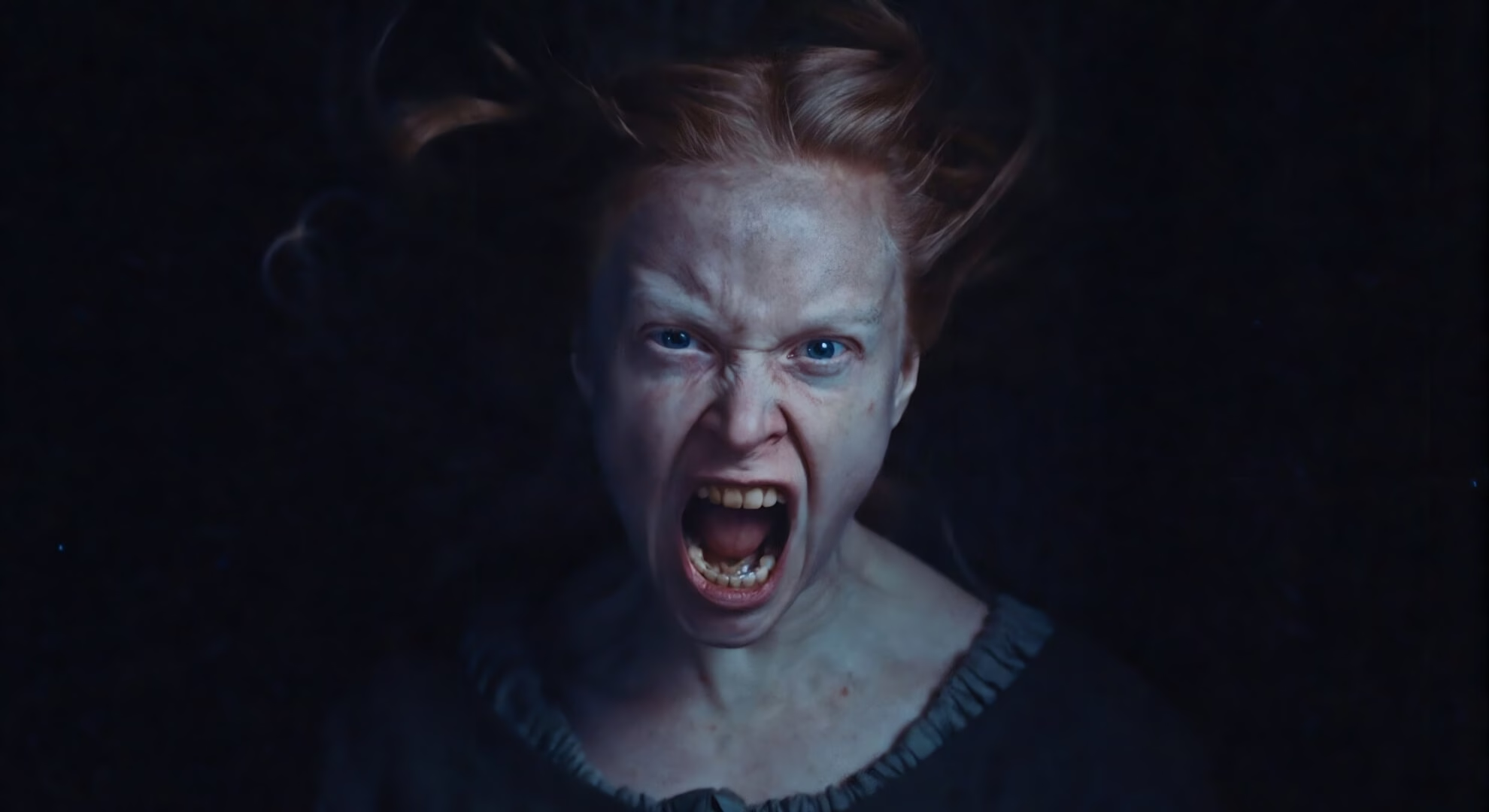
‘Heresy,’ directed by Didier Konings and streaming exclusively on Shudder from May 1st, 2026, enters that gap with directness. Originally broadcast as ‘Witte Wieven’ under the Koolhoven Presenteert initiative on Dutch public broadcaster VPRO, the film reaches its widest audience two years after its world premiere at the 2024 International Film Festival Rotterdam, having traveled through Fantastic Fest, Sitges Film Festival, Screamfest, and Grimmfest before arriving on Shudder’s multi-territory platform.
The Koolhoven Presenteert Commission
Martin Koolhoven — whose career runs from his Dutch Film Academy graduation through ‘Winter in Wartime’ (2008) and ‘Brimstone’ (2016), the English-language western that premiered in competition at the seventy-third Venice Film Festival — launched Koolhoven Presenteert as a structured mentorship initiative — selecting six emerging Dutch filmmakers and guiding each to direct a genre film — with the resulting series airing on VPRO from February 2024. The initiative was a deliberate institutional intervention in Dutch genre cinema’s historical difficulty sustaining productions with international distribution reach.
‘Heresy’ was the sixth and final film in that series, produced by Make Way Film alongside VPRO, with Marc S. Nollkaemper writing the screenplay. That institutional origin — a television commission within a mentorship framework — is relevant context for the film’s formal ambitions, which its festival circuit has confirmed consistently exceed those production resources.
The White Women of the Hunebedden
The Witte Wieven — translated literally as “White Women” — are figures of documented pre-Christian authority in Dutch Low Saxon mythology, concentrated in the eastern provinces of Drenthe, Gelderland, and Overijssel.
Historically understood as healers, midwives, and prophetesses of considerable social standing, they were venerated upon death at the Hunebedden: the great Neolithic megalithic dolmen scattered across Drenthe, some dating to several thousand years before the common era.
Jacob Grimm documented them in ‘Deutsche Mythologie’ as the Dutch variant of the Germanic Weiße Frauen, noting that “the people of Friesland, Drenthe and the Netherlands have just as much to tell of their witten wijven or juffers in hills and caverns.”1
The transformation from revered healer to malevolent forest specter followed the documented logic of Christianization across the medieval Low Countries, through which pre-Christian feminine authority was systematically reclassified as diabolical: the wise woman’s knowledge of herbs and fertility became the witch’s compact with darkness, and the Hunebedden where she had been honored became sites of contamination rather than veneration.
The mythology Konings and Nollkaemper inherit is therefore already a transformed record — a pre-Christian tradition visible only through the distorting glass of centuries of clerical recharacterization. That layering is richer source material than most folk horror productions have access to.
Low Saxon and the Buried Language
The decision to film ‘Heresy’ in Low Saxon — the regional Germanic language historically spoken across the eastern Netherlands into Lower Saxony, a language consistently marginalized within the Dutch national linguistic framework — is not stylistic decoration.
Low Saxon is the tongue of the territory where the Witte Wieven mythology is most densely documented: Drenthe, Gelderland, Overijssel. To film in Low Saxon is to film in the language in which the mythology was first transmitted and in which its suppression was most directly experienced.
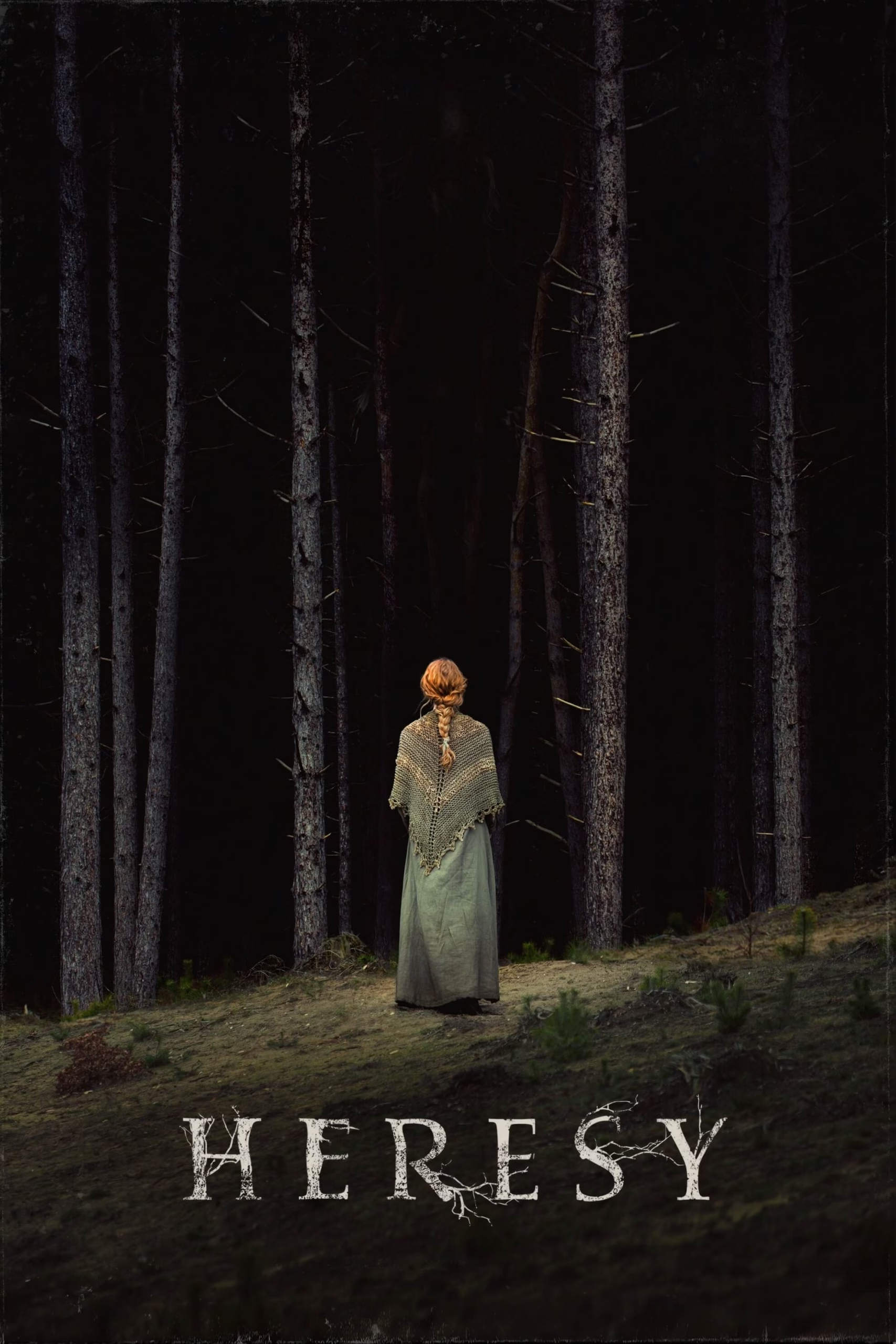
A film about the demonization of women whose social authority was encoded in a specific cultural tradition carries different weight when spoken in the suppressed dialect of that tradition’s home geography. The choice doubles the film’s central argument: what was buried was not only the women’s authority but the language through which it circulated.
Konings’s Concept Art Grammar
Didier Konings’s route to the director’s chair runs through concept art on major Hollywood productions — ‘Stranger Things,’ ‘Ghostbusters: Afterlife,’ and ‘Doctor Strange in the Multiverse of Madness’ — alongside visual effects credits on ‘The Conjuring 2’ and ‘Lights Out.’ A concept artist’s primary disciplinary formation is pre-visualization: the precise determination, before a camera rolls, of what a given image should contain, how it should be framed, and what relationship it should establish with every surrounding visual element.
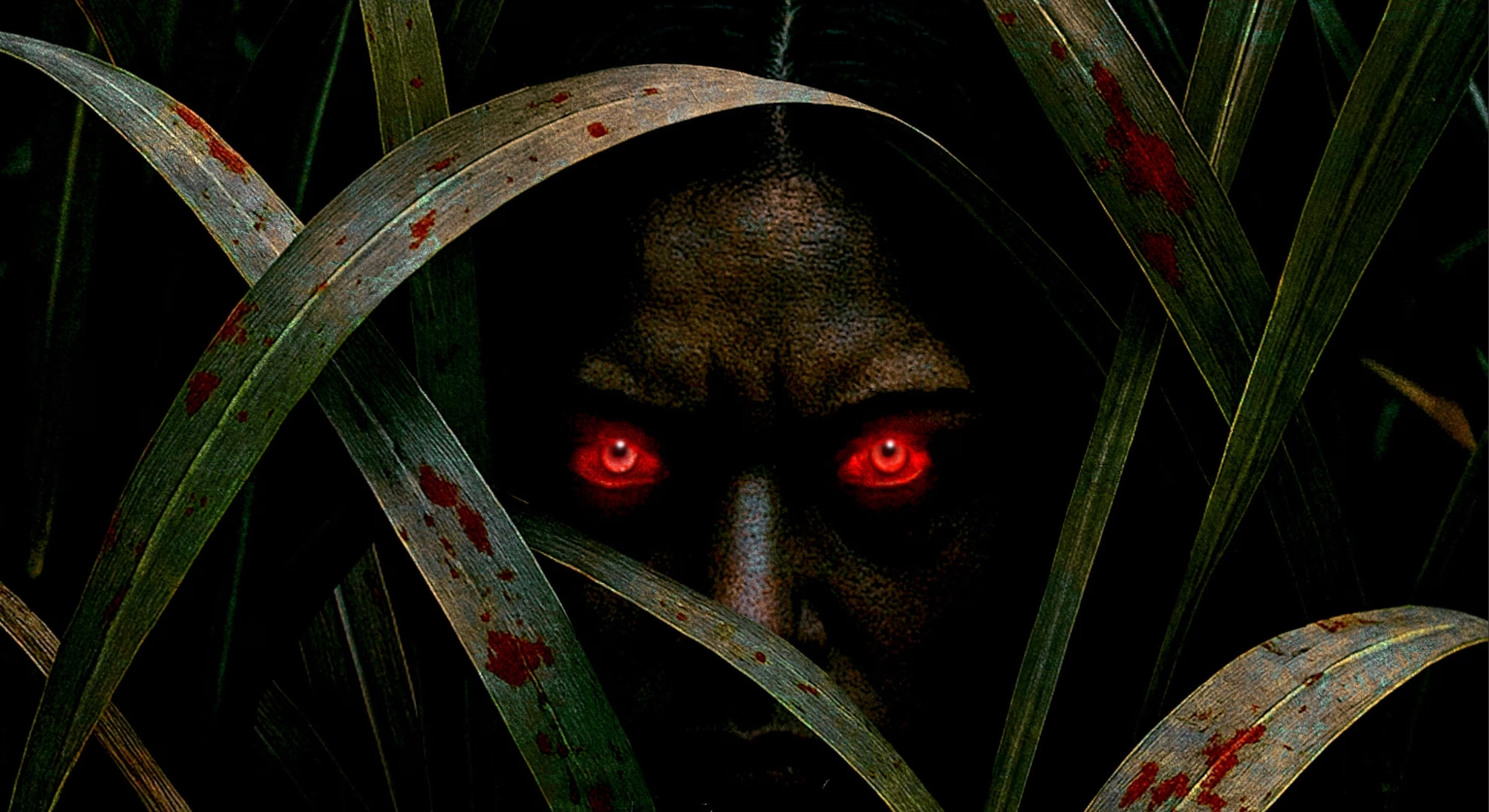
That formation produces a specific directorial instinct in ‘Heresy.’ The film organizes its horror around composed images rather than procedural revelation, using high-contrast chiaroscuro that draws from the visual language of Dutch and Flemish seventeenth-century painting — the tradition of deep shadow and directed light that the Dutch Golden Age institutionalized in paint and that Konings routes back through a medieval Dutch setting — as much as from any genre precedent.
The contrast between the flat, punishing light of the village and the deep shadow of the treeline is a visual argument before it is a narrative one: the terms of Frieda’s choice made legible through the difference in what each space can and cannot show.
Sluiters and Frieda’s Two Worlds
Anneke Sluiters plays Frieda, a young woman whose inability to conceive has made her a target within a community organized around fertility, piety, and collective surveillance of the body. The character’s situation maps with documentary precision onto the historical conditions under which the Witte Wieven mythology was demonized: a woman whose bodily difference marks her as outside the community’s reproductive order, whose survival requires either submission to that order or appeal to the authority the forest represents.
Frieda’s trajectory — from object of communal condemnation to the forest and back, transformed — is the structural mechanism through which the film returns the Witte Wieven to something closer to their pre-Christian function: as figures who offer an alternative authority to women the patriarchal order has expelled. Len Leo Vincent, Reinout Bussemaker, Léon van Waas, and Nola Elvis Kemper complete the principal ensemble.
From the Barrows to the Stream
‘Heresy’ arrives on Shudder after a festival route that placed it before multiple genre audiences across two years. The 2024 IFFR world premiere gave the film its first exposure outside Dutch television; Fantastic Fest, Sitges, Screamfest, and Grimmfest extended it through the European and American genre festival circuit before Shudder’s multi-territory exclusive debut on May 1st, 2026.
The distribution logic is characteristic of contemporary mid-budget European horror: a domestic television commission, a festival circuit that establishes critical credibility, and a specialist streaming platform providing the international audience that the film’s subject and formal ambitions were always pointing toward.
The Witte Wieven mythology has traveled from Neolithic burial mounds in Drenthe through centuries of Christianization through Jacob Grimm’s nineteenth-century documentation through Dutch television and into Konings’s film. What ‘Heresy’ does with that chain of translations — most specifically, what it restores to the Witte Wieven that centuries of demonization removed — is the specific argument the film now makes available to the genre audiences reaching it for the first time.
Konings’s formation as a concept artist on major franchise productions gives ‘Heresy’ a specific visual precision unusual for a first-time director working on a television budget — how do you read the relationship between that kind of pre-visualization training and the demands of filming a mythology whose original power was rooted in landscape, oral tradition, and the absence of fixed visual form?
References
- Jacob Grimm, ‘Deutsche Mythologie, vol. 3’ (Göttingen: Dieterich, 1835). Grimm documents the Witte Wieven as the Dutch counterpart to the Germanic Weiße Frauen within his systematic survey of pre-Christian Germanic supernatural figures, situating them within the tradition of feminine landscape spirits associated with burial sites across the Low Countries and adjacent German territories. ↩︎
Leave a Reply