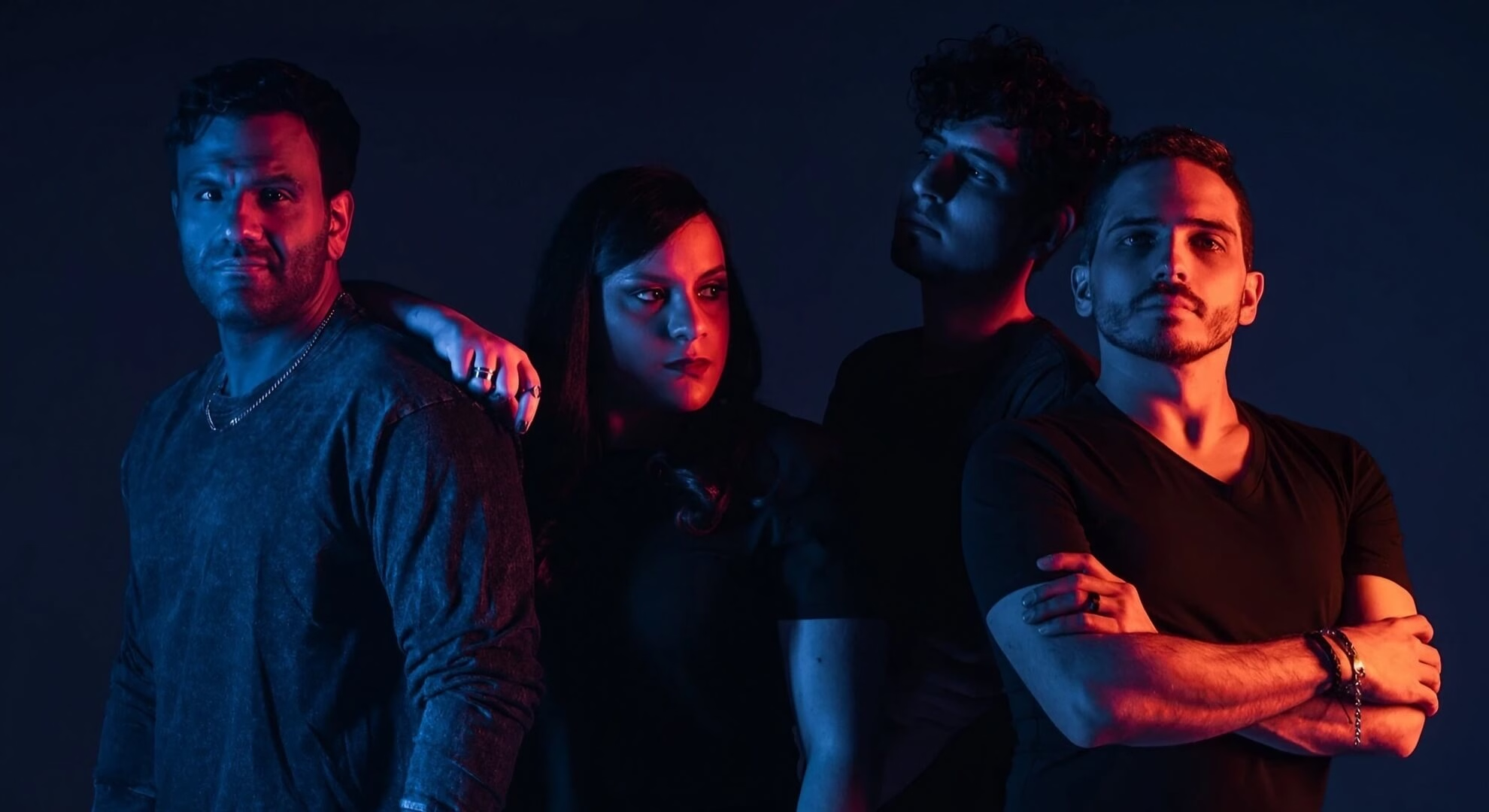


Argovia released its second full-length album, ‘Primal Repetition,’ on April 10, 2026, and presented it in Bogotá the following night. Its eleven tracks move from a reflection on love across lifetimes to a closing song that asks a question and declines to answer it. The album arrives after a hiatus, a rebuilt lineup, and a deliberate move away from symphonic metal toward modern progressive rock, all accomplished with little institutional support.
Sitting down to talk with us, the band discussed the record’s sequencing, its recording, and the Venezuelan-Colombian displacement that runs through its catalog. The band spoke with one voice, so this feature attributes its words to the band as a whole.
An Album Without Resolution
The question that organizes ‘Primal Repetition’ predates the album itself. “One of the central questions behind ‘Primal Repetition’ is whether death is truly final, or whether some part of us survives,” the band says. It frames the inquiry as spiritual rather than religious. ‘The Same River’ and ‘Spark’ approach it through memories of past lives and love that outlasts death, or even the destruction of the world.
That premise explains the record’s most distinctive sequencing decision. The album closes on ‘Where Do We Go’ rather than on ‘Unstoppable,’ which the band concedes “would’ve definitely been a more uplifting and empowering way to close the album.” The band chose otherwise: “we preferred to end on a more vulnerable and human note, wondering if this is it, or if everything eventually starts all over again.” Everyone can answer the question through belief or hope, the band adds, but no one can claim certainty.
The placement of ‘Ebb & Flow’ at track four follows the same logic. The band describes it as the song that sets the album’s existential pulse, and it wanted listeners to grasp early that, “even though ‘Primal Repetition’ has a modern sound and can sometimes feel almost pop, it is still asking deeper questions about who we are, the lives we lead, and the way we experience love.” It is also the first track where percussion becomes central, which the band treats as a return to “something more primal, something closer to our origins.” Placing it fourth lets the song define the album’s emotional and conceptual language without revealing the whole arc.
Two Voices in Conflict
Two songs introduce a second voice as a structural device, and the band assigns each a different task. In ‘Ebb & Flow,’ the dialogue “represents an internal conflict.” The second voice, the band explains, “initially feels external, but it gradually becomes clear that it is another part of the same person: the more fragile, fearful, and defeatist side.” Ross Jennings, vocalist of Haken, joined as the guest on the track. The band has called him one of its musical heroes and the collaboration a dream come true.
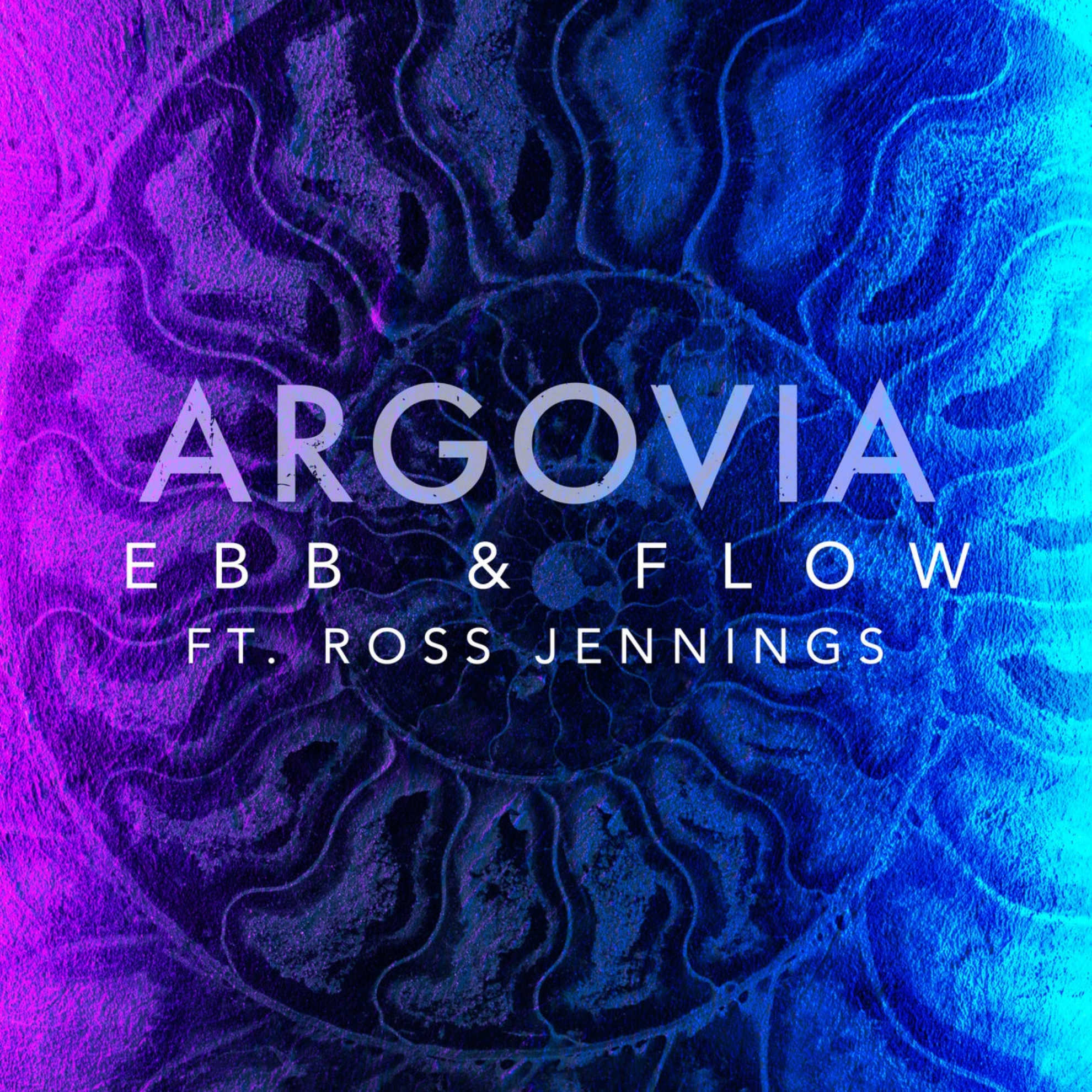
The band describes the collaboration as natural, partly because Jennings “has a lot of experience collaborating with other artists. He understands that language, and he is obviously a great vocalist.” It already held a fairly complete version of the song without a guest vocalist, in case the collaboration did not materialize, and Jennings received an almost complete guide for his lead vocals and harmonies. “He took very few liberties, and whenever he did, he explained why, and we agreed on those decisions as a team,” the band says.
His vocal demo, recorded remotely while he was on tour, served only as a reference. After Cruise to the Edge, Jennings went home, the band shared its feedback on the demos, and he recorded the final vocals in a studio, so the band reports no technical constraints from the integration.
In ‘Alas de Sal,’ the second voice carries a collective meaning. The band wanted to explore the idea that belonging and uprooting can be shared experiences, with the two voices echoing “many other voices and many different stories of migration.” The guest is Juan Carlos Marin of Boca de Serpiente, a Colombian who lived in Venezuela for many years before returning to Colombia, which gave the song a direct link to the band’s own history.
Displacement as a Constant
“Migration and displacement are part of the band’s DNA,” Argovia says, “almost like a wound that never fully closes.” The theme runs from the first album, ‘Distant Present,’ which addressed political violence and instability and the sense of being trapped between two points in time, into the new record. The band sees the connection as natural. Displacement is personal to its members, but it is also familiar to many people in a region, Latin America, that is always in transformation.
The question of national identity receives a lighter answer. The band jokes that asking where Argovia is from resembles asking where the arepa is from, and its standard reply is: “The arepa belongs to whoever makes it and whoever eats it.” Argovia, it follows, “belongs to whoever listens to it.”
The band played only one show in Caracas before leaving, a show it says left a mark on many people, as did its “very raw and improvised EP,” ‘Lost Letters,’ nominated at Venezuelan rock awards, yet “ninety-nine percent of our career has happened in Bogotá.”
The band’s summary is plain: “Venezuelans see us as a Venezuelan band, Colombians see us as a Colombian band.” Asked whether the Venezuelan dimension remains a live creative question, the band answers briefly, noting that it developed almost entirely in Bogotá. Its members come from both Venezuela and Colombia, and Ani Guillén and Carlos Arminio are Venezuelan.
That history frames the album’s only Spanish-language song. The band had been “very careful” about choosing the right track, in part because part of its audience has asked for more Spanish and some suggested it would bring local success. “We never wanted to write a Spanish-language song just to meet some kind of marketing quota,” the band says, and it remains open to more Spanish whenever a song demands it.
The track’s late position, at number nine, mirrors forced migration: “You may think everything is finally becoming clear and that you are getting close to where you are supposed to be, and then suddenly everything changes.”
Elsewhere, Latin American identity operates more quietly. At the arrangement level it appears through percussion, rhythmic patterns, melodic phrasing and instrumental textures, surfacing explicitly only when it serves the concept, as in ‘Alas de Sal.’ Otherwise it remains “operating beneath the surface of the arrangement.” The band nonetheless resists a regional label for the record as a whole. It does not consider ‘Primal Repetition’ “specifically tied to a local identity,” judging ‘Alas de Sal,’ with its Andean and Afro-Caribbean percussion, its most local moment and the album otherwise “quite universal.”
Produced across Bogotá, Santiago and the Netherlands, it expands a creative space previously occupied almost exclusively by Ani Guillén and Carlos Arminio.
The Loneliness of Connection
The band rejects the idea that the technology-driven title ‘Isol_AI_tion’ sits apart from the album’s inward concerns. Technology may be an external force, it argues, but the isolation it produces carries complex emotional consequences: “We live in a world where we can feel increasingly alone even when we are constantly connected.”
The promise was closeness, and in many ways it was delivered, through calls to distant family and daily contact with partners. Beneath that, the band describes a quieter detachment from surroundings, from other people and from one’s own body, in which people stop going outside and, “quite literally, touching grass.”
The embedded “AI” is therefore not only a comment on a new technology. The band calls it one more contradiction of human life, since “the tools created to connect us can also deepen the very loneliness they were supposed to solve.” That contradiction connects to the album’s governing impulse: “Returning to something primal is partly about stripping away certain layers and remembering what is basic and essential.”
From Hiatus to Revival
Much of the material on ‘Who We Are’ predates the hiatus. ‘Oceanborn’ dates in full form to about 2018 and began as an idea around 2015, while ‘Barefoot’ and ‘Crawling Is the Shape of Love’ come from 2017 or 2018. The band dynamic of 2016 to 2019 “simply ran its course,” and although the hiatus, deepened by the pandemic, was a period of uncertainty, it “may have been the best thing that could have happened to us.”
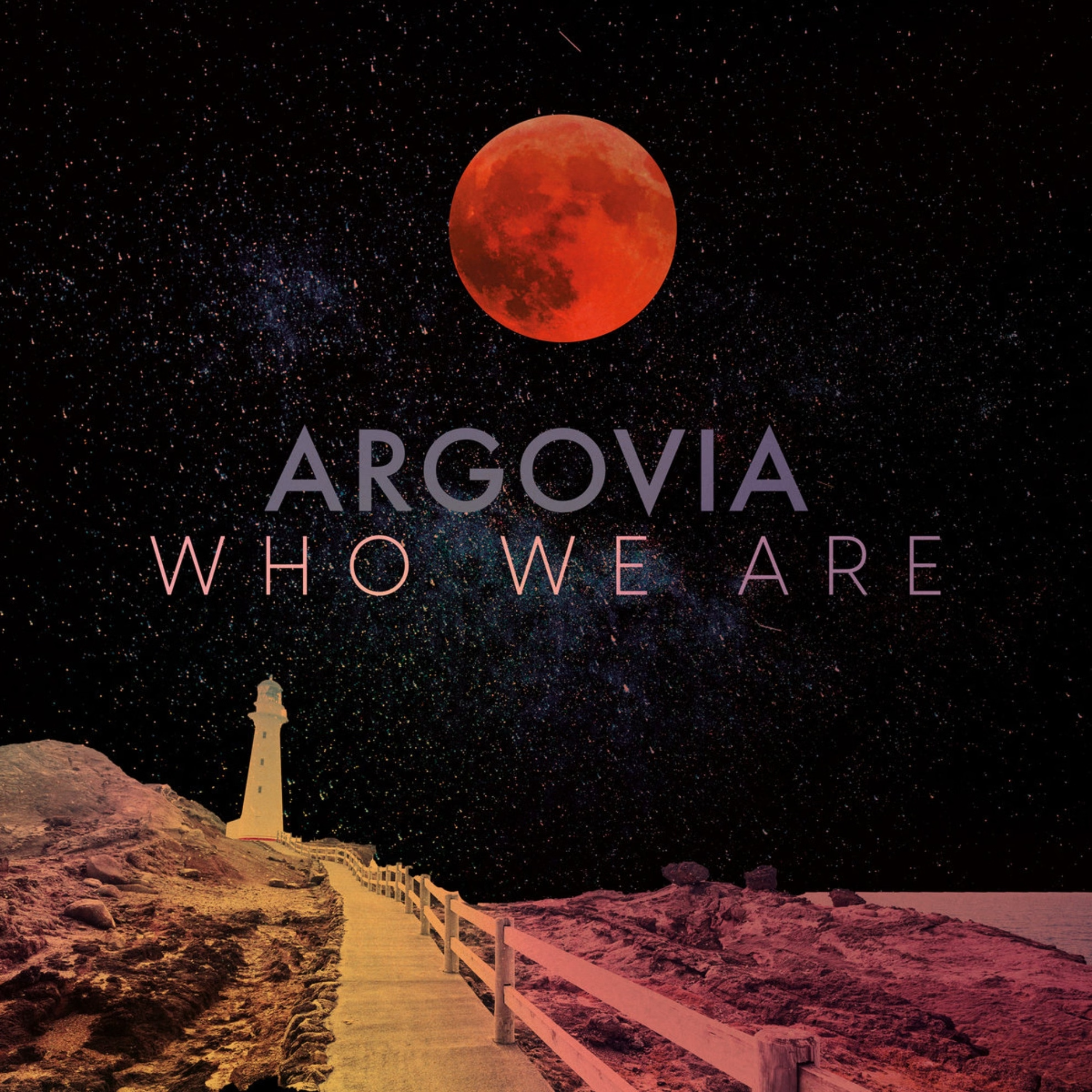
The band returned with “renewed energy and absolutely no expectations,” room for new members, a new team, external production and “fresh ears.” The work changed what it knew: “We learned more while making ‘Who We Are’ than we had during all the previous years combined.” Because the EP gathered so much pre-hiatus material, a backlog of new music was already building, and the band felt it needed “to get it out of our system,” so it began the ‘Primal Repetition’ chapter almost immediately after the EP’s release.
Groove Before Time Signature
The band’s compositional method treats rhythm as feel rather than specification. “We never start a song by saying, ‘We want to write a pattern in 31/16. Shall we go for it?’” the band says. Patterns are explored until they feel right, and only then do the members work out the time signature.
The band routinely moves through meters of 7, 5, 9 and 13, but the aim is to keep the song and what it makes the listener feel in view. Training the compositional brain, the band says, builds a habit of “humming and improvising patterns that are not always regular, but still have a certain flavor to them.” When complexity and groove find their balance, “I think you have struck gold.”
The principle appears elsewhere in the answers as “groove always comes before complexity,” within a keyboard-centric sound in which “the guitars are not really there to show off.”
That principle shaped who joined. Bassist Nicolás Paredes, who tracked half of the songs on ‘Who We Are,’ came to metal through nu metal and, in the band’s telling, “is not your typical rock or metal bassist.” He had to learn complex meters the hard way, and he brings funk and groove to the bass lines. Drummer Mauricio Sanabria comes from Latin, pop and urban music, which gives him a feel “closer to a fusion drummer than a typical metal drummer.” Both knew they were joining a band “deeply rooted in rock and alternative metal,” in which the guitars play, in the band’s words, “a more supportive and grounded role” beneath the keyboards.
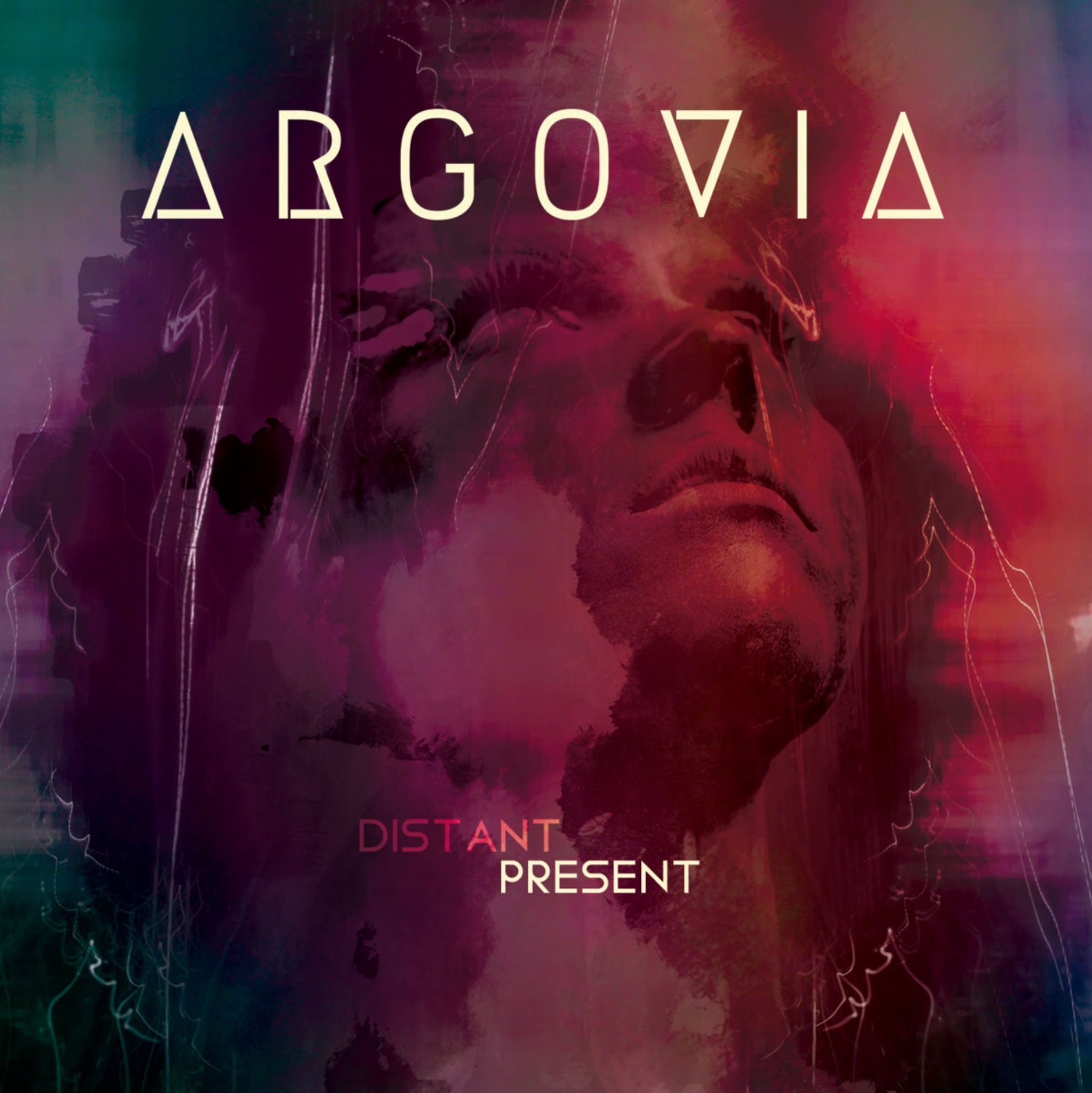
The band’s genre position moved with the same logic. Between ‘Distant Present’ and ‘Who We Are,’ it shifted from rock and metal with symphonic and progressive elements to progressive rock more directly, with Rush, King Crimson and Yes as classic reference points and a modern touch.
The band’s earliest work, ‘Lost Letters,’ drew on Ayreon, Lacuna Coil, The Gathering and Dream Theater, while ‘Primal Repetition’ points toward Porcupine Tree, Riverside, VOLA and Karnivool. The move toward progressive rock was deliberate, as was the insistence on accessibility: listeners should “simply feel the groove.” The musicians in the audience “might recognize the complexity, but everyone else does not need to sit there counting bars.”
Part of the motive was refusing a label. The band did not want to be identified as symphonic metal or as “female-fronted music,” which one answer calls “a personal battle of mine against a label that says absolutely nothing and feels very lazy.” The assumptions that come with the label no longer apply: “People no longer expect operatic vocals and orchestral arrangements. They expect rock with unusual time signatures and cinematic textures, and that is what we wanted Argovia to become.”
‘Primal Repetition’ doubled down on that approach with far more layers, and some songs ran to more than a hundred tracks in the digital audio workstation.
The Middle Ground of Prog
Asked whether its choice of production partners is a statement about where it sits in the international progressive scene, the band says the selection has “not really been that deliberate.” Modern progressive music is the label that fits best, but “it is not an easy genre for most producers and engineers to fully understand.”
The band describes “a very fine line between being purist and protecting the sonic heritage of the seventies, without going to the opposite extreme of hyper-technical math metal and programmed drums, while still embracing more modern forms of exploration.”
Its sound, the band says, “lives somewhere in the middle,” in a space also occupied by Leprous, The Pineapple Thief and Porcupine Tree at different points in their careers, and it wanted to work with people who understood that balance. The real statement came with ‘Who We Are,’ which “placed us within the sound we wanted to inhabit and established the level of quality we wanted to offer.” ‘Primal Repetition,’ it adds, “doubles down on that commitment.”
Leprous serves as the benchmark. The band follows the group closely and describes its music as “elegant, daring, accessible, and complex at the same time,” adding: “I think they are one of the bands that best represent what modern prog can be.”
Real Instruments, Real Rooms
The record’s sound rests on a rule the band keeps: real instruments and real amplifiers about ninety percent of the time, preserving the organic character of ‘Who We Are.’
That rule shaped the choice of Sandlane Recording Facilities in Rijen, the Netherlands, which anchored an eighteen-month production that also ran through Bogotá and Santiago. “Sandlane is a studio that has everything,” the band says. Its staff understood the sound the band wanted, having worked with Anneke van Giersbergen, Ayreon, Epica, Stream of Passion and Charlotte Wessels, and the studio held every instrument the sessions required, along with a console the band calls amazing, a 32-channel Rupert Neve Designs 5088 fully discrete analogue desk.
The contrast is Bogotá, where few studios keep a full inventory. Recording ‘Who We Are’ there meant renting the electric piano, the Hammond organ and the amplifiers from separate sources, an expensive process that left the band equipping the studio itself. For ‘Primal Repetition,’ the band travelled with “the hard drive containing the files, and nothing else.”
One unlikely instrument entered through family. Juan Francisco Arminio, Carlos Arminio’s father and one of the band’s earliest supporters, became an aficionado of the harmonica, and he plays it on ‘Isol_AI_tion,’ ‘Age of Wonder’ and ‘Alas de Sal.’ The band admired Steven Wilson’s use of the instrument on ‘To the Bone’ and found that it added texture when blended with organ and piano. It is also “quite an unusual instrument to hear on a modern progressive rock record,” which made it more appealing.
One Pen, Many Hands
Ani Guillén is the sole lyricist and the author of the album’s artwork, and the band is candid that the concentration of roles was practical rather than controlling. Argovia long functioned as a space for creative exploration without major ambitions, which allowed it to tell stories from the vulnerable and personal perspective of its two creative cores, Guillén and Carlos Arminio.
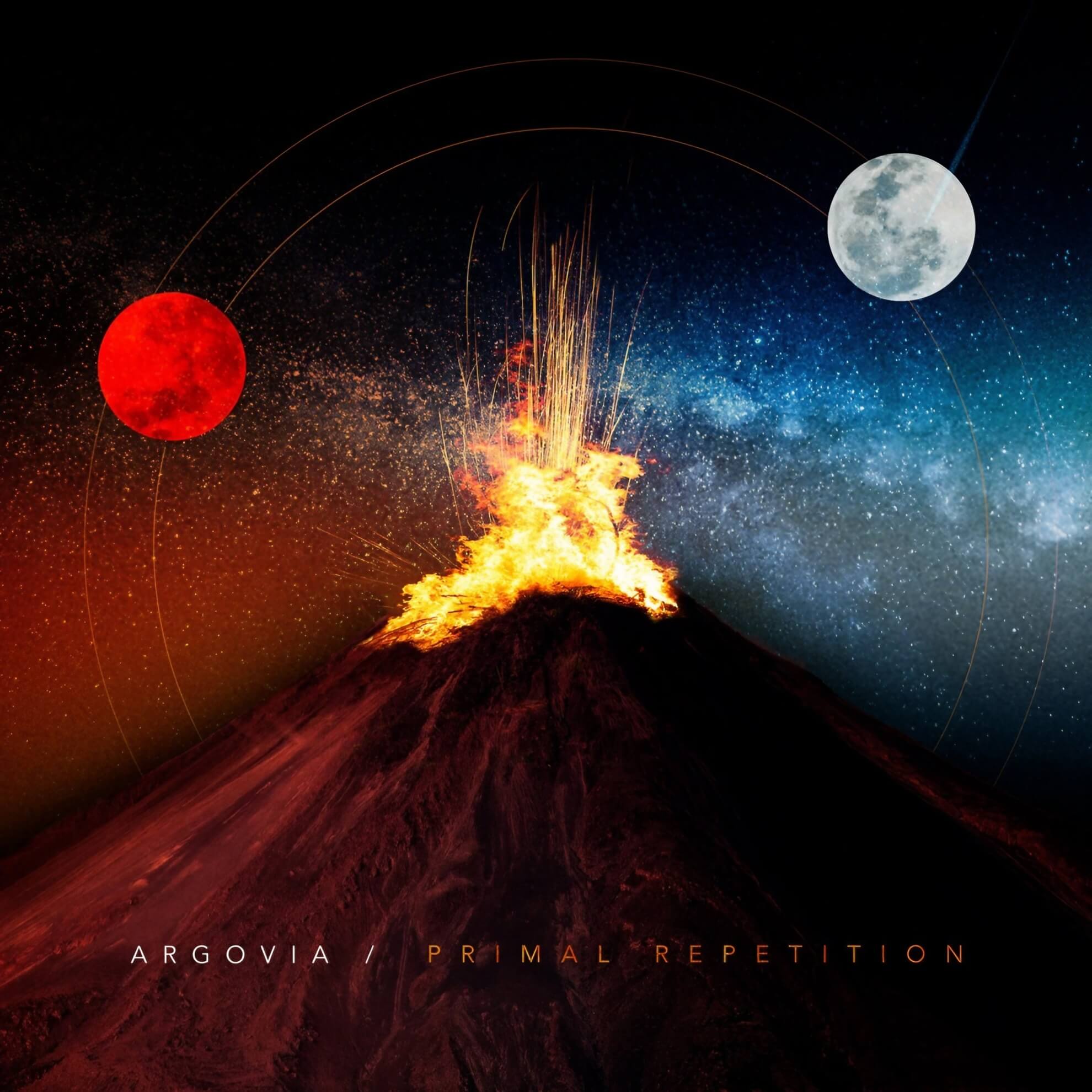
The visual side comes later. Once lyrics and music are finished, the band asks how to give the story a visual form, so the artwork “grows out of” the writing rather than determining it. The cover Guillén made places two celestial bodies on a shared orbital ring with an erupting volcano between them, a rupture belonging to neither and resolving into neither.
The band calls the artwork “another way of expanding the same emotional and conceptual world,” and, like the closing track, the image resolves nothing.
The band has since opened the process. ‘Who We Are’ and ‘Primal Repetition’ were the first releases to involve external co-producers, Alejandro Londoño of Cultura Tres and Germán Vergara of Aisles, respectively, and the band calls the results incredibly rewarding.
Writing as a single voice still exposes personal vulnerability, but the band stresses that the themes are universal and that its members talk through life, relationships and expectations constantly, so the lyrics do not exist in isolation. “Writing lyrics is partly about inhabiting your own experience, but also trying to step into someone else’s,” the band says. “It means giving form to ideas that are personal while still leaving enough space for them to become universal.”
Building What Does Not Exist
For a band without label infrastructure, the physical life of the record required its own logistics. “We have had to believe in the music, invest our own money, and find ways to make things happen,” the band says. Pressing vinyl was expensive, but progressive rock and metal listeners “still value physical formats,” and the decision paid off.
‘Primal Repetition’ became one of the best-selling albums in Bandcamp’s progressive rock category, and fulfilling orders is a reminder that “vinyl and CDs are still very far from dead.” Distribution in the United States and Europe relies on family and friends who, partly because of migration, now live in different parts of the world and agreed to help. The band presents the model as both proof and credential: “We understand how the promotion and sales ecosystem operates, and we are willing to build it ourselves.”
The same self-reliance extends to the Colombian scene. Prog in Motion was the last major attempt to sustain a progressive festival in the country until Argovia started Progota Fest with Human Conspiracy, a young initiative meant to keep the niche alive. The band is blunt about the conditions: “There is no large progressive scene in Colombia, and the venue infrastructure for smaller acts is still not strong enough.” Yet “there is an audience, and there are bands willing to work together and build what does not yet exist.”
Its lineage is acknowledged openly. Anathema is “one of the foundational bands for us,” though not because the music sounds alike. In February 2026 Argovia opened in Bogotá for Weather Systems, a project of two former Anathema members. What stayed with the band, in its words, was “their search for ethereal, immersive textures through keyboards and female vocals, because that is something we have explored in our own way as well.”
Beyond that, what remained was “not a specific formula or sound to imitate, but that sense of possibility,” the demonstration, at a time when music was moving elsewhere, “that this kind of emotional and atmospheric language was possible.” Guillén was also one of 170 voices in the choir on Leprous’s ‘Faceless’ in 2024. The band calls it a memorable experience but one that did not influence the album, which was already in final mix revisions, and the participants remain in touch as a community.
Time and Transition
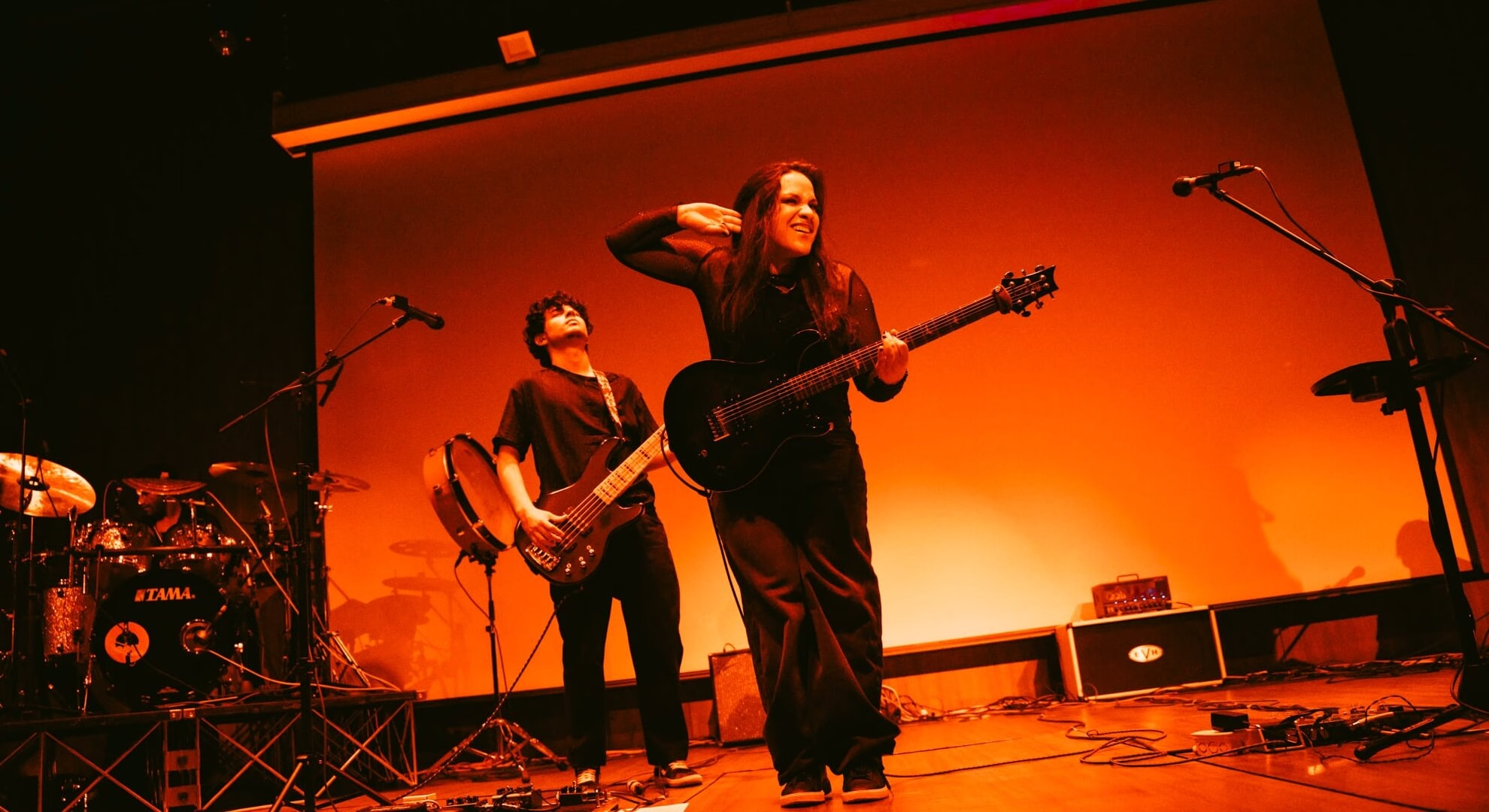
The launch concert on April 11 was framed as a threshold. “It was not simply a presentation of the new album,” the band says. It “also marked the end of one period in the band’s history and the beginning of a new cycle.” The set combined music from across the discography with selected new tracks, said goodbye to a few songs that will probably have no place in future sets, and introduced the material now shaping the band’s identity. The band considers it very unlikely that the exact set will be performed again, which makes it almost “a one-time document of Argovia at a particular point of transition.”
Time, finally, is a subject the band keeps returning to, in part because its members are “huge sci-fi nerds.” ‘Distant Present’ concerned suspension between origin and destination, while ‘Primal Repetition’ examines the patterns that return throughout a life. The band declines to treat one as the answer to the other. “So perhaps the evolution between the two albums is not that we finally found an answer, but that we became more comfortable with the possibility that some questions may never be fully answered.”
We reviewed the album’s debut in Argovia Launches ‘Primal Repetition’ Through Intimacy at Hall 74, a report on the April 11 show the band describes above as a one-time document.
‘Primal Repetition’ has been available since April 10, 2026, and the band’s Bandcamp page carries it in digital and physical formats, including the limited pressing on red marbled vinyl. I would recommend hearing it in sequence rather than by single. ‘Ebb & Flow’ makes its argument at track four, and ‘Alas de Sal’ lands harder at track nine because the album has by then convinced you that you are close to a destination.
Have you heard ‘Primal Repetition’ yet, and does an album that ends on a question feel more honest to you than one that ends on an answer?
Leave a Reply