

The label founded around a designer’s vocabulary reads differently from the label that hires him. The work may look identical from the outside; the structural fact does not. Boloria, the Antwerp-based fashion house announced in September 2025 with Olivier Theyskens as artistic director and Willy Vanderperre as campaign photographer, is the first house Theyskens has not inherited. His prior institutional positions placed a gothic romantic sensibility inside houses that preceded him and would follow him.
Boloria inverts that arrangement: the house was built for his register. That structural distinction, combined with the specific patronage of Belgium’s largest entertainment enterprise, makes Boloria a different kind of argument about dark fashion’s institutional future than either the work or the backing would suggest on its own.
Gothic Romanticism Without a Host
Olivier Theyskens entered fashion’s formal institutions at 25, when Rochas appointed him artistic director in 2002. He had already established his aesthetic position before that appointment — through a self-funded label launched in 1997 and through early work that placed him, at the end of the nineteen-nineties, among the most precise practitioners of gothic romanticism working at the level of couture craft.
Dazed described him at the peak of the Rochas period as the “dark prince of couture,” a characterization that accurately maps where within dark fashion’s documented lineage his work sat: not theatrical neo-Victorian pastiche, but gothic romanticism as structural principle — present in the cut, the closure, the weight of the fabric. The early pieces under his own label had an undisguised darkness: hook-and-eye closures, black satin, proportion that suggested nineteenth-century mourning dress filtered through punk-influenced tailoring.
That Procter & Gamble, Rochas’s owner, closed the house’s fashion division in July 2006 — despite Theyskens having won the Council of Fashion Designers of America’s International Designer award that same year — confirmed the commercial calculus that had been structurally built into the appointment from the start.
A designer of his particular register, working at a level of demi-couture precision that did not scale toward mass-market profitability, was always running against the grain of the institution’s ownership.
Nina Ricci, which Theyskens joined in November 2006, posed the problem from the other direction: it required him to temper the darker inflections of his vocabulary toward a more commercial femininity, producing fluid eveningwear with enough romantic restraint to read as luxury without challenging the house’s existing positioning.
His departure from Nina Ricci in 2009 and subsequent work at Theory’s designer line from 2011 to 2014 moved him further from the dark luxury crossover register — each position requiring translation of his sensibility rather than deployment of it.
The Campaign’s Withheld Face
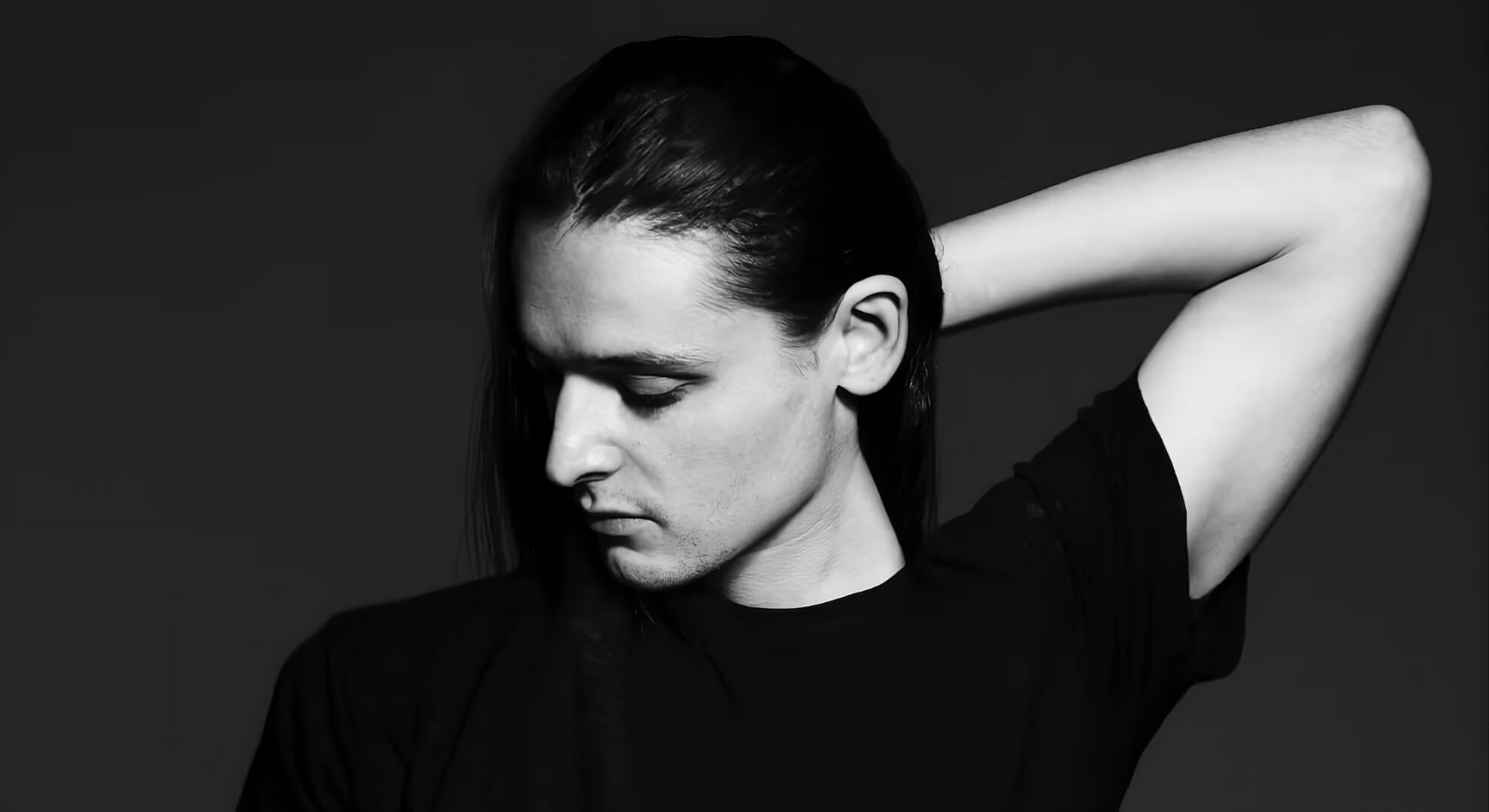
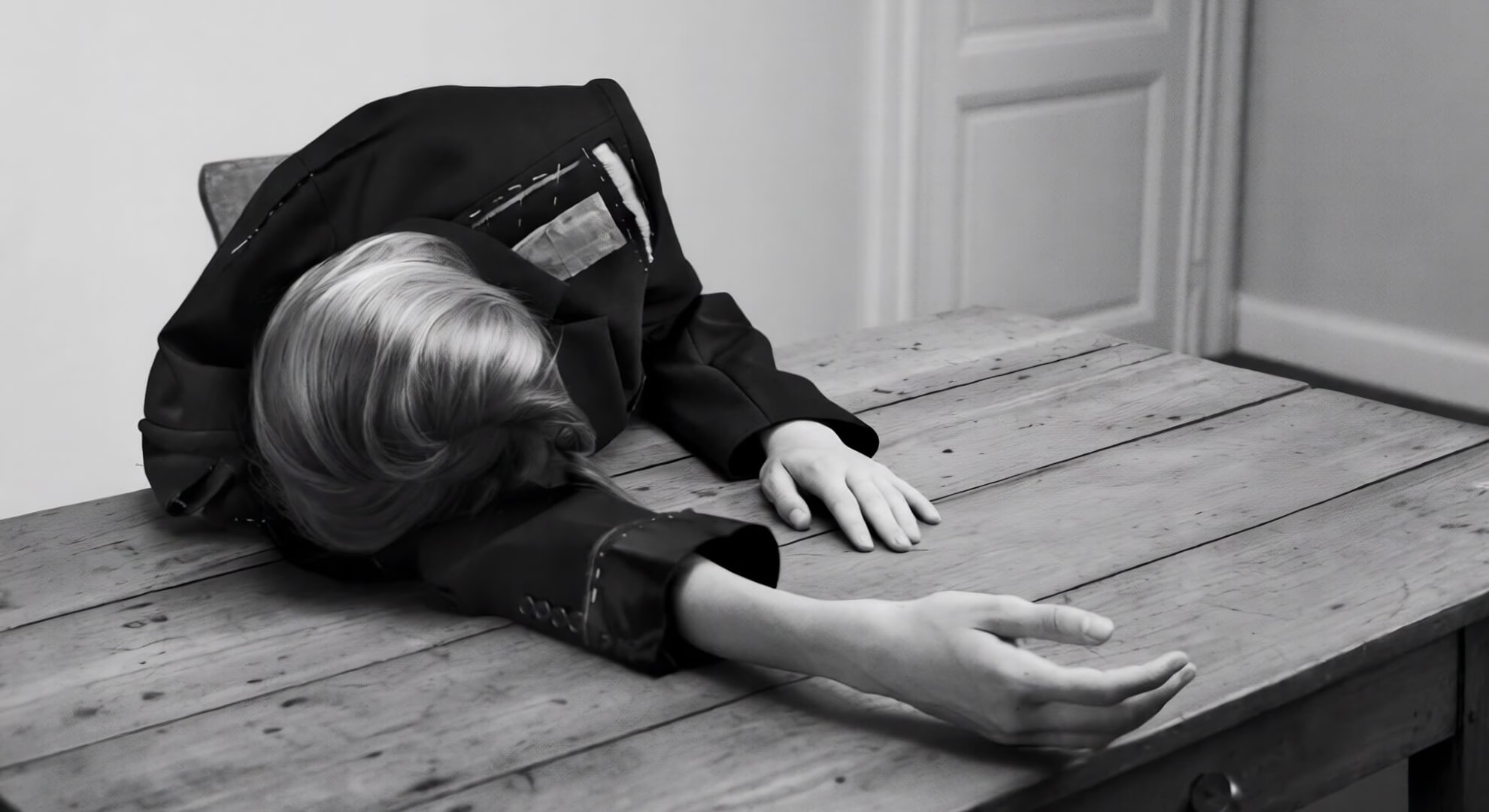
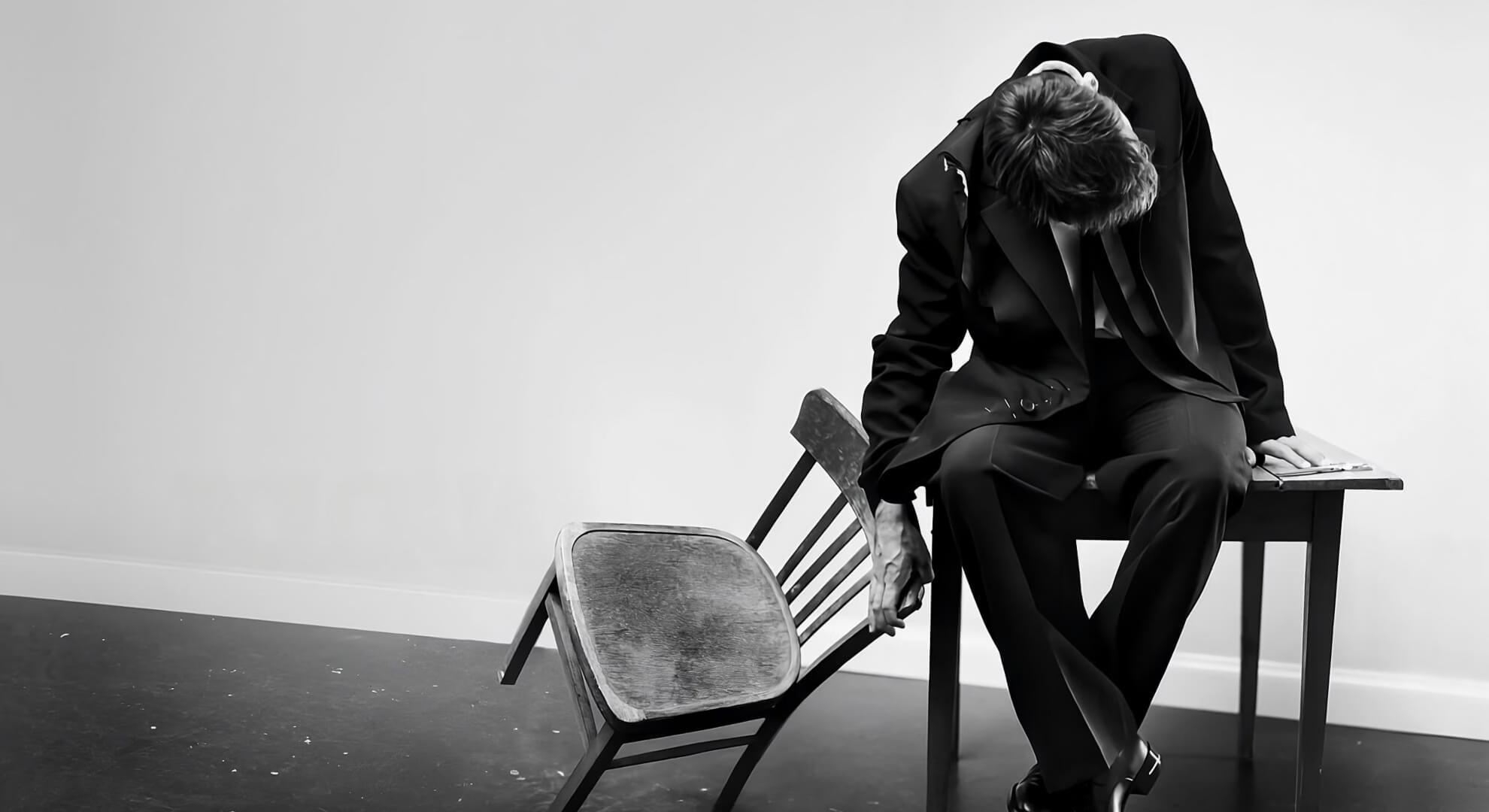
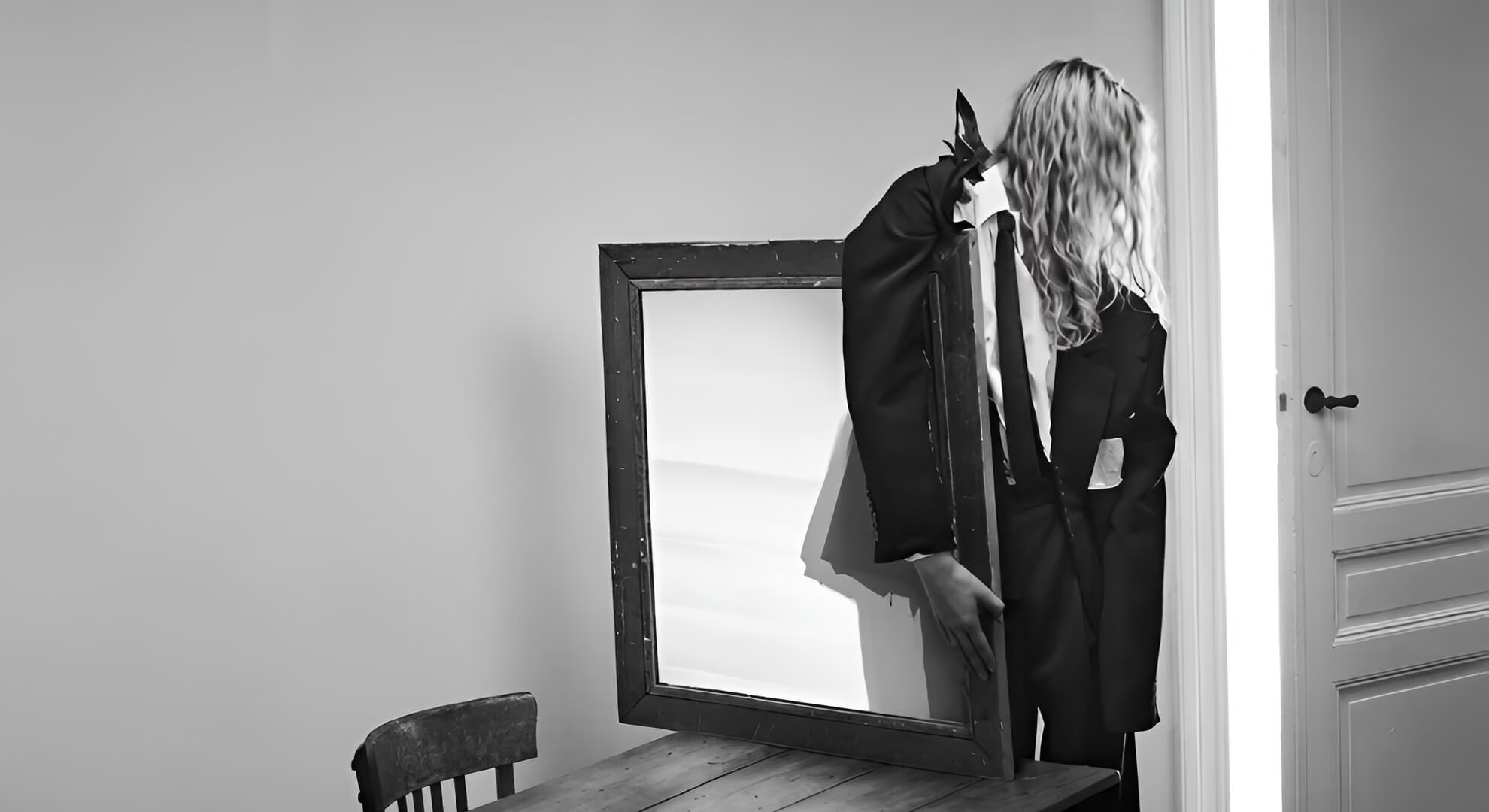
Willy Vanderperre photographed Boloria’s inaugural campaign as four black-and-white images. Each shows a single figure in a dark suit, with construction details — in one shot, needles and thread remain visibly in place as though the garment is mid-process — left deliberately unresolved.
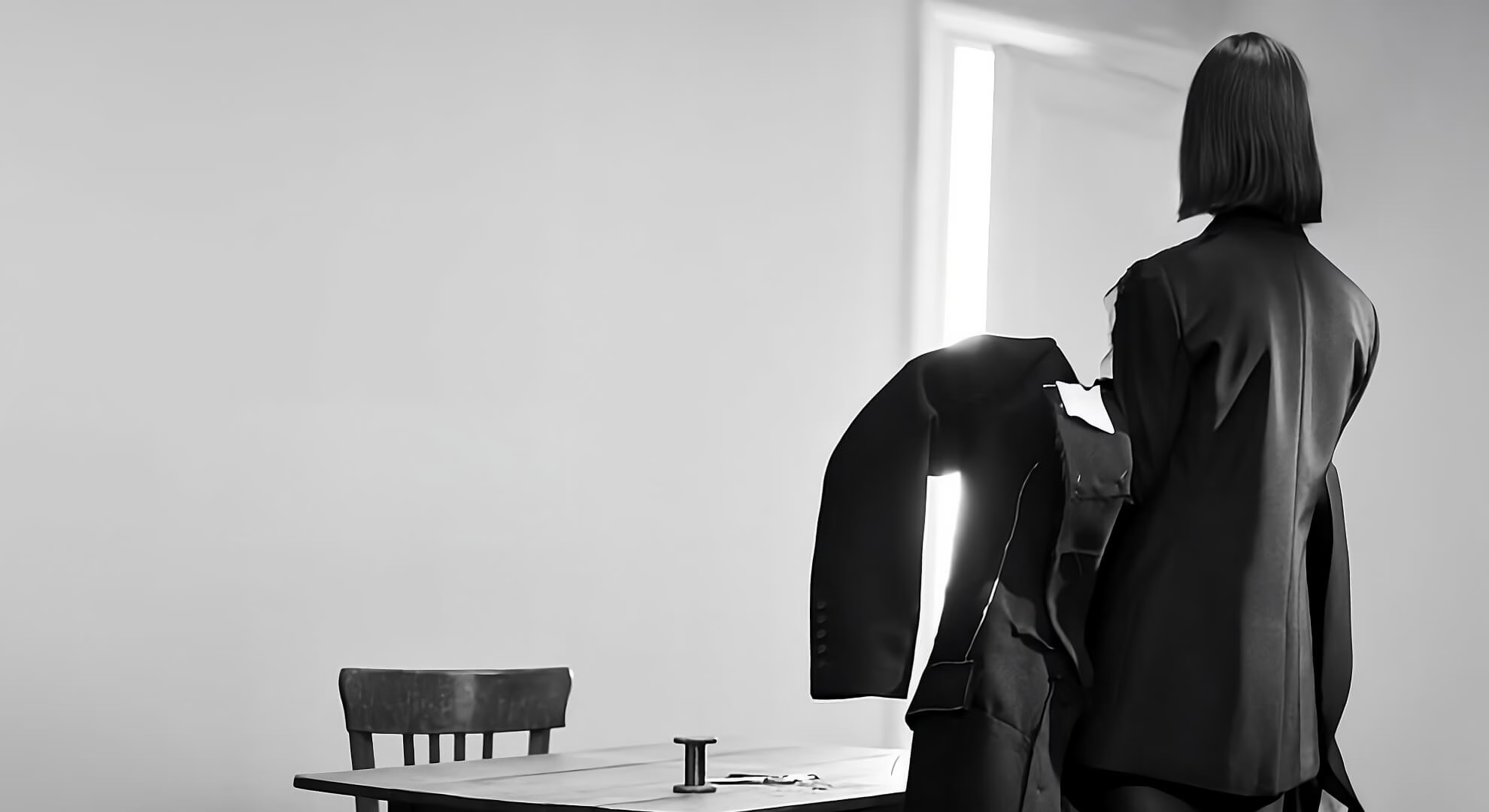
None of the shots reveals the subject’s face. This is not concealment by shadow, which would imply a face exists behind it and might, under different light, be visible. The face is physically turned or obstructed: the figure is present in the room, fully clothed, occupying a specific posture, but offers no legible expression, gender, or affect. The effect is not mystery as seduction. It is identity as withholding — a refusal to resolve the figure at precisely the moment a new house would conventionally demand a face to anchor its market position.
Vanderperre studied at Antwerp’s Royal Academy of Fine Arts alongside Raf Simons and stylist Olivier Rizzo, a set of collaborations that have defined Belgian fashion photography for three decades. His campaigns for Raf Simons, Dior, and Prada share a consistent formal decision: the body as locus rather than the face as anchor. For Boloria’s inaugural images, that decision acquires a specific institutional weight. The campaign does not introduce the house by showing what it is. It introduces it by demonstrating what it will refuse to do.
In its launch materials, Boloria characterized the photographs as opening a dialogue before the first collection — anticipatory images that invite interpretation rather than deliver resolved identity. What the images contain, as formal objects, is an argument about how gothic romanticism presents institutional identity: not through revelation, but through governed withholding.
Belgium’s Dark Parallel Traditions
The patronage structure behind Boloria is legible only within the specific geography of Belgian cultural production. Weareone.world, the entertainment group founded by Manu and Michiel Beers, operates Tomorrowland, the annual electronic music festival in Boom, near Antwerp, first held in 2005 and now among the world’s largest commercial electronic music platforms. This is the first time Weareone.world has entered fashion.
What makes the pairing culturally significant is not the commerce of the alliance but its specific Belgian coordinates. Belgium’s electronic music tradition is one of the most extensively documented dark-adjacent cultural lineages in Europe: Front 242, formed in 1981 near Leuven, pioneered electronic body music out of the same Antwerp-Brussels cultural geography within which Belgian fashion’s dark tradition would later develop.
The New Beat scene of the late nineteen-eighties grew directly from EBM’s hard-hitting rhythms and darkwave-adjacent energy, seeding the techno and electronic club culture that Tomorrowland would eventually institutionalize on a global scale. These are not identical lineages, but they run through the same documented soil: the Belgian independent labels, the club infrastructure of Antwerp and Brussels that produced, in parallel registers, both Front 242 and the Antwerp Six.
Theyskens’ own gothic romanticism developed in Brussels in the late nineteen-nineties, at the same cultural moment when Belgian electronic music was expanding internationally. The parallel trajectories — dark fashion and dark electronic music — have never formally converged as an institutional project in Belgium.
Boloria, backed by the country’s flagship entertainment enterprise, may be that alignment. Whether it holds will depend on whether the house’s independence of vision survives the scale of its backing. The campaign, as it stands, gives no ground on that question.
What the House’s Structure Changes
The critical question Boloria poses is not aesthetic — Theyskens’ aesthetic position is among the most consistently documented in European dark fashion — but structural. A designer working for an inherited house operates within pre-existing institutional pressures: the house’s commercial history, its ownership’s expectations, its previous audience’s encoded preferences.
Every collection must negotiate those pressures before it can negotiate the designer’s vocabulary. A house founded as the primary vehicle for a single designer’s vocabulary operates from a different premise: the institutional pressures are organized from the start around protecting and extending that vocabulary rather than moderating it.
A 2017 retrospective at MoMu in Antwerp, titled ‘She Walks in Beauty,’ documented Theyskens’ work across his own label, Rochas, Nina Ricci, and Theory as a single coherent design intelligence operating under varied institutional conditions. Boloria is the first institution designed from the outset to give that intelligence unmediated operating conditions.
The distinction is analogous to that between a soloist brought in to play for an existing ensemble and a composer writing for an ensemble assembled specifically for their score. Theyskens has consistently written the score. Boloria is the first ensemble assembled specifically to play it.
The First Collection Is the Test
The inaugural campaign is not the collection. Vanderperre’s four images establish an aesthetic position — the governing refusals, the formal choices, the institutional vocabulary — but Boloria’s debut collection in 2026 will be where the structural argument is either confirmed or qualified.
What the campaign already demonstrates is that Theyskens and Vanderperre, working together at a house that exists specifically for Theyskens’ register, have made formal choices that would not have been available at Rochas or Nina Ricci. Neither house’s commercial context would have permitted a launch campaign that refuses to show any resolved product, presents construction as the argument, and withholds the face entirely.
At Boloria, those refusals are the institutional position from the first image. Whether the collection that follows can sustain them — whether a house funded by the world’s largest electronic music enterprise can hold the specific patience that gothic romanticism’s dark luxury register requires — is the question the 2026 debut will answer.

Leave a Reply