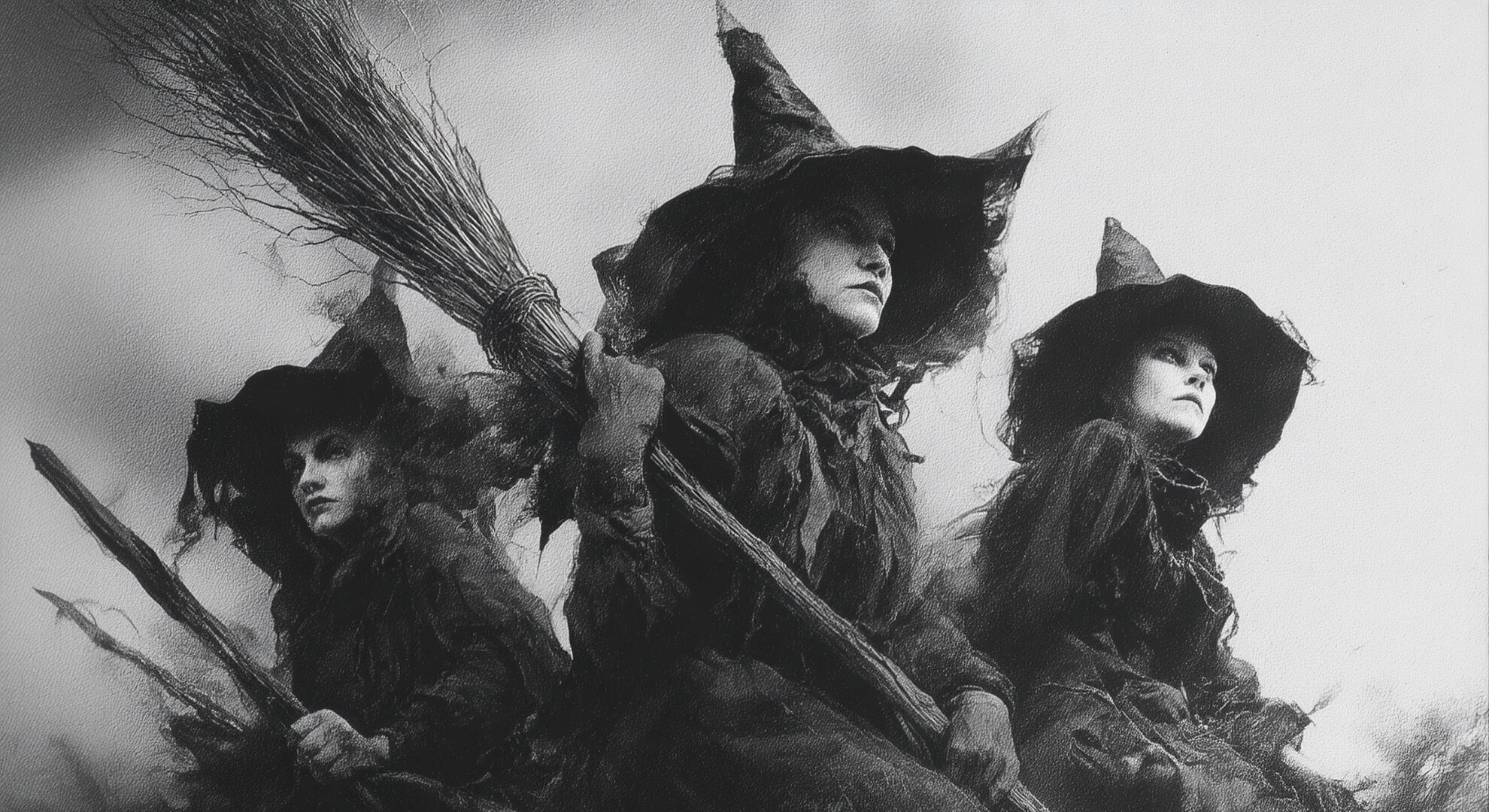


The pavilions of the Feria Internacional de Bogotá occupied a city block on the south edge of the Teusaquillo neighborhood, built in the 1950s to house Colombia’s annual trade exposition. By the third week of August 1975, those same halls had been stripped of their customary displays and refitted with white drywall partitions, a designated landing zone for unidentified flying objects, a marketplace where “pomadas” and talismans competed with electrodomestic appliances, and an art exhibition housing more than 675 works whose only curatorial requirement was some documented relationship — direct or indirect — with the world of witchcraft.
Between August 24 and 28, press accounts from El Tiempo and the magazine Cromos placed approximately 300,000 visitors through those pavilions over the course of five days. Journalists from 160 Colombian news organizations and 138 foreign outlets held press credentials. Time, Rolling Stone, The Guardian, and Le Monde ran coverage.
Colombia’s most senior Catholic ecclesiastical authority, Cardinal Aníbal Muñoz Duque, had already issued a formal condemnation four days before the event opened.
A Fractured Consensus and the Space It Left Open
The First World Congress of Witchcraft was not simply a spectacle for a city in search of novelty. It was the first formal institutional occasion in Colombian public life in which Afro-diasporic spiritual traditions — vodou, candomblé, the lumbalú of San Basilio de Palenque — were given conference slots, program booklets, and press accreditation alongside Western esoteric practitioners, all within a country whose confessional Catholicism had been state infrastructure for more than three centuries.
That this occurred in August 1975, in Bogotá, and that it drew 300,000 visitors through the Feria Internacional, is the central fact that demands accounting.1
Colombia in August 1975 stood at a specific political juncture. The Frente Nacional — the power-sharing arrangement between the Liberal and Conservative parties that had formally governed the republic since 1958 — had ended with the 1974 elections, won by Alfonso López Michelsen, the first president chosen outside its alternating structure.
The arrangement had purchased 18 years of relative political stability at the price of institutionalized exclusion: everything that was not Liberal or Conservative, everything the Catholic hierarchy had not sanctioned, was structurally marginal.
López Michelsen’s government had already signaled its distance from certain orthodoxies. He reestablished diplomatic relations with Cuba on March 6, 1975, a move the Catholic right read as endorsement of atheist communism.2 The country that received the First World Congress of Witchcraft was one whose governing consensus had cracked, and whose new president was not prepared to deploy the state in defense of the Cardinal’s preferences.
The Genealogy of the Brujo de Otraparte
Simón González Restrepo — born in Medellín on October 24, 1931, known across the Colombian press as “Brother Simón” or “el brujo Simón,” and serving at the time of the congress as director of the Instituto Colombiano de Administración (Incolda) — was not a businessman who had stumbled upon the occult as a marketing category.3 He was the son of Fernando González Ochoa.
Fernando González Ochoa (1895–1964) — philosopher, polemicist, and author of ‘Viaje a pie’ (1929), known to his followers as “el Brujo de Otraparte” after the home in Envigado where he worked — was one of the most singular intellectual voices in Colombian letters. His writing explicitly positioned itself against institutionalized religion, colonialist thought, and the self-satisfaction of the Colombian elite.
He called himself a “brujo”: in his usage, the word carried no diabolical charge. It named a person capable of perceiving the interior life of things, resistant to the materialist and ecclesiastical hierarchies that flattened that perception.
Gonzalo Arango, who founded Nadaísmo in Medellín in 1958 with the ‘Primer Manifiesto Nadaísta,’ was Fernando González’s disciple. The manifesto declared Colombia’s conservative intellectual culture a form of moral cowardice. The movement that followed — populated by figures including Jota Mario Arbélaez (Jotamario Arbélaez), Eduardo Escobar, and Amílcar Osorio, several of whom were publicly homosexual in a country that would not decriminalize homosexuality for more than two decades — was the most sustained challenge to institutional propriety in twentieth-century Colombian literature.
When Arango coined the congress slogan “A la sombra de lo diferente con amor y asombro” — “in the shadow of the different, with love and wonder” — he was not writing an advertising copy. He was extending a genealogy he had inherited from Envigado. The congress Simón González assembled in August 1975 was, within this lineage, the institutional form of his father’s philosophical project.
What Arrived at the Feria Internacional
The official program listed more than 20 specialist sessions, organized around an academic conference format. Clarice Lispector, the Brazilian novelist whose work had by 1975 begun to attract significant international attention, presented a paper titled ‘Literatura y magia: la gallina y el huevo,’ connecting her literary practice to the congress’s broader epistemological frame.
Álvaro Soto Holguín, then director of the Instituto Colombiano de Antropología, offered a session on the magical practices of Colombian indigenous communities. Andrew T. Weil, the ethnobotanist associated with Harvard University, addressed the curative applications of tobacco and cannabis within Indigenous healing traditions. The juxtaposition was significant: Afro-diasporic religion from the Caribbean, scholarly naturalism from a North American university, and indigenous spiritual knowledge from the Colombian interior, all formatted identically within the same conference program.
The Haitian Delegation and the Lumbalú
The Haitian delegation, led by Jean-Baptiste Romain, defended vodou as legitimate religion rather than folklore — a distinction that required deliberate framing in a Catholic hall. J. Mompoint Mondesir’s formal contribution to the Memorias del Primer Congreso Mundial de Brujería, titled ‘Aspecto mágico del vodou,’ provided the academic scaffolding for that defense. The delegation conducted ceremonial demonstrations before the assembled audience.
The Colombian choreographer Delia Zapata Olivella, with her Grupo de Danzas Folclóricas Colombianas, presented the lumbalú — the funeral rites of San Basilio de Palenque, the maroon community on the Caribbean coast that had maintained African cultural forms since securing its freedom from colonial authority in 1691.
Alongside the Haitian program, performers brought ceremonies of candomblé from Salvador de Bahía, and a priestess from Caracas conducted rituals of the Venezuelan María Lionza cult, a syncretic tradition centered on the figure of an indigenous water goddess of the Yaracuy region.
What connected Palenque to Haítí was not the congress organizers’ programmatic vision. It was the Middle Passage: the Bantu and Yoruba communities transported to both territories during the slave trade, whose ceremonial knowledge had survived in distinct but related forms across three centuries of colonial suppression.
The Theater and the Cinema
Actor Carlos Muñoz organized a Festival de Cine Fantástico at the Cinemateca Distrital de Bogotá, screening Jean Cocteau’s ‘Orpheus’ (1950) and Friedrich Murnau’s ‘Nosferatu’ (1922) — two films whose relationship to the fantastic was formal rather than decorative: each situated death and the occult as structural categories, not genre conventions. Actress Mónica Silva coordinated the theatrical program, which included Peter Weiss’s ‘Marat/Sade,’ directed by Manuel Espinel, and John Osborne’s ‘Luther,’ directed by Raúl Santa.
The film and theater selections were not chosen for thematic symmetry with witchcraft. Cocteau’s ‘Orpheus’ positions the poet as someone who crosses administrative boundaries the state cannot patrol; Weiss’s ‘Marat/Sade’ stages revolution within an asylum. These were arguments about institutional power, its representation, and its limits. The cultural argument of the congress was encoded in these choices as precisely as in the conference program.
The Salón de Arte Brujo and the Machinery of the Chatarra
María Teresa Guerrero, then serving as subdirector of the Museo de Arte Moderno de Bogotá, organized the exhibition component of the congress as a curatorial act independent of her institutional role. oShe sent direct invitations to Colombian artists requesting a minimum of two works with, in her words, “some relation to the world of witchcraft, whether direct or indirect.”
Prices were to be listed in both pesos and dollars. The resulting Salón de Arte Brujo occupied a pavilion fitted with white drywall partitions into which more than 675 works were installed and offered for sale.
The participating artists included Olga de Amaral, Omar Rayo, and Juan Antonio Roda — figures already positioned within the Colombian art historiography of the period. Feliza Bursztyn was among them. Bursztyn — born in Bogotá in 1933 to Polish Jewish immigrants who had remained in Colombia after Adolf Hitler’s appointment as German Chancellor, trained at the Art Students League in New York and under the sculptor Ossip Zadkine at the Académie de la Grande Chaumière in Paris — had by 1975 completed the series ‘Las camas.’
‘Las camas’ consisted of fabric-covered metal forms mounted on frames, driven by internal motors, performing a mechanical intimacy in the viewer’s presence. Bursztyn’s studio in Bogotá had become, across the preceding decade, an informal gathering point for the city’s writers, directors, and visual artists. Her work in the Salón de Arte Brujo was not incidental to the congress’s argument: the logic of her practice — industrial waste converted into forms that moved without producing anything useful, that generated noise without serving a function — was the same logic the congress was attempting to legitimize in the domain of knowledge.
Bursztyn’s trajectory after 1975 became its own argument about the cost of that legitimacy. In 1981, following two trips to Cuba, she was detained at her home by military intelligence and questioned for two days on undisclosed charges. She sought political asylum in Mexico, staying briefly at the home of Gabriel García Márquez, then settled in Paris. García Márquez, in an obituary following her death in January 1982, wrote that “Colombian sculptor Feliza Bursztyn, exiled in France, died of sadness.” She was 49 years old.
The Church, the Cardinal, and the Former President
On August 20, 1975, four days before the congress opened, El Tiempo ran the headline “El cardenal Muñoz Duque condena la superstición” across its front page. Cardinal Aníbal Muñoz Duque had issued a formal condemnation. The Conferencia Episcopal de Colombia, following his lead, declared the congress a setback to “la vida religiosa y civilizada” and affirmed that witchcraft was incompatible with the Catholic formation Colombia had maintained since the colonial period.
Former president Alberto Lleras Camargo — the first president of the Frente Nacional and the most institutionally credible voice of the Liberal establishment — published a column in El Tiempo on August 4, 1975, titled ‘Brujerías.’ Lleras Camargo’s objection was framed not in theological terms but in the language of secular rationalism: the congress was, in his reading, a regression from the values the republic had cultivated. His byline condensed, in a single column, the secular-liberal and Catholic-conservative objections into an effective alliance.
González Restrepo’s response to the press was that a “brujo” was “un enamorado” — a person in love — “the image of the force of everything that is not materialist but of the spirit.” It was his father’s definition, delivered through a commercial congress. What the condemnation produced, operationally, was attendance: the press criticism guaranteed coverage, and coverage guaranteed curiosity. Muñoz Duque’s public denunciation and Lleras Camargo’s column together ensured that the country understood the congress as a provocation before a single session had begun.
Three Centuries from Cartagena to Corferias
The Tribunal de la Inquisición de Cartagena de Indias was formally established in 1610, one of three such tribunals in the Americas. Its jurisdiction covered the entire territory of what is now Colombia. Among the practices it prosecuted were the preservation of Yoruba and Bantu ceremonial knowledge by enslaved African communities on the Caribbean coast, the use of plants and organic compounds for therapeutic or spiritual purposes, and the healing practices of communities the colonial order classified as heretical or diabolically influenced.
The Inquisition was formally abolished in Colombia in 1821, after independence. Its abolition did not dismantle the hierarchy of knowledge it had installed: the system that placed Catholic belief at the center of public life and pushed indigenous, African, and syncretic forms to the social periphery, where they persisted as folklore, superstition, or crime. That hierarchy was not a relic. It was operative in 1975, which is precisely why Cardinal Muñoz Duque’s condemnation was expected to carry political consequences.
What the Bogotá congress achieved — imperfectly, commercially, in conditions that mixed the legitimate and the farcical — was the first documented occasion in which the Colombian state did not obstruct that process of public inclusion. President Alfonso López Michelsen and his wife Cecilia Caballero Blanco received a congress delegation at the Casa de Nariño and permitted a Kirlian camera reading to be conducted on the first lady — the device, invented in 1939 by Semyon Davidovich Kirlian and Valentina Kirlian, claimed to make the human aura visible — the results of which Cromos reported as indicating circulatory and gastrointestinal problems. The photograph was not evidence of healing. It was evidence of permission.
The Woodstock That Was Not
The popular press of 1975 described the congress as “el Woodstock de la brujería.” The comparison was imprecise in the ways that matter. Woodstock in August 1969 was organized around performance: the audience consumed what the performers provided, and whatever radical credential the festival carried derived from the music and the countercultural display around it, not from any systematic challenge to the institutional hierarchy of knowledge.
The Bogotá congress was organized as a conference. Its ambition — however entangled with commercial logic, the enthusiasm of ufologists expecting visitors from the Pléyades, and the talismans sold alongside refrigerators in the Feria Bruja — was epistemological.
It sought to establish, within an academic format, that the knowledge systems it hosted warranted the same formal recognition as those from which the conference structure was borrowed. The Haitian delegation did not perform vodou for a paying audience. It presented vodou before an audience holding conference programs that listed the session title and the speaker’s credentials.
The international counterculture festivals of the late 1960s and early 1970s — whether at Woodstock, the Isle of Wight, or the Monterey International Pop Festival — drew their occult fringe almost exclusively from Western esoteric traditions: the tarot as a countercultural accessory, the astrologer as backdrop to a rock performance.
The 1975 Bogotá congress placed those same Western esoteric forms alongside ceremonial knowledge whose origins lay in the Middle Passage and in the Colombian interior. That juxtaposition was the congress’s most consequential structural decision, and it is the one that has been least visible in subsequent accounts.
What the Fifty-Year Mark Reveals
The documentary film shot by the director Francisco Norden during the congress, with Gustavo Nieto Roa as director of photography, has never been located. Multiple subsequent investigations — including the archival research conducted across nine years by art historian Julián Sánchez González, first in a master’s thesis at New York University and then in his doctoral research at Columbia University — have confirmed only that the film was made and that it has, in every available archive, gone missing.
What did survive is housed at the Corporación Otraparte in Envigado — the institution built around Fernando González’s former home. The Archivo Corporación Otraparte holds the Memorias del Primer Congreso Mundial de Brujería: the formal papers of Lispector, Romain, and the Cuban delegate Canet, whose paper ‘Religión de los yorubas en Cuba’ addressed Yoruba ceremonial continuity in the Caribbean.
The archive also holds Guerrero’s correspondence with artists, the statutes of González Restrepo’s travel agency La Rana, and contemporaneous press clippings from across the hemisphere. The film is gone. The papers are present. That distribution of survival is an archival argument.
What strikes me, after years of observing the particular friction between Colombia’s formal pluralism and its confessional reflexes, is the precision of the symmetry. The fiftieth anniversary commemoration, held as Conjuro at the Claustro San Ignacio in Medellín in October 2025, attracted institutional objections — almost word for word — from sectors of the public who opposed the use of the word “brujería” in a formal cultural context.
The 1991 Constitution, which formally declared Colombia a pluricultural and multiethnic nation, had not yet been drafted when the congress opened its doors. The language it would eventually codify — cultural diversity as a constitutional value, the legitimacy of non-Catholic knowledge systems in national life — was being argued informally in the Corferias pavilions in August 1975, through the lumbalú of Palenque, the vodou of Haítí, and the 675 works of the Salón de Arte Brujo.
What the Congress Left in the Record
The First World Congress of Witchcraft in Bogotá was not, as its ecclesiastical critics insisted, an act of irrationalism. It was a specific institutional intervention, made possible by a genealogy — Fernando González’s philosophy of interior mastery, Gonzalo Arango’s Nadaísmo, Simón González’s organizational capacity — and timed precisely to a political opening: the first presidency after the Frente Nacional, in a country willing to restore relations with Cuba but not yet prepared to acknowledge that the Cartagena Inquisición’s effects had not disappeared with its formal abolition in 1821.
What the congress achieved, imperfectly and commercially, was the first formal platform in Colombian public institutional life for traditions the colonial order had classified as crime. The Haitian delegates who presented vodou in conference format, Feliza Bursztyn’s kinetic chatarras in the Salón de Arte Brujo: these were not decorations. They were arguments made in the only institutional language available.
The connection between the 1975 congress and the 1991 Constitution is not direct. But the argument the congress made — that Colombia’s spiritual life exceeded its Catholic consensus, that Afro-diasporic and indigenous knowledge deserved the same formal frame as Western science and theology — is exactly the argument the Constitution’s pluricultural provisions eventually accepted. The congress is not a curiosity. It is an early draft of a document the country has been slow to fully ratify.
The Andean functions as a living archive, and its continued relevance relies on identifying the narratives that have been obscured by the passage of time. We invite our readers to contribute to this ongoing excavation. Whether referencing a seminal yet forgotten album within the spectrum of extreme music, a neglected chapter of art history, or a paranormal event that has imprinted itself upon the local consciousness, we seek to document the stories that official histories have omitted.
If you attended the 1975 Primer Congreso Mundial de Brujería in Bogotá, witnessed its polemics from within Colombian society, or possess documentation — programs, photographs, correspondence, recordings — from those five August days, what do you hold that the archive at Otraparte has not yet seen?
References
- Julián Sánchez González, ‘Activismo espiritual y contracultura souvenir: el Primer Congreso Mundial de Brujería, 1975,’ Boletín Cultural y Bibliográfico 57, no. 104 (2023), passim. ↩︎
- Corporación Otraparte, ‘Congreso Internacional de Brujería,’ accessed 2026. ↩︎
- Gonzalo Arango, ‘Primer manifiesto nadaísta’ (Medellín, 1958), repr. in Obra Negra, Biblioteca Gonzalo Arango (Medellín: Universidad EAFIT). ↩︎

Leave a Reply