


The album turned up on a Bandcamp recommendations trail in late 2023, during a session that had begun with Eldamar — a Norwegian solo project whose stripped synthesizer-and-guitar textures I had been revisiting after hearing a live recording from Oslo. The recommendation engine placed a 2016 release by a project called Dreams of Nature immediately below, on the grounds of shared audience, and nothing in the title or visual presentation suggested it came from anywhere other than Northern Europe. The origin read: Bogotá, Colombia.
What followed was not surprise so much as curiosity. The project’s catalog — ten releases across five years, from a 2014 split to a 2019 full-length — is a sustained engagement with the formal vocabulary of Northern European atmospheric black metal conducted entirely from the high-altitude tropics.
My argument is specific: this catalog is culturally significant not despite its fidelity to a Northern European formal tradition but because of what that fidelity reveals about the genre’s mobility, and ‘Naturaleza Ancestral’ (2019) is the album on which that mobility becomes most audible.
A Single Voice, a Northern Compass
L, the sole member of Dreams of Nature, has operated from Bogotá since 2014, producing all instruments, vocals, and mixes for every release. Five split releases between 2014 and 2018 — with Lumnos, Autumn Leaves Scars, Nordfrost, Eldamar, Nebula Orionis, and Astwind — predate and accompany the full-length catalog.
In the atmospheric black metal microgenre, the split format carries specific weight: it is the primary mechanism by which solo projects distributed across a globally scattered scene establish mutual recognition and reach a shared audience. Each release places Dreams of Nature alongside acts from Norway, Russia, Brazil, and the international fringes of the atmospheric scene; taken as a body, these five records document a deliberate process of scene integration conducted entirely from Bogotá.1
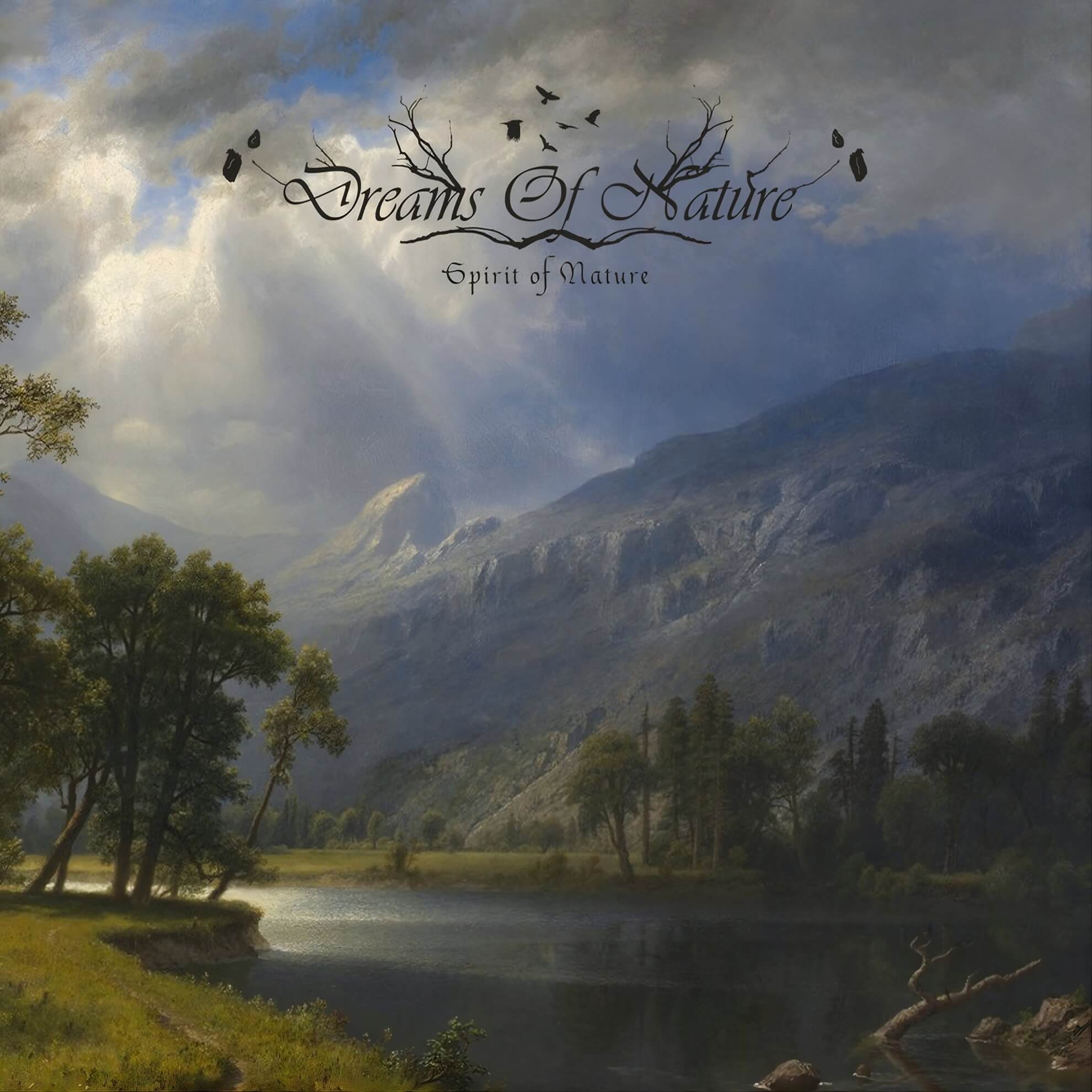
The project’s one departure from full independence came in 2018, when ‘Spirit of Nature’ — originally recorded in 2014 — received a six-panel digipack physical reissue through Flowing Downward. Founded in February of that year as a sub-label of Avantgarde Music — the Italian label that released Behemoth, Carpathian Forest, and Mayhem in the nineteen nineties — Flowing Downward was established specifically to work with younger and lesser-known atmospheric acts. ‘Spirit of Nature’ was among its earliest releases. For a solo project from Bogotá working in a tradition with no local precedent, placement within this distribution network served as formal confirmation of scene membership.2
The connections do not stop at the label relationship. Lumnos, the Brazilian project that appeared on Dreams of Nature’s first split in 2014, also released through Flowing Downward in 2018. The mastering on ‘Naturaleza Ancestral’ is credited to Nekkomix, an engineer whose name appears on multiple Flowing Downward releases from the same period. These are not coincidental details: they are the threads of a carefully cultivated position within a specific international microgenre, woven from the same city that produced none of it.
Borrowed Grammar, Southern Soil
‘Magic Transcendence’ (2016), the first solo full-length, establishes the formal signature that will carry through the following three years. Recorded between 2014 and 2015, the album draws by L’s account on “important pieces of ancient music” — a phrase whose imprecision points toward a pre-modern musical sensibility more than to any specific tradition.
Six tracks proceed through layered synthesizer drones occupying the high-frequency range that Scandinavian acts like Lustre and Elderwind made familiar, with L’s guitar work sitting in the midrange and programmed percussion far enough back in the mix to function as texture rather than rhythmic structure.
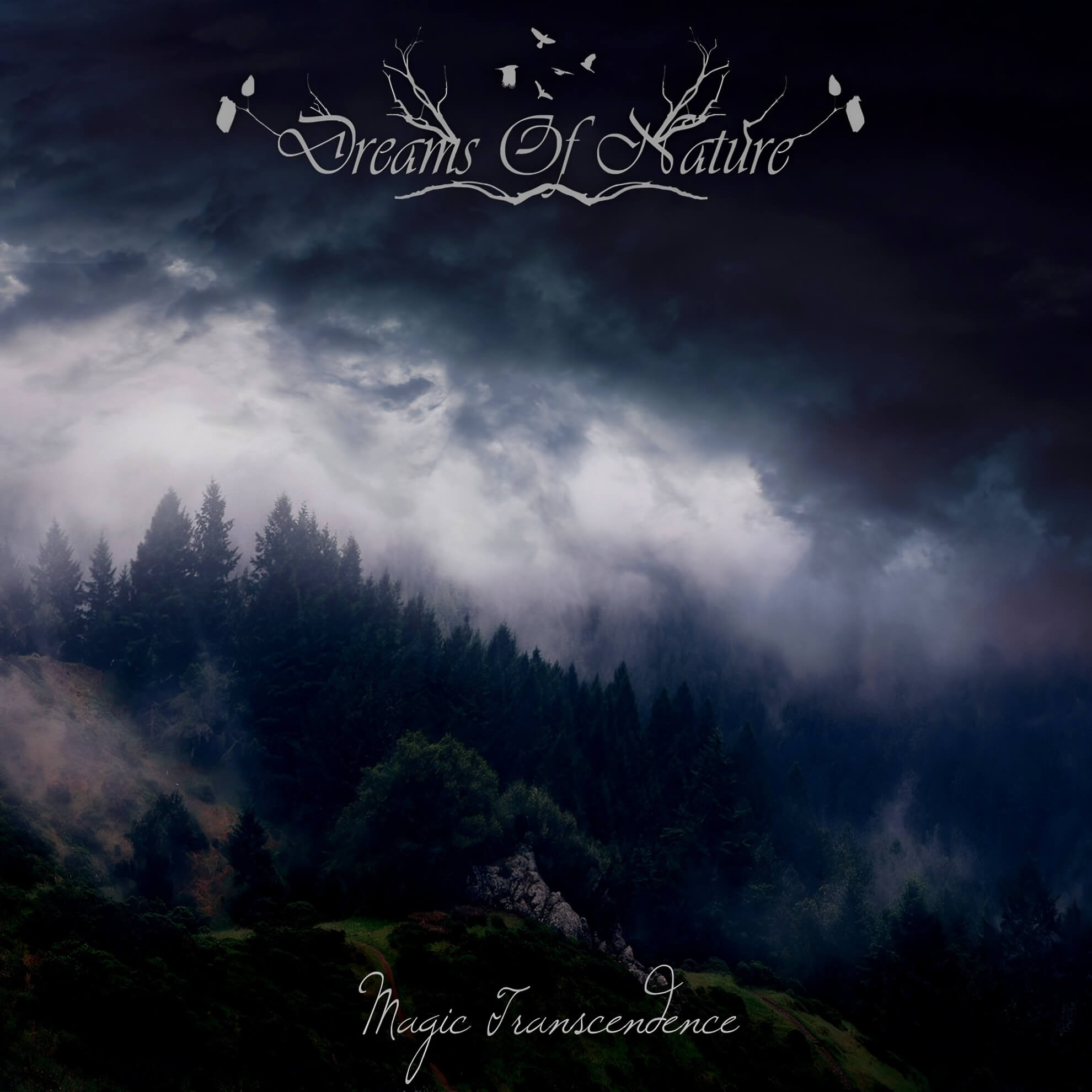
The fourth track, ‘The Encounter with the Stars and the Moon,’ extends past ten minutes: the guitar melody resolves into the synthesizer layer rather than against it, producing an extended stasis in which individual parts lose their distinctness and the overall sound functions as sustained mood rather than composed development. The overall effect belongs as much to the dark ambient tradition as to black metal proper — closer in temperament to Burzum’s ‘Filosofem’ than to anything in the Norwegian scene’s melodic output.
The split releases of 2016 and 2017 extend this approach without substantially revising it. Covers of Summoning and Lustre appear across several of these records, rendered in close fidelity to their originals — an act of sustained homage rather than reinterpretation. For a listener following the project in sequence, this fidelity marks a period of consolidation: Dreams of Nature is operating firmly within a borrowed tradition and not yet pressing against its edges.
‘Naturaleza Ancestral’ (2019) breaks that pattern in a specific and locally grounded way. The ninth track, ‘Condor de los Andes,’ carries lyrics inspired by ‘El cóndor viejo’ — a poem by Julio Flórez, a poet born in Chiquinquirá, Boyacá in 1867, and the figure Colombian critics consistently describe as “el último becqueriano.”
Flórez maintained fidelity to the lyric mode of Spanish Romantic poet Gustavo Adolfo Bécquer long after Colombian and Latin American literature had moved toward Modernism; his central themes — nature as an expression of melancholy, death as a form of solitary dignity, the homeland as an object of longing — place him in genuine proximity to the preoccupations of atmospheric black metal.
‘El cóndor viejo’ frames the condor not as a symbol of Andean grandeur but as an aged, solitary creature enduring at altitude — an image of perseverance in cold isolation that requires no translation to sit inside this music.
That L chose this specific poem, out of the entirety of Colombian literary tradition, as the lyrical foundation for a track on an atmospheric black metal record is the most considered artistic decision in the catalog. The same album still contains two Summoning covers and session vocalists drawn from Skyforest and other acts firmly embedded in the international atmospheric circuit. ‘Naturaleza Ancestral’ does not resolve the tension between these two registers. It contains them, and the record is the more significant for it.
High Altitude, Cold Hours
The geography of the Colombian plateau carries more weight here than it might elsewhere. Bogotá sits at 2,600 meters above sea level, surrounded by the Eastern Andes range, subject to a climate that in its colder hours bears low gray skies and an abrupt quality of isolation that atmospheric black metal has consistently invoked as both setting and emotional register.
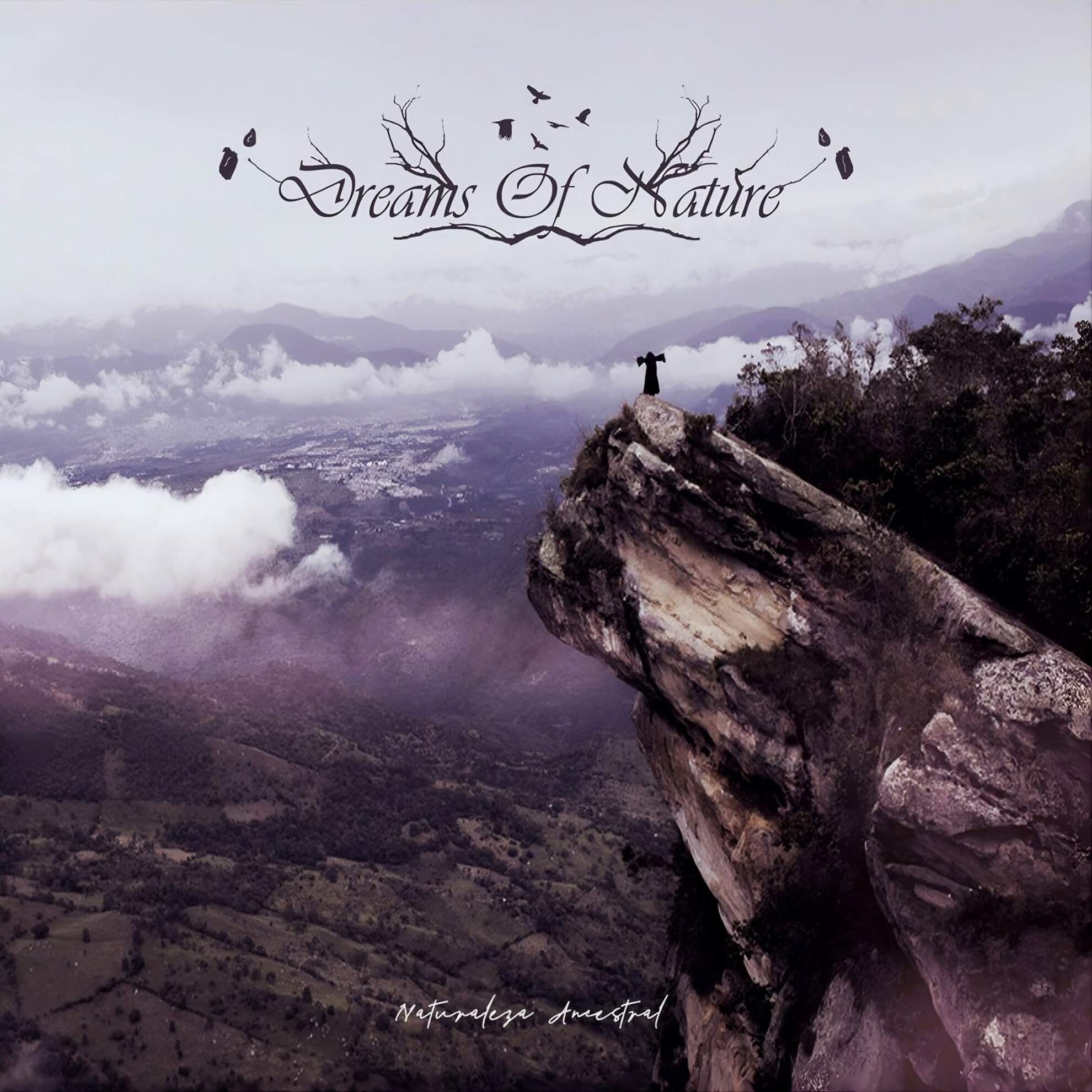
The cover photography of ‘Naturaleza Ancestral’ — credited to Ricardo Duarte and depicting the Cerro de Quinini, described as a sacred mountain of the Moon — makes the same point through visual selection: the Andes contain terrain of mythic remoteness that requires no conversion into Nordic imagery. What the project demonstrates is that the genre’s emotional vocabulary may be less climate-specific than its Scandinavian origins suggest.
Flórez himself spent his final years in Usiacúrí on the Caribbean coast, far from the highlands of his birth — a late-life exile from the territory that shaped his voice. The alignment with Dreams of Nature is not perfect, but it is suggestive: both figures operated in inherited forms, at a remove from the centers where those forms were authorized, and both produced work whose significance lies precisely in that displacement.
Dreams of Nature has not generated a local critical reception. No Colombian metal publication has addressed this catalog at any length; the audience that has accumulated around it via Bandcamp is drawn from the same international atmospheric communities the project takes as its reference — small in number, but notably committed. The supporters who return to this catalog do so with a consistency that speaks to genuine investment rather than passing discovery: a tight, self-selected community of listeners for whom the project’s specific register carries something they have not found elsewhere.
That the critical ecosystem of Bogotá — a city with one of Latin America’s most documented metal underground histories, with Rock al Parque serving since 1995 as a stage for the city’s thrash, death, and black metal tradition — has produced no parallel response places the project in an unusual position: internationally recognized within a narrow but loyal circuit, and invisible within its own city.
The Condor Remains
Whether Dreams of Nature releases further music after 2019 is not the question that makes the existing catalog worth attention. The question is what the catalog documents: that a Northern European aesthetic mode is mobile enough to be taken up by a solo project in the high-altitude tropics, and that when it arrives there, it does not remain entirely unchanged.
Flórez chose to remain a Romantic poet in an age of Modernism; L chose to build an atmospheric black metal catalog in a city with no atmospheric black metal tradition. The alignment is not mechanical, but it is legible — and it points toward a broader question about what genre membership means when the genre has no local history to inherit.
Where the Seams Appear
I do not find the tension in this catalog unsatisfying. The question of whether a Bogotá-based atmospheric black metal project should sound as if it belongs to Norway or to the Eastern Andes is, I think, a false one — but the fact that it can be asked at all is what makes the project worth engaging seriously.
The last entry in this catalog is dated 2019. Whether that silence marks the end of the project or simply a long pause is not something the available record can answer. I find myself hoping it is the latter — that a catalog which arrived at something genuinely its own in ‘Naturaleza Ancestral’ has not simply stopped there.
Does the existence of ‘El cóndor viejo’ within an otherwise Northern European atmospheric black metal catalog change what that catalog means, or does a single track remain too isolated to alter the surrounding music’s frame of reference?
References
- Kahn-Harris, Keith. ‘Extreme Metal: Music and Culture on the Edge.’ Oxford: Berg Publishers, 2007. ↩︎
- Wallach, Jeremy, Harris M. Berger, and Paul D. Greene, eds. ‘Metal Rules the Globe: Heavy Metal Music around the World.’ Durham: Duke University Press, 2011. ↩︎

Leave a Reply