


Welcome to Periscope, a column dedicated to the art of circling back. Nowadays, while the current media environment is fixated on the immediate, this space is reserved for releases that—whether missed in the initial deluge or discovered as hidden gems long after their release date—demand a retrospective analysis simply because their quality refuses to stay buried.
The mission of this column is to accord significant newcomers the platform they merit. However, in an ecosystem saturated with emerging acts, few offer genuine novelty—whether visual, thematic, or even of academic worth. Therefore, Periscope adopts a rigorous curatorial standard: we operate without a fixed editorial calendar, breaking silence only when a subject truly catches our attention. This strict filtration ensures that we champion only those who truly disrupt the status quo, rather than simply adding to the noise.
To christen this new column, we turn to a discovery unearthed just days ago while sifting through the latest video releases: Black Spikes. This quintet hails from a region that has long operated on its own distinct timeline. The Baltic states have long acted as a profound source of deep, ancestral memory within the often turbulent and expansive history of heavy metal music.
For decades, the narrative emerging from this corner of Northeastern Europe—where the grey waters of the Baltic Sea meet the dense, whispering pine forests—was inextricably linked to the land itself. It was a narrative of pagan folk traditions, of resistance against Soviet occupation, and of a melancholic reverence for nature.
Bands such as Skyforger and Obtest carved a niche that felt distinctly terrestrial, rooted in soil and blood; their sound was the sonic equivalent of amber: ancient, preserved, and beautiful in its roughness.
However, culture is never static. It mutates, evolves, and occasionally, it sheds its skin entirely to reveal something gleaming, sharp, and terrifyingly modern. To observe the trajectory of the Lithuanian music scene in 2025 is to witness a tectonic shift. A new generation of musicians, raised not only on the folklore of the Romuva movement but on the globalized sounds of American metalcore, Swedish melodic death metal, and the rhythmic complexity of djent, has begun to seek a new vocabulary.
They seek a sound that can articulate the urban experience of Vilnius—a city of baroque beauty clashing with brutalist Soviet remnants and modern glass skyscrapers.
Enter Black Spikes
To approach their 2025 release, ‘NIL,’ is to confront a band that has deliberately severed the tether to the “folk” aesthetic that has long defined their region, opting instead for a sound that is mechanical, precise, and devastatingly futuristic.
As both a critic and journalist who has spent more than thirty years cataloging the rise and fall of subgenres, observing the transition from the tape-trading underground to the digital present, the arrival of ‘NIL’ feels less like a release and more like a coronation. It is a dense, suffocatingly beautiful record that demands more than a casual listen; it requires an excavation.

The title itself—‘NIL’—invokes the Latin nihil, suggesting a focus on nothingness, a zero-point energy from which all creation and destruction flows. Yet, the music is anything but empty. It is replete with texture, laden with the heavy machinery of low-tuned guitars, and embroidered with the delicate, poisonous threads of symphonic orchestration. It marks a definitive moment, not just for the band, but for the trajectory of female-fronted metal in Northern Europe.
The Genealogy of Shadow
To comprehend the architectural triumph of ‘NIL,’ one must first survey the bedrock upon which it is built. Black Spikes is not an immaculate conception; it is the result of a long, arduous gestation within the Lithuanian underground. The band’s core members, particularly the enigmatic vocalist Agnieška Vrubliauskienė (formerly Agnieška Volček), have a lineage that traces back to the symphonic folk metal outfit Berserker.
The Berserker Legacy
Active from 2009 to 2023, Berserker was a significant entity in the Vilnius scene. Their music was characterized by melodic power metal infused with folk passages, often tackling themes of “Dark Worlds Collide” and Viking lore. In those early recordings, one could hear the genesis of Agnieška’s vocal prowess. She was described as possessing a strong and powerful female vocal capability, often framed by the fantastical—tales of wolves, viking ships, and battles for the earth.
Critiques of Berserker from that era noted a multidimensional sound that took aim at various musical paths, experimenting with melodic death metal and heavy metal while retaining a “thashy powery” approach. However, there was a sense that the folk metal genre, with its reliance on flutes and drinking songs, was becoming a constraint. The dissolution of Berserker in 2023 and the subsequent sharpening of Black Spikes represented a shedding of this “folk” skin.
The Mutation into Black Spikes
The formation of Black Spikes around 2020 (overlapping with the final years of Berserker) signaled a desire for a more modern, aggressive identity. The lineup that solidified for ‘NIL’—Simona Karinauskaitė on bass, Mažvydas Vrubliauskas and Leif Yaga on guitars, and Gediminas on drums—represents a pivot toward modern metal. This term, often nebulous, here refers to a synthesis of the down-tuned, rhythmic focus of djent (popularized by bands like Meshuggah and Gojira) with the cinematic atmosphere of symphonic metal.
The band’s visual component became equally paramount, evolving into a tableau of high-concept theatricality. Where their predecessors might have donned chainmail or linen tunics, Black Spikes adopted an aesthetic that merges industrial aristocracy with spectral decay: sharp pinstripe suits held together by safety pins, severe white face paint fractured by painted cracks, and signature electric blue lips that pierce the monochrome palette.
The inclusion of dancers—Toma and Emilija—into their live lineup was a masterstroke, introducing a physical narrative reminiscent of the avantgarde performance art of Butoh or the industrial grandiosity of Rammstein. This was no longer music for the campfire; this was music for the concrete bunker.
Musical Dissection of ‘NIL’
The album ‘NIL,’ originally released on January 1, 2025, comprises six tracks that function as a cohesive suite rather than a disparate assortment of tracks. Its staying power was further cemented by the recent release of a limited-edition CD on November 27, 2025, inviting a physical re-engagement with the work.
The tracklist reveals a bilingual approach, primarily rooted in the Lithuanian tongue, a decision that preserves the phonetic bite and rhythmic cadence unique to the language.
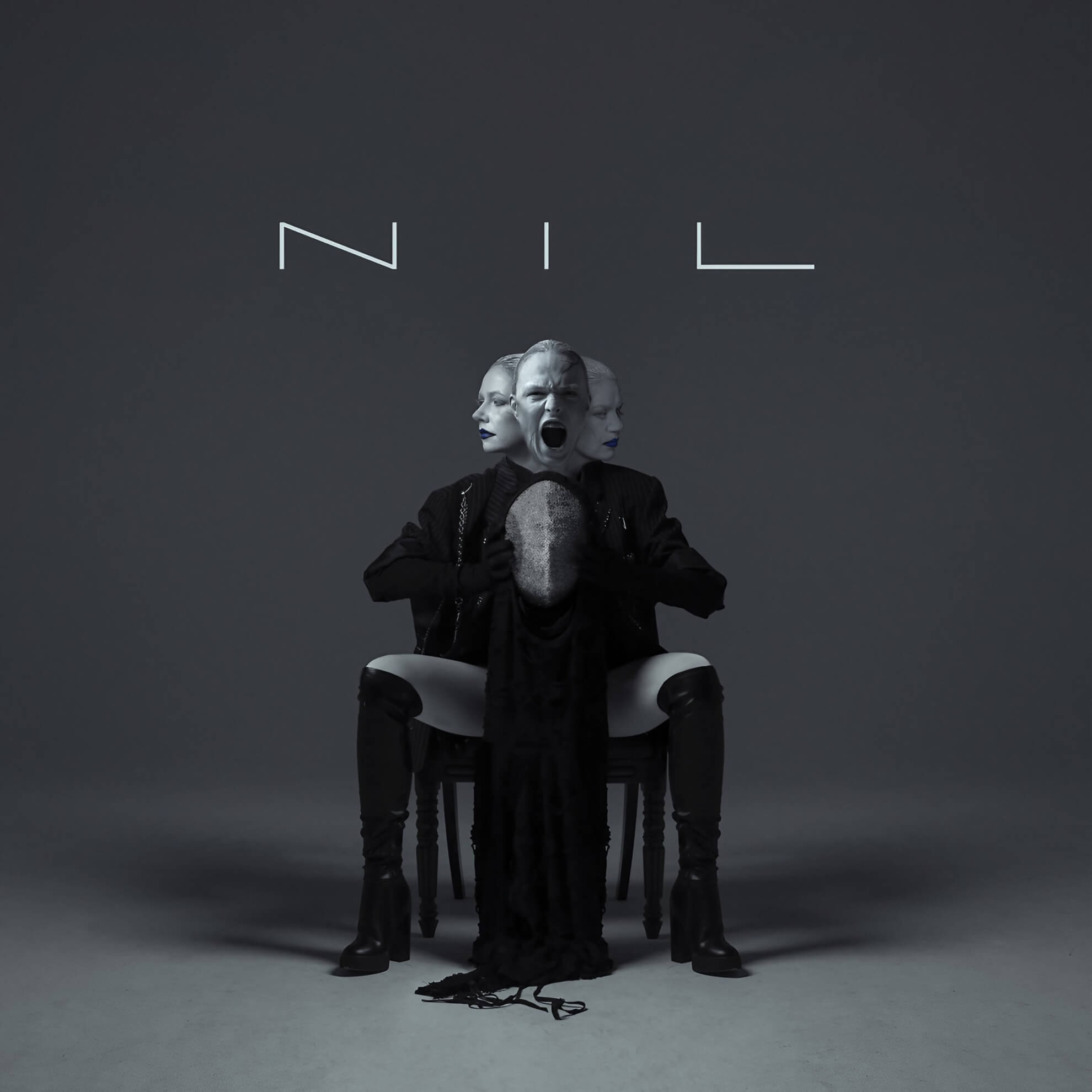
The journey begins with the grand declaration of ‘Imperatorė’ (“The Empress”), a four-minute-and-nineteen-second manifesto composed by the core quartet of Mažvydas Vrubliauskas, Leif Yaga, Agnieška Vrubliauskienė, and Simona Karinauskaitė. This opening piece sets the thematic weight for the record, immediately followed by the more compact ‘Kitas Tu’ (“The Other You”). Clocking in at just under three minutes, this second track shares the same compositional DNA as the opener but condenses the energy into a tighter, more volatile package.
The auditory terrain shifts with the third entry, ‘All is taken.’ Notable for being the sole track with an English title, this composition by Leif Yaga stretches towards the four-minute mark and serves as a bridge between the local and the universal. It is followed by the briefest cut on the record, ‘Ar tiki?’ (“Do You Believe?”), a sub-two-minute interlude co-written by Agnieška, Leif, and Denis Borodich that acts as a breath before the final act.
The latter half of the release returns to the collective strength of the band with ‘Jausmus išrašyt’ (“To Write Out Feelings”), a substantial piece credited to Black Spikes as a whole, emphasizing the collaborative nature of their new direction. This is deepened by ‘Užkalbėjimai’ (“Incantations”), a track that roots the band firmly in Baltic pagan mysticism through a heavy modern filter, ‘Apie ją’ (“About Her”), which adds another layer of narrative intrigue, and ‘Hipnozė’ (“Hypnosis”), which explores the trance-like states suggested by its title.
Finally, the experience concludes with ‘Sapnai’ (“Dreams”). At over five minutes, it is the longest and perhaps most atmospheric entry, a closing statement penned by Agnieška, Leif, Simona, and Mažvydas that allows the album’s intense pressure to finally dissipate into the ether.
The production of ‘NIL’ masterfully employs chiaroscuro—the dramatic contrast of light and dark. The guitar work from Mažvydas and Leif Yaga is the “darkness,” built on the jarring, mechanical staccato of low-tuned, high-gain djent syncopation. In sharp contrast, Agnieška’s vocals supply the “light,” although it is a cold and penetrating illumination. Her performance is highly versatile, switching seamlessly between a soaring, operatic soprano and a guttural, fry-screamed growl.
This duality is not merely aesthetic; it is structural. The band deploys silence as an instrument. In tracks like ‘All is taken,’ the pauses between the guitar chugs are as deafening as the notes themselves, creating a sense of vacuum—a literal nod to the album’s title.
The Empress’s Poison, into ‘Imperatorė’
If ‘NIL’ is the temple, ‘Imperatorė’ is the deity enshrined within. Released as a single on February 6, 2025 and accompanied by a visually stunning music video, this track is arguably the most important composition of Black Spikes’ career to date.

The song is a masterclass in historical allegory. According to the band’s own exegesis, the lyrics are inspired by the life of Cleopatra, specifically her mastery of poisons and her ruthless elimination of rivals, including her own brothers. However, Black Spikes avoids the cliché of portraying Cleopatra merely as a seductress. Instead, they frame her as a master of chemistry and fate—an “indomitable character who is able to shape her own destiny.”
The central metaphor of the song is the flower Aconitum, known commonly as wolfsbane or monkshood. In the lyrics, and visually in the video, this flower is omnipresent. The choice of Aconitum is layered with meaning. It is a flower native to Lithuanian gardens, often admired for its deep blue-purple petals, yet it is one of the most toxic plants in the European flora, capable of fatally paralyzing the nervous system.
The lyrics—translated fragments suggest: “Her eyes, like blades they are shining… By the blue charms… The poison spares no foot that treads”—paint a picture of a ruler who is as dangerous as the flora she cultivates. The “blue charms” refer to the petals of the wolfsbane. While linking the local Lithuanian botany (Aconitum is common in Baltic gardens) with the Egyptian history of Cleopatra, Agnieška bridges the gap between her homeland and the universal myths of antiquity. It is a brilliant act of cultural syncretism, suggesting that the drive for power and the use of “poison” (whether literal or metaphorical) are universal human constants.
The sonic construction of ‘Imperatorė’ is built on contradiction. It opens with an Eastern-tinged melody, evoking the Egyptian setting, before being crushed by a barrage of distorted, rhythmic guitar. The band leverages the djent technique—polyrhythms played on extended-range guitars—to create a sound that is percussive and modern.
The genius of the track lies in how it weaves the symphonic elements through this brutal framework. Unlike many symphonic metal bands that allow the orchestra to dominate, Black Spikes keeps the metal elements at the forefront. The orchestration acts as a garnish, a “soft spice boost” that accentuates the heaviness rather than diluting it. The breakdown in the middle section features blast beats characteristic of black metal, overlaid with Agnieška’s high-pitched screams, creating a sonic representation of the poison taking effect—a descent into chaos and paralysis.
The Theatre of the Macabre
Black Spikes clearly recognizes that in the digital era, music is as much a visual experience as it is an auditory one. This understanding is evident in their work: both the music video for ‘Imperatorė’ and their live shows are meticulously crafted with a keen, cinematic sensibility.
The video features the band and their dancers in a stark, stylized environment. The color grading emphasizes cold blues and blacks, matching the Aconitum theme. The presence of the dancers, Toma and Emilija, is crucial. They are not mere background decoration; their choreography interprets the music physically. Their movements are often jerky, spasmodic, mimicking the effects of a neurotoxin, or fluid and serpentine, evoking the Nile and the treacherous grace of the Empress.
This visual strategy extends to their live shows. Reports from the Kilkim Žaibu XXV festival in June 2025 describe the performance as “fantastic” and “hauntingly beautiful.” The band’s stage attire—black, spiked, blending leather armor with regal, almost religious vestments—reinforces the “Warrior-Queen” persona Agnieška inhabits.
In a festival lineup that included legends like Mayhem, Satyricon, and Heilung, Black Spikes managed to stand out not by being the most “true” black metal band, but by being the most theatrical and polished.
The video for ‘Hipnozė’ (“Hypnosis”), another single associated with this era, further explores these themes, drawing on Greek mythology and the children of Nyx (“Night”), the gods of sleep and death. The visual consistency across these releases suggests a band that is building a cohesive universe—a lore that fans can inhabit.
The Mechanics Behind the Scenes
Complementing the polished finality of the music videos is a series of “Behind the Scenes” dispatches that function less as promotional fluff and more as technical blueprints. These visual footnotes—covering the production of ‘Imperatorė’ and ‘Užkalbėjimai’—strip away the post-production gloss to reveal the band’s do-it-yourself ethos.
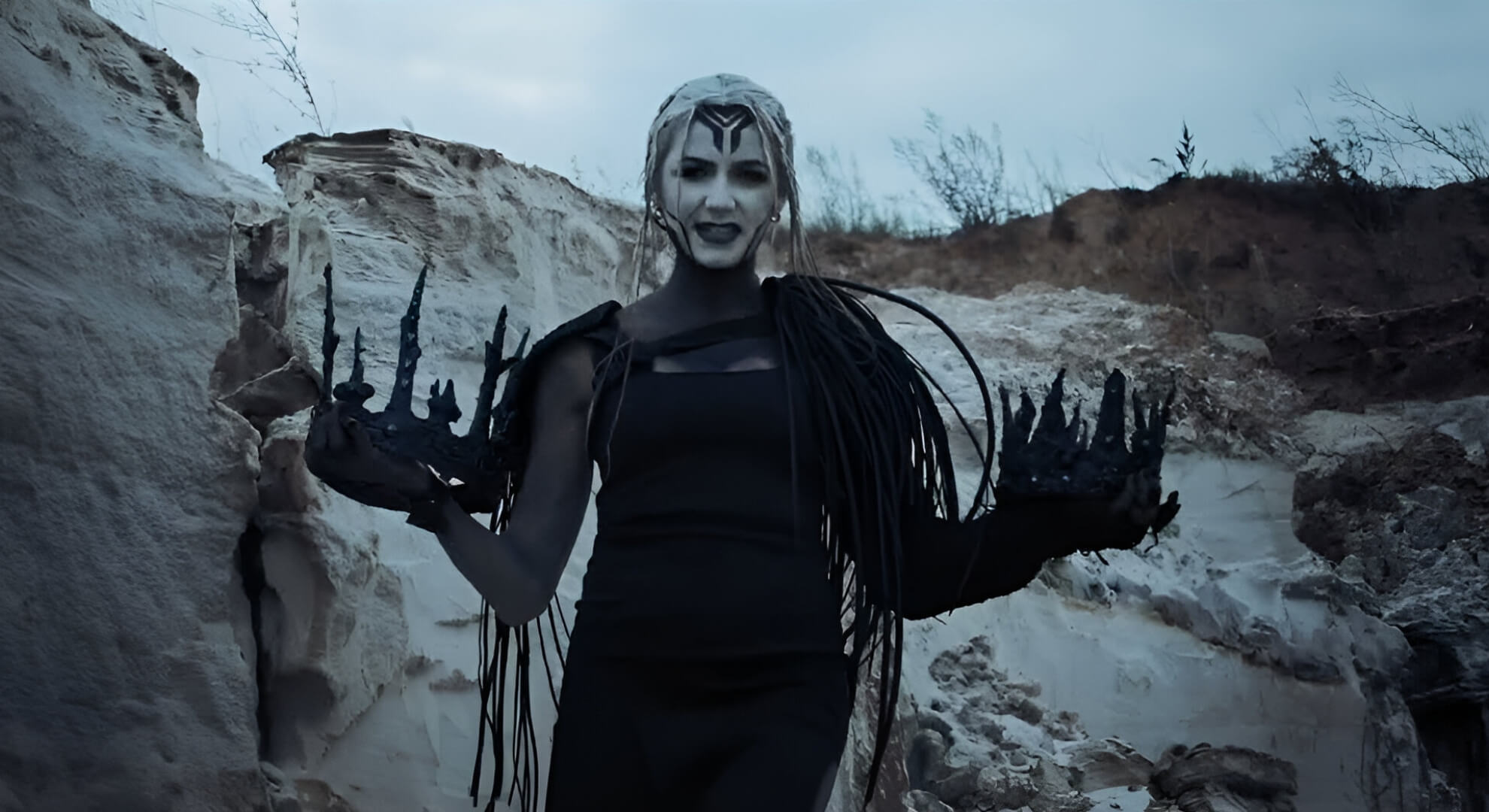
Far from breaking the immersion, these glimpses into the mechanical reality of the shoot—the cold warehouses, the makeup application, the lighting rigs—reinforce the industrial element of their identity. They present the band not just as performers, but as laborers constructing their own monument, engaging with the messy, physical process of art-making that the digital age often obscures.
The Mutation Phase
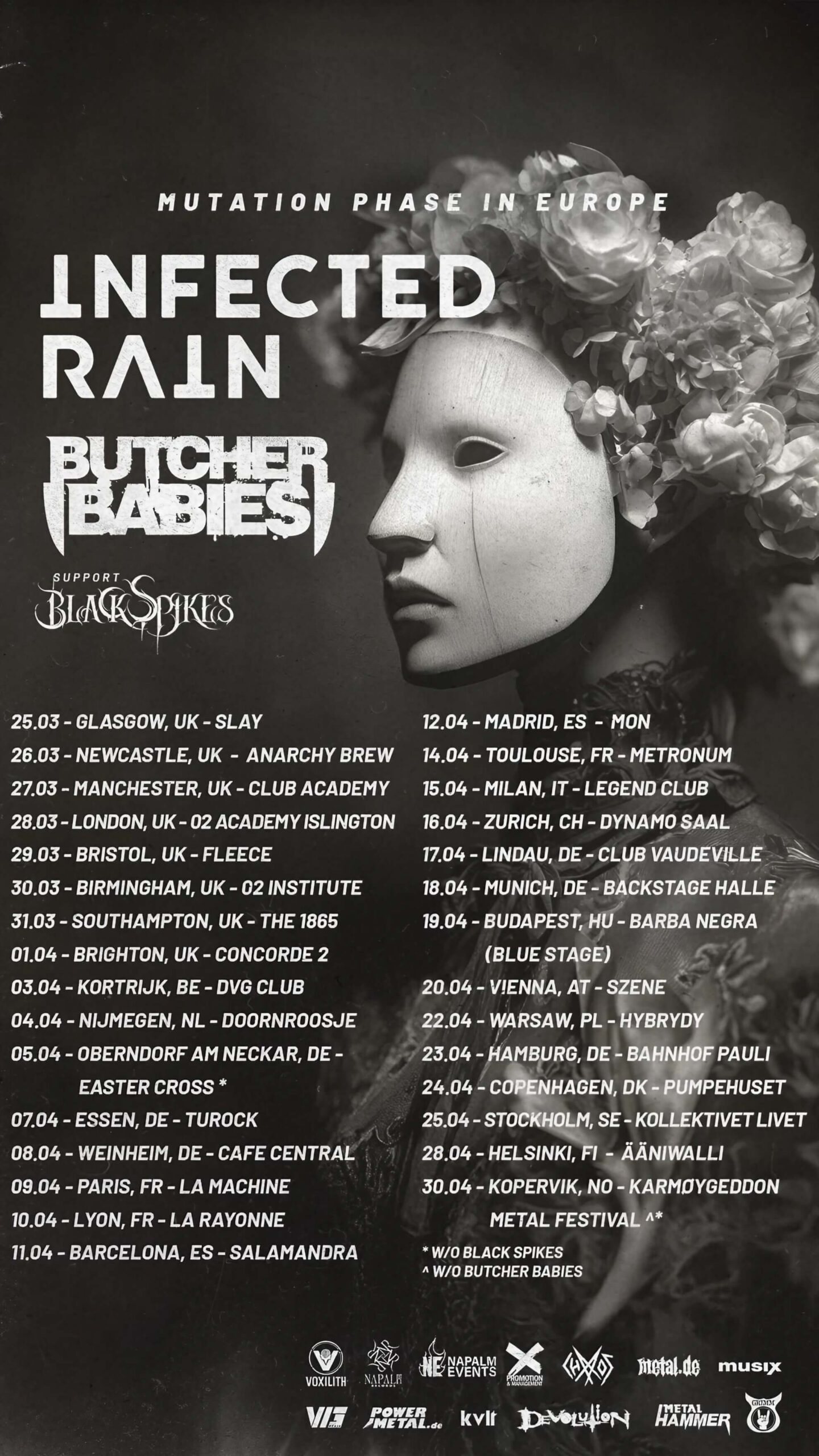
The release of ‘NIL’ is not the finish line; it is the prelude to a larger conquest. It has been confirmed that Black Spikes will support the Mutation Phase Tour 2026, co-headlined by the Moldovan behemoth Infected Rain and the American heavyweights Butcher Babies.
This tour is significant for several reasons. Firstly, it places Black Spikes in the upper echelon of female-fronted metal acts. Infected Rain, led by Lena Scissorhands, has paved the way for bands from the post-Soviet sphere to achieve global recognition. For Black Spikes to be chosen as the support act indicates that industry gatekeepers view them as the next logical step in this lineage.
Secondly, the tour’s title, Mutation Phase, aligns perfectly with Black Spikes’ own artistic trajectory. Just as Infected Rain is describing their current period as a “transitional chapter” or “mid-mutation,” Black Spikes is in a state of evolution, mutating from their folk roots into a modern metal organism.
The tour will traverse major European markets, exposing the band to audiences in the United Kingdom and beyond. Confirmed dates cut a swath through the British Isles in late March 2026, beginning with a performance at Slay in Glasgow on the 25th, followed immediately by a night at Newcastle’s Anarchy Brew Co. on the 26th. The procession then storms the capital for a show at London’s O2 Academy Islington on March 28, before moving to The Fleece in Bristol on the 29th and concluding this leg at Birmingham’s O2 Institute2 on March 30.
The synergy between these three bands—Infected Rain, Butcher Babies, and Black Spikes—is undeniable. All three feature powerful female vocalists who wield both clean singing and screaming. All three blend melody with aggression. Yet, Black Spikes brings a unique flavor to the bill: a specific Baltic darkness, a symphonic grandeur that the more groove-oriented Butcher Babies lack, and a theatricality that rivals Infected Rain’s intense live shows.
The Cult of the Blue Flower
As we synthesize the elements of ‘NIL’—the historical depth of ‘Imperatorė,’ the introspective punk-energy of ‘Kitas Tu,’ the atmospheric closure of ‘Sapnai’—a clear picture emerges of Black Spikes’ contribution to the culture. They are curators of a new kind of heaviness.
It is not the heaviness of sheer volume, though they are loud. It is the heaviness of history. While invoking powerful figures like Cleopatra and myths like Nyx, they ground their modern, digital-sounding riffs in the ancient dirt of human experience. They remind us that the themes of power, betrayal, and poison are eternal. The Aconitum that blooms in a Lithuanian garden is the same poison that ended dynasties in Egypt. The anxiety of the modern void (‘NIL’) is the same existential dread that has plagued humanity since the beginning.
In Agnieška Vrubliauskienė, the genre has found a new icon—a vocalist capable of channeling these archetypes with terrifying conviction. Her journey from the folk-metal storytelling of Berserker to the abstract, emotional bloodletting of Black Spikes mirrors the maturation of the metal genre itself. It has grown up. It has stopped merely retelling the old myths and started creating new ones.
The Empress Ascendant
In the final analysis, ‘NIL’ stands as one of the most significant releases from the Baltic region in 2025. It is a work of immense discipline and wild ambition. Black Spikes has successfully navigated the treacherous waters of the “sophomore slump” (if we consider this their major breakout era) by doubling down on their unique identity. They have not compromised their sound for commercial appeal; rather, they have refined their aggression until it shines like a polished blade.
For the listener, ‘NIL’ offers a complex, rewarding experience. It is music for the dark hours, for the moments of introspection, and for the primal release of the mosh pit. As they prepare to take this music across Europe in 2026, one thing is certain: the Empress has arrived, and her reign is just beginning.
Considering the band’s use of historical and botanical allegory in ‘Imperatorė,’ how do you feel the integration of “intellectual” or “academic” themes impacts the visceral experience of modern metal? Does knowing the history of the Wolfsbane or Cleopatra enhance the heaviness of the riff, or does the music stand entirely on its own?
Leave a Reply