
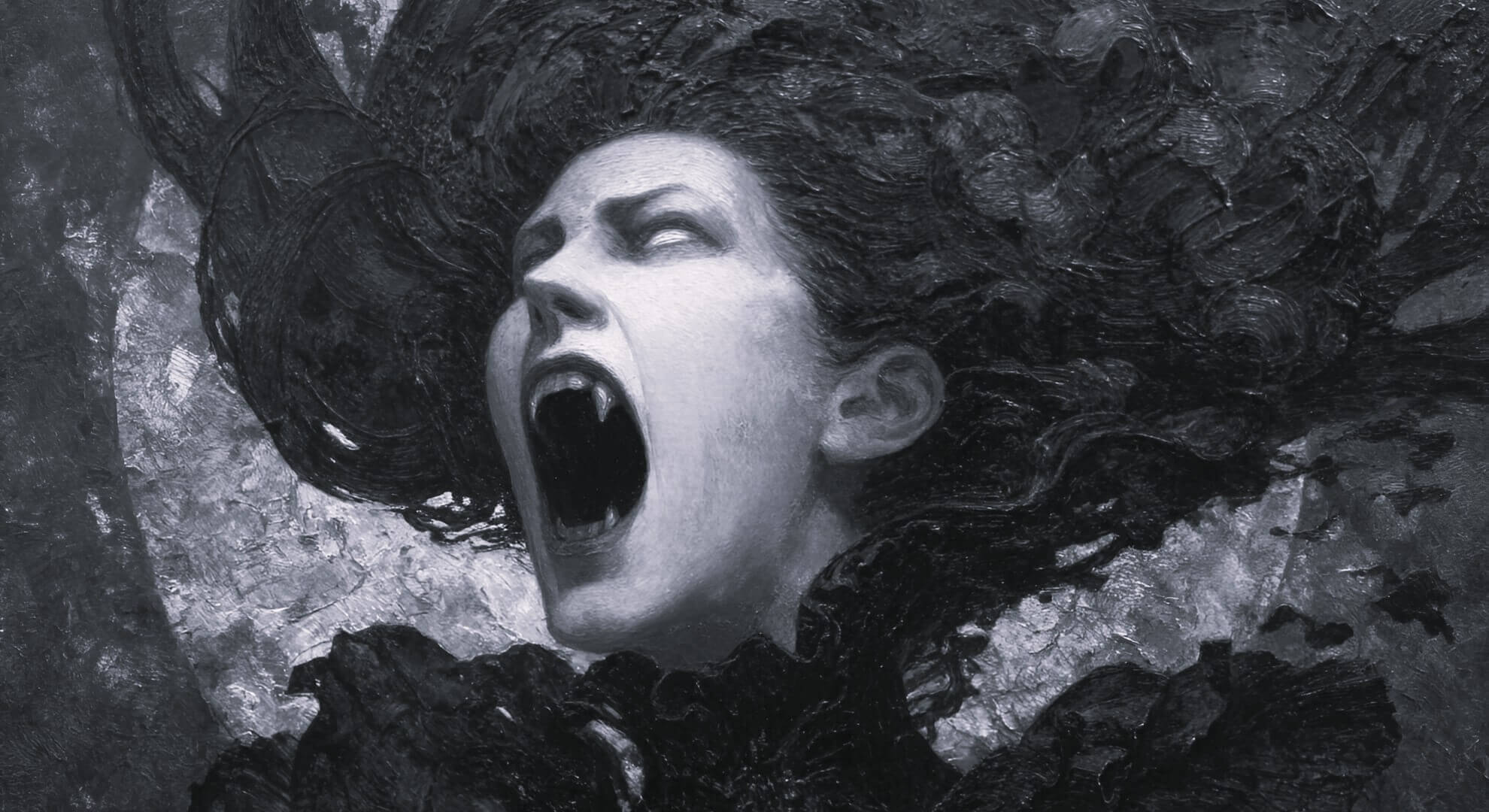


The vampire’s kiss is perhaps the most potent and enduring image in the modern grammar of horror. It is an act of perverse intimacy, a violation that is both lethal and erotic, driven by a longing for life, blood, and a dark communion promising cursed immortality. This figure—the caped aristocrat, the seductive predator—has haunted the Western imagination for over two centuries. Yet this familiar hunger is but a shadow, a culturally refined echo of a far older and more terrifying craving: a hunger born not of desire, but of utter, soul-scorching emptiness.
Before Dracula, there was Lamia. In classical Greek mythology, she emerges as a figure of profound tragedy: a beautiful Libyan queen beloved by Zeus who becomes the victim of his wife Hera’s divine jealousy. Hera, in a fit of rage, murders every child Lamia bears. Driven mad by a grief so absolute it defies comprehension, Lamia is transformed into a child-devouring demon, a bogeyman used by Athenian mothers to frighten naughty children into obedience.
The modern literary vampire is the direct, albeit sanitized, descendant of the Lamia. Its celebrated predatory lust is a sublimation of her primal maternal grief. The path from the classical world to the Victorian drawing-room traces a profound cultural transformation where the visceral terror of a barren womb was repackaged into the more palatable, if still subversive, thrill of a sterile kiss. To understand the vampire, one must first understand the chthonic mother from whom he sprang.
The Gaping Wound of the Ancient World
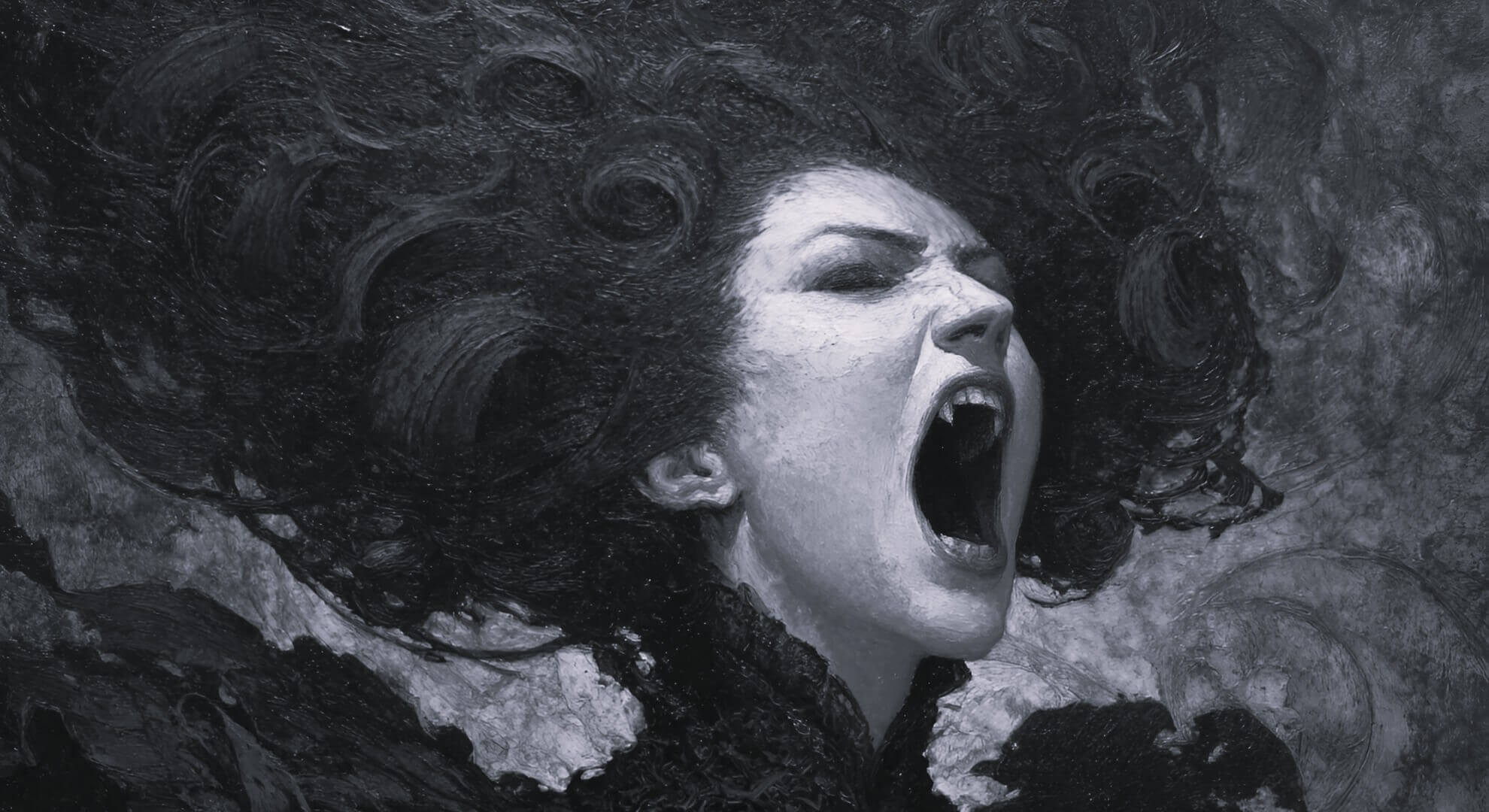
In the foundational myths of Western culture, the first monsters often serve as boundary markers, embodying the fears that police the edges of civilization. The Lamia’s monstrosity is not born of chaos or primordial evil, but is the direct result of trauma inflicted by the divine patriarchal order.
As the historian Diodorus Siculus recounted in the first century BCE, the queen, “weighed down in her misfortune and envying the happiness of all other women in their children, she ordered that the new-born babies be snatched from their mothers’ arms and straightway slain.”1
This act of retaliatory slaughter remade her. Diodorus suggests a psychological transformation, noting that “the savagery of her heart” eventually contorted her face into a “bestial aspect.” Her subsequent rampage is a horrifying but psychoanalytically coherent response to her loss.
She hunts and devours the children of others in a grotesque inversion of motherhood. Where her body once nurtured life, it now becomes a vessel for consumption, a void she desperately tries to fill. This is not the hunger of a predator seeking sustenance, but the pathological craving of a grieving mother.
This torment is given a potent mythological symbol. Hera’s curse afflicted Lamia with sleeplessness, forcing her to perpetually envision her loss. In a gesture of pity, Zeus granted her the ability to remove her own eyes—a metaphor for dissociation, a coping mechanism to “unsee” her reality and endure a wound that could never heal.2
Her story positions her as a foundational figure of what feminist scholar Barbara Creed has termed the “monstrous-feminine,” an archetype where the female reproductive body becomes a source of horror.3
Lamia is the archaic mother in her most terrifying form: a life-giver turned life-taker, a threat to the patriarchal social order that valued women primarily for their ability to produce heirs. Her legend polices the boundaries of acceptable womanhood, illustrating the horrific consequences of maternal failure.
The Serpent’s Gaze and the Philosopher’s Rebuke
For centuries, Lamia remained a threat to the nursery. Her evolution into a creature of erotic horror began with Flavius Philostratus’s third-century CE work, ‘The Life of Apollonius of Tyana.’ In this tale, Lamia appears as a beautiful, wealthy woman who seduces a young philosopher, Menippus.
She confesses her true purpose is to feast upon his body, “because their blood was fresh and pure.”4 Here, the archetype’s drive shifts decisively. The target is no longer the child, but the nubile young man; her hunger is now a thirst for blood, a direct antecedent of the vampire’s kiss.
Just as significant is the method of her defeat. The sage Apollonius, Menippus’s mentor, vanquishes her not with a weapon, but with logic. Through rational inquiry, he exposes her deception, and she vanishes. This confrontation establishes the narrative template for nearly all subsequent vampire fiction: the intellectual vampire hunter (Apollonius, a precursor to Van Helsing) who uses knowledge to defeat the seductive, supernatural monster.
A Rainbow-Sided Misery
Lamia’s journey toward psychological complexity took a crucial step in 1819 with John Keats’s Romantic poem, ‘Lamia.’ Inspired by Philostratus’s tale, Keats inverted the moral framework, transforming the demonic seductress into a figure of profound sympathy. The child-eating is gone. His Lamia is a tragic serpent of “rainbow-sided” beauty who endures an agonizing metamorphosis into human form, all for the love of the mortal Lycius.
In Keats’s hands, the monster becomes the protagonist, and her desire for love is presented as pure. The true villain is Apollonius, whose “cold philosophy” represents a destructive rationality that cannot abide mystery. When the sage exposes Lamia at her wedding feast, it is an act of intellectual violence that destroys both lovers.
This reinterpretation was a watershed moment. Keats imbued the Lamia with a soul and a tragic dimension, making it possible for audiences to identify with the monster. This suffering, doomed, and alluring supernatural being is the direct literary precursor to the aristocratic, melancholic vampire that would soon dominate Gothic fiction.
The Birth of the Byronic Fiend
In the same year Keats gave Lamia a soul, John Polidori gave her a definitive successor. His 1819 short story, ‘The Vampyre,’ introduced Lord Ruthven, the first vampire of modern literature. A thinly veiled caricature of Lord Byron, Ruthven codified the vampire as a suave, predatory, and utterly amoral aristocrat. His predatory drive, however, is a world away from the Lamia’s.
Ruthven preys on virtuous, high-society women, seeking not their blood for sustenance but their moral and social ruin for his own cruel amusement. The raw, grief-stricken hunger of the ancient mother is gone, sublimated into a cold, calculating sadism.5
With Lord Ruthven, the monstrous attack becomes the sterile kiss—an act that mimics intimacy but is fundamentally non-procreative and destructive. This shift marks a profound change in the monster’s cultural function.
The Lamia embodied the mythological terror of maternal loss; Lord Ruthven represents a social horror: the anxiety of a rising middle class about the perceived decadence and parasitic nature of the old aristocracy. The monster had moved from a cave to a London drawing-room, its motivations evolving to reflect the class conflicts of the Regency era.
The Beast from the East: Folklore and the Ghastly Revenant
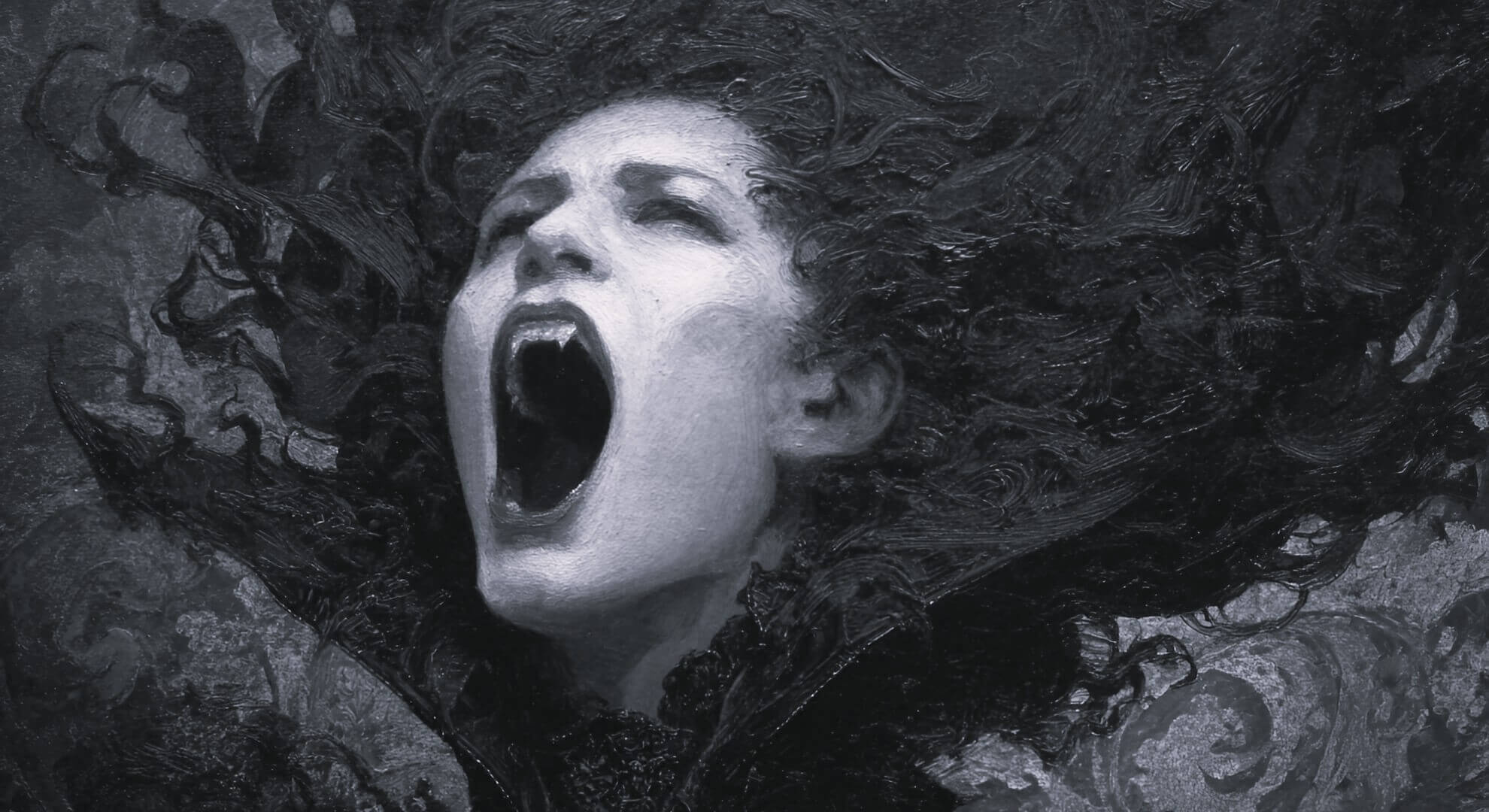
While the literary vampire was taking shape in the sophisticated salons of Western Europe, another, far more brutish version of the creature haunted the collective consciousness. Throughout the eighteenth century, a wave of “vampire hysteria” swept through Eastern Europe, bringing tales of the strigoi and vrykolakas to the West.
These were not charming aristocrats but grotesque revenants—shrouded, bloated peasant corpses that clawed their way out of the grave to plague their living relatives, spread disease, and drink blood.
This folkloric figure represented a different kind of horror: raw, physical, and visceral. It was the terror of the unrotted corpse, of lingering contagion, and of a community being literally consumed from within by its own dead.6
When authors like Polidori and later Bram Stoker created their aristocratic fiends, they were performing a dual act of sanitization. They not only replaced Lamia’s raw maternal grief with erotic desire, but they also laundered the crude, pestilential horror of the folkloric vampire. They took the bloated peasant from his shallow grave, dressed him in a cape, and placed him in a castle, transforming a symbol of communal decay into one of aristocratic menace and individual transgression.
Carmilla: The Return of the Monstrous-Feminine
Twenty-five years before Dracula set foot in England, the vampire archetype took a crucial, female-centric turn with Sheridan Le Fanu’s 1872 novella, ‘Carmilla.’ This text serves as the most vital bridge between the Byronic fiend and Stoker’s Count, and in doing so, it circles back to the monstrous-feminine roots of the Lamia myth.
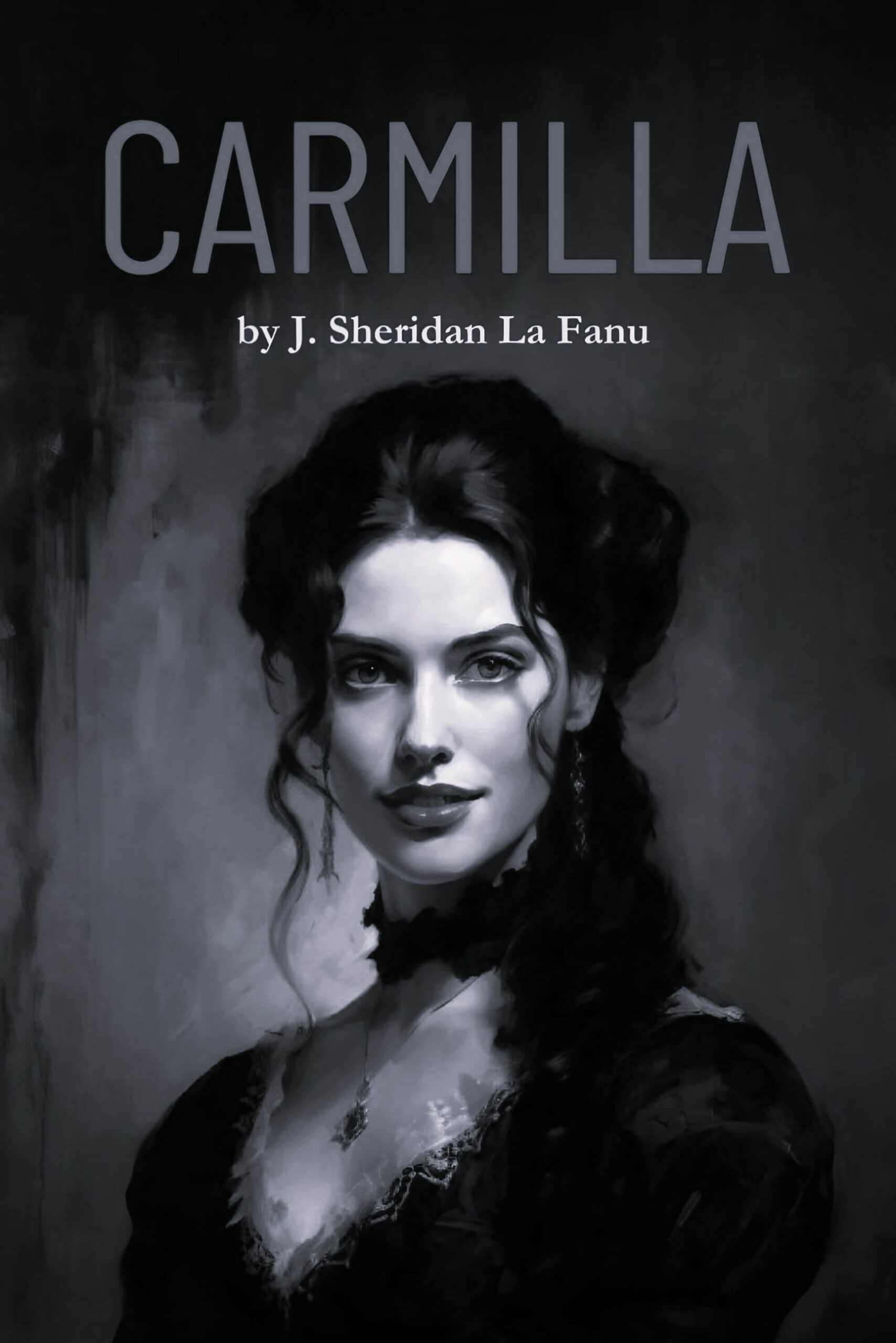
The vampire Carmilla is not a cold sadist like Lord Ruthven. She is a languid, beautiful, and deeply sympathetic creature who develops a passionate, almost romantic obsession with the story’s narrator, Laura. Her predation is intimate and seductive, blurring the lines between desire and death in a way that is deeply unsettling.
Le Fanu uses Carmilla to explore distinctly Victorian anxieties about female sexuality, intimacy, and lesbian desire. Her bite is not merely an attack but an erotic, corrupting caress that threatens to draw Laura away from the world of patriarchal order and into a shadowy realm of female power and forbidden love.7
Carmilla is essential because it re-feminizes the monster. It takes the seductive power of the Lamia, filters it through the Gothic lens, and creates a predator who is both alluring and terrifying. Unlike Lamia’s maternal rage, Carmilla’s hunger is explicitly queer and sexual, but like her ancient predecessor, she is a monstrous female figure who threatens the stability of the patriarchal family unit from within.
She is the direct link in the chain, demonstrating how the raw power of the monstrous-feminine was being shaped and reinterpreted to voice new, specifically modern anxieties about gender and desire.
The Vampire as Foreign Invader
Beyond its psychological and social dimensions, the vampire archetype that solidified with Dracula is saturated with the political anxieties of its era: namely, the fears of a declining British Empire. Stoker’s novel can be read as a classic work of invasion literature, a postcolonial nightmare in which the colonizer becomes the colonized.8
Dracula’s journey from the “primitive” East to the heart of modern London is a form of reverse colonialism. He is the racial and cultural “Other” who invades the metropole, threatening to corrupt its bloodlines and drain the life from the empire itself.
This fear is rooted in the pseudo-scientific racial theories of the late nineteenth century, which viewed Eastern Europeans as less evolved and degenerate. Dracula embodies this threat. He is ancient, cunning, and represents a pre-modern, feudal power that the forces of Western progress cannot easily defeat.
The “Crew of Light”—a team of rational, professional, middle-class men—must band together to repel this foreign invader, using modern technologies like typewriters and blood transfusions alongside ancient Christian symbols. The novel thus becomes a xenophobic fantasy about protecting the nation’s racial and cultural purity from a contaminating foreign presence, transforming the vampire into a potent symbol of imperial anxiety.
The Vampire as Contagion
The nineteenth-century imagination was haunted not only by foreign invaders but by invisible ones as well. The rise of the literary vampire coincided with major public health crises and a growing, though incomplete, understanding of disease. The vampire mythos became a vessel for these medical fears, particularly the terror of tuberculosis, or “consumption.”
The parallels between the victim of consumption and the victim of a vampire are striking. Both waste away, becoming pale and gaunt. Both suffer from a debilitating lethargy, punctuated by moments of feverish energy. And most damningly, both are afflicted with a bloody cough—a sign of the life force literally leaving the body.9
Before germ theory was widely accepted, diseases like tuberculosis were often seen as a kind of hereditary curse or a moral failing that spread mysteriously through families, much like the vampire’s curse. The vampire’s bite, therefore, became a powerful metaphor for the invisible and intimate nature of contagion, transforming a supernatural monster into a terrifyingly plausible allegory for the unseen diseases that could drain the life from a loved one right before your eyes.
The Vampire as the Uncanny
A final layer of the vampire’s psychological power can be understood through Sigmund Freud’s concept of the “uncanny” (das Unheimliche). The uncanny is the specific feeling of horror that arises not from something overtly alien, but from something familiar that has been twisted into a strange and threatening form. It is the terror of the “un-homely,” the moment when a safe, domestic space becomes a source of fear.10
The vampire is the quintessential uncanny figure. It is not a rampaging beast or an otherworldly demon; it is a creature that mimics humanity with horrifying precision. It is a corpse that refuses to stay dead, a loved one who returns from the grave not as themselves, but as a monstrous parody. This is the source of its most intimate horror.
The terror of Lucy Westenra after her transformation is not simply that she is a monster preying on children, but that she is still recognizably Lucy, the beautiful and beloved friend, now animated by a perverse and unholy life. The vampire collapses the boundary between the living and the dead, the beloved and the predator, turning the familiar into a source of profound dread and confirming the Freudian idea that the most terrifying monsters are often those that come from within the home.
The Predator at the Threshold
The archetype reached its apotheosis in 1897 with Bram Stoker’s ‘Dracula.’ The Count is a masterful synthesis of the entire lineage. He possesses the aristocratic menace of Lord Ruthven, the seductive, queer-coded undertones of Carmilla, and the xenophobic charge of the foreign invader. Yet he also wields an ancient, chthonic power that echoes the Lamia’s primal nature and the raw physicality of the folkloric revenant.
The most chilling link back to the archetype’s origins appears in the fate of Dracula’s victims. After Lucy Westenra is turned, she preys upon small children. The newspapers dub her the “Bloofer Lady,” and in this moment, the vampire’s hunger comes full circle, returning to Lamia’s original crime.11
Stoker reveals that beneath the veneer of sexual transgression, postcolonial anxiety, and medical horror lies the more ancient terror of perverted maternity. Dracula is the perfect monster for the fin de siècle, a composite nightmare embodying all of Victorian society’s most pressing fears.
This evolution from Lamia to Dracula signifies a crucial cultural sanitization. The raw, visceral horror of the Lamia myth—a mother driven mad by grief—was likely too psychologically disturbing for a society obsessed with domestic purity.
The terror of the empty cradle was sublimated into the more palatable, though still subversive, terror of the defiled marriage bed. The vampire’s bite became a culturally acceptable metaphor for the deeper, suppressed horror of maternal loss that the Lamia first embodied.
The Sanctioned Monster and the Modern Vampire
The journey from a cave in Libya to a castle in Transylvania is a history of our fears. It charts the process by which a raw, elemental horror—the grief of a mother robbed of her children—was systematically tamed, repurposed, and polished into a figure of dark, romantic allure. Lamia, born of a pain so profound it shattered her humanity, was the original chthonic mother of the vampire mythos.
Through Keats, her rage was softened into tragedy. Through Polidori, her threat was domesticated into a danger to bourgeois propriety. And in the hands of Stoker, her story was fully co-opted, her motivations erased and replaced with a complex web of Victorian anxieties about sex, gender, disease, and nation. The vampire became a creature whose power was built upon the suppressed grief of its mythological progenitor.
This trajectory did not end with Dracula. The twentieth century continued the process of humanizing the monster. Anne Rice’s ‘Vampire Chronicles’ completed the transformation Keats began, turning the vampire from the villain into a tormented, existential anti-hero whose story was one of loneliness and sorrow, not predation.
By the twentieth-first century, the sanitization was so complete that figures like the vampires of ‘True Blood’ could emerge: creatures stripped of nearly all horror, their predatory nature fully sublimated into a metaphor for romantic longing and teenage abstinence.
Yet the repressed has a way of returning. The vampire’s enduring power may lie not only in the taboos it so thrillingly breaks, but also in the deeper horror it conceals. A faint, chilling echo of Lamia’s cry can still be heard beneath the vampire’s silken whisper.
The terrifying image of Stoker’s vampirized Lucy, the “bloofer lady” luring children to their doom, is the myth’s screen memory—a flash of the original trauma that can never be fully erased.
It is a reminder that before the monster was a seductive stranger, the monster was a mother. The erotic thrill of the vampire’s sterile kiss is a sophisticated cultural defense, allowing us to confront a terrifying predator while keeping us safe from the far more unbearable horror at the archetype’s heart: the absolute, world-destroying grief of a mother’s empty arms.
As we continue to strip the vampire of its grotesque origins to fit a narrative of romantic alienation, are we effectively silencing the archetype’s foundational trauma, or does this persistent refusal to engage with the Lamia’s grief expose a lingering cultural inability to confront the sheer, destructive power of maternal loss?
References:
- Diodorus Siculus, ‘Library of History,’ trans. C. H. Oldfather (Cambridge, MA: Harvard University Press, 1935), 20.41. ↩︎
- Daniel Ogden, ‘Drakon: Dragon Myth and Serpent Cult in the Greek and Roman Worlds’ (Oxford: Oxford University Press, 2013), 89–90. ↩︎
- Barbara Creed, ‘The Monstrous-Feminine: Film, Feminism, Psychoanalysis’ (London: Routledge, 1993), 2. ↩︎
- Philostratus, ‘The Life of Apollonius of Tyana,’ trans. F. C. Conybeare (London: William Heinemann, 1912), 4.25. ↩︎
- Christopher Frayling, ‘Vampyres: Lord Byron to Count Dracula’ (London: Faber and Faber, 1991), 16. ↩︎
- Paul Barber, ‘Vampires, Burial, and Death: Folklore and Reality’ (New Haven: Yale University Press, 1988), 32. ↩︎
- Elizabeth Signorotti, ‘Repossessing the Body: Transgressive Desire in ‘Carmilla’ and ‘Dracula’,’ Criticism 38, no. 4 (1996): 609. ↩︎
- Stephen D. Arata, ‘The Occidental Tourist: ‘Dracula’ and the Anxiety of Reverse Colonization,’ Victorian Studies 33, no. 4 (1990): 623. ↩︎
- Mary Hallab, ‘Vampire God: The Allure of the Undead in Western Culture’ (Albany: State University of New York Press, 2009), 87. ↩︎
- Sigmund Freud, ‘The Uncanny,’ in The Standard Edition of the Complete Psychological Works of Sigmund Freud, trans. James Strachey, vol. 17 (London: Hogarth Press, 1955), 241. ↩︎
- Bram Stoker, ‘Dracula’ (London: Archibald Constable and Company, 1897), 177. ↩︎

Leave a Reply