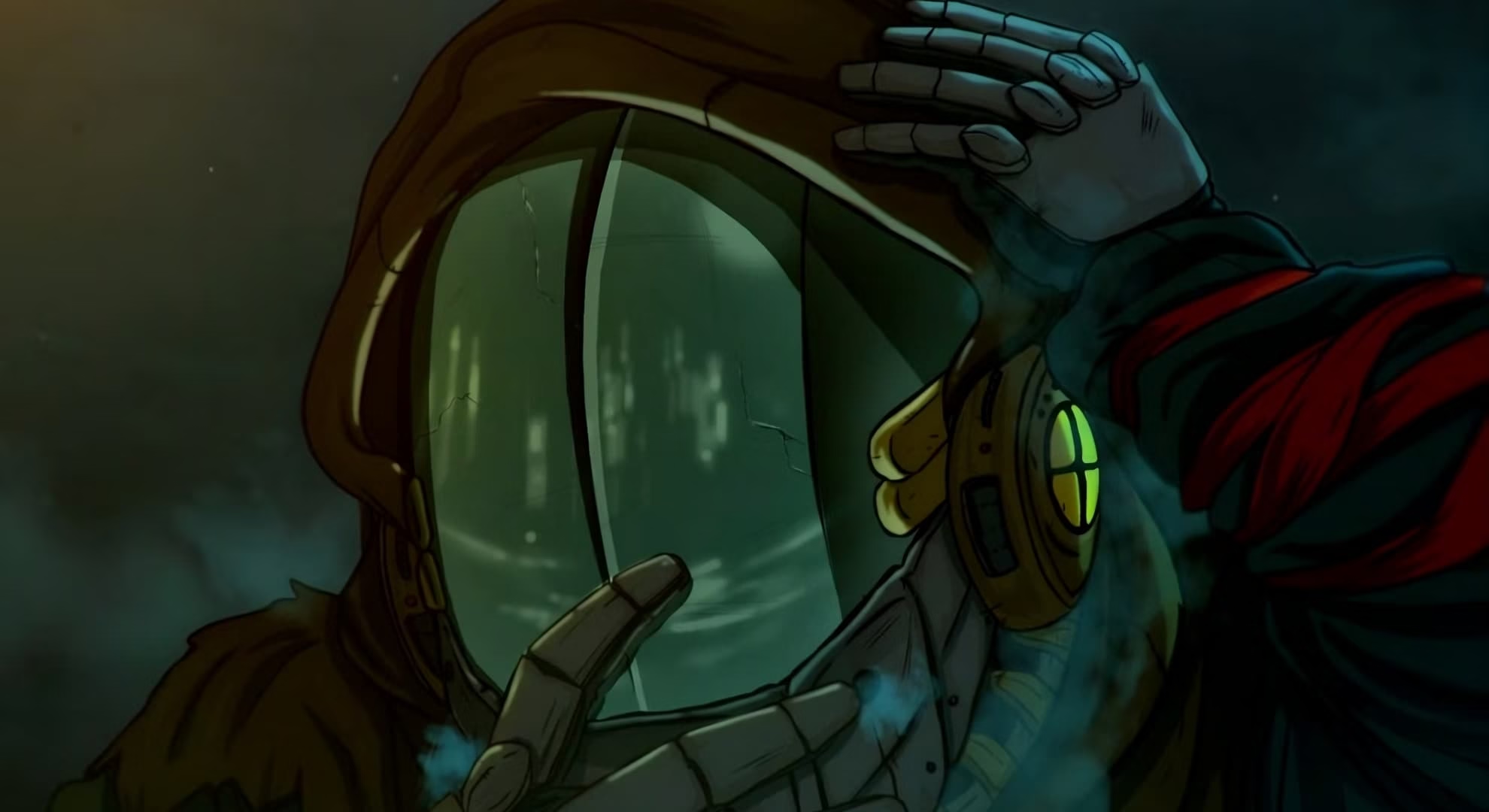


Cosmic horror has always resisted interactive form, because its central premise — a universe indifferent to human survival, governed by forces beyond comprehension — works against the sense of agency that games are built to reward. The roguelite, with its cycles of death, incremental knowledge, and permanent loss, has turned out to be one of the few structures able to hold that contradiction without softening it.
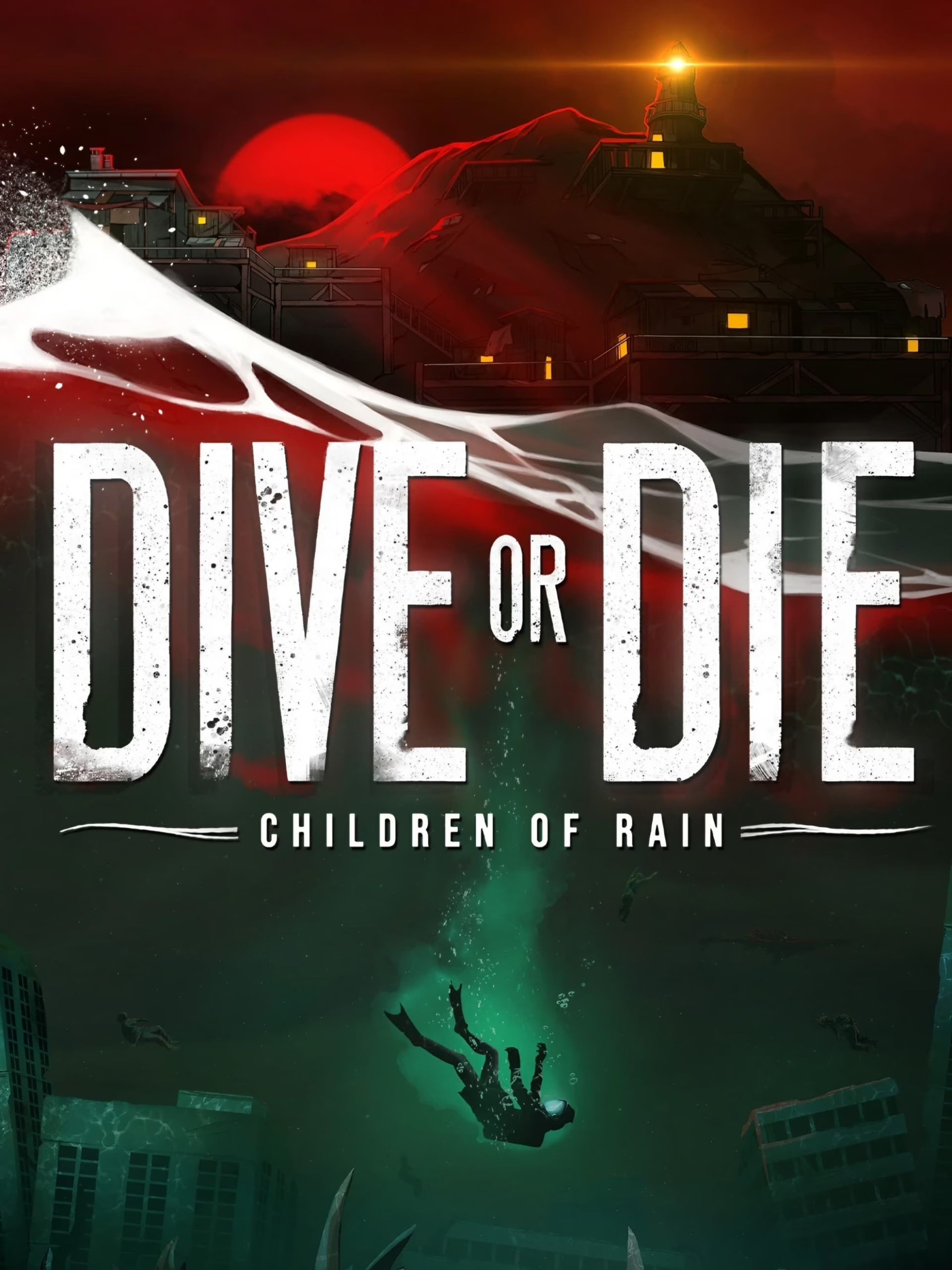
‘Dive or Die: Children of Rain’ places itself directly on that fault line. Announced by French studio Drop Rate Studio in February 2026 and dated for release on July 21st, 2026, the game reaches PC through Steam and the Epic Games Store, published by the Montpellier label Dear Villagers.
The premise discards the land almost entirely. Years of a supernatural Black Rain have drowned the world, and the survivors who remain cling to mountaintops gathered around a single lighthouse. The Rainmaker, described in official materials as an eldritch divinity, has set a final ultimatum: recover the sacred idols hidden in the flooded depths within 40 days, or watch the last ground vanish beneath a final Flood.
Players inhabit Jack, a haunted man whose personal history with the Rainmaker gives the apocalypse a specific weight rather than a generic one. He does not lead a heroic reconquest so much as manage a slow, negotiated defeat, and the game frames its central question as survival rather than salvation.
The Two-Person Studio Behind the Dive
Drop Rate Studio is a small French outfit founded by two former industry producers. Its first release, ‘Wantless’ (2023), was a turn-based tactical RPG set inside the minds of patients in a bleak future, fought through a skill-crafting system against manifestations of psychological torment.
That earlier game already treated dread as a mechanical subject rather than a decorative surface. ‘Dive or Die: Children of Rain’ carries the concern into an entirely different genre while keeping the studio’s stated preference for difficulty that rewards player involvement.
The move from a tightly bounded tactical RPG to a game that fuses action diving with colony management is a substantial jump in scope for a team this size. It places the studio in the company of small European developers who have used systemic design, rather than expensive spectacle, to produce horror on limited resources.
Oxygen as the Engine of Dread
The game divides cleanly into two activities that feed each other: descents into the underwater Abyssal Pool, and management of the surface camp between those descents. The dives are where the horror concentrates.
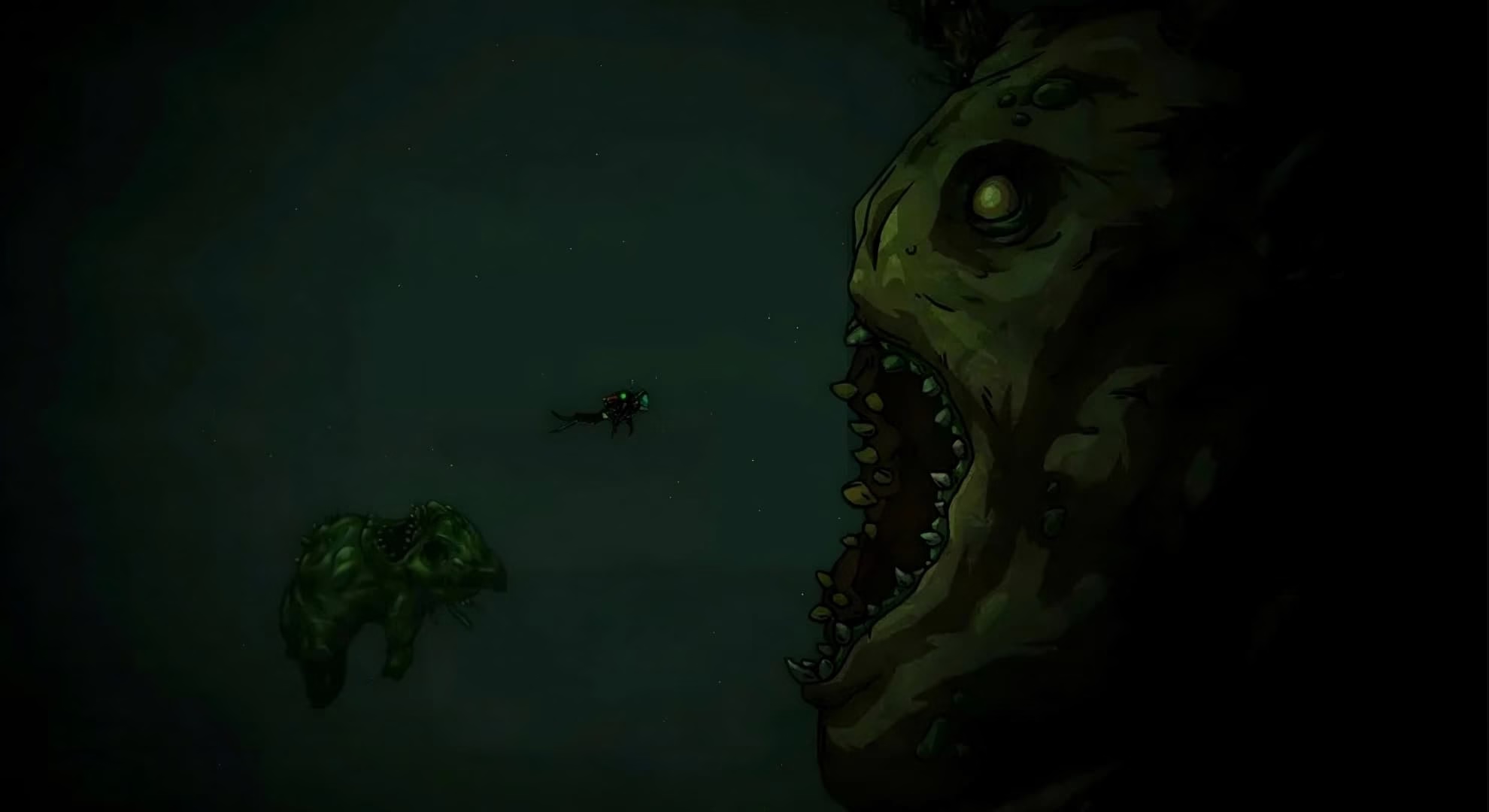
Rather than abstracting survival into a health bar, the design makes oxygen the primary resource. Every additional room explored and every piece of salvage retrieved is weighed against the breath remaining to return, so lingering for one more find becomes a genuine gamble rather than a calculation made safely on paper.
Sanity runs alongside oxygen as a second pressure. The creatures of the Abyssal Pool — mutated things adapted to the dark — erode the diver’s mind as readily as the body, and the deeper the descent, the harder both meters bite.
Death is permanent. A diver lost to a bad encounter or a miscalculated oxygen burn does not return, and the roguelite structure treats that loss as knowledge carried into the next attempt rather than a failure to be reloaded and undone.
The Abyssal Pool regenerates its layout between descents, so navigation never calcifies into a single memorized route. The diver is kept perpetually reading an unfamiliar space under a falling oxygen count, which is where the design locates its tension rather than in scripted shocks.
The Camp and the Cost of Survival
Above the water, the game becomes a colony manager. Survivors are assigned to a lighthouse, a workshop, an infirmary, an altar, and other structures, each supporting the dives in a different way and each demanding food and morale the camp can barely spare.
The sacrifice system is where the two layers meet at their most uncomfortable. Survivors are not interchangeable resources; sending one into the depths to buy time, or offering one at the altar to delay the Flood, is sometimes the only move that keeps the rest alive.
The altar formalizes that bargain. Offerings purchase worship points that push the countdown back or alter the outcome of random events, at a price measured in food, morale, or a survivor’s life — a mechanic that makes appeasement of the eldritch power a routine part of bookkeeping rather than a climactic moment.
Drop Rate Studio has been direct about the material this produces. Official Steam materials note that the game engages heavy themes including infanticide and suicide, while stating that these are not depicted directly on screen — a disclosure worth flagging for readers who weigh such content before purchase.
A Roguelite in the Lovecraftian Line
Lovecraftian horror in games has most often taken the first-person investigative route, from ‘Call of Cthulhu: Dark Corners of the Earth’ (2005) through the Frogwares Mythos adaptations, placing a player-detective in direct confrontation with the incomprehensible.
‘Dive or Die: Children of Rain’ belongs to a newer and different strand — the cosmic-horror roguelite that expresses indifference through systems rather than scripted encounter. Its structural DNA sits closer to the colony-survival tradition of a game like ‘Frostpunk’ (2018), where a population is ground down by an environment that will not negotiate, than to the survival horror canon of ‘Resident Evil’ or ‘Silent Hill.’
The two-dimensional side-scrolling presentation reinforces that lineage. This is not a game of over-the-shoulder tension in fully rendered corridors, but one of readable systems, visible meters, and choices whose consequences compound across a run.
Making the eldritch threat a weather system — rain that drowns, maddens, and finally floods — grounds the cosmic in the mundane. The horror is not a monster framed in a doorway but a climate that has already won, and the 40-day clock is simply the last stretch of a defeat long underway. That framing, more than any single creature design, is what situates the game within cosmic horror rather than the monster-driven survival tradition.
A Small Studio in Deep Water
Cosmic horror rewards creators willing to deny the player a clean victory, and the roguelite is the rare commercial structure that can make repeated defeat register as progress rather than punishment. ‘Dive or Die: Children of Rain’ is wagering that the two align at the level of design, not merely theme.
For a two-person studio following a niche tactical RPG with a genre it has not worked in before, that is a considerable bet. A free demo covering the first 10 in-game days has been available since February, with saves that carry into the full release, but the full shape of the 40-day descent — whether the sacrifice economy holds its weight across a complete campaign — will only be legible once the game is in players’ hands on July 21st, 2026.
Pricing had not been announced at the time of this report, though official store listings now carry an ESRB rating of Mature 17+ for Blood and Gore, Language, and Violence.
Lovecraftian horror in games has usually cast the player as an investigator confronting the incomprehensible face to face. Does expressing that same indifference through roguelite systems — permadeath, procedural depths, and a sacrifice economy — bring players closer to the genre’s central dread, or does the distance of a management layer blunt the fear that a first-person descent can produce?


Leave a Reply