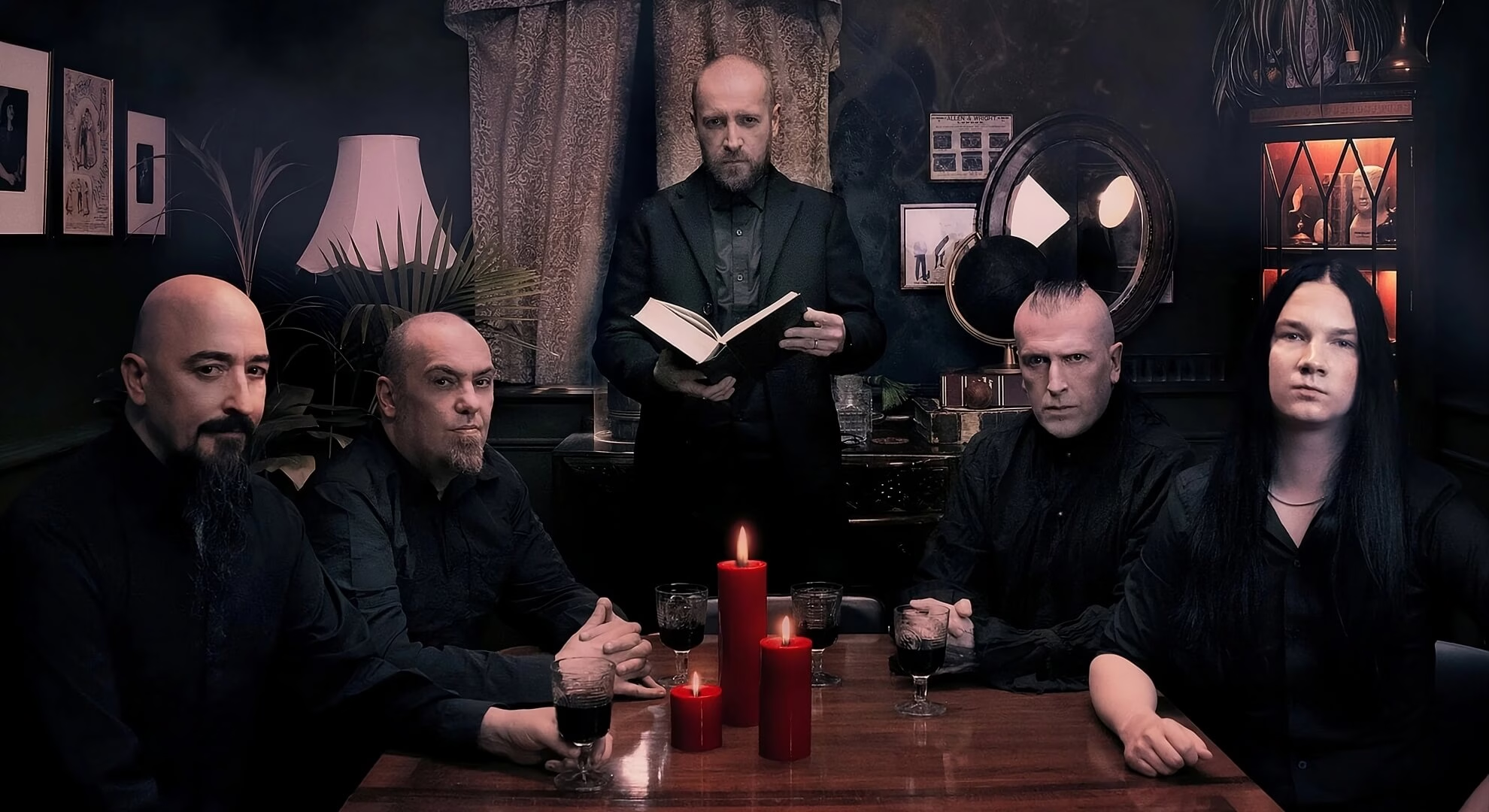


The moment a subgenre acquires a name, the record that gave it one becomes more than music. It becomes a document, fixed at the point of first definition. The five members of Paradise Lost who gathered at Academy Music Studios in West Yorkshire between November 1990 and January 1991 had no mandate beyond their second album.
They had drawn inward from the aggression of their debut, brought in a soprano vocalist found through a classified advertisement in the music press, enlisted an orchestral ensemble, and worked with engineer Keith Appleton to produce something that moved at the pace of loss. The genre name that would eventually describe what they made came, simply, from the album’s title.
Academy Studios, Late 1990
Academy Music Studios in West Yorkshire carried a reputation by 1990 as a facility suited to the weight that northern England’s extreme metal scene required — a room whose acoustic character served the slower tempos and denser arrangements that death metal’s neighbours were beginning to explore. The decisions made during those sessions were as much about removal as addition.
Where ‘Lost Paradise,’ the debut released earlier that same year on Peaceville Records, had moved with the speed and abrasion of late-eighties death metal, ‘Gothic’ proceeded at the cadence of a funeral procession. The engineer’s choices preserved a rawness that promotional repackaging often obscures: the rhythm guitars sit thin in the mix, the bass occupies a narrow register, and the space between instruments is deliberate rather than deficient.
Gregor Mackintosh’s lead guitar lines were the record’s most consequential innovation — melodic to a degree without precedent within the death metal tradition, carrying grief as a sustained condition rather than a percussive attack.
The Record That Named Itself
‘Gothic’ arrived on March 19th, 1991 without a genre to belong to. Death-doom described the tempo and vocal approach with reasonable accuracy, but the orchestral strings on the title track, the soprano presence on ‘The Painless,’ and the deliberate emotional register throughout placed the record at a remove from anything in the surrounding field.
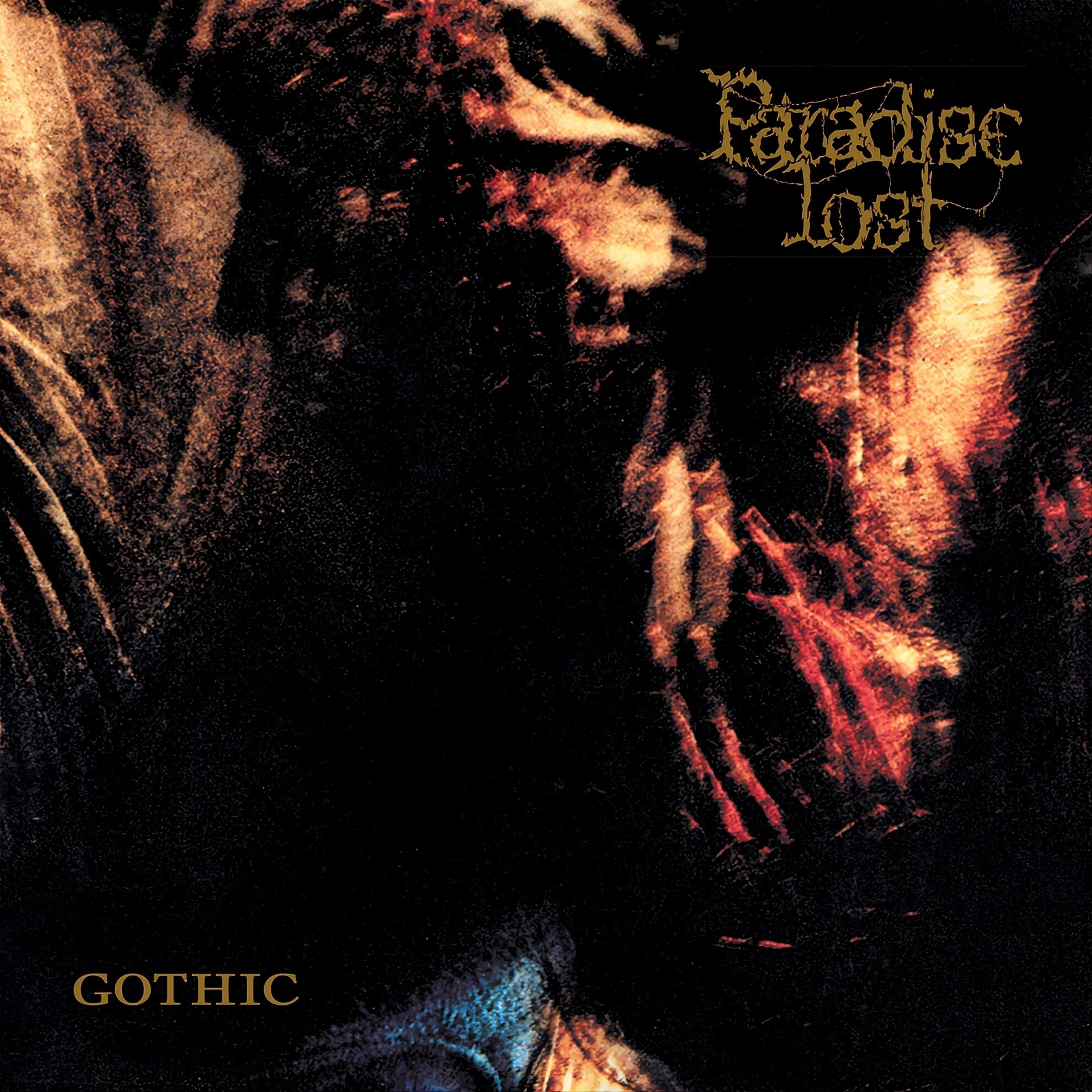
The genre name that would retrospectively organize this tradition came not from critical commentary or a label’s marketing copy but from the album’s own title. A record called ‘Gothic’ became the founding document of a genre that bears its name — a convergence that occurs almost nowhere else in the history of recorded music. What followed — Theatre of Tragedy, Draconian, Swallow the Sun, Tiamat in their mid-career turn, the entire Central European tradition of female-fronted gothic doom — elaborated the template without displacing it.
A Soprano Through the Death Growl
The vocal pairing that defines ‘Gothic’ was found through a classified advertisement placed in the NME. Sarah Marrion, a soprano from Manchester with no prior exposure to extreme metal, provided the clean register against Nick Holmes’s death growl on tracks including ‘The Painless’ and the title piece. When Mackintosh played the recordings back for her in the studio, she had, by his own account, never heard anything like them.
Her soprano does not perform comfort against the growl. It holds its ground against it. The orchestral sections, credited to the Raptured Symphony Orchestra, were performed on keyboards by Appleton himself — a pseudonym that named a creative necessity.
The result was not an orchestral record with metal added. It was a death metal record that had found, in its own recording sessions, the room the strings required.
A Colombian at the Console
The engineer who holds custodial authority over the 35th Anniversary Edition, Jaime Gomez Arellano, was born in Colombia, moved to London in 1999, and founded what became Orgone Studios — currently based in Portugal — as a mastering operation in 2003 before expanding to production and mixing.
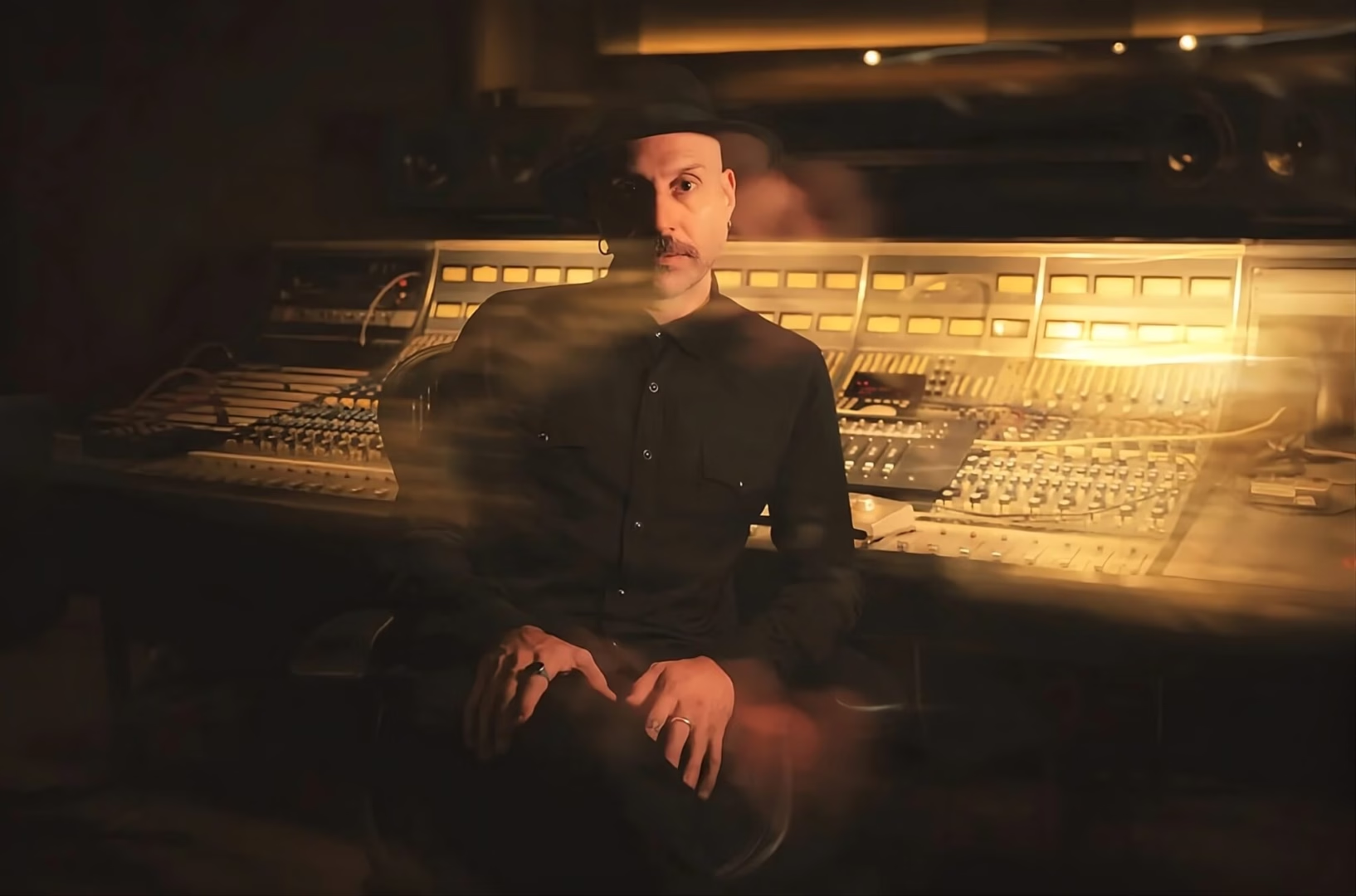
His credits span Opeth, Behemoth, Insomnium, Moonspell, Primordial, and Sólstafir, and his prior work with Paradise Lost’s post-millennium catalogue had established a working relationship with this specific sonic tradition before the remastering commission.
The first public document of the remaster, a revised version of ‘Eternal’ shared in advance of the March 27th, 2026 release, confirmed what the Peaceville press materials had suggested. The relationship between Mackintosh’s lead lines and Appleton’s keyboard string arrangements — previously audible as two sources competing for the same frequency space — achieves in the remaster a genuinely dialogic quality. Two voices in conversation rather than two sources in competition.
The CD edition’s bonus disc — a complete live set from Ludwigsburg, Germany, captured in 1991, the same year as the album’s original release — performs a distinct archival function. It documents what ‘Gothic’ was as a live proposition before gothic doom had acquired a name for what it was.
A four-page booklet, drawing on band recollections first published in the 2021 box set ‘The Lost and The Painless,’ accompanies both the vinyl and CD formats.
That a Colombian-born engineer now performs the primary technical labour on the record that named gothic doom is not incidental. It is a statement about how the global extreme music tradition reproduces itself — not through stable national centers but through the continuous movement of technical expertise across the Atlantic world.
What Thirty-Five Years Preserve
The decision to remaster ‘Gothic’ rather than rerecord it reflects a clear understanding of what the original represents. The specific acoustic conditions of Academy Music Studios in 1991 — the compression in the rhythm guitars, the soprano pressed against the death growl with no digital separation, the strings occupying a narrow frequency register — are not deficiencies to be corrected. They are the material record of decisions made before the genre those decisions established had acquired a name.
Arellano’s commission, performed from Orgone Studios in Portugal by an engineer who carries both a Colombian origin and two decades at the center of European extreme music production, makes the reissue something other than a commercial occasion.
‘Gothic’ at thirty-five is not the same object it was at its release. It is a founding document that has survived long enough to be claimed by the tradition it generated — and to be heard, for the first time in its correct proportions, by every listener that tradition has since found.
For the listeners who first encountered ‘Gothic’ through Bandcamp or import vinyl rather than its original March 19th, 1991 pressing — what does the distance between Arellano’s remaster and Appleton’s original engineering tell you about what a founding document becomes when the tradition it generated returns to restore it?

Leave a Reply