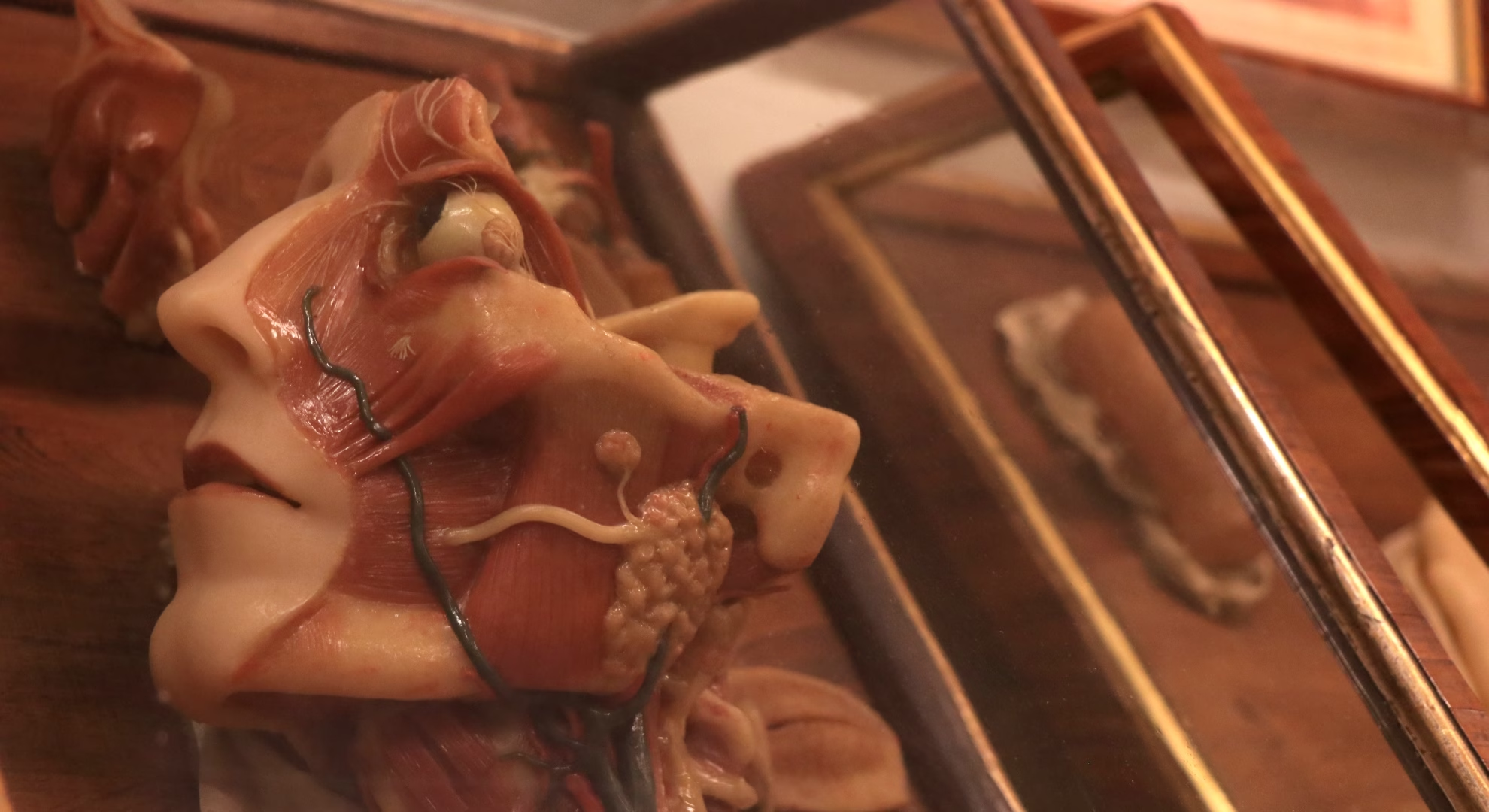


In a glass case in Florence’s Museum of Physics and Natural History lies a woman known as the Anatomical Venus, with a string of pearls at her throat, real human hair arranged across her shoulders, and a torso built to come apart in seven pieces. She has no name beyond the one her makers gave her, Venus, and she has waited four decades for a discipline built to study exactly her kind of body to notice that she got there first.
Gothic studies has spent that time reaching the beautiful corpse through a different door: through Horace Walpole, Matthew Lewis, and Mary Shelley, whose fiction is read as dramatizing and resisting the real violence of Enlightenment medicine, never as inheriting a visual grammar medicine had already perfected.
The wax workshop at Florence’s La Specola staged death as an erotic, serene tableau years before any of those novelists set a scene in a dissecting room, and the field that studies the Gothic corpse most closely has almost nothing to say about her.
The Gap Gothic Studies Left Open
Marie Mulvey-Roberts’s ‘Dangerous Bodies: Historicising the Gothic Corporeal,’ the most sustained recent account of how Gothic fiction represents the endangered body, moves from the tortured Catholic bodies of Walpole and Lewis through Mary Shelley’s stitched-together corpse in Frankenstein to Bram Stoker’s Dracula, where she reads the novel’s medical men, John Seward and Van Helsing, as figures disciplining a dangerously desiring female body through the period’s surgical practice.1
The book’s own reviewers describe its method precisely: it takes canonical literary texts and traces the “actual historical events and trends” that fiction transforms into monstrosity, with the medical profession named repeatedly as one of several oppressive forces, alongside the church and the state, that the Gothic novel dramatizes from outside and, at moments, indicts.
David Punter’s foundational survey of Gothic fiction follows the same evidentiary path a generation earlier, tracking the genre’s engagement with bodily horror through its printed texts rather than through the material culture medicine produced for public consumption in the same period.2
The pattern holds across the subfield: when Gothic studies discusses the anatomized body, it is almost always discussing a novel’s representation of dissection, resurrection, or surgery, with actual eighteenth-century anatomical display treated, when it appears at all, as background context rather than as an aesthetic object in its own right.
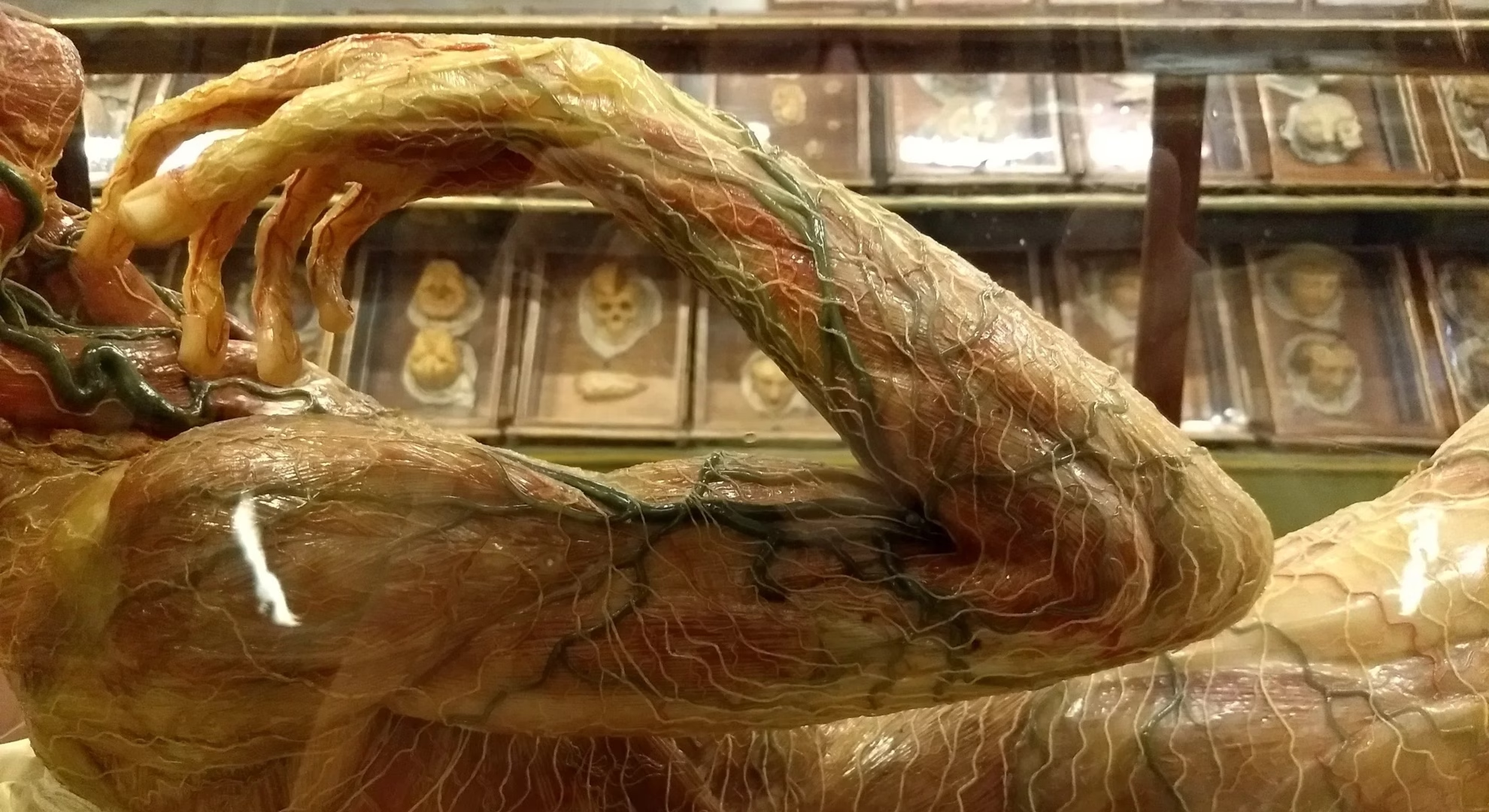
Historians of medicine and art historians have filled part of that silence, but from the opposite direction. Anna Maerker’s Model Experts, the first English-language monograph on the La Specola wax collection, reconstructs the workshop’s administrative and scientific life in exacting detail, following the models’ production under Grand Duke Peter Leopold and their reception as they traveled to Vienna, but her interest is the politics of expertise and public enlightenment, not the genre conventions the models anticipate.3
Roberta Ballestriero’s widely cited study of the wax Venus tradition asks whether these objects belong to art or to craft, a question of category and connoisseurship that never crosses into the vocabulary of terror, the sublime, or the uncanny that defines Gothic criticism.4
Joanna Ebenstein’s 2016 study, the most widely read popular account, comes closer than any academic text to naming the aesthetic directly, describing the Venus as staged to be “alive, healthy, and pain-free” in deliberate flight from the bloody reality of the dissecting table, but the book is written for a general audience and stops short of placing that staging inside the specific critical apparatus Gothic scholars have built for reading the monstrous, eroticized, or spectacular body.
The result is a genuine and demonstrable gap, not a vague sense of neglect: two adjacent bodies of scholarship, one historicizing the Gothic corpse through fiction and one historicizing the wax corpse through the history of science, that have not yet been set beside one another closely enough to ask the harder question: is the literary convention an origin, or is it an echo?
Answering that question requires treating the Venus not as background context for a chapter on eighteenth-century medicine, but as a primary aesthetic object with a documented production history, a documented reception history, and a documented set of formal choices — exactly the kind of evidence Gothic studies already knows how to read, applied here to an object outside its usual literary corpus.
A Museum Built to Replace the Cadaver
The Royal Museum of Physics and Natural History opened to the public in Florence on 21 February 1775, the result of a project Grand Duke Peter Leopold entrusted to his court physicist, Felice Fontana, a decade before any of the Gothic novels Mulvey-Roberts and Punter examine had been written.5
Fontana’s stated ambition, recorded in his own writing on the project, was to replace the cadaver on the dissecting table with a rendering in wax precise enough that physicians, surgeons, students, and artists would no longer need bodies to learn from.
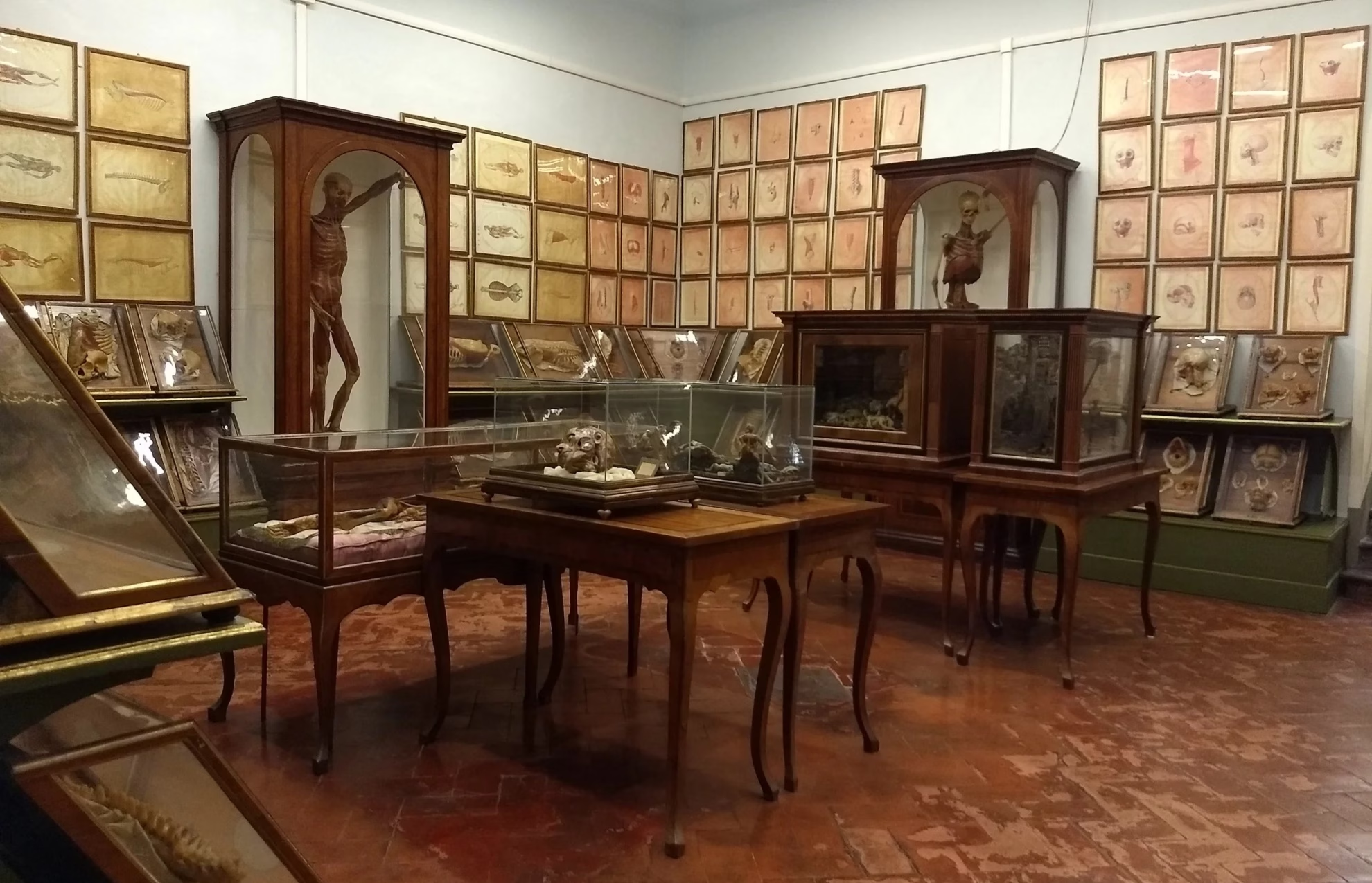
The museum he built for Leopold was explicitly conceived as an instrument of public instruction rather than a restricted clinical resource: unlike a dissection theater, which admitted a narrow professional audience to a single, unrepeatable, and often gruesome event, La Specola opened its doors to anyone who could pay, aristocrat and laborer alike, in keeping with the wider Enlightenment project of using science to form what Anna Maerker’s research describes as a model citizen.
That civic ambition is the first reason the wax collection belongs inside a Gothic studies conversation rather than outside it: it was never private material accidentally seen by a novelist. It was a deliberately public spectacle, engineered from its first sketch to be looked at by people with no medical training, and the choices its makers faced about how to make dissection bearable to that audience are the same choices later Gothic writers would face in dramatizing the same material for a reading public.
Fontana did not work alone. He recruited Clemente Susini, a sculptor trained at Florence’s Royal Gallery, to head the modeling workshop, and it was Susini, working alongside the workshop’s anatomists, who translated Fontana’s program into the specific object that would become the collection’s signature piece.
Between the workshop’s founding in the early 1770s and its eventual closure at the end of the nineteenth century, Susini and his successors produced more than 2,500 wax models; roughly 1,400 remain at La Specola today, of which eighteen are whole, life-sized human figures.
Only one of those eighteen is built to be fully taken apart. That figure, cast around 1780, is the model now known as the Anatomical Venus, and its singular status inside a collection otherwise built for functional anatomical instruction is itself evidence that its makers intended something beyond a teaching aid.
Susini’s Seven Layers of Wax
The Venus reclines on a cushion, roughly life-sized, her expression untroubled and her eyes fitted with glass. A string of pearls circles her throat. Her hair is not modeled in wax but is real human hair, set into the scalp strand by strand. Lift the top layer of her torso and a second layer appears beneath it, then a third, continuing through seven removable stages of muscle, vessel, and organ until the sequence ends at a curled, fully formed fetus resting in her womb, the detail that gives the whole assembly its full working title among specialists, the demountable or gravid Venus.6
Silk and linen threads stand in for the finer nerves and blood vessels too delicate to render convincingly in cast wax alone, a technical solution that let Susini’s workshop achieve a level of circulatory and structural detail no engraving of the period could match and that few cadavers, decomposing within days of death, could preserve for repeated study.
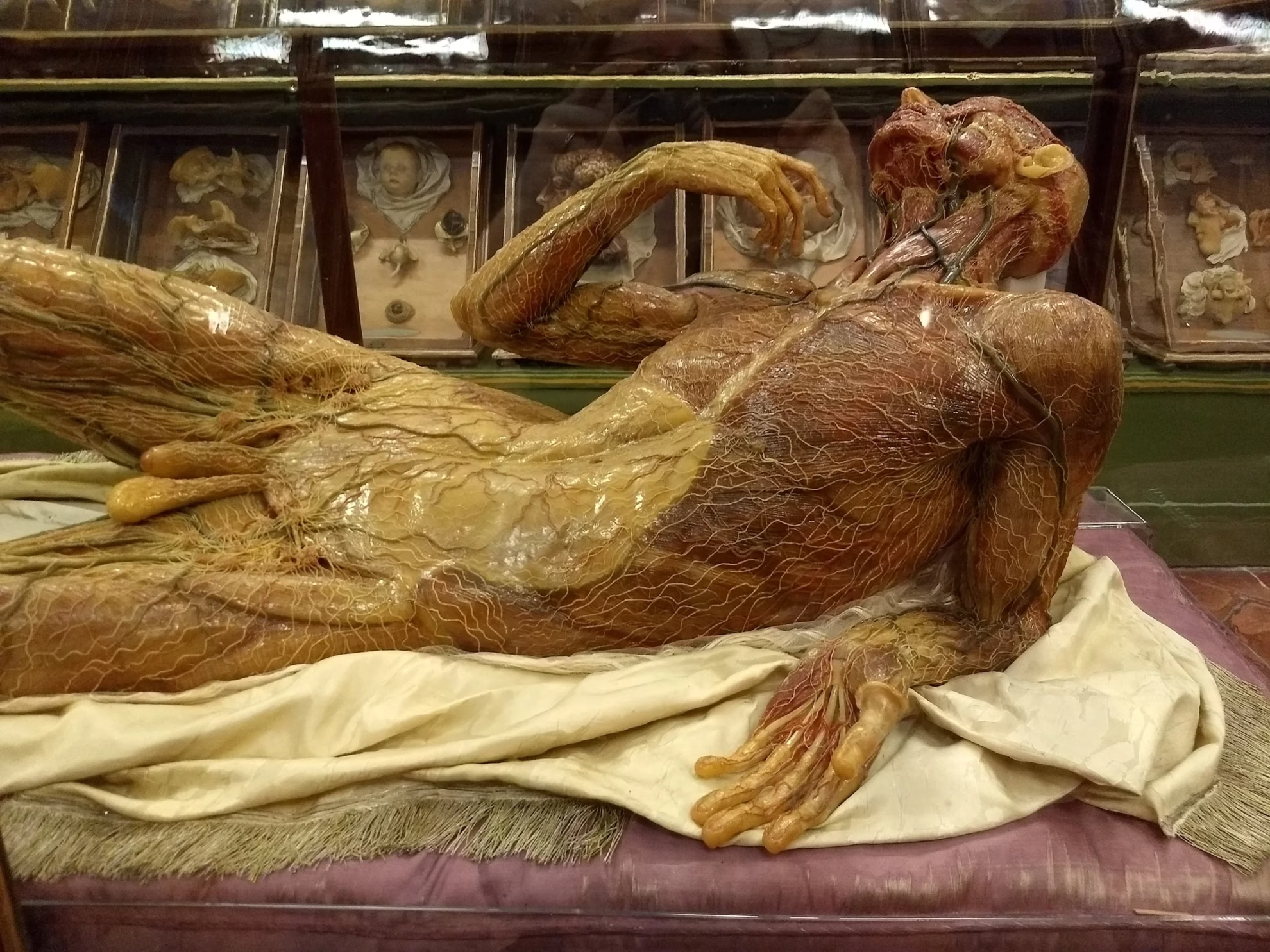
The engineering is inseparable from the argument the object makes about what a dissected body should look like. Susini’s workshop did not merely copy an opened corpse; it built a mechanism for repeatable disassembly, meaning every visitor who lifted the Venus’s breastplate encountered the same sequence of organs in the same pristine condition the previous visitor had seen, with no decay, no odor, and no blood.
That repeatability, achievable only because the object was manufactured rather than harvested, is what let La Specola put dissection on permanent public display for the first time in European history. A cadaver could be opened once, before an audience of dozens, for as long as decomposition allowed. The Venus could be opened for as long as the museum stood, before an audience that would eventually number in the millions, and each opening presented the identical, composed face at the top of the sequence, undisturbed by whatever lay beneath it.
Pearls, Hair, and a Serene Death Mask
The choices that make the Venus’s face and adornment so striking were not incidental to the anatomical program; they were, on the available evidence, deliberate policy. Fontana is recorded as having insisted that the models remain visually unblemished, and the historian Ludmilla Jordanova has traced how the workshop used ornament specifically to manage that requirement: the pearl necklace sits precisely where an incision would otherwise be visible at the throat, concealing the seam between the intact head and the openable torso beneath a piece of jewelry rather than leaving the join exposed.7
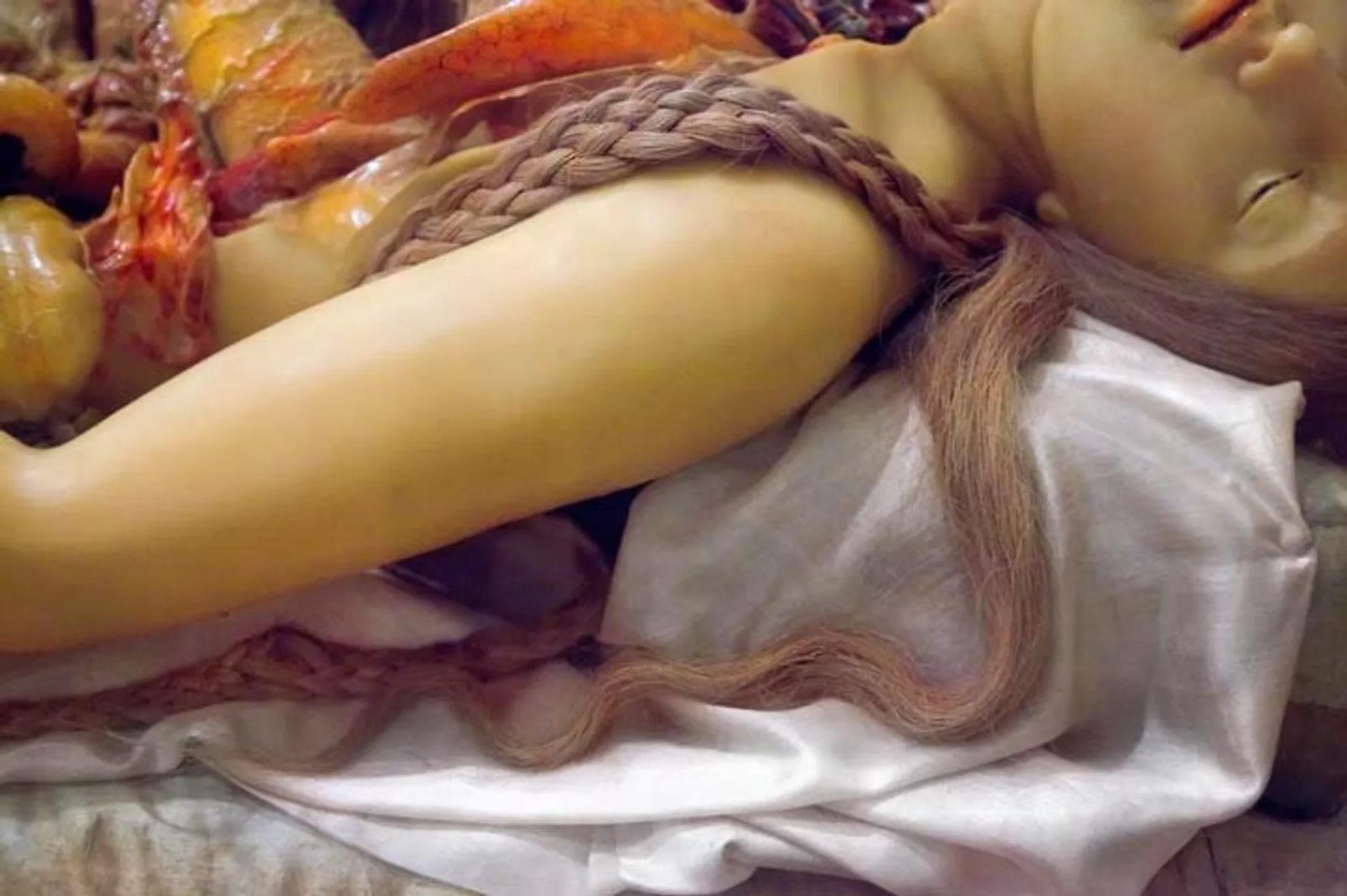
The pose itself borrows directly from a much older visual tradition. Susini modeled the Venus reclining in a manner that recalls Titian’s Venus of Urbino and the Medici Venus that gave Florence its own civic mythology of idealized female beauty, so that a viewer’s first visual association with the model, before any layer is lifted, is with painted and sculpted Renaissance sensuality rather than with a corpse on a table.
This was a specifically Florentine and Italian solution, not the only available one. Wax modelers working in England in the same general period, most notably Joseph Towne at Guy’s Hospital in London, produced figures that made no comparable effort to disguise the violence of dissection; the British tradition tolerated visibly gory, unidealized renderings in a way the Susini workshop’s Italian output deliberately did not.
The contrast matters because it shows the erotic serenity of the Florentine Venus was a choice among available alternatives, not an inevitable feature of anatomical wax work as a medium. Susini’s workshop chose beauty, concealment, and repose specifically because those qualities let an unprecedented public, including women and the unschooled, look directly into an opened body without recoiling from it.
That is the precise aesthetic maneuver later ascribed, in Gothic criticism, to fiction: the transformation of a violated body into an object that can be looked at, lingered over, and in some measure desired, rather than simply fled.
Why Medicine Got There First
The standard account in Gothic scholarship treats this maneuver as literature’s own invention, developed to let readers approach material — dissection, resurrection, the opened body — that medicine and the state had made genuinely frightening in the period’s actual practice.
Mulvey-Roberts’s reading of ‘Frankenstein,’ for instance, positions Mary Shelley’s creature as literature processing the real anxieties surrounding the resurrectionist trade and contemporary surgical experiment, translating documented medical horror into a fictional register a reading public could survive encountering. That account is not wrong about what the novel does. It is incomplete about who did it first.
More than three decades before ‘Frankenstein’s publication in 1818, and well over a century before ‘Dracula’s in 1897, Fontana’s workshop had already solved the specific problem later Gothic novelists are credited with solving: how to present an opened human body to a general audience so that horror gives way to a more complex, sustained fascination rather than to simple revulsion.
Medicine did not merely provide raw material that fiction later transformed into something bearable. In the specific, documented case of the Anatomical Venus, an official Enlightenment science project performed that transformation first, in a public museum, for a paying, mixed-class, mixed-sex audience, using exactly the tools — idealization, adornment, repose, controlled revelation — that Gothic criticism treats as literature’s distinguishing achievement.
The reception record confirms that eighteenth-century viewers experienced the model with the same double register of awe and dread that Gothic aesthetics would later formalize into the distinction between terror and horror. The painter Elisabeth Vigée Le Brun recorded viewing La Specola’s wax collection in 1792 and described an experience of both reverence and distress, a reaction the art historian David Mark Mitchell has argued was very likely provoked by the Venus itself, given its status as the collection’s centerpiece.8
Vigée Le Brun was not reading a novel. She was standing in a public museum, looking at a manufactured object, and she came away with precisely the mixed sublime response that Ann Radcliffe would spend the following decade theorizing in fictional form and that Gothic critics now treat as one of the genre’s defining literary effects.
The aesthetic Gothic studies attributes to a specific set of novelists was, by the time those novelists were writing, already a documented public experience available to any visitor with the price of admission to a science museum in Florence.
The Dissection Spectacle’s Long Shadow
Recognizing La Specola’s priority also clarifies a broader pattern that Gothic studies has tended to treat as a literary lineage when it is, at its root, a lineage of public spectacle borrowed and re-borrowed by whichever medium currently held the largest audience.
The public anatomical museums that proliferated across nineteenth-century Britain and the continent, offering paying visitors wax figures depicting the ravages of venereal disease alongside more conventional instruction, inherited La Specola’s core proposition almost unchanged: that a general public would pay to look at rendered interior bodies if the encounter were staged with enough decorum to remain respectable.
Those museums eventually declined into disreputable sideshows precisely because they abandoned the idealizing discipline Fontana had insisted on, trading Susini’s composed faces and concealed seams for more sensational, less carefully aestheticized material, a decline that itself demonstrates how load-bearing the original aesthetic choice had been.
Where Joseph Kahn’s mid-century London museum reassured the medical press that any model liable to offend a modest visitor would be quietly removed on days when women were admitted, La Specola’s founding generation had solved the same propriety problem a lifetime earlier by embedding concealment into the object itself, through pearls and pose, rather than by rationing who could see it, a distinction the historian Elizabeth Stephens has situated within a single continuous history of anatomical spectacle running from the eighteenth-century wax Venus through the Victorian museum to Gunther von Hagens’s contemporary plastination exhibitions.9
The literary Gothic, developing in roughly the same decades as the museums’ decline, took a parallel path rather than an originating one, translating the same underlying appetite for controlled exposure to the opened body into prose rather than wax, and inheriting, along with that appetite, the same unresolved tension between instruction and spectacle that had shadowed anatomical display from its first public exhibition.
The throughline extends well past the nineteenth century. Twentieth- and twenty-first-century plastination exhibitions built on the model of Gunther von Hagens’s Body Worlds, which display preserved human remains in dynamic, often theatrical poses for paying museum audiences, are direct structural descendants of Fontana’s original proposition, however distant their materials and marketing from Susini’s workshop.
Contemporary horror cinema’s recurring fascination with the composed, beautiful corpse — a body opened or violated yet somehow still arranged, lit, and framed for aesthetic contemplation rather than simple abjection — repeats a visual logic the Anatomical Venus had already worked out in three dimensions two centuries earlier.
None of this requires that any individual filmmaker or novelist consciously borrowed from La Specola. It requires only recognizing that the specific aesthetic solution Gothic criticism treats as a literary innovation is, on the documented evidence, considerably older than the literature, and that medicine, not fiction, is where the modern convention of the beautiful corpse was first worked out for a paying public.
An Argument That Predates the Novel
None of this diminishes what Walpole, Lewis, Shelley, and Stoker actually accomplished; it relocates where their accomplishment begins.
Gothic fiction did not invent the beautiful corpse from nothing, and it did not simply reflect a medical horror that existed only as raw, unaestheticized fact until literature got hold of it. It inherited an already-solved aesthetic problem from an Enlightenment science project that had spent decades working out, in public, in wax, exactly how to make an opened body bearable, and in some cases desirable, to look at.
Reading the Anatomical Venus as a document of Gothic history rather than only of medical history does not require Gothic studies to abandon its literary texts. It requires the field to extend its own method — historicizing the corporeal by tracing it to documented material conditions — one museum and one workshop earlier than it currently does.
If the Anatomical Venus first worked out how to make an opened body beautiful rather than simply horrifying, what does it mean that the discipline built to study exactly that transformation has spent so long looking past the object that performed it first?
References
- Marie Mulvey-Roberts, ‘Dangerous Bodies: Historicising the Gothic Corporeal’ (Manchester: Manchester University Press, 2016), 93-97. ↩︎
- David Punter, ‘The Literature of Terror: A History of Gothic Fictions from 1765 to the Present Day, vol. 1’ (London: Longman, 1996), 20-24. ↩︎
- Anna Maerker, ‘Model Experts: Wax Anatomies and Enlightenment in Florence and Vienna, 1775-1815’ (Manchester: Manchester University Press, 2011), 34-41. ↩︎
- Roberta Ballestriero, ‘Anatomical Models and Wax Venuses: Art Masterpieces or Scientific Craft Works?’ Journal of Anatomy 216, no. 2 (2010): 223-234. ↩︎
- Joanna Ebenstein, ‘The Anatomical Venus: Wax, God, Death and the Ecstatic’ (New York: DAP/Distributed Art Publishers, 2016), 52-58. ↩︎
- Lyle Massey, ‘On Waxes and Wombs: Eighteenth-Century Representations of the Gravid Uterus,’ in ‘Ephemeral Bodies: Wax Sculpture and the Human Figure,’ ed. Roberta Panzanelli (Los Angeles: Getty Research Institute, 2008), 83-107. ↩︎
- Ludmilla Jordanova, ‘Sexual Visions: Images of Gender in Science and Medicine between the Eighteenth and Twentieth Centuries’ (Madison: University of Wisconsin Press, 1989), 43-47. ↩︎
- David Mark Mitchell, ‘Vividness without Vitality: The Specola Venus’s Intersecting Afterlives,’ Journal18, no. 3 (Spring 2017). ↩︎
- Elizabeth Stephens, ‘Anatomy as Spectacle: Public Exhibitions of the Body from 1700 to the Present’ (Liverpool: Liverpool University Press, 2011), 22-29. ↩︎



Leave a Reply