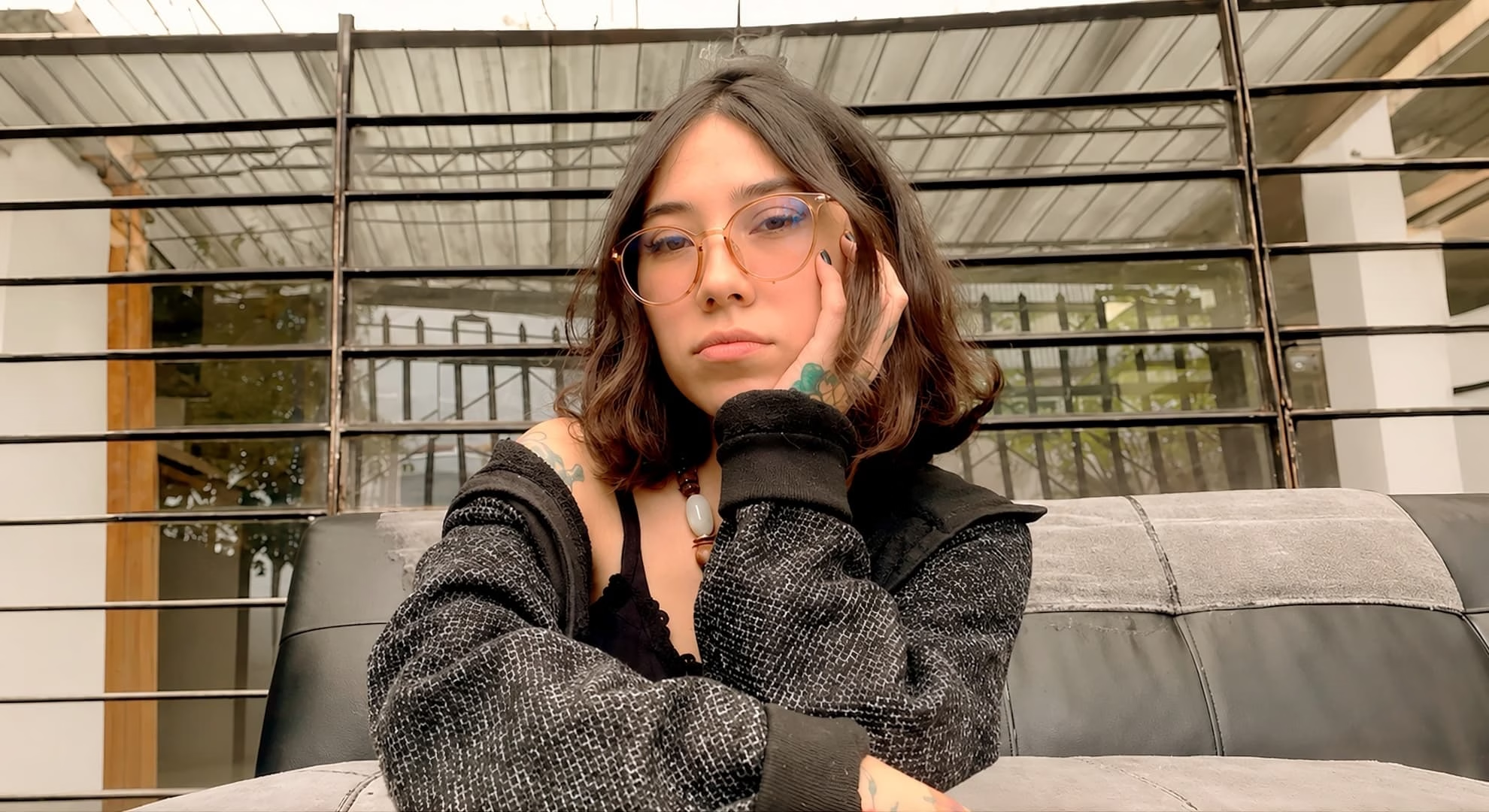


For three years, the illustrator known as Amarilla built her audience the slow way: story by story, posted independently, with no imprint behind her and no agent in front of her. ‘Retratos de Niños Asesinos’ — seven portraits of children edging, in her own words, only slightly toward wickedness — existed first as a scattered body of standalone work before it existed as a book.
That changed at FILBo 2026, where the anthology was signed in person for the first time. An audience of 18,000 Instagram followers had been, until then, just a number on a screen; in the room, Amarilla found readers who recognized her illustrated children before they recognized her. What follows draws on her own account of how the book found its shape, its cover, and its readers.
The Logic of Slightly
Amarilla’s seven children are not villains in any conventional sense. “I’m interested in creating complex characters who exist in moral gray areas rather than being purely good or purely evil,” she says, and the qualifier in her book’s own framing — slightly complex, slightly unpleasant, slightly wicked — is doing real work. She wants characters who are “unsettling and morally ambiguous, yet still deeply lovable,” fantastical figures built to carry something recognizably human: “our contradictory nature and the complexity of who we are.”
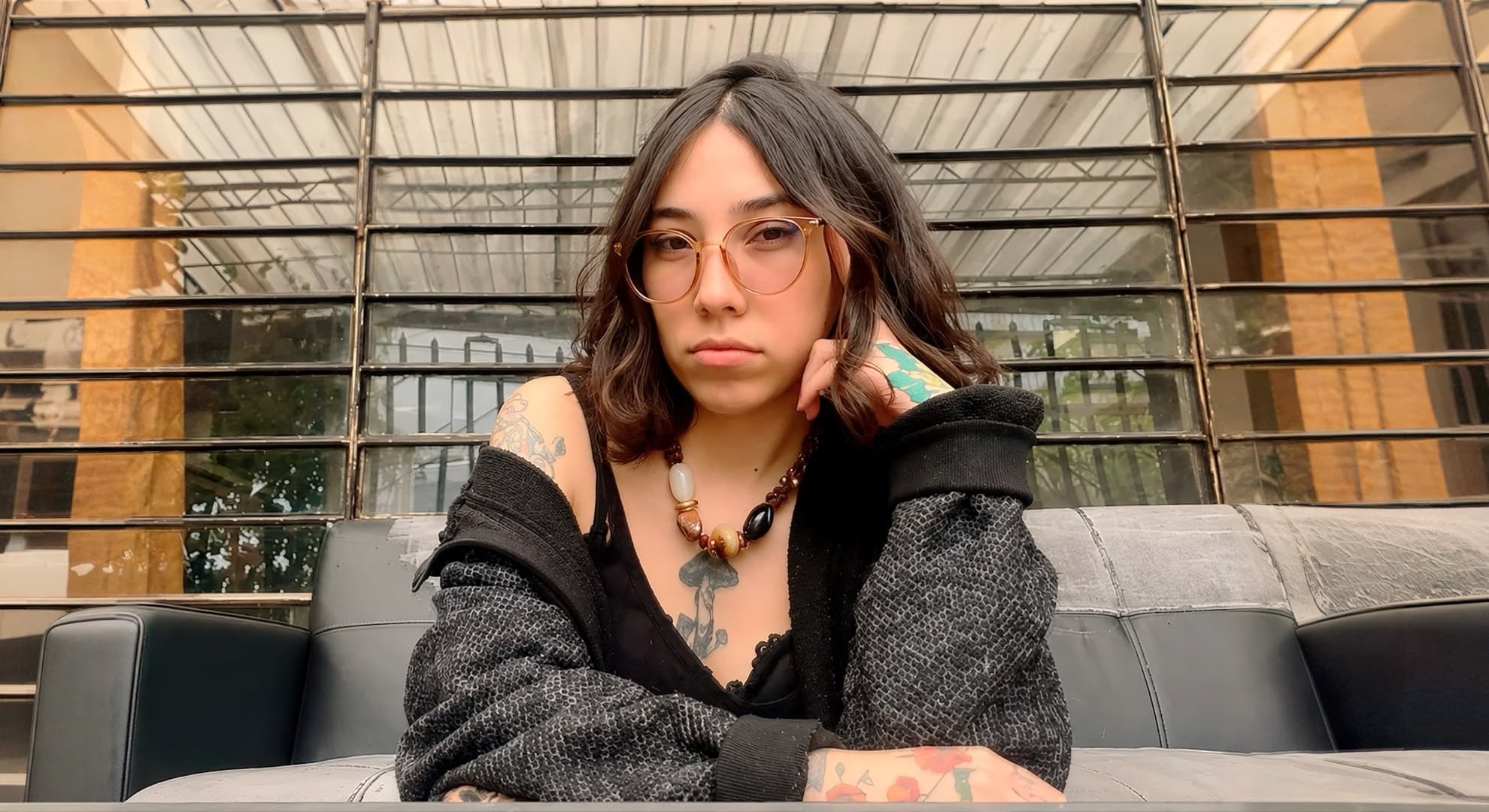
That the title borrows a phrase already attached to a 2018 Mexican true-crime film and an ongoing Discovery en Español series was not, by her account, a deliberate provocation. The connection she noticed while assembling the stories was more literal, and more emotional: what bound them together as she wrote, she says, was anger and revenge, the two feelings she kept returning to across separate pieces before she recognized they belonged to the same book. Only once she traced that thread did the title feel inevitable — “every child was connected by… death.”
Asked whether “Retratos” — a word that invokes portraiture, a genre built to dignify its subject — sits in tension with children the book declines to soften, Amarilla pushes back on the premise. “I do think the book dignifies its characters — or at least most of them,” she says. “While I never try to justify their actions, I do try to reveal the complexity behind them and what leads them to become something more than just monsters.”
She describes the writing itself as largely unconscious, intuitive, closer to discovery than design: “When I created these children, I didn’t expect them to become who they are now. In a way, I wasn’t familiar with them — I was getting to know them as I wrote.” That process of getting to know her own characters was not wasted once the book closed; understanding, in hindsight, that her children were the source of the threat rather than its victims has made the second volume, already underway, considerably easier to build.
Two portraits do the most to prove the book’s own thesis, she says — the first story, where a boy’s fury at a housekeeper who keeps moving his teddy bear escalates toward murder over what she calls “an emotion I remember feeling as a child… but taken to an extreme,” and the closing story, ‘Mak and His Army of Toads,’ where an ordinary child is pushed by a single event toward a fantasy of conquest.
Two Registers, One World
Visually, the book alternates between plain, sepia-toned line drawings and full-page, saturated paintings, and the split was not simply about polish. “Some stories were harder to illustrate than others,” Amarilla says. “Maybe I just wasn’t skilled enough at the time, so I used simple line drawings instead.” But the thinner register was not only a limitation — it was also a way of controlling what a reader learns and when.
“The illustrations are meant to create the atmosphere of each story, not reveal it,” she says. “I love surprising readers as the story unfolds, so I choose images that evoke the mood and emotional tone without giving away anything essential.” She was also frank about the alternative failing on its own terms: paint every page and the fully rendered illustrations lose their impact; draw every page in line only and the book risks feeling repetitive. Knowing which register a given story needs, rather than defaulting to one, is the point.
That instinct for pacing extends past the page and into how she works. “When I write, I see an animated film playing in my mind, and it looks exactly like my drawings,” she says — writing and illustrating are not, for her, sequential disciplines so much as one continuous act of seeing.
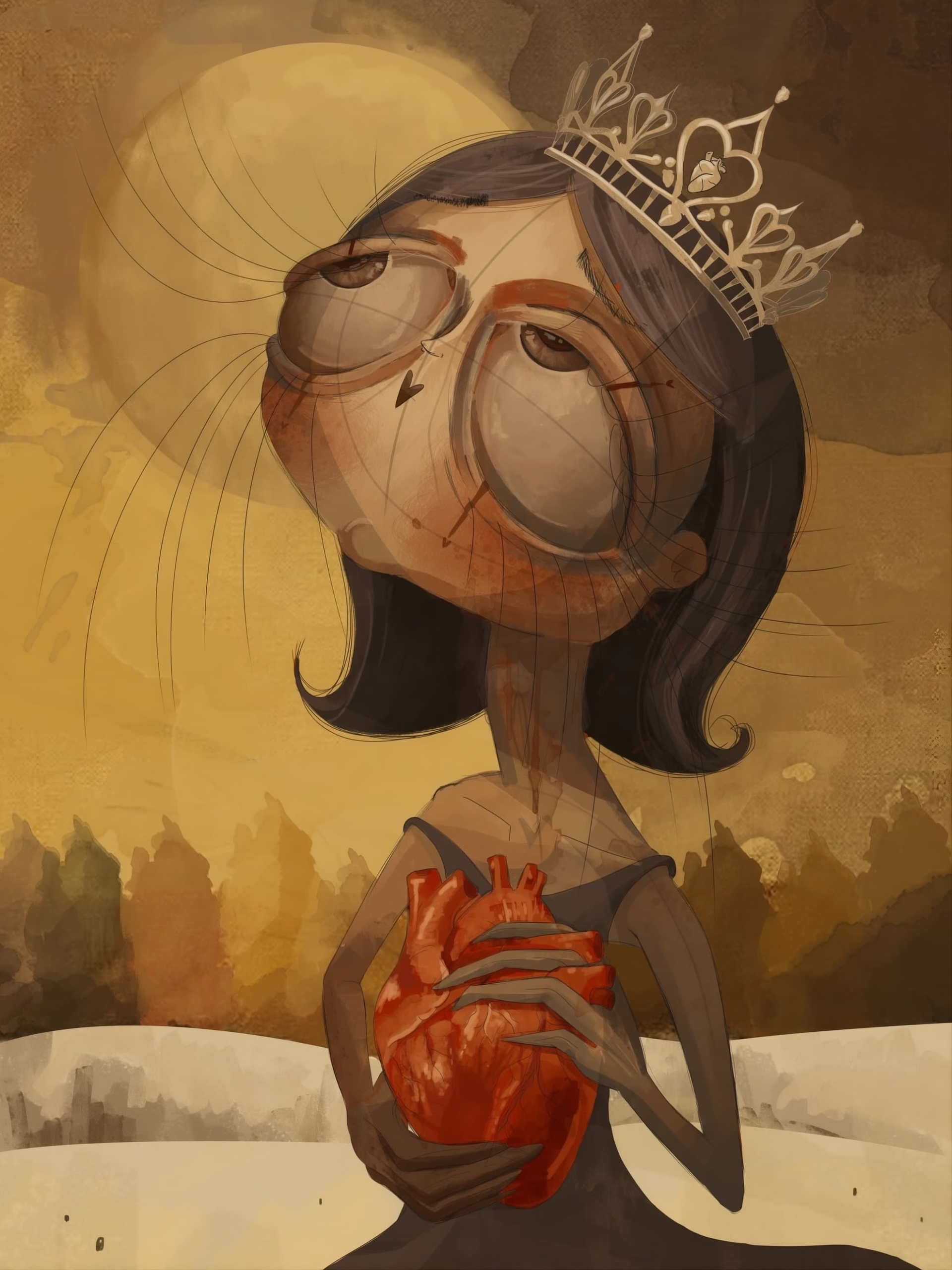
The book’s most striking single image, opening ‘La niña de las ojeras doradas’ — a portrait split by scar-like lines, with flame-wreathed hares floating above the girl’s head — came directly out of her own insomnia at the time. “I knew I wanted tired eyes and an expression of resignation and frustration,” she says. “I made a rough sketch in my notebook, then developed the rest digitally. I have a deep affection for this illustration, and I remember creating it while I was, fittingly, exhausted and very sleepy myself.”
For most of the book, text preceded image; the closing story was the exception, illustrated first with the prose built around it afterward. Her process has since evolved past that sequence entirely — she now writes and draws simultaneously, and sometimes lets an existing illustration generate the story that follows it.
The Cover Reveal
The cover asks to be misread, and Amarilla is direct about correcting that misreading when it happens. What looks, at a glance, like a wide-eyed boy holding a red horned creature on a leash under festive pennant bunting is neither of those things.
“The child is not holding a balloon or a creature,” she says. “The chain is attached to a woman hanging above him, and what might look like festive pennants are her feet. The idea was to disguise a disturbing scene with elements that initially feel innocent and playful.”
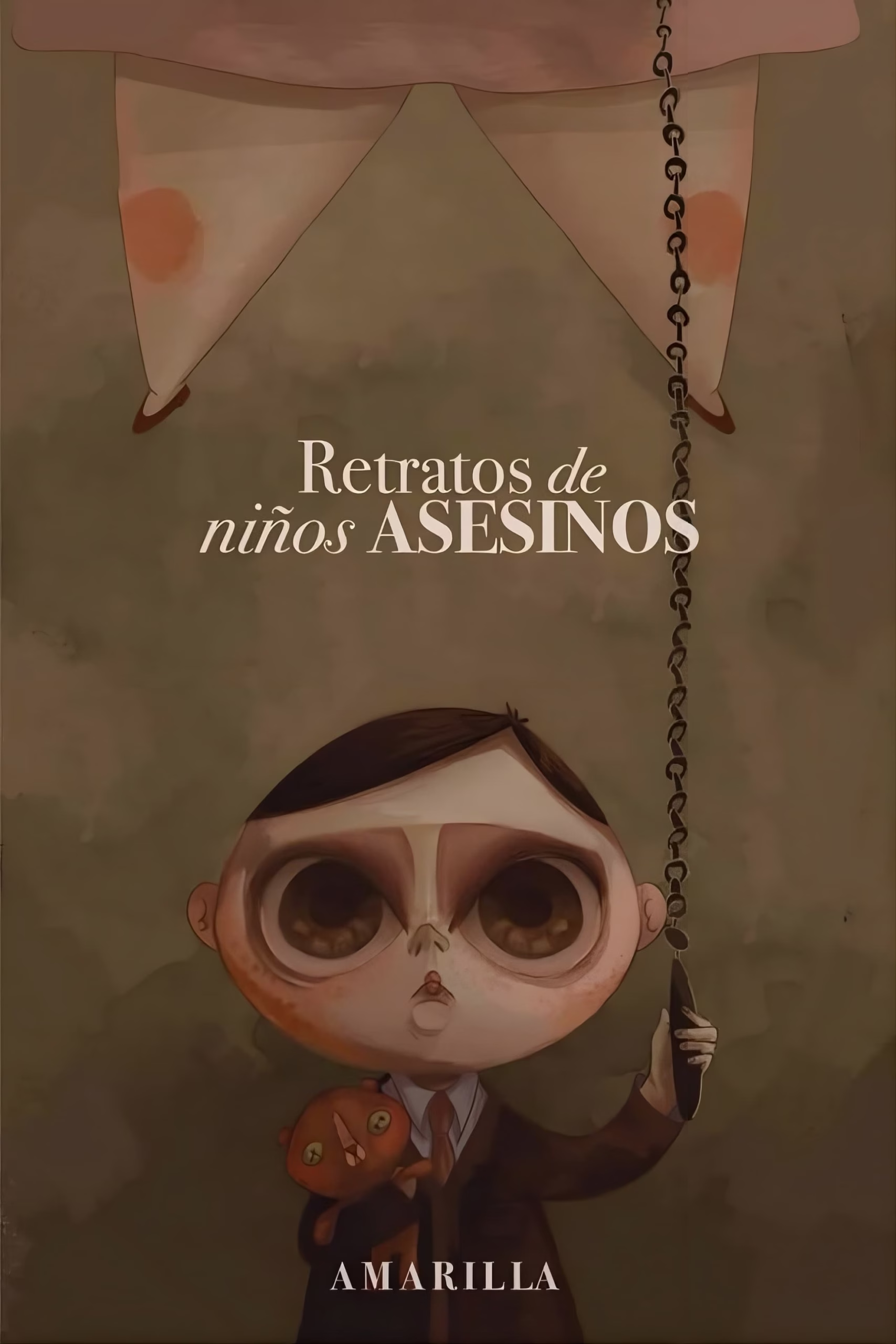
The contrast she was reaching for, she clarifies, was not between celebration and darkness as separate registers — it was the friction between the visual vocabulary of childhood innocence and the scene actually hidden inside it. The illustration itself was the first one she made for the book, though it became the cover only much later, after the anthology’s shape had already settled.
The boy on it is not an outside host figure; he is the protagonist of the book’s first story.
Complete Independence
‘Retratos de Niños Asesinos’ carries no imprint. It reaches readers through Amazon and, across Latin America, independent Mercado Libre listings, entirely outside institutional distribution.
For Amarilla, that is a description of temperament as much as strategy. “I’m a very independent person,” she says. “I like having as much control over my work as I can and choosing the people I collaborate with. Self-publishing allows me to do that. It also means taking on all the responsibility, but I’m happy with that.”
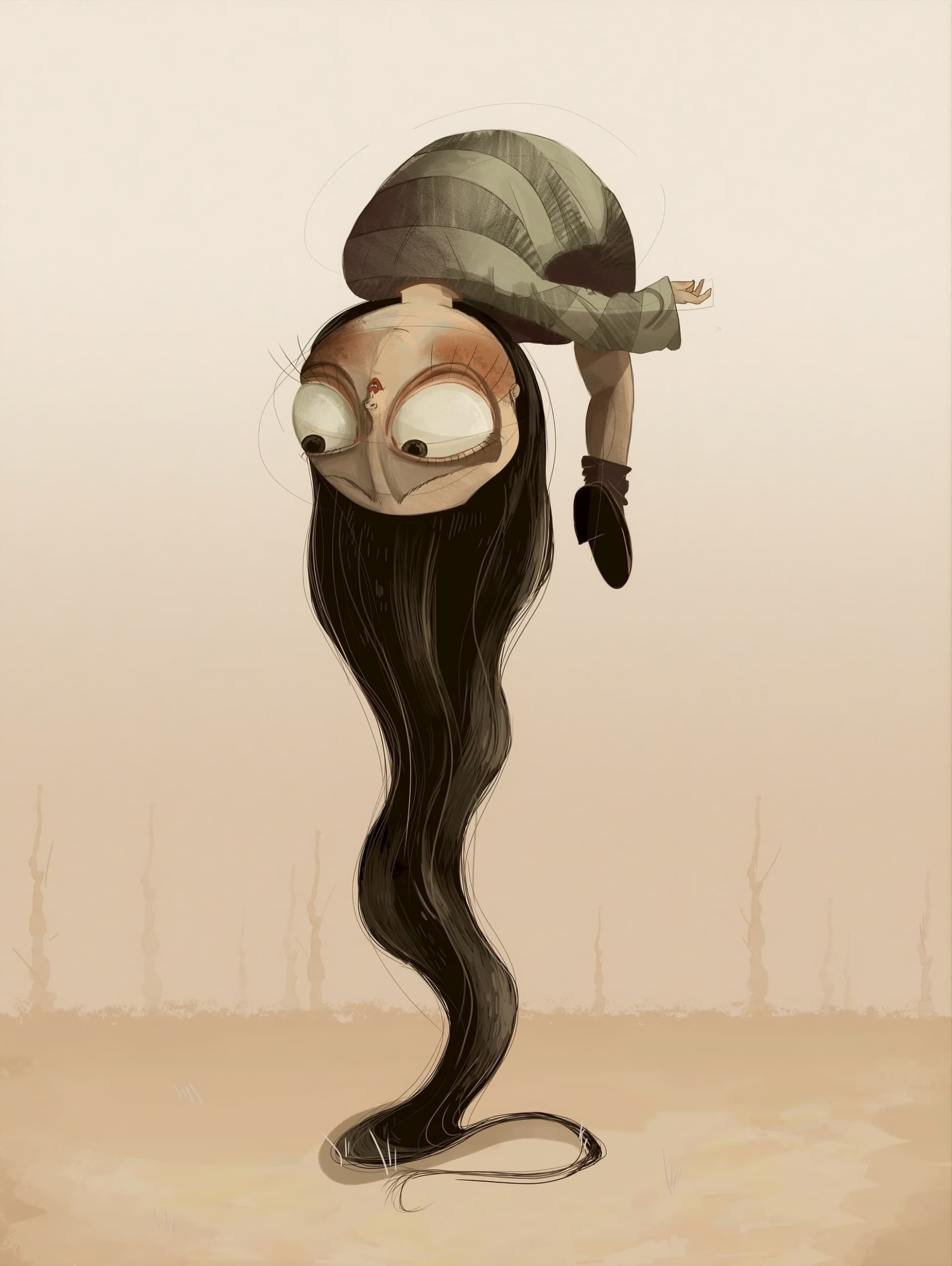
The years before the book existed were spent, by her account, finding an artistic voice and building a community before pursuing a bound anthology at all — a book, rather than an editor’s acquisition process, was the goal from the start.
Control extends to how she manages her own audience, too, including the content she makes about her process. She keeps the two mostly separate by design. “When I’m creating, I don’t think about the audience, I just focus on the work itself,” she says. “Creating content is different because then I do think about how to communicate what I do. Keeping that balance isn’t always easy, but I try.”
The distinction matters more now that the practice has shifted from client work to something fully self-directed — this has always been her full-time job, she notes, but she did not always depend on it so directly. Publishing the book let her build a small team, which has freed up time and lowered the daily pressure of running everything herself.
That independence extends to her name. Amarilla is a pen name standing in for a separate legal identity, and she describes the distinction as more than a professional formality: “Amarilla represents everything I want to be and everything I want to create. There’s something magical about choosing your own name — it can come to represent you more deeply than the one you were given.” It also extends to process — writing and illustrating a single book alone means every disagreement over how prose and image should meet happens inside one person. “I disagreed with myself on five out of the seven stories,” she says. “It was my first book, so balancing the writing and the illustrations wasn’t easy… I usually resolve those creative disagreements through a lot of reflection.”
Once the book is finished, that same independence turns into distance: she describes herself as “completely incapable of rereading” her own published work, since all she can see afterward are its flaws — easier, she has found, to trust that it was good enough and move on.
Asked to choose between keeping only the writing or only the illustration, she picks writing — reluctantly, and by her own description, from inside a kind of infatuation with the newer practice: “Drawing has saved my life, but right now I’m in that falling-in-love stage with writing… So, as painful as it is to say, I’d have to kill drawing.”
Folklore Kept Distant
The Bogotá savanna carries its own inherited dark geography — the Muisca account of Bochica striking open the rock wall at Salto del Tequendama, the abandoned hotel above the falls with its own nineteenth-century history, and a set of better-known folkloric figures, La Tunda, La Patasola, Madremonte among them, built around danger to children rather than danger from them.
Amarilla’s own account keeps all of it at a deliberate remove. Bochica’s story, she says, “has remained somewhat distant from my personal experience,” and her characters were not shaped by it: “I wasn’t consciously influenced by Bochica’s story. My endings come from the characters themselves and the emotions I want to leave with the reader.”
The same distance applies to the folkloric figures whose usual pattern her own children invert. “Those traditions were not a conscious influence on the creation of my characters,” she says. “My fears and inspirations as a child came more from other forms of horror and fiction, rather than Colombian folklore.”
Her sense of dread, she adds, does not come from documented places or historical tragedy at all, but from something closer in: “emotions, human nature, and the darker sides of everyday experiences.” She would still consider the Tequendama corridor for a future story, if the right one called for a real, cursed Bogotá location — but the pull, on her account, would be narrative rather than inherited.
Pressed on what a first-time reader should know that a critic or gatekeeper might not flag, Amarilla’s answer was less about craft than conviction: “I want you to know that fantasy can be a way of understanding reality.” It has a fitting note to carry into the book she is already writing — a second volume she expects will run “much more mature and deeper” than the first, built on the same children but with the foundation of understanding them that the first book cost her to earn.
It is also a long way from where the project started. “Originally, I wanted to create books for children, fully illustrated and without text,” she says. “But the unexpected turns of this journey have led me to create books that are not meant for children, but about children who are not quite children anymore.”
‘Retratos de Niños Asesinos’ is available now as a self-published paperback, through Amazon and, across Latin America, through independent Mercado Libre listings — the same channels that carried Amarilla’s illustrated shorts before this first bound anthology.
Our earlier coverage traced the project’s move from an ongoing illustration practice into its debut volume, presented and signed at FILBo 2026. Set against a second volume Amarilla says will run deeper than the first, it is a project worth following into its next stage.
For readers who have already picked it up: which of the seven portraits unsettled you the way the teddy-bear story unsettled her — and is this the register of quiet, morally gray horror you would want to see more of?
Leave a Reply