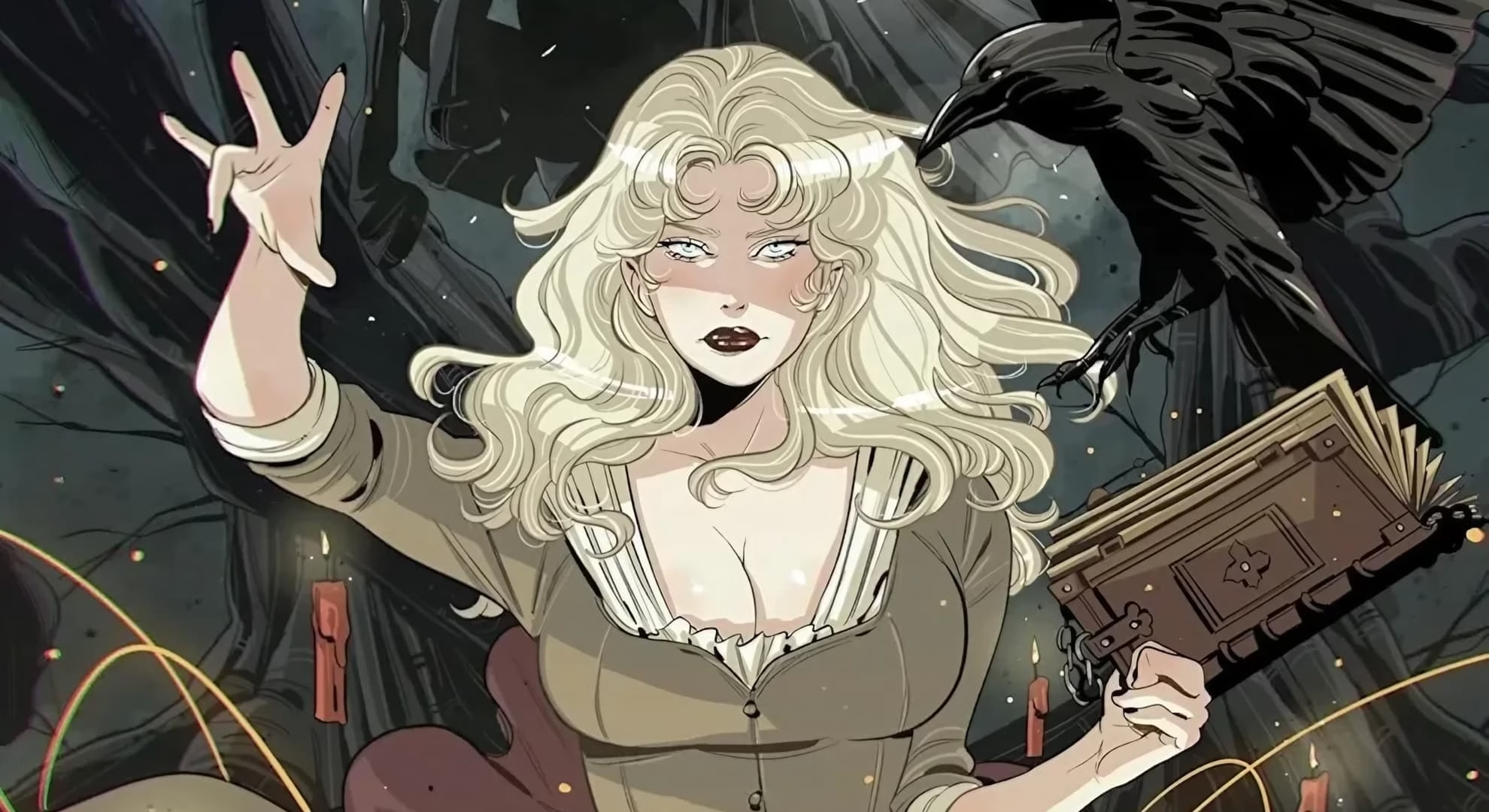


A prequel comic built around a villain rather than a hero commits to a specific kind of patience. It cannot rely on the arrival of a monster for its tension, because the monster’s arrival is already promised on the cover of the source material. What it can do instead is slow the frame down on the choices that produce the monster, one at a time, until the audience understands the transformation as an accumulation rather than an event.
That is the wager IDW Dark has been running since May of 2026 with ‘Sleepy Hollow: The Witches of the Western Wood,’ a five-issue series written by Delilah S. Dawson with art by Jose Jaro, colors by Xenon Honchar, and letters by LetterSquids. An editor had not been confirmed in the announced materials at the time of publication.
Chop Chop Chop
‘Sleepy Hollow: The Witches of the Western Wood’ #4 reaches comic shops on August 19th, 2026, priced at $4.99 USD, approximately COP 15,760, across 32 full-color pages. Cover A comes from Corin Howell, with a 1:10 incentive variant by Piotr Kowalski joining the earlier variant program built around Serena Mercado and Andy Price.
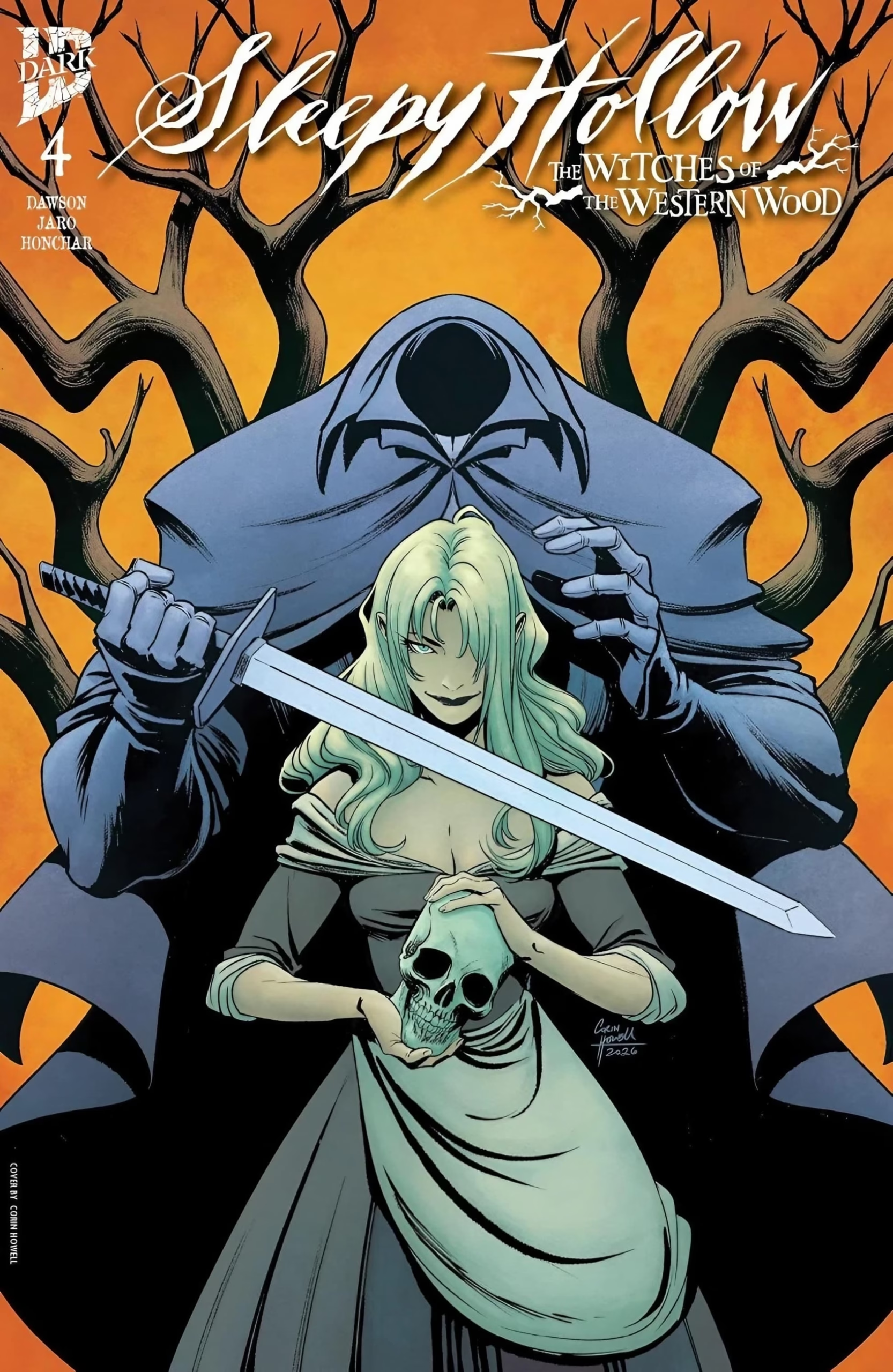
The solicitation copy leads with a percussive stage direction rather than a plot summary: Sarah Archer, swinging her axe with what the copy calls no shame, cuts down residents of Sleepy Hollow she has come to despise. Each killing brings her open joy and strengthens the dark magic growing inside her, and the specter of the Headless Horseman looms behind the violence, aware that once Sarah gathers sufficient power, she will call him into being and he will ride again.
Where the first three issues built Sarah’s motive in private, in the cave and in the shadow of her twin, issue #4 moves that motive into public view. The axe is not concealed, and the killings are not accidents dressed up as folklore. The issue commits to showing Sarah as an agent of the coming legend rather than a passive vessel for it, a distinction the series has been working toward since its debut.
The Twin Who Stayed
Issue #3, released July 15th, 2026, had not previously received coverage on this site, and its plot carries directly into what #4 escalates. Sarah watches her twin Mary grow close to the people of Sleepy Hollow, the same townspeople who turned their backs on the Archer family, and her jealousy curdles into stalking. She sullies Mary’s reputation and moves to seduce the men Mary shows interest in, using intimacy as another weapon in her arsenal against her sister.
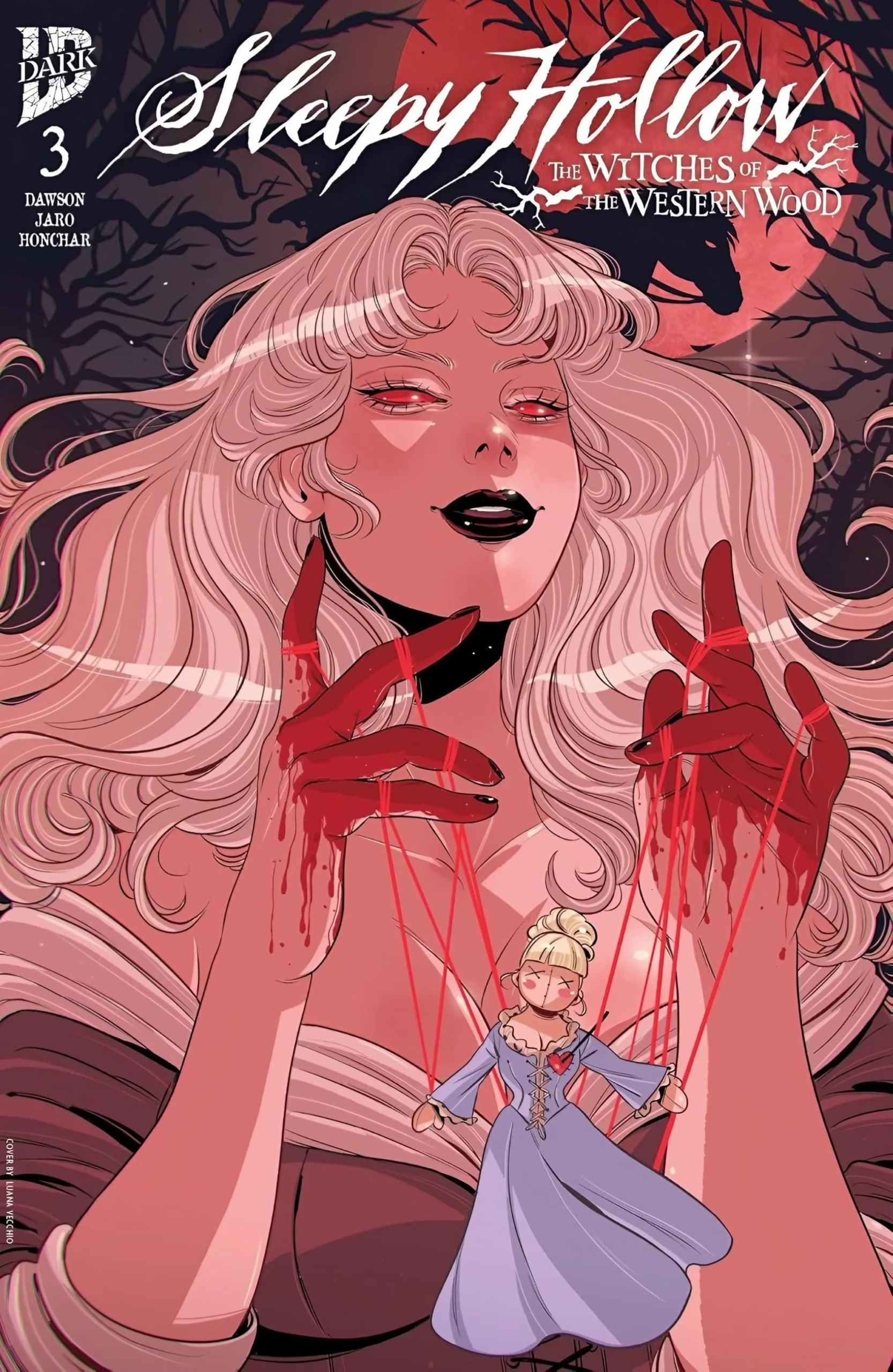
Mary, for her part, spends the issue discovering how far her sister’s magic has gone. After a failed experiment, she attempts to bring her sister’s dead fox back to life, and the creature returns to the cave the twins share, startling Sarah in the process. Recognizing the depth of what Sarah has become, Mary leaves the cave for an abandoned house in town, taking work as a live-in nurse so she can watch her sister from close range rather than confronting her directly.
That decision to observe rather than intervene is what issue #4 punishes. Mary’s proximity does not slow Sarah down; it gives Sarah a reason to escalate, since every resident Mary befriends is another target for a grievance that predates the friendship.
A Soldier Who Lost His Head
The series draws its ending from a documented historical account rather than an invented one. Washington Irving’s 1820 short story ‘The Legend of Sleepy Hollow,’ published in ‘The Sketch Book of Geoffrey Crayon, Gent.,’ fixed the Headless Horseman as the ghost of a Hessian mercenary who lost his head to a cannonball at the Battle of White Plains in October of 1776, one of two engagements fought near the future setting of Irving;s tale during George Washington’s retreat through Westchester County.1
Irving had absorbed the region’s Dutch settler folklore firsthand as a teenager, when a yellow fever outbreak sent his family from New York City to the Hudson Valley, and he drew the character’s silhouette from a wider European tradition of headless riders that includes the Irish Dullahan and the German Wild Huntsman.
What Irving fused was a Revolutionary War casualty and a Continental ghost story into a single American legend, and that fusion is precisely what ‘Witches of the Western Wood’ inherits and works to explain from the other direction: not the ghost who already haunts the valley, but the living woman whose violence will eventually summon him.
Second In The Line
‘Witches of the Western Wood’ is the second Sleepy Hollow comic IDW Dark has produced from the Tim Burton film license, following the continuation series ‘Return to Sleepy Hollow,’ which this publication has covered as part of its ongoing attention to IDW Dark’s original horror output alongside titles such as ‘Operation: Iron Coffin.’ Where ‘Return to Sleepy Hollow’ extended the story forward from the film’s ending, ‘Witches of the Western Wood’ works backward, asking what shaped the woman who became Mary Van Tassel before Ichabod Crane ever rode into town.
The prequel structure changes what suspense means in the comic. Readers of the film already know Mary’s fate and the Horseman’s role in it, so the series cannot generate dread from uncertainty about outcomes. Instead it generates dread from watching a specific sequence of grievances, each one plausible on its own, accumulate into the person the film already told audiences to fear.
The Villain Made By Choice
Dawson’s structure treats Sarah Archer’s turn to violence as neither an accident of birth nor a single traumatic snap, but a sequence of decisions made under conditions of neglect and jealousy that a reader can follow one panel at a time. That approach places the series closer to the tradition of the sympathetic monster than to the jump-scare mechanics its Halloween-adjacent branding might suggest, asking what creates a villain rather than simply staging one.
Whether the final two issues sustain that distinction, or collapse Sarah into the kind of inevitable monster the folklore already promises, is the question the series has one issue left to answer before its own ending catches up with the one Washington Irving already wrote two centuries ago.
Does staging a witch’s turn to violence panel by panel make the eventual arrival of the Headless Horseman more tragic, or does a folklore ending this fixed drain the suspense from the choices that lead there?
References
- Andrew Burstein, ‘The Original Knickerbocker: The Life of Washington Irving’ (New York: Basic Books, 2007), 112–118. ↩︎


Leave a Reply