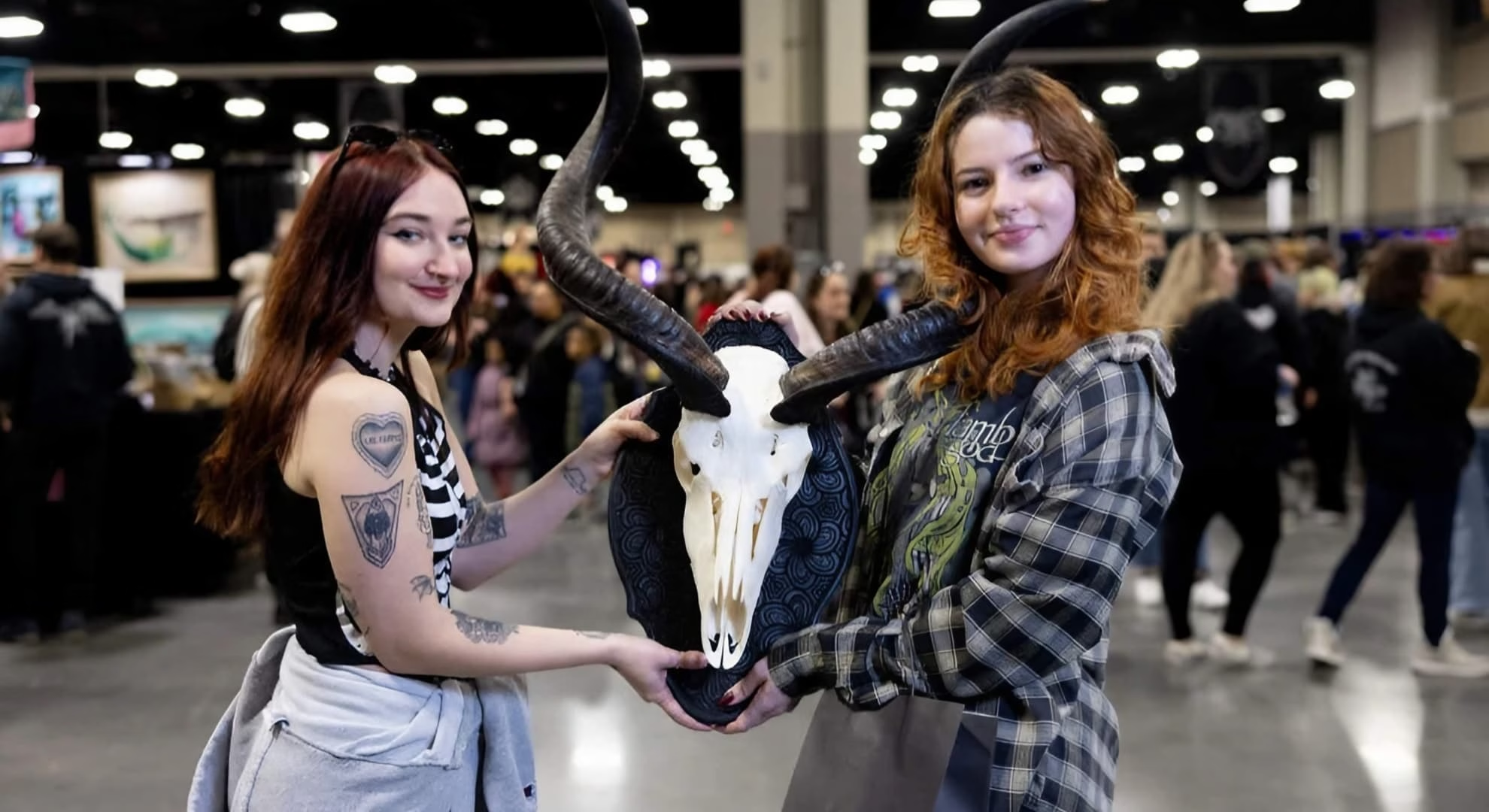


A Wunderkammer was never a single kind of room. The sixteenth-century collector who filled cabinets with narwhal tusks, deformed skeletons, and pressed botanicals was building an archive meant to outlast him; the traveling showman who charged admission to see the same categories of object a century later was building a transaction meant to end at the door. Both descended from the same impulse—cataloguing what a culture found strange enough to keep looking at—and both survive into the present, occupying the same geography without occupying the same institution.
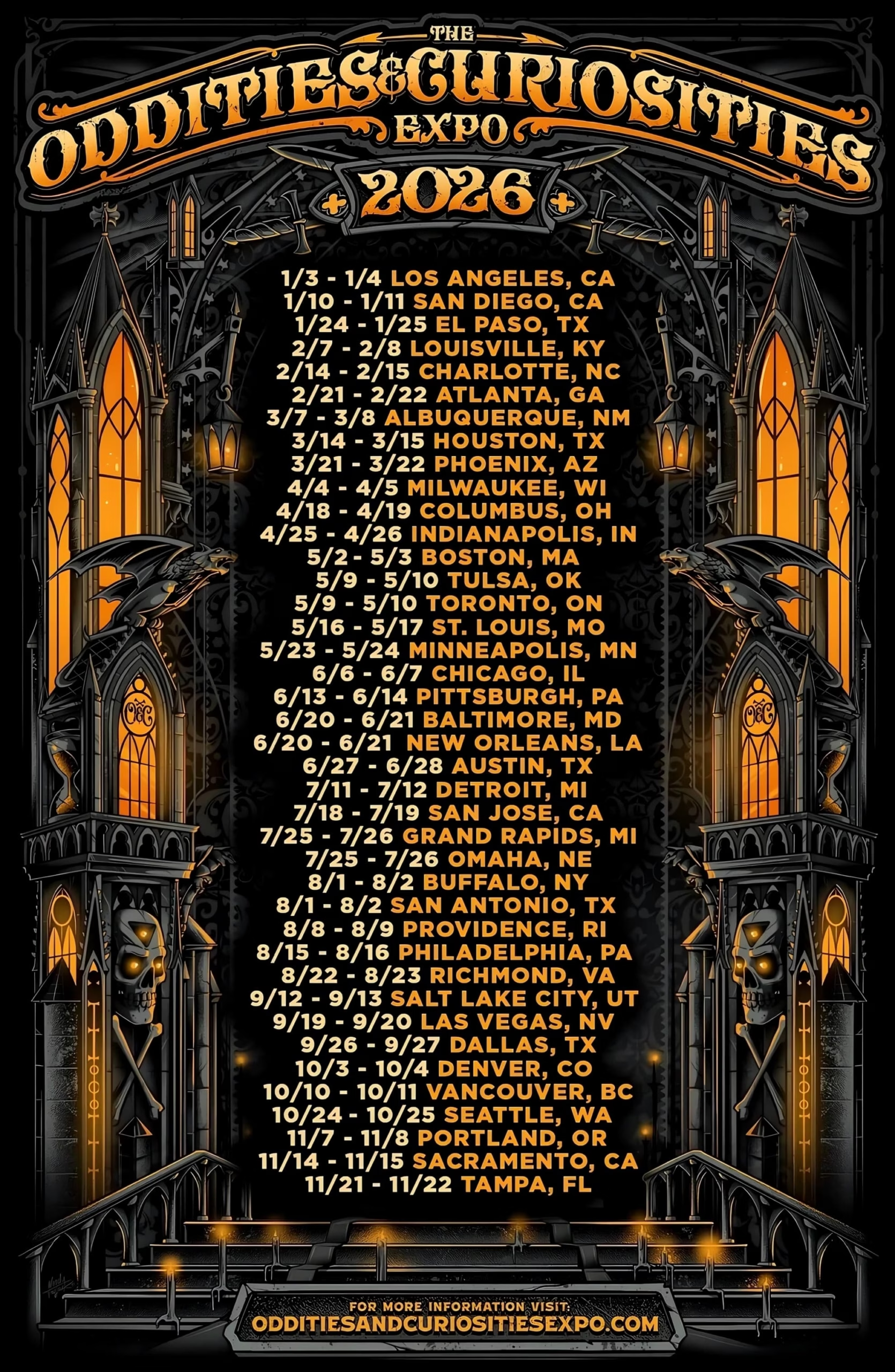
On August 15th and 16th, The Oddities & Curiosities Expo sets up at the Greater Philadelphia Expo Center in Oaks, Pennsylvania, roughly twenty-five miles from a building in Center City that has been doing the archive version of this work, without interruption, since 1863.
A Room Built to Outlast a Sale
The cabinet of curiosities did not begin as entertainment. Its sixteenth- and seventeenth-century practitioners—physicians, apothecaries, minor nobility—assembled naturalia and artificialia into a single taxonomic room specifically because no existing discipline had yet claimed the objects in it.
A narwhal tusk sold as a unicorn horn sat beside a Roman coin and a preserved armadillo not because the collector lacked organizing principles, but because the organizing principle was the strangeness itself.
That impulse split, over the following three centuries, into two distinct institutional descendants. One became the museum: cataloged, credentialed, oriented toward permanence and study. The other became the market: itinerant, commercial, oriented toward the transaction of the moment.
The Oddities & Curiosities Expo belongs unambiguously to the second lineage. Founded in Tulsa in 2017 by Michelle and Tony Cozzaglio, the traveling show now visits more than three dozen cities a year, setting up for a weekend of vendor tables before moving on. Nothing sold at Oaks is expected to still be at Oaks in October.1
The Confirmed Program
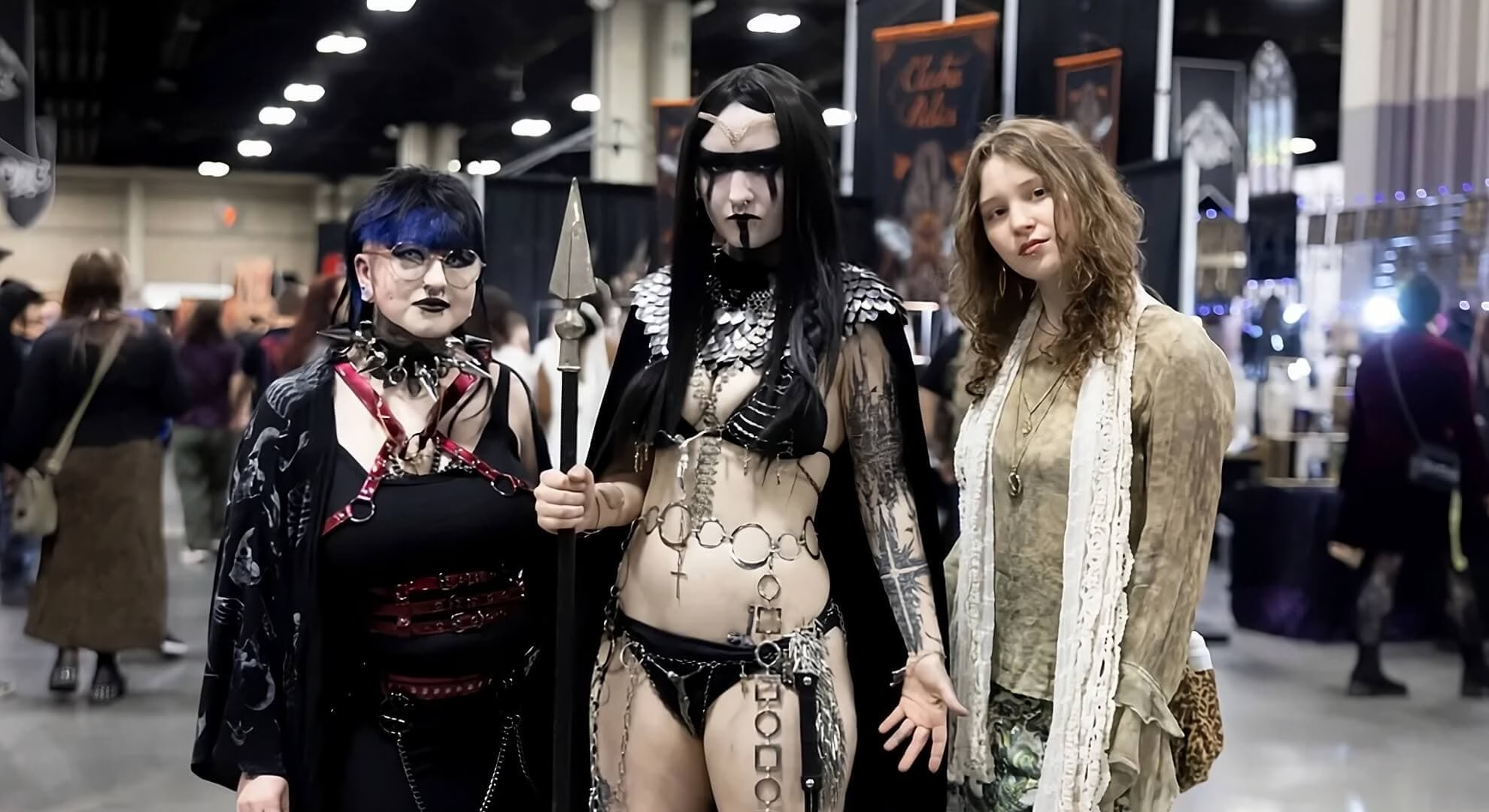
The Oaks stop runs both days from 10:00 AM to 5:00 PM, with several hundred vendors expected to fill the Expo Center’s floor with taxidermied specimens, osteological material, horror-inflected original art, antique medical devices, and funerary collectibles—the expo’s standard category range, though the specific Oaks vendor roster was not released in advance of publication. Sideshow performers are confirmed for both days.
The weekend’s one confirmed named practitioner is Heather Clark, who runs preservation workshops under the name The Sleeping Sirens and travels with the expo to select stops on its circuit. A former army medic and emergency room nurse, Clark has described her preservation work as a continuation of the same instinct that drew her to clinical care—holding matter at the point of loss and refusing to let it pass unrecorded.
At Oaks, her sessions include an opossum taxidermy mount, a fabricated “ratalope” display combining preserved rodent and antelope elements, and an octopus and tentacle preservation class using specimens from food-industry suppliers. All three formats have traveled with the expo to prior stops on the 2026 circuit, including its April dates in Milwaukee.
The Distant Archive
The College of Physicians of Philadelphia opened the Mütter Museum to the public in 1863, four years after the death of the surgeon whose personal collection founded it. Thomas Dent Mütter had assembled more than seventeen hundred anatomical and pathological specimens over his career, driven by the conviction that physicians learned more from direct observation of pathology than from any illustrated text.2
When he died, his widow transferred the collection to the College; the museum has been adding to it, under increasingly selective scholarly criteria, for more than a century and a half since.
The distinction the Mütter draws against a weekend market is not one of taste—both institutions traffic in the same broad category of object, the anatomically or biologically unusual—but of what happens to an object once it enters the collection. A specimen acquired by the Mütter is cataloged, contextualized, and held against loss; a specimen purchased at Oaks changes hands and, unless its buyer chooses otherwise, its documented history mostly ends there.
The expo does not pretend otherwise. Its stated purpose, per its own organizers, is to give unusual businesses and artists “a dedicated commercial and communal space”—a market’s aim, stated without apology.
Eight Miles to Spring City
A third relationship to the strange sits closer to Oaks than the Mütter does. Pennhurst State School and Hospital, the shuttered institution in Spring City roughly eight miles from the Expo Center, held more than ten thousand people with intellectual and developmental disabilities across eight decades before a 1968 television exposé and a landmark civil rights lawsuit forced its 1987 closure.3
Pennhurst does not fit either category the expo and the Mütter represent. It was not a market, and its version of keeping was not preservation — it was confinement, and the record it left behind is testimony to harm rather than a catalog of interest.
The campus now runs seasonally as a for-profit haunted attraction staged inside the original wards, a use the Pennhurst Memorial and Preservation Alliance has publicly protested since it opened in 2010 as a trivialization of documented abuse.
The Price of Passing Through
Admission to The Oddities & Curiosities Expo is $15 in advance or $20 at the door; children twelve and under are admitted free. Workshop tickets, including admission to the expo floor, are priced separately by class.
Placed twenty-five miles from the Mütter’s archive and eight from Pennhurst’s, the Oaks weekend does not argue that a market, a museum, and a former institution are equivalent. It argues, more usefully, that keeping is not a single act.
The Mütter keeps by cataloguing; Pennhurst kept by confining, and its record survives as evidence rather than as specimen; the expo does not keep at all, and its stated purpose says as much. Does a market built to sell and move on read as the most honest of the three rooms for making no claim on permanence, or does standing near two institutions that made permanence their business simply lend a weekend of vendor tables a gravity it has not earned on its own?
Tourism Partnership
We reach an audience that travels with intention — drawn to documented history, dark heritage, and the cultural weight of the places they seek out. If you operate tours, cultural experiences, accommodation, or heritage sites aligned with that ethos, we would like to hear from you. We consider partnerships with tour operators, travel agencies, hostels, hotels, museums, and any organization whose work engages seriously with dark tourism, gothic culture, or historical travel. We do not promote services we cannot stand behind editorially. Reach us through our Contact page.
References
- Patrick Mauriès, ‘Cabinets of Curiosities’ (London: Thames & Hudson, 2002), 9-14. ↩︎
- Cristin O’Keefe Aptowicz, ‘Dr. Mütter’s Marvels’ (New York: Gotham Books, 2014), 22-29. ↩︎
- Dennis Downey, ‘Pennhurst State School and Hospital,’ Encyclopedia of Greater Philadelphia (Camden: Rutgers University, 2013). ↩︎

Leave a Reply