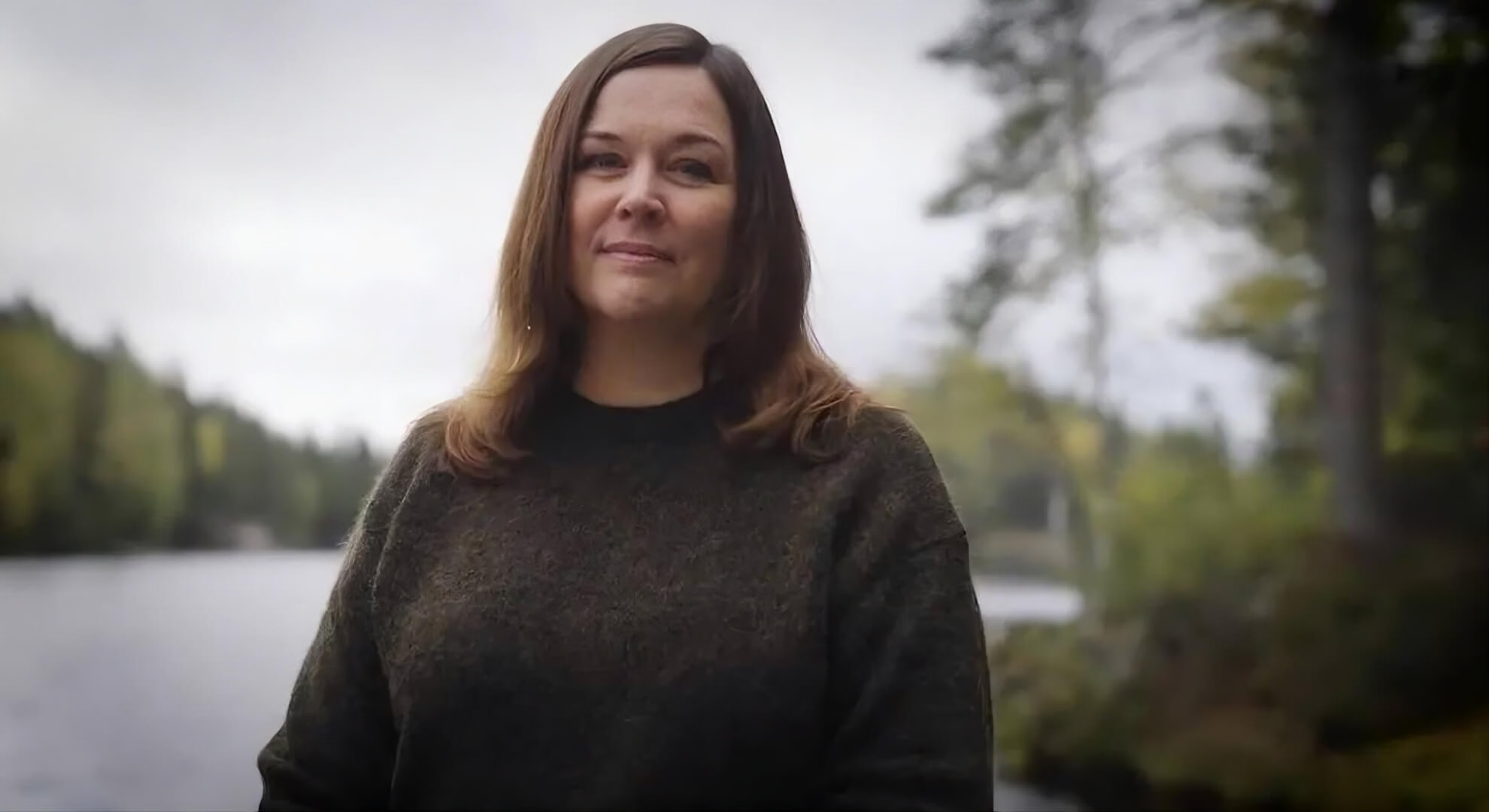


For thirty years, Hilde “Hildr” Nymoen has written the lyrics for the Norwegian black metal bands Tulus and Khold without performing in either. On April 30th, 2026, her own press, Harg Forlag, released those words as two hardcover books: ‘Syner,’ which gathers her work for Khold, and ‘Vintervolve,’ which gathers her work for Tulus. Each volume sets the original Norwegian beside her own English translation and adds her commentary on the folklore and history behind selected songs.
Sitting down to talk with us, Nymoen was direct about what she planned and equally direct about what she never considered. Her answers cover the decision to release the two volumes together, the craft of translating her own archaic Norwegian, the historical research behind Khold’s most recent album, and the practical work of running a press from a single desk.
Two Bands, Two Books
The pairing was never a question. “I was never considering releasing one before the other,” Nymoen says. She worked toward a set from the start, and the reason she gives is cumulative rather than strategic: both bands have released albums across the years, and the books hold “all my words for these bands put together in collections.” Releasing one without the other, she says, is hard to imagine.
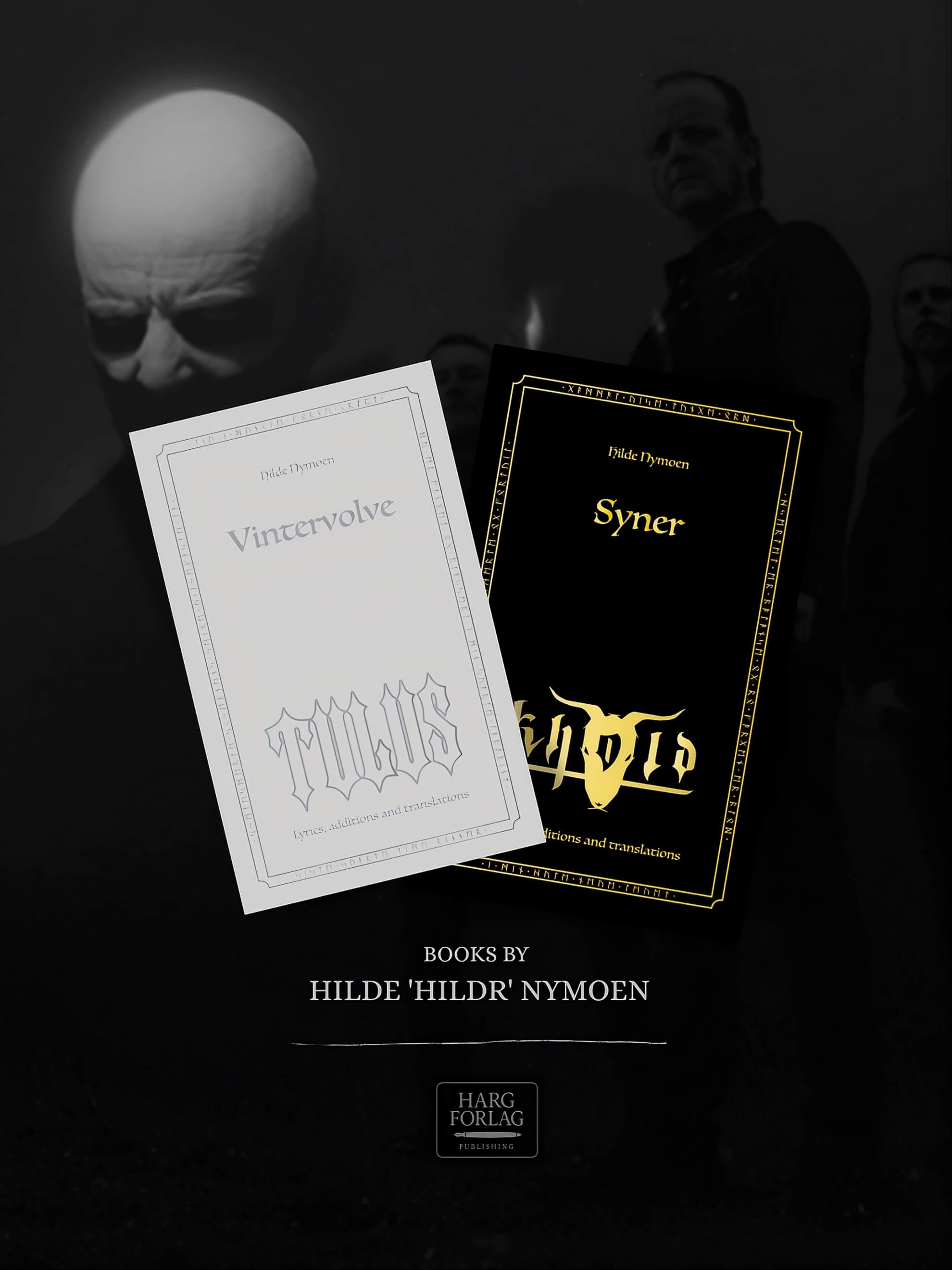
Inside that pairing the bands stay apart. The volumes group each band’s lyrics by album, and she keeps the two catalogs separate in her own mind. “I have the band in mind and always know who I’m writing for,” she says. No lyric has ever moved from one manuscript to the other; a text that one band does not use is “put on hold for this band or discarded.”
Asked whether anything was lost by not braiding the two catalogs in the order she wrote them, she answers briefly: “Honestly I don’t think anything got lost by keeping Tulus and Khold apart here. They are two bands with different catalogues.”
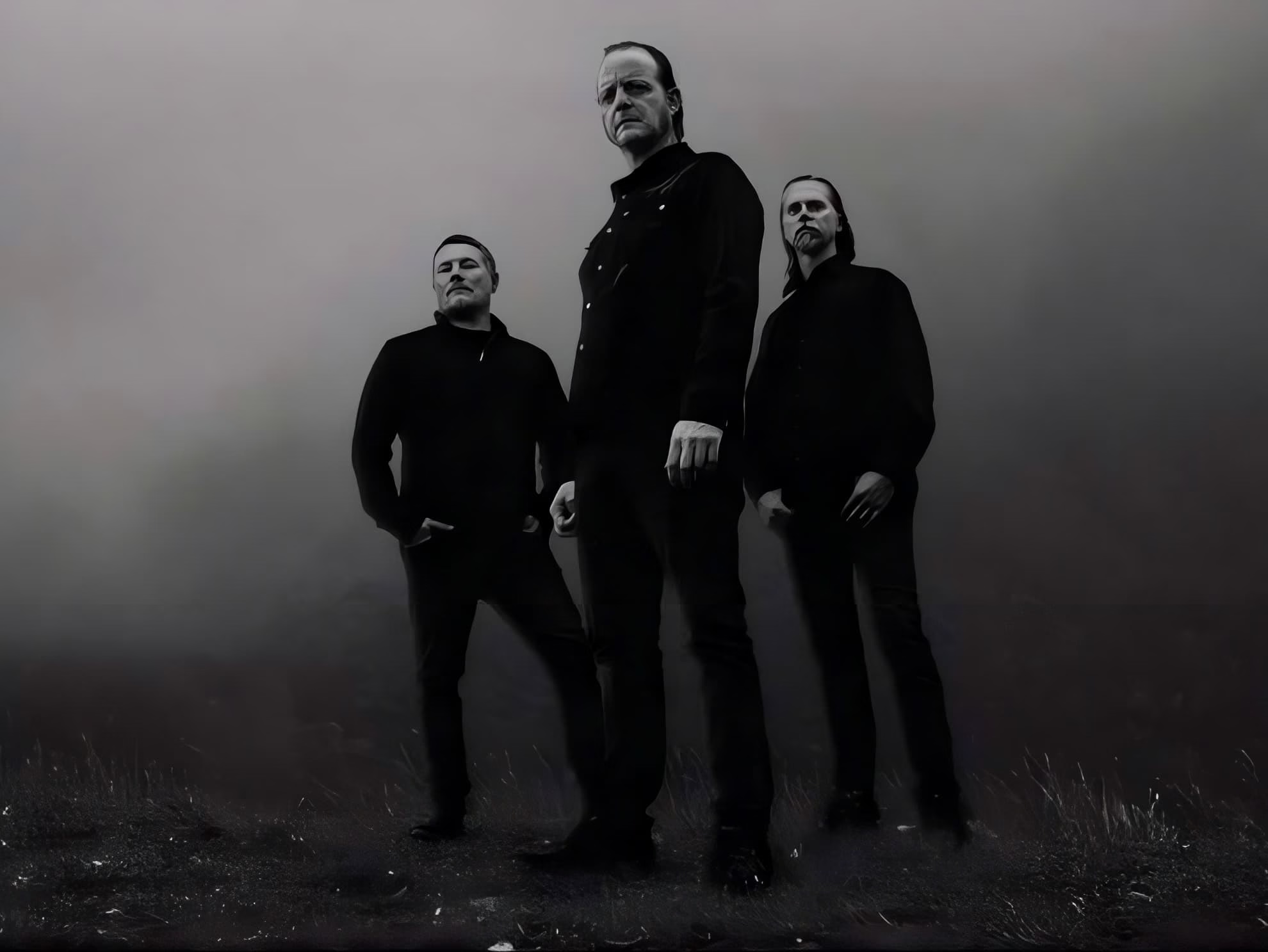
‘Vintervolve’ is framed through a single song. The book opens with the full Norwegian text of ‘Tulus,’ the title track of the band’s 2026 album ‘Morbid Desires,’ and holds the English translation until the final pages. Nymoen says that was an early decision made while working on the layout. “The lyric presents the atmosphere, moods and topics that I am inspired by in my writing for Tulus,” she says, and delaying the translation became a way to close the collection. The song also sits beside a photograph of the band.
She works largely alone. The bands sometimes ask for a topic, a pace, a length or particular details, then compose the music themselves. “More often than not, tying the lyrics to the music goes very well,” she says. Writing for the bands of her husband, Sverre Stokland, from outside them has not drawn her toward the stage. “I seriously might have stirred up some problems performing in the bands…” she says, acknowledging that she is not musical in that sense and would have found it difficult to have no say in the composing.
Translation and Revision
Writing for music, Nymoen says, “requires both the pen and the ear.” Asked which poetic technique she considers most central, she names no device and offers a standard instead: “I aspire to make the words flow and have rhythm, and I try to write the lyrics that suit the vocals.”
Her Norwegian leans on “old fashioned and outdated words,” and she sometimes combines words into forms of her own, habits that make some lines, in her estimate, “almost impossible” to carry into English. Her method is to keep hold of the story and let the mood decide the rest. “I always keep hold of the stories and translate them in the most accurate way that I can, but sometimes English sentences come to me more from the atmosphere of the Norwegian lyrics than the words,” she says.
Her English is archaic as well, and she writes English rather than American English. Asked which poet or translator shaped that standard, she names none: the task became “easier when I let everything else go.” Her stated hope for the English reader is plain. “My sincere hope is that the readers of the English version will have the same reading experience as the Norwegian readers,” she says, and she notes that some English words she found are no longer in use and may need to be looked up.
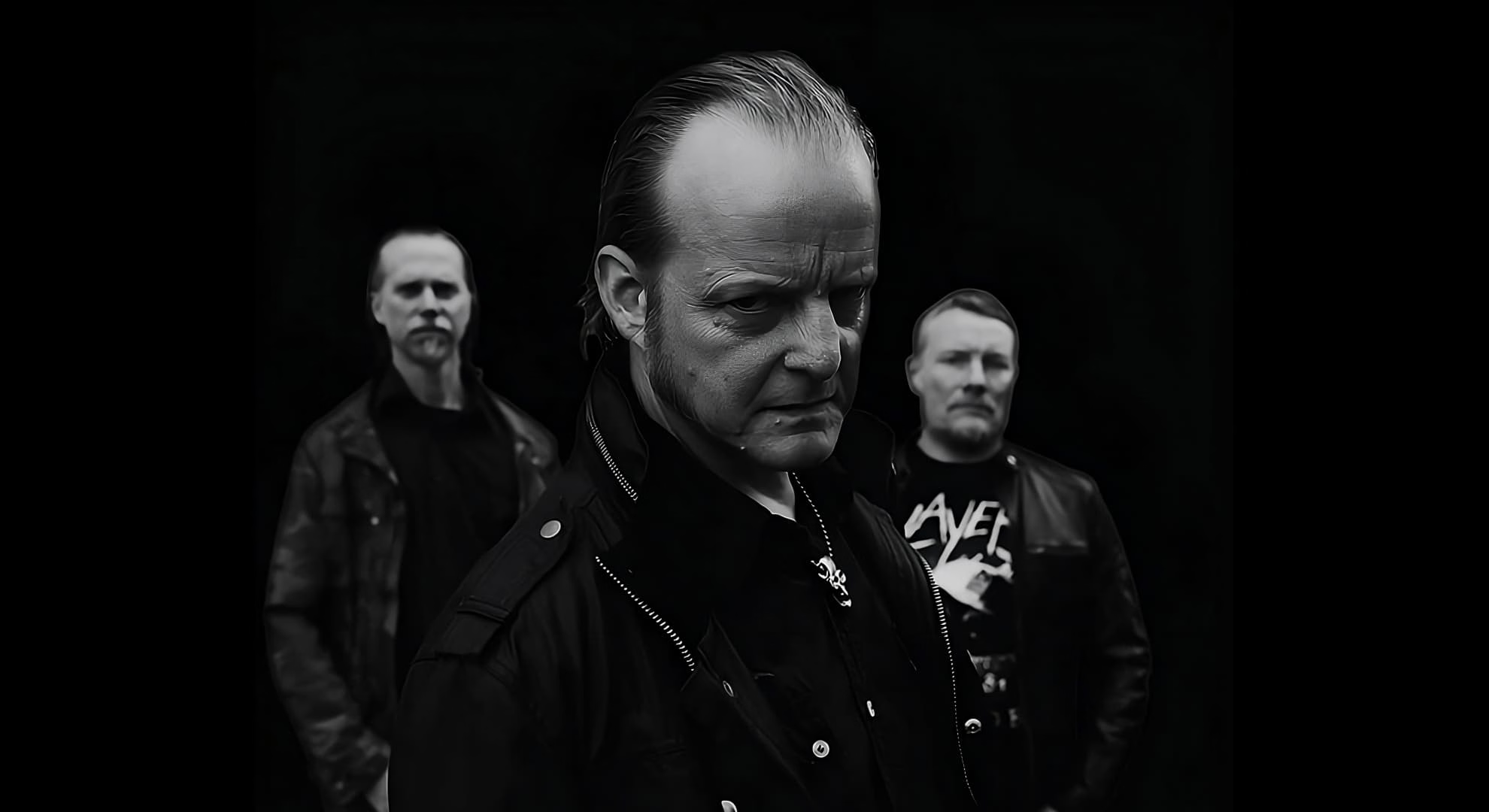
Only one Tulus album, ‘Biography Obscene’ from 2007, was written directly in English. She was asked to write it that way because the band wanted to try something new, and she welcomed the change; it let her use the full range of the language without worrying that she had said the same thing on the previous release. The band, she guesses, did not find the experiment interesting enough to continue.
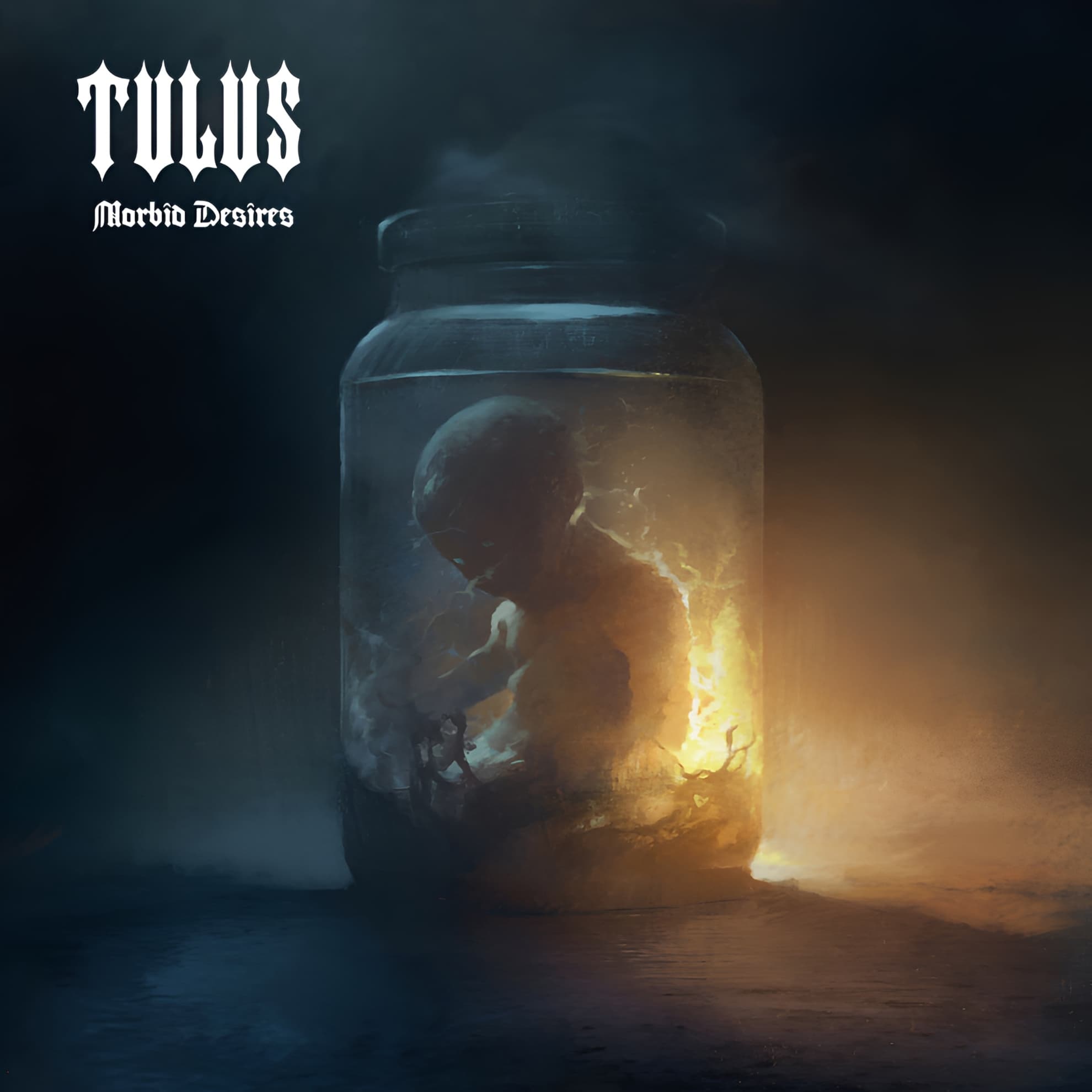
Returning to old work has its own constraints. ‘Salme II,’ on ‘Morbid Desires,’ is a sequel to ‘Salme’ from ‘Evil 1999,’ a funeral in the forest for the Collector, a figure she says frequents her Tulus lyrics. “‘Salme II’ had to be as melancholy and respectful as ‘Salme,’” she says. “I did not have the same ability to change moods or discard thoughts.”
By contrast, the 1995 lyric ‘Tunge dråper fra et mørkt hjerte’ was extended for ‘Vintervolve,’ not revised. “I did not change anything, I just added,” she says. She kept the three verses from 1995 untouched and wrote two more thirty years later. “My 30 years older self read the lyric from 1995 and found this lyric to be a nice example of me being a slightly different lyricist today.”
She is candid about the flaws in her early work, some of which she finds “a bit simple” or marked by naivety. “They are my legacy, though, and they are 30 years old.” She was still surprised that she could have written some of it today. “I guess there is a little corner in my brain that still holds the same darkness and the capacity to ration it.”
The example she offers is ‘Draug,’ and the line “Draugen, med tenner som hunder.” She asks herself whether the creature really has teeth like a dog, and whether the line is dark or humorous. The English version drops the teeth, she says, because of the rhyme and not for any larger reason. The song earned its weight through the music and the vocals, and it is now one of her favorite Tulus songs and an absolute favorite live.
As for what changed across the early albums, she cannot pinpoint anything. “I can not finish draining the darkness for inspiration. Folklore, history and grief hold a vast amount of stories to be told.”
Research and Annotation
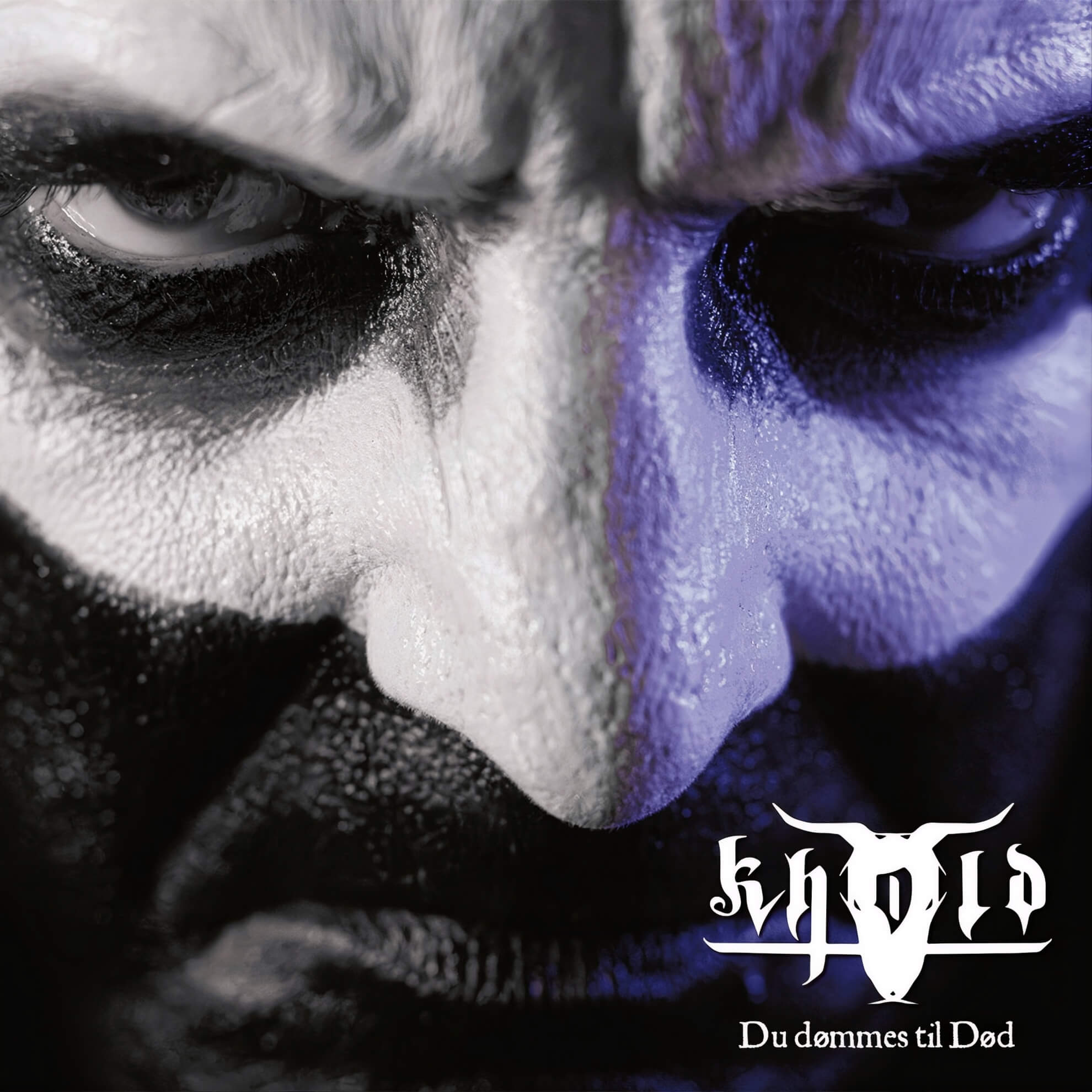
Khold’s most recent album, ‘Du dømmes til Død,’ drew its nine songs from documented Norwegian executions, and Nymoen says the work suited her. “I really liked writing for ‘Du dømmes til Død,’” she says. “A lot of research had to be done and a lot of stories had to be dug up.”
The concept album was more intense than writing single lyrics, and she was reading and learning throughout. “Feeling inspired and eager to tell the stories in my own way, I was ahead of the deadline this time,” she says, adding that she felt honored to present the stories to the band’s audiences.
Her filter was reliability. She wrote about the cases that she felt fit the release and wanted “information that I could trust, and that I would be able to double check in different places.” Few stories were researched in full and then dropped; the main reason to set one aside was a lack of adequate sources. Beyond that, she says, “I guess I just have to feel it.”
Her song ‘Skoggangsmann’ tells the story of the murder that earned Ole Olsen Sevle his death sentence; by her account he was tracked down after two years on the run and beheaded at the age of 26 in 1834. “I find this story perfect for the album,” she says.
She wrote none of it at the sites themselves. She has not visited the Steilneset memorial in Finnmark, though she allows that “there might absolutely be a certain feel to visiting such a place,” and she visited none of the execution grounds while writing ‘Galgeberg og Retterbakke.’ She is able to say what remains: most former execution grounds are now “built-up areas, parks or wildland.”
By her account, the Oslo sites at Galgeberg and Etterstadsletta are now residential areas with information signs; Bergen has an in-ground plaque at Galgebakken and a memorial stone in Nordnesparken; Anda in Gloppen has a stone sculpture of a witch burning; Løten has a rebuilt scaffold at Ekromstormyra; and Leinstrand, south of Trondheim, has a statue of Lisbet Nypan, who was accused of sorcery and burned in 1670.
Outside influences stayed outside the writing. She says she has “never given thought to the labels,” so Khold’s moves between labels never changed a lyric, and she would listen if someone told her something was off.
Andy La Rocque produced both ‘Du dømmes til Død’ and ‘Morbid Desires’ at Sonic Train Studios, yet she kept the two projects separate: “One album at the time, regardless of label or producer.” She will always stay alert, she adds, to the band and the people around them.
The annotations in both books follow a rule she states clearly. Where a lyric concerns Nordic folklore, Norse mythology or real events, she gives the reader some insight into what it means. Her reasoning is simple: “The lyrics can be read with more weight when you know something about them.”
She cites who the people were, when and how they lived and died, and places a reader can actually visit. Lyrics written “out of darkness, hurt and evil” and carrying more mood than fact receive no explanation. “Read them and feel them, they are written for the senses.”
A Lyric for Borild
One case did not make the album and did make the book. Nymoen’s sister, who is interested in genealogy, found that their nine-times-great-grandmother, Borild Skjefstad, sat on a committee in 1625 that ensured a woman was burned at the stake. As Nymoen explains it, a witch trial required twelve “honorable, decent and well-mannered” women to vouch unanimously for the accused’s innocence, and a woman who voted for acquittal would most likely be accused of witchcraft herself.
“One can only assume that this was a danger not worth the risk,” she says. The woman who was condemned is named in the book as Ingeborg Knutsdatter Økset.
The discovery came after ‘Du dømmes til Død’ had been recorded, too late for the album, and the text found its place in ‘Syner’ instead. Nymoen says she approached it as she had the others, reading about both women and looking for the ideas and emotions that could become a lyric. Because the song was never recorded, she can only guess how the band would have used it, but she believes it would sit well among the other songs on the album.
The difference lay in the position she was writing from. “It did feel a bit different to write a lyric that was about the trial committee rather than the convicted,” she says. “I could have made her a lot darker and colder, but she was not the judge and she was not the executioner. She was chosen among the women of the city for a job no one would want and probably got a lifetime of grief for what she had to do.” She is careful about what she claims to know. “I have no chance to know what she was feeling or how hard it was for her. Unconsciously, the fact that she was family might have done something with me writing about her.”
Folklore and Imagination
Nymoen did not grow up in fear of the creatures she writes about. “Growing up I was never told to beware of the Fossegrim or the Draug or any other folklore creature,” she says. To her they are creatures from Norwegian folklore, “to remember and bring forward again as part of our historic beliefs.”
On ‘Fossegrimens Vakt,’ from ‘Morbid Desires,’ she chose to show the fossegrim keeping watch. What drew her was a creature that could do great damage if misled or disturbed and yet wanted to keep his waterfall in calm and quiet. “I wanted to keep him there alone in the darkness, with his own clean fiddle strokes to back up the ambience,” she says. “I wanted the text to dwell in the same quietness that he would demand.”
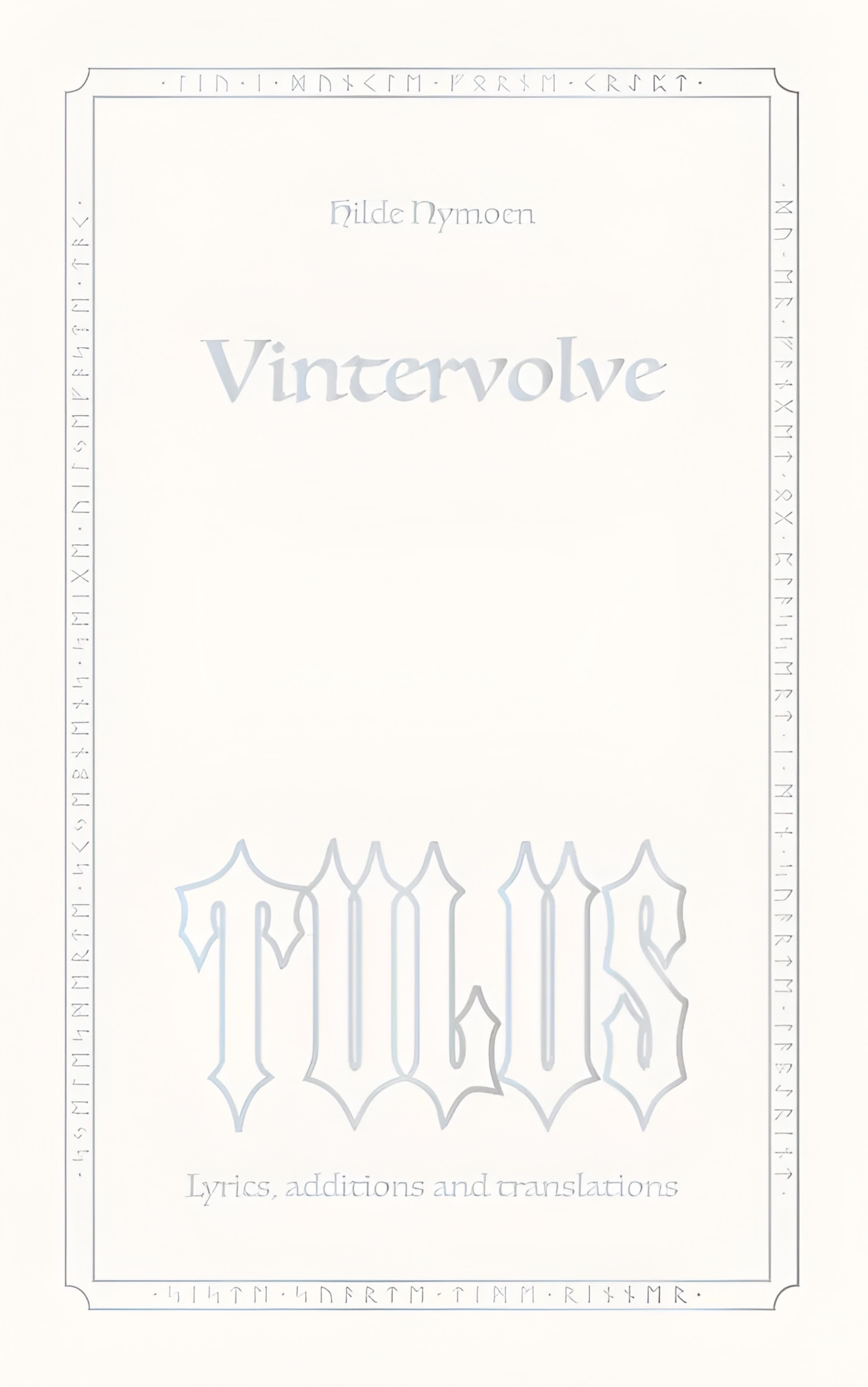
The title ‘Vintervolve’ is, in her telling, close to a creation of her own. “First of all I love the word Vintervolve, and I see her in a way as my own creation,” she says, and the figure suits the white Tulus book. The volume contains a text titled ‘Winter völva,’ and she says that if you read it, “she could probably have written it all.”
She is explicit about how much of this is history and how much is invention. Documented records earn more of her trust, and the most widely documented history earns the most, if accuracy is the aim. But pre-Christian material, she says, can be interpreted personally by lyricists, fiction writers and poets “to paint a picture of life, surroundings and experiences in the ancient times.” Her position is a clear one: “My lyrics are not only historical facts.” She describes pictures of imagined people and their anguish, stories inspired by history, dark atmospheres, grief, nature and wildlife.
Designing the Volumes
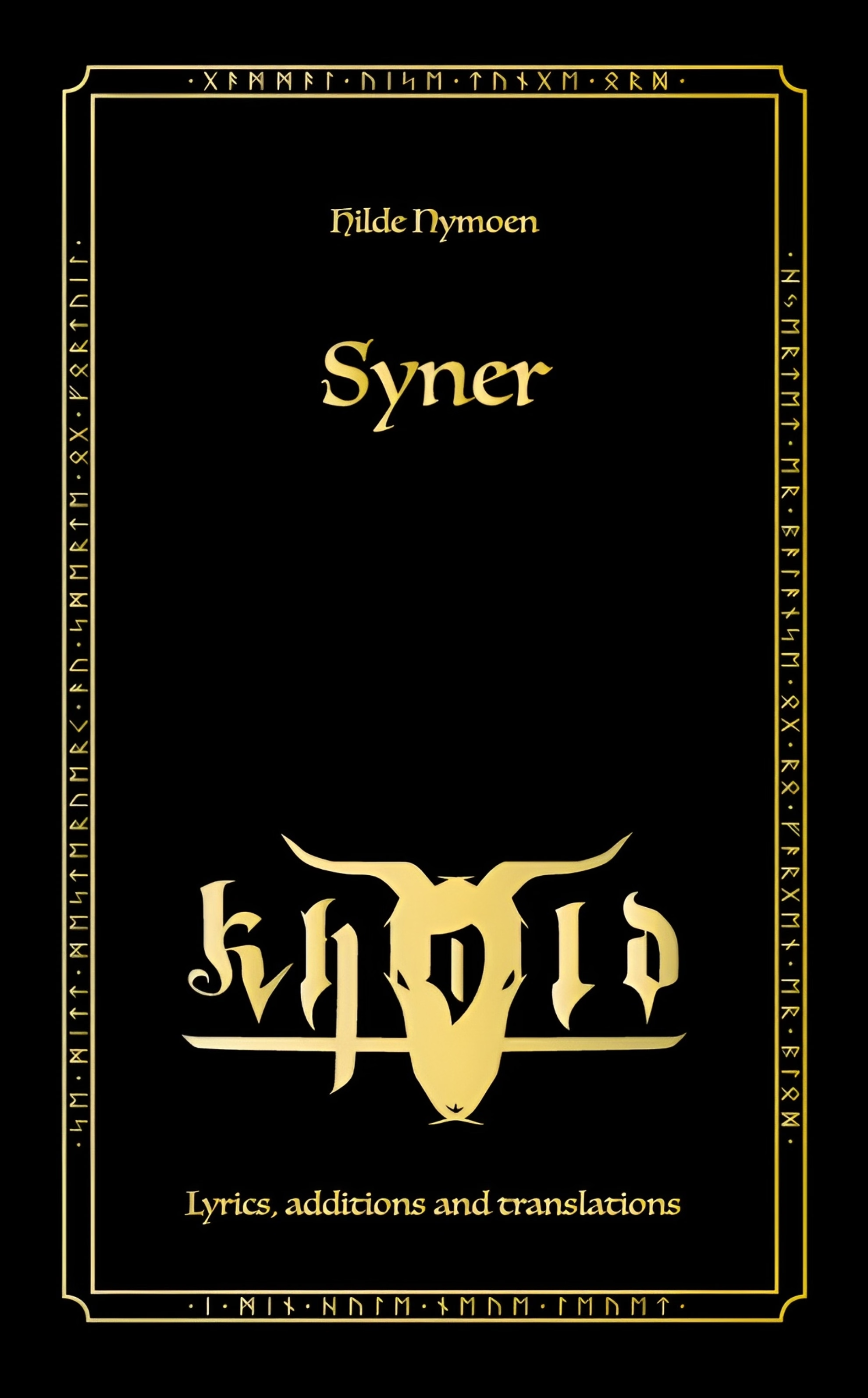
Nymoen designed both covers herself and says the concept had been on her mind for a long time. Both hardcovers carry a rune border and the band’s own logo: ‘Syner’ is black with gold embossing for Khold, ‘Vintervolve’ white with silver for Tulus.
She wanted the books to stand apart and to work as a set. “Khold to me is darkness and black, while Tulus holds more afterlife, grief and suffering,” she says. The metals were meant to make the books “wear something extra.” She sums it up as “the devil and the ghost,” and adds: “It could never have been the other way around.”
She left the publisher’s mark off the covers for the sake of a clean, tidy look, and because collectors and followers are glad to see the Khold and Tulus logos. “These lyrics are not only my own work, they are lyrics I have crafted for these two bands.”
She also designed the cover of Tulus’s 1996 debut, ‘Pure Black Energy,’ but sees no reason to compare it with these books beyond the Tulus logo; the somber mood of that cover, she suggests, lives on in the content of both volumes.
The visual material is shared work. The main illustrations are pen and pencil sketches by Gard/Blodstrup, credited in the books as Khold’s Gard and Tulus’s Blodstrup, who worked on his own after the two of them settled in advance which lyrics to illustrate. Nymoen painted a few watercolors for specific lyrics, always after the words were written.
The scaffold she painted is the rebuilt one at Ekromstormyra in Løten, and the axe is one of the actual execution axes used by the Lædel men in Oslo, now displayed at Justismuseet, the Norwegian National Museum of Justice, in Trondheim. Text came first for her; setting aside watercolors as a child, “I have always been writing.” She also has a great fascination for photography, and cover design is something she picked up only recently so that she could carry out that part herself.
Of the photographs, only one is hers, the concert photo of Tulus; the others are credited to Mikael Schatz, Morten Syreng, Trym Stokland and Sebastian Ludvigsen. Stokland’s portrait of her appears on an author page that she added after thinking about it and being encouraged to. She wanted to offer the black metal community, and readers outside the music, “a little glance into who I am,” and she says the photo carries no deeper meaning: “it’s just a classical About the author page.”
On the page, her priority was ease. She chose the paper, Edixion 120g, after telling her printing house, Merkur Grafisk in Langhus, that she wanted a sheet that was not see-through, and set the text in Baskerville, which she has made her go-to font after trying several for both volumes. She wanted “the lyrics to be easy to read,” she says, in contrast with black metal booklets, where white or red text on dark or faded images is often hard to read.
The booklet, she adds, “is not supposed to be a literary release.” Asked why ‘Du dømmes til Død’ carries two different covers, the Kjell Åge Meland art on the LP editions and a photograph on the CD, she says she takes no part in the ideas or designs of album covers and cannot answer. Of Meland’s work she says only that his “dark and raw pen strokes tell the stories directly,” because he was inspired by the words.
Running Harg Forlag
Everything passes through Nymoen’s hands, and the part she had to teach herself was design: learning the layout program and, with it, “to trust my instincts.” Her civilian-name collection, ‘Prestekragemyndighet,’ was the first release in which she held every rein herself. It is, she says, a journey through life that follows the seasons, written with light and darkness, humor, earnestness and gravity.
Her style there is related to her metal work, but she allows herself more irregularity than the rhythm and musical rules of lyric writing permit, so long as the poems read well.
She enjoys being her own distributor. Mail orders bring praise from buyers, and she can do business from where she sits; ‘Syner’ and ‘Vintervolve’ have reached more than 15 countries so far. She has tried all three books at craft and holiday markets, where, she notes, books are rarely the main items, and all can be ordered by emailing Harg Forlag. Advertising and publicity are the part furthest from writing lyrics and producing the books.
The readers have surprised her slightly. Norwegian listeners tell her they read and enjoy the lyrics, but she had expected more response from people outside black metal, and most buyers so far follow the bands. Many thank her for the collections.
Those who know the music, she says, “might see some of the stories clearer, or find new meanings reading the texts alone,” though many had already read the lyrics in the album booklets. A few readers who barely know the music read the texts as poems and have been generous. “I guess darkness, dark emotions and sinister moods can work well outside of the genre, too,” she says.
What Comes Next
Publishing thirty years of lyrics, she says, “does not mean that I’m done writing for music.” Another author’s manuscript might one day appear under the Harg Forlag name, but only if she trusts herself to pull all the strings or can afford collaborators; working with a professional illustrator or photographer would interest her. She has “a few projects waiting” and planned to decide in the fall which to take up first, but the next step is a record. “Next on my agenda is actually writing for a new Tulus album – in Norwegian.”
Both volumes are hardcovers from Harg Forlag, released on April 30th, 2026, and sold individually or as a set by ordering directly from the press by email; the ISBNs printed on the back covers are 978-82-694328-2-4 for ‘Syner’ and 978-82-694328-1-7 for ‘Vintervolve.’ Our earlier feature on ‘Syner’ covers the Khold volume in more detail.
The recommendation here is a specific pairing: read ‘Borild’ and its annotation in ‘Syner’ for a lesson in how a researched fact becomes verse without being inflated, then read ‘Draug’ in ‘Vintervolve’ in both languages to see a lyricist let a flaw stand and explain why. Have you picked up either volume, and does verse written for the ear hold its weight when you meet it only on the page?
Leave a Reply