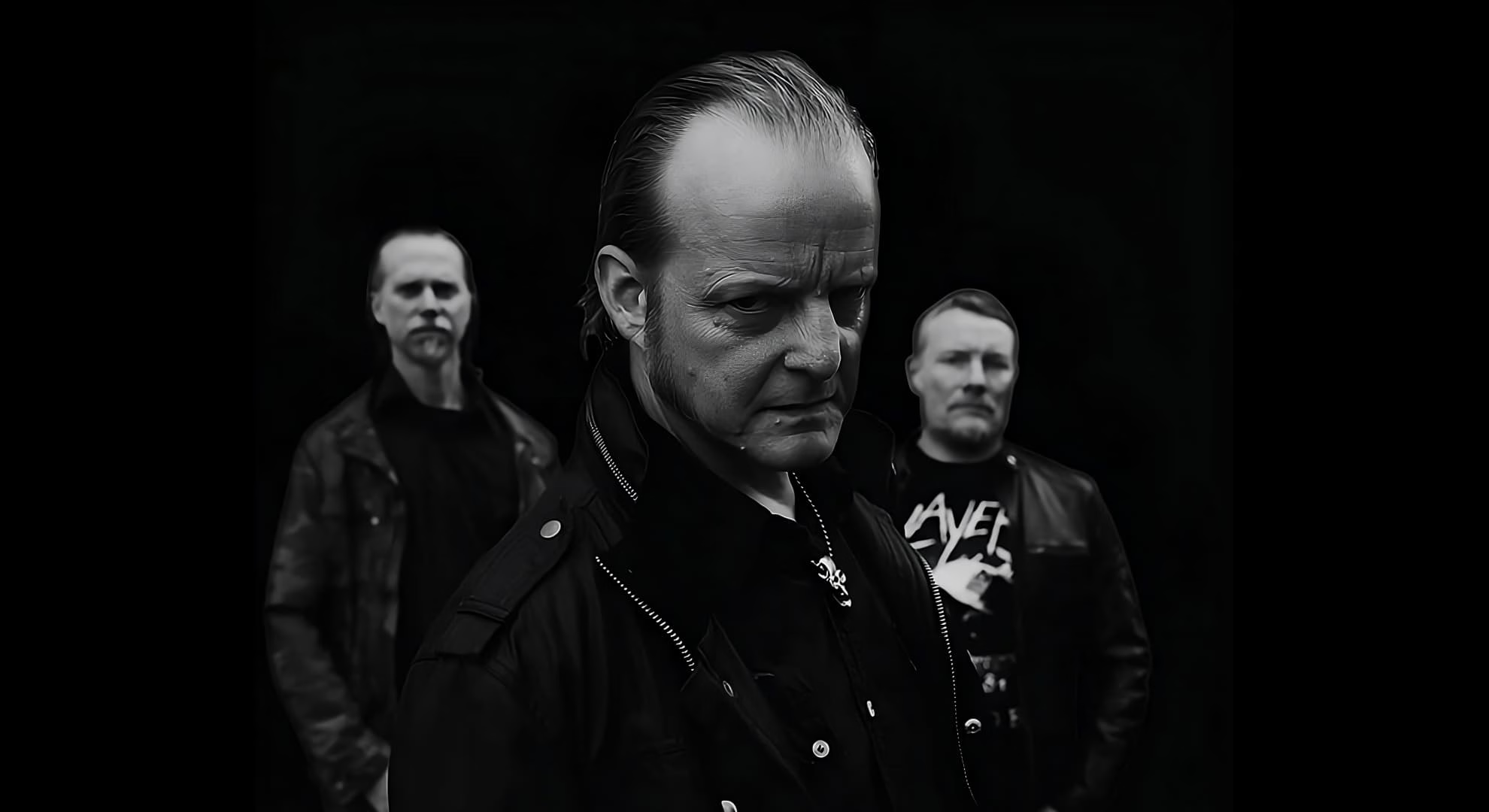


The völva in Norse tradition is not simply a prophetess. She is a wandering seeress who has passed through states of existence that ordinary life does not permit, and who returns with knowledge that the living cannot access by other means. When Hilde “Hildr” Nymoen titles her collected lyric work for Tulus ‘Vintervolve’ — Winter Völva — she positions thirty years of verse within that specific inheritance: a body of dark knowledge transmitted from the edges of experience rather than its center.
Released in hardcover by Harg Forlag Publishing on April 30th, 2026, ‘Vintervolve’ gathers Hildr’s complete lyric output for the Oslo black metal band Tulus — Norwegian-language verse spanning the band’s eight studio albums, translated into English by the author herself and augmented by contextual commentary on Norse mythology, Norwegian folklore, and the specific historical and personal circumstances behind particular songs.
The volume is issued simultaneously with ‘Syner,’ its companion text collecting Hildr’s parallel body of work for Khold. Where ‘Syner’ is bound in black with gold embossing, ‘Vintervolve’ inverts that visual logic: white hardcover, silver embossed design, the same rune border carrying Tulus’s band logo.
Thirty-Five Years of Oslo Darkness
Tulus was founded in Oslo in 1991 by Sverre “Blodstrup” Stokland and Thomas “Sarke” Berglie. The founding occurred within the Oslo black metal scene of the early nineties — a creative atmosphere shared by a cohort of Norwegian musicians committed to cold, stripped, Norwegian-language darkness as a literary and musical position. Both Stokland and Berglie would remain active in that tradition across three decades, in Tulus, in Khold, and in Berglie’s own Sarke project.
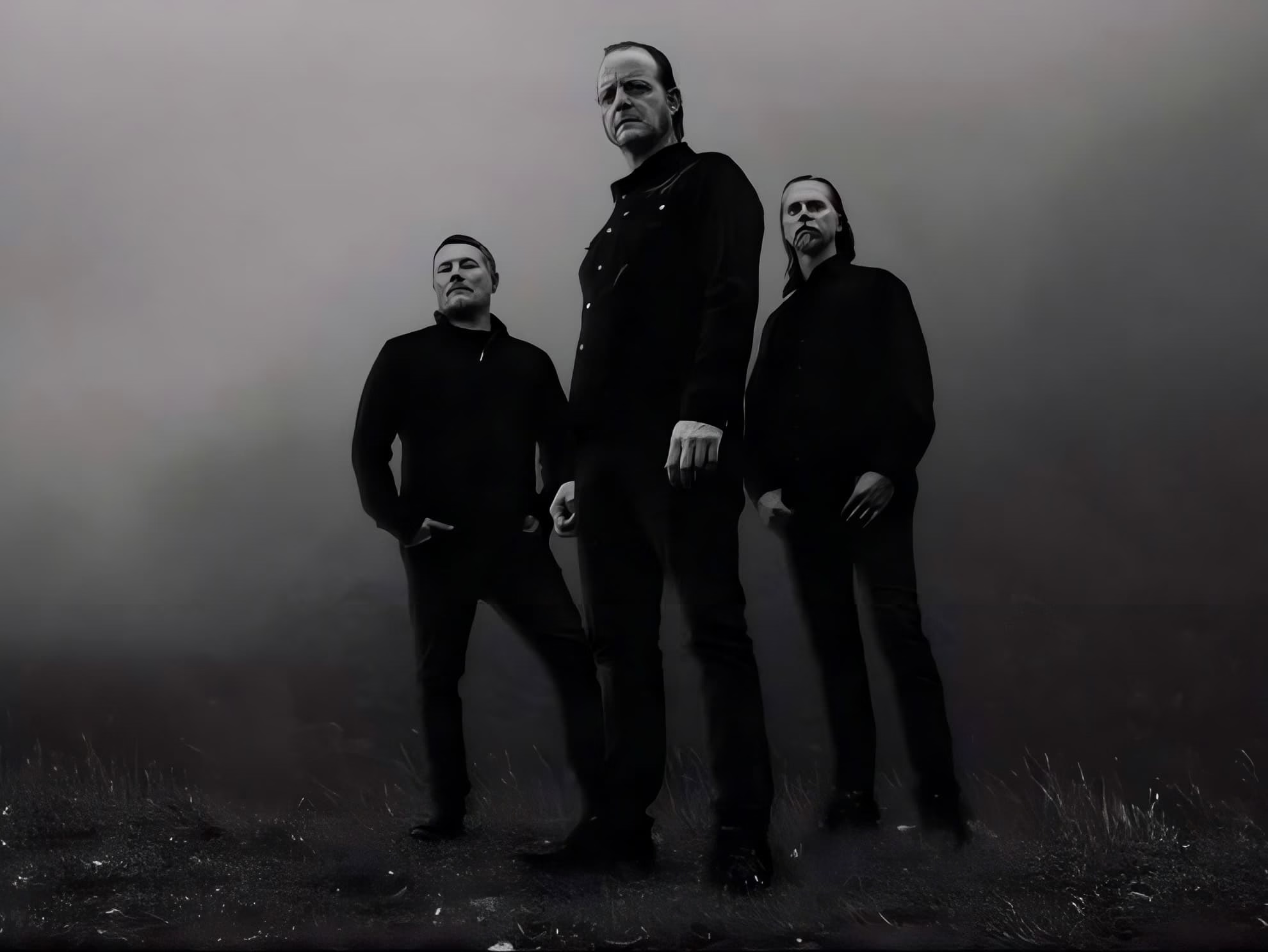
The band’s debut, ‘Pure Black Energy,’ appeared in 1996 on Hot Records. It was followed by ‘Mysterion’ in 1998 and ‘Evil 1999’ in 1999 on Hammerheart Records. These three albums constitute Tulus’s first documented phase: mid-paced black metal written entirely in Norwegian, the lyrics already Hildr’s, the thematic territory already fixed — Norwegian folk belief, ancestral grief, the natural world as both environment and symbol.
‘Evil 1999’ carries what may be the most durable single track in the Tulus catalog: ‘Salme,’ an extended composition whose direct successor, ‘Salme II,’ appears on ‘Morbid Desires’ twenty-seven years later.
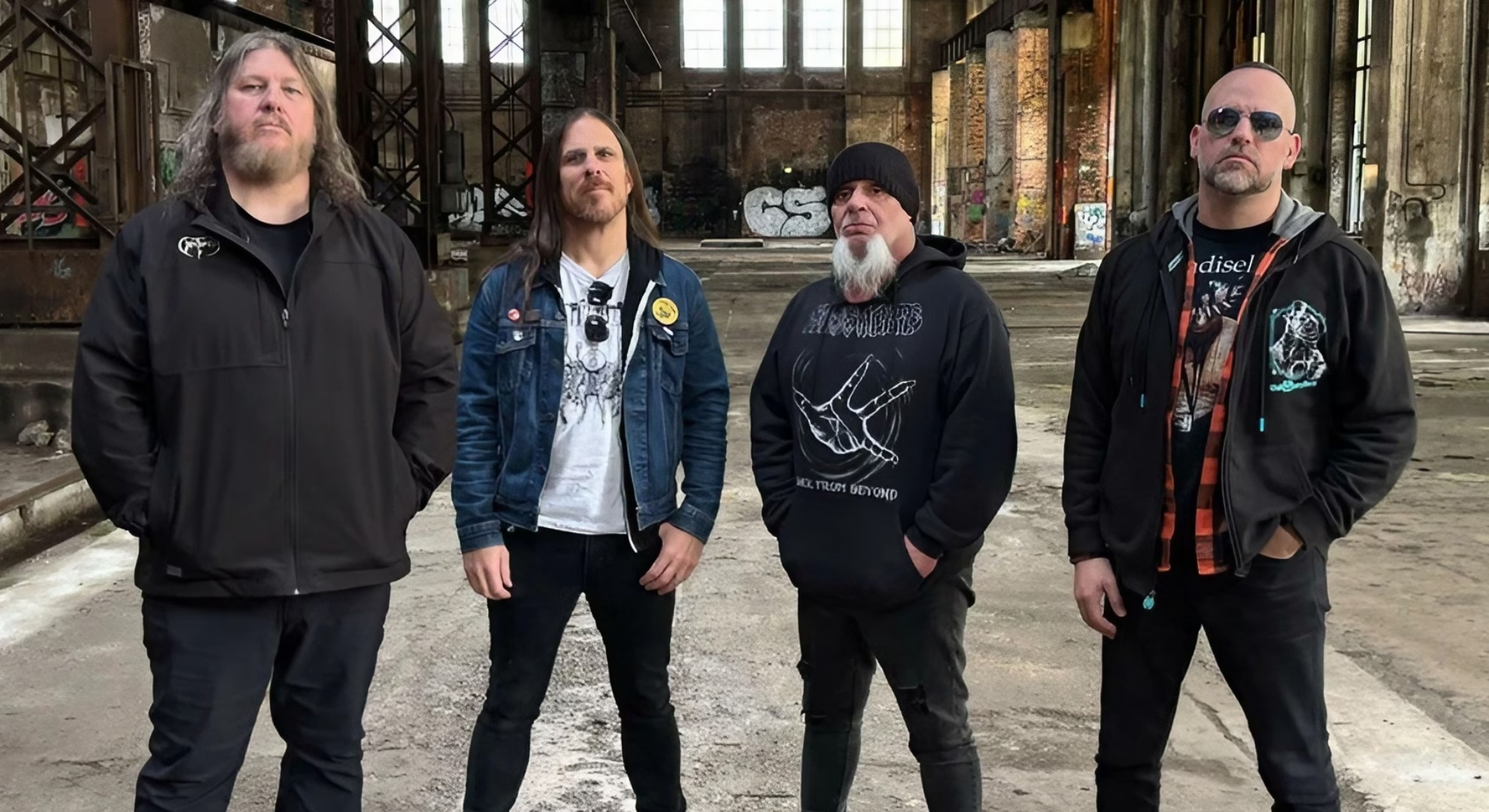
After ‘Evil 1999,’ the core lineup paused Tulus’s activity to found Khold in 2000. When Khold’s own activity reduced in 2006, Tulus was reconstituted with the core returning members of Stokland and Berglie, initially with bassist Victor “Sir Grannug” Borge; Stian “Crowbel” Kråbøl joined in 2008 and has recorded every Tulus album since.
The second phase of the band’s career opened with ‘Biography Obscene’ in 2007 — the sole album in the catalog written in English, a departure the band did not sustain. ‘Olm og Bitter’ (2012, Tabu Records) restored the Norwegian-language practice. ‘Old Old Death’ (2020, Soulseller Records), ‘Fandens Kall’ (2023, Soulseller Records), and ‘Morbid Desires’ (2026, Darkness Shall Rise Productions) completed the eight-album discography that ‘Vintervolve’ addresses.
The Lyricist Outside the Frame
Hildr’s position within Tulus has always been formally anomalous. She writes all lyrics for both Tulus and Khold and holds no performing role in either band; her creative contribution exists entirely on the page, accessed by listeners through album booklets and the archaic Norwegian that most of that audience — including the Norwegian-speaking majority — must work to read.

Two Spellemann Award nominations — Norway’s principal music industry recognition — confirmed that this contribution registered within the industry’s formal assessment of the work. The broader literary recognition that ‘Vintervolve’ and ‘Syner’ represent is of a different order: not industry acknowledgment but direct presentation of the verse as a standalone literary object, available for reading on its own terms.
Harg Forlag, the small press Hildr operates herself, previously issued ‘Prestekragemyndighet,’ a poetry collection attributed to her civilian name that worked in a different mode. ‘Vintervolve’ is the first volume to address the Tulus body of work directly and in its entirety.
The White Volume
‘Vintervolve’ — the title translating literally as “Winter Völva” — is a hardcover volume bound in white with silver embossed design and a rune border bearing the Tulus band logo. The visual complement to ‘Syner’ is exact and deliberate: the two volumes placed side by side produce a black-and-white paired object that maps the two bands’ distinct aesthetic registers onto a single shared format.
Pen and pencil sketches contributed by Blodstrup/Gard, watercolor illustrations and photographs provided by Hildr herself, and a portrait by photographer Trym Stokland constitute the visual material throughout both volumes.
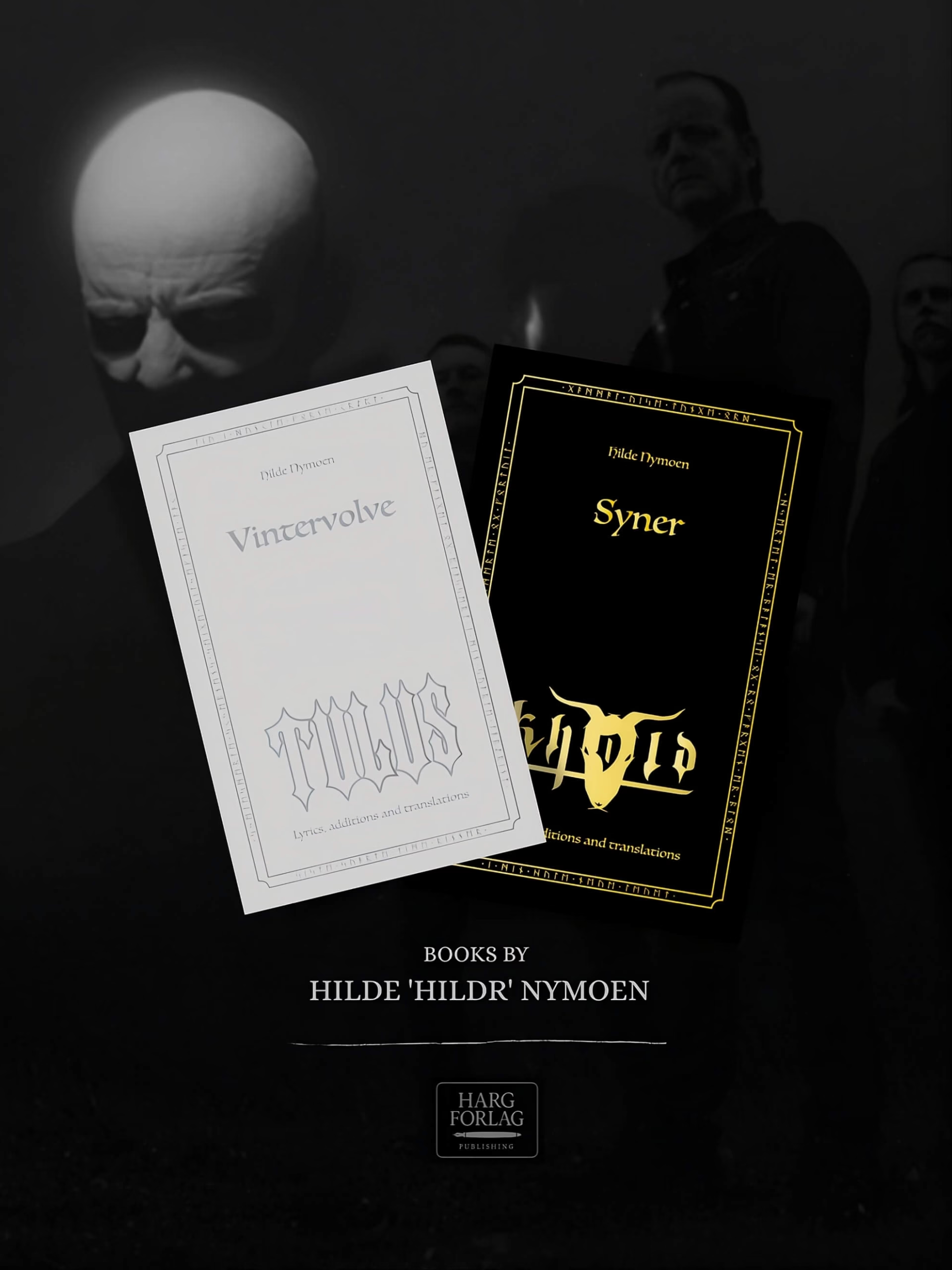
The book opens with the complete Norwegian text of ‘Tulus’ — the self-titled track from ‘Morbid Desires’ — and presents its English translation at the volume’s end before moving into contextual material. That structural choice frames the entire collection through the band’s name-as-lyric: the song that names Tulus contains what Hildr’s verse for the band has always been about, and the English translation placed at the close positions the second language as a closing meditation on material the Norwegian opens.
Winter as Dark Inheritance
The title’s reference to the völva carries implications that extend beyond naming. In Norse belief, the völva’s knowledge was characterized by its access to temporal depths — she could read backward and forward simultaneously because she occupied a position outside ordinary sequential time.
The winter, in that framework, is not merely a season but a condition of sustained visibility: when the natural world strips itself bare, the underlying structure becomes legible. It is the season when older knowledge re-emerges.
What distinguishes Tulus’s lyrical territory from Khold’s is not a matter of lesser darkness but of different temporal orientation. Khold’s verse under Hildr’s authorship tends toward the historically specific — documented executions, named perpetrators, verified events. Tulus’s writing engages a deeper register of Norwegian cultural memory: pre-Christian belief, folk-religious practice, the Norwegian natural world as inhabited by forces that did not become abstract simply because Christianity arrived.
The fossegrim — a river spirit of Norwegian folk tradition — is one such figure; it appears in ‘Morbid Desires’ as the track title ‘Fossegrimens Vakt.’ The early-album mythological figures, the winter landscapes, the ancestral sorrows: these are not metaphors drawn from mythology as decoration but the residue of a belief system that persisted in Norwegian folk practice long after its formal suppression.
‘Samuelsbrenna’ and Living Ancestry
The contextual annotations that distinguish ‘Vintervolve’ from a straightforward bilingual lyric compilation include one addition of particular literary weight. ‘Samuelsbrenna,’ a track from ‘Fandens Kall’ (2023, Soulseller Records), centers on a female ancestor of Hildr’s — a discovery that emerged from biographical and historical research connected to the band’s recorded work.
The song’s frame is that of an inheritance: a specific woman from Hildr’s own documented lineage, rendered in archaic Norwegian, now augmented in the volume with the biographical context the lyric could not have carried when it was written.
That contextual layer changes the reading of the verse. A lyric engaging ancestral grief in a generalized or mythological sense is one kind of dark writing; a lyric that turns out to be a specific reckoning with an actual woman from the lyricist’s own family tree — documented, researched, annotated — is another. ‘Vintervolve’ makes that distinction available in a way that ‘Fandens Kall,’ as a recording, could not.
Reading the Verse Without the Record
The question any attentive reader of ‘Vintervolve’ must eventually confront is whether the verse holds on the page independent of its recorded context. The annotations in the ‘Fandens Kall’ section — which include ‘Samuelsbrenna’ with its biographical depth — are fully self-sufficient as reading.
The prose commentary on Norse mythology and Norwegian folk history that accompanies the earlier album sections gives the mythological verse sufficient grounding for a reader with no prior knowledge of either band.
Where the book asks more is in the more incantatory passages of the early albums, where Hildr’s archaic Norwegian verse worked in close partnership with the specific mid-paced weight of Blodstrup’s guitar delivery and the cold production values that Tulus established on ‘Pure Black Energy.’
Reading ‘Salme’ as a lyric on the page is a different experience from hearing it within the nearly six-minute musical frame the album provides. That is a description, not a complaint: all collected verse that began as song lyric carries this condition. What matters is whether the writing has sufficient internal density to sustain independent reading, and ‘Vintervolve’ contains verse that does.
The inclusion of ‘Tunge dråper fra et mørket hjerte’ — “Weighty Drops from a Darkened Heart,” originally composed in 1995 and revised and expanded for the volume in 2025 — provides the clearest evidence of this. A lyric that has passed through three decades of revision by the same author is a very different object from a lyric transcribed from a recording; ‘Vintervolve’ contains both categories, and the contextual apparatus distinguishes between them.
The effect is that the book functions simultaneously as archive and as living document: not only what the verse was when it was written, but what it has become through three decades of ongoing attention.
‘Morbid Desires’ and the Ongoing Record
Released March 27th, 2026 on Darkness Shall Rise Productions — a month before ‘Vintervolve’ reached readers — ‘Morbid Desires’ is Tulus’s eighth studio album, released in the year that marks 35 years of the band’s activity.
Recorded, mixed, and mastered by Andy La Rocque at Sonic Train Studios in Sweden, it presents nine tracks in Norwegian — all lyrics by Hildr: ‘Salme II,’ ‘Skabb,’ ‘Tulus,’ ‘Kistesmed,’ ‘Vanvidd,’ ‘Hedengangen,’ ‘Fossegrimens Vakt,’ ‘Skauånd,’ and ‘Sabbat.’
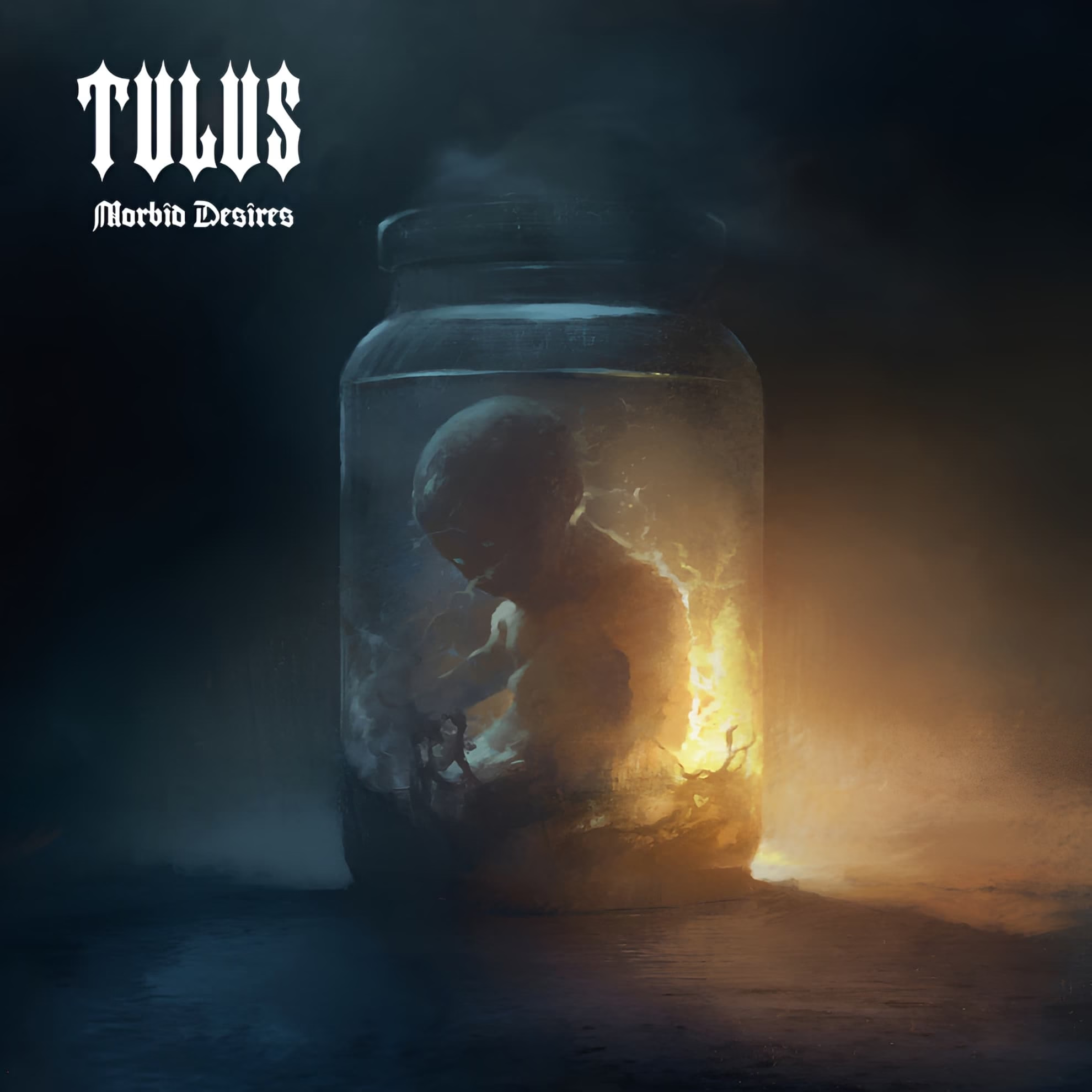
The lineup — Blodstrup on vocals and guitar, Crowbel on bass, Sarke on drums — is the same three-piece that has recorded the band’s post-hiatus catalog. ‘Salme II’ revisits the lyrical territory of ‘Salme’ from ‘Evil 1999,’ functioning as both an internal callback and an acknowledgment of how far the band has traveled since 1999.
‘Fossegrimens Vakt’ — “The Fossegrim’s Watch” — draws from the same pre-Christian Norwegian folk-religious register that ‘Vintervolve’ annotates throughout its contextual apparatus. That the most recent Tulus album should carry lyrics whose folk-religious frame appears also in the book that documents thirty years of Tulus verse is continuity, not coincidence.
‘Morbid Desires’ is available on LP in multiple pressed vinyl editions — 250-copy runs in grey-black marble, galaxy transparent yellow-black, and ultra clear variants — and in a jewel-case CD format with a 12-page booklet. The CD was released April 10th, 2026.
The Companion Volume
‘Syner,’ issued simultaneously on April 30th, 2026, gathers Hildr’s complete lyric work for Khold across eight studio albums. The two volumes share their visual grammar — rune borders, band logos, Blodstrup’s sketches, Hildr’s watercolors — and are sold individually or as a paired set directly from Harg Forlag Publishing.
Their thematic distinction maps directly onto the two bands’ documented lyrical territories: ‘Syner’ works through historical execution and documented Norwegian folk horror; ‘Vintervolve’ works through mythological inheritance and winter as a form of knowledge. A separate feature on ‘Syner’ appears in this publication.
The Winter Völva’s Inheritance
For thirty years, Hilde Nymoen’s verse for Tulus was embedded in recordings that most listeners encountered with varying degrees of access to the Norwegian it was written in. The lyrics were present; the verse was always there. ‘Vintervolve’ does not change what the verse is. What it changes is the conditions under which it can be fully encountered.
A winter völva carried knowledge across time and made it available to the living in a form they could use. ‘Vintervolve’ makes the same claim for thirty years of dark Norwegian verse — verse that has always argued, in archaic language and extreme musical context, that certain forms of knowledge about winter, ancestry, and the deep Norwegian past do not diminish with the passing of the religious frameworks that once held them.
Tulus has spent thirty-five years producing one of the more uncompromising bodies of recorded work in Norwegian black metal. The book is not a supplement to that record. It is the body of writing that the band carried.
What in the full arc of Hild Nymoen’s verse for Tulus — the mythological early albums, the folk-religious middle period, or the biographical precision of the ‘Fandens Kall’ material — do you find most fully realized when read on the page rather than heard within the music?


Leave a Reply