
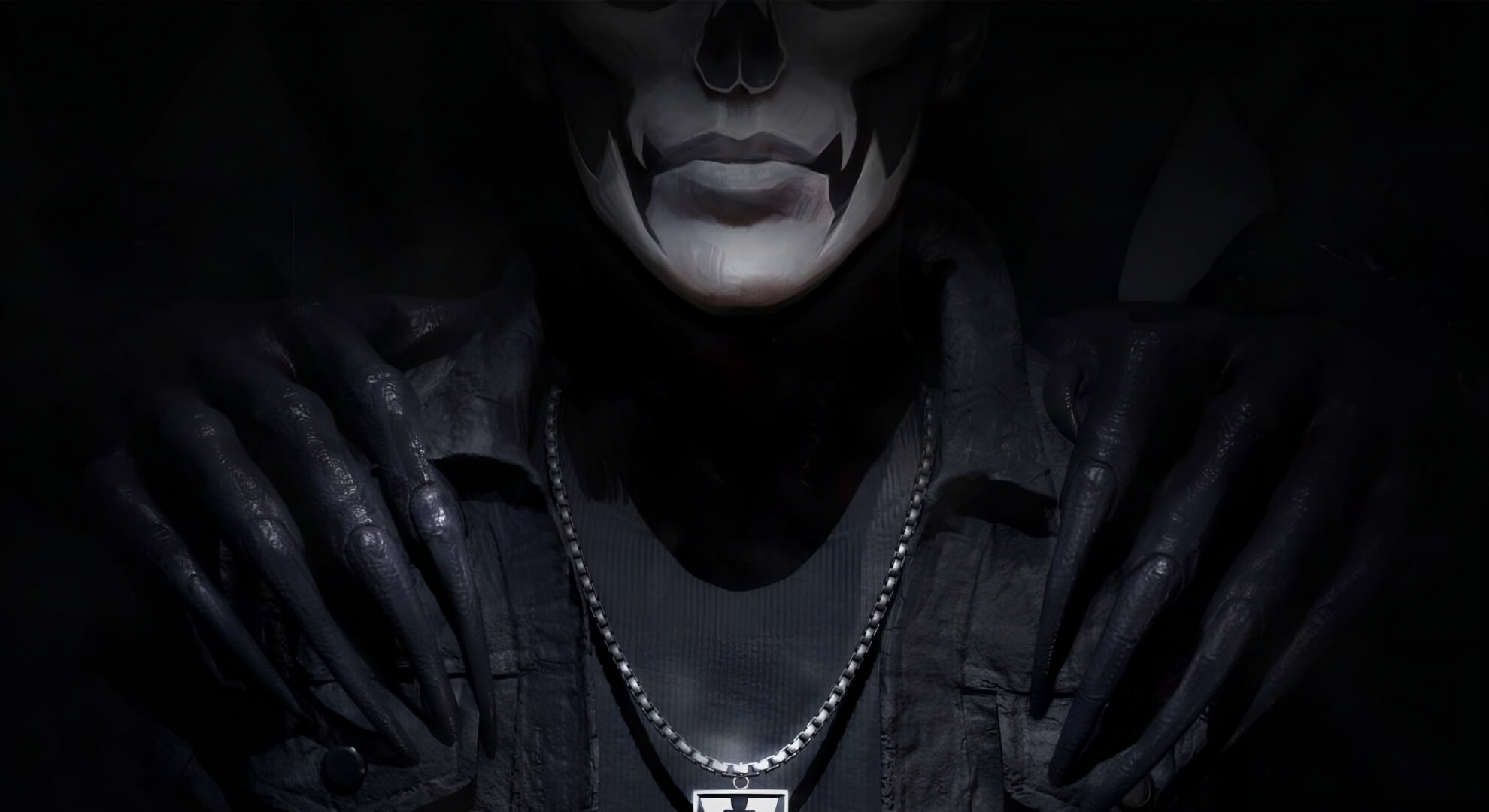


The late 1990s produced a short-lived genre hybrid that the dominant horror categories of the period failed to contain: action-horror games of substantial scale, built on licensed intellectual properties, that inhabited the territory between ‘Resident Evil’s claustrophobic dread and the expansive open-world action-adventure still emerging from the platformer tradition.
The original ‘Shadow Man,’ developed by Acclaim Studios Teesside and published by Acclaim Entertainment in 1999, was the most accomplished example of that hybrid — a game that its designers conceived explicitly as a response to Capcom’s survival horror template, translated into fully three-dimensional environments.
Now, after more than two decades in which the franchise produced no new original video game, ‘Shadowman: Darque Legacy’ is approaching its announced Q2 2026 release window, developed and published by Sydney-based Blowfish Studios in active partnership with Valiant Entertainment.
The Deadside’s Long Wait
The Acclaim duology — ‘Shadow Man’ (1999) and ‘Shadow Man: 2econd Coming’ (PS2, 2002) — established the Deadside as one of the more distinctive horror environments in late-1990s and early-2000s game design: an industrial, decaying afterlife populated by serial killers and demonic entities, navigated through voodoo powers by a reluctant supernatural warrior.
Both titles were developed under the Acclaim umbrella and based on a comics continuity distinct from the founding Valiant Comics run, centering on a protagonist — Michael LeRoi — created specifically for Acclaim’s own publishing imprint. That choice shaped the games’ narrative register and set the template against which ‘Darque Legacy’ positions itself.
After Acclaim Entertainment’s bankruptcy in 2004, both titles entered an extended period of commercial unavailability before Nightdive Studios re-released the 1999 game digitally in 2013 and followed with ‘Shadow Man Remastered’ for PC in April 2021 and consoles in January 2022.
The remaster’s reception demonstrated sustained affection for the property and, by Blowfish Studios’ own account at the time of the 2023 announcement, was a contributing factor in motivating the new entry. The gap between ‘Shadow Man: 2econd Coming’ in 2002 and the current project’s Q2 2026 target represents over two decades without an original Shadowman video game release — a distance comparable to the interval that separated ‘System Shock’ from its 2023 remake by Nightdive Studios, the same company that remastered the 1999 Shadowman title.
Jack Boniface and the Valiant Comics Return
Where the Acclaim games centered on Michael LeRoi, ‘Shadowman: Darque Legacy’ marks the first video game appearance of Jack Boniface — the original Shadowman from the 1992 Valiant Comics debut of the character.
This distinction carries genuine design implications: Boniface is depicted as a novice inheriting the Shadowman mantle from a family line of voodoo warriors charged with preserving the boundary between the living world (Liveside) and the dead realm (Deadside), and his relative inexperience as the new Shadowman is an explicit narrative premise of the game.
That framing positions the player’s progression through the RPG-lite upgrade system as narratively motivated — Boniface becomes a more capable Shadowman over the course of the game, rather than entering as an established figure.
Blowfish Studios developed the narrative in direct collaboration with Valiant Entertainment, and the game’s subtitle almost certainly references Master Darque — the primary antagonist of the current Valiant Comics run of the series — though this has not been formally confirmed in developer communications at the time of publication.
The collaborative character of the development is further reinforced by the Free Comic Book Day 2023 publication of a prequel story, ‘FCBD 2023: Shadowman Darque Legacy #1,’ released under the Valiant Entertainment imprint, which positions the game within the active Valiant publishing program rather than as an isolated licensed adaptation.
The creative partnership with Valiant Entertainment involves both the narrative development and the intellectual property framework. Russell Brown, President of Consumer Products at Valiant Entertainment, confirmed in the May 2023 announcement that Blowfish Studios had been working directly with Valiant’s team on the story.
Game Director Clinton McCleary at Blowfish Studios described the project as “honorable work” of reviving the property — paraphrasing his stated intent to bring what he called a “horrifying, punishing, but rewarding experience” to the franchise’s first gaming outing since the PlayStation 2 era.
Two Realms and the Design Framework
The structural premise of ‘Shadowman: Darque Legacy’ follows the dual-world traversal mechanic that defined its predecessors: the player moves through both Liveside environments and their dark counterparts in Deadside, with realm-shifting serving as the mechanical basis for environmental puzzles.
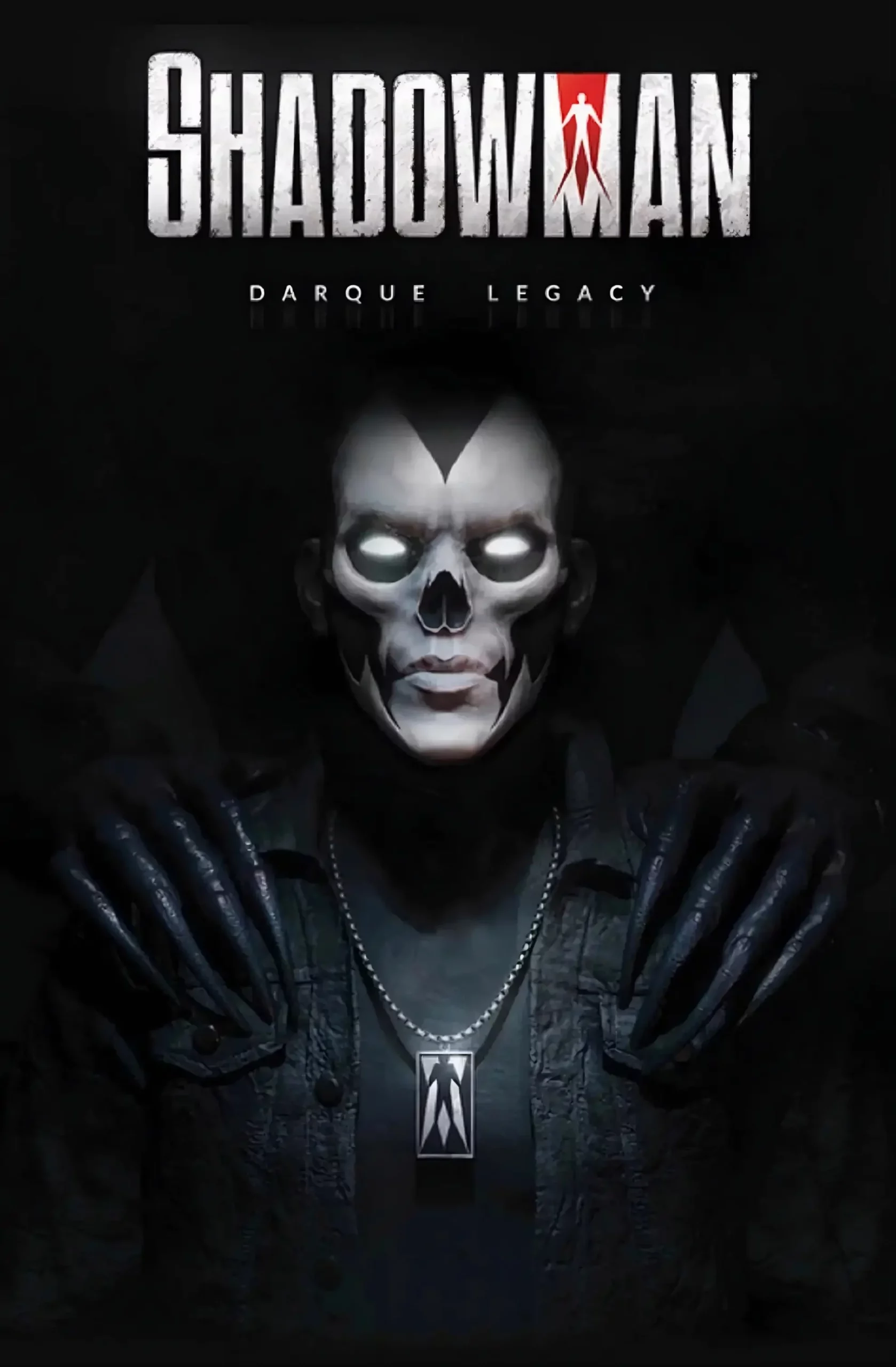
The combat is melee-focused, built around a range of Shadowman-specific weapons including a scythe, with a system of brutal finishing moves described in official materials as both visceral and rewarding. An RPG-lite character progression system provides a framework for skill acquisition across the game’s duration.
The enemy design as described in official materials spans two distinct categories: human antagonists in the form of the Brethren cultists, ranging from hammer-wielding fighters to sorcerous necromancers, and supernatural creatures from Deadside. That division mirrors the original game’s structural approach, in which the Liveside offered more grounded threats while Deadside populated its environments with entities of a different register entirely.
Whether the game maintains an equivalent tonal differentiation between its two realms — one of the 1999 title’s more effective atmospheric decisions — cannot be assessed from available pre-release materials.
The overall design scope includes what Blowfish Studios describes as “action-packed boss encounters” against monstrous entities from Deadside, alongside the environmental exploration and progression system. The combination of melee combat depth, realm-traversal puzzles, boss encounter design, and RPG progression places ‘Darque Legacy’ in the broad action-adventure-soulslike space rather than the slower, atmospheric-dread tradition of developers such as Frictional Games or the PT-descended walking horror subgenre that emerged from Konami’s 2014 playable teaser.
The Soulslike Reference and What It Implies
Blowfish Studios has cited ‘Bloodborne’ (FromSoftware, PS4, 2015), ‘Star Wars Jedi: Survivor’ (Respawn Entertainment, 2023), and ‘Uncharted’ (Naughty Dog) as design inspirations for ‘Shadowman: Darque Legacy.’ The combination is instructive. ‘Bloodborne’ established a design template in which hostile encounter design, environmental storytelling, and punishing mechanical difficulty operate in sustained service of a gothic and cosmic horror register — a template whose influence on subsequent action-horror games has been considerable, traceable through titles from ‘Lies of P’ (Neowiz, 2023) to ‘The Lords of the Fallen’ (Hexworks, 2023). The ‘Bloodborne’ citation signals ambition for that register of dark horror.
The ‘Star Wars Jedi: Survivor’ and ‘Uncharted’ citations pull in a different direction — toward accessible spectacle, narrative momentum, and a pacing designed for broad engagement rather than deliberate friction. Both titles are notable for their integration of challenging combat within structures that remain broadly welcoming to players who do not typically engage with punishing difficulty systems. That pairing alongside ‘Bloodborne’ suggests Blowfish Studios is seeking a design register closer to ‘Bloodborne’s visual and tonal ambitions than to its mechanical severity.
This is a legitimate design position, and one that the Shadowman property’s history arguably supports: the 1999 ‘Shadow Man’ was itself an action-adventure first and a horror game second, prioritizing exploration and combat variety over the sustained dread mechanics of its contemporaries in the survival horror genre.
Whether ‘Darque Legacy’ can hold those competing influences in productive tension — preserving the horror register that distinguishes the property while delivering the accessible combat pacing its cited inspirations exemplify — is the central unresolved design question before release.
Three Years and Two Delays
‘Shadowman: Darque Legacy’ was announced on May 4, 2023, with a stated 2024 release target. The game subsequently missed that window and was repositioned for Q4 2025, a date it also failed to meet, arriving at the current Q2 2026 target. Blowfish Studios has offered limited public communication about the reasons for either delay, and the game’s Steam community has noted the absence of developer updates in extended stretches.
Two delays across three years of development is, in the current industry environment, not unusual for a title of this scope from a mid-sized studio working outside the major publisher framework — but the absence of sustained communication has generated visible uncertainty among prospective players.
Blowfish Studios was founded in Sydney, Australia in 2008 by Benjamin Lee and Aaron Grove, and was acquired by Animoca Brands in July 2021. The studio’s catalog spans action games, platformers, and published titles across multiple genres, with ‘Shadowman: Darque Legacy’ representing both its largest licensed intellectual property engagement to date and its most prominent entry into the horror-genre space. The studio describes itself as a developer and publisher of both indie-scale and more ambitious projects.
With Q2 2026 now underway, the game is either weeks or a few months from its delivery or from a third date adjustment. Pricing, a final ESRB or PEGI rating, and any confirmed Spanish language localization for PC — a relevant consideration for this publication’s Latin American readership — had not been formally announced at the time of this report.
What the Return of Shadowman Means Now
‘Shadowman: Darque Legacy’ occupies a specific and somewhat lonely position in the contemporary action-horror space: a franchise revival from a mid-sized studio without major publisher support, drawing on a property that spent more than two decades absent from the medium while the design traditions it once participated in evolved substantially around it.
The shift from Michael LeRoi to Jack Boniface, from the Acclaim comic continuity to the current Valiant Comics run, is not a retreat from the franchise’s gaming history but a redefinition of what it means to be a Shadowman game — one that trades the original’s specific horror-adventure approach for a design vocabulary shaped by fifteen more years of action-game development.
Whether that redefinition produces a game that honors both its comics source and the design traditions it cites as inspiration will only become clear once players have the title in their hands. For a property that has spent most of its gaming life as a cult object, ‘Shadowman: Darque Legacy’ represents an unusual opportunity: the chance to establish what the franchise is in the current moment, independent of what it was.
The original ‘Shadow Man’ (1999) was explicitly conceived by its designers as an attempt to translate ‘Resident Evil’s survival horror approach into fully three-dimensional open environments — a design ambition that shaped both the game’s achievements and its limitations. Do you think the design priorities cited for ‘Shadowman: Darque Legacy’ — melee-focused action, RPG-lite progression, and inspirations drawn from ‘Bloodborne’ and ‘Star Wars Jedi: Survivor’ — are better suited to the Shadowman premise than the original’s horror-adventure approach, or does that shift in design register represent a departure from what made the franchise distinctive?


Leave a Reply