
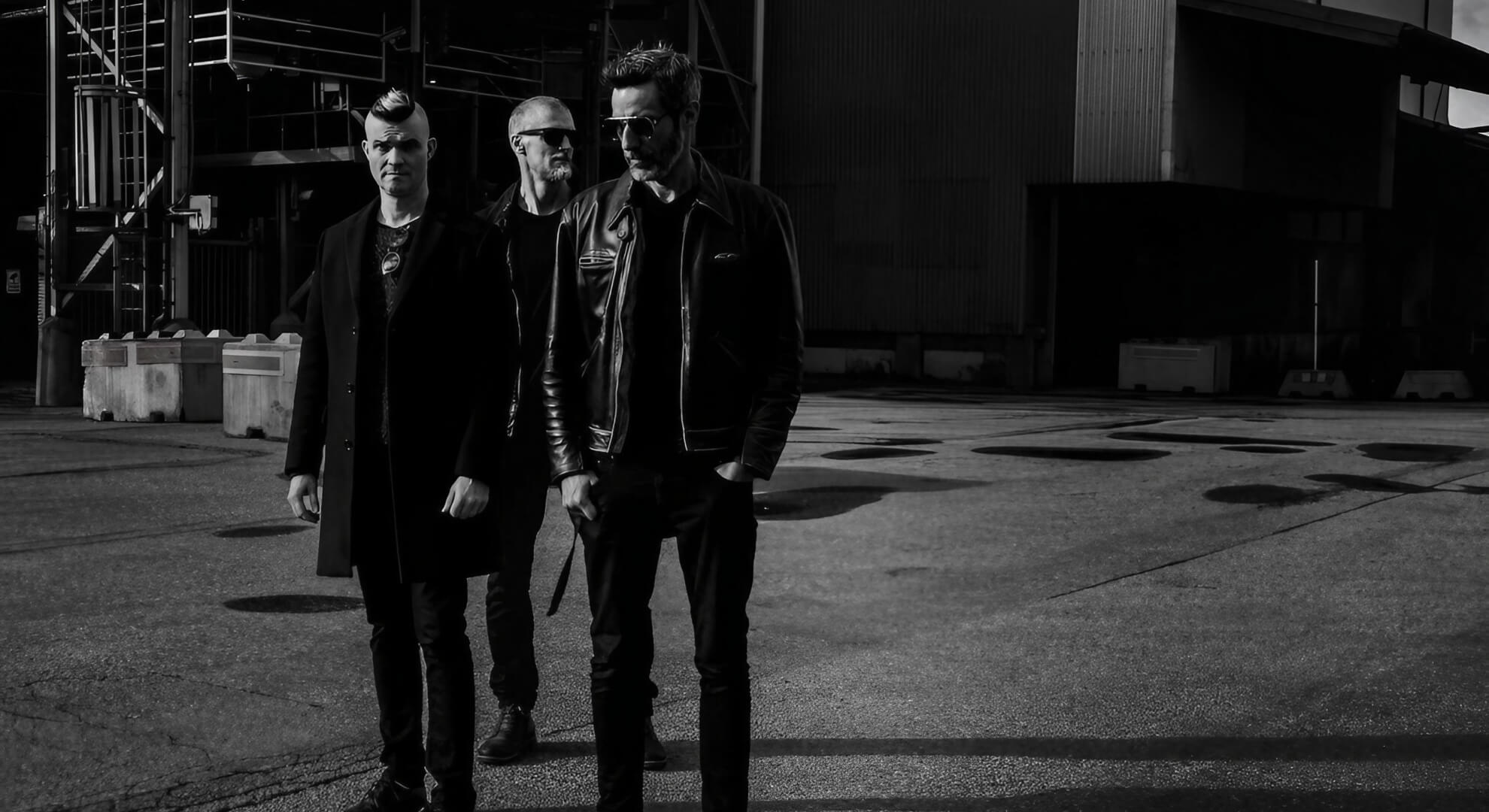


On December 12, 2025, the distinguished darkwave label Metropolis Records will release a limited-edition white vinyl reissue of ‘Section,’ the third studio album by Swedish post-punk outfit A Projection. Originally released on October 25, 2019, ‘Section’ represents a watershed moment in the band’s trajectory—a document of survival recorded amidst significant lineup turbulence, including the departure of their original vocalist.
The reissue of ‘Section’ positions the album as a manifesto of artistic resilience, offering a detailed look at its historical and cultural context through a track-by-track review. Contextually, the record marks a crucial shift in the band’s trajectory within the European post-punk lineage, moving away from early brutalist minimalism toward a more accessible, synth-driven indie rock sound. This evolution is precisely why ‘Section’ endures as a cornerstone of the modern darkwave canon.
Sadly, in the often-cyclical music industry, reissues typically function as mere commercial placeholders, primarily aiming to capitalize on nostalgia. Yet, the upcoming reissue of ‘Section’ signifies something much more substantial. This release, strictly limited to 500 copies globally and pressed on striking white vinyl, is not just a product; it is a tangible artifact representing a pivotal, defining moment in the band’s history—their most challenging and ultimately triumphant hour.
For A Projection, ‘Section’ was never just “album number three” It was a trial by fire. Released originally in 2019, it arrived in the wake of an existential crisis that would have shattered lesser groups. The band had lost their founding vocalist, Isak Erikson, a figure whose presence had defined their initial aesthetic.
The band’s fundamental blueprint was reshaped by the resolute choice to continue, with bassist Rikard Tengvall assuming vocal duties. Consequently, this reissue is more than a mere commemoration of compiled recordings; it stands as a monument to the successful passage through that transition. It is a powerful affirmation of the monumental effort to reinvent the group without sacrificing its core identity.
The Stockholm Origins and Early Ethos
To gauge the gravity of ‘Section,’ one must first descend into the environment that necessitated it. Formed in 2013 in Stockholm, A Projection emerged with a sound that was inextricably linked to their geography. Critics and biographers have frequently noted the influence of the “long, dark winter” on the Swedish psyche, and A Projection’s early output—specifically 2015’s ‘Exit’ and 2017’s ‘Framework’—was a sonic mirror of this environment.
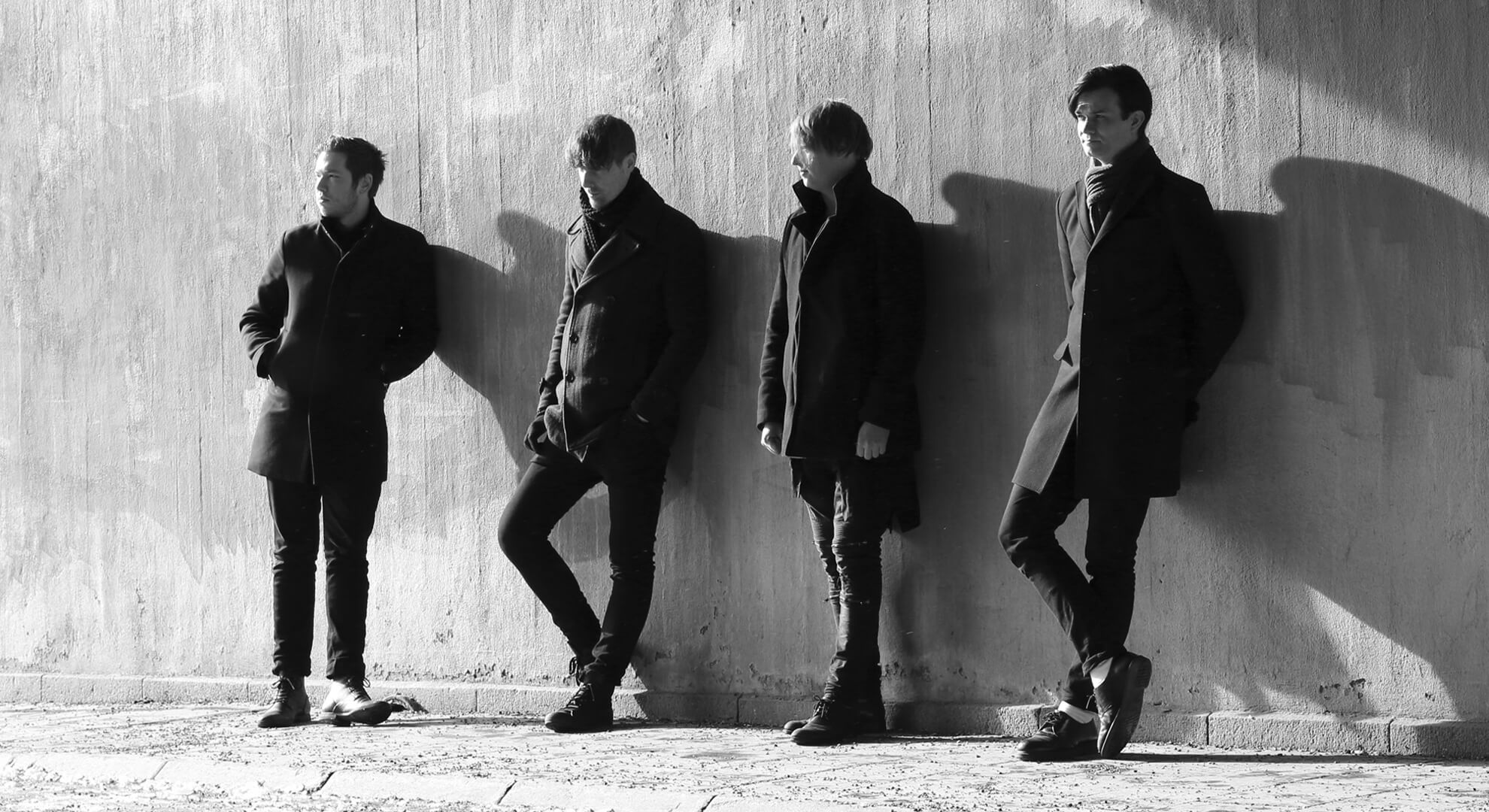
The band began with an ambition to be a “true post-punk band,” drawing deeply from the wells of Joy Division, The Cure, and The Sisters of Mercy. Their early aesthetic was characterized by a hard-boiled, minimalistic approach. It was music of sharp angles and monochromatic textures, driven by effect-laden guitars and a pervasive sense of urban alienation. They were, in the words of one observer, people who know how to survive a long, dark winter.
However, the band was never content to be mere revivalists. While the “Boy Division” comparisons were inevitable—and perhaps lazy, as some critics noted—A Projection always harbored aspirations that spilled over into adjacent genres like indie rock and electronica.
They were disciplined, almost businesslike in their presentation, often appearing in suits, projecting an image of serious intent rather than chaotic rebellion. This discipline would become their lifeline when the internal structure of the band began to fracture following the Framework tour.
The Crisis of the Voice
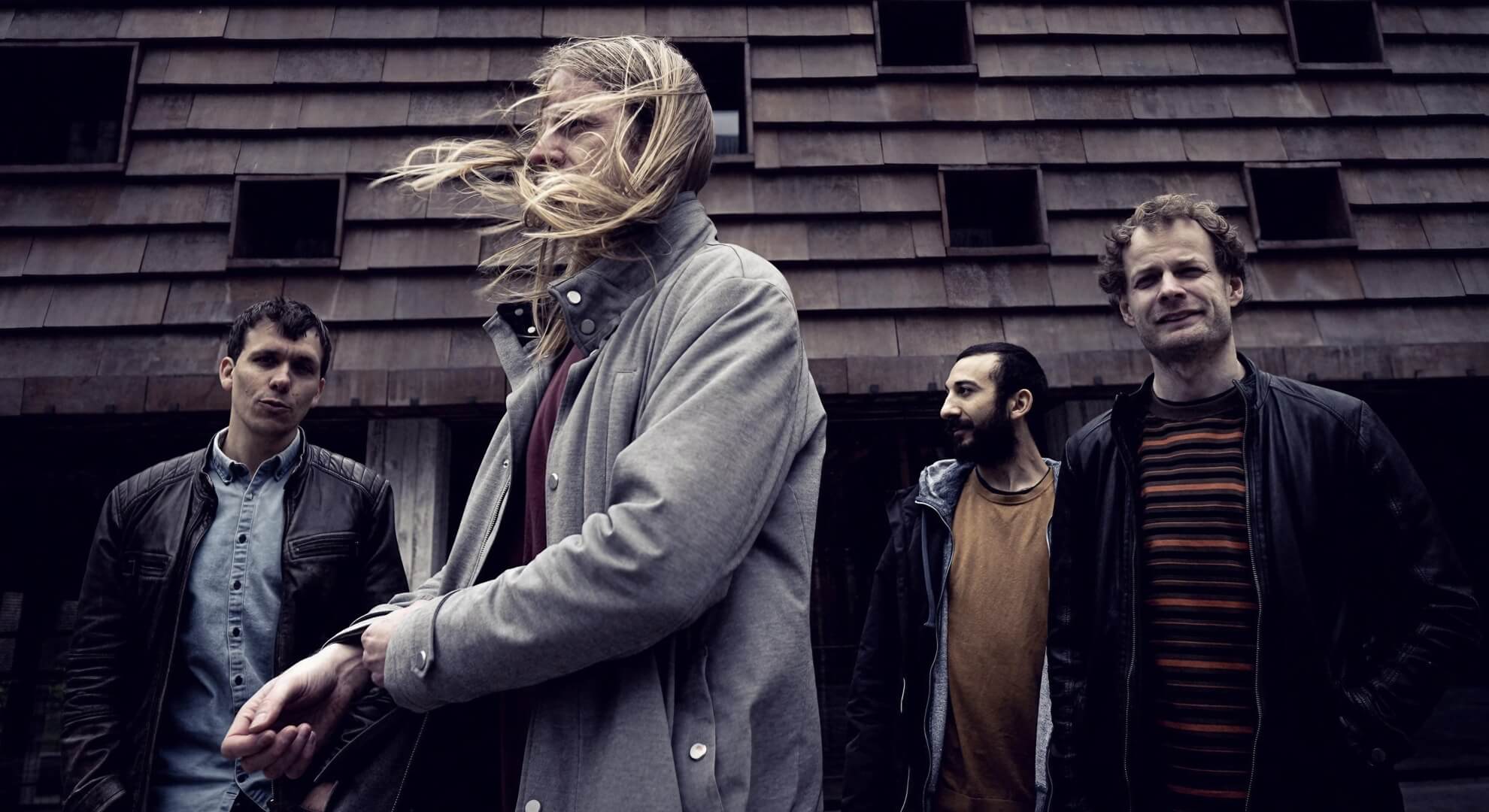
The departure of a lead singer is the most traumatic event a rock band can endure. The vocalist is the avatar of the group’s emotional communication, the focal point of the audience’s gaze. When Isak Erikson left A Projection, the remaining members—Rikard Tengvall, Linus Högstadius, Jesper Lönn, and Gustav Forneus—faced a binary choice: dissolve the project or radically reconfigure it.
Rikard Tengvall’s transition from bass player to lead vocalist is the central narrative arc of the ‘Section’ era. This shift was not merely functional; it was timbral and emotional. Tengvall brought a “rich voice” that added “suitable gravitas” to the sound, distinct from Erikson’s delivery yet capable of carrying the band’s established melancholy.
In interviews from the period, the band acknowledged the magnitude of this change, noting that they deliberately tried not to make drastic shifts in songwriting to counterbalance the dramatic change in vocal personnel. They trusted that the inherent difference in Tengvall’s voice would provide enough novelty, while the musical structures provided a familiar safety net for their existing fanbase.
This period was marked by turmoil, health issues, and the stress of reconfiguration. Yet, rather than producing a disjointed or tentative record, this pressure cooker environment yielded a work of surprising cohesion. ‘Section’ emerged not as the sound of a band falling apart, but of one snapping into a tighter, more formidable formation.
The Sonic Design of ‘Section’
Recorded, mixed, and mastered at Redmount Studio in Stockholm, ‘Section’ codified a shift from the raw, garage-bound post-punk of the debut towards a more polished, stadium rock aspiration.
The production on this album is notably expansive. While it retains the “cavernous drums” and “shimmering guitars” typical of the genre, there is a newfound clarity and separation in the mix that allows the synthesizers to occupy more space without cluttering the frequency spectrum.
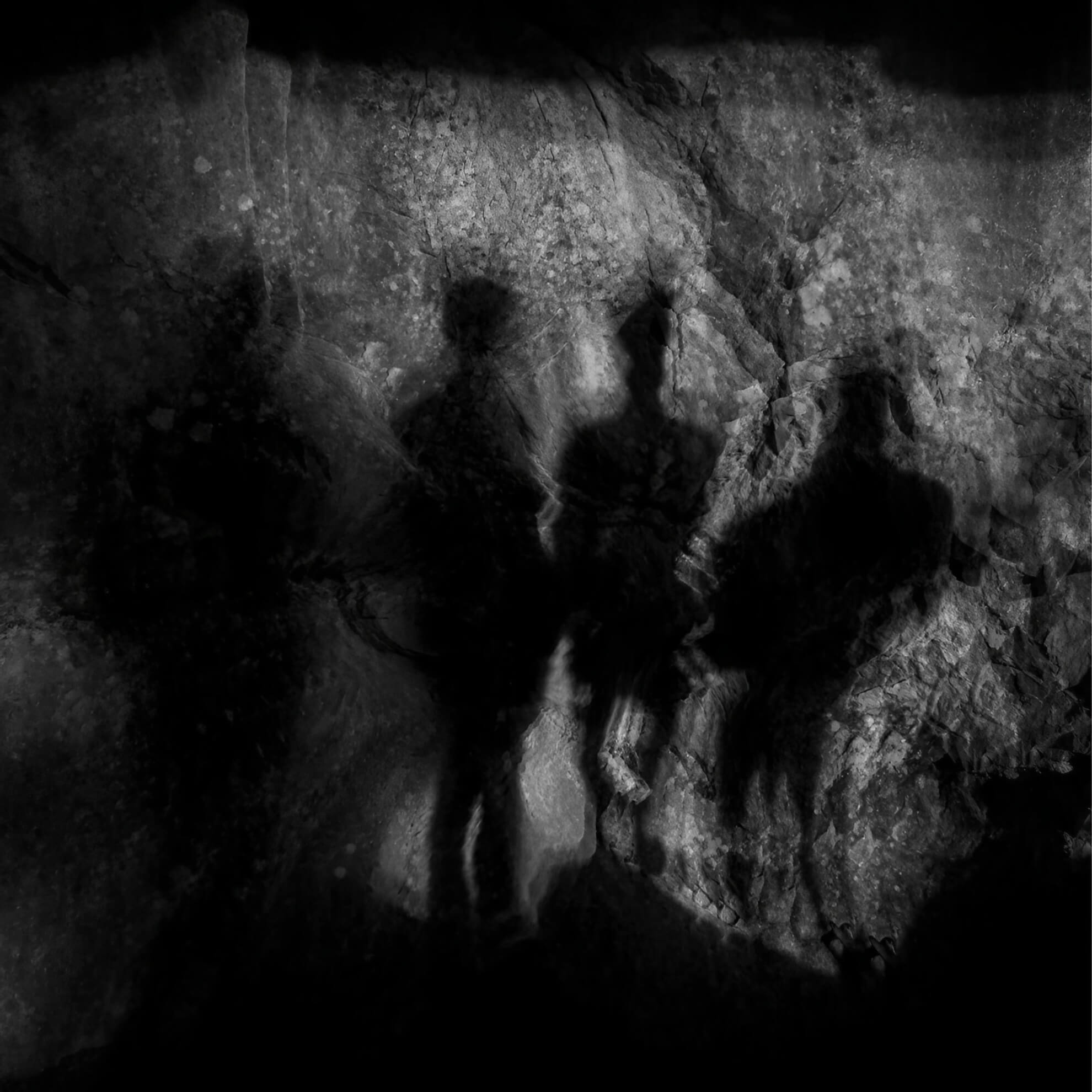
Upon its initial release, critics recognized that the album successfully avoided the prevalent, tiresome trend of synthwave revival, yet its production unmistakably retained an 80s feel. This differentiation is vital.
Unlike many contemporary acts that rely on vintage synthesizers merely as a stylistic crutch for simulated authenticity, A Projection used these textures as structural components to construct music that sounded both immediate and current. The resulting sound was lauded as “a captivating blend of emotional New Wave, dark Post-Punk, early 90’s Goth & Indie Rock.”
The album operates on a tension between the organic and the synthetic. The rhythm section—propulsive and disciplined—anchors the tracks in the physical realm of punk, while the lush synthesizers and effect-driven guitars create a dreamy, atmospheric superstructure.
This duality is reflected in the album title itself. ‘Section’ implies a part of a whole, a slice of time, or perhaps a distinct architectural view. It suggests that the listener is observing a specific cross-section of the band’s evolution—a moment where the past and future overlap.
The album launches with ‘Something Whole,’ a three-minute burst of intent that immediately establishes the new era. Driven by a relentless beat and surgical guitars, it frames Rikard Tengvall’s urgent vocals as a call to arms for both listener and band—a theme visually reinforced by the track’s fog-laden, industrial music video.
This energy bleeds into ‘Strange,’ which channels gothic influences into a 2am dancefloor anthem, juxtaposing an upbeat rhythm with lyrics grounding personal angst in broader geopolitical unease.
The pace tightens with ‘Time,’ a punk-oriented study in economy that reflects on the scarcity of opportunities, before arriving at the album’s keystone, ‘Substitute.’ Identified early on by Metropolis Records as the standout track, it encapsulates the band’s strengths: catchy hooks, deep vocals, and a defiantly modern punk attitude that refuses to wallow in the disillusionment of its lyrics.
As the record progresses, it drifts into more atmospheric territory. Tracks like ‘Fall’ and ‘Verdicts’ explore post-punk anguish and the weight of legacy, offering a dense counterweight to the earlier pop sensibilities. ‘Lucy Shrine’ stands out for its near-religious imagery, sanctifying a lost love amidst digital decay.
The album’s rhythm shifts again with the angular complexity of ‘Down’ and the mental scattering of ‘Diffusion,’ before ‘Live Again’ injects a driving, joyful optimism. The journey concludes with the stately, slow-burn epic ‘Disbelief,’ a track that suggests a final shedding of the past and a metamorphosis for the future.
The Object and Its Placement in Time
The 2025 reissue of ‘Section’ is not merely a digital re-upload; it is a dedicated physical campaign. The album will be available on Digipak CD, but the limited edition White Vinyl—restricted to 500 copies—is the primary focus of the reissue campaign, positioning the album as a rarity for connoisseurs.
The appreciation of post-punk and darkwave is deeply tied to the physical format. The ritual of the needle drop, the tactile nature of the vinyl, and the expansive artwork are essential to the genre’s experience. Metropolis Records is asserting ‘Section’ as a genre classic, worthy of preservation and display, with the release of a special white vinyl edition. Scheduled for December 12, 2025, the release is strategically timed for the winter market, offering music perfectly suited for the long nights of the solstice.
This reissue also serves a strategic purpose in A Projection’s broader career arc. Since the release of ‘Section’ in 2019, the band has continued to evolve. Their subsequent work, such as 2022’s ‘In a Different Light,’ shifted even further towards an electronic sound with influences from contemporary darkwave and mainstream hit lists.
The 2025 reissue of ‘Section’ serves as the essential Rosetta Stone for comprehending the band’s musical evolution. The reissue of ‘Section’ offers a crucial point of reflection, enabling modern listeners to witness the evolution of the band’s sound—from its initial rock foundation to its current synth-pop form.
‘Section’ serves as the band’s foundational blueprint, uniquely blending the guitar-driven rock of their early days with the electronic sheen that hinted at later tracks such as ‘Regenerate’ and ‘Paris Stockholm.’ This album proves that synthesizers were not a later addition but were always subtly embedded, waiting beneath the surface of the guitar work, foreshadowing their future sound.
The Live Projection
A crucial component of the A Projection mystique is their live performance. They have been described as a highly sought-after live act, known for powerful and atmospheric shows that combine a dense, sinister sound with suggestive video projections. The band’s name itself—A Projection—hints at this visual component. They do not just play music; they project an image, a mood, a world.
Throughout 2025 and moving into 2026, the band remains active on the European festival circuit. Confirmed dates include performances in Germany, such as appearances at Sub Kultur Festival in Hannover on July 4, 2025, and the Eastside Festival in Halle on July 5, 2025.
Looking further ahead, the band is scheduled to perform at the prestigious Castle Party Festival in Bolków, Poland, between July 16 and July 19, 2026. These performances often feature a mix of the classic ‘Section’ material alongside the newer electronic tracks, proving that the songs from 2019 have the stamina to stand alongside the fresh material.
The band’s touring history is extensive, covering festivals like Amphi Festival, M’era Luna Festival, and NCN Festival. This road-dog mentality has honed their sound, stripping away the superfluous and leaving only the muscle and bone of the songs. When they play ‘Section’ material now, in 2025, it is with the confidence of survivors.
The upcoming performances at the Cold Hearted Festival in Bochum and Dresden in November 2025 serve as a prelude to the reissue’s release, building momentum and reintroducing these tracks to live audiences just before the physical product drops.
This strategic alignment of live performance and physical release highlights the band’s continued relevance and their ability to command a stage, even years after the initial release of their defining material.
The Lasting Resonance
The reissue of ‘Section’ on December 12, 2025, is more than a commercial transaction; it is an act of curation. It frames a specific moment of artistic bravery—the decision to continue when silence would have been easier. A Projection took the broken pieces of their lineup and fashioned a record that honored their post-punk roots while refusing to be imprisoned by them.
In listening to ‘Section’ today, one hears the sound of a band finding its footing on shifting ground. It is a record of power and vulnerability, of confidence and introspection. The white vinyl spinning on the turntable is a ghost of that struggle, now purified and preserved.
For the modern listener, inundated with algorithmic playlists and ephemeral content, ‘Section’ offers something substantial: a coherent, album-length narrative of resilience. It reminds us that the long, dark winter is not an end, but a season to be endured, and that the music we make in the dark can eventually lead us into a different light.
With A Projection evolving from the guitar-driven anxiety of ‘Section’ to the synth-pop polish of ‘In a Different Light,’ one must ask: do you believe the band’s true identity lies in the shadows of the post-punk past, or is their electronic future the inevitable destination for all modern darkwave acts?
Leave a Reply