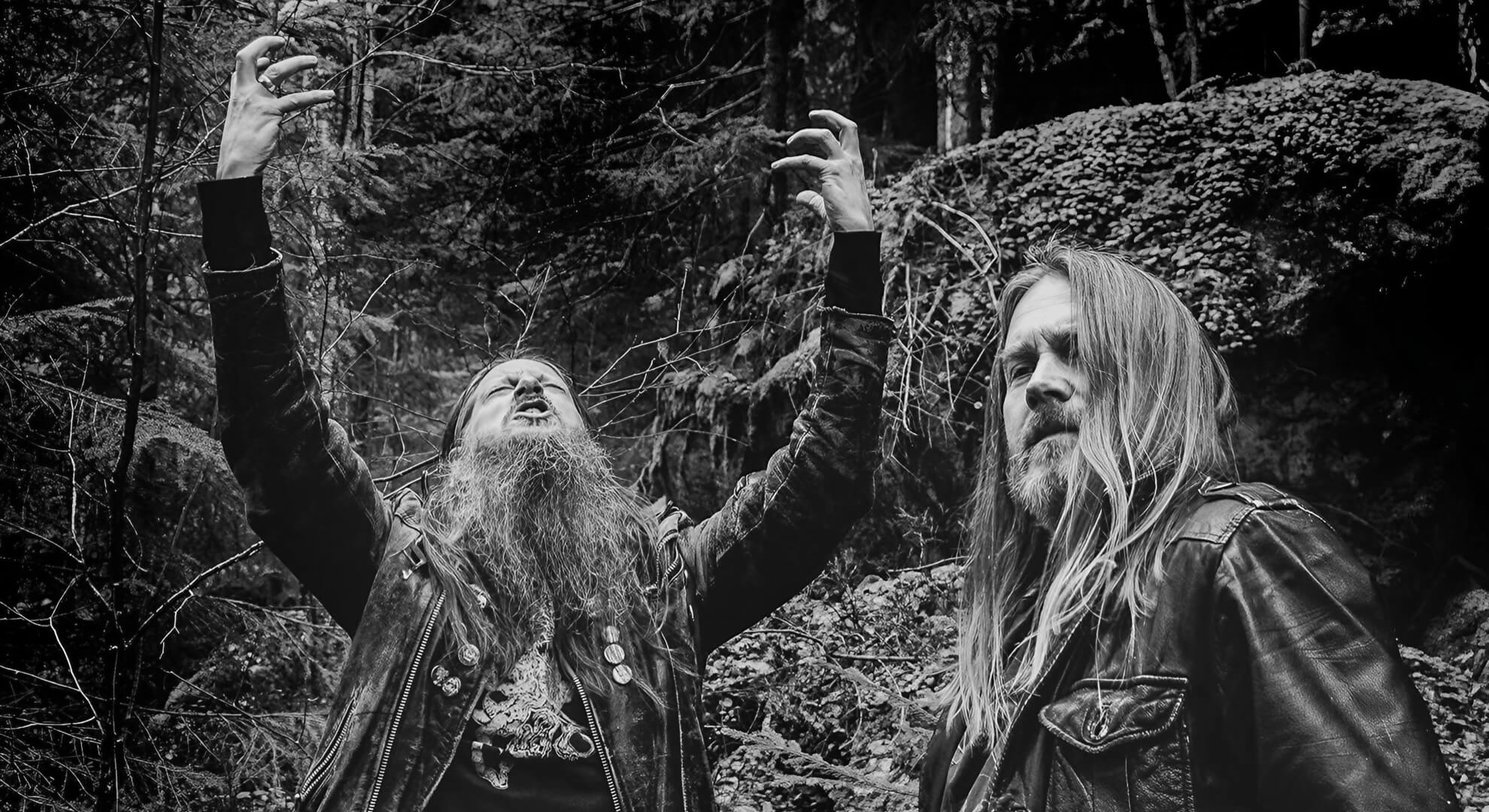


Forty years into a career defined by militant isolationism and artistic stubbornness, Darkthrone has finally permitted a comprehensive audit of their most volatile decade. The release of ‘The Fist in the Face of God,’ on March 6, 2026, is less a standard reissue campaign and more a canonization of the specific creative madness that seized Gylve “Fenriz” Nagell and Ted “Nocturno Culto” Skjellum in the early 1990s.
Spanning the nine albums that cemented their reputation as the genre’s most unyielding purists, this collection frames their discography not merely as music, but as a deliberate, decade-long act of sabotage against commercial polish.
For a band that has notoriously avoided the machinery of the modern music industry—famously refusing to tour since the mid-1990s and remaining localized in the forests of Oslo—this retrospective offers a sanctioned glimpse into the internal logic of their longevity. It traces the arc of a duo who realized early on that true progression required a calculated regression.
Darkthrone stripped their sound down to its most primitive, skeletal components, a tactic that allowed them to not merely survive the changing tides of heavy metal, but to build a fortress against them.
The Scope of the Archival Collection
‘The Fist in the Face of God’ operates as a physical manifestation of this uncompromising ethos. The collection comprises nine classic albums, each having received a freshly updated master courtesy of Patrick Engel at Temple of Disharmony.
Engel, a figure of significant renown in the extreme metal community for his sensitive restoration of foundational tapes, was tasked with ensuring the audio remains faithful to the original sonic intent while optimizing it for the modern 180-gram heavyweight vinyl format.
This balance between preservation and presentation is critical for Darkthrone, a band whose identity is inextricably linked to the “lo-fi” and “primitive” qualities of their early recordings, a production choice that scholars argue serves as a deliberate form of subcultural capital and resistance against mainstream co-optation.1
The physical presentation of the boxset adheres to a “gold standard” of archival quality. Each of the nine LPs is supplied with its original cover and sleeve design, maintaining the visual continuity of the band’s history. Furthermore, the set includes a selection of posters and art prints containing rare band photography and classic artwork, much of which has been out of print or restricted to private archives for decades.
Nine Volumes of Darkness
The musical journey contained within this boxset begins with ‘A Blaze in the Northern Sky’ (1992), the release that marked the band’s pivotal shift into early Norwegian Black Metal. This is followed immediately by ‘Under a Funeral Moon’ (1993), a record widely celebrated as a benchmark for pure black metal atmosphere.
The trilogy of early classics concludes with ‘Transilvanian Hunger’ (1994), which introduced a minimalist, lo-fi aesthetic that would influence the genre for decades. As the band moved into the mid-90s, they released ‘Panzerfaust’ (1995), a record heavily noted for its Celtic Frost influences, followed by the darker, cold heavy metal sound of ‘Total Death’ (1996).
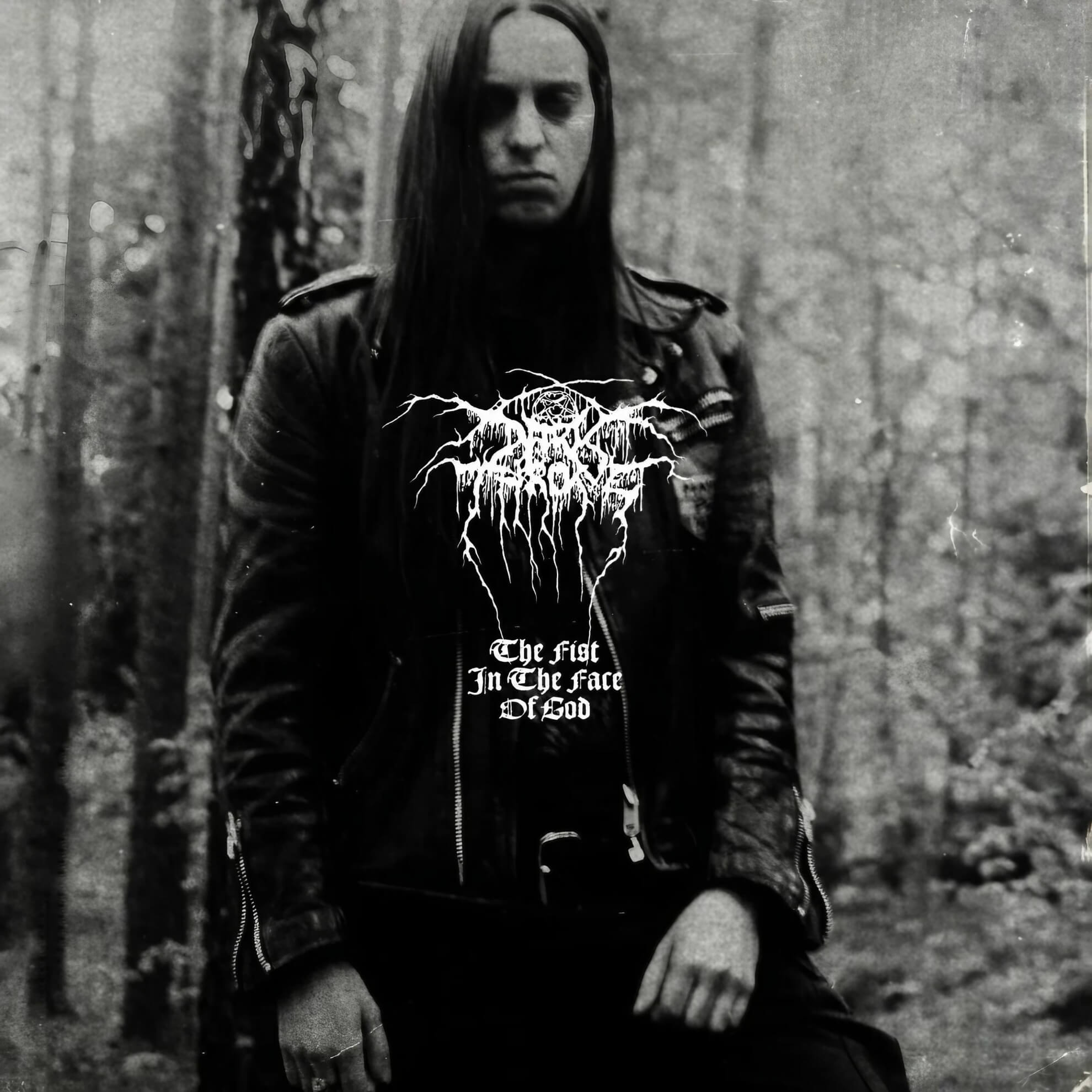
As the millennium approached, the collection documents the band’s subtle shifts in style, including the mid-tempo and melodically inclined ‘Ravishing Grimness’ (1999) and the aggressive, modern black metal approach found on ‘Plaguewielder’ (2001).
The set concludes with the punk-influenced black metal of ‘Hate Them’ (2003) and finally ‘Sardonic Wrath’ (2004), which stands as their final statement of pure black metal before their subsequent stylistic evolution.
Beyond the audio-visual material, the boxset is bolstered by a 48-page book written by Harald Fossberg. Fossberg, a longtime friend of the band and former vocalist of the “death punk” outfit Turbonegro, provides a narrative that details Darkthrone’s career through the essential development periods represented by the included albums.
This literary component is supplemented by rare images from the band’s personal archives, providing a look at the personal side of a duo that has spent most of their career avoiding the camera.
A Radical Transfiguration of Sound
To fathom the seismic weight of this anthology, one must look beyond the tracklists and see the radical rejection of modernity that birthed them. In 1991, Darkthrone was poised to become royalty in the technical death metal scene following the polished, complex success of ‘Soulside Journey.’ Yet, in a move that baffled their contemporaries and infuriated their label, Fenriz and Nocturno Culto abruptly dismantled their own technical prowess. They traded the clean, high-fidelity production of Swedish studios for a sound that was intentionally raw, cold, and jarringly primitive.
This “transfiguration” produced what is arguably the most important trilogy in black metal history. ‘A Blaze in the Northern Sky’ arrived not as a continuation, but as an interruption. Fenriz has frequently cited this moment not as an evolution, but as a necessary correction, noting that the technical death metal scene had become tedious and devoid of the gritty atmosphere found in 80s progenitors like Hellhammer.2
The metamorphosis reached its zenith with the recording of ‘Under a Funeral Moon’ and the notoriously lo-fi ‘Transilvanian Hunger.’ Having successfully alienated the mainstream metal audience, the duo distilled their sound into a hypnotic, monotone buzz. This boxset captures the precise moment Darkthrone ceased striving to be a “good” band and focused entirely on being a “cold” one, establishing a template that thousands of imitators would chase for the next thirty years.
Restoring the Audio Authenticity
The decision to enlist Patrick Engel of Temple of Disharmony for the mastering of ‘The Fist in the Face of God’ is a strategic choice that reflects Darkthrone’s commitment to audio authenticity. Engel is not merely a technician; he is a specialist in “audio restoration” who approaches historical metal tapes with the reverence of an archeologist.
His mastering philosophy centers on the idea that the band should sound on an album as they sound in their rehearsal room, emphasizing the natural character of the instruments over modern digital sheen.
Engel’s reputation for mastering foundational black and death metal reissues—including works by Samael, Massacra, and Sodom—makes him the ideal choice for this boxset.
For ‘The Fist in the Face of God,’ Engel was tasked with updating the audio to meet modern vinyl standards (180g heavyweight) while ensuring the records “remain in line with the originals.” This adherence to the original “necro” sound is vital; regarding their production choices, Fenriz has argued that the organic sound of the 1970s was never about poor quality, but about capturing a specific, tangible atmosphere that digital clarity destroys.
The updated masters provide a cohesive tonal link between the early Peaceville Records years and the later experiments documented in the boxset. ‘Panzerfaust’ (1995), the band’s fourth album and their first for Moonfog Productions, is often noted for its “Celtic Frost-fuelled” aggression. The 2026 restoration aims to highlight the “meatier thickness” that critics have praised in later retrospectives while maintaining the “chilling” atmosphere of the vocal performances, which are widely considered some of Nocturno Culto’s best.
Unearthing the Visual History
Perhaps the most anticipated element of the boxset for dedicated collectors is the DVD, which contains a wealth of archival material that Fenriz has described in characteristic fashion as being “as rare as chicken teeth.” This colloquialism highlights the band’s hermetic nature; footage of the duo is scarce precisely because they view the visual aspect of the music industry with suspicion.
Central to this is an exclusive career-spanning interview with Fenriz and Nocturno Culto recorded in 2025. Conducted by Harald Fossberg, this 53-minute interview covers the full forty-year history of the band, offering rare insights into their creative process.
The inclusion of the 1996 live show in Oslo, recorded at the Rockefeller Music Hall, is of immense historical significance. Darkthrone has not performed live since the 1990s, making any high-quality footage of their few stage appearances a “holy grail” for fans. This specific performance features a lineup that included Sigurd “Satyr” Wongraven of Satyricon on bass, as Darkthrone had already transitioned into a studio-only project.
The setlist captures the band at a pivotal moment, performing tracks from their “Unholy Trinity” era alongside material from their death metal roots. Additionally, the DVD contains the “2003 Trilogy” of interviews, which were originally conducted for previous reissue campaigns. These interviews provide a fascinating snapshot of the band during their “Moonfog era,” showing Fenriz and Nocturno Culto reflecting on their early black metal classics while they were in the midst of creating more punk-influenced works like ‘Hate Them’ and ‘Sardonic Wrath.’
Evolution and Infamy at Moonfog
The latter half of ‘The Fist in the Face of God’ documents the band’s tenure with Moonfog Productions, the label founded by Satyr of Satyricon. This period, spanning from 1995 to 2004, is often characterized by increased experimentation and a “crustier,” more rock-influenced edge. ‘Panzerfaust’ remains a fan favorite from this era, hailed for its homage to the “Celtic Frost” sound and the sheer vocal intensity of Nocturno Culto.
As the band progressed, ‘Total Death’ (1996) and ‘Ravishing Grimness’ (1999) saw them exploring different facets of the extreme metal spectrum. ‘Total Death’ is notable for featuring lyrics written entirely by Nocturno Culto (on his tracks) and other figures in the scene, while ‘Ravishing Grimness’ introduced more melodic leans and a “heavy hammering feeling” that suggested a shift away from the purely atmospheric black metal of the early 90s.
The era concluded with ‘Hate Them’ (2003) and ‘Sardonic Wrath’ (2004). ‘Hate Them’ is often cited as the point where the “crust punk” influence became undeniable, with its dry guitar sound and aggressive, primitive drumming providing a bridge to the “Black ‘n’ Roll” style that would dominate their post-2005 output.
Meanwhile, ‘Sardonic Wrath’ serves as the “swansong” for the Moonfog era, with academic observers noting it was the last Darkthrone album recorded “solely in the black metal style” before subsequent releases.3 The album is dedicated to the memory of Quorthon of Bathory, underlining the band’s lifelong discipleship to the foundational architects of the genre.
The Voice of the Kolbotn Chronicles
The participation of Harald Fossberg in this boxset is not merely a journalistic addition but a deep-seated connection to the band’s origin story. As a longtime friend who “mingled and recorded in the same spaces” as Mayhem and Darkthrone in the late 1980s, Fossberg’s 48-page book and DVD interviews are expected to provide a level of intimacy that standard music biographies lack.
Fossberg’s own history as the first singer of the seminal “death punk” outfit Turbonegro gives him a unique perspective on the intersection of metal and punk that has come to define Darkthrone’s later career.
Impact on the Global Collector Market
‘The Fist in the Face of God’ is positioned as a “mammoth” limited-edition release, with retail sources reporting a strict limitation to 2,000 units globally.
Given the exhaustive nature of the contents—including nine LPs, a DVD, a 48-page book, posters, and art prints—the retail price has been set between £225 (approximately 1,135,000 COP) and €329 (approximately 1,437,000 COP), reflecting its status as a premium item for “completist” collectors. The boxset is scheduled for a global release on March 6, 2026, through Peaceville Records in the United Kingdom.
Vitality in the Modern Era
The release of this boxset in 2026 does not mark the end of the band’s activity; rather, it contextualizes a history that is still very much in motion. In recent years, Darkthrone has experienced a creative renaissance, releasing a string of highly acclaimed albums through Peaceville Records.
This creative arc includes ‘Arctic Thunder’ (2016), ‘Eternal Hails……’ (2021), and most recently ‘It Beckons Us All’ (2024)—a record we previously championed as a “symphony of darkness and light” that pushed the envelope of extreme metal. These modern works see the duo diving deep into their love of “epic metal,” 70s rock, and traditional doom, while still maintaining the “cold” atmosphere that made them revered figures.
Nocturno Culto has recently hinted that multiple albums are on the horizon, with recording sessions potentially taking place in the spring of 2026. This ongoing productivity makes the release of ‘The Fist in the Face of God’ even more significant; it allows the band and their audience to look back at the “pure black metal” foundations that made their current freedom possible.
A Monument to Musical Resistance
Ultimately, ‘The Fist in the Face of God’ stands as more than a luxury artifact for the collector; it is the final verdict on a decade spent at war with the status quo.
Darkthrone did not survive the nineties by adapting to the industry, but by forcing the industry to reckon with their raw, unpolished reality. As Fenriz and Nocturno Culto look back from the vantage point of forty years, this boxset proves that their retreat into the shadows was never an act of hiding, but an act of preservation. It remains proof of the power of the primitive, a reminder that in a world obsessed with clarity, there is still a profound, untouchable majesty in the dirt.
As listeners prepare to re-immerse themselves in this definitive archive of the “Unholy Trinity,” consider this: in a modern metal climate increasingly defined by technical perfection and digital clarity, does Darkthrone’s deliberate regression to the “necro” aesthetic still operate as a genuine act of rebellion for you, or has the lo-fi sound become a tradition as rigid as the one they originally sought to destroy?
References:
- Kahn-Harris, Keith. ‘Extreme Metal: Music and Culture on the Edge.’ Oxford: Berg, 2007. ↩︎
- Patterson, Dayal. ‘Black Metal: Evolution of the Cult.’ Port Townsend: Feral House, 2013. ↩︎
- Patterson, Dayal. ‘Black Metal: The Cult Never Dies Vol. 1.’ London: Decibel Books, 2015. ↩︎

Leave a Reply