
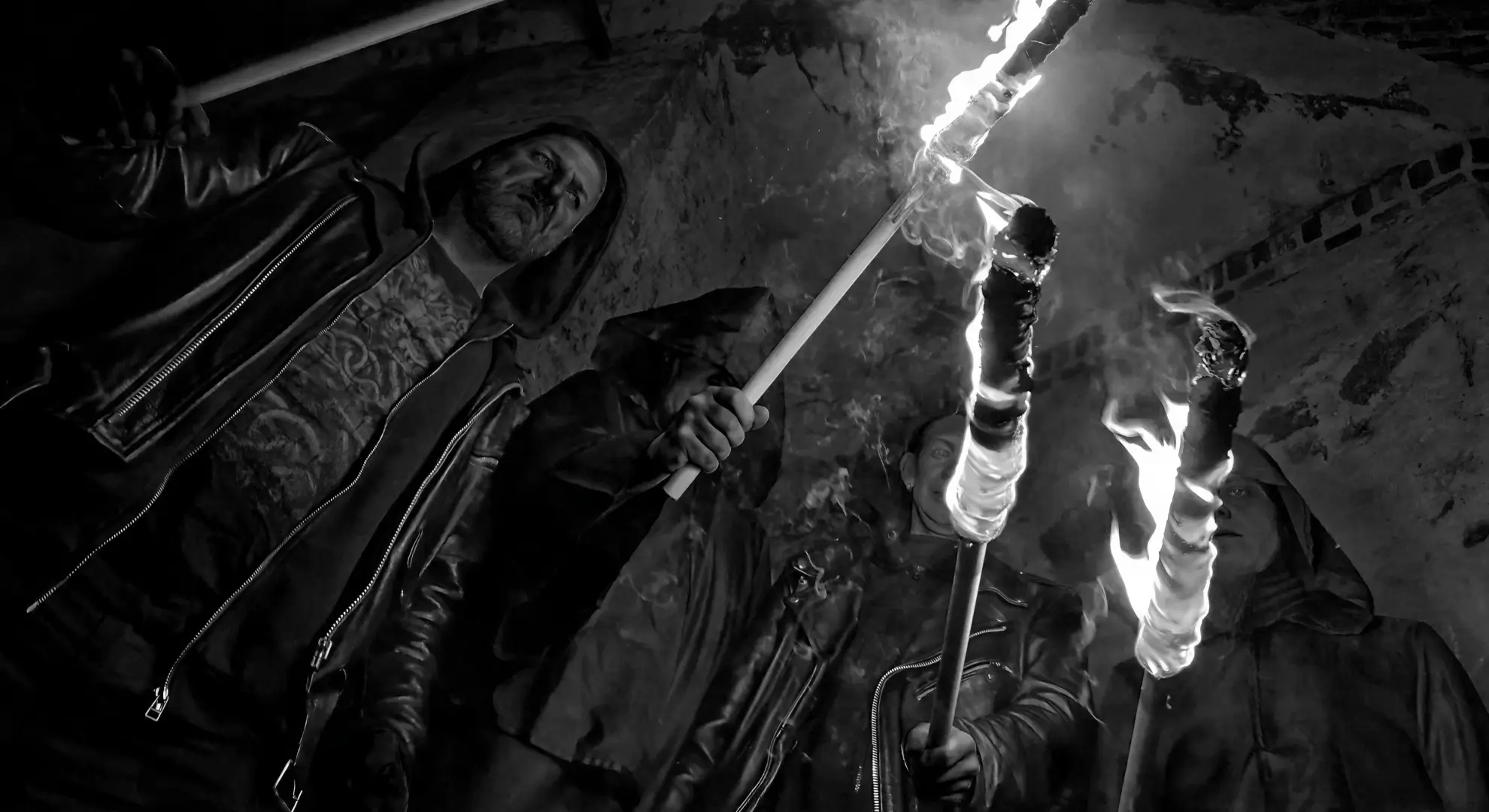


On November 7, the Polish metal band Deconstructing Sequence is set to release ‘Tenebris Cosmicis Tempora,’ an album with a philosophical concept as aggressive as its sound. The title, a Latin phrase suggesting an era of cosmic darkness, will be released by Black Lion Records. The album presents a narrative of universal annihilation, in which humankind, along with angelic and demonic celestial beings, is destroyed to clear the way for a single, perfect entity designed to create new worlds free from the constraints of human religion and rules.
The album’s anti-religious themes are particularly pointed in the band’s native Poland, a country where a strong Catholic identity has often clashed with artistic expression. The nation’s extreme metal scene has a history of dissent; the band Behemoth, for example, has faced legal challenges for offending religious sentiment. For Deconstructing Sequence, which has long cited atheism as an influence, the album’s cosmic conflict can be seen as an allegory for a struggle against established belief systems.
The project’s aesthetic is guided by the Polish graphic artist Mariusz Stelągowski, who created the album’s cover art. A cinematic trailer released ahead of the album features stark, unsettling imagery that establishes a tone of impending doom. The music, described by the label as a “devastating fusion of sound and atmosphere,” draws on a lineage of experimental and cerebral metal. The band cites a range of influences, including the chaotic riffing of Mayhem and the complex song structures of Emperor, suggesting a focus on intellectual rigor as much as raw aggression.
Deconstructing Sequence: The Making of a Sound
Deconstructing Sequence was formed in 2012 by Morph and Tiberius, emerging from the dissolution of their previous band. From their base, initially in Taunton, United Kingdom, they set out to chart the “progressive and avant-garde regions of extreme music,” coining their own descriptor for the mission: “Extreme Progressive Art.” This was a promise to create music that blended technique, atmosphere, and brutality in service of a larger artistic vision.
Their initial EPs, ‘Year One’ (2013) and ‘Access Code’ (2014), established a unique voice rooted in science fiction, blending the cosmic death metal of Nocturnus, the technicality of Cynic, and the industrial weirdness of Aborym into a forward-thinking, mechanical whole. This early work culminated in their 2018 debut full-length, ‘Cosmic Progression: An Agonizing Journey Through Oddities of Space,’ a demanding, 55-minute collection of complex soundscapes.
However, the seven years between ‘Cosmic Progression’ and the forthcoming album were not just a period of meticulous composition; they were a time of fundamental transformation. Sometime after relocating to Szczecin, Poland, the original partnership dissolved. Co-founder Morph departed in 2021, leaving Tiberius as the sole remaining original member.
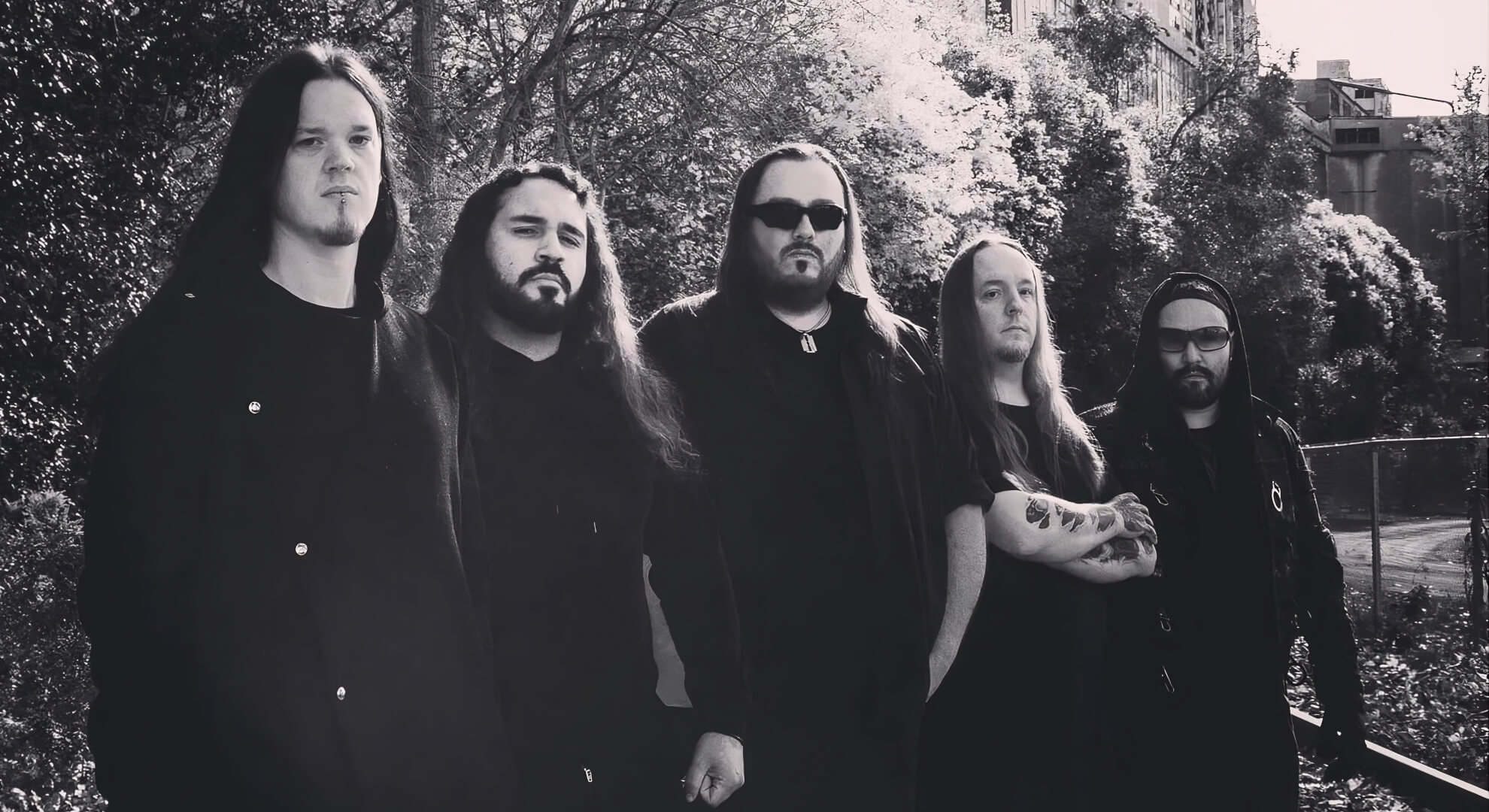
The band did not end; it was rebuilt. ‘Tenebris Cosmicis Tempora’ is the first statement from this new incarnation of Deconstructing Sequence, now a quartet featuring Tiberius alongside Dark Soul (Drums), Immortal (Bass), and Uruk (Guitars).
This real-world collapse and rebirth adds a profound layer of personal resonance to the album’s abstract concept. The narrative of a universe being destroyed to make way for a perfect, new creation is no longer just a science-fiction allegory; it is a mirror to the band’s own story.
The move to Poland’s more religiously conservative public sphere, followed by the lineup’s dissolution, suggests the sharpened, anti-dogmatic focus of the new material is deeply tied to Tiberius’s singular, evolving vision for the project. The album is not the end of a journey two people began, but the powerful first chapter of a new one.
The Bulletin
Subscribe
Subscribe today and connect with a growing community of 613,229 readers. Stay informed with timely news, insightful updates, upcoming events, special invitations, exclusive offers, and contest announcements from our independent, reader-focused publication.
The Art of Mariusz Stelągowski
The project’s aesthetic is guided by the Polish graphic artist Mariusz Stelągowski, who created the album’s cover art under the name Blutvision. Stelągowski’s work delves into the depths of human suffering, solitude, and existential dread, placing him in a lineage of Polish surrealists known for their bleak, dystopian visions.
While his art evokes the haunting, skeletal landscapes of the legendary Zdzisław Beksiński, Stelągowski has also cited the North American cover artist Travis Smith as a key influence, blending a classic Polish sense of gothic gloom with a modern, international metal aesthetic.
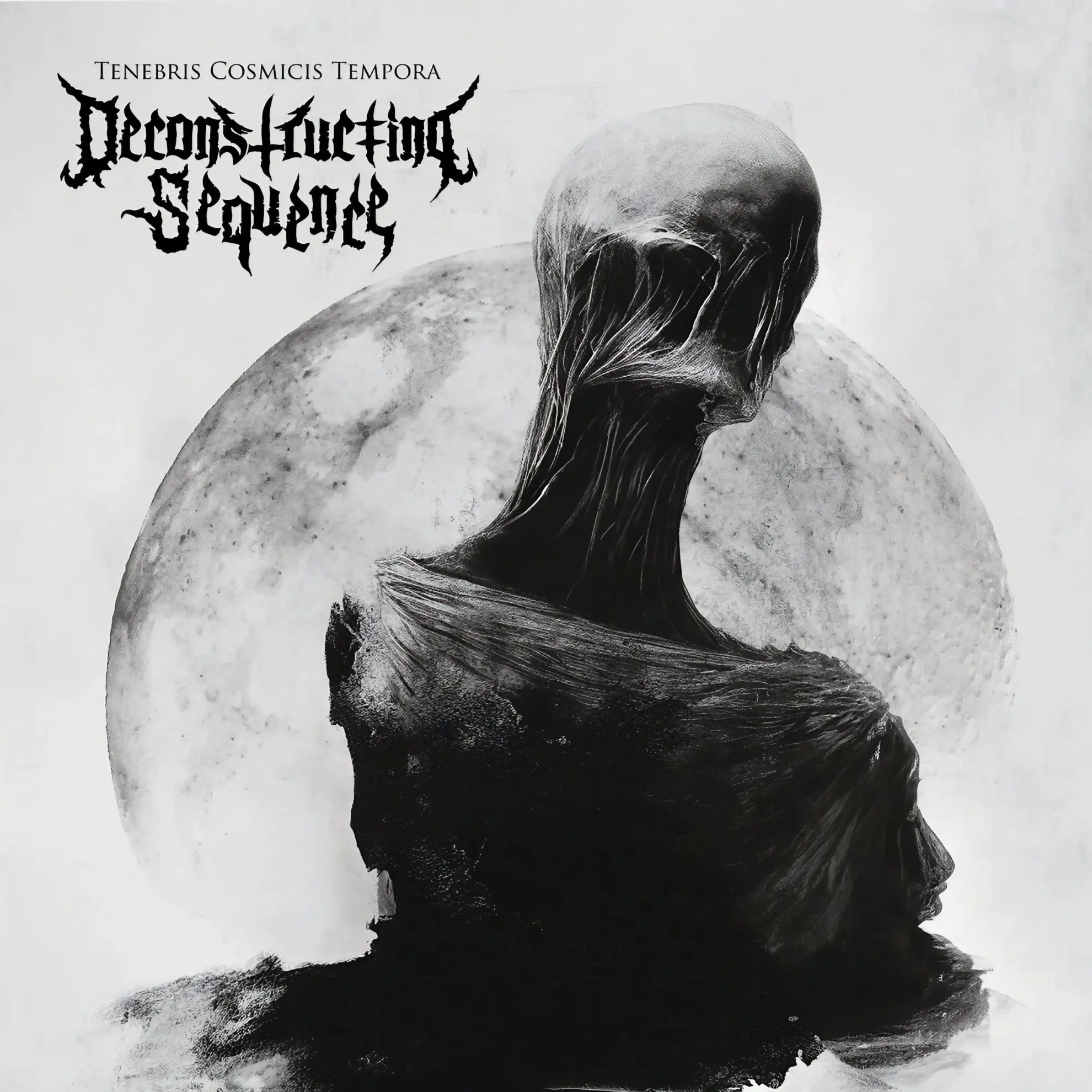
For ‘Tenebris Cosmicis Tempora,’ Stelągowski has created a powerful visual overture to the album’s themes. The artwork is dominated by a gaunt, spectral figure, its face obscured by a thin, shroud-like membrane, as if its identity has been erased or has not yet been formed.
This being, seemingly composed of shadow and dust, stands before a vast, pockmarked moon, a dead world hanging in an empty cosmos. The image is a direct visual translation of the album’s narrative: it is the “perfect being” emerging from the void, a post-human entity born from the ashes of a dead universe.
The featureless face suggests a clean slate, an existence unburdened by the past, while its fragmented form speaks to a creation that is both terrifying and pure. The stark, monochrome palette reinforces the album’s title, perfectly capturing the cold, silent emptiness of a “Dark Cosmic Time” and the solemn, unsettling birth of what is to come.
The Uncompromising Echo: Metal in Modern Poland
The work of Deconstructing Sequence is inseparable from the remarkable artistic ecosystem from which it has now emerged. Poland, a country with a tumultuous history of occupation and ideological struggle, has cultivated one of the world’s most vital and intellectually rigorous extreme metal scenes.
This tradition of defiant internationalism has deep roots. The pioneering death metal band Vader was instrumental in proving that a Polish band could break through the Iron Curtain, signing to the influential British independent label Earache Records. They paved the way for Behemoth, who became one of the genre’s most successful acts while simultaneously fending off legal battles at home related to the country’s blasphemy laws.
What defines the Polish scene, however, is not a singular sound but its radical diversity. Described as a “crucible of ideas,” its stylistic “disunity” is a unifying characteristic. This creative freedom allows for a vast spectrum of expression, from the melancholic, folk-influenced black metal of Furia to the world-class stoner doom of Belzebong.
Fostered by an ethos of “cooperation, not competition,” this environment has created a fertile ground for experimentation, allowing a band as eclectic as Deconstructing Sequence to develop their sound without pressure to conform to a rigid template. Within this landscape, Polish metal often functions as a form of cultural counter-memory, a space where intellectual dissent and artistic freedom are preserved.
Deconstructing Sequence, with its British origins, Polish home, and universal cosmic themes, perfectly embodies this transnational, philosophical identity.
Conclusion
All of these threads—a decade of evolution, a creative schism, a philosophical sharpening, and the influence of a uniquely defiant national scene—converge on ‘Tenebris Cosmicis Tempora.’
The album, the product of three years of intense effort, stands as the band’s most definitive declaration. Its very structure, traced by track titles like ‘Echoes of a Dying World’ and ‘The Last Terraform,’ culminates in the final, triumphant act of ‘Igniting the Skies of Creation.’
The choice of a Latin title is a final, subtle act of intellectual audacity. Latin is the historical language of the Roman Empire, of Western science, and, most critically, of the Catholic Church. For a Polish band to use the very language of the old world’s dominant religious and intellectual order to announce its annihilation is a powerful gesture of subversion.
It frames their futuristic narrative within a deep historical context, suggesting the “Dark Cosmic Times” they describe are not just a speculative future, but a commentary on the long shadow of dogma they seek to transcend. As of its announcement, no tour dates have been confirmed. The anticipation is focused on the recorded work itself, which promises to be a demanding and thought-provoking journey into a void from which, the reborn band argues, a more perfect existence can emerge.
Support
Independent
Journalism
Fund the voices Behind Every Story
Every article we publish is the product of careful research, critical reflection, and stringent fact-checking. As disabled individuals, we navigate this work with unwavering dedication, poring over historical records, verifying sources, and honing language to meet the highest editorial standards. This commitment continues daily, ensuring a consistent stream of content that informs with clarity and integrity.
We invite you to support this endeavor. Your contribution sustains the work of writers who examine their subjects with depth and precision, shaping narratives that question assumptions and shed light on the overlooked dimensions of culture and history.
Donations are processed through an in-kind sponsorship model powered by Paymattic—a secure, reliable donations plugin that enables direct support for our ongoing editorial work.
Leave a Reply