
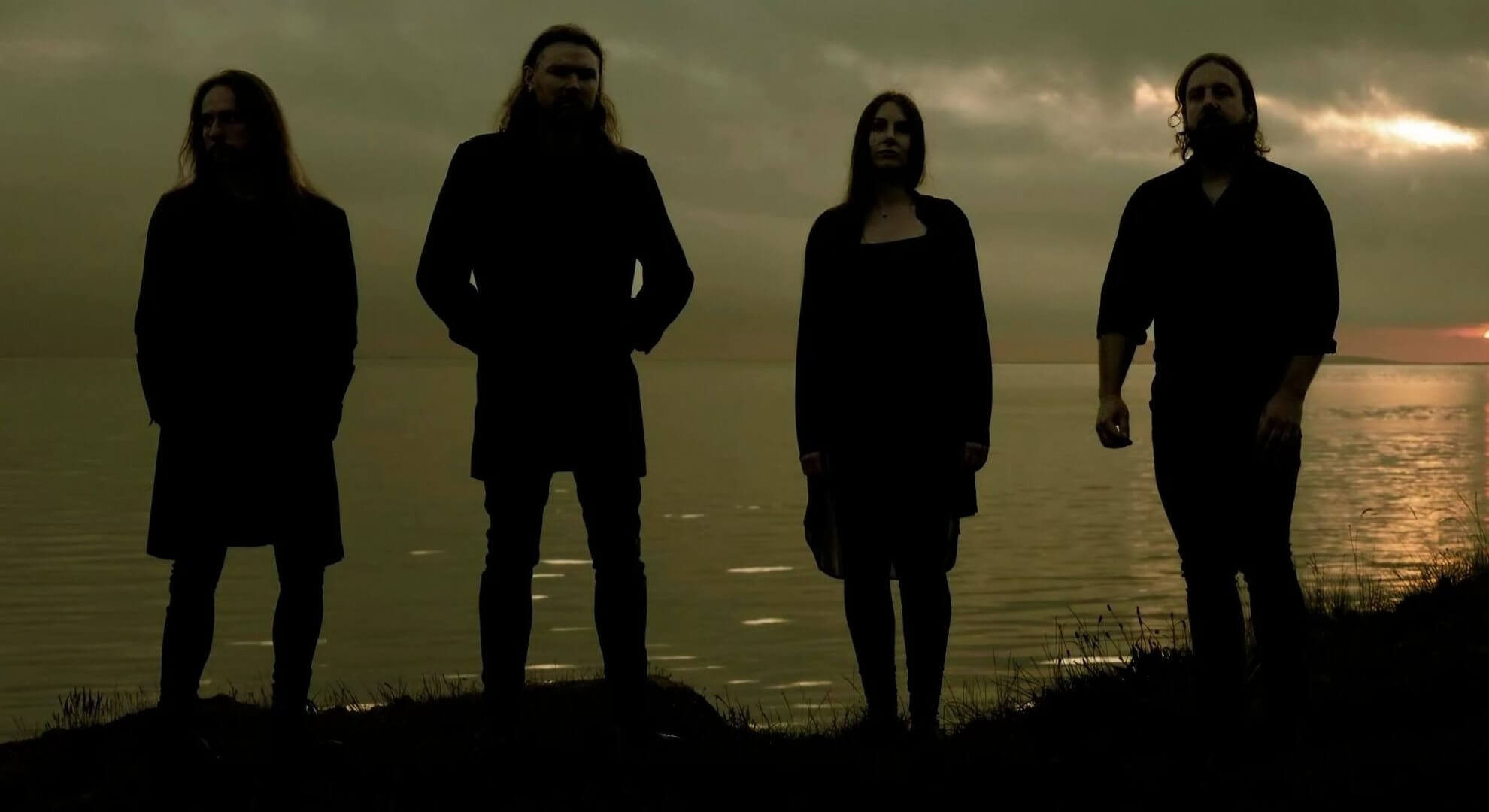


Heavy music, throughout its broad and often tumultuous history, possesses a distinct, resonant frequency. This sound speaks not of typical rebellion or aggression, but rather captures the cold, crushing inevitability inherent in the natural world. It is a sound born of granite and grey water, a sonic reflection of the rugged, windswept terrain that characterizes the northern fringes of Europe, and it is within this elemental sphere that the Northern Irish quartet Domhain has carved a distinct niche, a space where the ferocity of black metal is tempered by the mournful introspection of shoegaze and the solemnity of classical instrumentation.
With the announcement of their debut full-length album, ‘In Perfect Stillness,’ scheduled for release on February 20, 2026, via the Roman label These Hands Melt, the band moves beyond the mythic promise of their earlier works into a realm of profound, elemental finality.
The lead single, ‘My Tomb Beneath The Tide,’ serves as the herald of this new era. It is a composition that feels less like a song and more like a submersion, a work that demands patience as it washes over the listener with the slow, crushing weight of a rising sea. For a band whose name translates from the Irish Gaelic as “World” or “Deep,” the thematic trajectory is fitting. They are not merely observers of the environment; they are chroniclers of its capacity to swallow human experience whole.
Domhain: Origins and the Creation of a Sound
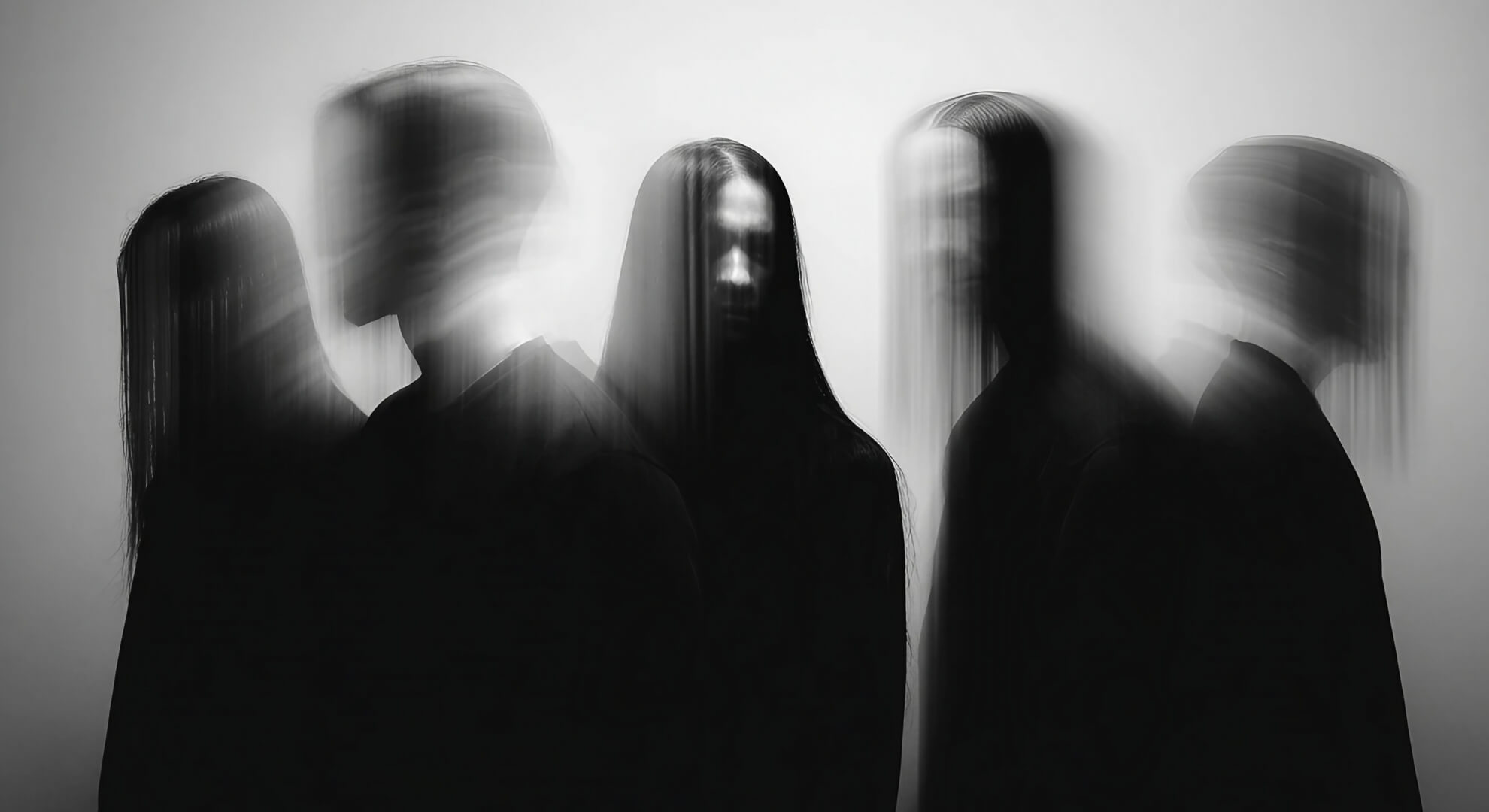
Domhain emerged from the fertile creative soil of Northern Ireland, a region with a storied history of producing artists who blend the abrasive with the melancholic. The lineup features Andy Ennis on vocals and bass guitar, Anaïs Chareyre-Méjan on drums, vocals, and cello, Nathan Irvine on guitars, and Ashley Irwin on guitars and backing vocals. This is not a gathering of novices; it is a convergence of experienced musicians who have honed their craft in the fires of the local circuit, bringing a level of technical proficiency and compositional maturity that belies the project’s relatively short existence.
The ‘Nimue’ Era and Mythic Foundations
The initial impact of the band was felt with the release of their debut EP, ‘Nimue,’ on October 20, 2023. This three-track offering established the sonic pillars that would come to define their identity: long-form song structures, the interplay of harsh and clean vocals, and the distinctive integration of the cello—not merely as an ornamental flourish, but as a central melodic voice.
Recorded at the renowned Foel Studio in Wales with producer Chris Fielding, known for his work with Conan and Primordial, ‘Nimue’ was steeped in Arthurian legend and ancient mysticism.
Tracks such as ‘The Mourning Star’ and ‘A Pile of Stones Upon Her Grave’ showcased a band interested in the intersection of beauty and decay. Critical reception was notably positive, with commentators praising the band’s ability to weave disharmonic harmony and dense melodic dynamics into a tapestry of hopeless hopefulness.
The inclusion of guest cellist Jo Quail on this release signaled Domhain’s ambition to expand the timbral palette of black metal, introducing a mournful, organic resonance that synthesized strings with the electric fury of amplifiers. The press noted that the band transported the Nordic mien of dense, atmospheric folk-infused post-blackgaze to the bleak, withered lushness of the Irish terrain, creating a sound that captivated as much as it desolated.
‘Of Pine and Oak’ and the Turn to Nature
Following ‘Nimue,’ Domhain participated in a split release titled ‘Of Pine and Oak’ on May 16, 2025, alongside the German dark folk trio Ephemeral. This release marked a subtle but significant shift in focus. Where ‘Nimue’ looked to myth, ‘Of Pine and Oak’ looked to the tangible environment. Described by the band as an ode to nature, this collaboration allowed them to explore a more pastoral, yet no less sombre, side of their artistry.
The track contributed by Domhain, ‘Footsteps’, introduced a quieter, more contemplative atmosphere, utilizing the sound of rain and acoustic guitars to evoke a sense of transience and memory. Reviewers noted that the track opens with the sound of rain, setting a somber tone, while the acoustic guitar recalls the delicate, melancholic style of Norwegian artist Vàli.
A spoken-word passage in French emerged amid distant thunder, adding a dramatic layer that reinforced the track’s mournful soundscape. This track, re-imagined as ‘Footsteps II’ on the upcoming album, serves as a bridge between their past explorations and the definitive statement that is ‘In Perfect Stillness.’
The Prelude to Stillness and the Single
The announcement of ‘In Perfect Stillness’ was accompanied by the release of ‘My Tomb Beneath The Tide,’ a track that stands as a towering demonstration to the band’s evolution. It is a piece of music that functions as a narrative arc, moving from introspection to cataclysm and finally to resignation.
The composition begins with a deceptive gentleness. Brightly glinting guitar notes and a gently musing bass create an atmosphere of introspection, evoking the grey light of a coastal dawn. This initial calm is the quiet of the shoreline before the storm. As the track progresses, the instrumentation swells, mirroring the incoming tide.
The production choices by Chris Fielding are crucial here; the drums—described as gunshot drums—cut through the mix with visceral immediacy, while the bass provides an enormous low-end throb that grounds the ethereal guitar work.
Andy Ennis’s vocal performance is a study in duality. His singing voice rises with a plaintive, tormented melody, pleading for release, before descending into savage snarls that articulate the violence of the emotional turmoil. A defining element of this track is the guest performance by Sarah Fielding of Darkest Era. Her remarkable high-arcing voice joins the fray as the song intensifies, adding a layer of operatic tragedy that elevates the composition from a metal song to a sonic drama.
The mid-section of the track sees the music slow and darken, sinking the listener into a dark emotional abyss. Here, the guitars moan and wail, employing feedback and dissonance to mimic the sound of wind tearing across a desolate beach. The climax is not a triumph, but a crash and pound, a sonic representation of the waves reclaiming the land, before the track recedes into the plaintive ring of guitars and softly spoken words, completing the circle.
The accompanying music video, directed by the band’s own Anaïs Chareyre-Méjan, is an essential component of the work, reinforcing the themes of the music with stark, evocative imagery. The visual narrative is simple yet devastating: a solitary figure on a cold, grey shoreline digs a cavity in the wet sand. This act of digging is ambiguous—is it a grave? A shelter? A womb?
As the music intensifies, the figure crawls into this water-filled depression. The arrival of a second figure—an age-weathered face—introduces a shocking turn. This second figure caresses the protagonist before killing her with her bare hands. This sequence can be interpreted as a metaphor for Time or Nature itself—a force that is both mother and executioner. The final shots of the tide rolling in to cover the body in sand and seaweed provide a visual resolution that matches the musical fade-out: a return to the perfect stillness of the void.
The band describes the track as a death-scene on a collapsing world: a person lying on a cold beach, the final dopamine hit painting the sky with visions of their life and surrendering to the spirit of the sea with calm acceptance. It is a powerful summation of the sublime—the eighteenth-century philosophical concept of nature as something both beautiful and terrifying.
‘In Perfect Stillness’ and the Album as a Whole
While ‘My Tomb Beneath The Tide’ offers a glimpse into the album’s soul, the full tracklist suggests a broader, more complex narrative journey. ‘In Perfect Stillness’ is not merely an album; it is a curated sequence of movements designed to guide the listener through a specific emotional topography.
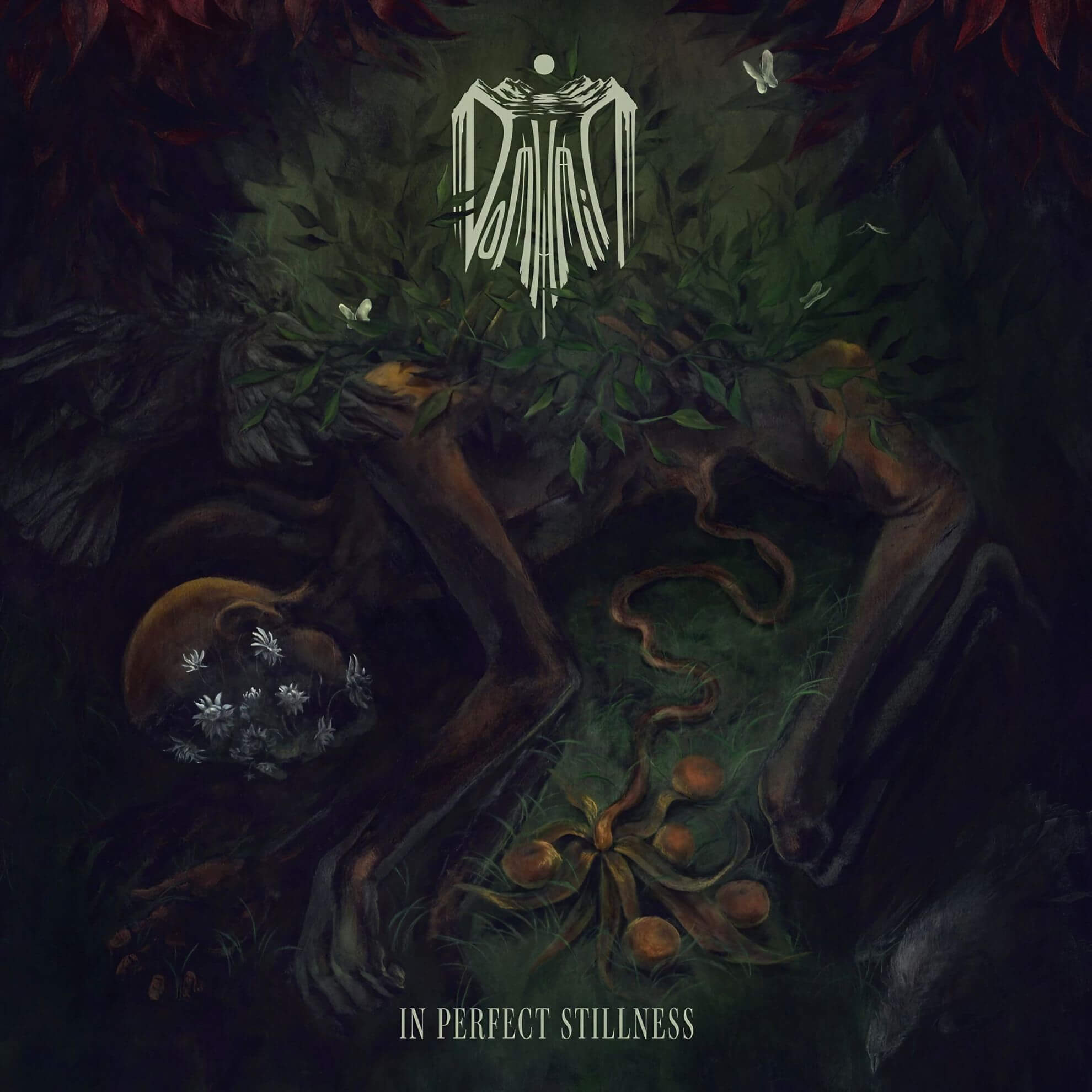
The album opens with ‘Una Tarra Ci Hé,’ a title in Corsican that translates to “There is a land.” This reference likely alludes to the polyphonic choral traditions of Corsica, suggesting themes of heritage, belonging, and perhaps the diaspora of the Celtic and pre-Celtic peoples. It establishes a connection to the earth and to history before the album moves into more personal territories.
The second track, ‘Talamh Lom,’ bears an Irish Gaelic title meaning “Bare Ground” or “Naked Earth.” In the context of Irish history and literature, this phrase is loaded with significance. It evokes the desolate, deforested landscapes of Ireland, the rocky soil of the west, or a metaphorical spiritual barrenness. It suggests a stripping away of artifice, leaving only the fundamental elements of existence.
The journey continues with ‘Footsteps II,’ a reimagining of the track from the split EP. This version features guests John Wilson on piano and Raul Andueza on cello, suggesting an expanded, more orchestral arrangement than the original. The movement from “Bare Ground” to “Footsteps” implies a journey across this desolate terrain, a traverse of the self.
The title track, ‘In Perfect Stillness,’ likely serves as the thematic anchor, exploring the concept of stasis or death not as an end, but as a state of perfection. The album concludes with ‘My Tomb Beneath The Tide,’ cementing the theme of submersion and return to the elements. The progression of titles suggests a journey from the earth to the ocean. The narrative charts a course of erosion: the solid ground is traversed, the self is examined, and finally, the self is dissolved into the infinite expanse of the sea.
The album is notable for its use of guest musicians, which speaks to Domhain’s collaborative ethos. Aside from Sarah Fielding on the single, the album features John Wilson on piano and Raul Andueza on cello for ‘Footsteps II.’ This expansion of the ensemble allows for a richer, more cinematic sound. The cello, played by Anaïs Chareyre-Méjan and guest Andueza, is particularly significant. In the context of metal, the cello acts as a bridge between the guttural and the ethereal, its timber capable of mimicking the human voice’s mournful cry in a way that electric guitars often cannot.
Historical and Cultural Background
To assess Domhain’s place in the broader cultural tapestry, one must look to the lineage of atmospheric black metal and post-metal. The band draws clear inspiration from the Nordic mien of the genre—the dense, tremolo-picked guitars and blast beats synonymous with Scandinavian black metal. However, their sound is filtered through a distinctly Celtic lens.
The Irish Lineage
Ireland has produced a unique strain of metal that often grapples with history and the land. Bands like Primordial have spent decades exploring the tragedy of Irish history through a blackened folk metal framework. Domhain operates in a similar emotional territory but with a different sonic approach. Where Primordial is epic and defiant, Domhain is introspective and resigned. They share the bloodline with the now-defunct Altar of Plagues, another Irish band that pushed black metal into urban and industrial territories, though Domhain retreats from the city to the coast.
The presence of Sarah Fielding from Darkest Era creates a direct lineage to the current vanguard of Irish metal. Darkest Era blends heavy metal with Irish folklore, and her collaboration with Domhain solidifies the band’s position within this tight-knit community.
The Post-Black Metal Context
Domhain’s music fits comfortably within the blackgaze subgenre, a style pioneered by French artists like Alcest, who mixed the ferocity of black metal with the dreamy textures of shoegaze. Domhain’s innovation lies in their integration of classical instrumentation (cello, piano) and their specific focus on the Atlantic atmosphere.
They are less concerned with the urban angst often found in post-black metal and more focused on the elemental indifference of nature. They are creating a soundtrack for the Anthropocene in a localized context—watching the coast erode, knowing that the perpetual movement of the waves will turn bones into sand.
Visual and Psychological Dimensions
The album’s physical presentation emphasizes its themes. The vinyl release, limited to 200 copies on Dark Green wax, evokes the color of deep sea water and pine forests. The inclusion of a 12-page booklet suggests that the lyrics and accompanying imagery are integral to the experience.
Psychologically, the band’s imagery—the digging of the grave, the surrender to the tide—speaks to a desire for return. In psychoanalytic terms, this is the Oceanic Feeling: a sensation of being one with the external world as a whole. However, in Domhain’s interpretation, this union is achieved through death.
The perfect stillness is not a meditative state of life, but the finality of non-existence. The final dopamine hit mentioned by the band suggests a biological, almost clinical view of death, stripped of religious comfort, leaving only the chemical and the elemental.
The Inevitability of Silence
With ‘In Perfect Stillness,’ Domhain has constructed a monument to impermanence. By fusing the raw aggression of black metal with the sorrowful elegance of the cello and the piano, they have created a sound that captures the terrifying beauty of the Northern Irish coast. This is not music for the faint of heart, nor is it music for the casual listener. It is a demanding, immersive experience that asks us to confront our own fragility in the face of nature’s vast, unyielding power.
Domhain presents a paradox in our age of ceaseless digital noise: a massive sonic presence that ultimately guides the listener toward stillness. Their music serves as a potent reminder of nature’s elemental finality—that all human efforts, histories, and voices are transient, destined to be eroded until only the foundational earth and the relentless tide remain. Though a bleak perspective, Domhain elevates this vision with such profound artistry that it achieves a unique form of transcendence.
Given that modern music is frequently produced in non-studio environments and consumed digitally, largely without a tie to a specific physical context, how relevant is the concept of “place” in the contemporary digital music environment? Domhain’s music is intrinsically tied to the physical environment of Northern Ireland—the fierce storms, the grey expanse of the sea, the rugged granite.
Does the “terroir” of a band like Domhain offer essential grounding, or does it merely reflect an internal emotional state projected onto the external world? Is the sound truly shaped by the scenery, or is the connection purely subjective?
Leave a Reply