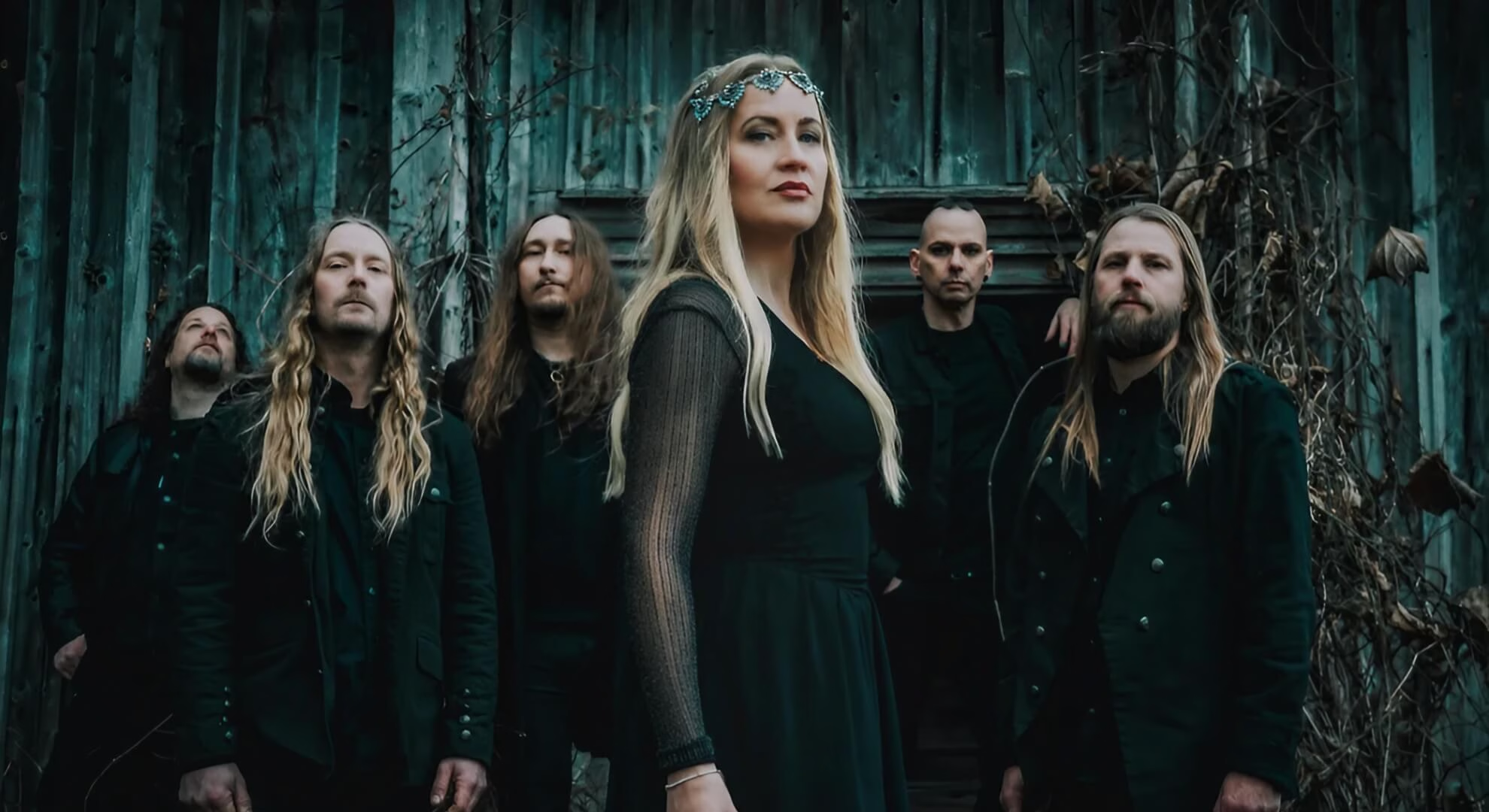


As of May 2026, Draconian stands at the precipice of a rare artistic singularity. With the release of ‘In Somnolent Ruin,’ the Swedish doomsayers are not merely adding an eighth volume to their library of sorrows; they are enacting a cyclical restoration of their identity that few bands survive long enough to achieve.
Emerging from the quiet isolation of Säffle—far removed from the buzzsaw aggression of Stockholm or the melodic velocity of Gothenburg—Draconian has spent thirty years perfecting a sound that privileges crushing weight and ethereal grace in equal measure.
This release represents a critical juncture in the band’s trajectory, serving as the narrative resolution to a decade-long arc of separation and growth. If the 2020 album ‘Under a Godless Veil’ was a masterpiece of “Cosmic Horror” and Gnostic inquiry—themes the band will revisit in their upcoming liturgical performance at Bogotá’s Teatro Astor Plaza—‘In Somnolent Ruin’ is the grounded, visceral answer.
The return of vocalist Lisa Johansson bridges the raw, romantic melodrama of their early 2000s classics with the refined, atmospheric production of their modern era.
This is not a regression to nostalgia, but a synthesis. Where the band once looked outward to the cosmos for meaning, they now turn inward to the soul, pivoting from the Gnostic rebellion detailed in our previous tour coverage to a starker Platonic introspection. In doing so, Draconian reasserts their position not just as survivors of the 90s doom tradition, but as its modern architects, proving that the genre’s capacity for profound philosophical weight remains unexhausted.
Draconian and the 90s Swedish Underground
To contextualize the auditory weight of the 2026 release ‘In Somnolent Ruin,’ one must first excavate the geological layers of the band’s formation in the mid-1990s. The sound of Draconian is not merely a musical choice; it is a product of geography, logistical constraints, and the specific socio-cultural mechanism of the pre-internet metal underground.
In the early 1990s, the Swedish metal scene was defined by a bipolar center of gravity. Stockholm served as the domain of the “Sunlight Sound” (Entombed, Dismember), characterized by the raw, buzzing distortion of the Boss HM-2 pedal, while Gothenburg became the birthplace of the “Gothenburg Sound” (At The Gates, Dark Tranquillity), which introduced Iron Maiden-esque twin harmonies to death metal. Sociologists of heavy metal have long noted that such regional scenes often dictate aesthetic boundaries through peer enforcement and proximity.1
Draconian hailed from Säffle, a small municipality geographically removed from these epicenters. This isolation was instrumental in their artistic development. Removed from the immediate peer pressure to play faster or adopt the “buzzsaw” tone, the band—originally formed in May 1994 as Kerberos before becoming Draconian seven months later—looked outward toward the United Kingdom.
Their primary influences were not their Swedish neighbors, but the “Peaceville Three” (My Dying Bride, Paradise Lost, Anathema), who were pioneering a slower, more romanticized form of death-doom.
Before the digital immediacy of streaming platforms, the underground was a literal physical network of cassette tapes sent via postal mail. Draconian’s early survival and reputation were built on this mechanism. The distribution of physical demos like ‘Shades of a Lost Moon’ (1995) relied on what Deena Weinstein describes as a “translocal community,” where shared artifacts created deep social bonds across vast distances.2
This slow dissemination of music fostered a sense of mystery and devotion. A listener in 1996 had to actively correspond with the band or a distributor to hear Draconian; there were no hyperlinks. This investment created a “cult” following that sustained the band through their unsigned years.
The 1990s saw the crystallization of the “Beauty and the Beast” vocal style, pioneered by bands like Theatre of Tragedy and The Gathering. Draconian adopted this not as a commercial gimmick, but as a narrative necessity. The juxtaposition of the “Beast” (Anders Jacobsson) and the “Beauty’” (Lisa Johansson) represents an auditory actualization of the Gnostic dualism between matter and spirit, a theme deeply rooted in the genre’s literary aspirations.
Artistic Lineage and Cultural Parallels
While Draconian’s geographical roots are firmly planted in the Swedish soil of Säffle, their cultural roots extend into a broader European tradition of melancholy that spans centuries. To categorize them merely as a “metal band” is to ignore the dense intertextuality of their work, which dialogues with nineteenth-century literature, Romantic art, and the cinematic traditions of the gothic.
If the “Peaceville Three” were the architects of Gothic Doom in the early 90s, Draconian are the custodians who preserved the cathedral after the architects moved on. While Anathema drifted into progressive rock and Paradise Lost experimented with electronica, Draconian remained fiercely loyal to the original blueprint: the crushing slow tempos and the interplay of elegance and filth.
They represent the Second Wave of Gothic Doom—taking the raw invention of the British scene and refining it with the uniquely Swedish sensibility of vemod (a tender, reflective sadness), distinguishing them from the more abrasive death-doom of American contemporaries.
The title of the 2026 album, ‘In Somnolent Ruin,’ aligns Draconian with the Romantic tradition of the eighteenth and nineteenth centuries. Much like the paintings of Caspar David Friedrich (e.g., ‘The Abbey in the Oakwood’) or the poetry of Lord Byron, Draconian’s aesthetic fetishizes the “ruin”—the decay of the material world which allows the spiritual to emerge.
As scholar Fred Botting observes, the Gothic tradition relies on such “negative aesthetics” to critique the rationalism of the Enlightenment, finding truth instead in darkness and fragmentation.3 Their lyrics, often referencing Milton’s ‘Paradise Lost’ and gnostic texts, situate them in a lineage of Dark Romanticism, where the fall from grace is not a sin but a tragic, beautiful necessity.
Critics have often described Draconian’s sound as “cinematic,” but the comparison warrants specificity. Their atmosphere does not evoke the high-fantasy bombast of power metal, but rather the stark, existential dread of Ingmar Bergman’s cinema.
The interplay between Anders Jacobsson’s guttural despair and the soprano clarity of the female vocalist mirrors the visual chiaroscuro of films like ‘The Seventh Seal’—a stark contrast of light and dark used to explore the silence of God.
“The Sethian” and Gnostic Anguish
To trace the evolution leading to 2026, one must examine the band’s intellectual peak in the preceding era. The track ‘The Sethian,’ from the 2020 album ‘Under a Godless Veil,’ stands as the theological centerpiece of Draconian’s modern discography. It serves as a direct conduit to the Gnostic cosmogony that Anders Jacobsson has explored for decades, acting as the bridge between the Luciferian romance of the 90s and the Platonic introspection of 2026.
‘The Sethian’ refers to Sethianism, a strain of Gnosticism that venerates Seth, the third son of Adam, as a spiritual redeemer. As noted in our feature on the band’s return to the High Andes, this belief system posits the material world as a “black iron prison.”
While the Bogotá performance will function as a “Gnostic liturgy” emphasizing the separation from the divine, ‘In Somnolent Ruin’ pivots to focus on the psychological toll of that separation. This mirrors Hans Jonas’s foundational analysis of the Gnostic attitude, which is defined by a fundamental feeling of “alienation” and the sense that the cosmos itself is a hostile, imprisoning structure.4
In ‘The Sethian,’ Jacobsson and then-vocalist Heike Langhans trade verses that dismantle the orthodox narrative of the Fall. The lyrics proclaim that they did not fall from grace, but rather leapt to freedom from the black iron prison; transitioning from deprivation to revelation. This completely inverts the Christian concept of the “Fall of Man.” Instead of a sin, the separation from the divine is portrayed as a courageous escape or a realization of the self against a tyrannical creator.
In terms of arrangement, ‘The Sethian’ represents the “heavy” pole of Draconian’s dynamic range during the Langhans era. While much of ‘Under a Godless Veil’ leans into gothic dream-pop textures reminiscent of Slowdive or Cocteau Twins, ‘The Sethian’ harnesses crushing, distorted riffs in its chorus to represent the weight of the “iron prison.”
Critics noted that the chorus launches to the most metal part of the album, providing a necessary violent contrast to the album’s prevailing tranquility. This track proved that despite the atmospheric drift, Draconian had not lost the crushing weight that defined their origins in Säffle.
Silence and Transformation
The interval between ‘Under a Godless Veil’ (2020) and ‘In Somnolent Ruin’ (2026) was defined by global isolation (COVID-19) and internal metamorphosis. This period, often silence to the public, was a crucible of restructuring for the band.
Heike Langhans’ tenure (2012–2022) fundamentally altered Draconian’s creative DNA. Coming from a background in electronic and darkwave music, she introduced a haunting, breathy vocal style that pushed the band toward “Cosmic Horror” and “Sci-Fi Gnosticism” themes. Her departure in 2022, driven by a desire to focus on family and personal projects, marked the end of the band’s Gnostic era.
In a move that surprised the metal community, the band announced the return of Lisa Johansson in 2022. Johansson, who had defined the band’s sound on their classic albums ‘Where Lovers Mourn’ and ‘Arcane Rain Fell,’ had left in 2011 to raise her son. Her return was not merely a nostalgia act; the band performed a symbolic “passing of the torch” set at Hellfest 2022, where both Langhans and Johansson performed together.
This transition signaled a synthesis: the band aimed to retain the atmospheric depth developed with Heike while reclaiming the operatic, gothic melodrama of the Lisa era.
The rhythm section of Draconian underwent a complete reconstruction during this interval, finalizing the lineup that would record the 2026 album. As detailed in our coverage of the Latin American Tour lineup, the introduction of new blood has significantly altered the band’s musical foundation.
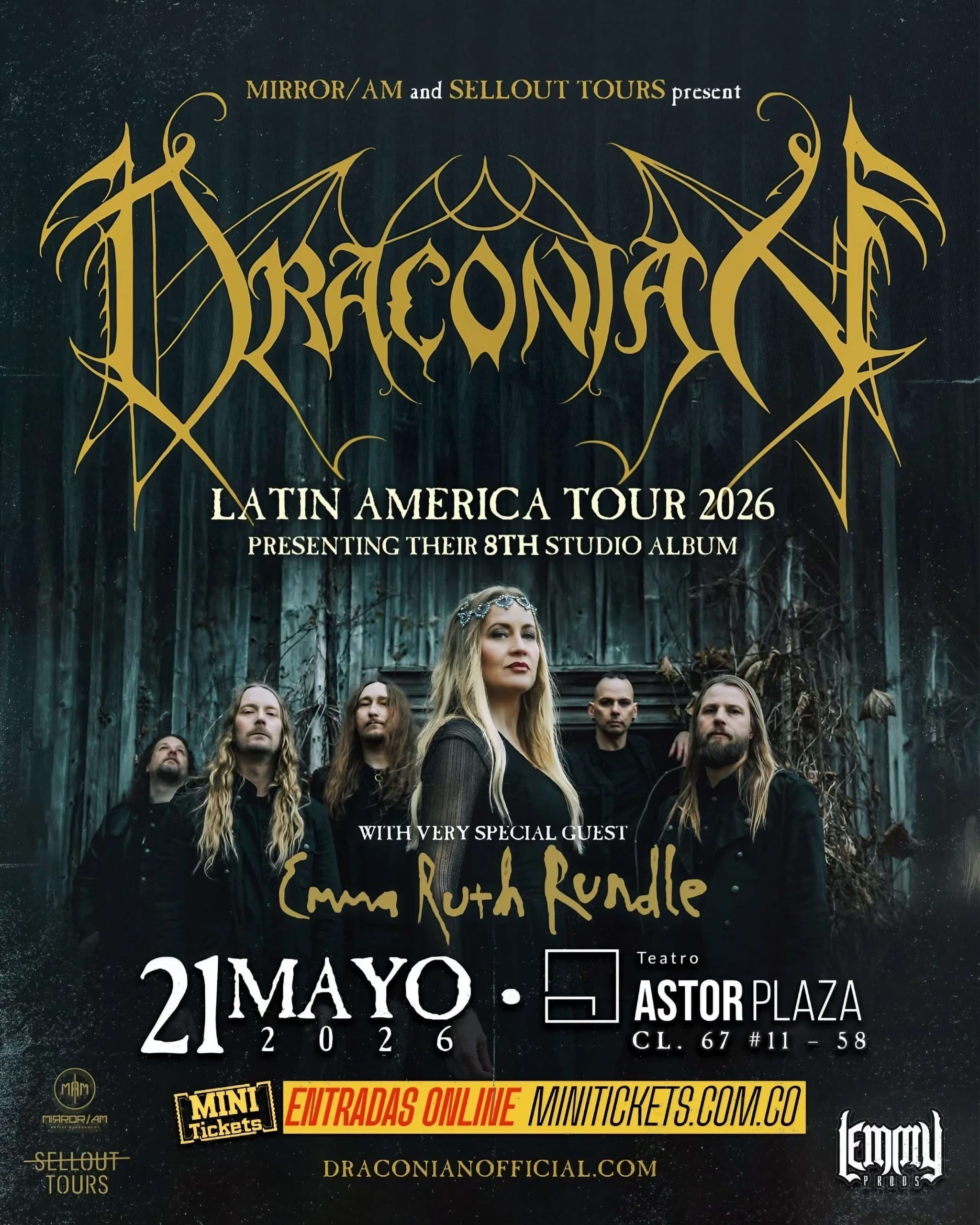
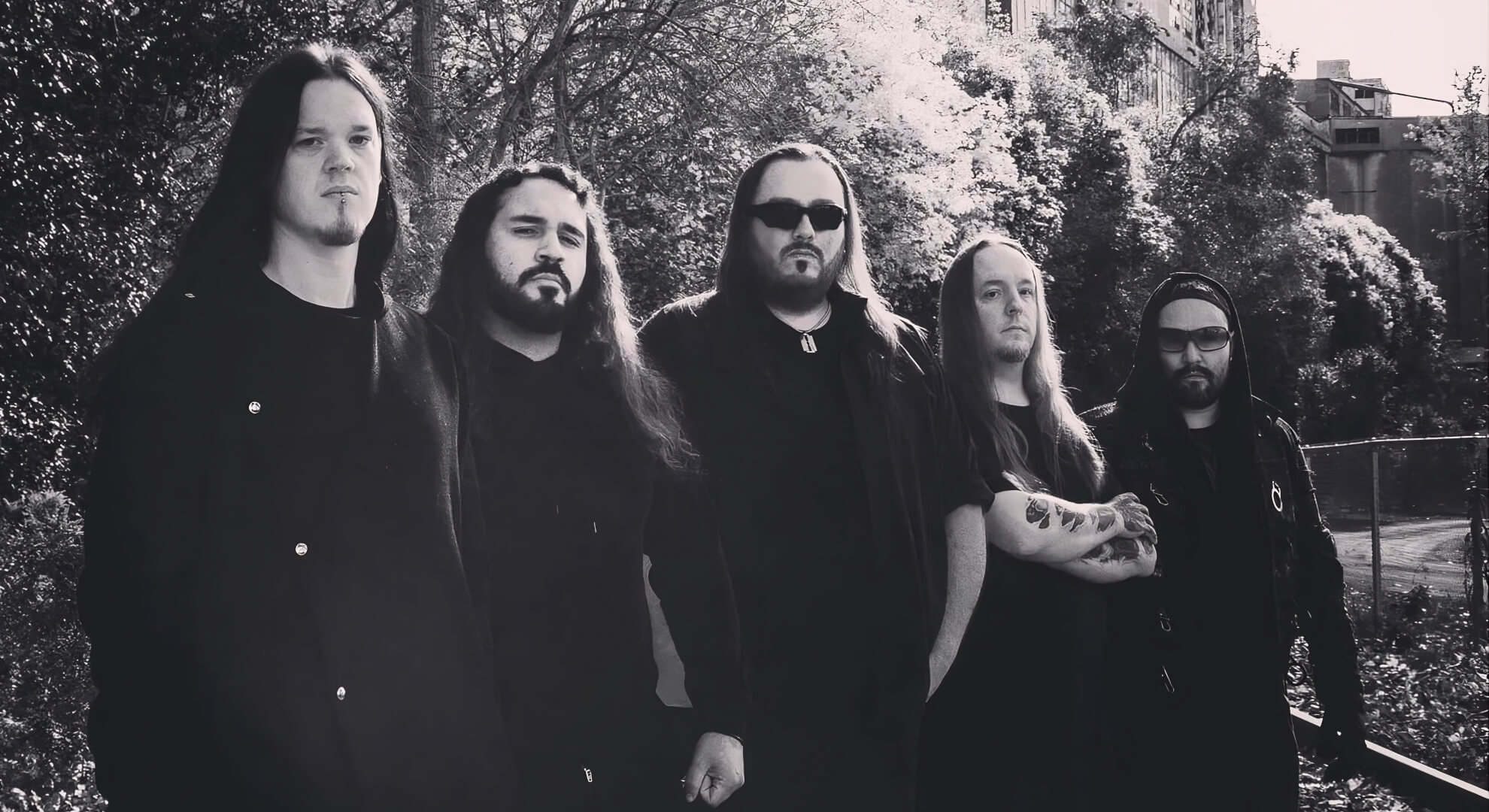
Niklas Nord, formerly of Myteri and DeathTrap, joined on guitar in spring 2022, bringing a crust and hardcore background that suggests a grittier, more visceral edge to the harmonies on the new record. Daniel Johansson, who became a full member on drums as of 2025 after serving as a session musician, brings a background with Wormwood that indicates a capability for handling both atmospheric subtleties and black metal intensity—a vital skill for the “psycho-acoustic ritual” planned for the Teatro Astor Plaza.
Finally, Daniel Arvidsson, a longtime member, switched from guitar to bass in 2022, anchoring the low end with a songwriter’s melodic sensibility.
The 2026 Opus, ‘In Somnolent Ruin’
Scheduled for release on May 8, 2026, via Napalm Records, ‘In Somnolent Ruin’ represents the crystallization of Draconian’s post-pandemic psyche. It is described as one of the most personal records in their discography, a “dreamlike journey” that pivots from the external cosmology of Gnosticism to the internal philosophy of the Soul.
The album’s incubation was organic and protracted, rooting itself in textures that predate the band’s return to the stage. Guitarist Johan Ericson traces the record’s genealogy back to 2021, revealing that the material did not begin as heavy metal, but emerged from an exploration of dark folk to eerie ambient music.
This distinction is critical to understanding the album’s architecture: rather than simply layering keyboards over doom riffs, Ericson suggests that the heaviness was assembled atop a foundation of silence. The track ‘Misanthrope River,’ the first “embryo” of the sessions, serves as the proof of concept for this method—raising a cathedral of doom from the quietest materials available.
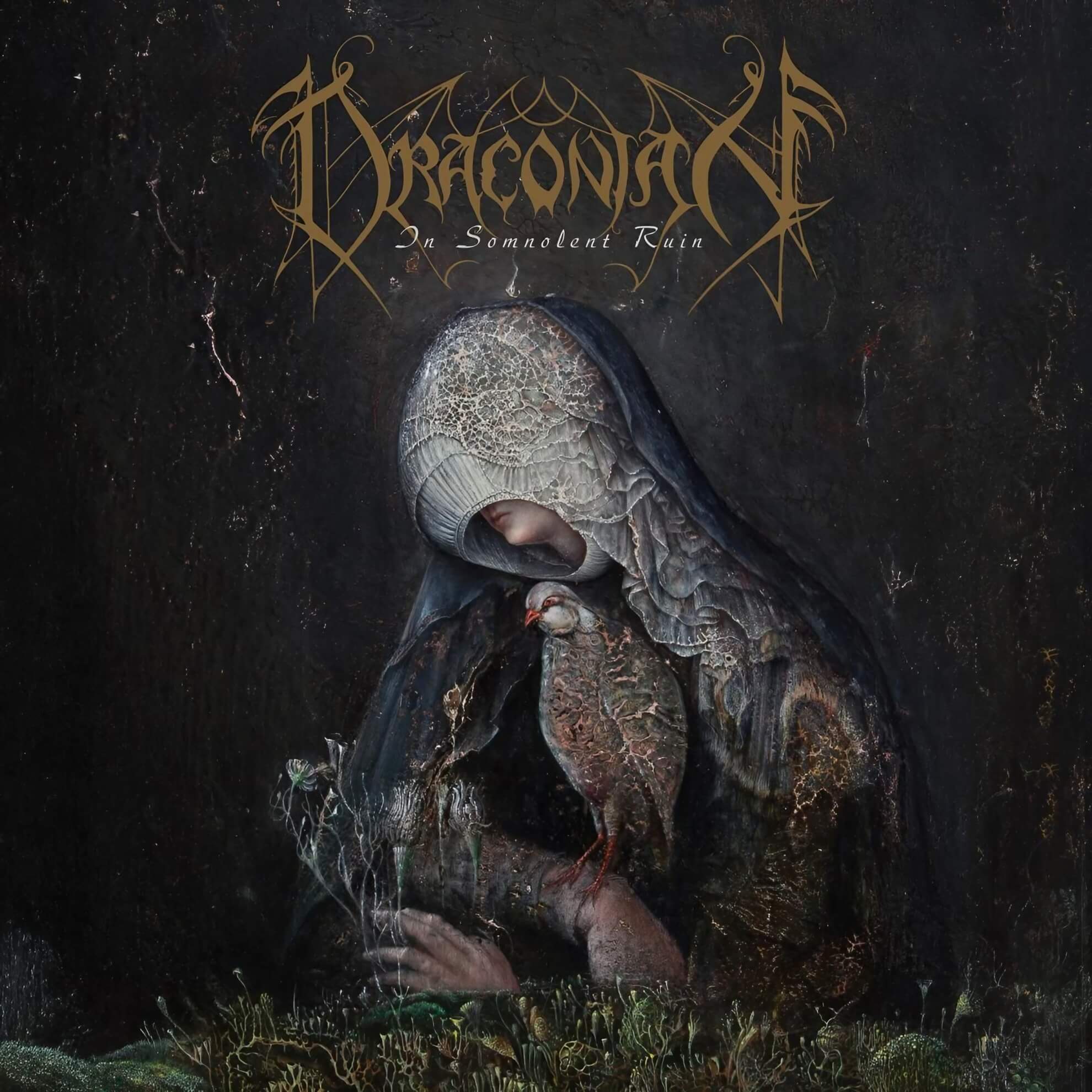
The thematic architecture of ‘In Somnolent Ruin’ diverges from the strict Gnostic narrative of its predecessor, shifting toward a contemplative exploration of Plato’s theory of the soul. Plato argues in ‘The Republic’ that the soul is composed of three distinct parts: Reason (logos), Spirit (thumos), and Appetite (epithumia).5
Draconian’s exploration of “alienation” and “numbness” suggests a soul out of balance, where the “Appetite” (material desire) or “Spirit” (emotional volatility) has overwhelmed “Reason.”
In the closing track ‘Lethe,’ Anders Jacobsson strips away the poetic complexity of previous eras to expose the raw mechanism of the soul’s entrapment. His command—to drink, forget, and repeat—is not merely a lyric but a diagnosis of the human condition. Jacobsson reduces the cycle of reincarnation to three imperative verbs, moving beyond the romantic longing of the 90s into a starker, Platonic realism: the tragedy is not that we die, but that we are forced to forget why we lived. The music serves as the trigger for anamnesis—a violent reminder of the divine origin the listener has forgotten.
The Evolution of the Draconian Sound
Draconian’s auditory identity has never been static; it has evolved in a slow arc that mirrors the history of production technology in metal. The core of Draconian’s sound is the tension between Johan Ericson’s guitar work and the atmospheric layers.
From the riff-centric era of the 1990s to the textural complexity of the 2020s, the band has mirrored the influence of post-rock and darkwave on the doom genre. With ‘In Somnolent Ruin,’ the band aims to balance these, using the “live-feeling” of the new lineup to bring back the visceral impact of the riffs while maintaining the cinematic scope of the keys.
The Somnolent Return
With ‘In Somnolent Ruin,’ Draconian has achieved what few artists in the metal canon ever manage: a perfect circle that feels like a forward leap. The reintegration of Lisa Johansson does not merely restore a lineup; it re-consecrates the band’s original vow to explore the furthest extremities of sorrow.
If ‘Under a Godless Veil’ was a scream against the bars of a cosmic cage, this album is the silence that follows—the heavy, lucid realization that the prison was always internal. Draconian offers something far more radical: fidelity to a specific, crushing emotion. They remain the genre’s steadfast poets, reminding a distracted world that in the depths of ruin, there is a terrible, necessary beauty waiting to be remembered.
As Draconian pivots from the cosmic rebellion of the Sethian era to the internal silence of ‘In Somnolent Ruin,’ we invite you to consider the nature of your own catharsis: Does the genre of doom metal serve you best when it rages against an external prison, or, as Anders Jacobsson now suggests, when it forces us to confront the amnesia of our own souls?
References:
- Kahn-Harris, Keith. ‘Extreme Metal: Music and Culture on the Edge.’ Oxford: Berg, 2007. ↩︎
- Weinstein, Deena. ‘Heavy Metal: The Music and Its Culture.’ Rev. ed. New York: Da Capo Press, 2000. ↩︎
- Botting, Fred. ‘Gothic.’ London: Routledge, 1996. ↩︎
- Jonas, Hans. ‘The Gnostic Religion: The Message of the Alien God and the Beginnings of Christianity.’ Boston: Beacon Press, 1958. ↩︎
- Plato. ‘The Republic.’ Translated by Allan Bloom. New York: Basic Books, 1968. ↩︎

Leave a Reply