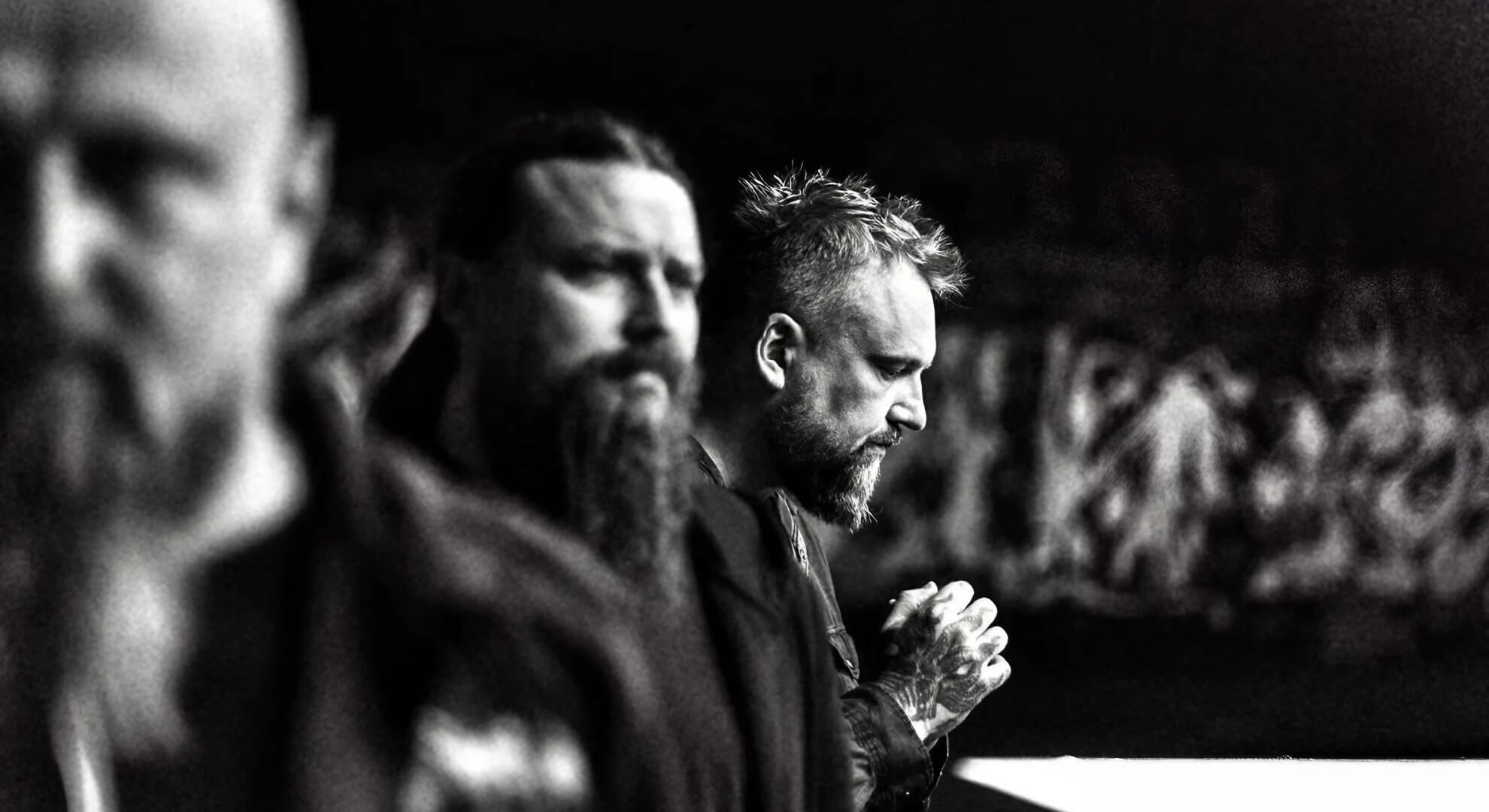


On this day, February 10, 2026, the atmosphere within the European avant-garde metal community has shifted perceptibly. It is a shift not merely of anticipation, but of realization—a moment where the theoretical potential of a musical resurrection crystallizes into sonic reality. Blindead 23, the transmogrified and revitalized incarnation of the seminal Polish post-metal collective Blindead, has presented the title track of their long-awaited debut full-length album, ‘Deuterium.’
Accompanied by a hypnotic visualizer crafted by the esteemed Matt Vickerstaff, the single serves as both a declaration of intent and a gravitational anchor for the upcoming album, confirmed for release on April 24, 2026, via a formidable alliance between Peaceville Records and Mystic Production.
Grasping the magnitude of this release requires looking beyond the standard cycle of promotional singles and album drops. This is not simply a new record; it is the culmination of a harrowing, existential odyssey undertaken by the band’s founder, Mateusz “Havoc” Śmierzchalski.
It is a narrative of near-collapse, psychiatric intervention, and the arduous restoration of the self through the medium of sound. The release of the single ‘Deuterium’ today signifies the final stage of this reconstruction, offering listeners their first true glimpse into the 53-minute conceptual journey that awaits in the spring.
The track itself, released as a standalone statement today, acts as the isotopic center of the new era. Just as deuterium—heavy hydrogen—carries a neutron that grants it twice the mass of its lighter counterpart, Blindead 23 appears to have doubled its creative weight, fusing the sludge-laden despair of its predecessor with a newfound, crystalline melodicism and progressive structural ambition.
The release comes in the wake of the 2025 single ‘Disposed’ and the ‘Vanishing’ EP, pieces that served as preliminary sketches for this monumental work. Now, with the title track resonating through digital platforms and the physical pre-orders for the double gatefold vinyls—available in both severe black and a limited red transparent edition—going live, the full scope of Blindead 23’s ambition is laid bare.
The Industrial Brutalism of Gdynia
Contextualizing ‘Deuterium’ requires situating Blindead 23 not merely within the timeline of heavy metal, but within the broader lineage of Polish artistic darkness. The project occupies a unique coordinate where the “Polish School” of extreme metal intersects with the high-art anxieties of the country’s twentieth-century cultural exports.
Cultural sociologists have long noted that the Polish metal scene is distinct for its rigorous technicality and insular development, a byproduct of the geopolitical isolation during the late Cold War era.1
Blindead 23’s aesthetic has always mirrored the dystopian surrealism of Zdzisław Beksiński, whose paintings of crumbling mega-structures and skeletal figures convey the same sense of monumental isolation found in Śmierzchalski’s riffs.2 With ‘Deuterium,’ the parallel deepens.
The album’s concept—heavy hydrogen, stability, nuclear weight—evokes the “hard” science fiction of Stanisław Lem, specifically works such as ‘Solaris’ and ‘Fiasco.’ Like Lem, who used futurology to examine the inherent limitations of human communication, Blindead 23 uses cold, physical concepts to explore the terrifying fragility of the human psyche.3
The “journey” offered is not a fantasy quest, but a Tarkovskian drop into the “Zone”—a slow, deliberate, and spiritually hazardous expedition through the wreckage of the self.
In terms of composition, the band serves as a bridge between the sonorism of twentieth-century composer Krzysztof Penderecki—who terrorized orchestras with ‘Threnody to the Victims of Hiroshima’—and the rhythmic discipline of modern death metal. Scholars of Polish musicology identify sonorism as a movement that prioritized the texture and color of sound over melodic function, a philosophy that directly informs the avant-garde metal approach to guitar texture.4
While early Blindead drew heavily from the American post-metal of Neurosis, ‘Deuterium’ signals a shift closer to the European “art-metal” tradition. It shares DNA with the cinematic scope of Sweden’s Cult of Luna and the ritualistic intensity of Belgium’s Amenra. Yet, it remains distinctively Polish: less interested in the sprawling Americana of the former or the religious iconography of the latter, and more focused on a specific, industrial melancholy born of the Baltic coast.
Mateusz “Havoc” Śmierzchalski
The narrative of Blindead 23 is inextricably linked to the personal and artistic biography of its founder, Mateusz “Havoc” Śmierzchalski. To interpret ‘Deuterium,’ one must acknowledge the man who engineered it, and the collapse that nearly ended him.
Śmierzchalski’s entry into the global metal consciousness came through his tenure in Behemoth. Joining the band at the turn of the millennium, he was instrumental in their transformation from a raw black metal act into a world-dominating blackened death metal force.
His rhythm playing on ‘Thelema.6’ and ‘Zos Kia Cultus’ helped define the “Behemoth sound”—percussive, precise, and relentlessly intense. However, the creative constraints of such a focused entity eventually led him to seek other outlets.
While Behemoth was about conquering the world through strength and blasphemy, Śmierzchalski had other ghosts to exorcise. Blindead, initially a side project, became the vessel for these more introspective explorations.
Under Śmierzchalski’s leadership, Blindead evolved from a sludge metal curiosity into a powerhouse of the European post-metal scene. The run of albums from ‘Autoscopia: Murder in Phazes’ (2008) to ‘Absence’ (2013) represents a high-water mark for the genre.
‘Affliction XXIX II MXMVI’ (2010), in particular, was a critical darling, earning a Fryderyk Award nomination and cementing the band’s reputation for conceptual depth and emotional rawness. This era was defined by a relentless work ethic that eventually extracted a heavy toll.
Śmierzchalski reflects on the unsustainability of this period with blunt clarity, noting that while they achieved recognition touring Europe, “everything started falling apart.” The band poured every resource back into the project, sacrificing financial stability for artistic integrity. The departure of vocalist Patryk Zwoliński in 2015 signaled the end of this golden era and the beginning of a slow fragmentation.
Following the release of ‘Niewiosna’ in 2019 and the subsequent dissolution of the band, Śmierzchalski entered a period of profound darkness. The COVID-19 pandemic acted as an accelerant for personal struggles that had been simmering for years. Śmierzchalski has been courageously open about this period, framing his absence not as a hiatus, but as a fight for survival.
He details a battle with bipolar disorder that culminated in a prolonged manic episode, candidly revealing that “for the past two years I was putting myself together after a suicide attempt caused by a long manic episode which led me to heavy substance abuse.” This confession is crucial to interpreting ‘Deuterium’; the album’s density is not a stylistic affectation, but a sonic mirror of this “vanishing” from reality. The music stopped because the musician nearly ceased to exist.
Recovery is rarely a linear process, but for Śmierzchalski, it was catalyzed by friendship and music. During his therapy and rehabilitation, he spent hours on the phone with Roger Öjersson of Katatonia. These conversations, initially just lifelines of support between friends, began to spark creative impulses.
Śmierzchalski identifies this dialogue as the precise moment of creative ignition, stating that “that is where the inspiration for this band was born.” The decision to rebrand as Blindead 23 rather than simply reforming Blindead is significant. It honors the 23-year history of the project (1999–2022) while acknowledging a fundamental break in continuity.
The number 23 serves as a demarcation line—a “before” and “after.” It is the same entity, yet transmutation has occurred. The metal has been melted down and recast. The alloy is different. It is heavier. It is Deuterium.
Blindead 23 and the “Supergroup” Lineup
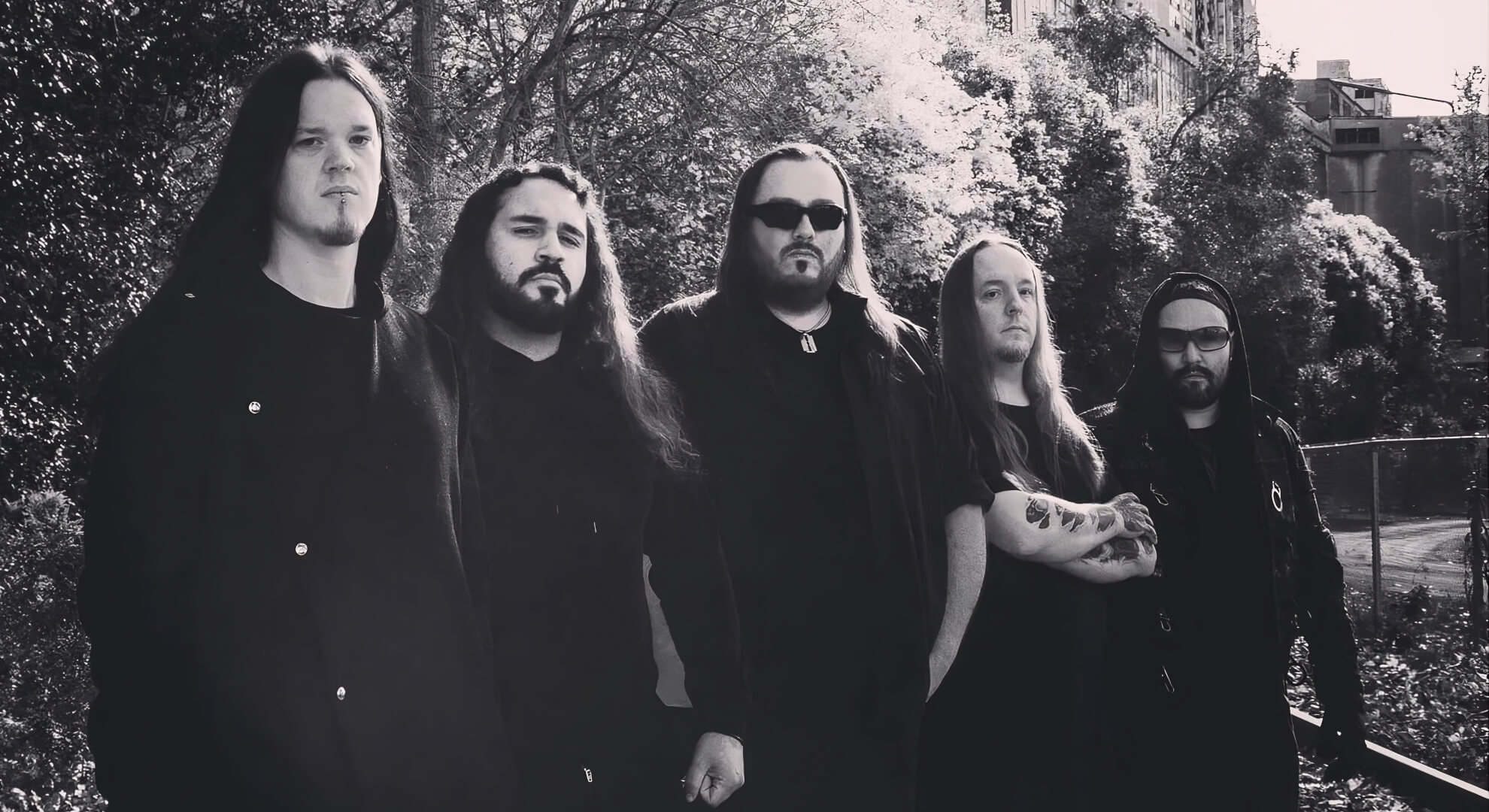
The lineup assembled for ‘Deuterium’ is, by any definition, a “supergroup,” though the term often implies a commercial project lacking soul—a label that certainly does not apply here. This is a collective of veterans, survivors of the industry who have come together to create something specific and meaningful.
Mateusz “Havoc” Śmierzchalski remains the architect, providing the massive, textured riffing and atmospheric layering that defines the band’s core. Returning to the fold is vocalist Patryk Zwoliński, whose versatile range—spanning from fragile crooning to tectonic roars—provides the project’s soul.
Joining them is Roger Öjersson, known for his work with Katatonia, Tiamat, and Kamchatka. He serves as the melodic counterpoint, contributing gothic lead work and melancholic vocal harmonies. The rhythm section is anchored by Paweł Jaroszewicz, a drummer of immense technical precision known for his work with Vader and Decapitated, who provides the engine for the new sound. Vinicius Nunes handles bass duties, laying the foundation, while Maciej Janas of Ketha adds avant-garde dissonance and experimental noise on guitar, enriching the textural landscape.
The most significant development for long-time fans is the return of Patryk Zwoliński. His voice was the emotional anchor of the band’s most beloved albums. Zwoliński possesses a chameleon-like ability to shift vocal personas—he can channel the brooding baritone of a gothic crooner in one measure and the visceral scream of a hardcore vocalist in the next.
His return signifies that Blindead 23 is not just a new project, but a continuation of the “true” Blindead spirit. It connects the nerve endings of the new music directly to the emotional core of ‘Affliction XXIX II MXMVI.’
Roger Öjersson is the X-factor in this new equation. As the guitarist for Katatonia, he is a master of the “Stockholm gloom”—a specific style of melodic, sorrowful lead guitar playing that defines modern doom and progressive metal. His involvement goes beyond just playing solos; he is a co-writer and vocal contributor.
The chemistry between Havoc’s sludge-influenced riffing and Öjersson’s gothic sensibilities is the defining characteristic of the new sound. Snippets suggest he brings “melancholic, melodic and catchy singing” to the mix, providing a counterpoint to Zwoliński’s rawness.
Recruiting Paweł Jaroszewicz is a statement of intent regarding the “heaviness” of the record. Jaroszewicz is one of the premier drummers in extreme metal, having occupied the throne for legends like Vader and Decapitated. However, Blindead 23 does not require the relentless blast beats of death metal.
Instead, Jaroszewicz is applying his immense technical facility to creating deep, rolling grooves. It is the difference between a machine gun and a steamroller. His ability to play complex, syncopated patterns at slower tempos is what gives ‘Deuterium’ its progressive edge.
The ‘Deuterium’ Album Concept
We arrive now at the artifact itself: ‘Deuterium.’ Scheduled for release on April 24, 2026, the album is described as a 53-minute conceptual journey. The title track, released today, serves as the thesis statement for the album. Sonically, it is a dense, multi-layered composition that showcases the three-guitar attack of Havoc, Öjersson, and Janas.
The visualizer by Matt Vickerstaff reinforces the hypnotic, trance-like quality of the music. Listeners will note immediately the production quality—crisp, expansive, yet crushing. This is the result of the collaboration between Scandinavian precision and Polish grit. The song likely moves through multiple movements, typical of the band’s post-metal roots, building from atmospheric quietude to massive sonic climaxes.
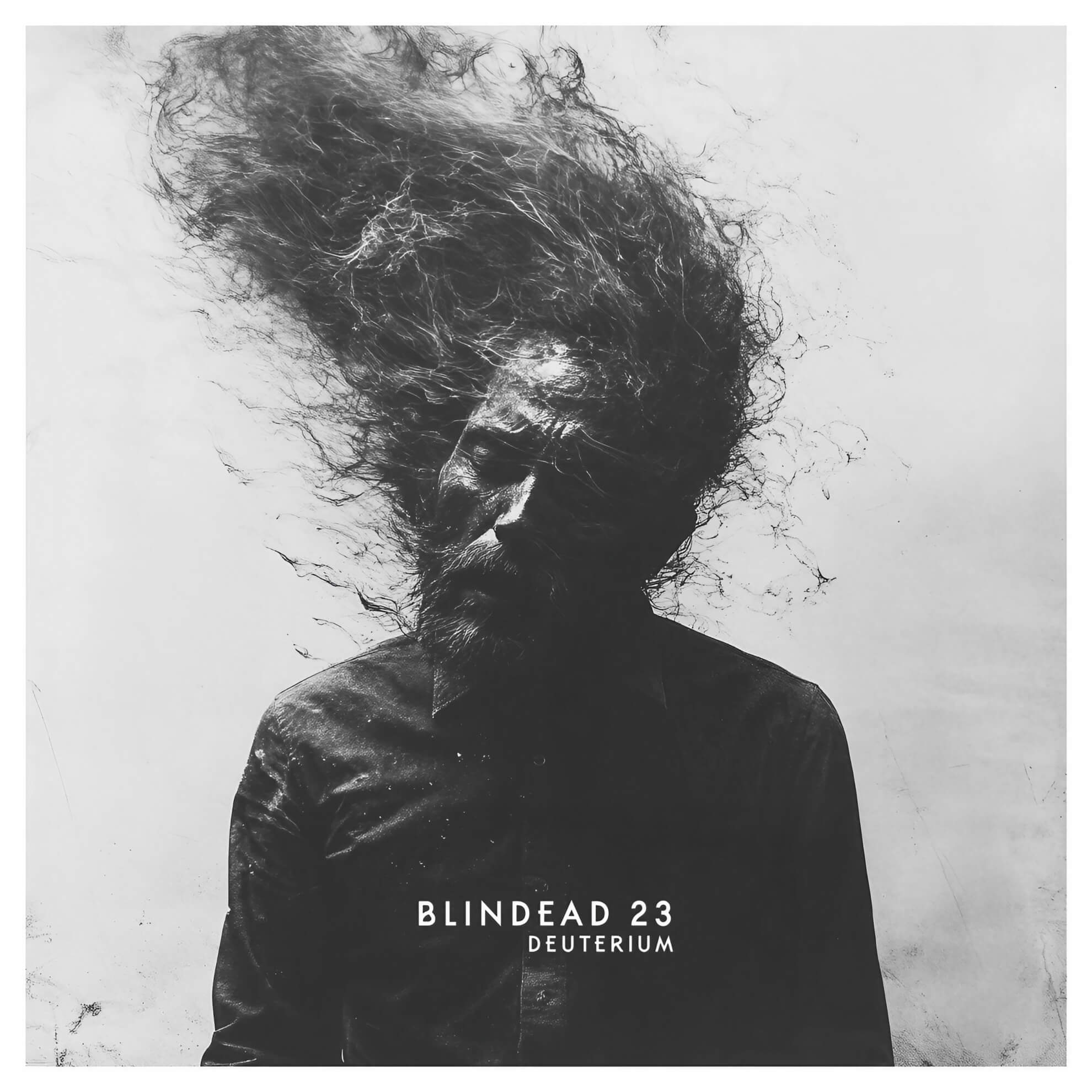
The title ‘Deuterium’ is rich with metaphorical potential. Deuterium is an isotope of hydrogen that contains a neutron, making it twice as heavy as the common isotope, protium. It is stable, non-radioactive, and “heavy.” In the context of Śmierzchalski’s mental health journey, this metaphor is poignant. It represents heaviness, symbolizing the weight of depression and the gravity of the manic-depressive cycle.
It also represents stability; unlike tritium, which is radioactive, deuterium is stable, suggesting a state of equilibrium reached after the volatility of the ‘Vanishing’ period. Finally, it represents energy, as deuterium is used in nuclear fusion, a source of immense power. The trauma has not destroyed the artist; it has fueled a reaction that produces something brighter and more powerful than before.
Snippets allude to tracks like ‘Towards the Dark’ and ‘Let Them Speak.’ ‘Towards the Dark’ was the first song written, a courageous step into the abyss to understand it, while ‘Let Them Speak’ deals with confronting the inner voices.
While the full official tracklist remains under embargo, the release of singles such as ‘Disposed’ and the title track, alongside the anticipated appearance of seminal pieces like ‘Towards the Dark’ and ‘Let Them Speak,’ suggests a cohesive narrative structure. The album, therefore, is not a mere assembly of tracks but a documented exorcism.
Peaceville and the Global Stage
The release of ‘Deuterium’ is being handled by a partnership between Peaceville Records and Mystic Production. This is a strategic masterpiece. Peaceville Records is hallowed ground.
Founded in the United Kingdom in the late 80s, it gave the world the “Peaceville Three”: Paradise Lost, My Dying Bride, and Anathema. These bands invented the gothic doom genre—slow, romantic, crushing metal. Through the alliance with Peaceville Records, Blindead 23 is explicitly positioning themselves as the heirs to this tradition. It signals to the international market in the United States, United Kingdom, and Germany that this is a band of serious pedigree.
In maintaining this relationship with Mystic Production, the premier label in Poland, the band ensures they do not alienate their core fanbase. Mystic Production as nurtured the scene for decades, releasing seminal albums by Behemoth, Vader, and the original Blindead. This dual strategy allows for direct access to the loyal home fanbase and the festival circuit, including the Mystic Festival, while simultaneously expanding their reach globally without cutting their roots.
The Weight of Existence
The release of ‘Deuterium’ signifies more than a return to a previous form; it acts as the sonic documentation of a psyche retrieved from the edge of dissolution. Mateusz Śmierzchalski has done more than survive the quiet years of his crisis; he has harnessed that silence, producing a resonance that bears the specific, crushing mass of actualized trauma.
Blindead 23 transmutes personal collapse into this dense, stable isotope of avant-garde metal, presenting a stark truth: that within the cold mechanics of the human experience, we are characterized not by our disappearance, but by the gravity we possess upon our return. The darkness has found a voice, and it is articulate, structured, and frighteningly alive.
With the full 53-minute narrative arc arriving in April, we are left to ponder: How will the synthesis of “Stockholm gloom” and the industrial brutalism of Gdynia reshape the emotional density of the genre, and can the concept of “heavy stability” provide a more potent catharsis than the unrestrained hopelessness of the past?
References:
- Wallach, Jeremy, Harris M. Berger, and Paul D. Greene, eds. ‘Metal Rules the Globe: Heavy Metal Music Around the World.’ Durham: Duke University Press, 2011. ↩︎
- Dmochowski, Piotr. ‘The Fantastic Art of Beksinski.’ Morristown: Morpheus International, 1998. ↩︎
- Swirski, Peter. Stanislaw Lem: ‘Philosopher of the Future.’ Liverpool: Liverpool University Press, 2015. ↩︎
- Thomas, Adrian. ‘Polish Music since Szymanowski.’ Cambridge: Cambridge University Press, 2005. ↩︎

Leave a Reply