


In Old Norse legal tradition, the wolf occupied a position that was less metaphor than function. The term “ulvgjeld” — wolf-toll, the debt owed when primal forces came to collect — named something specific: an obligation that had been accumulating, and that now required settlement.
The companion term is “blodsodel.” Odel — or odal — was the Norwegian legal concept of ancestral land passed through bloodlines across generations: land held not by individual ownership but by line of descent, land that could not simply be purchased from a family because it belonged to blood rather than to a single person. Blodsodel is blood-odal — the birthright that lineage alone confers.
The Toll the Wolf Demands
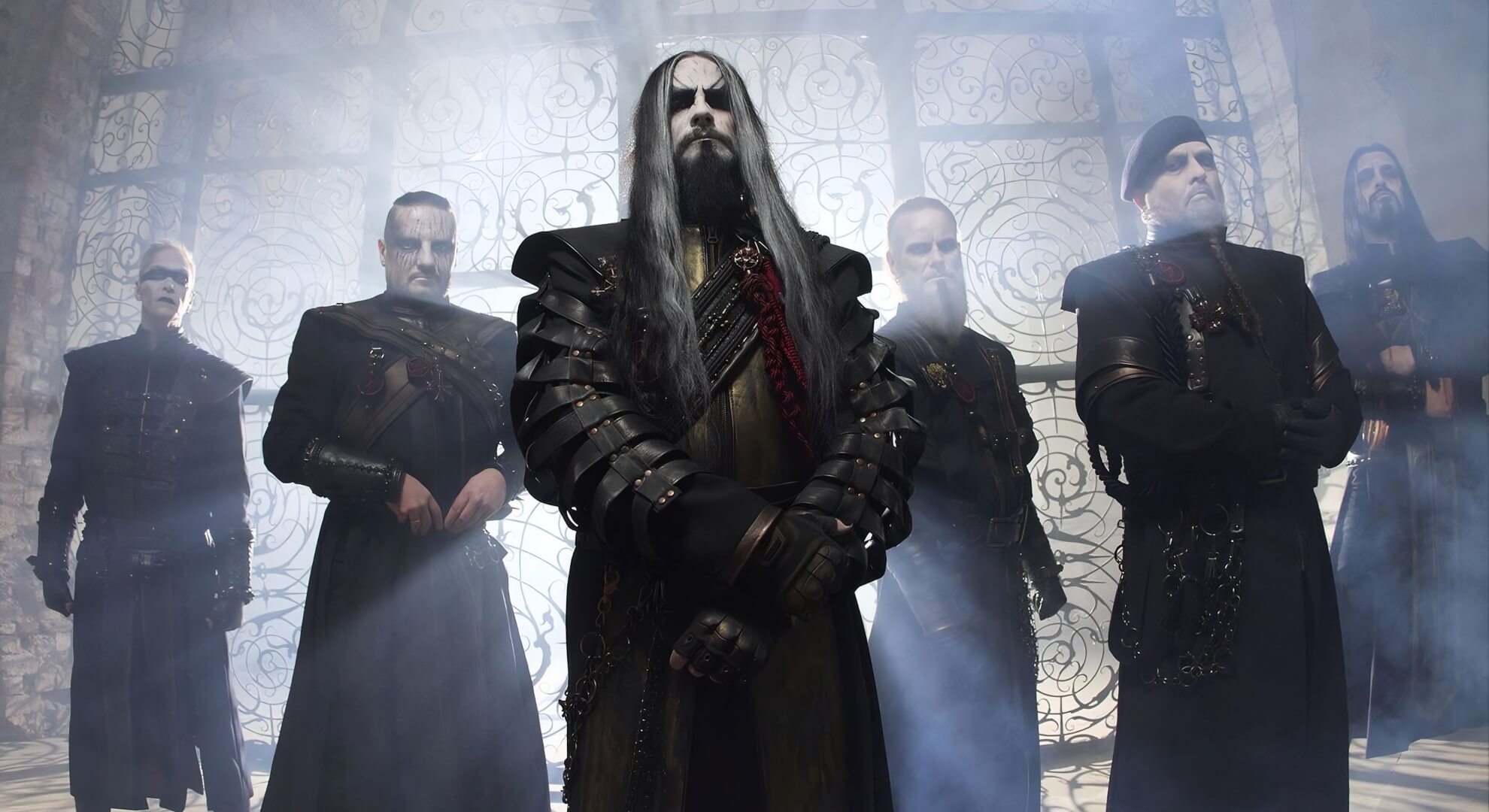
When Dimmu Borgir named their first piece of original studio material in eight years with both of those terms, they placed their return in a specific Old Norse juridical frame before a single note was described. ‘Ulvgjeld & Blodsodel’ is the lead single from ‘Grand Serpent Rising,’ the Jessheim-formed band’s tenth studio album, due May 22, 2026, via Nuclear Blast Records. The official music video premiered simultaneously with the single on March 26, 2026, at 18:00 CET.
The odel institution occupied a central position in Norwegian customary law from the early medieval period forward, functioning as a guarantee that land passed through recognized lineages could not be alienated from those lines without the right of repurchase remaining with the kin group.1 That weight is carried intact into the title pairing: a debt owed to primal force on one side, a hereditary right that cannot simply be revoked on the other.
The video was directed by Dariusz Szermanowicz and produced by g13.film, with Jakub Stypuła serving as director of photography. The track is sung entirely in Norwegian — a significant choice for a band whose catalogue since 1997 has been conducted almost exclusively in English — and its lyrical argument turns on what is passed from one generation to the next: heritage, blood, the weight of obligation that lineage places on those who inherit it.
The benchmark in that tradition remains the 2007 clip for ‘The Serpentine Offering,’ directed by Swedish filmmaker Patric Ullaeus of Revolver Film Company AB. That production placed high-contrast, cold-lit interiors against the full orchestral weight of the ‘In Sorte Diaboli’ album, deploying a palette of compressed blacks and steel grays that argued the symphonic black metal of the Norwegian second wave had arrived at a visual grammar commensurate with its compositional ambitions.2 Ullaeus returned to direct the 2018 single ‘Interdimensional Summit,’ maintaining that grammar while scaling the frame upward in compositional density.
The thematic premises of ‘Ulvgjeld & Blodsodel’ — debt, bloodline, and juridical obligation — demand a visual argument pitched to the same register of archaic severity. The released video answers that obligation in a register of occult ceremony: moody shots of arcane ritual are cut against a brimming chalice whose contents carry the visual weight of blood-obligation made liquid.
Directed by Dariusz Szermanowicz for g13.film — his first confirmed collaboration with the band — the production deploys director of photography Jakub Stypuła’s camera work in a visual language of dark ceremony that extends the occult seriousness of the song’s juridical Norse title into the image track.
A Studio in Gothenburg and What It Produced
‘Grand Serpent Rising’ was recorded, mixed, and mastered at Studio Fredman in Gothenburg, Sweden, under producer Fredrik Nordström. It marks the fourth time Nordström has produced the band, following ‘Puritanical Euphoric Misanthropia’ (2001), ‘Death Cult Armageddon’ (2003), and ‘In Sorte Diaboli’ (2007) — the three albums that established the band’s commercial and critical peak
It is the first full-length studio album since ‘Eonian’ in 2018, and the first to proceed without the guitar contributions of Thomas Rune Andersen, known as Galder, who announced his departure in August 2024 after nearly 25 years with the band. His replacement is Kjell Åge “Damage” Karlsen, who had previously played alongside vocalist Shagrath in Chrome Division and made his live debut with the band on June 27, 2025, at Tons of Rock in Oslo.
Silenoz spoke directly to the reasoning behind the album title. “Dimmu Borgir is a leviathan of a band on a grand scale and we are rising once again,” he noted. “While the serpent represents evil to some, for us it symbolizes something else: renewal, growth, knowledge, and liberation. Shedding our skin, so to speak.” He also connected the record’s completion to a calendrical coincidence: February 2026 marked the end of the Year of the Snake, roughly the same moment the album was finalized.
Shagrath, for his part, addressed the scope of what the album contains rather than its symbolic register. “I truly feel we have outdone ourselves musically on this album,” he said. “It has been a long and demanding process, but seeing how it all came together makes it incredibly rewarding. ‘Grand Serpent Rising’ reflects every era of Dimmu Borgir.” Silenoz, speaking to Metal Hammer, was more precise about the tonal range: “Some stuff is more stripped-down, some epic stuff is still there. We have some modern stuff and some old stuff, as well.”
‘Ulvgjeld & Blodsodel’ sits as the fifth track in a thirteen-song sequence that runs from the introductory ‘Tridentium’ through the closing ‘Gjǫll.’ The album, described in advance promotional material as spanning close to an hour of new music, represents the band’s most sustained original statement in eight years — and the first without the guitar voice that had been part of the band’s compositional identity since 2000.
Thirteen Tracks and a Serpent’s Skin
‘Grand Serpent Rising’ is scheduled for release on May 22, 2026, via Nuclear Blast Records. The album spans thirteen tracks and runs close to an hour in total duration. It is available for pre-order in several physical configurations: standard CD jewel case, gold CD with a sixteen-page booklet, double vinyl in dark green, and a limited deluxe mediabook containing two transparent green and marbled vinyl pressings alongside a gold CD. Pre-order deliveries have been confirmed as beginning no earlier than the release date.
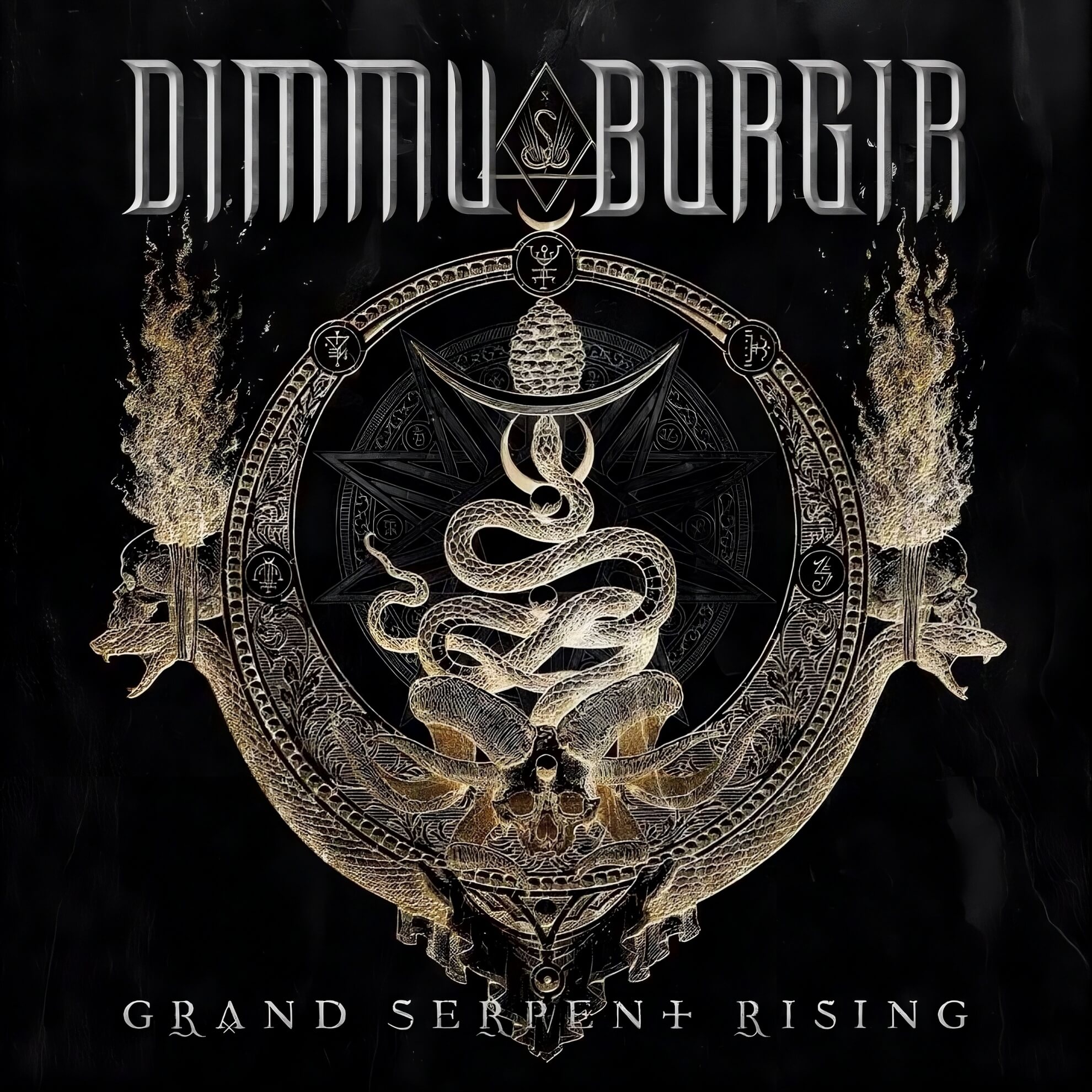
The full tracklist runs as follows: ‘Tridentium,’ ‘Ascent,’ ‘As Seen in the Unseen,’ ‘The Qryptfarer,’ ‘Ulvgjeld & Blodsodel,’ ‘Repository of Divine Transmutation,’ ‘Slik Minnes en Alkymist,’ ‘Phantom of the Nemesis,’ ‘The Exonerated,’ ‘Recognizant,’ ‘At the Precipice of Convergence,’ ‘Shadows of a Thousand Perceptions,’ and ‘Gjǫll.’
The track titles alone constitute a map of the album’s thematic terrain: the Old Norse of “Gjǫll” — the roaring river of Norse cosmology that separates the living from the realm of the dead — placed at the end of the sequence frames the journey the album proposes as a crossing rather than a return.
The presence of ‘Slik Minnes en Alkymist’ — Norwegian for “Thus Remembers an Alchemist” — among the track titles signals that the album does not operate exclusively in the Old Norse archaic register. Alchemy and transmutation appear as parallel conceptual lines alongside the Norse juridical vocabulary of the single’s title, and ‘Repository of Divine Transmutation’ reinforces that pairing. The album’s thematic range moves between law and transformation, between ancient obligation and the kind of knowledge that changes the nature of what it touches.
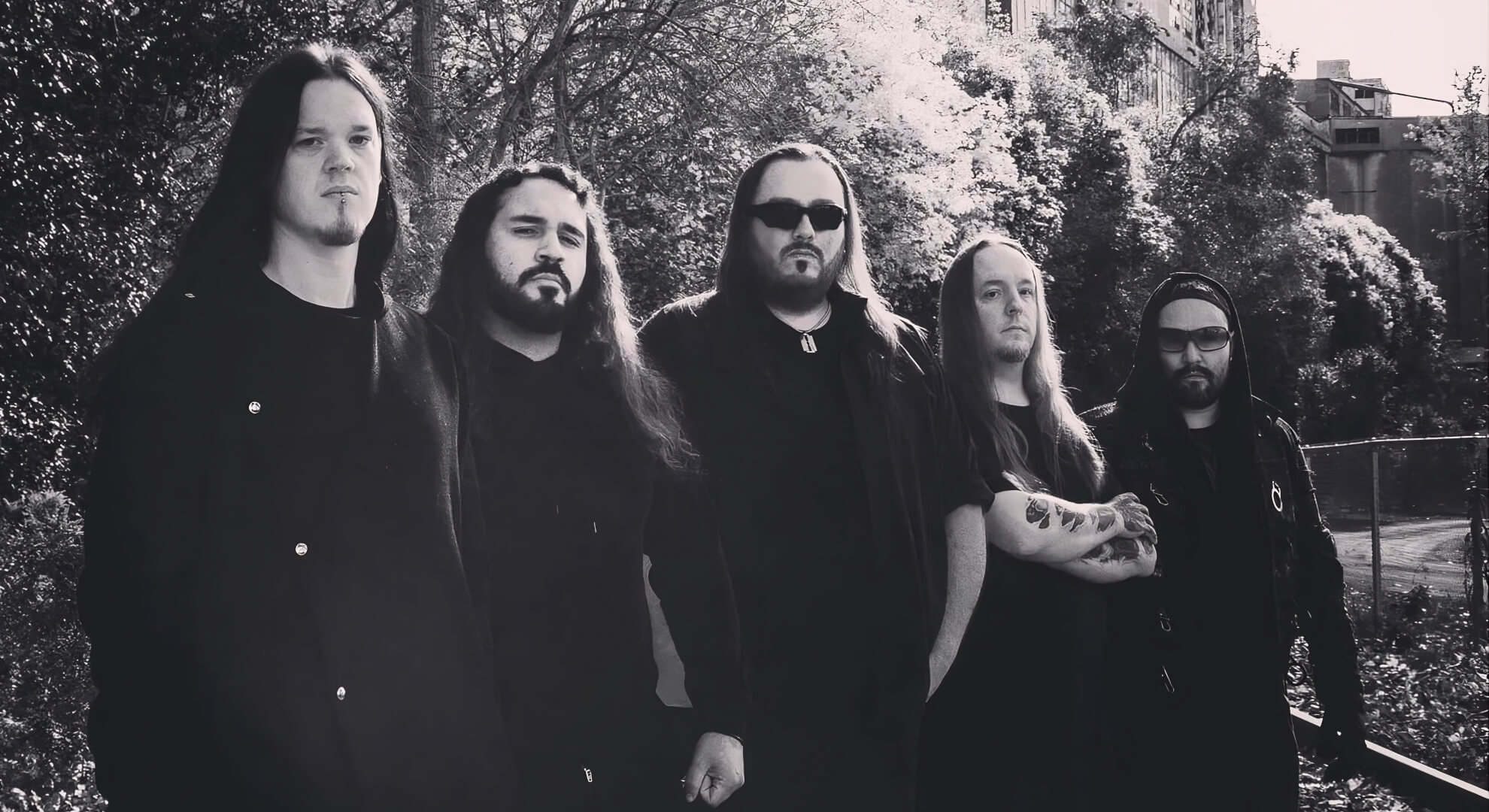
The recording lineup for ‘Grand Serpent Rising’ comprises founding vocalist Shagrath and co-founding guitarist Silenoz alongside the longstanding session and touring members: Dariusz “Daray” Brzozowski on drums, Geir “Gerlioz” Bratland on keyboards, and Victor Brandt on bass. Kjell Åge “Damage” Karlsen, confirmed as Galder’s replacement, completes the six-piece configuration under which the album was realized.
Advance promotional descriptions position the album as one that holds two commitments simultaneously: fidelity to the aggressive foundational energy of the early 1990s Norwegian black metal underground, and the compositional discipline that three decades of continuous work have made available. The serpent Silenoz invoked when explaining the album’s title sheds a skin precisely because the body beneath is already formed — the renewal is not reinvention but clarification.
Two Devils in Print
When the German metal publication Legacy Magazine devoted the cover of its issue 161 — the März/April 2026 edition — to a joint feature with Shagrath and Behemoth’s Nergal, the headline called it a summit meeting: Gipfeltreffen – Zwei Teufel Unter Sich (“Summit Meeting — Two Devils Among Themselves”). The cover image placed both frontmen against a grand interior setting, with the conversation framed around three decades of proximity within the extreme metal world.
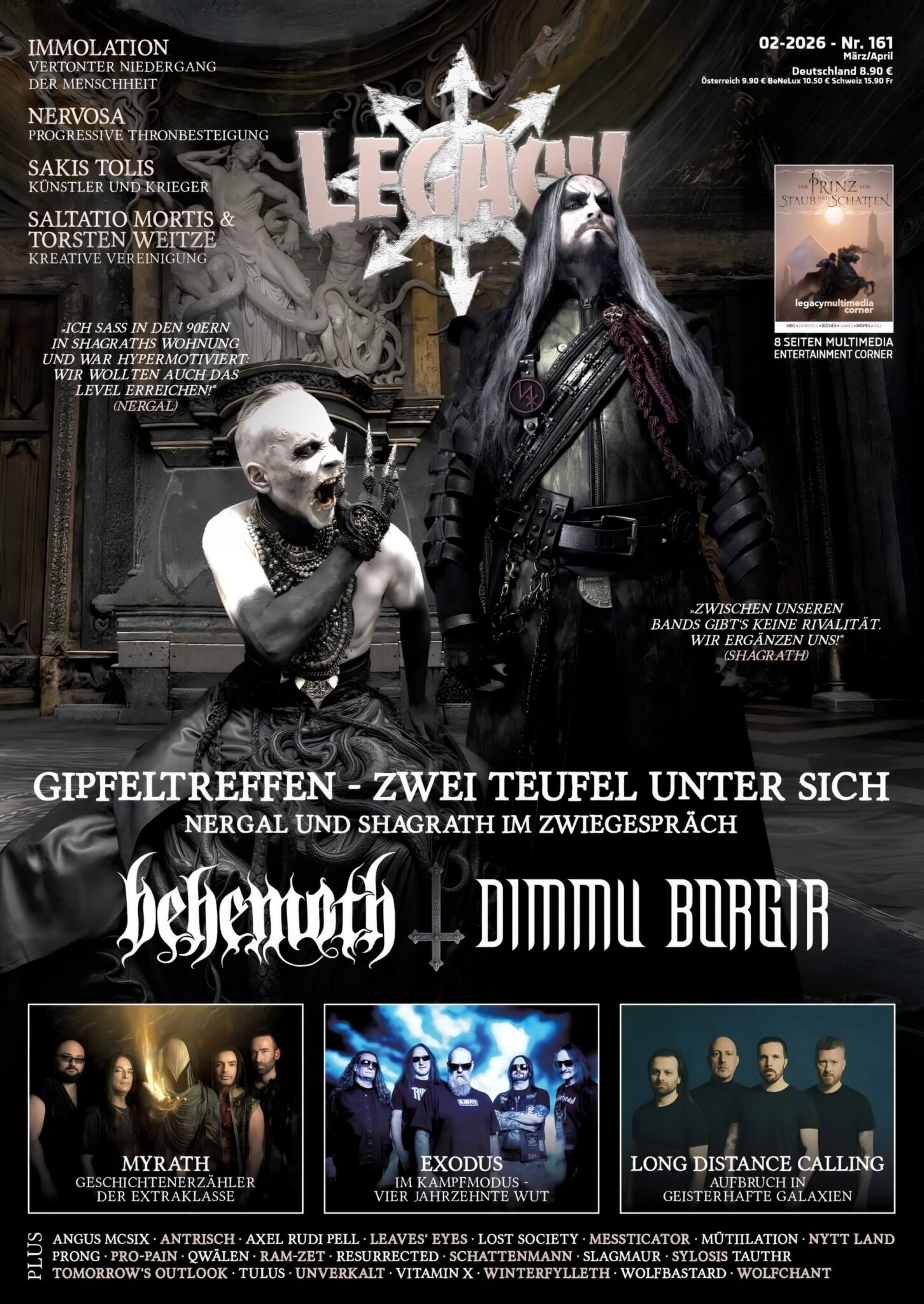
Nergal’s contribution to the feature located the shared history in a specific moment: “I was sitting in Shagrath’s apartment in the 90s and was highly motivated: we also wanted to reach that level,” he said. Shagrath, addressing the competitive framing the cover might imply, was precise in his response: “Between our bands there’s no rivalry. We complement each other.”
That complementarity has a structural dimension. Both acts have spent their careers navigating the same tension: between the underground credibility of the second-wave Norwegian and Polish black metal scenes from which they emerged, and the orchestral and theatrical ambitions that took their work onto the main stages of the continent’s major metal festivals.
The Legacy Magazine cover confirmed that positioning as the context in which ‘Grand Serpent Rising’ is to be read — not as a late-career consolidation, but as the next chapter of a co-authored argument that has been running since the early 1990s.
October’s Co-Headlining Contract
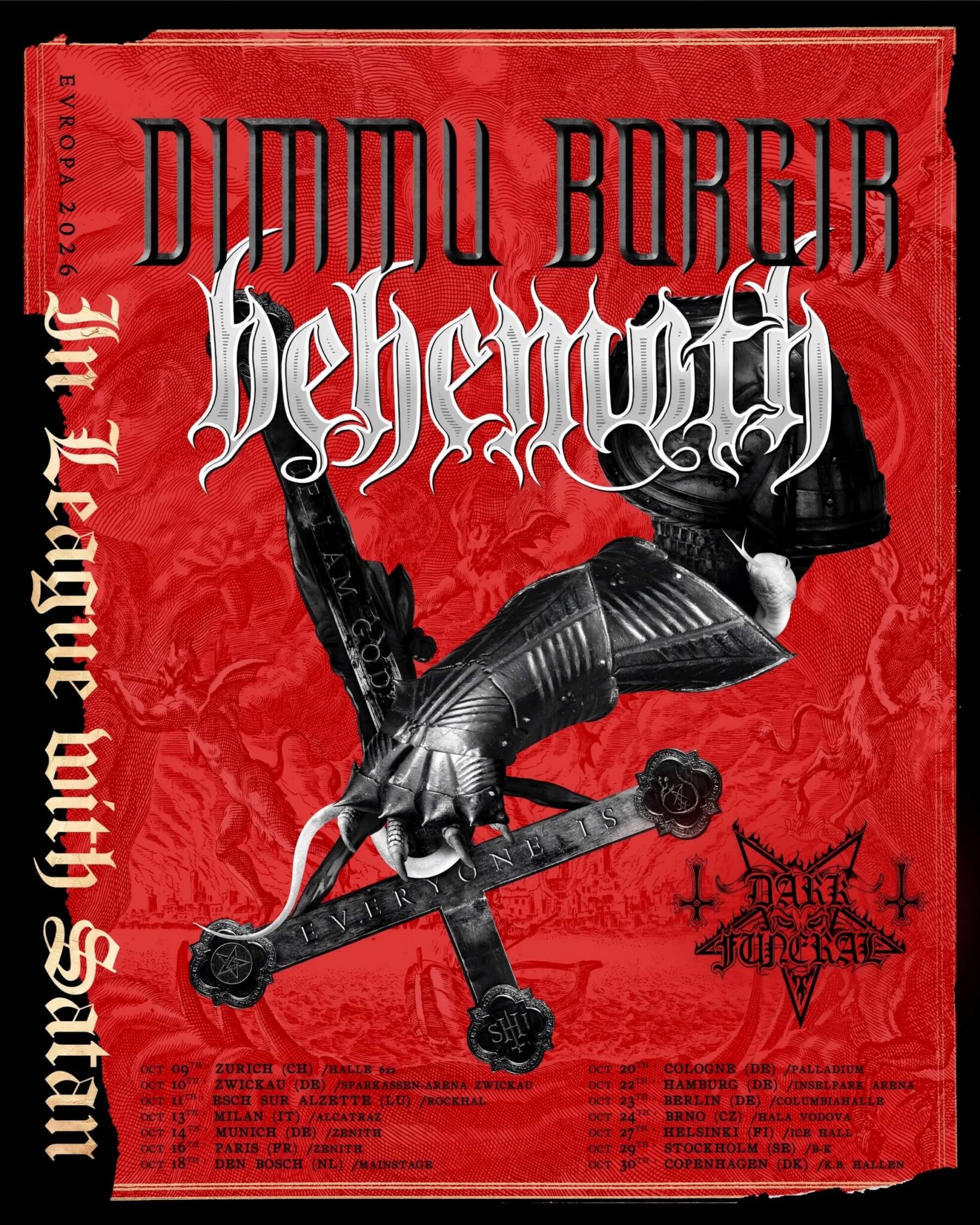
The In League with Satan European tour, confirmed for October 2026, spans fourteen dates across thirteen cities. Dimmu Borgir and Behemoth share the billing as co-headliners, with Dark Funeral as special guests. The run opens October 9 in Zurich and closes October 30 in Copenhagen, passing through Zwickau, Esch-sur-Alzette, Milan, Munich, Paris, Den Bosch, Cologne, Hamburg, Berlin, Brno, Helsinki, and Stockholm.
No South American or Colombian dates have been announced in connection with the current album cycle. Dimmu Borgir have a confirmed concert history in Colombia: a performance at Teatro Metropol in Bogotá on February 27, 2012, during the An Evening with Dimmu Borgir tour, was followed by a second confirmed date in Bogotá during the Eonian Tour South America in November 2018. The band’s current touring program is entirely European, and ‘Ulvgjeld & Blodsodel’ reaches this readership through digital platforms rather than through the live presence those two Bogotá performances established.
The tour’s title is borrowed from a 1982 Venom track that helped name the genre’s identity at its foundational moment. Both co-headlining acts are reaching back toward that origin point — Dimmu Borgir through the juridical Norse vocabulary of their single’s title, Behemoth through the Polish black metal tradition that Nergal has consistently placed in conversation with the Norwegian scene from which he said Shagrath’s work once set the standard. Dark Funeral’s presence on the bill — a Swedish act whose career has tracked a parallel course to both headliners across the 1990s and 2000s — anchors the tour in the Scandinavian and Northern European core of the genre.
What the Debt Declares
‘Grand Serpent Rising’ arrives as the work of a band that has taken its own album title’s advice: the serpent sheds its skin, and what remains is what was always there. The single that opens the album’s promotional cycle does not resume from 2018 but names its terms in Old Norse juridical language before a single chord is described.
‘Ulvgjeld & Blodsodel’ dismisses the vocabulary of return before it can take hold. What wolf-debt and blood-odal propose is a settlement on different terms: that after eight years, what was owed has been calculated, and the account is now open. The question the next twelve tracks of ‘Grand Serpent Rising,’ scheduled for release May 22, 2026, will continue to press is whether the toll runs only in one direction, or whether it demands something of the listener as well.
For a readership in Colombia that has received this band through recordings and digital platforms across the distance that separates them from Jessheim, the single’s release is also the beginning of a question about what the In League with Satan tour of October 2026 will consolidate — and whether the European stage it maps will eventually extend its itinerary southward.
‘Ulvgjeld & Blodsodel’ anchors a musical return in Old Norse juridical vocabulary — wolf-debt and blood-odal — rather than in the more familiar imagery of darkness or mythological iconography. How does the decision to name obligation and birthright rather than spectacle change what you hear in the song, and what does it ask of the band that produced it?
References
- Knut Helle, ed., ‘The Cambridge History of Scandinavia, Volume 1: Prehistory to 1520’ (Cambridge: Cambridge University Press, 2003), 349–352. ↩︎
- Andrew Goodwin, ‘Dancing in the Distraction Factory: Music Television and Popular Culture’ (Minneapolis: University of Minnesota Press, 1992), 72–76. ↩︎
Leave a Reply