


Before it was medicalized into a clinical diagnosis, a form of mental illness to be managed with pharmaceuticals, melancholia was a condition of the soul. It was an affliction, certainly, but also a privilege. To be melancholic was to be touched by the planet Saturn, to be constitutionally disposed to both profound genius and crippling despair. This was the dark side of genius, a state both feared and sought by artists and thinkers for centuries. It was not mere sadness, but a philosophical disposition, a lens through which the world was perceived with a painful, exquisite clarity.
This ancient concept, with a pedigree stretching back to Hippocrates, has found a new and unlikely vessel in Green Carnation, a Norwegian progressive metal band whose three-decade journey has been as mercurial and fraught as the condition itself. On September 5, 2025, the band will release ‘A Dark Poem, Part I: The Shores of Melancholia,’ the first installment of an audacious album trilogy that deliberately invokes this rich and complex artistic heritage. In naming their magnum opus, they are not simply describing a mood; they are staking a claim to a lineage, positioning their work not within the modern parlance of depression, but in the grand, romantic tradition of creative sorrow.
Historically, melancholia was understood as a physical ailment, an excess of “black bile,” one of the four humors that governed the body’s temperament. It was a state of being marked by contradictory impulses: the “heat” of heightened inspiration and the “cold” of dejected spirits. This duality made it the signature affliction of the intellectual and the artist. While medieval theology often condemned its listlessness as the sin of “acedia,” or sloth, the Renaissance saw its revival as a mark of distinction. Thinkers like Marsilio Ficino, building on Aristotle, recast the melancholic temperament as a prerequisite for creative genius, transforming it from a vice into a fashionable, if perilous, identity.
This persona became a fixture in the arts. One sees it in the weary, dejected pose of the angelic muse in Albrecht Dürer’s seminal 1514 engraving, ‘Melencolia I,’ an image that has become the very emblem of intellectual frustration and creative struggle. It echoes in the tormented soliloquies of Shakespeare’s ‘Hamlet’ and the mournful odes of John Keats, who found a “sad luxury” in the contemplation of sorrow. It is the “Weltschmerz”—the world-weariness—of the German Romantics and the pensive isolation of the figures in an Edward Hopper painting. It is a sorrow born not just of personal loss, but of a deep, philosophical wrestling with the imperfections of the world.
Green Carnation’s deliberate engagement with this history is made explicit by their citation of Arthur Rimbaud’s poem ‘Ophelia’ as a primary inspiration for the trilogy. Rimbaud’s vision of Shakespeare’s tragic heroine floating down a river, a “white phantom” forever hearing “the song of madness,” is a perfect distillation of nineteenth-century romantic despair. By aligning themselves with such a work, the band signals that their exploration is one of artistic and existential depth.
As vocalist Kjetil Nordhus states, the album “begins in a melancholic place that we have long associated with our music,” adding with a sense of profound rightness, “I think melancholia suits Green Carnation very well.” It is a declaration that they are not just making a sad album, but are channeling an ancient and powerful muse, one that has long walked hand-in-hand with artistic ambition.
The Restless Path of Green Carnation
The impetus for such a monumental project is found in the tumultuous history of Green Carnation itself—a history that reads like a macro-level expression of the melancholic tension between creative fire and self-destructive collapse. For over 30 years, the band has been a vessel for the singular, often tortured, vision of its founder, Terje Vik Schei, better known as Tchort. His own journey began in the crucible of the early Norwegian black metal scene as a bassist for the legendary band Emperor, but Green Carnation, formed in 1990, was always his own, more personal, project.
The band’s career has been a study in restlessness, a chameleonic journey through a dizzying array of styles. With almost every release, they have shed their skin and adopted a new one, defying easy categorization and frustrating any listener expecting consistency. They began as a death metal act, shifted to a folk-inflected doom metal for their 2000 debut, ‘Journey to the End of the Night,’ then veered into gothic metal, accessible hard rock on 2005’s ‘The Quiet Offspring,’ and even released a completely unplugged album, 2006’s ‘Acoustic Verses.’ This constant metamorphosis is their only constant, a sign of an artistic spirit that refuses to be tethered.
This relentless creative impulse reached its zenith in 2001 with ‘Light of Day, Day of Darkness,’ an album that stands as the foundational myth of Green Carnation. It is a single, continuous piece of music clocking in at 60 minutes and six seconds, one of the most ambitious undertakings in the history of heavy music.
The album was born from the most profound and contradictory of human experiences: it was an exploration of Tchort’s feelings following the death of his young daughter and, concurrently, the birth of his son. This collision of ultimate grief and nascent life fueled a work of staggering emotional and compositional complexity. It became the band’s landmark, a “masterpiece” that established their reputation for fearless, epic-scale artistry.
The album’s legacy has haunted the band ever since. For years, there was talk of a conceptual sequel, a second part of a planned ‘Chronicles of Doom’ trilogy to be titled ‘The Rise and Fall of Mankind.’ But the project never materialized. Instead, after their creative peak, the band entered a period of stylistic diffusion, moving away from the progressive doom that had defined them. This “cooling” phase, a retreat from the creative fire of their magnum opus, culminated in a complete collapse. In 2007, citing financial strain and a loss of motivation following a poorly organized tour, the band went on an extended hiatus. The melancholic cycle was complete: the “hot” phase of brilliant creation had given way to the “cold” phase of dejection and silence.
The silence lasted seven years. The band reunited in 2014, a slow reawakening that eventually led to their 2020 comeback album, ‘Leaves of Yesteryear.’ The album was a conscious “return to their earlier gothic progressive metal roots,” a reclamation of their core identity after years of wandering. It was a successful return, one that was met with largely positive reviews and re-energized their fanbase. But it was also a prelude. It proved that the creative spark was not extinguished, and in doing so, it laid the groundwork for an ambition that had lain dormant for nearly two decades.
The ghost of a grand, multi-album narrative had never truly been exorcised. Now, with ‘A Dark Poem,’ it is being given new life. As Nordhus acknowledges, the new trilogy is a return to the “long-form storytelling like ‘Light Of Day, Day Of Darkness,’” but, he insists, “done in a totally different way.”
An Inner Dystopia Deconstructing ‘A Dark Poem’
‘A Dark Poem, Part I: The Shores of Melancholia’ is not a simple album; it is the opening act of a three-part drama scheduled to unfold over 2025 and 2026. The band describes the trilogy’s arc as a journey to “the highest tops as well as their darkest inner rooms,” a description that echoes the dual nature of melancholia itself.
Bassist and songwriter Stein Roger Sordal elaborates that the work explores “feelings of alienation in existential questions and down to the very inner self.” The trilogy format is a declaration of intent, a promise of a narrative so vast it cannot be contained within a single release. It is their modern answer to the monolithic statement of ‘Light of Day, Day of Darkness.’
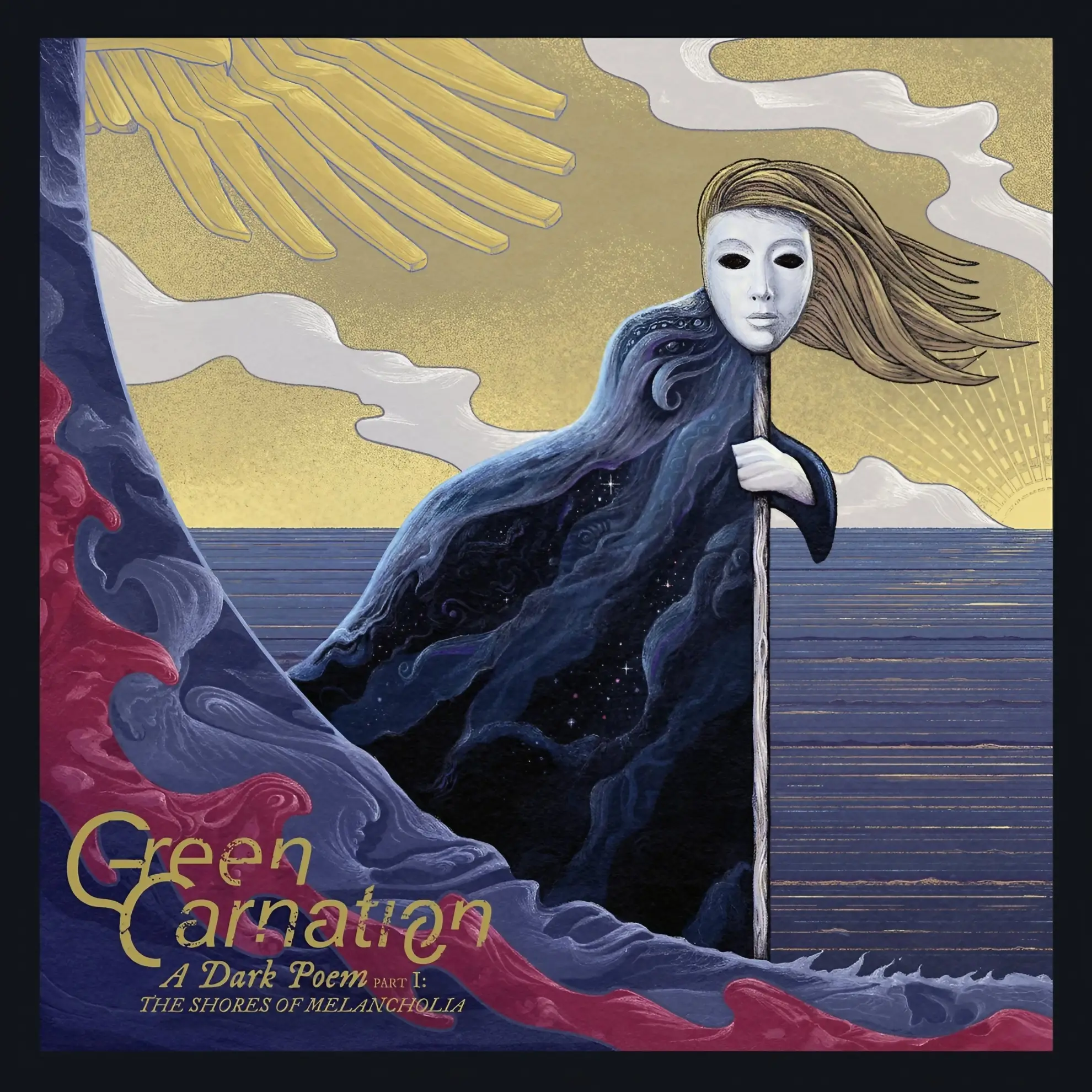
‘The Shores of Melancholia’ appears to be a work of synthesis, a conscious amalgamation of the many sounds Green Carnation has explored over its career. The lead single, ‘In Your Paradise,’ carries the “newfound heaviness” of their 2020 comeback, built on powerful, chugging riffs and soaring, symphonic flourishes. Yet, early analysis suggests the album also incorporates the “catchy rock arrangements” that defined their more accessible mid-period work, like 2003’s ‘A Blessing in Disguise.’ The album’s opening tracks, ‘As Silence Took You’ and ‘In Your Paradise,’ are described as melodic and hook-laden, while a track like ‘Me My Enemy’ reportedly delves into a “spacey, almost jazz fusion groove.”
This sonic retrospective even reaches back to the band’s most primal origins. The song ‘The Slave That You Are’ is described as an “aggressive throwback to Green Carnation’s underground past,” a nod to their early days in extreme metal. This connection is solidified by a guest vocal appearance from Grutle Kjellson, frontman of Enslaved, another pioneering Norwegian band that evolved from black metal roots into a celebrated progressive force.
This collaboration is significant, placing Green Carnation firmly in conversation with their peers and situating their work within the broader narrative of Norwegian progressive metal, a scene that includes world-renowned acts like Opeth, with whom Green Carnation has toured. The album’s evocative cover art, created by Niklas Sundin, the former guitarist of Swedish melodic death metal titans Dark Tranquillity, further cements its place within this creative ecosystem, its moody visuals perfectly matching the album’s thematic core.
It is in that thematic core that the album’s modern interpretation of melancholia comes into sharp focus. This is not an abstract, historical sorrow. According to Nordhus, the album “reflects the troubled relationship between our personal lives and the external world.” It is, he says, “about losing faith in the world we’ve come to know and how that leads to an inner dystopia.”
The source of this disillusionment is pointedly contemporary. The music video for ‘In Your Paradise’ flashes with “haunting images from today’s headlines,” and the lyrics speak of being “hounded by fearmongers.” Nordhus speaks directly to the psychological toll of the modern information landscape, the “daily barrage of misinformation” and the realization that “our brains cannot take in everything that is going on around us.”
This is “Weltschmerz” for the twentieth-first century. The romantic poets despaired over the state of the world as they saw it; Green Carnation despairs over a world whose reality has become unstable, contested, and weaponized. The external chaos of a post-truth society is internalized, creating the “inner dystopia” the band seeks to explore.
The lyric “It’s in your head,” belted out by Nordhus, becomes the album’s central thesis. The battleground is no longer just the world, but the mind itself, besieged by a reality that is constantly being manipulated. The melancholia of ‘The Shores of Melancholia’ is a direct response to the anxiety of living in a fractured, hyper-mediated age.
The Bulletin
Subscribe
Subscribe today and connect with a growing community of 613,229 readers. Stay informed with timely news, insightful updates, upcoming events, special invitations, exclusive offers, and contest announcements from our independent, reader-focused publication.
The Visual Alchemist Crafting a Modern Melancholia
The task of giving visual form to this complex sound fell to Niklas Sundin, an artist whose own credentials are as deeply embedded in the metal scene as the musicians themselves. For decades, Sundin was a principal songwriter and the lead guitarist for Dark Tranquillity, the Swedish titans who, alongside bands like At the Gates and In Flames, pioneered the entire genre of melodic death metal. His departure from the band in 2020 was not a retreat from the arts, but a pivot, allowing him to focus entirely on his work as a graphic designer and visual artist.
Operating under the banner of Cabin Fever Media, Sundin has become one of the most sought-after artists in the metal world, crafting iconic covers for a veritable who is who of the genre, including Arch Enemy, Enslaved, and At the Gates. His selection is therefore not merely a commission; it is a continuation of the album’s collaborative, pan-Scandinavian spirit.
His approach is that of a visual translator, known for his ability to distill a band’s sonic and lyrical concepts into stark, atmospheric, and often surreal imagery. His work avoids literalism, preferring to evoke a mood and a sense of place, a skill perfectly suited to an album titled ‘The Shores of Melancholia.’ The evocative, moody visuals he provides are not an afterthought but an integral component of the album’s world-building, establishing a visual grammar that will likely define the entire trilogy.
The Dystopia of ‘In Your Paradise’
The album’s thematic core is brought into sharp, unsettling focus in the music video for the lead single, ‘In Your Paradise.’ The clip serves as a visual manifesto for the “inner dystopia” Nordhus describes. Interspersed with atmospheric shots of the band performing, the video bombards the viewer with a rapid-fire montage of contemporary anxieties: scenes of war and devastation, the flash of rapid-fire weapons, the bombardment of cities, and flickering, decontextualized news clips. It is a deliberate aesthetic of information overload, a visual representation of the psychological toll of the modern media landscape.
The romantic poets despaired over the state of the world as they saw it; Green Carnation despairs over a world whose reality has become unstable, contested, and weaponized. The external chaos of a post-truth society is internalized, creating the very dystopia the band seeks to explore.
The lyric “It’s in your head,” belted out by Nordhus, becomes the album’s central thesis, reinforced by the video’s claustrophobic assault of imagery. The battleground is no longer just the world, but the mind itself, besieged by a reality that is constantly being manipulated. The melancholia of ‘The Shores of Melancholia’ is a direct response to the anxiety of living in a fractured, hyper-mediated age.
Conclusion
‘A Dark Poem’ is more than an artistic statement; it is a calculated, high-stakes gamble to redefine their standing. The enthusiastic reception to their 2020 comeback provided the crucial momentum. Nordhus confirms that the “extremely positive feedback from fans, record buyers, concert audiences, music writers, reviewers and the metal community” was “very motivating.” That motivation led to the “very ambitious record deal with Season of Mist,” which finally gave the band the institutional support to undertake a project of this magnitude. The comeback was not the final word; it was the catalyst.
A band with a “gold standard” album like ‘Light of Day, Day of Darkness’ in its past faces a unique challenge. That history can become a gilded cage, a benchmark against which all future work is measured and often found wanting. Some longtime fans, for instance, found the band’s last album “pretty meh” when compared to the “magic” of their early, more ambitious material. The trilogy is a direct answer to this challenge. It is a conscious act of building their reputation, an all-in bet that they can not only recapture that magic but create something even more vital and enduring.
The band members are acutely aware of the stakes. They acknowledge the “very strong emotional connection” fans have with their past work and openly state that the new trilogy is intended to be a “milestone in our career.” This is a project designed to be “challenging for ourselves, challenging for our fans, just the way Green Carnation has always been.” It is a declaration that their creative peak is not a monument in their past, but a summit they are still climbing. By committing to such a monumental, multi-year endeavor, they are forcing a re-evaluation of their place in contemporary music, betting that this new epic will define their second act just as ‘Light of Day, Day of Darkness’ defined their first.
‘The Shores of Melancholia,’ therefore, is not a destination but a point of departure. It is the first chapter in a story that will unfold across three albums and several years. The band is already working “extremely hard” on a live production of the new material, with a world premiere planned for the prestigious ProgPower USA festival in Atlanta this September.
It is an expression of the enduring power of the melancholic spirit—the belief that from the “darkest inner rooms” of sorrow and doubt, works of profound and lasting beauty can still be born.
Support
Independent
Journalism
Fund the voices Behind Every Story
Every article we publish is the product of careful research, critical reflection, and stringent fact-checking. As disabled individuals, we navigate this work with unwavering dedication, poring over historical records, verifying sources, and honing language to meet the highest editorial standards. This commitment continues daily, ensuring a consistent stream of content that informs with clarity and integrity.
We invite you to support this endeavor. Your contribution sustains the work of writers who examine their subjects with depth and precision, shaping narratives that question assumptions and shed light on the overlooked dimensions of culture and history.
Donations are processed through an in-kind sponsorship model powered by Paymattic—a secure, reliable donations plugin that enables direct support for our ongoing editorial work.
Leave a Reply