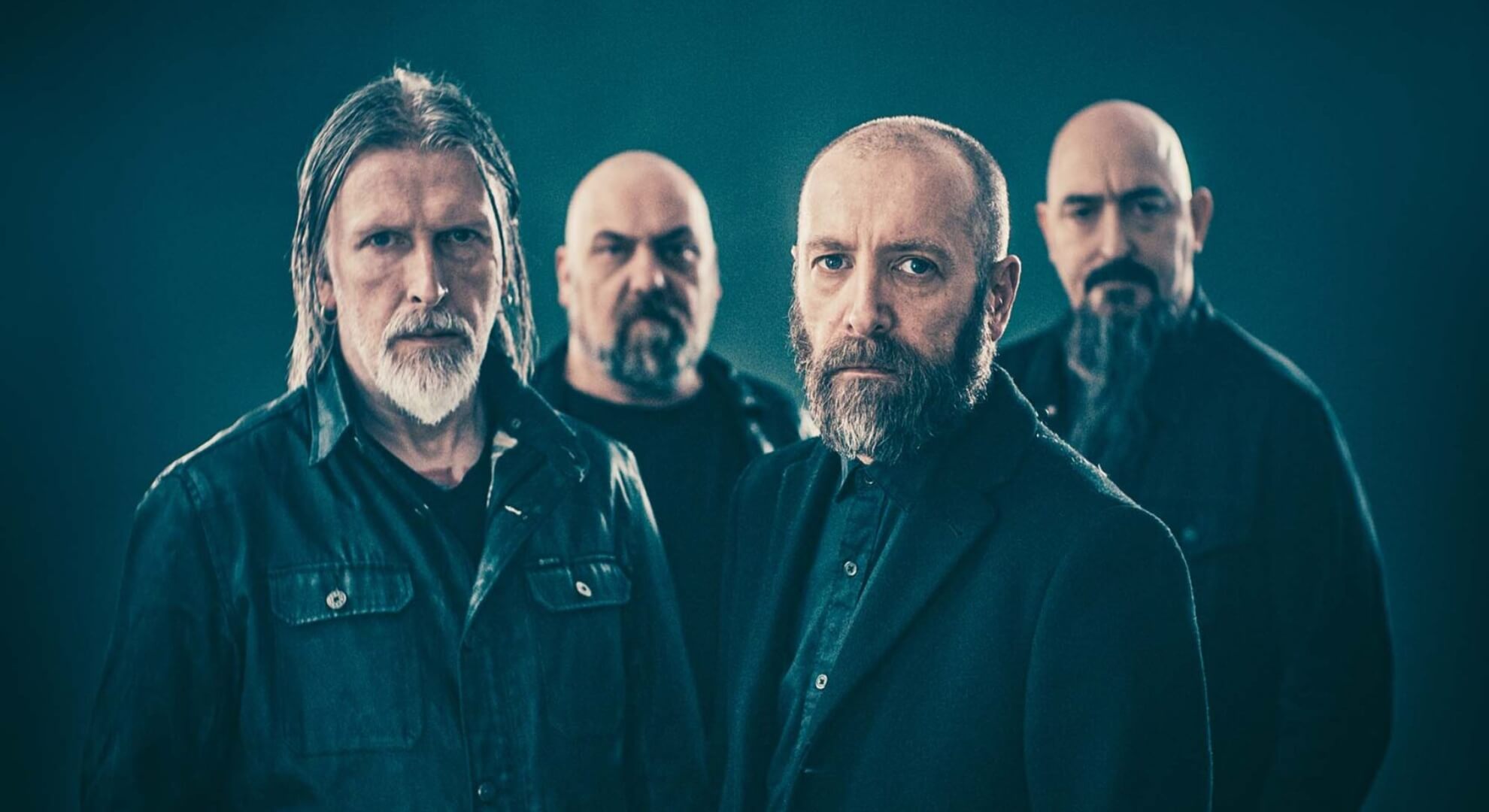


On December 12, 2025, just as the Northern Hemisphere settled into its deepest winter, Paradise Lost issued a visual manifesto that cut through the season’s festive artifice with stark, monochromatic resolve. The release of the music video for ‘Salvation’—the centerpiece of their seventeenth studio album, ‘Ascension,’ which arrived earlier on September 19—served not merely as a promotional footnote, but as a deliberate counter-narrative to the prevailing digital noise. Ending a five-year recording silence that ensued after 2020, the Halifax quintet has returned with a work that feels less like a comeback and more like a recalibration of gothic metal’s emotional barometer.
For a collective approaching its fourth decade, this moment represents more than a routine addition to a discography; it is an assertion of survival. While their peers from the “Peaceville Three”—Anathema and My Dying Bride—have faced dissolution or hiatus, Paradise Lost remains a monolithic entity, aging not by softening, but by hardening into something crystalline and impervious.
This longevity is significant within the sociology of heavy metal, where the “Peaceville Three” are historically credited with slowing the tempo of British metal to a funereal crawl, creating a distinct sonic lineage that privileges atmosphere over aggression.1
‘Salvation’ Statement in Monochromatic Grey
The music video for ‘Salvation’ arrives with the specific, ironic timing of the holiday season. Released just weeks before Christmas, it offers a counter-narrative to the forced jubilance of December. Vocalist Nick Holmes, a man whose dry, northern wit is often as sharp as his growls, acknowledged the friction between the season’s cheer and the band’s sombre output.
He noted that, given the timing, the video adopts “perhaps a more optimistic view,” a sentiment that reveals the band’s dark humor; in the world of Paradise Lost, optimism is a relative term, usually defined by the mere absence of total collapse.
Through the Lens of Ash Pears
The video was directed by Ash Pears of AshTV, a longtime collaborator who has become the visual interpreter of the band’s modern era. As observed in our coverage of the lead single ‘Silence Like The Grave,’ Pears’ aesthetic consistently reinforces the band’s gothic visual language through restrained, shadow-saturated narratives. Pears understands that Paradise Lost does not require pyrotechnics or complex CGI narratives. Their music demands texture, shadow, and a sense of vast, indifferent space.
For ‘Salvation,’ Pears rejected modern polish in favor of texture, embracing a “raw, guerrilla filmmaking spirit.” This do-it-yourself ethos is a deliberate aesthetic choice, stripping away the artifices that often clutter modern metal videos to construct a perfect, spinning circle of grey. The resulting production achieves a high-gloss emotional resonance through austere means, relying on atmosphere rather than spectacle.
The Solitude of the Lighthouse
The narrative center of the video is the lighthouse. In the visual lexicon of gothic literature—from the works of Ann Radcliffe to Adeline Virginia Woolf—the lighthouse functions as a liminal space, symbolizing both isolation and the fragile boundary between the ordered world of the land and the chaotic sublime of the sea.2
The video portrays the connection between two individuals committed to upholding a beacon. They are protectors of a symbol they must guard until their last breath. This imagery creates a powerful resonance with the band’s own career. Are Holmes and Mackintosh not the lighthouse keepers of gothic metal? Have they not tended this flame for decades, while storms of grunge, nu-metal, and metalcore raged around them?
The ambiguity of the light is central to the work’s power. Holmes suggests that the nature of this guidance is not inherently benevolent, noting that whether this force is ultimately good or bad “will always remain a mystery.” The beacon guides, but it also warns. It attracts the lost, but it also illuminates the wreckage.
In the context of the words of the song—which deal with seeking forgiveness in the face of death—the lighthouse becomes a purgatorial symbol. It represents the “belief in a higher power” that the lyrics interrogate, serving as a visual manifestation of the ‘Ascension’ itself—a vertical climb toward a light that may burn rather than warm.
A Cinematic Descent into Chaos
The editing of the video likely mirrors the dynamic shifts of the song itself. ‘Salvation’ is a seven-minute epic, teasing light before plunging back into chaos. The visual pacing reflects this, moving from the stoic, wind-battered exterior of the lighthouse to the intimate, perhaps claustrophobic interior where the keepers maintain their vigil.
The inclusion of guest vocals by Alan Averill of the Irish pagan metal band Primordial adds another layer of gravitas to the track. While Averill does not appear to be the focus of the video’s narrative, his vocal presence infuses the audio-visual experience with a pagan texture, a raw, elemental force that matches the crashing waves and grey skies of the video’s setting.
The Weight of a Five Year Silence
To perceive the depth of ‘Salvation,’ one must situate it within the broader narrative of the album. The gap between ‘Obsidian’ (released in May 2020) and ‘Ascension’ (September 2025) was a period of profound recalibration for the band.
Living in the Shadow of ‘Obsidian’
‘Obsidian’ was a critical and commercial success, released at the height of the global pandemic. It was a diverse, eclectic record that blended the goth-rock of their mid-period with the crushing doom of their early days. However, the inability to tour the album properly left a creative vacuum. The world stopped, and for a band that lives on the road, this enforced stasis was both a curse and a catalyst.
Rediscovering the Flame Through ‘Icon’
Guitarist Gregor Mackintosh, the primary songwriter and architect of the Paradise Lost sound, revealed the ruthless quality control that defined the genesis of ‘Ascension.’ He admitted to writing about half a record roughly three years prior to the release—six or seven songs—only to discard them entirely because he “was not happy with it.”
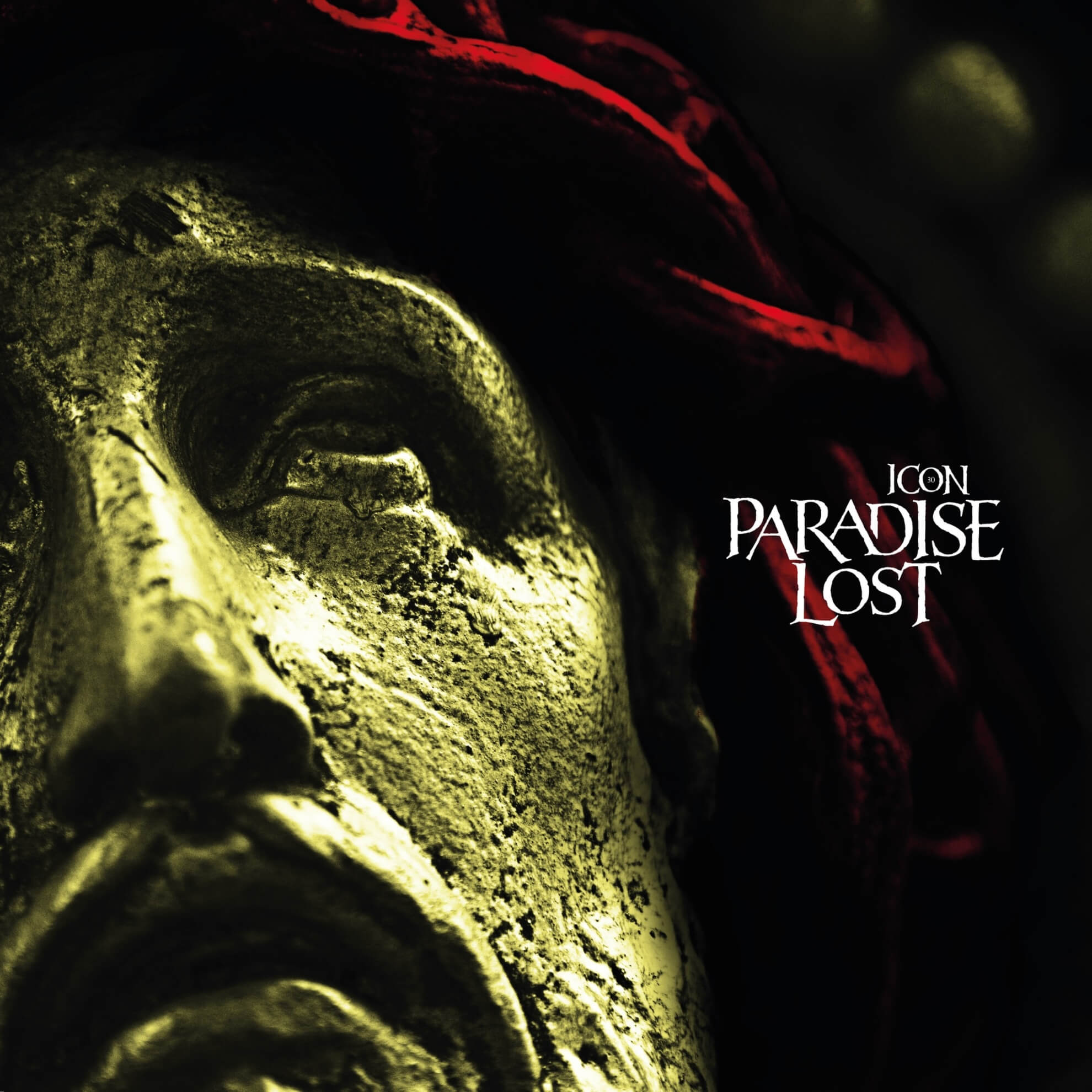
This creative blockage was unblocked by a look into the past. In 2023, the band re-recorded their seminal 1993 album ‘Icon’ for its 30th anniversary, ‘Icon 30.’ This was not merely a commercial exercise; it was a ritual of rediscovery.
Nick Holmes explained that physically playing and singing those old songs—tracks like ‘True Belief’ and ‘Embers Fire’—put them back in the “headspace” of that era. It was not about copying the sound; it was about remembering the attitude. They rediscovered the specific chemistry of their younger selves, the way they arranged songs before the digital age, before click tracks and Pro Tools homogenized the process.
Momentum Gathering on the Mountain
Once the blockage was cleared, the writing process for ‘Ascension’ began in earnest. Holmes describes the accumulation of ideas as a “snowball rolling down a mountainside,” indicating how the initial inertia gave way to unstoppable momentum. The ‘Icon 30’ sessions acted as the push.
The band adopted a vinyl mentality for sequencing, thinking in terms of Side A and Side B journeys rather than a playlist of singles. They traded files remotely, a process that allowed for “brutal criticism.” Without the pressure of jamming in a room, they could listen to a riff, judge it dispassionately, and reject it if it did not meet the gold standard.
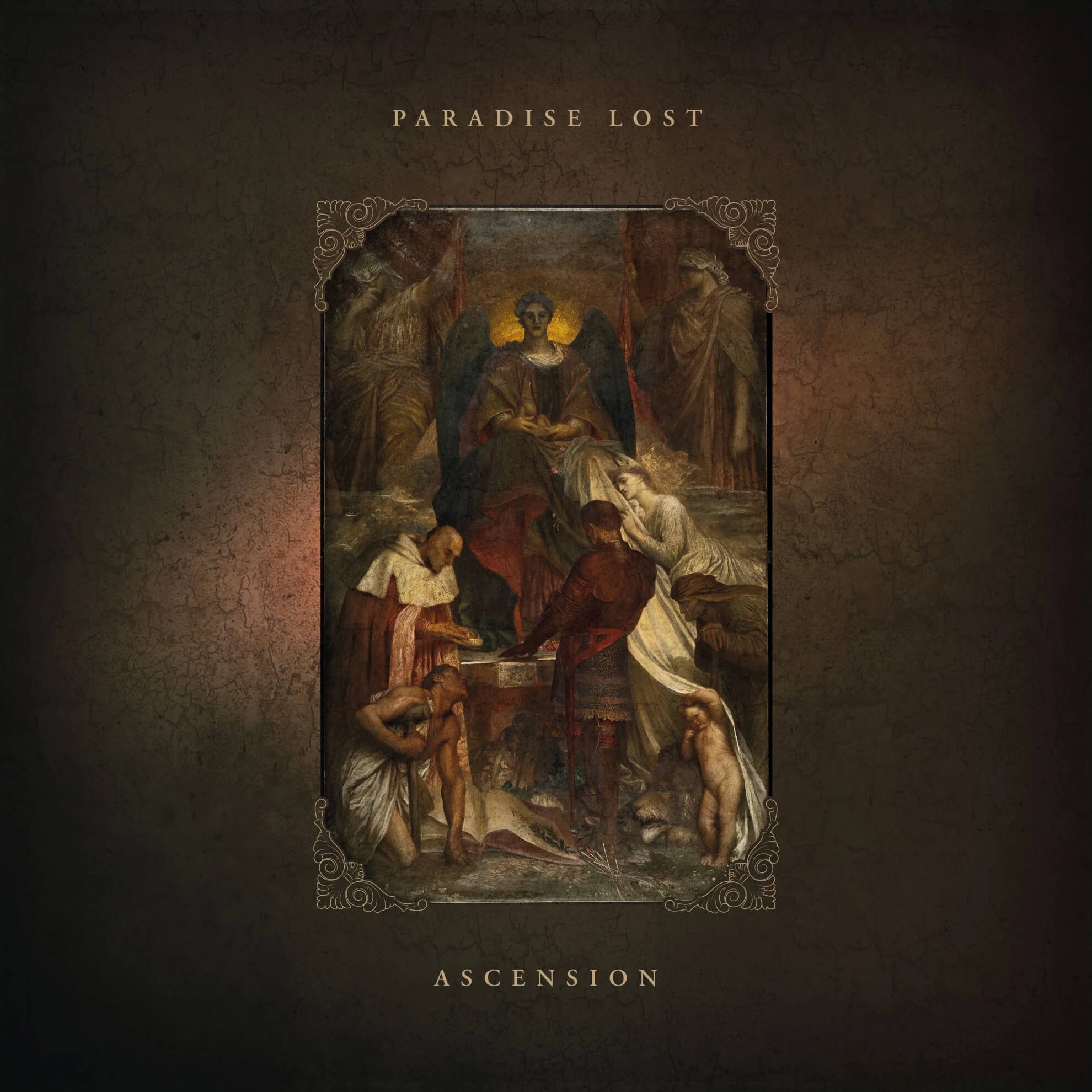
The album, ‘Ascension,’ stands as a sonic monolith. Its production, handled by Gregor Mackintosh at Black Planet Studios in East Yorkshire and mixed by Lawrence Mackrory, achieves a stunning balance: it is both warm and powerful, yet simultaneously imbued with a spacious, gothic atmosphere.
The choice to self-produce, with Mackintosh at the helm, speaks to the band’s insular confidence. They know their sound better than any outsider could. The recording process was split: guitars and keys in the United Kingdom, drums and vocals at NBS and Wasteland Studios in Sweden. This geographic split did not fracture the sound; rather, it allowed for a polished, layered approach.
Critics have observed that the album combines Paradise Lost’s artistic side with a more commercial feel, though they note that the artistic integrity definitely overshadows any commercial considerations. It is a record that balances the suffocating density of doom with the melancholy of melody.
Traversing the Sonic Spectrum
The sonic palette of ‘Ascension’ is vast. It traverses from full-bore heavy metal to sky-high melody. It features the chugging, lumbering aspects of doom, but also surprisingly catchy, energetic moments.
One reviewer noted a thrash influence in some of the rhythm guitars, comparing moments to Metallica or Testament. This is a fascinating evolution. Paradise Lost has rarely been associated with thrash, but the precision of the riffing on ‘Ascension’ suggests a band that has sharpened its blades. Tracks like ‘Silence Like The Grave’ have been compared to the ‘Black Album’ era of Metallica in their bombastic, mid-tempo heaviness.
The Ritual of the Ascension of Europe 2025 Tour
The music of Paradise Lost is designed for the stage. It is in the live arena that the community of the miserable gathers to celebrate their shared ethos. The tour supporting the album, titled the Ascension of Europe, sees the band reinforcing their status as a premier live act. This ambitious schedule, now extended with a confirmed second leg in 2026, emphasizes the magnitude of the release.
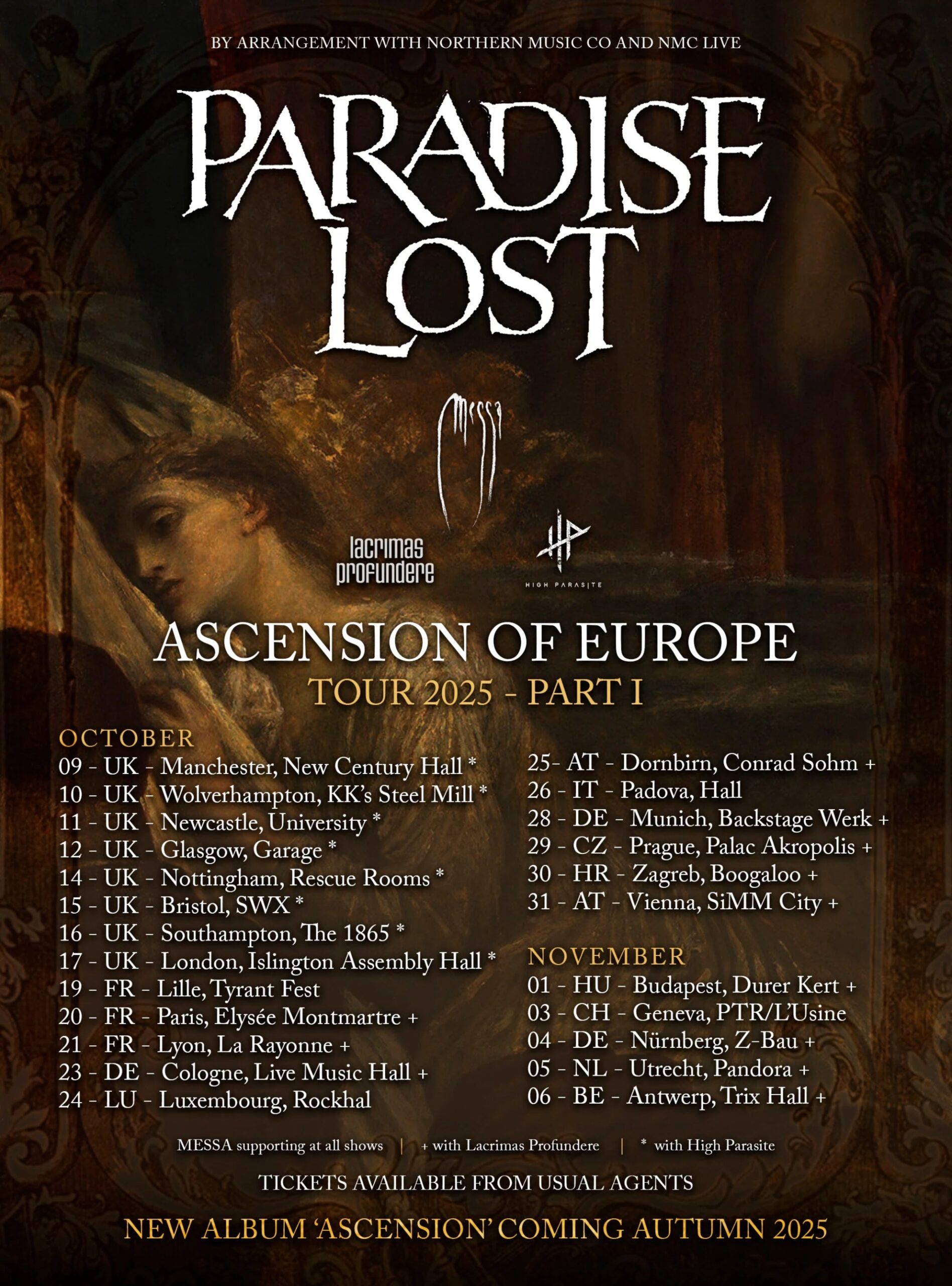
Reviews from the tour—specifically gigs at the New Century Hall in Manchester, Islington Assembly Hall in London, and Brudenell Social Club in Leeds—paint a picture of a band revitalized. The setlists are a careful balance of the new and the storied. The band is playing the new singles—‘Serpent on the Cross,’ ‘Tyrants Serenade,’ and ‘Salvation’—alongside deep cuts that have not been aired in decades.
‘True Belief’ and ‘Embers Fire’ from ‘Icon’ represent the nineties peak, while ‘Say Just Words’ from ‘One Second’ brings the gothic club energy. ‘Beneath Broken Earth’ from ‘The Plague Within’ provides the heaviest moment of the night, a crushing death-doom interlude.
Curating the Gloom
The choice of support acts, Messa and High Parasite, demonstrates Paradise Lost’s finger on the pulse of the underground. Messa, an Italian scarlet doom band described as “ethereal and entrancing,” offers a jazz-tinged, oud-influenced sound that provides a stark contrast to the headliners, proving that the audience is open to unpredictable atmospherics.
High Parasite is a newer band featuring Aaron Stainthorpe, former My Dying Bride, on vocals. This is a massive nod to the “Peaceville Three lineage.” Seeing Stainthorpe support Paradise Lost is a symbolic reunion of the Halifax and Bradford doom scene, a passing of the torch within the same generation.
The atmosphere at these shows is described as “reverential.” It is not a violent mosh pit; it is a congregation. At the Electric Bristol, the crowd did not erupt; they just let go. This is the essence of the Paradise Lost experience: a shared release of tension, a collective immersion in the psycho-analytic concept of abjection, where the confrontation with the “improper” or “unclean” elements of existence results in a cathartic release.3
Ascension of Europe 2026 Tour
Extending their dominion beyond the immediate cycle, Paradise Lost has confirmed a second leg of the Ascension of Europe tour for 2026. This subsequent phase ensures that the album’s sombre narrative will continue to resonate across the continent well into the following year, reaching territories and venues not covered in the initial 2025 run.
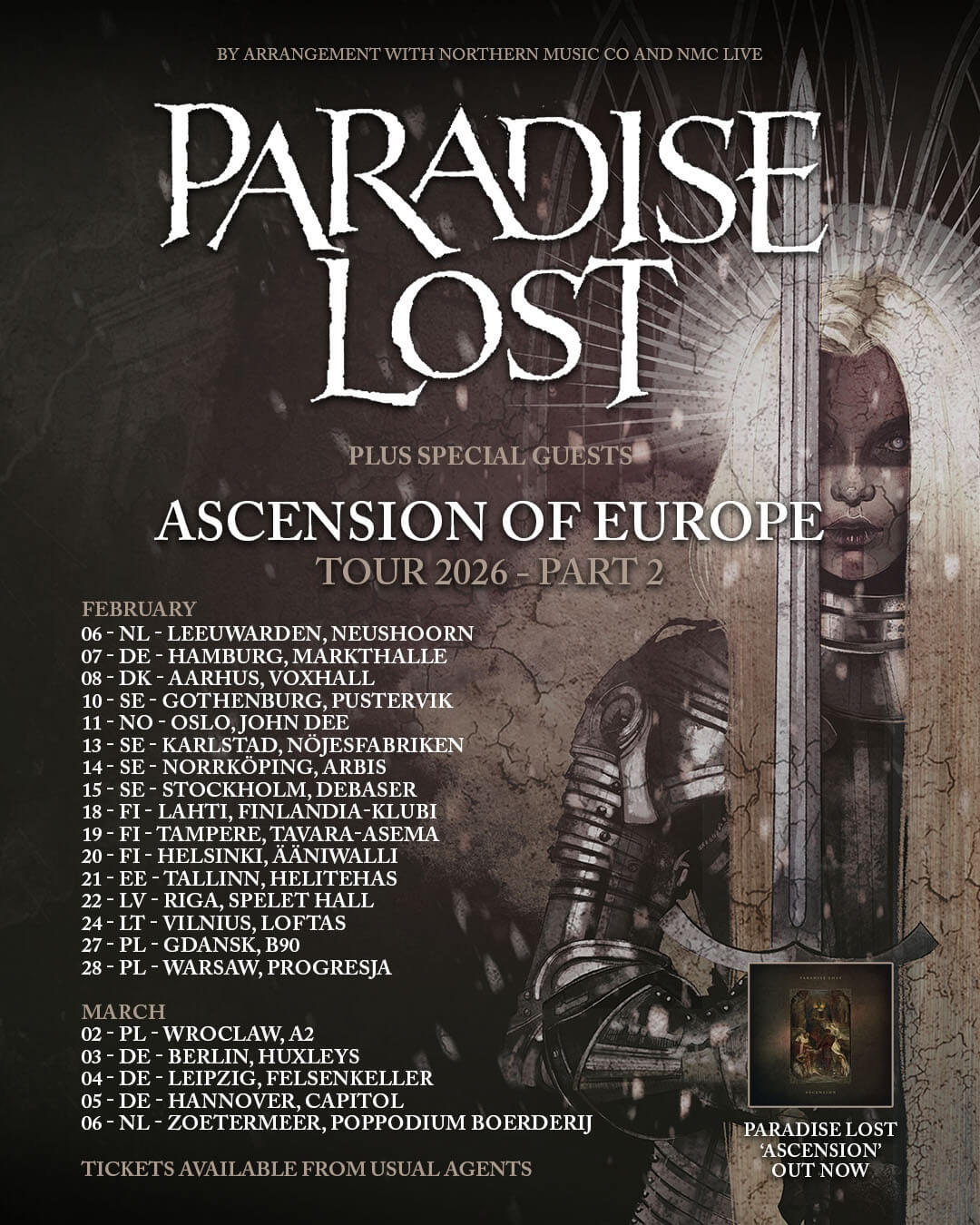
The commitment to a protracted touring schedule signals not only the commercial viability of their latest work but also a dedication to bringing the full, immersive weight of ‘Ascension’ to a wider congregation of listeners.
A Monument to Endurance
After the final notes of ‘Ascension’ dissolve, the sheer scale of Paradise Lost’s accomplishment is undeniable. Rather than simply enduring four decades of artistic attrition, they have transformed the weariness of their long experience into a powerful and unique aesthetic weapon.
Paradise Lost, with an unwavering commitment to the sombre path forged in Halifax, offers a radical act of fidelity in an era obsessed with perpetual reinvention and the ephemeral. The ‘Salvation’ video serves as a visual codex for this period, a monochromatic statement to a profound truth: true resilience lies not in denying the darkness, but in tending the light within it. Rather than offering escape from the void, the band has constructed a cathedral of sound—a sanctuary where one can face and endure the darkness with dignity.
In considering the austere imagery of the ‘Salvation’ video alongside the album’s overarching themes of mortality and endurance, how does the visual metaphor of the lighthouse reshape your interpretation of the band’s longstanding engagement with the concept of hope?
References:
- Kahn-Harris, Keith. ‘Extreme Metal: Music and Culture on the Edge.’ Oxford: Berg, 2007, 126–28. ↩︎
- Smith, Andrew, and William Hughes, eds. ‘The Victorian Gothic: An Edinburgh Companion.’ Edinburgh: Edinburgh University Press, 2012, 45. ↩︎
- Kristeva, Julia. ‘Powers of Horror: An Essay on Abjection.’ Translated by Leon S. Roudiez. New York: Columbia University Press, 1982, 3–4. ↩︎

Leave a Reply