
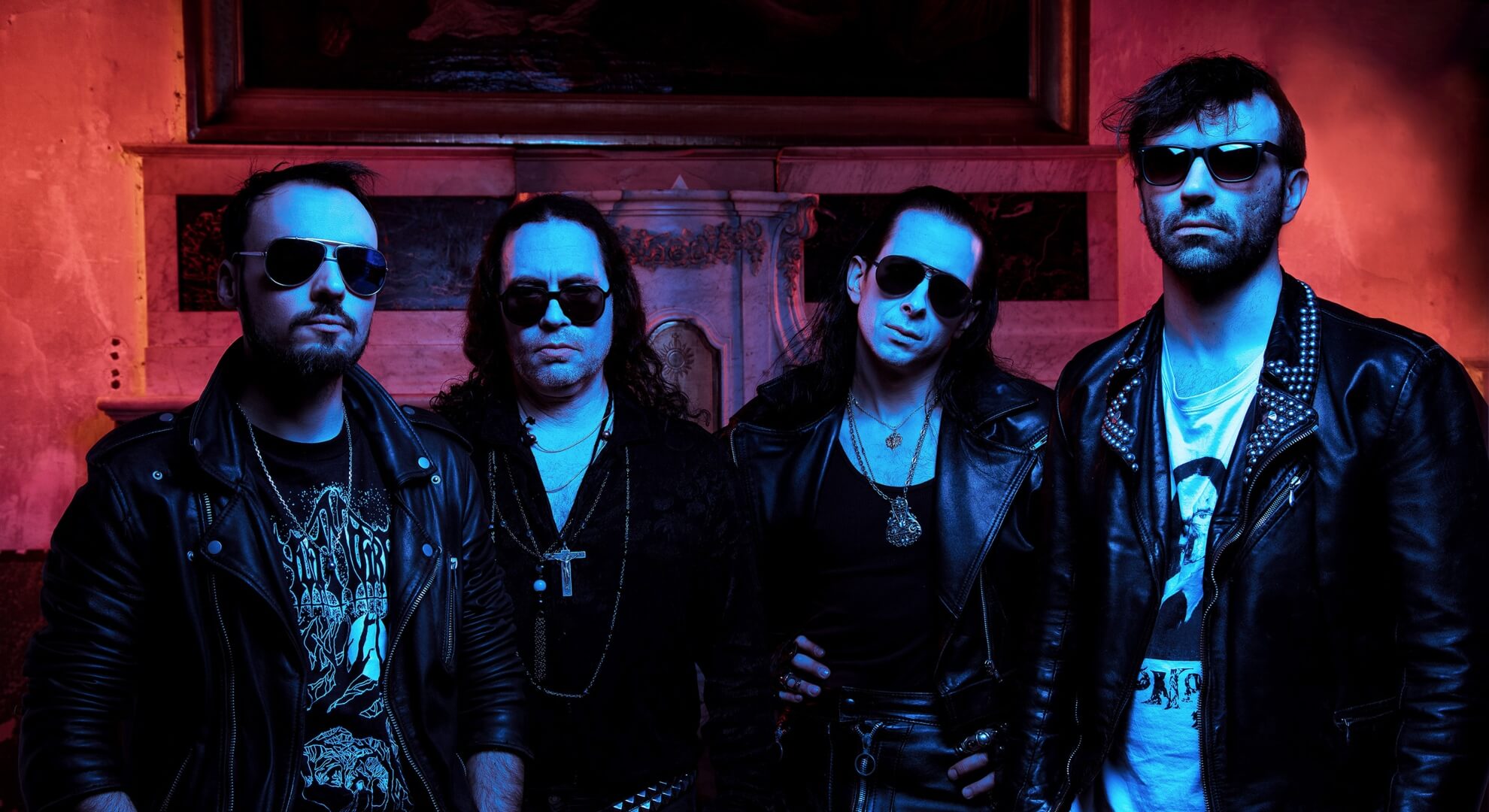


The release of the full-length concert film ‘Back to the Cave’ constitutes a watershed moment for the Paris-based gothic rock ensemble Soror Dolorosa. It serves as both a definitive document of the recent creative peak of the band and a cinematic exploration of the subcultural ethos the members have inhabited for over two decades.
Filmed during the 2025 edition of Prophecy Fest in the prehistoric limestone majesty of Balve Cave, the production captures the group at a point of creative consolidation. At this juncture, the aggressive shadows of the deathrock origins of the band meet the refined, crystalline electronic textures of the latest masterwork, ‘Mond.’
As a document, it transcends the typical live recording, functioning as an atmospheric witness to the enduring power of the French coldwave tradition and the unique position of the band as the Sister of Pain in a modern setting that is often lacking in authentic emotional depth.
Ritual Resonance within the Limestone Deep
The selection of Balve Cave (Balver Höhle) as the setting for this performance was not merely a matter of logistical convenience but an intentional alignment of musical spirit and geological gravity. The venue is located in the Hönne Valley of Balve within the Sauerland region of Germany. Geologically, it is a naturally formed karst limestone cave that now functions as the largest cultural hall in Europe.
Archaeology indicates that the site has been a locus for human activity since the Age of Stone, yielding significant Neolithic and Iron Age remains that highlight the historical depth of the cavern.
In the context of dark and avant-garde music, the venue imposes a sense of ritual that is rare in conventional festival settings. The natural curvature of the cavern creates a distinctive, raw reverb that challenges and ultimately enhances the atmospheric density of the sound of Soror Dolorosa.
For frontman Andy Julia, the performance was a communal exercise in inhabiting a specific frequency rather than a standard concert delivery. He describes the appearance as a defining memory, “shaped by an audience that collectively inhabited the mystical atmosphere of the cave.”
This shared immersion allowed the band to explore the gravity of the history of the site, which is linked to the Germanic myth of Wayland the Smith, providing a spiritual echo for the exploration of longing and transcendence by the group. The annual context of Prophecy Fest further focuses this energy, creating a space dedicated specifically to innovative and dark auditory experiences.
A Trajectory of Creative Consolidation
Rather than a simple evolution, the journey of the band represents a deliberate ascension toward a more atmospheric and exploratory identity. The release of ‘Back to the Cave’ serves as a bridge between two distinct creative lives. The raw, wooden deathrock energy that defined the early Toulouse era of the group—characterized by the abrasive melancholia of the Extended Play ‘Severance’—has not been discarded but has been subsumed into the sophisticated coldwave textures of the current work of the band.
This transition is reflected in the discography of the group, beginning with the decadent androgyny of the ‘Severance’ era in 2009 and moving through the Vienna Secession-influenced atmosphere of ‘Blind Scenes’ in 2011 and the Art Deco aesthetics of ‘No More Heroes’ in 2013.
Julia frames the history of the project as a “perpetual desire to get higher and closer” to an elusive artistic ideal, one where the earthiness of the origins of the band eventually yields to something more ethereal. This transition reached a turning point with the 2017 album ‘Apollo,’ which featured antique and Egyptian visual themes and which he characterizes as a “long walk through the desert.”
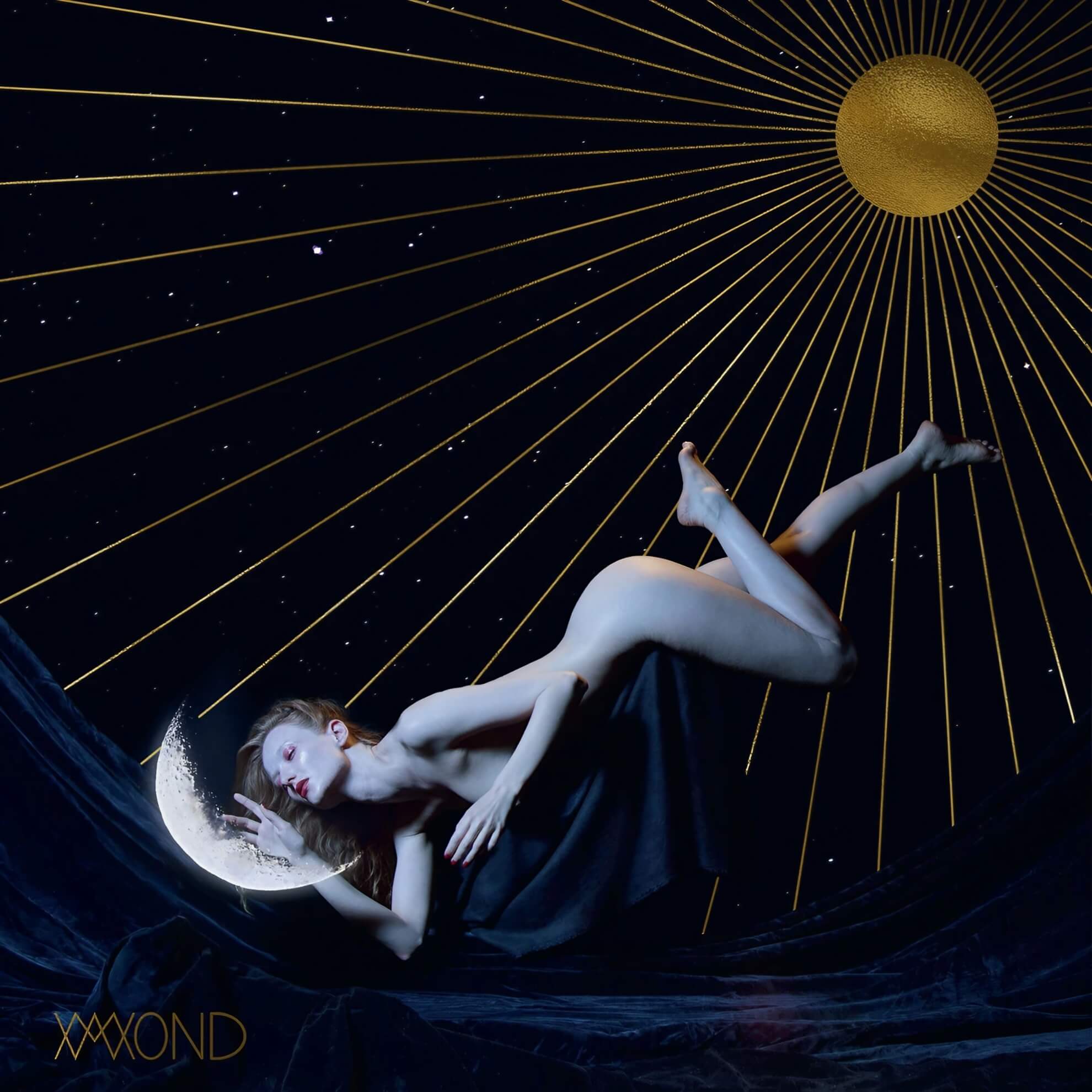
This was a period of intense transition and lineup reconstruction where the band had to shed genre-bound limitations. ‘Mond,’ released in 2024 with its minimalist visual identity, and the cinematic companion of the album in the cave represent the successful navigation of that desert, moving from the earthy grimness of the metal roots of the band toward the misty blue clarity of a more refined future.
The French Coldwave and Symbolist Echoes
To contextualize Soror Dolorosa is to place the band within the specific artistic milieu of the Touché Française—the French coldwave tradition that emerged in the late nineteen-seventies and early nineteen-eighties.1 While British peers such as The Sisters of Mercy or The Cure favored a foggy, industrial gloom, the French movement infused post-punk with a unique sense of Gallic romanticism and poetic desolation.
Soror Dolorosa carries this torch into 2026, acting as the bridge between that nostalgia and a more modern, crystalline production style. This musical lineage is inseparable from the literary foundations of the band, specifically the nineteenth-century symbolist novel ‘Bruges-la-Morte’ by Georges Rodenbach.2
Julia explains that the name Soror Dolorosa is not a mere branding exercise but a guiding philosophy; the goal is to capture the “eternal mourn facing the beauty of purest things in life after they are gone.”
This literary anchor translates suffering into a structural component of the sound of the band, where the dead city of the prose of Rodenbach becomes a topographical map of mourning. This connection places the group in conversation with early twentieth-century realism and the chiaroscuro lighting found in the direction of Pjetra.
The visual identity of the band is further enriched by influences from the Vienna Secession and Art Deco movements, which inform the graphic identity of the project. This multifaceted approach is complemented by collaborations with contemporary peers such as Perturbator, Drab Majesty, and Je T’Aime, all of whom contribute to the electronic modernization of the gothic rock genre.
Through these connections, the photography of Andy Julia serves as an epitaphic portrait, manifesting hidden visions through songwriting that remains poetical and cathartic.
The Alchemist Lens of Andy Julia
The aesthetic cohesion of Soror Dolorosa is largely the result of the singular visual universe of Andy Julia. He was educated at the L’école des Beaux Arts in Toulouse and later served as an assistant at Daylight Studios in Paris, backgrounds that allow him to redefine beauty through dark photographic compositions.
He views the underground music sphere as a sanctuary where the musician must act as an entire artist who is completely removed from the common-sense world of commercialism. This philosophy has led to the publication of several significant works, including ‘IDEAL’ in 2004 and ‘LIBERTINE’ in 2007, books that explore themes of female narcissism and ghostly visions through somber portraiture and vintage atmospheres.
This commitment to the concept of the entire artist explains the refusal of Julia to use digital shortcuts. For the artwork of ‘Mond,’ he opted for a five-hour physical arrangement of subjects and handmade props rather than using Photoshop. This was a decision rooted in a broader subcultural commitment to manual craft.
The history of Julia in the black metal scene—playing drums for renowned acts such as Mutiilation, Darvulia, and Peste Noire—continues to fuel the violence and tension of the live performance of the group. He transitioned to vocals to achieve a greater sense of maturity and longevity, ensuring that even the most melodic work of the band retains a sense of primordial threat while focusing on the essence of things.
Synthesized Shadows and Lunar Rhythms
The current era of the band is defined by the fourth full-length release, ‘Mond,’ which Julia views as the symbolic counterpart to ‘Apollo.’ Where the latter was the sun, ‘Mond’ is the moon, bringing a danceable, minimalist energy to the sound of the band.
The production was a grueling seven-year process that ultimately saw the band shift from live drums to electronic machines. This is a move that Julia suggests brings the group closer to a “faster” and more “danceable” record while retaining the atmospheric core of the band.
The creative direction and poetical vocal delivery of Andy Julia are supported by the founding work of bassist Hervé Carles, whose wooden driven bass sound remains foundational to the compositions of the band.
The collaboration with guitarist and composer Jean-Baptiste Marquet was instrumental in introducing stronger dance-oriented elements into the repertoire. Furthermore, James Kent, known professionally as Perturbator, provided the mixing and mastering that added a layer of depth, clarity, and electronic tension to the record.
Kent grounded the nostalgic elements of the nineteen-eighties in a sound that remains firmly in the here and now. In terms of the lyrics, however, the record remains tethered to the poetic traditions of Blake and Poe. Tracks such as ‘Tear It Up’ showcase this synthesis, embracing the darkest facets of classic post-punk while maintaining a fresh energy under the moon.
Frames of a Subterranean Cinema
The concert film ‘Back to the Cave’ is more than a simple performance document; it is a high-definition, seven-camera production directed by Livja Pjetra. Pjetra has become a critical collaborator for the band, having previously directed music videos for ‘Apollo,’ ‘That Run,’ ‘The End,’ and ‘Tear It Up.’
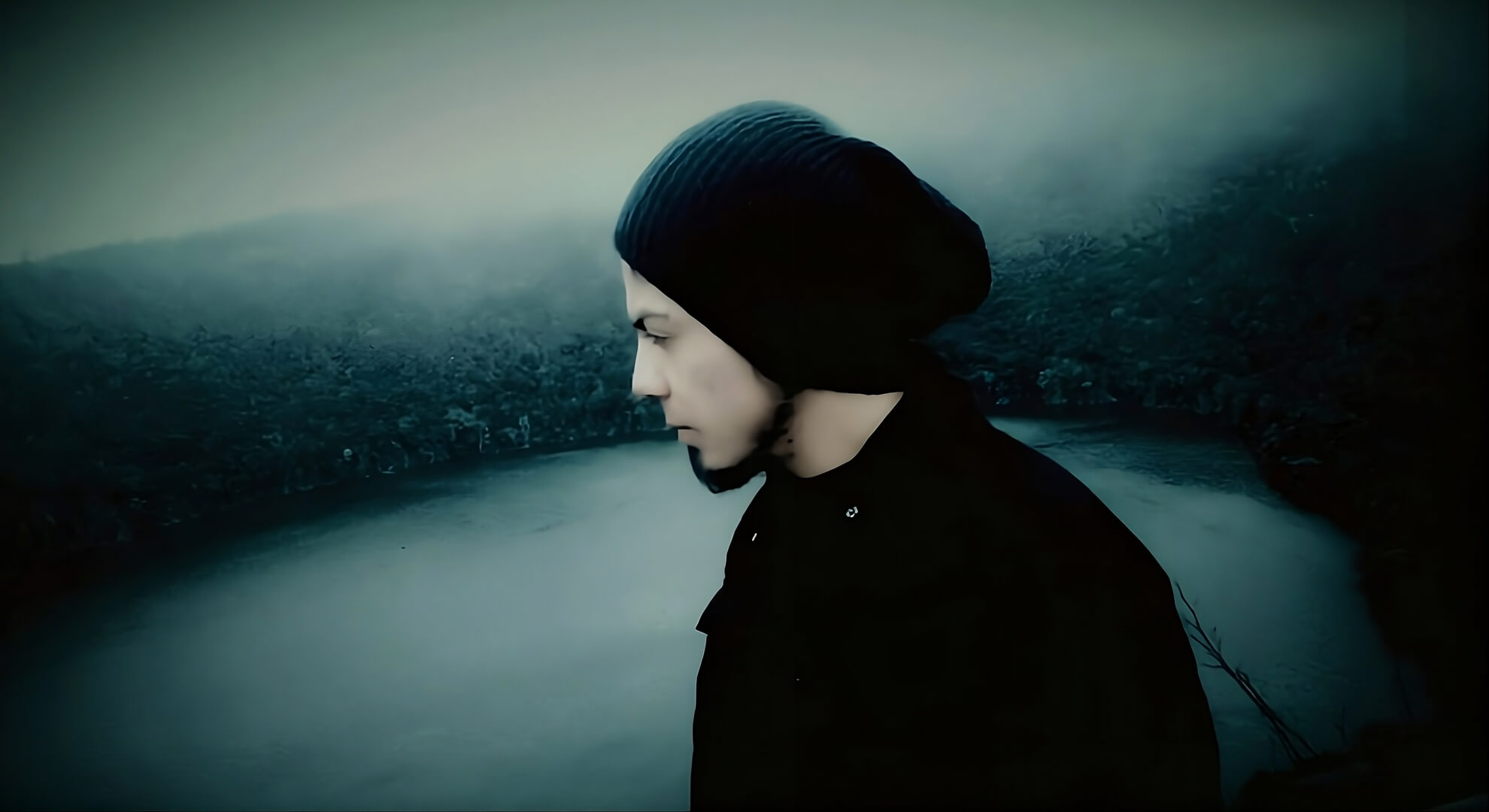
The visual style of the film mirrors the nocturnal aesthetics of the group and employs the unique architecture of Balve Cave to create an immersive stage presence. The production also features the work of Frédéric Duarte, who documented the landmark ‘Rive-Gauche’ performance of the band in 2014, ensuring a sense of historical continuity for the project.
For the subcultural chronicler, the film offers a rare window into the battlefield of the live show. Julia views the stage as a space where the magic and tragic elements of the human enigma are most potent, and the direction of Pjetra captures this duality. The presence of the band in such an organic, prehistoric setting reinforces the idea that the music is not a digital product but a ritualistic event that requires physical presence and geological gravity to be perceived in its totality.
The editing and visual effects provided by Pjetra ensure that the aesthetic of the film matches the refined minimalism of the ‘Mond’ era, highlighting a creative consolidation that is both clear and confident.
Dark Romance across the Parisian Nocturne
To inhabit the world of Soror Dolorosa is to engage with a broader Parisian lifestyle that is currently experiencing a significant gothic revival. In 2025, the fashion industry has decisively moved toward a Dark Romance aesthetic, with designers such as Rick Owens and Maria Grazia Chiuri for Dior embracing ecclesiastical motifs and chiaroscuro lighting.
This resurgence reflects a hunger for authenticity that is mirrored in the nomadic but active club scene of the city. While dedicated gothic clubs are rare, events hosted at Caves St Sabin provide a ritualistic atmosphere within medieval vaulted cellars, while the Atomic Cat near Bastille serves as a modern focal point for the alternative community.
Other essential hubs include Le Klub, which focuses on dark electronic and industrial sounds, and promoters such as Manic Depression Records, who host DJ sets at Le Piano Vache. These entities bridge the gap between classic post-punk and modern darkwave, supporting local acts as they navigate the shifting tides of the subculture.
Sites such as Caves Le Chapelais offer additional underground spaces for parties within medieval cave settings similar to the environment of Balve. This collective effort elevates the subculture to a beautiful, dark flower, resisting the absence of emotional depth found in the common-sense world and providing a sanctuary for the tradgoth community.
Between the Iron Ghost and the Human Spirit
The creative philosophy of Soror Dolorosa is defined by a series of productive dualities: light and shadow, the sun and the moon, and the aggression of black metal versus the elegance of new wave. Julia and bassist Hervé Carles emphasize that the alchemy of sound cannot be replicated by machines; they view the current obsession with Artificial Intelligence as a threat to the “human soul” and the “essence” of art.
This resistance is reflected in the songwriting process of the band, which Julia claims begins with a vision rather than a mere riff. For him, the goal of an artist is to reach a level of expression that is unpredictable and deeply rooted in personal experience—what he calls the “poetry of truth.”
The band rejects moody caricatures in favor of intense performance, a tension that is managed by maintaining the eye for detail of an international fashion photographer while channeling the blackest parts of the psyche. This duality represents a balance of introspection and energy, protecting the human spirit from digital optimization.
Julia has created a body of work that is as much a spiritual quest as it is a musical career by choosing to remain within the underground project while employing fashion-grade aesthetics. This philosophy ensures that the music remains a manifestation of hidden visions, delivered with a poetical and cathartic intensity that is unique to the project.
Charting the Arc of Change
The setlist for ‘Back to the Cave’ is a strategic plan of the evolution of the band. It features nine tracks from the ‘Mond’ sessions and reworked versions of historical songs from the ‘Aurora’ sessions, which comprise bonus material from the ‘Severance’ era. This blend allows the band to present the current minimalistic and very elegant identity of the group alongside the sad and abrasive deathrock roots that first won the band a following in Toulouse.
The performance begins with ‘But Today,’ which delivers the high-energy, electronic-forward post-punk characteristic of the 2024 era. This is followed by ‘Tear It Up,’ an aggressive and brooding gothic rock track that signifies a milestone for the current sound of the group.
The middle of the set offers the ethereal and melancholic ‘Silver Square’ from the 2013 album ‘No More Heroes,’ providing a touching vocal performance that highlights the emotional range of Julia. The band then revisits its roots with the bass-heavy deathrock revival of ‘Low End’ from the 2009 ‘Severance’ Extended Play.
The atmosphere becomes increasingly cinematic with the auditory experience of ‘Autumn Wounds,’ a track from ‘Mond’ that functions as a dark centerpiece for the film. The performance concludes with ‘Trembling Androgynous,’ a song from the debut Extended Play that represents the culmination of the Sister Pain heritage of the band, tying the prehistoric ritual in the cave back to the foundational mourning of the group.
The Persistence of the Human Alchemy
In this subterranean theatre, the alchemy of Soror Dolorosa achieves its ultimate purpose: transforming the raw, earthy aggression of the origins of the band into a crystalline vision of the future. As the members emerge from the depths, they leave behind an indelible impression on the subcultural environment, reminding us that in the hollows of the world, true beauty is found not in digital perfection, but in the vibrating, tragic truth of the human enigma.
Soror Dolorosa stands as the visionary architect of a dark, romantic future that remains stubbornly, essentially alive by merging the symbolist literature of the past with the electronic shadows of the here and now.
As Soror Dolorosa navigates the shift from the abrasive deathrock of the origins of the group to the crystalline coldwave of the ‘Mond’ era, how do you interpret the Sister Pain identity within the context of your own modern experience—is it a lingering ghost of the past, or a necessary catalyst for finding beauty in our increasingly optimized, digital world?
References:
- Reynolds, Simon. ‘Rip It Up and Start Again: Post-Punk 1978–1984.’ New York: Penguin Books, 2006. ↩︎
- Rodenbach, Georges. ‘Bruges-la-Morte.’ Edited by Pierre-Henry Borne. Brussels: Académie Royale de Langue et de Littérature Françaises de Belgique, 2005. ↩︎
Leave a Reply