

For any artist working within the forbidding kingdom of contemporary black metal, the past is not merely a foreign country; it is an occupying force. The long, cold shadow of the genre’s early 1990s Norwegian “second wave”—a period of mythic transgression and sonic innovation, infamous for its connection to church arsons and a militant anti-Christian ideology—has become both a sacred text and a creative prison. Dominated by foundational acts like Mayhem, Darkthrone, and Emperor, this era cast a template so powerful that, more than three decades on, the scene is crowded with acolytes meticulously recreating its gestures. In this blizzard of homage, the emergence of a truly distinct voice is a seismic event.
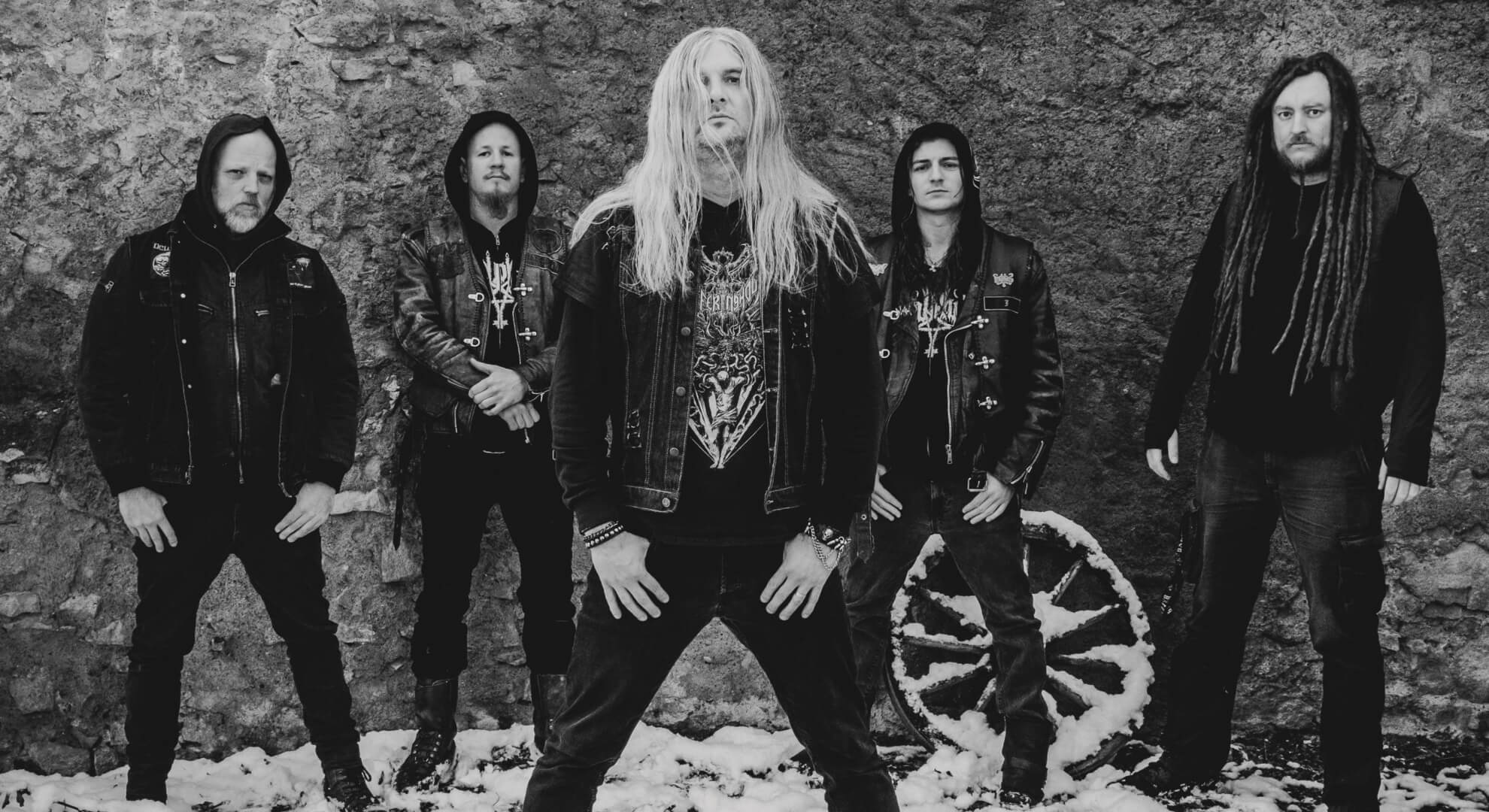
Enter Thron, a quintet from Germany’s Black Forest. Operating with a certain distance from the original Scandinavian maelstrom, they have long approached the form less as primal screamers and more as thoughtful curators of its legacy. Their work, indebted to the icy, melodic strain of Swedish progenitors like Dissection, has consistently demonstrated a meticulous craftsmanship that favors structure over raw fervor. Theirs has been the art of perfecting a known form.
With ‘The Serpent’s Path,’ the lead single from their forthcoming fifth album, ‘Vurias,’ due October 31, 2025 from Listenable Records, Thron presents evidence of a profound evolutionary leap. The song and its accompanying video are not just new material but a potent artistic argument. Thron has grown weary of curation.
They are charting a new course, proposing that the path forward for black metal is not a linear progression away from its hallowed past, but a serpentine coil—a conscious, intellectual return to its foundational influences to shed the dead skin of imitation and rediscover the venomous, philosophical potency within.
The Sound of Transformation
The architecture of ‘The Serpent’s Path’ is a masterclass in controlled volatility, built on the tension between primal aggression and majestic, atmospheric depth. The track opens not with a percussive assault but with an eerie, funereal acoustic passage, a quietude that makes the subsequent explosion all the more visceral.
When the fury is unleashed, it is a calibrated storm. Furious blast beats provide a relentless engine, but they are counterpointed by tasteful synthesizer layers that add harmonic color without overwhelming the core intensity—a technique perfected by antecedents like Emperor.
At the song’s heart is the interplay of twin guitars, a signature of the Swedish style the band has long favored. One carves out acerbic, tremolo-picked riffs of pure hostility, while the other weaves icy, melancholic melodies that feel both triumphant and tragic. Anchoring this is the formidable vocal performance of Samca, a torrent of the throaty raspiness the genre demands, a constant reminder of the music’s savage core.
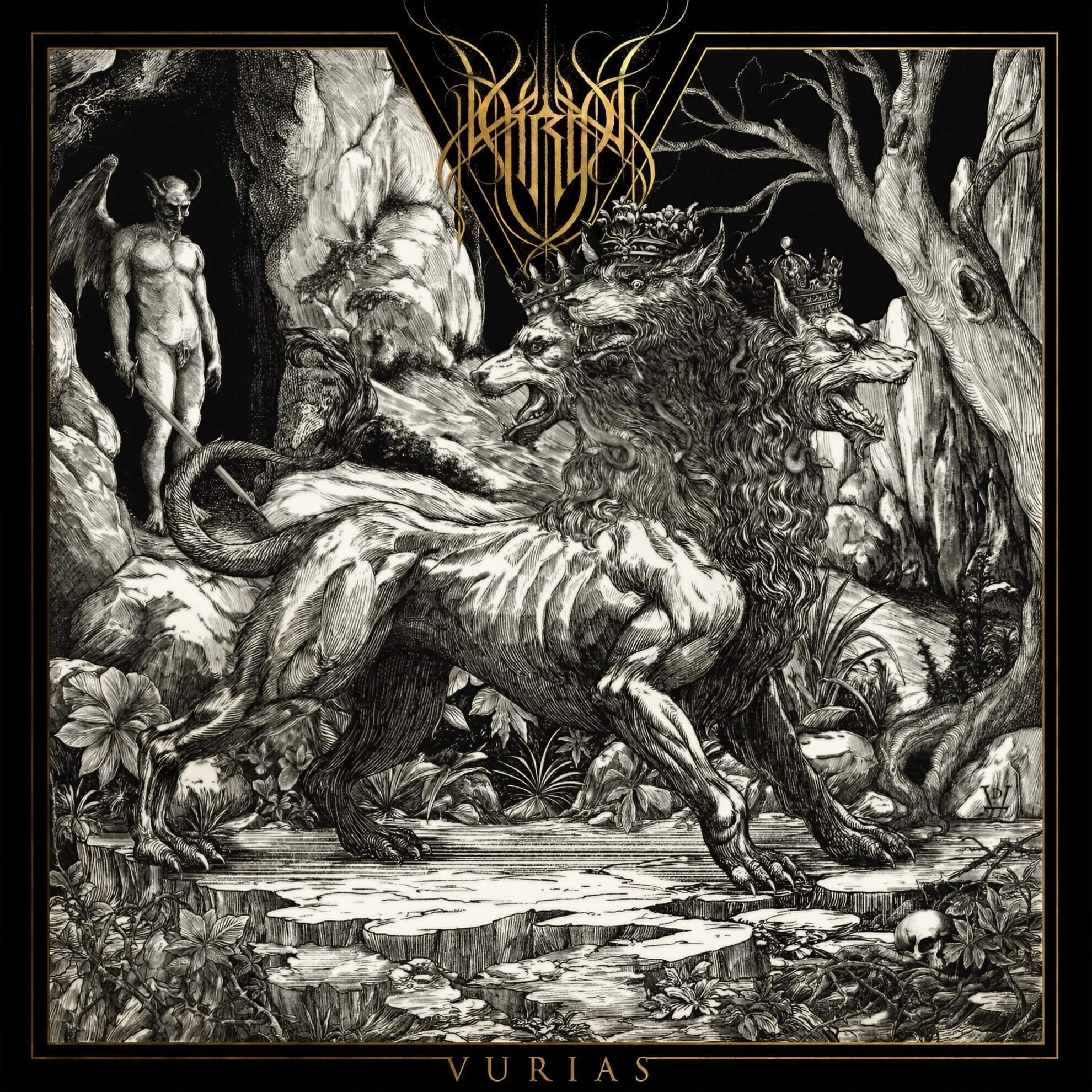
This soundscape is a significant evolution. The band’s 2023 album, ‘Dust,’ was a highly accomplished work, but one steeped in the grand traditions of heavy metal, its sound clearly drawing from Judas Priest and the ‘90s Swedish scene. It was masterful homage. ‘The Serpent’s Path,’ however, signals a conscious pivot toward a darker and more volatile sound, one where those classic influences are more of a faint echo than a defining feature. This is a band moving from proficiency to prophecy.
The most telling evidence of this new ambition is the expansion of their sonic palette. ‘Vurias’ promises instruments far outside the traditional black metal toolkit, including saxophones, Hammond organs, and vintage synthesizers. This is not gimmickry, but a move rooted in the band’s own influences.
Guitarist PVIII has cited 70s progressive rock titans like King Crimson and Pink Floyd as personal favorites. Their inclusion retroactively heals a schism in heavy music, reconnecting black metal to the ambitious, experimental spirit of the very era that birthed its parent genre.
Thron’s experimental turn is not happening in a vacuum. It mirrors a broader, vital movement within extreme music, where bands are increasingly dismantling genre purism.
From the psychedelic, jazz-infused explorations of Finland’s Oranssi Pazuzu to the dissonant, avant-garde art-deco nightmares of New York’s Imperial Triumphant, a new vanguard is proving that metal’s darkest corners can be home to its most forward-thinking artists. Thron’s evolution places them firmly within this contemporary current, making their story not just an internal affair, but part of a wider artistic dialogue.
The Shadow of Bergman
The visual language of black metal is as codified as its sonic one: grainy monochrome, desolate landscapes, the iconic mask of corpse paint. It is an outward expression of misanthropy and cold fury. The music video for ‘The Serpent’s Path,’ filmed by Oliver König, operates within this tradition but aims for something far deeper than a band in the woods performance.
The key to its ambition lies with one of the genre’s most profound, if often unstated, thematic influences: the cinema of Ingmar Bergman. While much of black metal’s visual bedrock was built on a stark, monochrome look reminiscent of Bergman’s cinematography, the video for ‘The Serpent’s Path’ injects this tradition with the lurid, fiery glow of torchlight.
Its visuals, dominated by deep reds and stark shadows, translate Bergman’s relentless exploration of death, faith, and psychological torment into a more visceral, modern language. The bleak settings and suffering figures remain, but the black-and-white austerity is replaced with a fiery, feverish intensity. Still, the cloaked figure of Death from The Seventh Seal remains the clear spiritual ancestor to the specters that haunt the genre’s imaginary.
The song’s lyrical focus on inner torment, chaos, betrayal, and isolation is pure Bergman. It bypasses the genre’s more cartoonish posturing and taps directly into the existential dread that animated his films. The video, then, is not a narrative but a piece of small-scale existential theater.
The stark lighting and oppressive landscapes are not backdrops but externalizations of a psychological state. Thron uses the genre’s visual language to explore not mythological horror, but the more unsettling horror of the human condition, engaging with Bergman’s profound questions rather than simply brandishing the genre’s established answers.
The Serpent’s Tongue
If the music enacts a transformation and the visuals frame it in existential dread, the lyrics articulate its guiding philosophy. The words to ‘The Serpent’s Path’ function as a remarkably self-aware meta-commentary on the very process of artistic renewal.
The song’s narrative suggests a conscious break with a former identity and, by extension, a former mode of creation. This act is framed not as destruction, but as rebirth, challenging the romantic nihilism common to the genre with a powerfully defiant statement in favor of renewal. It replaces the notion that an ending must be a decay with the possibility of transformation.
The central image of the serpent is key. In many esoteric traditions, the serpent is not a symbol of pure evil, but of cyclical renewal, wisdom, and the integration of opposites—the Ouroboros. The song’s invocation of the serpent is a plea for clarification and healing, a purging of flawed perception. This is a far more nuanced and philosophically rich symbol than the inverted crosses that populate much of the genre’s lexicon.
The song’s title and themes articulate the nature of their proposed path. It is not linear progress, but a circular journey that constantly returns to its origins, each time on a higher plane of understanding. The “shed skin” implied by the song’s narrative is the band’s earlier, more derivative sound. The “serpent’s path” is a prescription for the genre’s survival: renewal not through revolution, but through a deeper re-evaluation of its own history.
Conclusion
‘The Serpent’s Path’ is a formidable achievement where every element serves a central, complex idea. The music enacts a sonic evolution from homage to synthesis. The visual concept frames this transformation as a psychological necessity. The lyrics provide a philosophical key.
With this single track, Thron argues that the future of a storied genre like black metal lies not in ignoring its monumental history or in slavishly repeating its catechisms, but in a more profound engagement with its foundational elements.
In a genre so often defined by the nihilistic fury of youth, this is a work of profound maturity. It is an affirmation of the idea that the most extreme forms of music can be vessels for the most sophisticated ideas.
Thron has proven that even after three decades of winter, the frozen kingdom still has uncharted territory to explore—not by looking ever forward, but by looking deeper within.


Leave a Reply