


In the strange and often misunderstood history of heavy metal, the most profound evolutions have been driven not by corporate strategy, but by ideological fervor and chaotic chance. This is the lesson of Cacophonous Records, a small, fiercely independent British label that, for a few critical years in the mid-1990s, served as the unlikely incubator for the genre’s most theatrical and ambitious impulses. To truly grasp how extreme metal grew from a brute, aggressive sound into a form capable of symphonic complexity and literary depth, one must consider the deeply flawed, yet essential, role of this chaotic enterprise.
Every scene needs its true believers, especially when the scene itself is all but dead. By the early 1990s, this was the state of British heavy metal: a once-proud empire left moribund, its relevance gutted by the plaid-shirted ascendancy of North American grunge. While a musical and ideological conflagration was consuming Norway in the form of black metal, Britain felt like a silent, forgotten outpost. It was precisely this spiritual vacuum, not a commercial one, that drew the attention of Neil Harding, a young mail-order manager at a London record shop.
Harding, operating under the alias “Frater Nihil,” was a man whose ambitions were more philosophical than fiscal. His modest initial plan—to release a series of 7-inch singles from obscure international bands like Japan’s Sigh and Greece’s Kawir—was merely the scaffolding for a far grander, more audacious project: to launch an ideological crusade, a self-proclaimed “Satanic war” on dogma from the heart of a country that had forgotten how to rebel.
The Foundational Text: The Cradle of Filth Pact
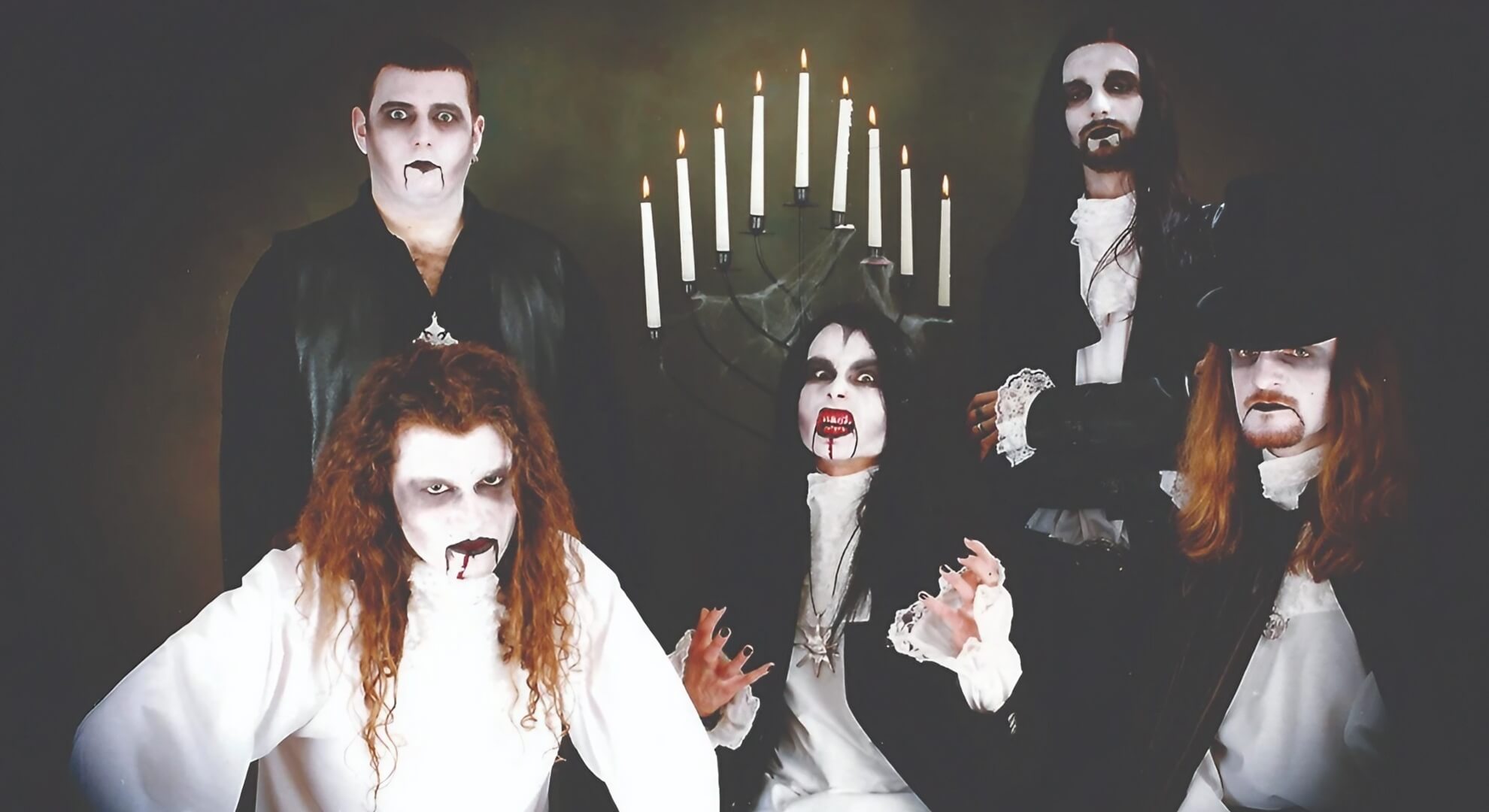
That crusade found its voice through a piece of unsolicited mail. A demo tape titled ‘Total Fucking Darkness,’ left at the shop for Harding, was the work of a theatrically-minded band from Suffolk called Cradle of Filth. The reaction was absolute. “Cradle were the first band that you listened to and thought, ‘This is the future,’” he would later recall.
The pivot was immediate. Over beers, a pact was forged, and the 7-inch plan was scrapped in a high-stakes gamble on this one unknown act. The energy was so chaotic and creative that a planned EP session, produced by drummer Nicholas Barker, evolved into a full-length album in a single day when Barker not only produced the music but also joined the band.

The resulting record, ‘The Principle of Evil Made Flesh,’ released on February 24, 1994, was far more than the label’s first full-length; it was its foundational text. Assigned the historic catalogue number NIHIL1, the album and the label became indivisible. Everything that came before was mere prologue.
Cacophonous’s identity—from its name to its occult aesthetic—was now inextricably fused with the vampiric vision of its flagship act. This was made explicit on the album itself. The final, unlisted track, ‘Imperium Tenebrarum,’ is not a song but a mission statement, a spoken-word manifesto delivered by Harding himself.
Over an eerie soundscape, he intones a declaration of war against the status quo, speaking of “burning down temples and marching over dogma.” In an act of breathtaking hubris, the label owner had inscribed his own ideology onto his band’s art. Cacophonous Records had its sermon, Cradle of Filth provided the soundtrack, and extreme metal had a theatrical new sound that would echo for decades.
A Parliament of Horrors
But where the label truly revealed its strange genius was in its curation of the unmarketable, its deliberate cultivation of the eccentric. It offered a platform to Norway’s Dimmu Borgir, whose Wagnerian ambitions were dismissed by purists but would define symphonic black metal with 1996’s ‘Stormblåst.’
It found room for the high fantasy of Yorkshire’s Bal-Sagoth, a band whose obsessions owed more to pulp novels than diabolical tracts, resulting in epics like ‘A Black Moon Broods Over Lemuria’ (1995) and ‘Starfire Burning Upon the Ice-Veiled Throne of Ultima Thule’ (1996). The label’s reach extended to Japan’s avant-garde Sigh and Ireland’s pagan metal pioneers Primordial.
This curatorial vision was an act of sonic rebellion. While the dominant Norwegian scene championed a raw, minimalist aesthetic—an intentionally underproduced, “necro” sound meant to convey pure hostility—Cacophonous championed the opposite.
The label’s key releases were lush, ornate, and unapologetically cinematic. It embraced the keyboard not as a textural afterthought, but as a lead instrument capable of carrying complex, baroque melodies. This embrace of polish and theatricality was a direct challenge to the genre’s prevailing orthodoxy, carving out a space where black metal could be symphonic and literary without sacrificing its transgressive spirit.
This, ultimately, was the label’s singular achievement. It treated the keyboard not as a gimmick but as a serious compositional tool, it legitimized lyrical themes drawn from the worlds of fantasy literature, and it opened a vital pathway for avant-garde experimentation in a genre often policed by purists.
An Arena of Zealots
To appreciate the sheer audacity of the Cacophonous experiment, one must understand the rigid sonic territories its competitors had already staked out. The extreme metal underground of the early 1990s was an arena of zealots, where labels defined themselves by what they championed—and, more importantly, what they excluded.
In the United Kingdom, the old guard had mastered their respective crafts. Nottingham’s Earache Records had cornered the market on sheer, visceral aggression, building an empire on the back of grindcore and death metal. Its spiritual counterpart, Peaceville Records, had perfected a distinctly British form of melancholy, becoming the undisputed home of gothic death-doom.
Even among the newer class of labels, specialization was key. Misanthropy Records, a United Kingdom contemporary, was established to support the controversial “high art” of the Norwegian scene, while on the continent, France’s Osmose Productions became the primary European exporter of raw, unadulterated Scandinavian hostility.
At the ideological epicenter was Norway’s own Deathlike Silence Productions, a cult-like entity that served as the official voice of the notorious “Inner Circle.” Each was a specialist in brutality, sorrow, or purist rage. Against this backdrop, Cacophonous’s bet on the theatrical, the keyboard-drenched, and the fantastically weird was not just a market calculation; it was a defiant ideological statement. It chose to champion the very elements its peers had deemed impure.
The Unraveling: When Ideology Meets the Bottom Line
But the anti-establishment ethos that made the label a creative powerhouse was also the seed of its undoing. A venture built on a purist, anti-commercial philosophy is simply ill-equipped to manage success.
The relationship with Cradle of Filth dissolved into bitter legal disputes over money and mismanagement, culminating in the shelving of their completed second album, ‘Dusk… and Her Embrace.’ To escape their contract, the band recorded a final, obligatory EP, ‘V Empire or Dark Faerytales in Phallustein’ (1996), a work openly described as an “escape-plan” born of contractual spite.
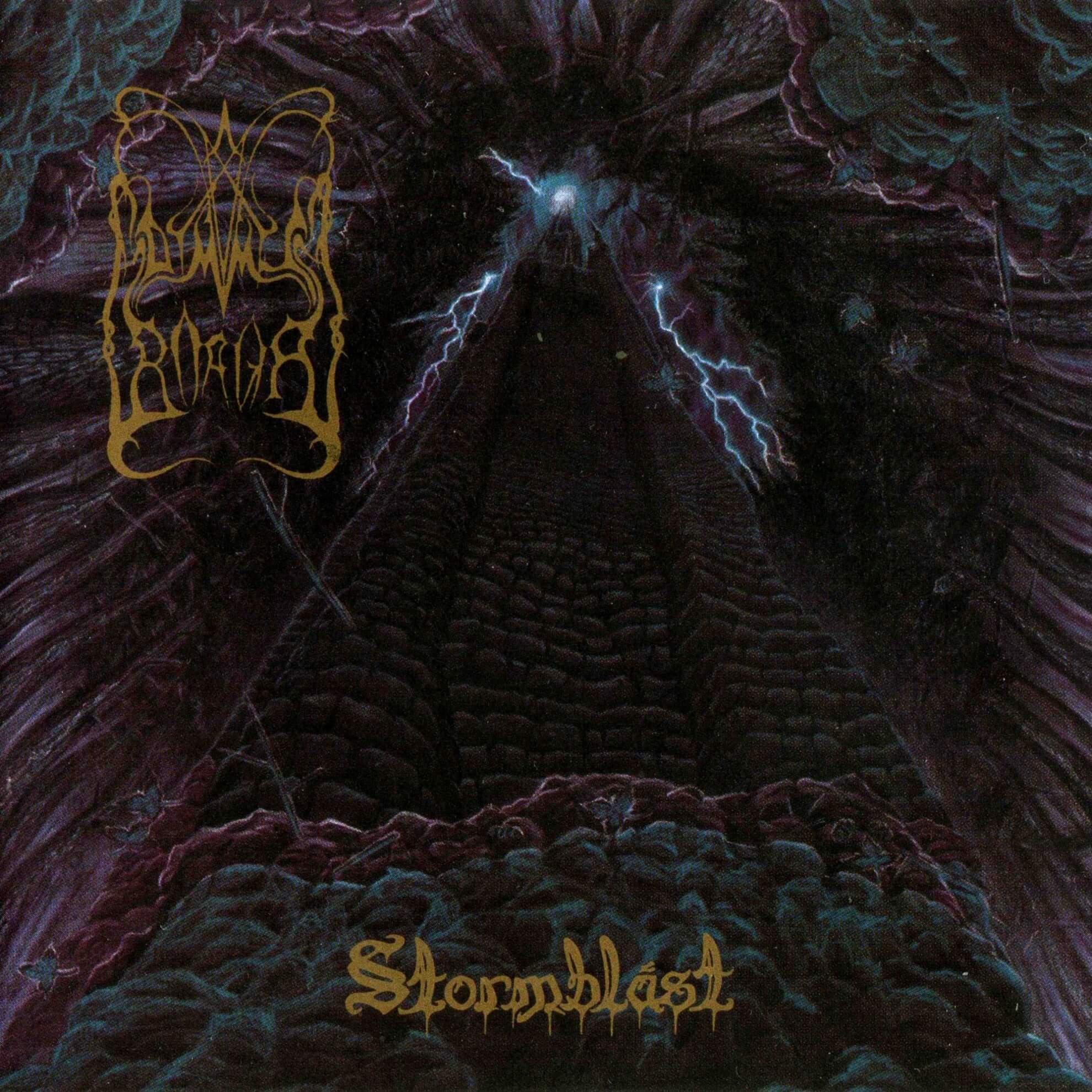
This was not an isolated incident. Dimmu Borgir, whose international career had been launched by the label’s release of ‘Stormblåst,’ would later state that Cacophonous “performed so poorly that they were going to jump ship no matter what,” confirming a pattern where the label’s greatest discoveries were driven away not by creative differences, but by fundamental business failings.
In a telling incident, the Christian metal band Antestor accused the label of censoring religious terms from their lyrics—a hypocritical act for an entity founded on a mission of “marching over dogma.” The unraveling was inevitable. Cacophonous faded into dormancy, a casualty of its own founding principles.
Echoes in the Abyss: A Complicated Reconciliation
Yet the story does not end there. After a long silence, Harding resurrected the label in 2016, making a nod toward the future by signing new acts like The King Is Blind. But the relaunch’s true purpose was an act of historical curation.
This culminated in the official 2016 release of ‘Dusk… and Her Embrace – The Original Sin,’ the legendary lost Cradle of Filth album, an artifact of the very feud that had torn them apart. More than a simple reissue, it was a public burying of the hatchet.
Daniel Davey himself confirmed the rapprochement, stating that “time heals everything” and that it was time to “let bygones be bygones.” This was a savvy act of reputation management, a reframing of a difficult past through a genuine reconciliation, proving that the music’s enduring value had finally eclipsed the memory of old business disputes.
Conclusion
The true, troubling resonance of Cacophonous’s history, however, is found not just in its cautionary tales, but in its lasting sonic footprint. The very theatricality the label championed—the symphonic arrangements, the high-fantasy concepts, the avant-garde structures once deemed heretical by purists—has become a normalized and vital part of the modern metal fabric.
Its risky A&R strategy created a permanent space for ambition and eccentricity, proving that the genre’s creative potential was far broader than its gatekeepers believed. The label’s commercial failures cannot overshadow its artistic triumph: it helped make metal weird, and metal is infinitely richer for it.
In August of 2025, Cradle of Filth, now a veteran act with frontman Daniel Lloyd Davey as its sole original member, was thrown into public turmoil. Departing musicians Zoe Marie Federoff and Marek “Ashok” Šmerda leveled eerily familiar accusations: low pay, manipulative management, and what their lawyer allegedly called “the most psychopathic contract a session musician could ever be handed.” The young artist who once took his label to court over financial exploitation was now the established band leader facing the exact same claims from his own ranks.
Herein lies the potent parable of Cacophonous Records. Its story is a microcosm of the eternal struggle between revolutionary art and the unyielding realities of commerce. The label’s most celebrated creation is now embroiled in a conflict that so perfectly mirrors its own origins, demonstrating a tragic, cyclical truth of the music industry.
The artist becomes the brand, the frontman becomes the CEO, and the same corrosive power dynamics are replicated. The rebellious spirit that Cacophonous championed was ultimately consumed by the very system it sought to defy. The faces and the music have changed, but the devil, it seems, is always in the details of the contract.
Leave a Reply