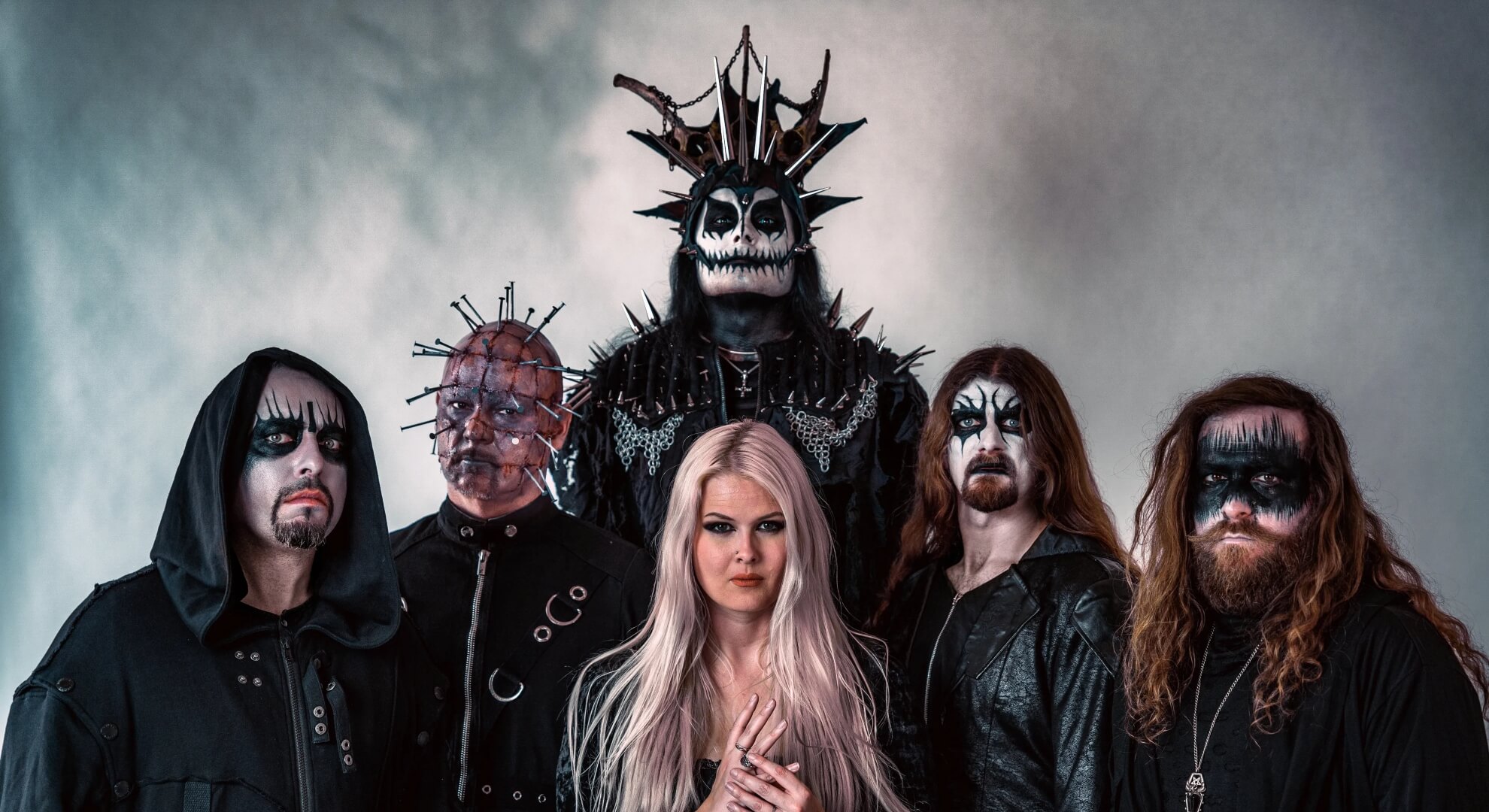


Some musical acts mark time, their careers neat arcs that either ignite and burn out or simply fade to silence. And then there are institutions like Cradle of Filth, which seem to operate on a different temporal plane altogether, inhabiting a perpetual, gaslit twilight of their own meticulous design. For 34 years, the band has endured not merely as a sonic entity but as a remarkably durable fixture of gothic pantomime, a performance art project born of literary horror, extreme metal, and a particularly English strain of high camp. They are, against all odds, still here.
Their persistence is a study in calculated adaptation. The feral, lo-fi black metal of their initial demos eventually gave way to the symphonic grandeur of albums like ‘Dusk… and Her Embrace’ (1996) and ‘Cruelty and the Beast’ (1998), works that polished their aesthetic and projected it far beyond its underground origins.
In the decades since, the band has continued to refine this baroque fusion of blast beats and Byronic romance, all of it anchored by the unmistakable, polysyllabic shrieks of its founder and sole constant, Daniel Davey. To engage with their fourteenth studio album, ‘The Screaming of the Valkyries,’ is to acknowledge this long-running contract with artifice.
The band’s very longevity seems to stem not in spite of its theatricality, but because of it. In an era of disposable digital trends, their unwavering commitment to a self-contained narrative universe has forged a formidable brand, less susceptible to the whims of fashion.
This brings us to the central paradox of Cradle of Filth in 2025. How does a group so defiantly rooted in the aesthetics of the 1990s continue to create vital work? Their label, Napalm Records, has framed the album as both a “summation of the ghosts of Cradle’s past” and a “bold step into the future.” The question is whether the music can bear the weight of that claim, or if this is simply another lavish, bloody act in a play that has been running for a generation.
‘The Screaming of the Valkyries’: A Scream, Not a Story
From its opening moments, ‘The Screaming of the Valkyries’ announces a clear, deliberate shift in strategy. This is Cradle of Filth streamlined, a conscious pivot away from the sprawling, often indulgent opuses of their past. Daniel Davey has spoken of the desire to create a “shorn down album” of memorable songs, a collection built for an age where the playlist often reigns supreme over the long-form narrative. The result is a nine-track, 56-minute collection that feels both muscular and surgically precise.

The production, helmed by longtime collaborator Scott Atkins, is immaculate, lending the music a crystalline power that allows the band’s disparate influences to coalesce. The sound is a finely calibrated synthesis of their entire career: the gothic, orchestral sweep of their mid-90s peak fused with the more direct, guitar-driven attack of their recent output.
This is immediately apparent on the opener, ‘To Live Deliciously,’ which pairs a menacing, spoken-word intro with a galloping, hedonistic momentum. It is a declaration of intent, a libertine’s thesis set to music.
From there, the album moves through a diverse but cohesive set of moods. Its apex may be ‘White Hellebore,’ a track that feels like the quintessential Cradle of Filth composition. It balances thrashing fury with operatic melancholy, driven by dueling guitars and a haunting vocal performance from the now-departed keyboardist Zoe Marie Federoff.
It is the band’s foundational ‘Beauty and the Beast’ dynamic, executed to near perfection. In stark contrast is ‘Non Omnis Moriar,’ the album’s emotional core. It is a mournful, achingly gorgeous ballad that slows the pace to a funereal crawl, suggesting the gothic doom of Paradise Lost, but filtered through Cradle of Filth’s uniquely thorny prism.
It is a moment of profound gravity that demonstrates the band’s impressive dynamic range. Throughout, Davey’s own performance shows a mature command; much of the frantic, rapid-fire delivery of his youth has been replaced by a greater control of cadence and register, allowing him to playfully push lines across bars with a new, deliberate thoughtfulness.
Valkyries, Vampires, and Other Verses
The album’s title conjures images of epic, world-ending finality. In Norse mythology, the Valkyries are the choosers of the slain, their scream an omen of Ragnarok—a potent, apocalyptic frame for a record released into a world rife with its own anxieties. Yet, in a compelling dialectic, the album’s lyrical concerns turn almost entirely inward.
Instead of a concept album about the end of days, Davey has crafted a collection of songs that represent a retreat into what he calls “occult escapism.” The thematic tension between the macro-level threat of the title and the micro-level focus of the lyrics is the album’s most resonant intellectual undercurrent.
This is a consistent retreat into the personal. ‘To Live Deliciously’ is not a cry of despair but a defiant celebration of hedonism, a personal manifesto for indulgence in the face of external chaos. The ballad ‘Non Omnis Moriar’ takes its title from the Roman poet Horace—“Not all of me shall die”—and transforms it into a gothic romance, an intimate promise between two lovers that their bond will transcend the grave.
Elsewhere, the album revisits the band’s foundational mythologies of vampirism and toxic love affairs. The album, then, is not about the scream of the Valkyries itself, but about what one does in its shadow. It argues that a sane response to a world on the brink is to construct a personal sanctuary of meaning, whether through sensual pleasure, eternal love, or dark fantasy.
The Ghost in the Machine
To listen to this album is to experience a moment frozen in time, a potent chemical reaction captured just before its elements flew apart. The record marks the debut of American guitarist Donny Burbage and keyboardist-vocalist Zoe Marie Federoff, while also serving as the final appearance for longtime guitarist Marek “Ashok” Šmerda. The off-stage drama that saw both Federoff and Šmerda depart the band after the album’s completion lends the music an unintended and powerful poignancy.
This context creates a layer of dramatic irony. The record was praised for the palpable chemistry of its lineup, particularly the interplay between the two guitarists and the haunting contributions of Federoff. To know that this synergy was so fleeting transforms the album from a confident statement into an unintentional monument to a configuration that no longer exists.
This forces the central, existential question of the band itself. With a history that includes more than thirty musicians, is Cradle of Filth a band in the traditional sense, or the singular artistic project of Davey, populated by a rotating cast of collaborators?
Rather than a weakness, this constant churn may be the very engine of the band’s creativity. As Davey himself has noted, the injection of “new blood” prevents artistic stagnation. Each record becomes a distinct snapshot of a particular configuration of talent orbiting his central vision.
The “Valkyrie Coven,” as this lineup was known, was not a failure because it was short-lived; its brief existence was precisely what allowed this specific, critically lauded album to be made. The instability is a mechanism for renewal.
Conclusion
‘The Screaming of the Valkyries’ succeeds because it fully embraces the contradictions that have always animated Cradle of Filth. It is an album that looks back, summoning the gothic romanticism of the band’s most beloved era, while pushing forward with a refined, modern, and guitar-driven attack.
It is a work framed by the public terror of apocalypse but filled with the private solace of escapism. Most compellingly, it is a work of celebrated cohesion created by a collective on the verge of splintering apart.
This is a significant, late-career triumph. The band has successfully streamlined its baroque sound for a contemporary audience without sacrificing its core identity, resulting in one of its most memorable and consistently engaging albums of the modern era.
The album affirms the persistent power of a singular vision, a powerful demonstration that, even after three decades of darkness, the theater of Cradle of Filth is still capable of producing moments of genuine artistic potency.


Leave a Reply