

Bogotá operates at elevation — literally and emotionally. Suspended 2,640 meters above sea level in the eastern range of the Andes, the Colombian capital has developed a particular relationship with sorrow: one that is neither ornamental nor performed, but structural to the city’s way of inhabiting the world. The perpetual overcast of Chapinero, the historical weight carried in its streets, the kinetic urgency of a city that has always had to convert its suffering into momentum — these are not incidental details. They are the conditions that make Bogotá one of the few cities on the continent where extreme metal does not simply happen but genuinely means something.
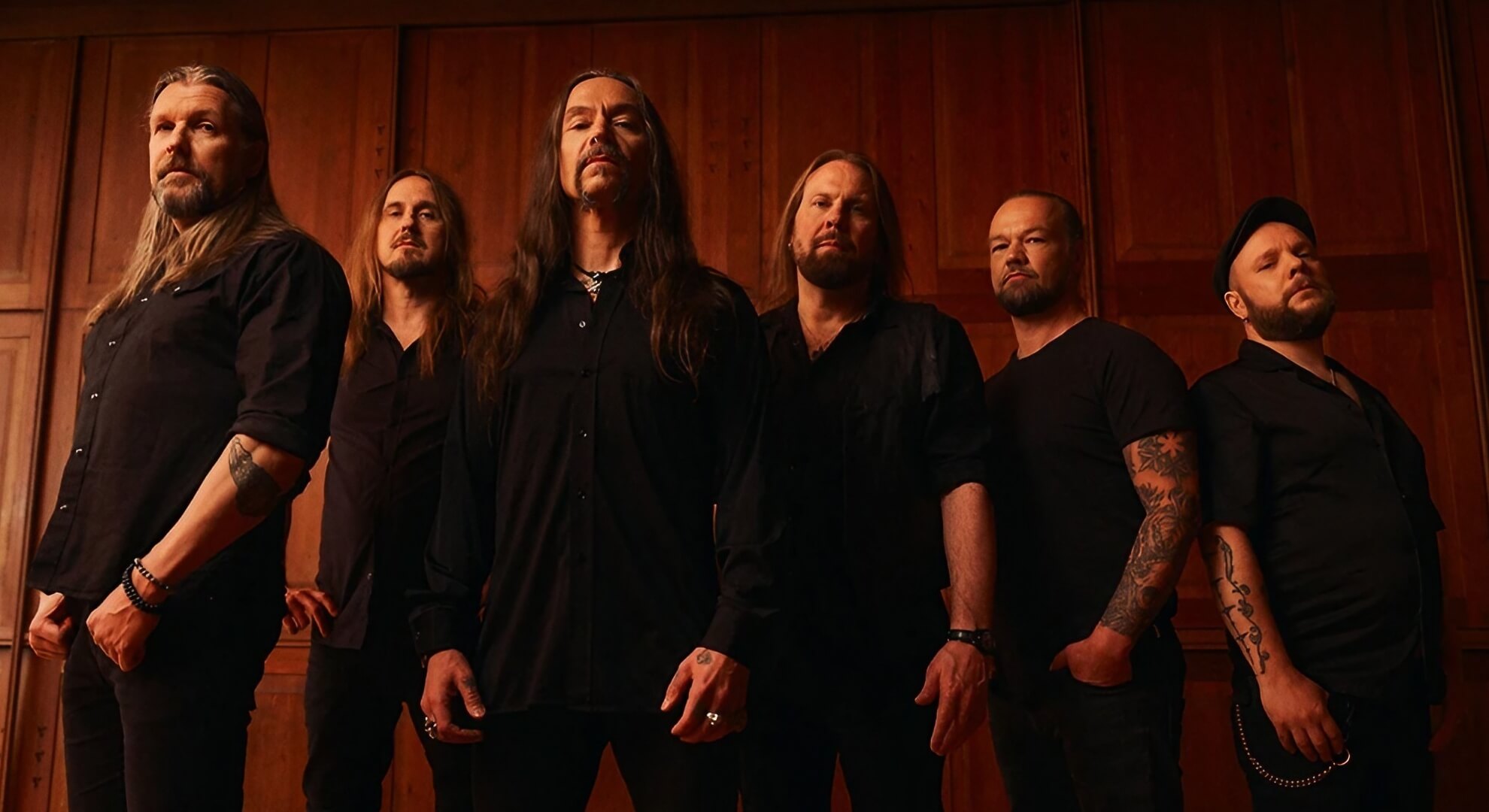
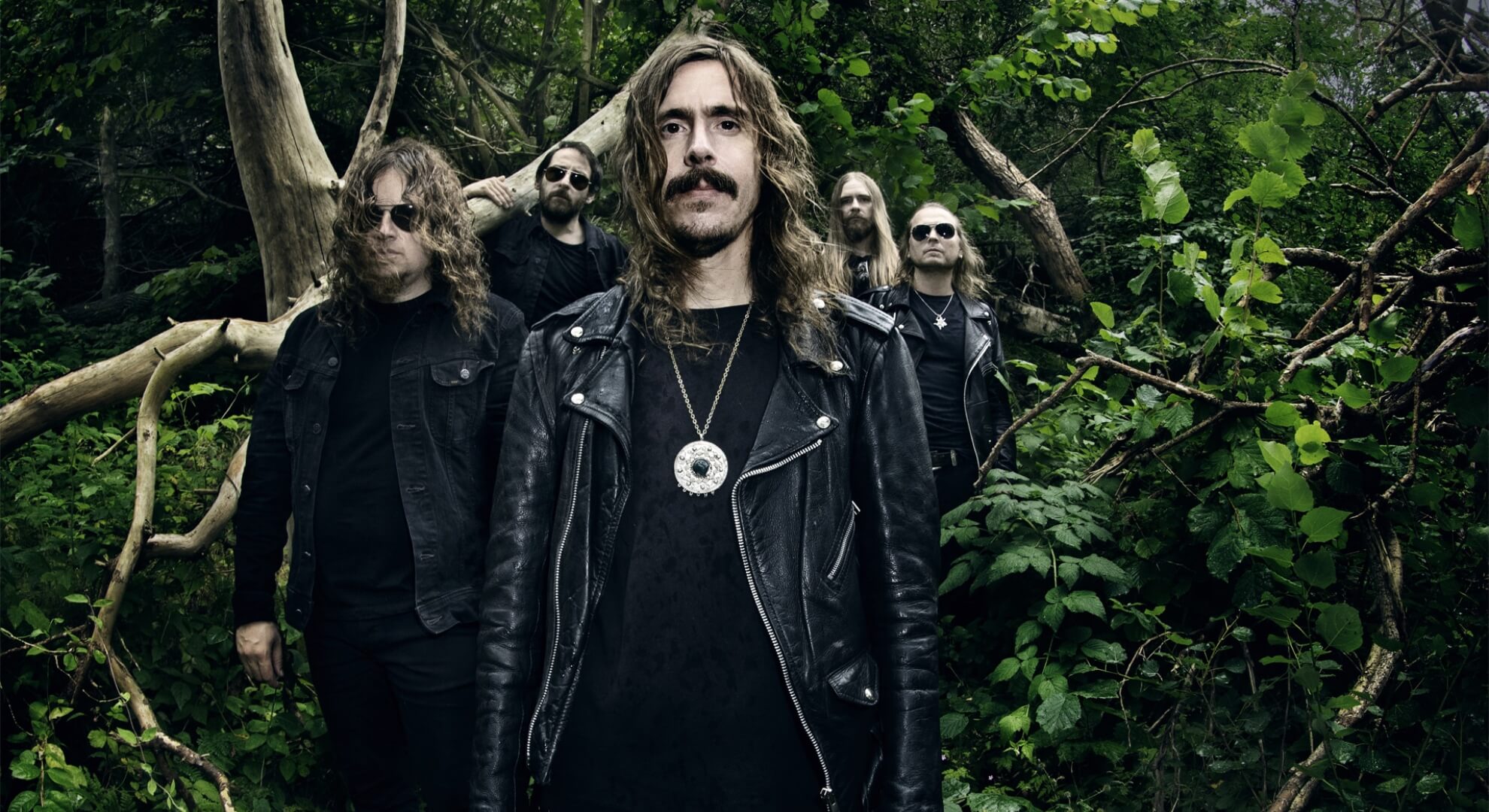
On Friday, October 9, 2026, that condition meets its Nordic counterpart. Amorphis — the Finnish progressive metal ensemble, now in their fourth decade of continuous work — arrives at the Teatro Astor Plaza in support of their fifteenth studio album, ‘Borderland,’ released in 2025. The engagement is the Colombian date of the Latin American Tour 2026, and it arrives at a moment when the ensemble has done something few bands at their stage of career manage convincingly: they have surprised themselves.
Between the Baltic and the Andes
The significance of a Finnish progressive metal act performing in the heart of Colombia rests on a truth that extreme music has repeatedly confirmed: regional suffering generates particular sonic frequencies. The Nordic heavy metal tradition draws from a cultural well fed by long winters, isolating geography, and a philosophical orientation toward darkness that owes as much to Lutheran quietism as to any residual paganism.1 When that specific frequency crosses the Atlantic and rises to altitude, it does not arrive as something foreign. The Andean audience meets it as a dialect of something already known.
As documented in this publication’s coverage of the January 2026 Dark Tranquillity engagement at this same venue, Bogotá’s metal audience does not merely absorb European melancholy — it processes it through local historical experience. The long shadow of “La Violencia” and its aftermath has produced a cultural memory dense with survivalist urgency, one that responds to the same emotional registers that Nordic darkness has long occupied.2 The performance on October 9 stands to extend and deepen that exchange considerably.
From Helsinki’s Death Pits to the Kalevala
Established in Helsinki in 1990, Amorphis began within the unsparing brutality of early Scandinavian death metal. The musicians were technically accomplished from the outset, but the orthodoxies of the genre offered insufficient space for what they needed to say. With ‘Tales From the Thousand Lakes’ in 1994, the band executed a turn toward the ‘Kalevala’ — the Finnish national epic compiled by Elias Lönnrot in the nineteenth century — integrating melodic folk structures and a conceptual framework drawn from Finnish mythology.
The gesture carried cultural weight beyond the aesthetic. It mirrored the Karelianism movement of the late nineteenth century, during which Finnish painters such as Akseli Gallen-Kallela and composer Jean Sibelius turned toward rural mythology and indigenous narrative as instruments of national identity against Russian imperial pressure.3 Amorphis did not borrow that framework so much as continue it, carrying a nineteenth-century cultural argument into the register of late-twentieth-century extreme metal. The effect was music located within a world far larger than the genre — a sustained engagement with a national literature spanning centuries.4
Over three and a half decades, the sextet refined this approach into a form of progressive metal defined by cinematic scope, philosophical seriousness, and an unwillingness to abandon its heavier origins. The two traditions — the guttural and the melodic, the ancient and the contemporary — have always coexisted in the band’s work, held in deliberate tension rather than resolved.
What ‘Borderland’ Sought to Recover
‘Borderland’ is a deliberate disruption of the band’s own recent momentum. The three albums preceding it — culminating in ‘Halo’ in 2022 — were produced under the interventionist authority of Swedish producer Jens Bogren, whose methodology yielded records of clinical precision. Bogren functioned as an effective seventh member, trimming arrangements, dictating vocal layering, and centring the sonic balance on compressed guitar rhythms. Santeri Kallio’s keyboards were frequently subordinated to those requirements.
For ‘Borderland,’ the band relocated to Denmark and worked with producer Jacob Hansen, whose approach inverted Bogren’s: facilitative rather than directive, present only when strictly necessary. Hansen preserved the band’s original demo arrangements and gave Kallio’s keyboards room to expand into territory they had not occupied on record in years. Guitarist Esa Holopainen reflected that the previous production process had brought the ensemble to a point of technical comfort that had begun to feel like automation — that genuine presence had been refined out of the work in favour of a perfect surface. Hansen returned the room to them.
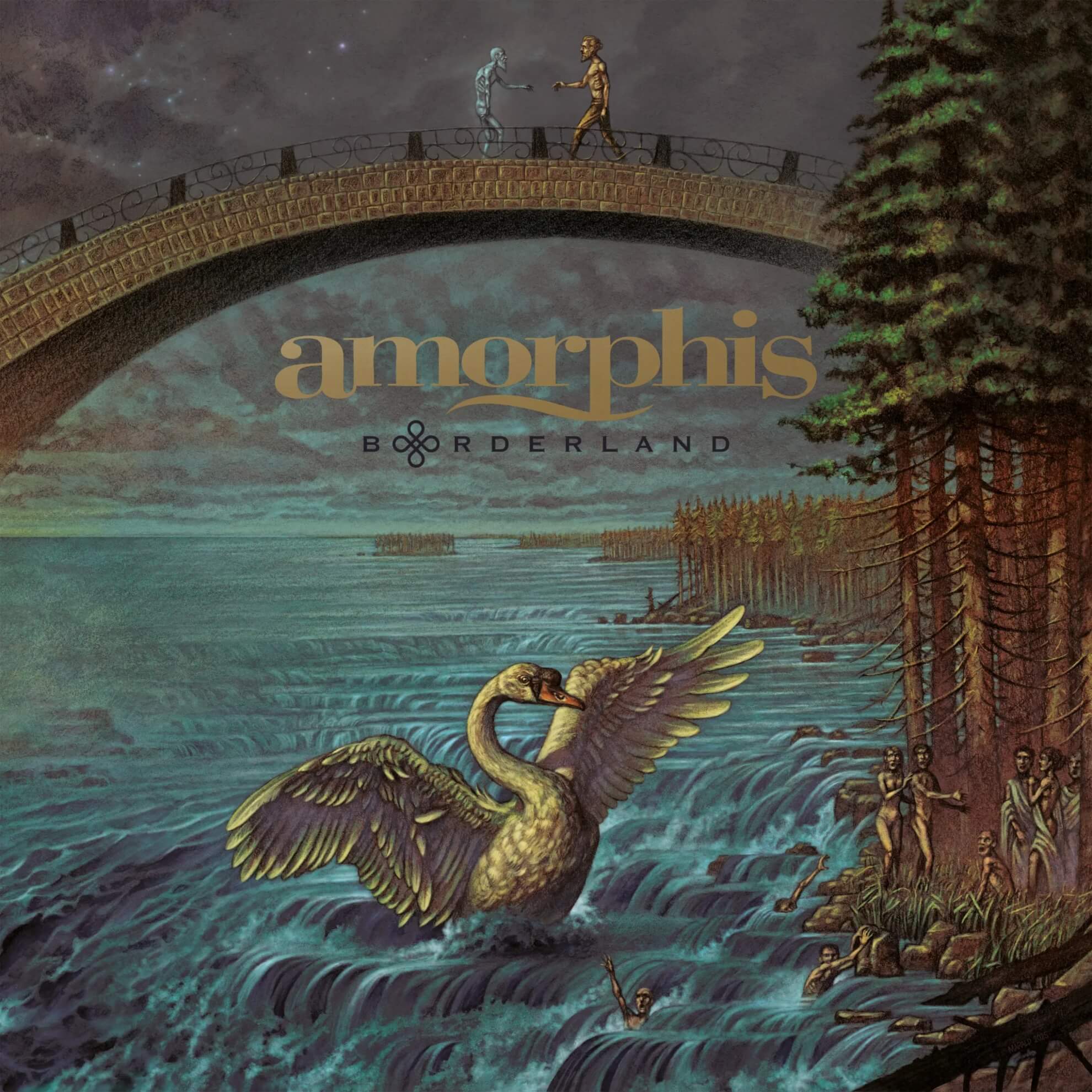
The result is an album that breathes differently from its predecessors. It is wider, more atmospheric, more willing to allow the accidental and the spontaneous — including an entirely unplanned keyboard introduction on ‘Tempest’ that survived into the final mix precisely because it captured something truer than what had been written. Opening with ‘The Circle,’ which deploys delay-soaked guitar textures reminiscent of later Pink Floyd, and pressing through ‘The Lantern’ into darkly synthetic Vangelis-adjacent atmospheres, the album reads as a suite of emotional arguments rather than a sequence of isolated pieces.
Tuonela and the Ancestral Dark
The emotional weight of ‘Borderland’ is anchored by the poetry of Pekka Kainulainen, who drew from the mythology of Tuonela — the Finnish underworld of the ‘Kalevala,’ a dark river separating the living from the dead.5 Kainulainen’s handling of this material refuses ornament. Death, in his framing, is not a terminus but a repository — a place where the accumulated experience of those who endured is held in trust for those who still must.
In articulating the conceptual framework of the album, Kainulainen described Tuonela not as a place of torment but as the river where the living must go to ask their ancestors how they survived the dark, “so that we might learn to survive our own.” For a Bogotá audience whose cultural memory carries its own deep reserve of collective survival, that metaphor requires no translation. The ancestral quiet of the Finnish underworld and the particular strain of endurance that Andean urban history has produced are not the same thing. But they speak to one another across the darkness.
The Teatro Astor Plaza and the Colombian Vanguard
As this publication has consistently documented across its coverage of Dark Tranquillity in January and Draconian in May 2026, the Teatro Astor Plaza has become the principal site at which Bogotá’s formal engagement with extreme metal takes place. Located at Calle 67 # 11-58 in the Chapinero district, the venue accommodates 999 attendees across its seated Platea, Luneta, and Balcón configurations. Its acoustic infrastructure provides the fidelity that the layered, dynamically complex compositions of ‘Borderland’ genuinely require. Progressive metal of this density cannot function in a standing-room club; it demands an environment capable of rendering its full dynamic range without compression or collapse.
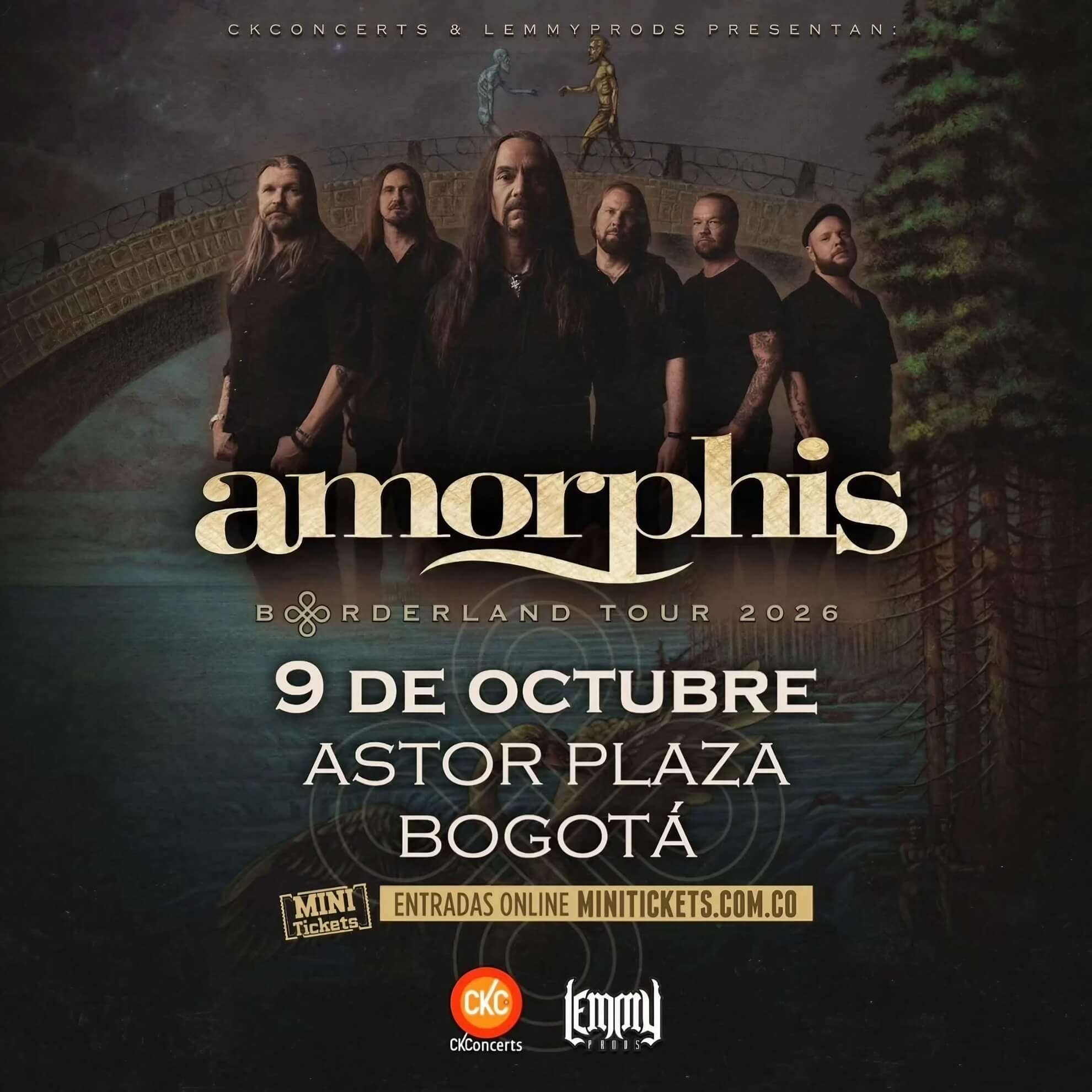
Access to the October 9 performance is currently available at a single general admission tier of 190,000 COP (approximately $48 USD). The local context into which Amorphis steps is not passive. The Colombian heavy music scene carries its own documented history of innovation — most significantly in the Ultra Metal movement that originated in Medellín and Bogotá in the 1980s, a raw, nihilistic current that exerted direct influence on the Scandinavian black metal explosion that followed.
Contemporary progressive acts such as Entropia and symphonic projects such as Tenebrarum represent the ongoing sophistication of a scene that has never been content to receive what Europe produces. These are not audiences consuming a foreign product. They are practitioners in active dialogue with allied work.
The Vocal Duality of the Live Set
The current iteration of Amorphis is built in considerable measure around the vocal authority of Tomi Joutsen, who has fronted the ensemble since 2005. Joutsen commands the full span of the band’s discography with unusual physical control — capable of the guttural register that defined the band’s earliest recordings, among them the 1992 debut ‘The Karelian Isthmus,’ and the cleanly sung melodic lines that give ‘Borderland’ much of its emotional reach. He functions as the instrument through which Kainulainen’s poetry travels from page into room, supported by the rhythmic foundation of bassist Olli-Pekka Laine and drummer Jan Rechberger.
The phenomenon of collective audience chanting — the spontaneous “corear” observed during the January Dark Tranquillity engagement at this same venue, where sections of the auditorium responded not merely with applause but with a full-throated communal voice — is likely to find a particular intensity against the contrasts of Joutsen’s dual register. A guttural phrase followed immediately by a clear melodic line does something that few instruments can manage: it holds grief and grace in the same breath.
What arrives at the Teatro Astor Plaza on October 9 is not a touring band executing a set list. It is the continuation of a decades-long argument — one that Amorphis has been advancing, in various forms, since they first turned toward the ‘Kalevala’ and decided that the darkness of Finnish mythology had something necessary to say to the present. ‘Borderland’ deepened that argument by stripping away the clinical precision of recent years and returning the work to something human-scaled: the sound of people genuinely listening to one another in a room, allowing accident and spontaneity back into the process. That quality, translated into a live setting within a city that has spent generations converting its weight into momentum, does not promise entertainment so much as recognition.
When the lights of the Chapinero theatre go out and the first note of the evening rises, what the two traditions in the room carry in common will matter far more than what separates them.
Which aspect of ‘Borderland’ — the organic warmth of its production, the ancestral weight of Kainulainen’s poetry, or the raw duality of Joutsen’s range — do you anticipate will carry the most differently in the specific acoustic and communal atmosphere of the Teatro Astor Plaza?
References:
- Robert Walser, ‘Running with the Devil: Power, Gender, and Madness in Heavy Metal Music’ (Hanover: Wesleyan University Press, 1993), 2–3. ↩︎
- Gonzalo Sánchez, ‘Bandits, Peasants, and Politics: The Case of “La Violencia” in Colombia’ (Austin: University of Texas Press, 2001), 134. ↩︎
- Glenda Dawn Goss, ‘Sibelius: A Composer’s Life and the Awakening of Finland’ (Chicago: University of Chicago Press, 2009), 89. ↩︎
- William A. Wilson, ‘Folklore and Nationalism in Modern Finland’ (Bloomington: Indiana University Press, 1976), 118–122. ↩︎
- Anna-Leena Siikala, ‘Mythic Images and Shamanism: A Perspective on Kalevala Poetry’ (Helsinki: Academia Scientiarum Fennica, 2002), 175. ↩︎

Leave a Reply