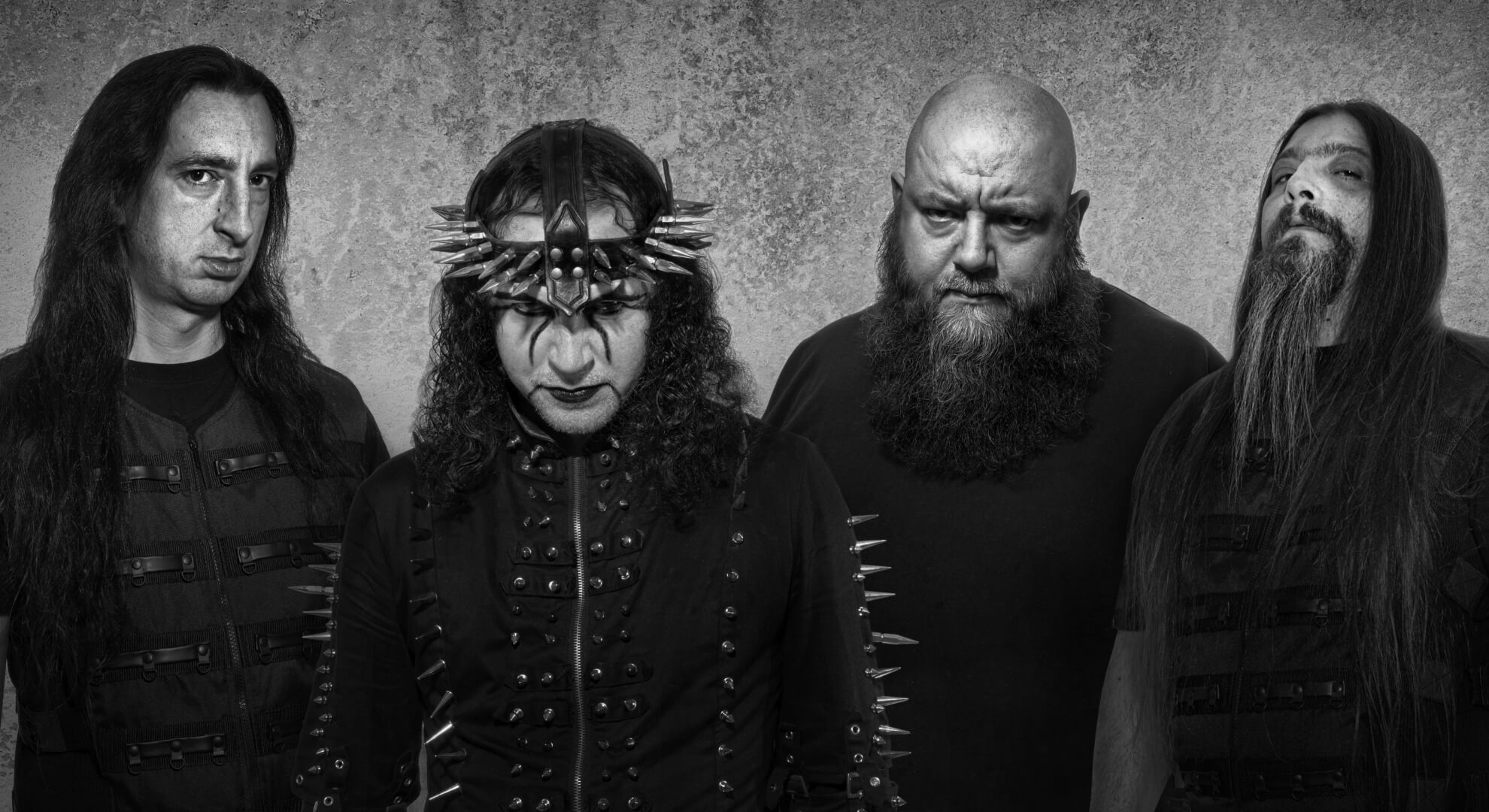


Three decades is a long time for a text to remain active. The myth of Cain — the first exile, Lilith at the margins of what civilization permits, the irreversible weight of the first act of violence between kin — does not diminish with the years that accumulate around it. When Ancient convened at Unisound Studios in Sweden in January 1996, what emerged under Dan Swanö’s direction was not merely a black metal record but a structured narrative instrument: a document of exile and temptation rendered in guttural declarations and synthesizer atmospheres, with female vocals threading through the severity like a second conscience.
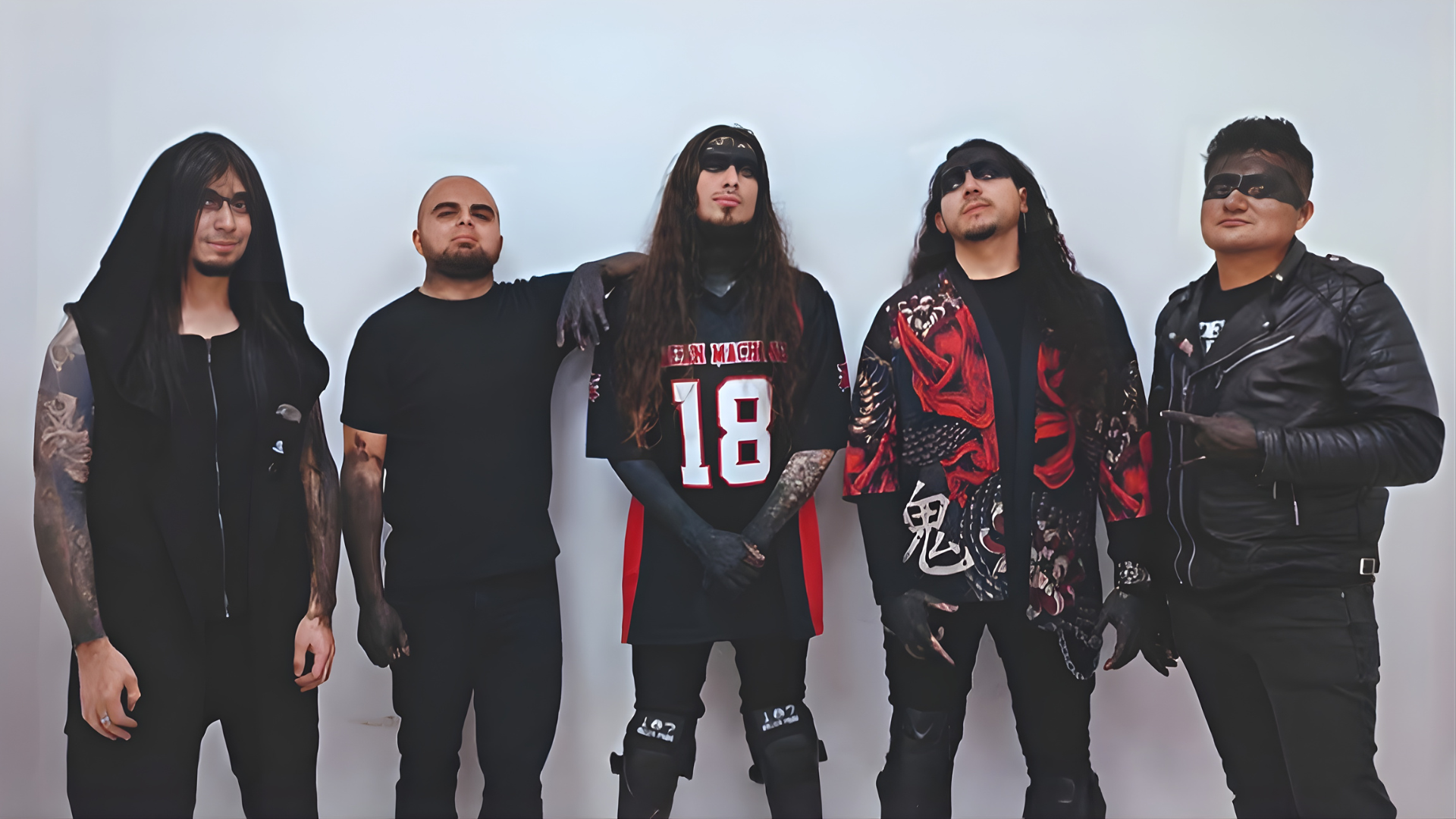
Thirty years after that document’s release on Metal Blade Records, it arrives in Bogotá. At Capital Live Concerts — the 600-capacity room at Carrera 13 #48-90 in the Chapinero district — Ancient performs the album in full on May 2, 2026, as part of the Latin American Tour 2026 — The Cainian Chronicle. The occasion carries a specific charge: Lord Kaiaphas, whose vocal performance defined much of the record’s character and who rejoined the band for live work in 2023, performs here in the role that has always been distinctly his.
What Bergen Assembled and Sent Elsewhere
Ancient began in 1992 as the solo project of Aphazel — Magnus Garset — in Bergen, during the years that defined the second wave of Norwegian black metal and produced some of the genre’s most enduring and most contested records.1 The debut full-length, ‘Svartalvheim’ (1994), released on Listenable Records, occupied the same atmospheric register as early Ulver and Enslaved: raw production, folky underpinnings, a Northern European primitivism that found its gravity in atmosphere rather than technical precision.
The decisive shift came with geography. Aphazel relocated to the United States, where he encountered Lord Kaiaphas — then operating as Lord Vlad Luciferion in Virginia-based acts Grand Belial’s Key and Thokk — and recognised in him a vocal dimension the project had not yet possessed. The addition of Kimberly Goss on vocals and synthesizer, and of drummer Kjetil, completed the configuration that would enter Unisound Studios with Dan Swanö to produce the band’s most discussed record.
The Cainian Text and Its Formal Instruments
‘The Cainian Chronicle’ is a semi-conceptual record organised around the Biblical figure of Cain: expelled from the community of the living, pursued by Lilith, condemned to exist at the margin beyond what human settlement would acknowledge.2
The album’s compositional approach departs decisively from the debut’s primitivism: acoustic passages interrupt the extreme material at considered intervals; Kimberly Goss’s soprano operates in counterpoint to Kaiaphas’s hoarse declarations; synthesizer sequences extend the vocabulary into registers that guitar distortion alone cannot occupy.
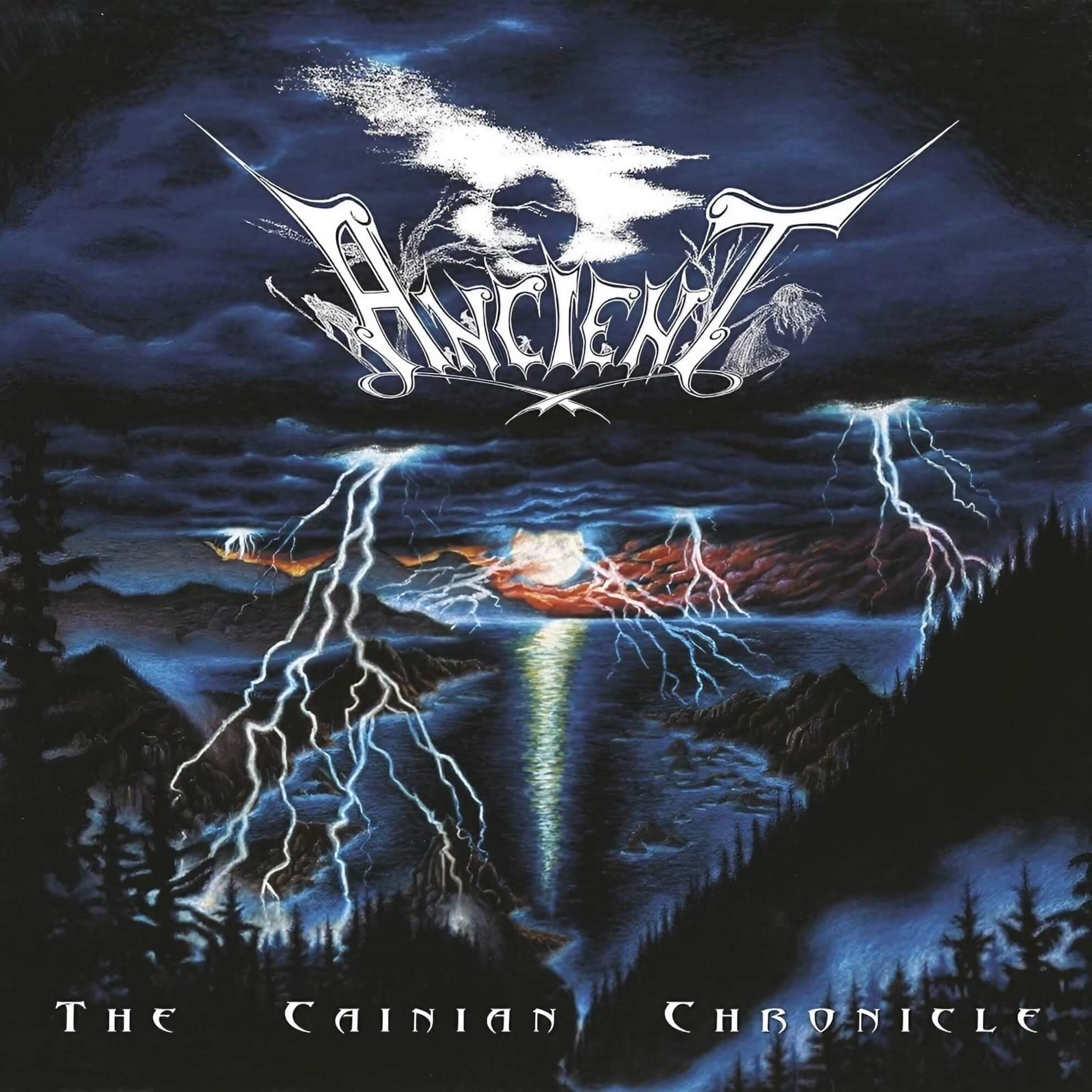
This was the record on which Ancient staked a position in the melodic and atmospheric wing of Norwegian black metal — closer to Emperor’s compositional rigour than to the lo-fi severity that characterised much of the scene’s foundational output.
The multi-part title suite — ‘Part I: The Curse,’ ‘Part II: Lilith’s Embrace,’ and ‘Part III and IV: Disciplines of Caine / Zillah and the Crone’ — functions as a three-movement dramatic structure, and it is this structural ambition, rather than any single track’s immediate impact, that has secured the album’s standing across three decades of critical reconsideration.
The Voice That Defines the Return
Lord Kaiaphas rejoined Ancient in 2023 for the Cainian Chronicle tour, the inaugural performance of which took place at the Cosmic Void Festival in London. In the years since, the tour extended through European stages before arriving at the Latin American leg that places Bogotá on the itinerary in May 2026. His presence transforms these performances from anniversary presentations into something with a different claim on the material: not reinterpretation, but reactivation.
The spoken-word passages that punctuate the title suite, the tonal shifts between the devotional and the ferocious, the specific texture of a voice working with material it originated — these are elements that cannot be replicated by another performer without fundamental alteration of the record’s internal logic. What the Bogotá audience receives on May 2 is not a curated selection of the album’s most celebrated moments but the complete text, performed by the people who authored it.
The Scene That Absorbed the Document
Colombia’s relationship with Norwegian second-wave black metal is not one of casual admiration but of sustained, structured engagement that has developed across three decades of underground activity. The bars and rehearsal spaces of Bogotá’s Chapinero district were circulating these records from the mid-1990s onward, during the same years when the city’s extreme music community was operating under conditions of urban conflict that gave the genre a different kind of urgency than it carried in its countries of origin.3
For that generation, the Norwegian scene provided a formal vocabulary that could be absorbed without submission to its specific cultural mythology. The Bogotá community built its own extreme metal in parallel — acts like Masacre and Internal Suffering whose aesthetic decisions engaged the same formal vocabulary while arriving at conclusions shaped by distinctly local conditions. The community that fills Capital Live Concerts on May 2 carries that accumulated history: thirty years of deliberate investment in a record that has never been merely a genre exercise.
The Room and Its Compact
Capital Live Concerts — at 600 persons, one of the more intimate rooms in Bogotá’s dedicated metal circuit — imposes proximity as a condition rather than an accident of layout. The venue has established a consistent relationship with the extreme music underground of Chapinero, operating within a neighbourhood whose continuity in this tradition extends back further than most of the individual rooms that have housed it.
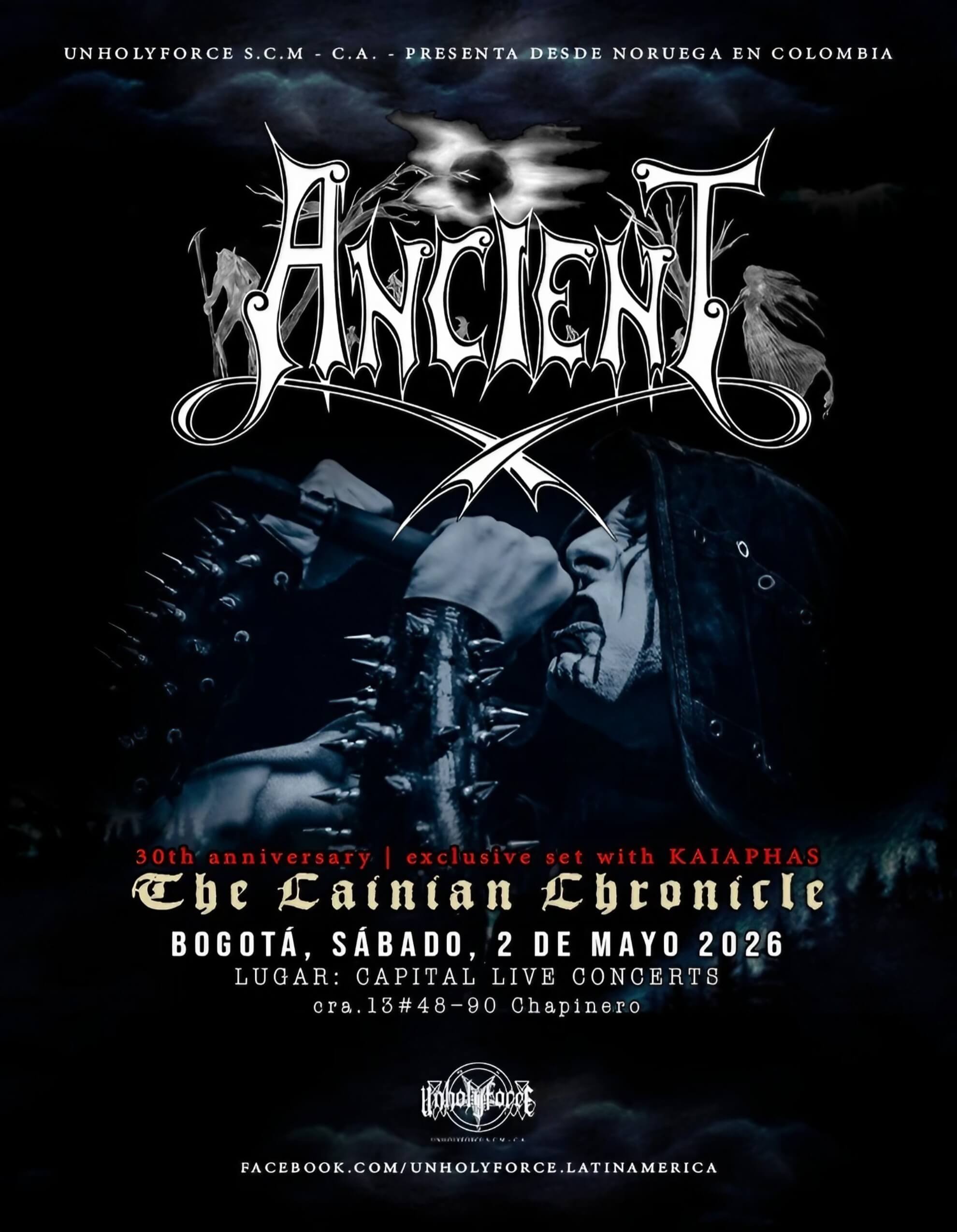
For a performance that depends on the acoustic precision of synthesizer sequences and acoustic guitar interludes — elements of ‘The Cainian Chronicle’ that must register as compositional forces rather than as decorative transitions — the room’s scale is not a limitation but a structural advantage.
The Neogothic Stone at the End of Carrera 13
Approximately 15 blocks north of Capital Live Concerts, along the same axis of Carrera 13, the Basílica Menor de Nuestra Señora de Lourdes stands at number 63-27 in the central plaza of Chapinero. Commissioned in 1875 by Archbishop Vicente Arbeláez, designed in the neogothic style with Moorish inflections, it is the first example of neogothic construction in Bogotá and the second-largest church in the capital — a building that historians of the Gothic Revival have positioned as an original contribution to the movement rather than a reproduction of European models.
Its polychrome stained glass was imported from Germany; its quadrangular tower and pointed arches carry the grammar of a tradition that sought to materialise vertical aspiration in a tropical Andean city. Construction extended from 1875 to 1896, and the basilica was elevated to its present canonical status in 2016 — a duration of institutional presence that gives the structure a gravitational quality distinct from the activity surrounding it on Carrera 13.
A building commissioned to house devotion to the absent, the longed-for, the irretrievable — these are not incidental qualities on the evening a record about exile and Lilith performs fifteen blocks to the south along the same street.
The arrival of The Cainian Chronicle tour in Bogotá in 2026 is not primarily a historical event. It is a live test of whether a document conceived three decades ago — built from the vocabulary of Biblical exile, shaped by a compositional discipline that preferred melodic structure to raw intensity, and given its defining vocal character by a performer now returning after years of separation — still carries the weight its conception was designed to bear. The Chapinero underground does not need to be persuaded of the record’s significance; it has been living with that assessment since the late 1990s.
What May 2 at Capital Live Concerts provides is something the studio recording cannot: the complete text, performed live, in a room whose intimacy ensures nothing is lost between performers and audience. The question the performance will answer is not whether ‘The Cainian Chronicle’ matters. It is whether it burns.
Which dimension of ‘The Cainian Chronicle’ — the dramatic coherence of the multi-part title suite, or the atmospheric severity of ‘At the Infernal Portal (Canto III)’ — holds the greater weight for you as a live proposition, and what does that preference reveal about what you bring to the May 2 performance?
References
- Michael Moynihan and Didrik Søderlind, ‘Lords of Chaos: The Bloody Rise of the Satanic Metal Underground,’ revised ed. (Port Townsend: Feral House, 2003), 155–160. ↩︎
- Northrop Frye, ‘The Great Code: The Bible and Literature’ (New York: Harcourt, 1982), 181–184. ↩︎
- Forrest Hylton, ‘Evil Hour in Colombia’ (London: Verso, 2006), 56–62. ↩︎

Leave a Reply