
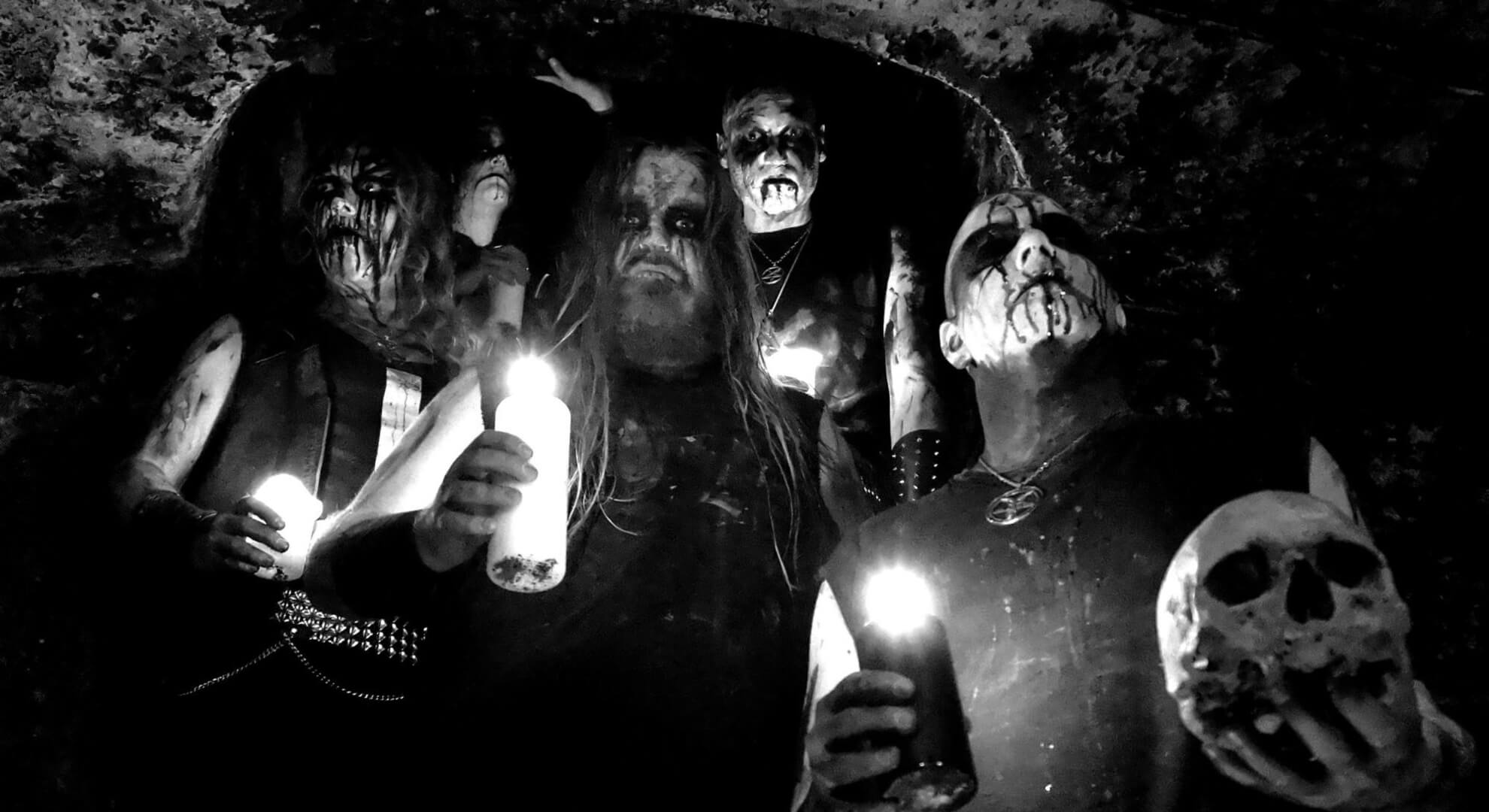


In the biting chill of the Estonian midwinter, where the Baltic winds cut through the medieval spires of Tallinn like a spectral blade, a ritual is preparing to unfold. For the thirteenth consecutive iteration, the Howls of Winter Festival will descend upon the capital, transforming the industrial cavern of Rockclub Tapper into a sanctuary for the black arts.
Scheduled for February 12–14, 2026, this gathering has long eschewed the commercial bloat of the summer open-air circuit in favor of a curated, hermetic experience—a dark journey through the depths of black metal that prioritizes atmosphere over accessibility.
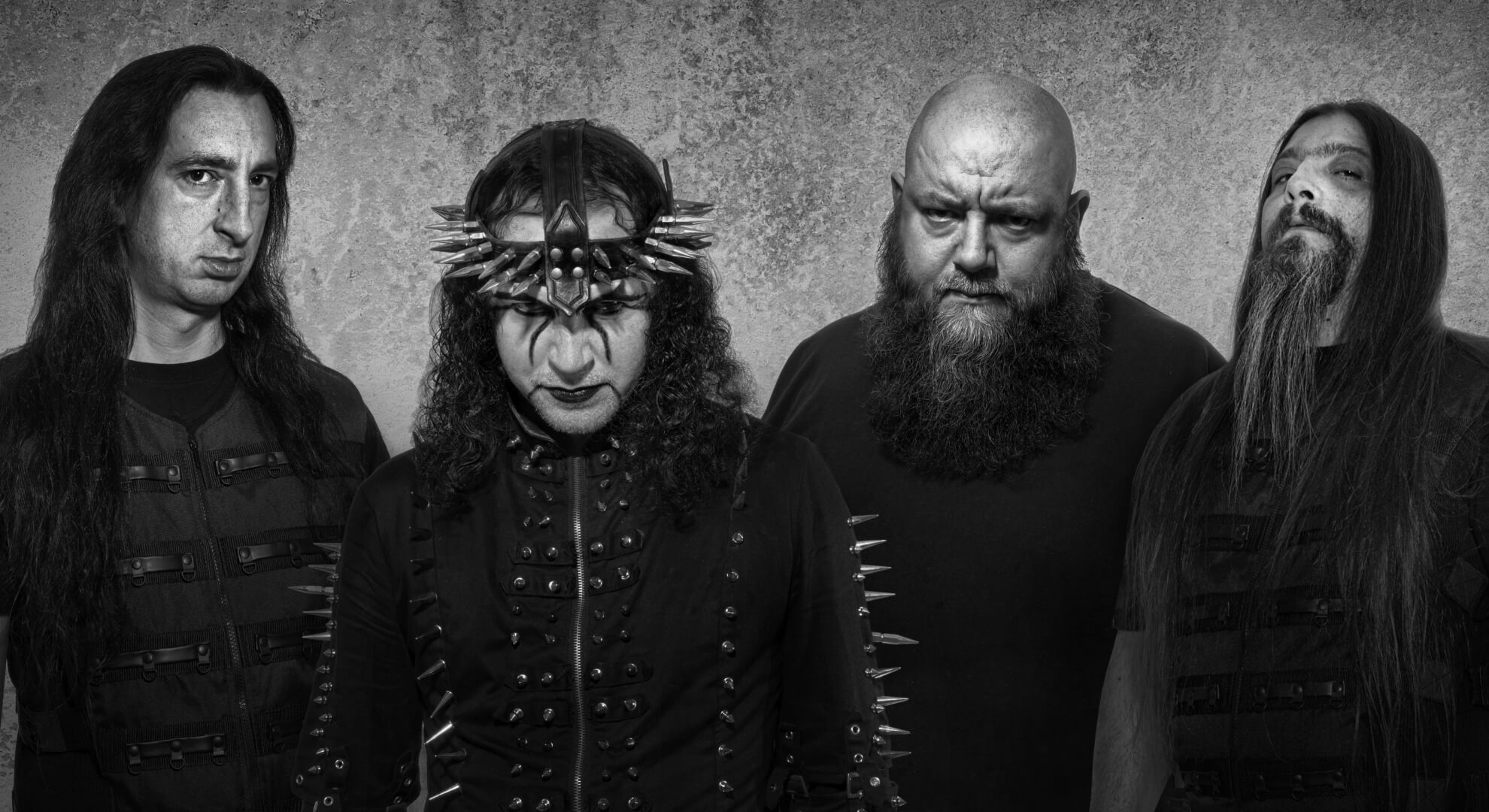
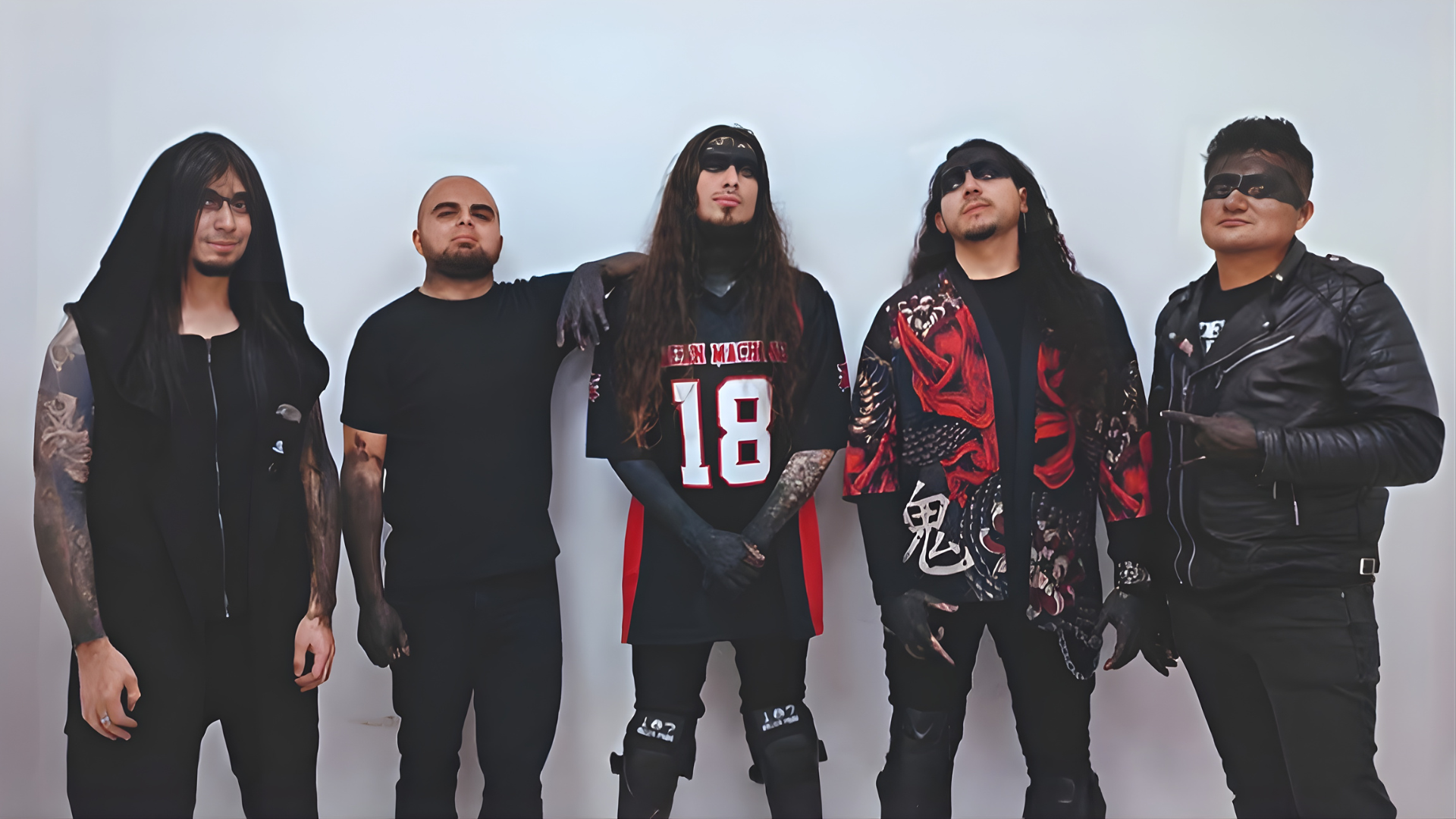
At the apex of this congregation stands Cirith Gorgor. The Dutch veterans, carriers of the flame since 1993, arrive in Tallinn not merely as a heritage act, but as a revitalized force.
Having recently renewed their “pact of blood,” with the influential French label Osmose Productions, the band is poised to unleash a new period of furious and uncompromising black metal upon the Baltic faithful. This performance is more than a gig; it is a statement of intent from a band that has spent three decades refining a sound of ice-cold precision and spiritual glory.
Ancient legacies and the Return to Osmose
Appreciating the impending appearance of Cirith Gorgor at Howls of Winter XIII requires a look west to the Netherlands and south to France. In 2025, the band announced a significant development in their trajectory: a re-signing with Osmose Productions, the label that originally launched their career with the seminal albums ‘Onwards to the Spectral Defile,’ released in 1999, and ‘Unveiling the Essence,’ which followed in 2001.
This reunion is steeped in historical weight. Osmose Productions was the epicenter of the Second Wave explosion, housing titans such as Immortal and Marduk. Within this specific subcultural framework, the re-signing represents a reclamation of “transgressive authenticity,” a concept where artists deliberately “burn the bridges,” to social acceptance in favor of ideological purity.
For Cirith Gorgor, returning to this fold is a deliberate consolidation of their legacy. The band characterizes this move not as a business transaction, but as a “pact of blood,” a phrase that highlights their commitment to a specific, uncompromising lineage of extreme music. It marks a definitive end to their tenure with Hammerheart Records, during which they explored a more nihilistic direction, and a return to the “spiritual glory,” that defined their early, more expansive works.
The upcoming full-length opus, provisionally titled ‘The Sinner and the Devil,’ represents the fruition of this re-alignment. While the exact release date remains fluid, the 2023 single ‘Into the Abyss,’ serves as the harbinger of this new cycle. Carrying the motto “Abyssus Abyssum Invocat”—Hell calls to Hell—the track bridges haunting melodies with blatantly brutal aggression.
This thematic focus on “apophasis”—the use of negative language to define the divine or the demonic—mirrors a broader tradition in black metal where negation is used as a form of “radical affirmation,” of the self against traditional moral frameworks.1
A Pivotal Junction in the Black Metal Trajectory
The Tallinn performance represents far more than a stop on a tour; it is the physical manifestation of the creative rebirth of Cirith Gorgor. Throughout their discography, the band has navigated the tension between melodic grandiosity and raw, unbridled chaos. Early milestones established them as masters of atmospheric scale, while later efforts pushed into a more technical, surgical violence.
This upcoming appearance at Howls of Winter acts as a nexus where these two paths converge. The return to Osmose effectively closes a thirty-year circle for the band. They describe the current phase as a crowning achievement of three decades of madness, a sentiment that reframes their longevity not as endurance, but as a continuous refinement of their craft.
For the audience at Rockclub Tapper, this is an opportunity to witness a band at the peak of their conceptual powers—no longer just participants in a scene, but architects of its enduring traditions. This process of “gatekeeping,” and boundary-drawing is essential for maintaining subcultural capital, as fans and artists alike resist the dilution of the transgressive qualities of the genre by mainstream commercial interests.2
Finding Sanctuary Within the Industrial Cavern
The setting for this revelation is as crucial as the music itself. Rockclub Tapper, located at Pärnu maantee 158g in Tallinn, is not a sterile multipurpose arena. It is a space revered by the local scene for its heavy music atmosphere and specific acoustics.
Unlike the sprawling fields of summer festivals, Tapper offers a “pressure cooker” environment essential for the transmission of the kinetic energy of black metal. This environment facilitates what musicologists describe as “psycho-acoustic construction,” where spatial acoustics influence mental processes and sound perception to create a sense of the “sacred,” within a secular space.3
Previous attendees describe a venue bathed in low-key red backlights, where the air is thick with the scent of Estonian craft beers and the palpable tension of a dark ritual.
For a band such as Cirith Gorgor, whose sound relies on a dense auditory onslaught constructed from rapid-fire tremolo picking and relentless blast beats, the ability of the venue to articulate the sound of the Dutch masters without collapsing into mud will ensure that the intricate melodic structures of their work, such as those found in ‘The Declaration of Our Neverending War,’ retain their majestic power.
The experience is essentially one of “sonic abjection,” where the extreme frequencies and distorted timbres serve to dissolve the boundary between the listener and the soundscape, fostering a state of intense “embodied presence.”4
A Gathering of Tribes Under the Black Banner
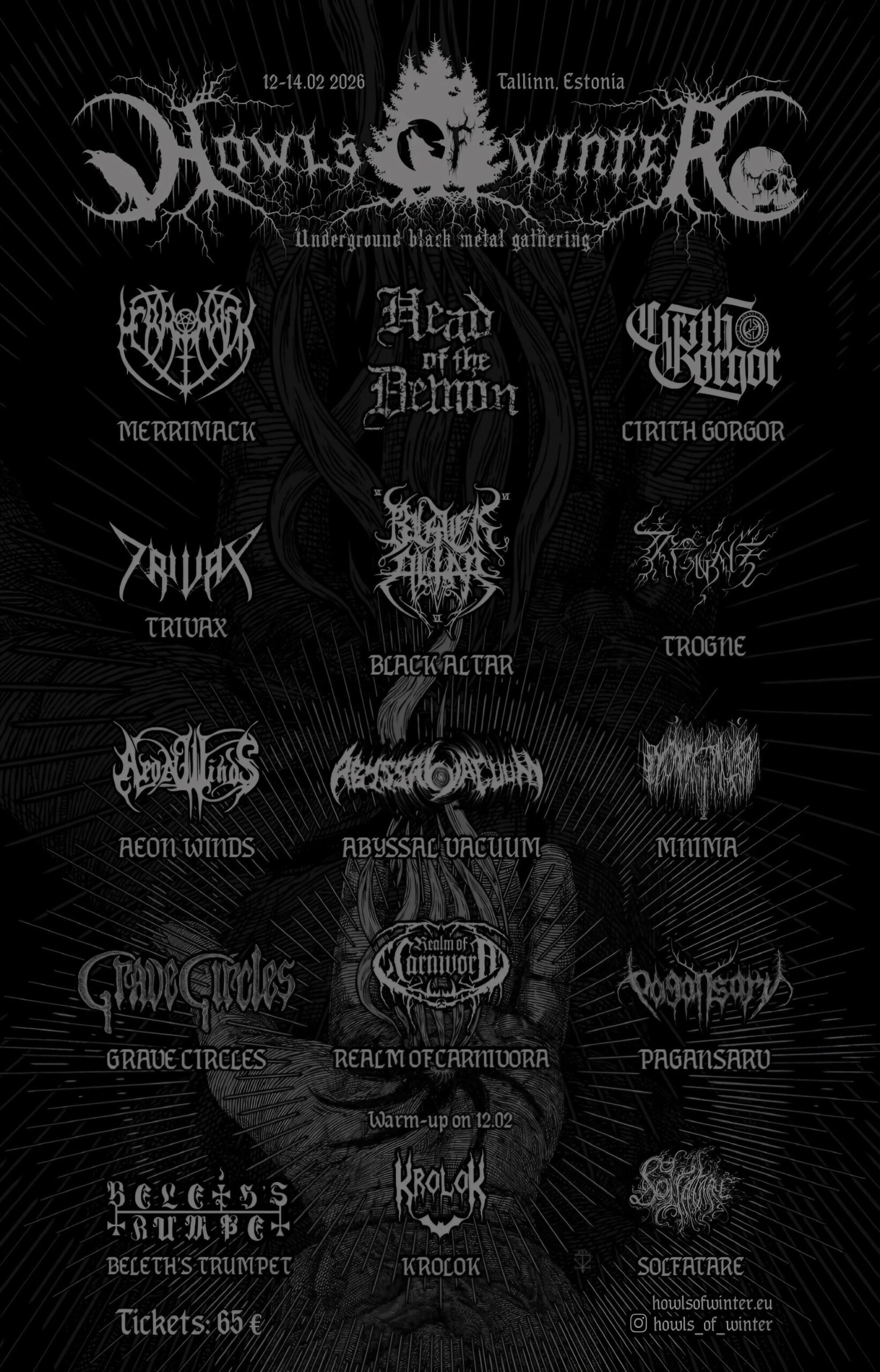
Cirith Gorgor does not stand alone in the frozen dark. The organizers of Howls of Winter have constructed a lineup that balances the Old Guard with the vanguard of the underground.
The roster includes the orthodox French black metal of Merrimack and the occult Polish-British heritage of Black Altar, alongside the cinematic and symphonic textures of Aeon Winds from Slovakia.
The atmospheric depth continues with the doom-laden omens of Head of the Demon from Sweden, while the Greek act Mnima pushes sonic boundaries into the realms of raw noise. Furthermore, the Iranian-British collective Trivax injects Eastern melodies and death metal brutality into the event.
This curation reflects the gold standard of underground festivals: a refusal to dilute the lineup with incompatible genres. It is a gathering of tribes, united under the banner of extreme art.
Entering the Ritual
For those seeking to witness this congregation, tickets are available both in advance and at the venue. A weekend pass may be purchased during the pre-sale for 282,100 COP (approximately $68 USD), or at the door for 347,200 COP (approximately $84 USD).
Those wishing to attend only a single day on Friday or Saturday may secure admission for 238,700 COP (approximately $58 USD), while entrance to the warm-up night on Thursday is set at 86,800 COP (approximately $21 USD).
Guardians of the Steadfast Dutch Tradition
The journey of Cirith Gorgor to Tallinn is also a representation of the enduring vitality of the black metal scene in the Netherlands. Often overshadowed by the Scandinavian giants, the Netherlands has cultivated an idiosyncratic and deeply interconnected scene. This “subcultural network,” relies on the transmission of specific symbolism and meanings to maintain a sense of “authentic identity,” within a globalized metal environment.
Within this ecosystem, Cirith Gorgor plays the role of the steadfast guardian of tradition. While newer Dutch acts explore post-metal textures or solo-project introspection, Cirith Gorgor has maintained the traditional black metal sound since 1993. They are the Dutch veterans who have weathered the trends to emerge as elder statesmen, respected for the integrity and strength of their execution.
Their 2026 itinerary emphasizes this status; following the conclusion of the festival, the band brings its campaign to Popei in Eindhoven on March 21 and the prestigious Steelfest Open Air in Finland between May 14 and 16. Steelfest, known for its strict underground culture, shares a spiritual kinship with Howls of Winter. The presence of Cirith Gorgor at both festivals confirms their position in the upper echelon of the uncompromising European circuit.
The Haunted Pass Opens at Last
When the midwinter darkness settles over Rockclub Tapper, the performance by Cirith Gorgor will represent more than just a headline set; it will be the physical manifestation of a thirty-year cycle of artistic defiance.
Returning to the label and the uncompromising sounds that first birthed them ensures the band is not simply looking backward—they are using the weight of their legacy to shape a more potent future. This ritual in Tallinn is a reminder that in the hermetic world of black metal, true power lies in the refusal to soften.
As the first notes of ‘Into the Abyss,’ resonate through the Baltic frost, the audience will witness the final proof of their central philosophy: that Hell truly does call to Hell, and the most profound truths are found only when one is willing to descend into the cold, unwavering dark.
As Cirith Gorgor prepares to close this thirty-year circle in the frozen dark of Tallinn, which specific facets of their sound—from the haunting melodicism of the early Osmose Productions years to the modern, relentless fury of ‘Sovereign,’—do you believe will resonate most powerfully within the intimate, psycho-acoustic ritual of Rockclub Tapper?
References:
- Niall Scott, ‘Black Metal’s Apophatic Curse: Negation as Affirmation,’ Théologiques 26, no. 1 (2018): 125-142. ↩︎
- M. Selim Yavuz, ‘True black metal: The construction of authenticity by Dutch black metal fans,’ Communications 39, no. 2 (2014): 151-167. ↩︎
- Margarita Díaz-Andreu and Tommaso Mattioli, ‘Psychoarchaeoacoustics for Understanding Ancient Minds and Their Relationship to the Sacred,’ Journal of Archaeological Method and Theory 28 (2021): 412-435. ↩︎
- Woodrow Steinken, ‘Music as Transgression: Masking and Sonic Abjection in Black Metal,’ (PhD diss., University of Pittsburgh, 2018). ↩︎
Leave a Reply