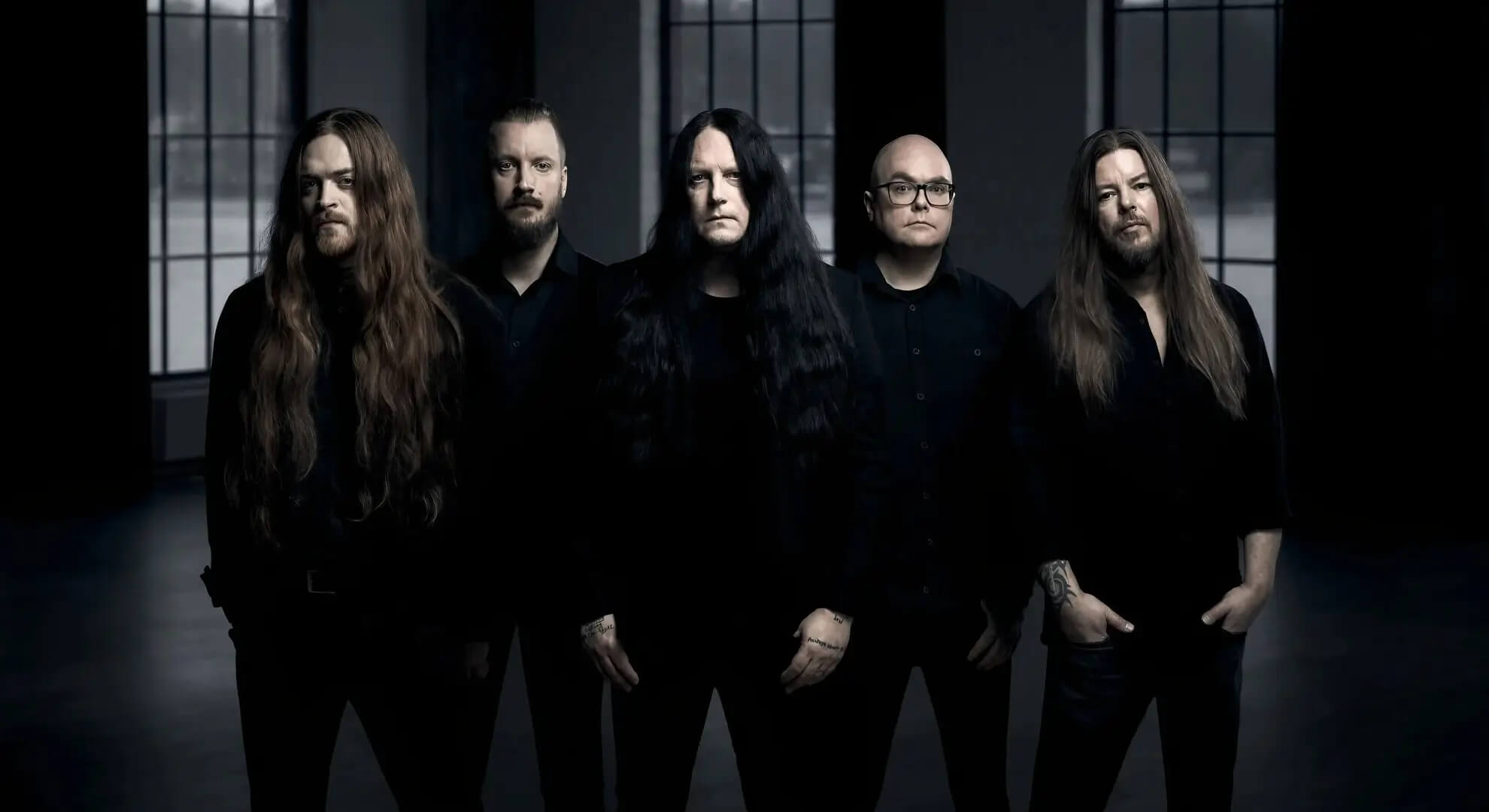


In the thin air of the High Andes, where the altitude itself imposes a breathless reverence, the metropolis of Bogotá sprawls beneath a ceiling of perpetual clouds. As observed in our recent coverage of Dark Tranquillity’s engagement at Teatro Astor Plaza, the city known to its inhabitants as “The Fridge” (La Nevera) offers a distinct atmospheric mirror to the Scandinavian peninsula.
It is here that the melancholy of the North finds its most profound echo in the South. When Katatonia arrives at Capital Live Music on March 16, 2026, the performance will function less as a standard stop on the itinerary of a touring rock group and more as a continuation of this ceremonial convergence between two spiritually aligned geographies.
Touring in support of their latest opus, ‘Nightmares as Extensions of the Waking State,’ the Stockholm-based ensemble brings their Nightmares as Extensions of the Waking State – Latin America 2026 production to a capital that has long embraced the darker spectrum of sonic expression as a necessary catharsis.
As the band navigates a pivotal period defined by significant lineup changes and a singular creative evolution, they step into a city where the audience does not merely listen to heavy music but inhabits it as a survival mechanism.
The Artifact: ‘Nightmares as Extensions of the Waking State’
The 2026 tour’s significance stems from Katatonia’s fourteenth studio album, ‘Nightmares as Extensions of the Waking State.’ Released through Napalm Records, this work has been hailed by critics and fans as the definitive start of the band’s “Post-Nyström” era. The album continues the sonic progression seen in the 2023 release ‘Sky Void of Stars,’ building upon its “crystal-clear production” while simultaneously exploring more experimental, electronic, and austere soundscapes.
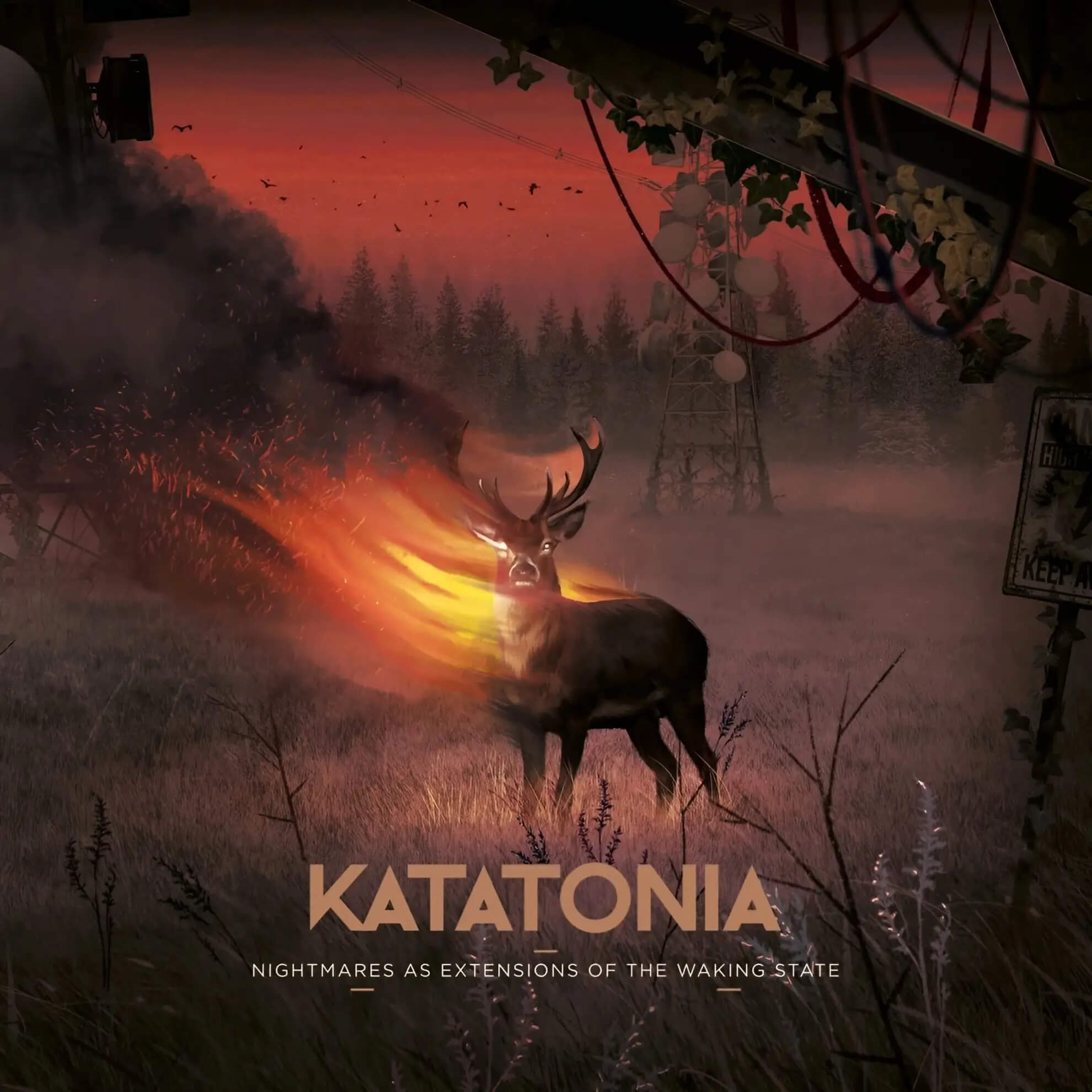
The production strategy for the new album marks a distinct shift in the band’s auditory presentation, with direct implications for the upcoming live show. Mixed by Bruce Soord of The Pineapple Thief, the recording prioritizes spatial separation over density. This choice mirrors the album’s thematic focus on the liminal spaces between sleep and wakefulness, by making use of silence as a compositional tool. For the Capital Live Music sound engineers, this presents a unique challenge: the venue’s acoustics will need to accommodate a mix that balances traditional heavy instrumentation with the “hypnotic rhythms” of the new electronic arrangements.
The setlist is expected to integrate these new sonic textures, with tracks like ‘Thrice’ and ‘The Liquid Eye’ serving as primary examples of this evolved sound, blending syncopated percussion with clean melodic lines. The inclusion of ‘Efter Solen,’ sung entirely in Swedish, further signals a departure from standard rock structures, introducing electronic and dance elements that will test the venue’s dynamic range.
The creation of ‘Nightmares as Extensions of the Waking State’ occurred in the shadow of a significant lineup shift. The departure of Anders Nyström, a founding member and key songwriter, left vocalist Jonas Renkse as the primary architect of the sound of the band. This transition has catalyzed a subtle but profound shift in the compositional DNA of the group. Renkse, originally a drummer, approaches songwriting from a rhythm-first perspective.
The visual identity of the album also informs the aesthetic of the tour. Renkse has described the “wine red” sky of the cover art as representing a “nightmarish state” where one cannot distinguish between dusk, dawn, or an unnatural darkening. This color palette—deep purples, blacks, and crimsons—is expected to dominate the lighting design at Capital Live Music, creating an immersive, suffocating atmosphere that complements the enclosed nature of the venue.
Capital Live Music as a Vessel
The selection of the venue is a significant component of the cultural event. For their 2026 return, Katatonia will perform at Capital Live Music, historically and structurally known as Auditorio Mayor CUN, located at Carrera 13 #48-90 in the Chapinero district.
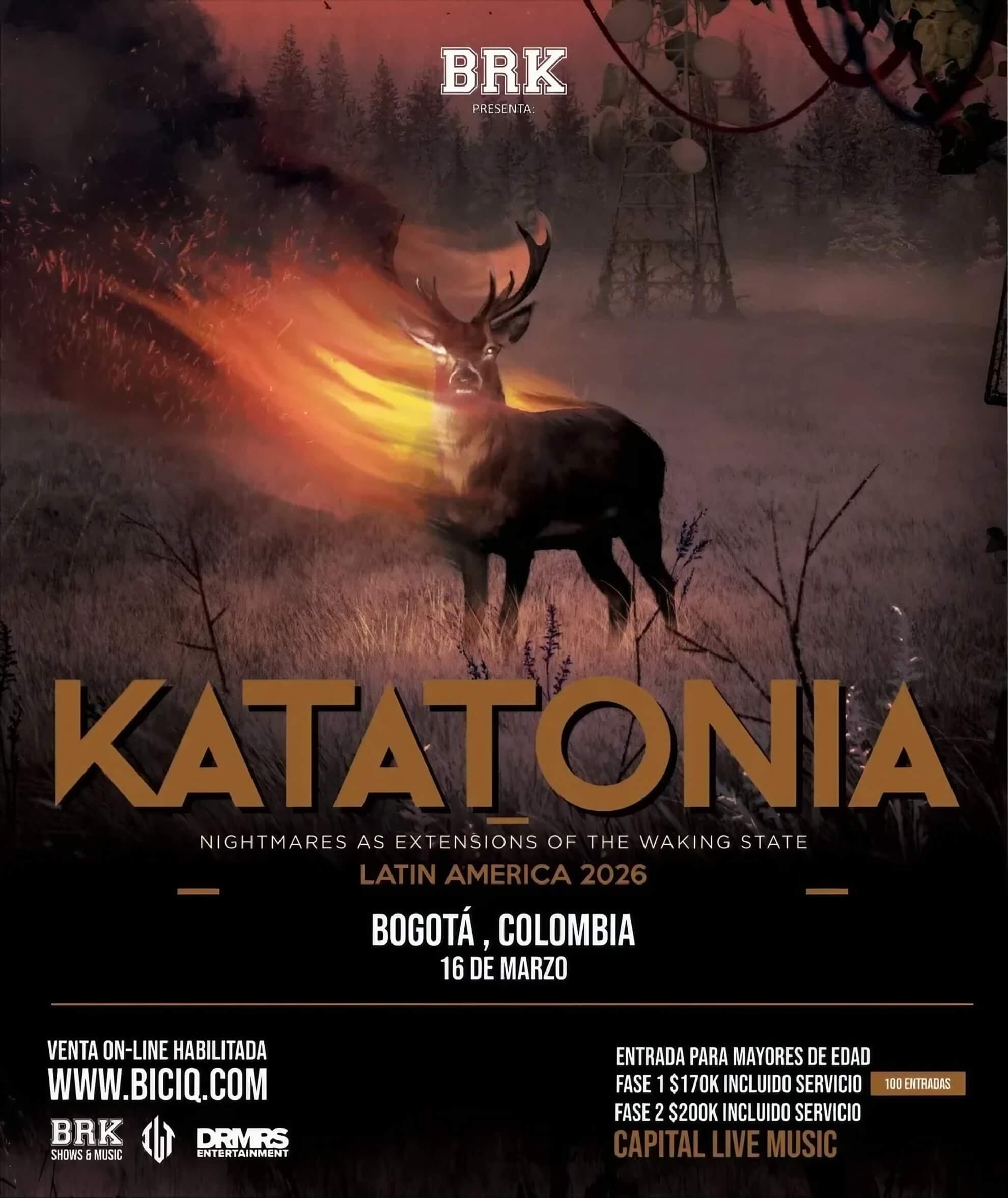
Unlike the open-air festivals or massive arenas the band has played previously in Colombia, such as the Gran Carpa Américas in 2024, Capital Live Music is a theater-style venue with a capacity of approximately 1,600 spectators.
The venue is stratified into two primary zones. The first is The Plateau, or the VIP section on the first floor. This standing area has a capacity of roughly 1,300 and acts as the “pit,” the epicenter of physical engagement where the audience is pressed close to the stage, facilitating a communal, ritualistic experience.
The second zone is The General Balcony on the second floor. This smaller section, with a capacity of approximately 300, offers elevation and distance, suited for those examining the sound rather than participating in the physical release.
This architectural choice signals a desire for intimacy. In the hierarchy of venues in Bogotá, Capital Live Music sits in the middle ground—larger than smaller club venues but significantly more contained than the Movistar Arena. This containment is essential for the current sound of Katatonia.
The intricate electronic layers of ‘Efter Solen’ or the delicate ghost notes of ‘Departure Trails’ would be lost in the echoing expanse of a sports arena. Here, the sound is trapped, intensified, and forced upon the listener.
The pricing structure reflects the economic reality of touring niche international acts in 2026. With General tickets available at 148,000 COP (approximately 36.50 USD), the cost is significant for the average Colombian youth. This pricing barrier filters the audience, ensuring that those in attendance are the most committed fans—those who prioritize this experience above all else. This demographic reality often results in a more attentive, knowledgeable, and passionate crowd, as every attendee has made a significant material sacrifice to be present.
The venue is situated in Chapinero, the bohemian and counter-cultural heart of Bogotá. This district is home to the largest universities of the city and its independent music economy. The area is a tapestry of urban grit and intellectual aspiration, filled with coffee shops, record stores, and bars that serve as gathering points for the subcultures of the city.
For the traveling fan, the location adds a layer of cultural texture. The queue outside the venue on Carrera 13 will likely stretch past bustling street vendors and graffiti-covered walls, grounding the “Nordic melancholy” of the band in the chaotic, dynamic reality of the Latin American street. The juxtaposition of the cold, precise Swedish metal against the chaotic, high-altitude urban sprawl of Chapinero creates a dialectic of order and entropy that defines the concert experience.
The Promoter: BRK Shows
The concert is organized by BRK Shows, a production company that has carved a niche in the Colombian market by focusing on specialized, high-quality metal acts rather than broad mainstream appeals.
BRK Shows has marketed this event not as a mass-consumption spectacle but as an exclusive gathering for the devoted. Reports indicate a strategy of “extremely limited ticketing,” with initial phases releasing as few as 100 tickets at a time. This artificial scarcity taps into the “cult” status of Katatonia in South America. It frames the concert as a ceremony for the initiated—the “die-hards” who have followed the band through their stylistic metamorphoses.
Katatonia in the Land of Ultra Metal
The intensity surrounding Katatonia’s concert in Bogotá on March 16, 2026, can only be understood by looking into the profound and historical foundation of heavy metal in Colombia—a history forged through violence and unwavering resilience.
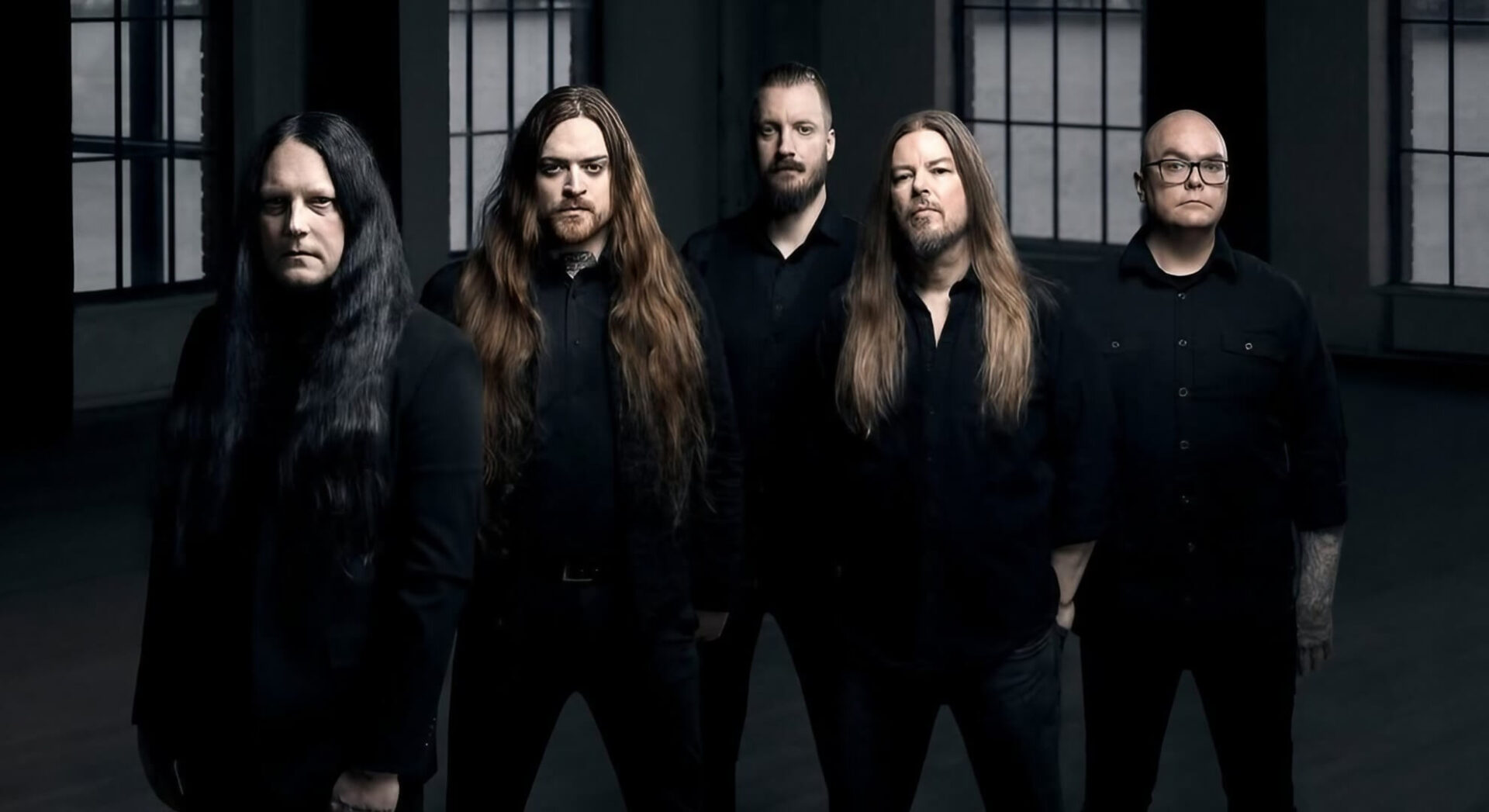
The relationship Colombia has with extreme music is unique in Latin America. The legacy of “Ultra Metal”—pioneered by Medellín acts like Parabellum in the 1980s—created a cultural infrastructure built on raw resistance. This heritage means that the Colombian metal audience possesses a sophisticated palate for darkness. They do not merely consume heavy music as entertainment; they view it as a necessary catharsis.
While the music of Katatonia has evolved away from the raw aggression of their death metal roots towards a polished progressive rock, the emotional intensity remains compatible with this historically forged temperament. The “romanticism” inherent in the songwriting of Katatonia resonates with the Latin American literary tradition of fatalismo and the poetic embrace of tragedy.
Katatonia has meticulously cultivated this relationship over decades. In 2010, the New Night Over South America Tour promoted ‘Night is the New Day,’ establishing the band as a major draw in the region. This was followed in 2016 by the Fallen Hearts of South America tour, which showcased their complex, progressive evolution.
Most recently, on November 8, 2024, they appeared at the Colombia Metal Festival, a critical precursor to the 2026 show. Performing at the Gran Carpa Américas alongside historic acts like Satyricon, At The Gates, and Samael, Katatonia played a “festival set” to thousands.
The 2024 festival performance was a spectacle, but festival sets are inherently compromised by time constraints, shared production, and the cavernous acoustics of tent venues. The 2026 show at Capital Live Music is a headline performance. This distinction is paramount. It allows for the “deep cuts,” the visual production specific to the album, and the extended atmospheric interludes that define the artistic vision of the band.
Projections and Setlist
Based on data from the European dates of the band in 2025 and the early 2026 North American leg, the setlist is expected to be a carefully curated hybrid of the new and the canonical.
The evening will likely commence with ‘Thrice’ from ‘Nightmares as Extensions of the Waking State,’ providing a high-energy start that establishes the sound of the new era. This will seamlessly transition into ‘Soil’s Song’ from ‘The Great Cold Distance,’ a fan favorite designed to ignite the crowd immediately.
The new material continues with ‘The Liquid Eye,’ showcasing the new lead guitar tone and melodic engagement. To maintain momentum, the band will likely play ‘Deliberation,’ a mid-tempo groove from ‘The Great Cold Distance,’ followed by the melodic hook and lighter texture of ‘Opaline’ from ‘Sky Void of Stars.’
The middle portion of the set is expected to increase the heaviness with ‘Forsaker’ from ‘Night is the New Day,’ serving as a catalyst for the mosh pit. This intensity will be balanced by the rhythmic complexity of ‘Lilac’ from the new album, showcasing the vocal phrasing of Renkse.
The emotional peak of the night typically arrives with ‘Old Heart Falls’ from ‘The Fall of Hearts,’ acting as the “ballad” moment of the set. This leads into the anthem ‘July,’ ensuring maximum audience participation. An atmospheric, brooding interlude might be provided by ‘Wind of No Change,’ before the set reaches its climactic unity moment with ‘My Twin,’ the biggest hit of the band.
The performance is expected to conclude with an encore of ‘Evidence’ from ‘Viva Emptiness,’ a legacy closer known for its gritty and aggressive nature.
The Colombian Audience
The audience that will fill the Auditorio Mayor CUN is not a monolith. It is a complex stratification of generations and subcultures, each connecting with the music on different frequencies. The crowd will fundamentally consist of two demographics.
The first is the “Metal Medallo” veterans, fans who grew up in the 1980s and 1990s, for whom metal was a form of resistance against the violence of the state and the cartels. They value technicality, heaviness, and history. They respect the death-doom roots of Katatonia and tolerate the new direction out of loyalty.
The second demographic is the “New Emo” and post-pandemic generation. This is a younger cohort emerging in the 2020s, influenced by the global resurgence of emo and the local post-hardcore scene involving bands like Basuraastillada. For them, the themes of mental health, urban isolation, and existential dread found in Katatonia are literal descriptions of their reality in a post-pandemic Bogotá. This group is less concerned with “metal purity” and more engaged with the emotional utility of the music.
Colombian audiences are renowned globally for their energy, with Bogotá frequently cited as one of the loudest crowds in the world. However, Katatonia shows induce a specific type of energy: a “reverent chaos.” During heavy tracks like ‘Forsaker,’ the pit will be violent and physical.
During tracks like ‘Old Heart Falls,’ the crowd often sings the guitar melodies—a phenomenon common in South America known as the “Oé Oé” chanting of riffs—creating a choir that rivals the output of the band itself.
A Ceremony of Shadows
The upcoming performance of Katatonia at Capital Live Music on March 16, 2026, is poised to be a landmark event in the cultural calendar of the alternative scene of Bogotá. It represents the intersection of a band at the peak of its “third act”—having successfully navigated the departure of a founding member to find a new, sleeker voice—and a city that has historically used heavy music as a tool for survival and emotional processing.
For the attendee, the night promises a journey through the “extensions of the waking state.” The architectural intimacy of the venue will strip away the distance of the festival stage, forcing a confrontation with the nuances of ‘Nightmares as Extensions of the Waking State.’
The electronic pulses of ‘Efter Solen’ will test the acoustics; the heavy groove of ‘Thrice’ will test the structural integrity of the VIP plateau; and the collective voice of the Bogotá choir will test the emotional resolve of Jonas Renkse himself.
In the end, this concert is a validation of the enduring bond between the Nordic and the Andean—a shared understanding that in the rain, in the gray, and in the minor key, there is a profound, unifying beauty.
Given the unique synthesis of Katatonia’s evolved, sleek sound and the historically raw, emotive temperament of the Bogotá audience, how do you anticipate the live translation of their more electronic, “nightmarish” tracks will reshape the traditional catharsis of the metal concert experience for you?


Leave a Reply