


Some concert programmes function as arguments. The bill assembled for November 19, 2026, at Capital Live Concerts in Bogotá is that kind of programme — two European black metal acts whose divergences in geography, aesthetic temperament, and ritual orientation are precisely what makes their co-billing significant.
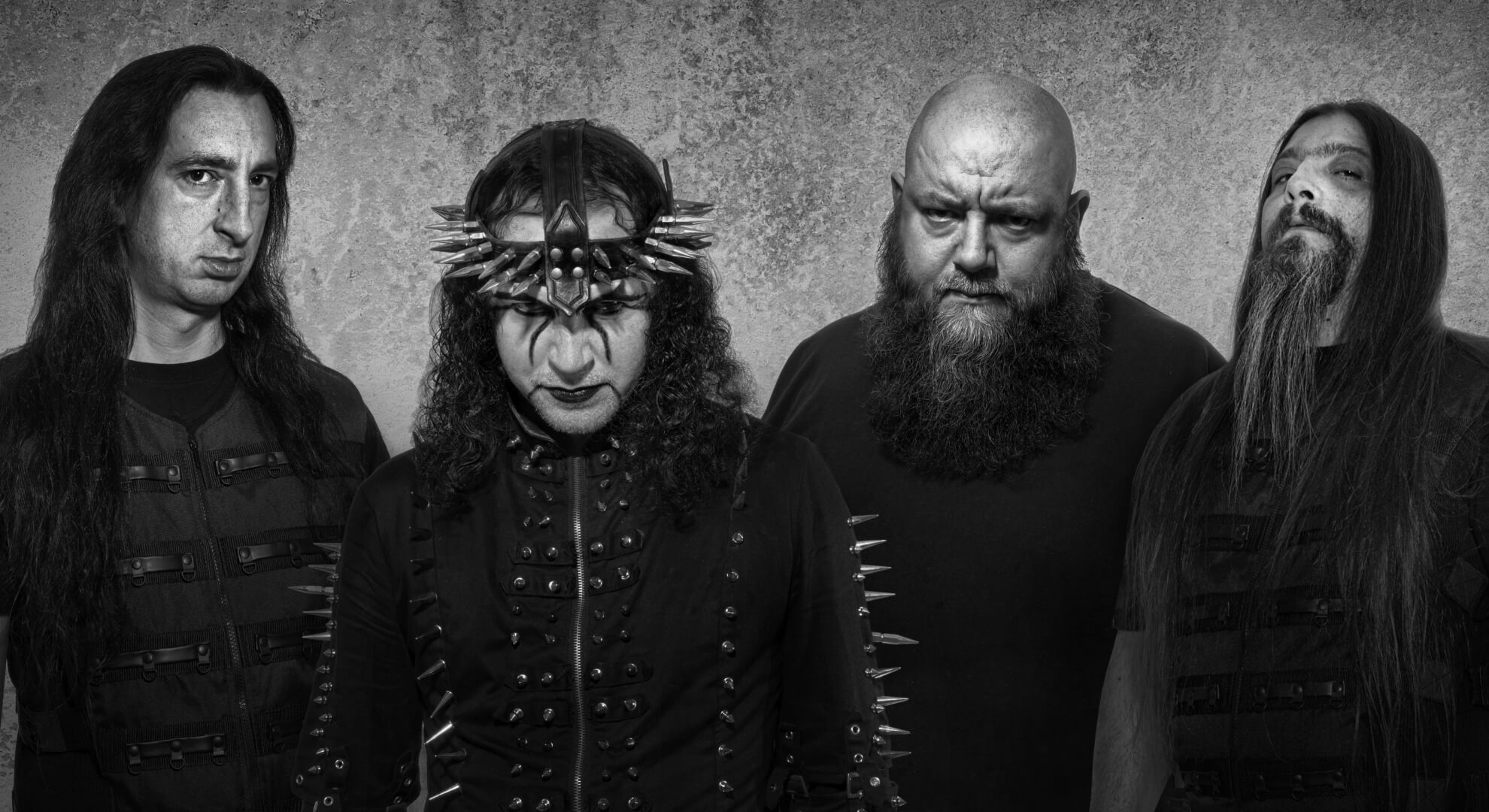
Opera IX, the Piedmontese occult black metal project now in its fourth decade of continuous activity, performs here in direct support of ‘Veneficium,’ the band’s forthcoming album due through Edged Circle Productions in May 2026 and its first studio record in eight years. Alongside them, Nocturnal Depression, the Grenoble-based depressive black metal project led compositionally by the reclusive Herr Suizid, arrives with the weight of ‘Perpétuelle Eclipse’, their most recent full-length, as their primary platform.
Two Altars, One Night
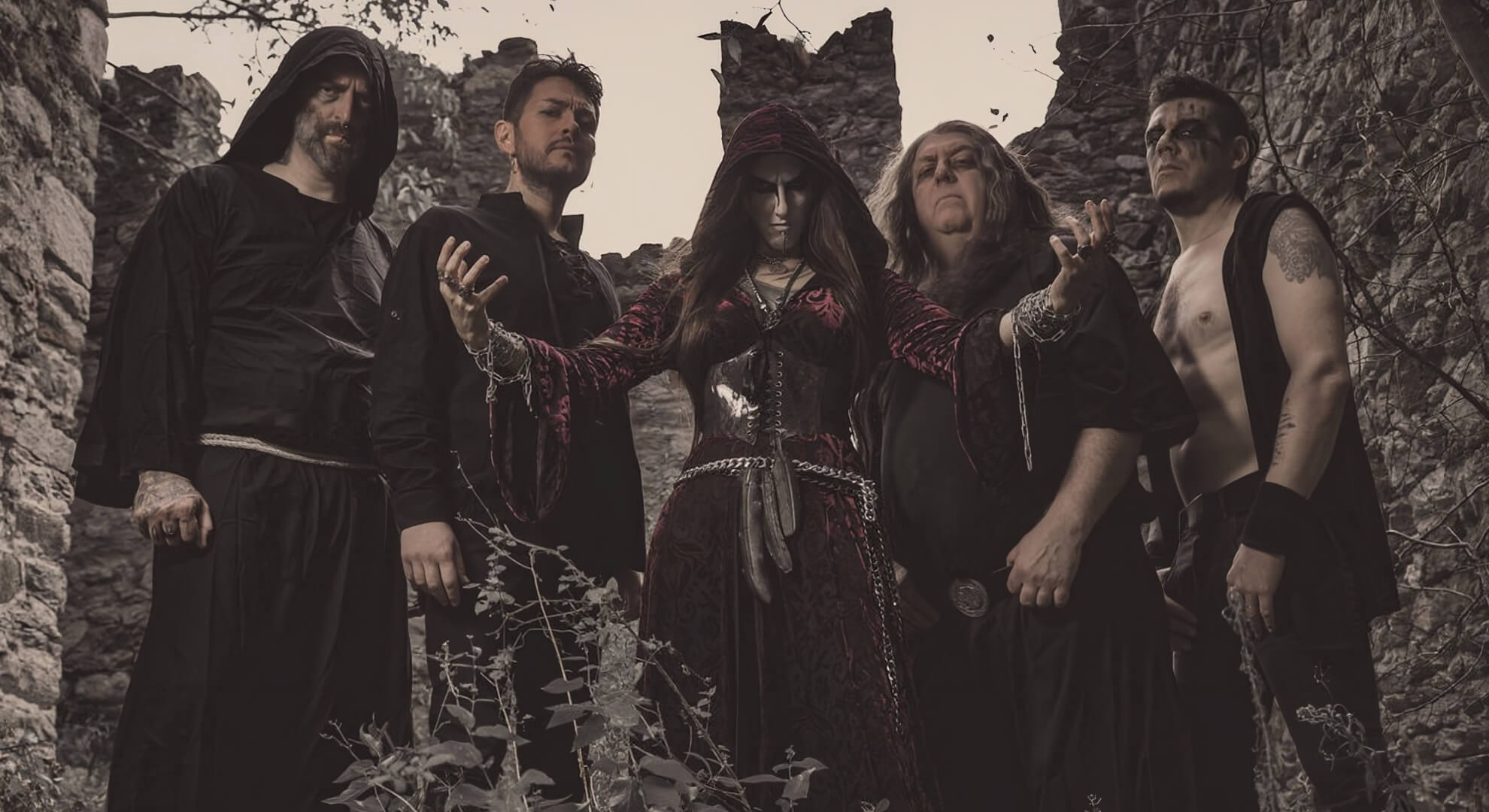
The distance between the two headliners is not merely geographic. Opera IX operates from a position of ceremonial excess — layered keyboards, extended compositions, a programme of pagan reference that treats pre-Christian Italian folk traditions as living material rather than historical quotation. Nocturnal Depression moves in the opposite direction: stripped, interior, organised around a single emotional register pursued with absolute commitment across twenty years of recordings.
The juxtaposition is not a contradiction. It is a demonstration of how wide the black metal container has become when sustained by communities that use it seriously — and few communities use it more seriously than the one concentrated in Chapinero’s underground bars and mid-sized venues.
The Necromantic Inheritance of Biella
Ossian founded Opera IX in Biella in 1988, recording the band’s first demo in a cellar in the summer of 1989 with two collaborators. The city itself — set against the Piedmontese foothills between Turin and Milan, more industrial than pastoral in character — provides an unlikely home for a band whose concerns have always been agrarian, animist, and rooted in the knowledge traditions of pre-urban Italy. That tension between industrial geography and pagan subject matter is present in the music: the heaviness is urban, the content is not.
The period of the band’s widest international reach corresponded with Cadaveria’s vocal tenure, stretching from the early 1990s through ‘The Black Opera’ (2001), a record that sold approximately 18,000 copies and established Opera IX as one of the defining acts of Italian extreme metal.
Carlo Ginzburg’s work on the benandanti — the sixteenth and seventeenth-century northern Italian agricultural workers who claimed nocturnal spirit journeys to protect their crops from witches — illuminates the folk tradition within which Opera IX’s imagery operates: not diabolism imported from a literary tradition, but a specific vernacular engagement with the forces believed to govern harvest, illness, and the boundary between the living and the dead.1
Current vocalist Dipsas Dianaria, who joined in 2018, brought a distinct timbre to that tradition. The album ‘The Gospel’ (2018), centred on the Aradia corpus — the body of Tuscan witchcraft documentation compiled by Charles Godfrey Leland in the nineteenth century — confirmed that the post-Cadaveria Opera IX had not abandoned its preoccupations but reorganised them around a different voice and a deeper engagement with the source material.
‘Veneficium’ and the Ritual Return
‘Veneficium’ extends this line of inquiry into poisoners and female practitioners of the occult arts in antiquity. Ossian has described the record’s sound as a “Sabbath-driven dissonance” — a deliberate turn away from polished production toward a raw, ritualistic quality that he has associated with the album’s commitment to specific historical figures: Canidia, Martina, and Locusta, all of them women whose knowledge of botanical toxicology placed them at the intersection of healing and harm.
Guest musician Patrice Roques of the French folk ensemble Stille Volk contributes nyckelharpa to one track, introducing a bowed, organic texture that grounds the compositions in northern European folk heritage. The Bogotá performance is the record’s first South American presentation, making November 19 a date of introduction rather than repetition.
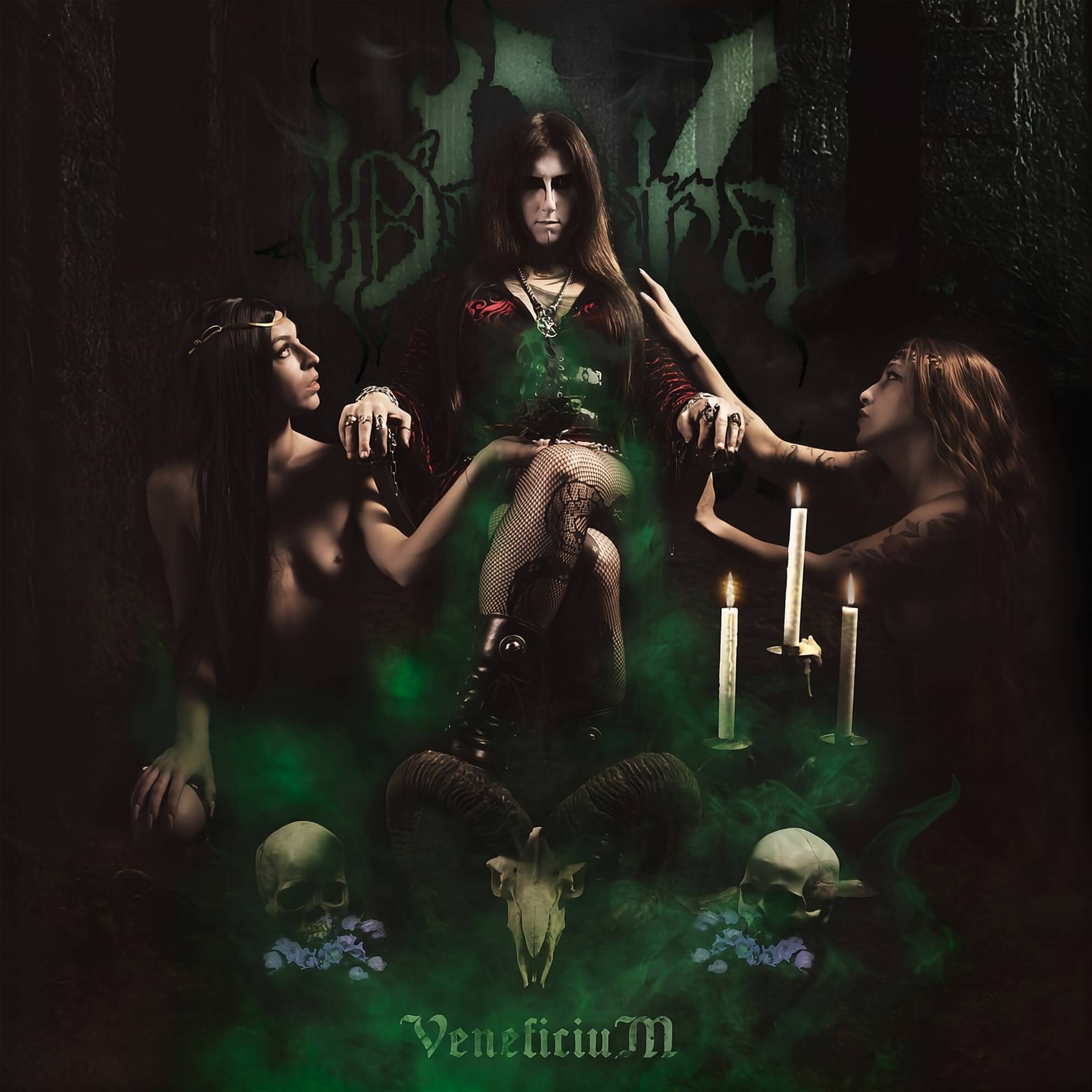
Eight years separate ‘The Gospel’ (2018) from ‘Veneficium,’ and the gap is not simply chronological. The former drew its conceptual framework from Charles Godfrey Leland’s nineteenth-century Aradia corpus — the Tuscan witchcraft documentation that had served as the band’s thematic anchor since their engagement with pre-Christian Italian folk traditions deepened in the 2000s.
‘Veneficium’ moves the lens from the theological to the botanical: its programme centres on women in antiquity who wielded knowledge of toxic plants as a form of power that the prevailing order consistently labelled criminal. Canidia, the poisoner condemned in Horace’s Epodes; Martina, the accused purveyor of toxic compounds in the reign of Tiberius; Locusta, whose skills in preparation of lethal substances were retained by Nero as an instrument of state — all three appear as figures whose transgression resided not in malice but in the possession of knowledge that formal structures of power could neither contain nor replicate.
The tracklist — including ‘Gratidia,’ ‘Vocatio Mortuorum,’ ‘Saltatio Corvi,’ ‘Hortus Sagae,’ and ‘Defixiones’ — reads as a ceremonial inventory: the summoning of the dead, the crow as familiar, the garden of the witch, the curse tablet. The closer, a cover of Black Sabbath’s self-titled track, is not an act of genre deference but a statement of lineage.
Opera IX has always treated heavy metal as continuous with the occult tradition rather than merely themed around it; the inclusion of the original Black Sabbath track places that lineage in explicit form. Released via Edged Circle Productions on 22 May 2026, ‘Veneficium’ arrives in Bogotá before any South American audience has had more than weeks to absorb it.
What distinguishes the record structurally from its predecessor is the explicit withdrawal from production clarity. Ossian’s stated intention was a rawer, more ritualistic surface — one that places the listener inside a ceremony rather than in front of a performance. That is a meaningful distinction before a Bogotá crowd that has historically received extreme metal not as spectacle but as occasion: something to attend in the fullest sense of that word, with the body and the attention both present and committed.
Grenoble’s Interior Wound
Nocturnal Depression began in 2004 as a project of total authorial solitude. Herr Suizid writes and records the band’s compositions entirely alone and does not perform live; the live incarnation of the project belongs to Lord Lokhraed, whose presence on vocal duties has defined its stage identity since the band first performed in 2006.
Philip Auslander’s writing on the recorded and live divide identifies the particular stakes of this arrangement: the recorded work carries the authority of its origin, while the live version must establish its own claim through the quality of performance rather than the continuity of authorial presence.2
For Nocturnal Depression, the result is a stage identity that does not approximate the studio work but interprets it — a distinction that matters before an audience like Bogotá’s, where familiarity with the catalogue is a prerequisite rather than an achievement.
‘Perpétuelle Eclipse’ and the Threshold of Live
‘Perpétuelle Eclipse,’ released in September 2024, is the band’s most compositionally refined account of its central emotional logic. The contrast that has always defined Nocturnal Depression at its best — melodic, almost luminous guitar lines carrying the formal structure, set against Lord Lokhraed’s vocal despair — is more precisely calibrated here than on the earlier records.
Nocturnal Depression performed in Bogotá for the first time in November 2024, demonstrating the live version’s potency before a crowd already fluent in the depressive black metal tradition. The November 19, 2026, return presents the band as co-headliners on a more prominent bill, in a larger room, with the full weight of ‘Perpétuelle Eclipse’ as the set’s primary platform.
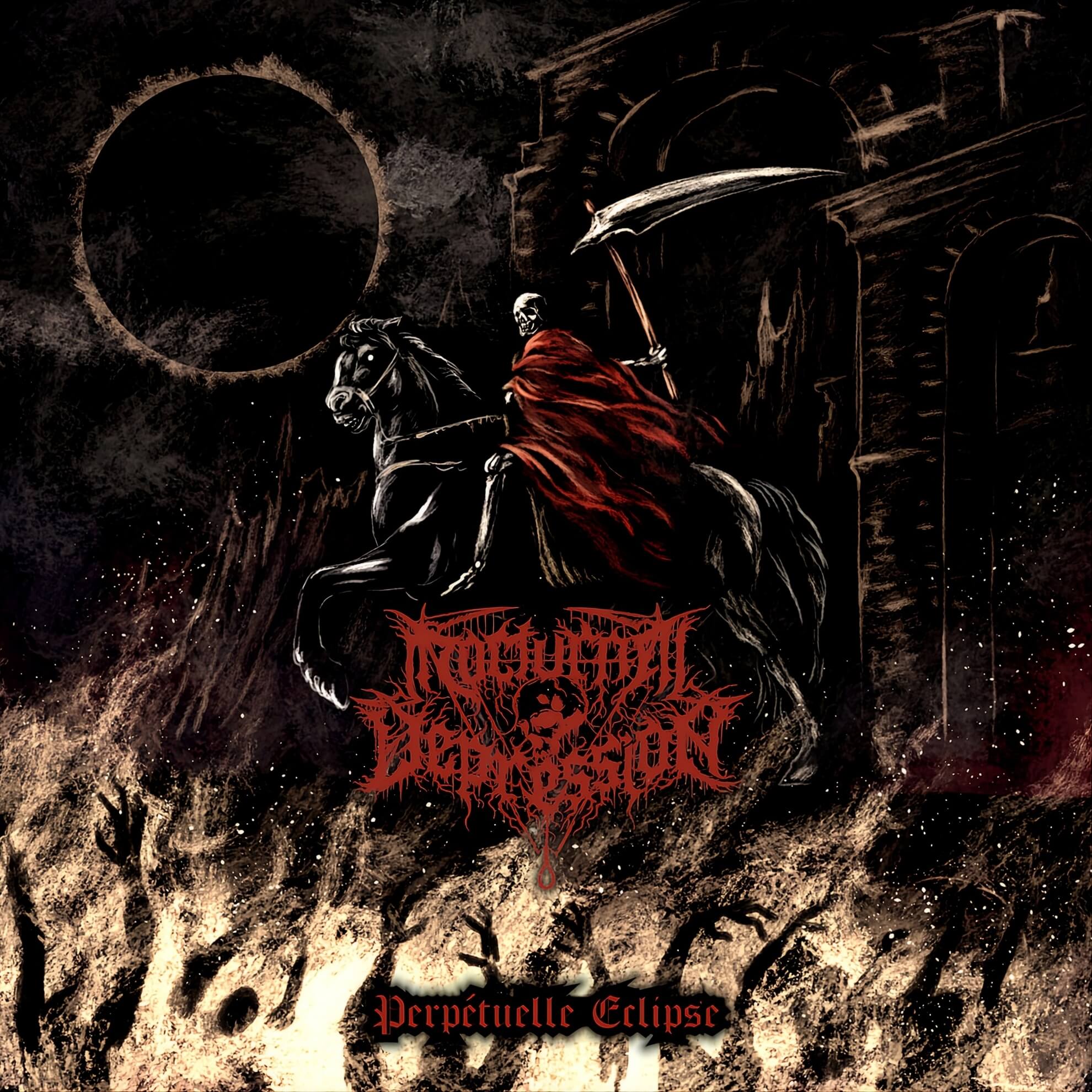
Released on 26 September 2024, ‘Perpétuelle Eclipse’ is Nocturnal Depression’s most recent full-length studio record. Its six tracks — ‘Waltzing Among Graves,’ ‘When My Time Has Come to Die,’ ‘Self-Murdered Woods,’ ‘Perpétuelle Eclipse,’ ‘Endless Slumber,’ ‘Footprints in the Dust’ — continue the band’s long investment in depressive black metal as a form organised entirely around a single emotional state sustained to the point of structural consequence.
Where many acts working in the depressive register treat suffering as atmosphere, Nocturnal Depression treats it as argument: the compositions on this record do not evoke despair so much as inhabit it, constructing a formal environment in which no other condition is available to the listener.
What makes ‘Perpétuelle Eclipse’ a significant statement at this point in the band’s career is its formal economy. More than twenty years of activity have produced a project that no longer needs to declare its position — the compositions proceed from it as a given. The melodic guitar lines that carry the album’s formal weight are not decorative; they are the mechanism through which the emotional content is delivered with the precision that only long practice produces. Lord Lokhraed’s vocal performance operates within that precision rather than against it, which is the compositional maturity the earlier records were still reaching toward.
For the Bogotá community that encountered the band in November 2024, ‘Perpétuelle Eclipse’ is already known material — absorbed in the intervening period, tested against memory of that first live experience, brought to Capital Live on November 19 with the depth of understanding that only elapsed time and repeated listening produce. That is a different kind of reception from a first encounter, and a more demanding one. The record will not be new to the room; it will be familiar in the way that changes what a performance is asked to do.
The Chamber on Carrera 13
Capital Live Concerts, at Carrera 13 ·48‑90 in Chapinero, occupies a position in Bogotá’s live metal ecology that neither the arena nor the underground bar can occupy. It is mid-sized in a way that is compositionally significant: close enough for the textural complexity of both headliners to register without mediation, large enough to contain the physical energy of a crowd that does not treat the live experience as passive consumption.
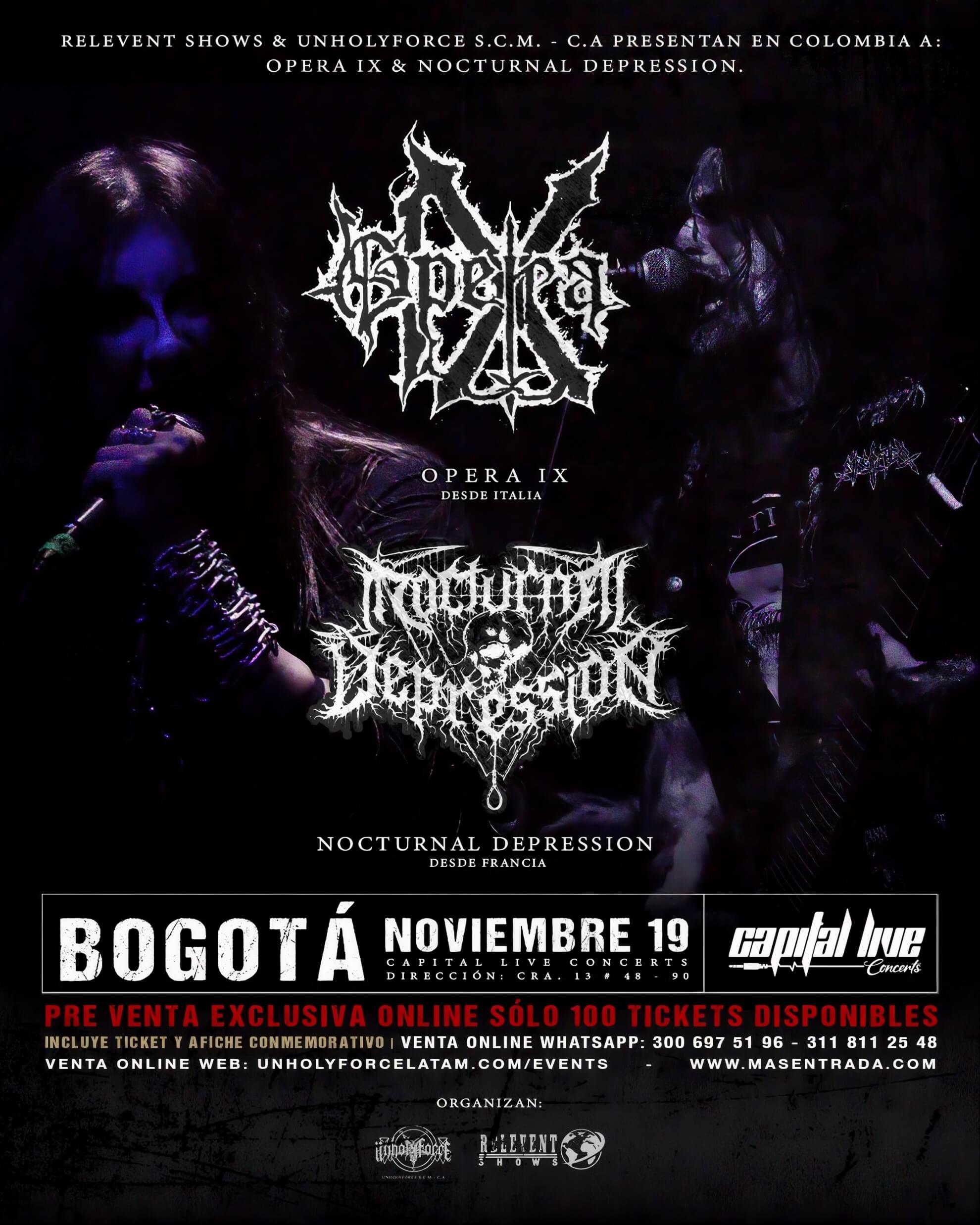
The venue has built a consistent programming record around European extreme metal, hosting acts including Katatonia and Cynic within its recent history, and the community that attends those shows arrives with the accumulated expectation of an audience that has paid serious attention for years.3
An exclusive pre-sale block of 100 tickets — each accompanied by a commemorative poster — is available through the online channels listed on the event’s promotional materials. Full ticket pricing had not been confirmed at the time of publication.
The First Gothic Stones of Chapinero
Fifteen blocks north of Capital Live Concerts, along the same stretch of Carrera 13, the Basílica Menor de Nuestra Señora de Lourdes stands at number 63‑27. Commissioned in 1875 by Archbishop Vicente Arbeáez and designed by the Bogotá-born architect Julián Lombana — who fell from scaffolding during construction, lost an arm and a leg, and continued directing the project until his death — it constitutes Colombia’s first exercise in neo-Gothic form.
Its pointed arches, German polychrome stained glass, and blue vaulted ceilings punctuated with gold stars were constructed through precisely the kind of local adaptation of European formal vocabularies that the Colombian colony and republic had applied to every inherited tradition since independence.
The 67-metre bell tower serves as a vertical marker visible from ground level across most of Chapinero. The building was elevated to the status of Basílica Menor by the Vatican in 2016 — a title conferred on approximately 1,560 structures worldwide on the basis of historical significance, architectural distinction, and sustained devotional use.
Its relationship to the evening’s programme is not atmospheric coincidence. Both Opera IX and Nocturnal Depression work within traditions that treat mortality, esoteric knowledge, and the persistence of the past in the present as their primary subject matter. A structure that carries within its stones a Muisca pre-history, a colonial founding, a nineteenth-century European revival executed in local materials, and an earthquake-damaged reconstruction that continued despite irreversible loss — this is what those subject matters look like in stone. The building is publicly accessible and remains open twelve hours each day.
Two Fires, One Room
When the November 19 programme concludes at Capital Live, Bogotá will have received two acts that approach extremity from opposite positions — the ceremonial and the interior, the maximalist and the spare — and processed them through an audience that has spent thirty years developing the capacity to hold both at once.
What the Bogotá underground has built across that period is not a tolerance for difficult music but a dependence on it: a community that has needed extreme sound to perform work that no other cultural form was equipped to carry. Opera IX brings the Italian ritual tradition to Chapinero; Nocturnal Depression brings the French nocturnal grief. The room on Carrera 13 holds both, and the community that fills it does not distinguish between types of necessity.
Between Opera IX’s ritual precision and Nocturnal Depression’s interior collapse, which register of extremity cuts closer to the emotional need that brought you to this kind of music in the first place?
References
- Carlo Ginzburg, ‘The Night Battles: Witchcraft and Agrarian Cults in the Sixteenth and Seventeenth Centuries,’ trans. John and Anne Tedeschi (Baltimore: Johns Hopkins University Press, 1983), 4–9. ↩︎
- Philip Auslander, ‘Liveness: Performance in a Mediatized Culture,’ 2nd ed. (London: Routledge, 2008), 73–77. ↩︎
- Charles Bergquist, Ricardo Peñaranda, and Gonzalo Sánchez G., eds., ‘Violence in Colombia: The Contemporary Crisis in Historical Perspective’ (Wilmington: SR Books, 1992), 19–23. ↩︎

Leave a Reply