

Seventeen years of sustained practice inside the same city that produced the conditions the music addresses — this is the specific weight Storm of Darkness carry into Capital Live Concerts on the evening of March 27, 2026. The March 27 event is formally anchored by the album launch of There’s No Savior’s ‘EX(SINS)TENCE,’ but the supporting programme makes its own case.
Among the four acts sharing the stage at Carrera 13 No. 48-90, Storm of Darkness arrive as the bill’s most extensively documented Colombian practitioners of the form. Their appearance on a launch night for a project rooted in the same Bogotá underground is not incidental context — it is the argument the bill makes about the depth of the scene from which both bands have emerged.
Seventeen Years Without Concession
Storm of Darkness was established in 2008 in Bogotá by Blackthrasher, whose formation as a musician and conceptualist preceded the project by several years of work within the capital’s underground circuit. The band’s self-designation, “Unholy Black Metal of Death,” is not a genre hybrid but a declaration of purpose: a refusal to accept that the extremity of the sound requires the neutralisation of its thematic ambition.1
Mayhem, Emperor, and Immortal are the coordinates Blackthrasher has identified as formative. These are not casual reference points; they are three of the most structurally influential projects within the second wave of Norwegian black metal, each of which contributed a distinct resolution to the question of how extreme music can hold melodic coherence and raw aggression in the same composition without either quality consuming the other.
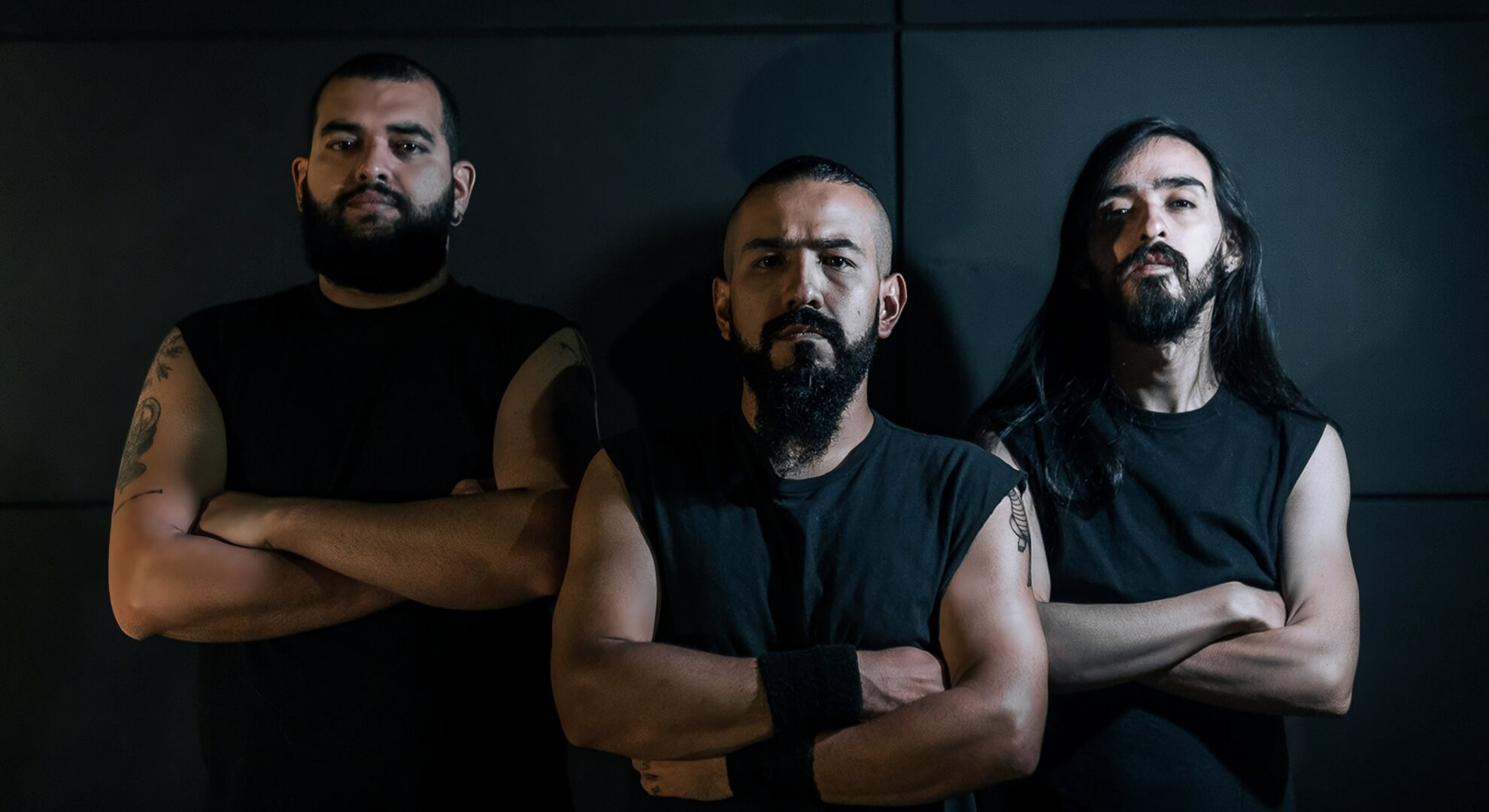
The current trio — Blackthrasher on vocals, guitars, and bass; Gabriel on guitars and choirs; Isaac on drums — represents the project’s most stable configuration to date, and it is the lineup that produced both ‘Inevitable’ in 2023 and the most recent release, ‘The Black Episode,’ issued in August 2025.2
A Discography Built Under Its Own Conditions
The Storm of Darkness catalogue is compact by intention rather than circumstance. ‘Before Life, After Death,’ their debut full-length, appeared in 2012, four years after the project’s founding — a gap that reflects the capital’s material conditions for independent black metal production as accurately as any statement the band has made.
The trajectory that followed was shaped by the same conditions: ‘A Journey Through the Storm,’ a seventeen-track retrospective compilation, gathered the first six years of output in 2015. ‘Hymns for Abya-Yala’ arrived in July 2016, and ‘Anti-Abrahamic Pest Propaganda’ — designated by the band as their third blasphemous full-length — in March 2018.
Four Full-Lengths and a Reckoning
February 2023 produced ‘Human Terror Revelations,’ a split release with fellow Colombian act Asbel, issued through Blasphemous Attack Productions on tape and black vinyl twelve-inch. Its five tracks, including re-recorded versions of earlier material alongside new compositions, extended the catalogue before the full-length ‘Inevitable’ followed in September of the same year.
‘Inevitable’ — eight tracks across Spanish and English, from the opening ‘Tormenta’ through to ‘Oscuridad’ — worked the bilingual practice the band has maintained throughout their output. The decision to record in both languages is not an affectation; it reflects the position of a Bogotá band operating simultaneously within a global black metal circuit and an immediate local community that demands the music speak in its own terms.3
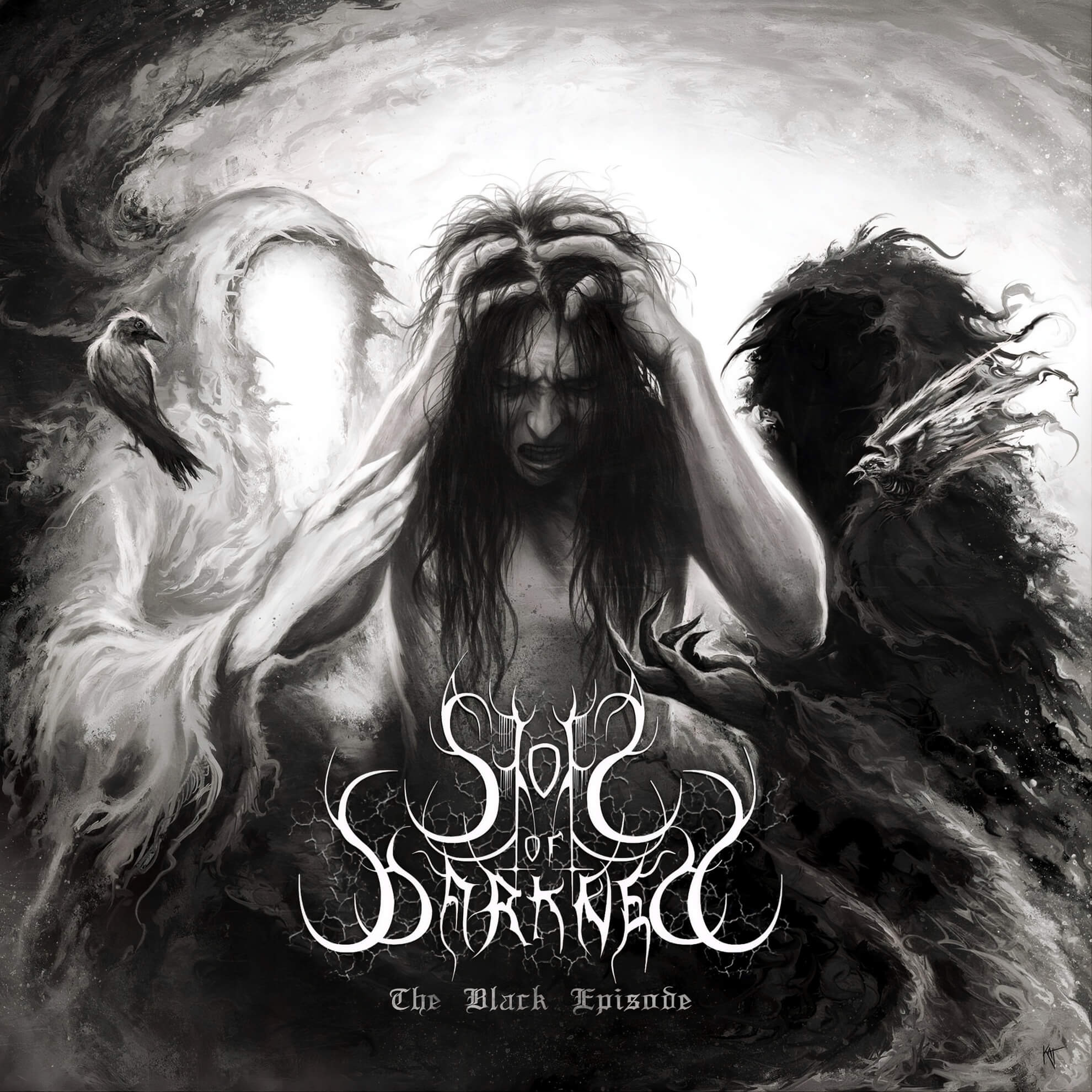
The most recent release, ‘The Black Episode’ (August 2025), is a three-track EP: ‘Violentas Tormentas,’ ‘Cursing my Life, Wishing my Death,’ and ‘Lejos del Paraíso Terrenal 4.0.’ The title marks a concentrated formal statement rather than an interruption between full-lengths: each track holds its own argumentative weight, and the bilingual construction of the release — Spanish in the first and third tracks, English in the second — continues the code-switching that has characterised Storm of Darkness’ lyrical practice from the beginning.
The 2024 appearance at Rock al Parque — the government-funded annual festival established in 1995 that has for three decades gathered tens of thousands of metalheads at the Parque Simón Bolívar and constituted Bogotá’s most visible institutional acknowledgement of its rock and metal communities — was, for Storm of Darkness, a specific kind of public confirmation. The festival does not invite acts; it selects them through competitive processes that measure institutional standing alongside musical merit.
The performance, during which the band closed their set with ‘God and Satan,’ was documented on their social channels and received responses that extended well beyond the immediate audience. Storm of Darkness’ capacity to hold the Rock al Parque stage — a context that demands command of a crowd ten or twenty times larger than the underground rooms where the project was formed — demonstrates a stage practice built over seventeen years of consistent performance rather than occasional visibility.
International bookings in Mexico in 2025 extended the band’s circuit beyond the national territory without displacing the domestic work that has always been the project’s primary commitment. The March 27 appearance at Capital Live Concerts is a return to the room that forms the centre of that commitment: a mid-size Bogotá venue operating within the same neighbourhood where Storm of Darkness first built their practice as a live entity.
The Bill’s Internal Argument
Somberspawn and Self Deceiver, the two other established acts on the March 27 bill, each represent positions within the Colombian underground that share with Storm of Darkness a commitment to working the extreme end of the spectrum without accommodation to more commercially accessible variants of the form. Their presence alongside a project with Storm of Darkness’ span gives the evening a multi-generational coherence that a purely international bill cannot produce.
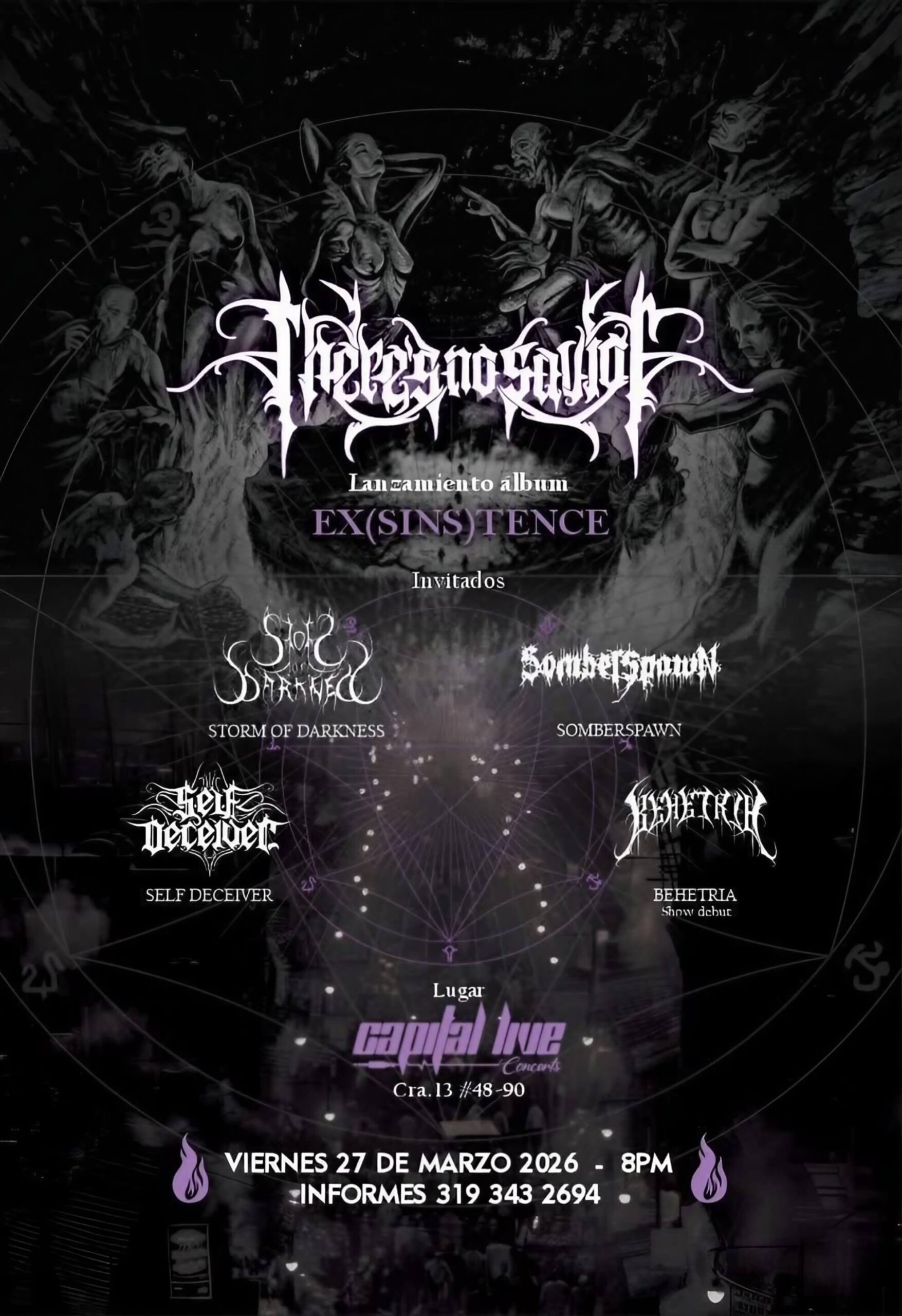
Behetria, identified on the official show poster as making their debut performance, introduces into the evening’s arc the specific charge of a first live appearance before a Bogotá metal crowd. A debut before this audience is its own form of pressure: the community assembled at Capital Live Concerts on March 27 carries a collective musical literacy developed across decades of underground listening, and it applies that literacy immediately and without concession.
El Panóptico
The building at Carrera 7 No. 28-66 has borne two identities across its history, and both remain legible in its stone. Designed by the British architect Thomas Reed in the 1850s and constructed between 1874 and 1905, it was built as the Central Penitentiary of Cundinamarca — a panopticon-inspired prison whose Greek-cross floor plan distributed 104 cells around a central surveillance point, the geometry of institutional control made literal in brick and mortar. It functioned as a prison until 1946, absorbing across seven decades the pressures of Colombia’s civil wars, political upheavals, and the systematic detention of those the state had designated as its adversaries.
In 1948 — the same year the Bogotazo convulsed the capital and remade its social geography — the building was repurposed as the Museo Nacional de Colombia, the oldest museum in the country. The former prison courtyards became gardens; the cells became galleries.
The fortress façade of solid stone with arched windows remained unchanged, as did the cruciform structure whose original logic was the comprehensive visibility of those held within it. The museum now houses more than 20,000 pieces documenting Colombian history from pre-Columbian times to the present, preserving within the architecture of confinement the evidence of what that confinement produced.
From Capital Live Concerts, El Panóptico is approximately twenty-five minutes on foot heading south along Carrera 7, or a short ride to the Museo Nacional TransMilenio station directly outside its entrance. Its relationship to the March 27 bill is not atmospheric.
Storm of Darkness have spent seventeen years making music addressed to the mechanisms of institutional power — anti-religion, war, existentialism directed at the conditions that produce suffering rather than at suffering as a personal condition. A building whose entire architectural logic was the management of human beings under state authority, and which now serves as the repository of the national memory that authority generated, holds a specific gravity for that argument.
Storm of Darkness perform on March 27 not as a guest import into a bill assembled around them, but as one of the evening’s most grounded institutional presences — a band formed in Bogotá, releasing through its own label, playing Chapinero’s mid-size circuit, and addressing through seventeen years of recorded output the specific conditions that produced the community filling the room. The anti-religious themes, the war imagery, the existentialist register of the lyrics are not generic black metal conventions; in the context of Colombian history, they are precise coordinates within the material experience of the audience receiving them.
Across seventeen years and a catalogue running from ‘Before Life, After Death’ through ‘The Black Episode,’ Storm of Darkness have maintained a thematic orientation directed at anti-religion, war, and existentialism without modification toward more accessible territory — which of these three commitments do you hold as the most central to the project’s identity, and what in their recorded output grounds your reading?
References
- González, Juan Pablo, and Claudio Rolle. ‘Historia Social de la Música Popular en Chile, 1890–1950.’ Santiago: Ediciones Universidad Católica de Chile, 2005, pp. 289–294. ↩︎
- Partridge, Christopher. ‘The Lyre of Orpheus: Popular Music, the Sacred and the Profane.’ Oxford: Oxford University Press, 2014, pp. 178–183. ↩︎
- Rowe, William, and Vivian Schelling. ‘Memory and Modernity: Popular Culture in Latin America.’ London: Verso, 1991, pp. 112–117. ↩︎


Leave a Reply