


Few albums in atmospheric metal can claim the geographic specificity of their devotion that ‘Mandylion’ can. Released by Dutch band The Gathering in August 1995, the record did not merely attract listeners in Chile; it assembled a congregation that has outlasted the departure of its central voice, a decade-long absence by its original lineup, and the rise of streaming platforms that have since confirmed what Chilean audiences already knew. Santiago is today, the city where ‘Mandylion’ is heard more frequently than anywhere else on earth.
On October 17, The Gathering performs at Movistar Arena in Santiago — their first show in Chile with vocalist Anneke van Giersbergen since March 2007, when the band recorded the live document ‘A Noise Severe’ at Teatro Caupolicán. The nineteen years between that recording and this concert have been occupied by a departure, a succession, a hiatus, and finally a reunion that the Santiago audience has awaited with a patience that borders on the theological.
From Oss to Century Media Records
The Gathering formed in Oss, in the Dutch province of North Brabant, in 1989, under brothers René and Hans Rutten. Their first two albums — ‘Always…’ in 1992 and ‘Almost a Dance’ in 1993 — were products of the European doom-metal underground, defined by harsh male vocals and an instrumentation that drew from the traditions of Celtic Frost and Hellhammer. By 1994, following two vocalist departures, the band faced dissolution.
Anneke van Giersbergen, then 21 years old, shifted the band’s trajectory irrevocably when she joined in late 1994. ‘Mandylion,’ recorded at Woodhouse Studios in Hagen over sixteen days in June 1995 and released through Century Media that August, sold more than 130,000 copies in Europe and peaked at number 20 on the Dutch Albums Chart, establishing a template that shaped an entire generation of female-fronted atmospheric metal.1
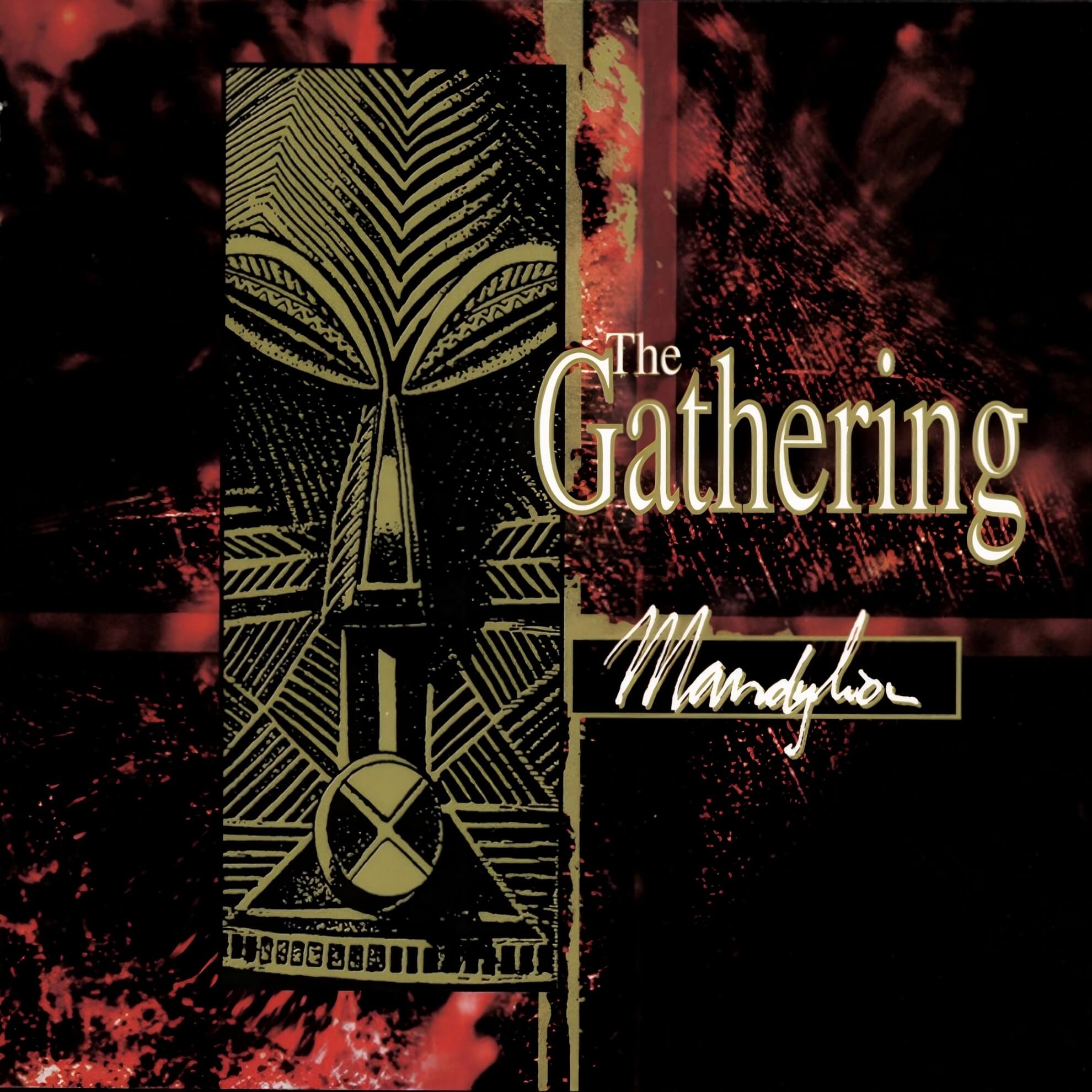
The album’s eight tracks proceed with a slow, heavy deliberateness — doom-inflected guitar riffs intertwined with atmospheric synthesizer layers and long, complex song structures — with van Giersbergen’s contralto moving between intimacy and something approaching liturgical declaration.
Within Temptation’s early gothic-metal output bore visible traces of ‘Mandylion’s approach to integrating clean female vocals over heavy instrumentation, and Epica founder Mark Jansen has cited the album as pivotal to his own musical development.2 The record was not, in other words, merely a milestone within The Gathering’s career. It was a generative act whose consequences are still audible across the genre.
The Chilean Covenant
The Gathering first played Chile in 2004, at the Teatro Providencia in Santiago, in what was planned as a single show. The audience response — an auditorium of people singing along with every lyric of an album whose records had never circulated officially in the country at meaningful scale — required a second date to be added immediately. By 2007, that relationship had deepened enough for the band to choose Santiago as the recording location for ‘A Noise Severe,’ the live document captured on March 24 at Teatro Caupolicán that stands as the most durable record of the van Giersbergen era.
Chile’s sustained devotion to atmospheric and gothic metal operates within a specific socio-cultural history. The decade of institutional suppression that followed the 1973 coup, and its long aftermath, shaped an audience with a particular relationship to music that processed grief and interiority — heavy music in Chile has carried a documentary function that has long exceeded its subcultural classification.3
Santiago’s position as the global city with the highest ‘Mandylion’ streaming figures is not an anomaly. It is the accumulated evidence of a relationship between a Dutch record and a Chilean public that has now lasted longer than many of the band’s original members could have anticipated when the record was pressed.
The Nineteen-Year Gap
Anneke van Giersbergen announced her departure from The Gathering in June 2007, citing her desire to pursue solo projects and spend more time with her family. Norwegian vocalist Silje Wergeland joined the band the following year, and three further studio albums followed — ‘The West Pole,’ ‘Disclosure,’ and ‘Afterwords’ — before an extended hiatus.
The band returned in 2018 and released ‘Beautiful Distortion’ in 2022, touring South America that September with a stop at Teatro Caupolicán that confirmed the Chilean audience’s commitment had survived a decade of lineup change.
In December 2024, the band announced the Mandylion 30th Anniversary Tour, reuniting the original lineup with van Giersbergen for five sold-out shows at Doornroosje in Nijmegen in August 2025. Wergeland departed the band that same month. The October 17 Movistar Arena show is the first occasion since 2007 that René Rutten, Hans Rutten, Hugo Prinsen Geerligs, Frank Boeijen, Jelmer Wiersma, and Anneke van Giersbergen perform together in Chile.
Movistar Arena and the Scale of Demand
The demand for this event confirmed what the streaming figures implied. Initial tickets sold out in hours — 5,000 of the first 9,000 reported gone within the first 60 minutes of the August 2025 sale opening — prompting The FanLab, the show’s promoter, to open additional seating configurations.

The Tribuna section is priced at 40,250 Chilean pesos (approximately $44 USD); Platea Alta at 63,250 pesos (approximately $68 USD); Cancha at 90,850 pesos (approximately $98 USD); and Platea Baja, the premium floor tier, at 113,850 pesos (approximately $123 USD). Support acts had not been announced at the time of publication.
Movistar Arena, located within Parque O’Higgins in central Santiago, holds approximately 15,500 in configured seating — considerably larger than the Teatro Caupolicán shows of 2007 and 2022. That the band approaches this scale speaks to the sustained growth of the Chilean audience’s commitment across the years of interim absence. The anniversary show includes a complete performance of ‘Mandylion’ in sequence, followed by a broader selection of catalog material.
The Basílica de los Sacramentinos Before the Night
Approximately 28 minutes on foot from Movistar Arena, at the intersection of Arturo Prat and Santa Isabel in Barrio San Diego, stands one of Santiago’s most significant and most visibly weathered religious monuments. The Basílica de los Sacramentinos was conceived in the early twentieth century as an explicit homage to the Basilique du Sacré-Cœur in Paris, rendered by architect Ricardo Larraín Bravo in a neoromantic style with pronounced Byzantine elements, its central dome rising 69 meters above street level.
Construction of the crypt began in 1912 and was completed by 1919; the upper temple was delivered for partial use in 1931 and completed in 1934, before being declared a National Historic Monument by Chile’s Consejo de Monumentos Nacionales in 1991.
The structure was damaged twice by major earthquakes — in 1985 and again in 2010 — and its restoration has remained incomplete. That incompleteness is now part of its character: the silhouette reads as something unfinished and enduring simultaneously, its French-inspired profile marked by what the tremors left behind. The interior includes a 1,500 m² crypt lit through tall windows, French stained glass, a German-commissioned pipe organ, and a marble communion rail imported from France.
‘Mandylion’ operates in a register of slow weight, introspection, and an interior solemnity that the basilica’s spatial character — the experience of standing inside it — sustains without effort. The album’s eight tracks proceed with the gravity of something raised to last, repeatedly damaged, and still standing. The city that streams this record more than any other on earth also raised this monument and has not been able to finish restoring it; that correspondence, between what the music holds open and what the stone refuses to resolve, is worth sitting with before the Movistar Arena’s doors open at 21:00.
What Survives the Distance
Three decades after its release, ‘Mandylion’ resists the tendency toward nostalgia that anniversaries generally invite. The album does not simplify across time; it accumulates meaning in proportion to the distance between its original moment and the present one. The Chilean audience that will fill Movistar Arena on October 17 is not the same audience that packed the Teatro Providencia in 2004, though some of the people in that room will have been there.
What the evening represents is neither repetition nor retrieval, but something closer to proof: that an album can outlast the circumstances of its making, the departure of its central voice, and the years that followed, and still arrive in a new room with the same weight it carried when it was new.
When an album accumulates its deepest meaning not in its country of origin but thousands of miles away, across entirely different histories — what does that displacement tell us about whose interior life the music was speaking to from the beginning?
References
- Rob Walser, ‘Running with the Devil: Power, Gender, and Madness in Heavy Metal Music’ (Middletown: Wesleyan University Press, 1993), 108–114. ↩︎
- Deena Weinstein, ‘Heavy Metal: The Music and Its Culture,’ rev. ed. (Cambridge: Da Capo Press, 2000), 60–67. ↩︎
- Steve J. Stern, ‘Battling for Hearts and Minds: Memory Struggles in Pinochet’s Chile, 1973–1988’ (Durham: Duke University Press, 2006), 205–212. ↩︎

Leave a Reply