
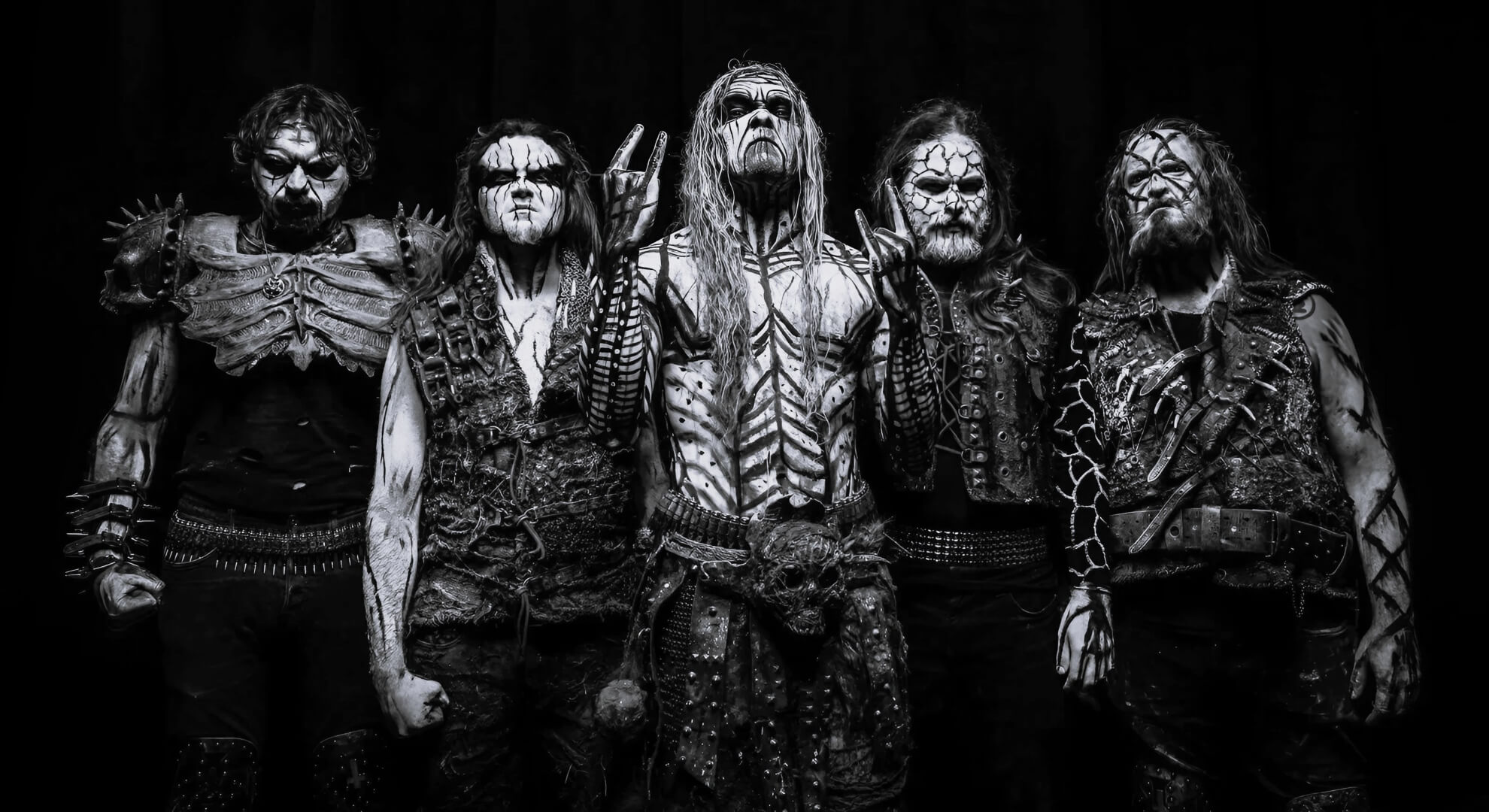


In the eternal twilight of my study in Bogotá, a new transmission arrives—not a homecoming, but a departure. The digital flyer that now circulates through the underground is a declaration of expansion, a map drawn in charcoal and blood. It confirms that Thy Antichrist, the seminal entity born in the violence of Medellin and now based in Dallas, United States, will bypass the Northern Andes to undertake an epic trajectory towards the Southern Cone in 2026.
The announcement is definitive: “Confirmed! Thy Antichrist arrives for the first time in Peru, Chile, and Argentina,” and indeed, this tour is a seismic shift. The narrative has evolved from one of return to one of conquest. The Beast is no longer just looking back at its roots; it is marching forward into the “Inca magic” and the “heart of Buenos Aires,” elevating the mystique of the metal underground to a continental scale.
Tracing the Bloodline of Medellín
Gauging the weight of this southern expansion, one must first examine the soil from which the entity sprang. The history of metal in Colombia is not a footnote to the European narrative; it is a parallel gospel, written in blood.
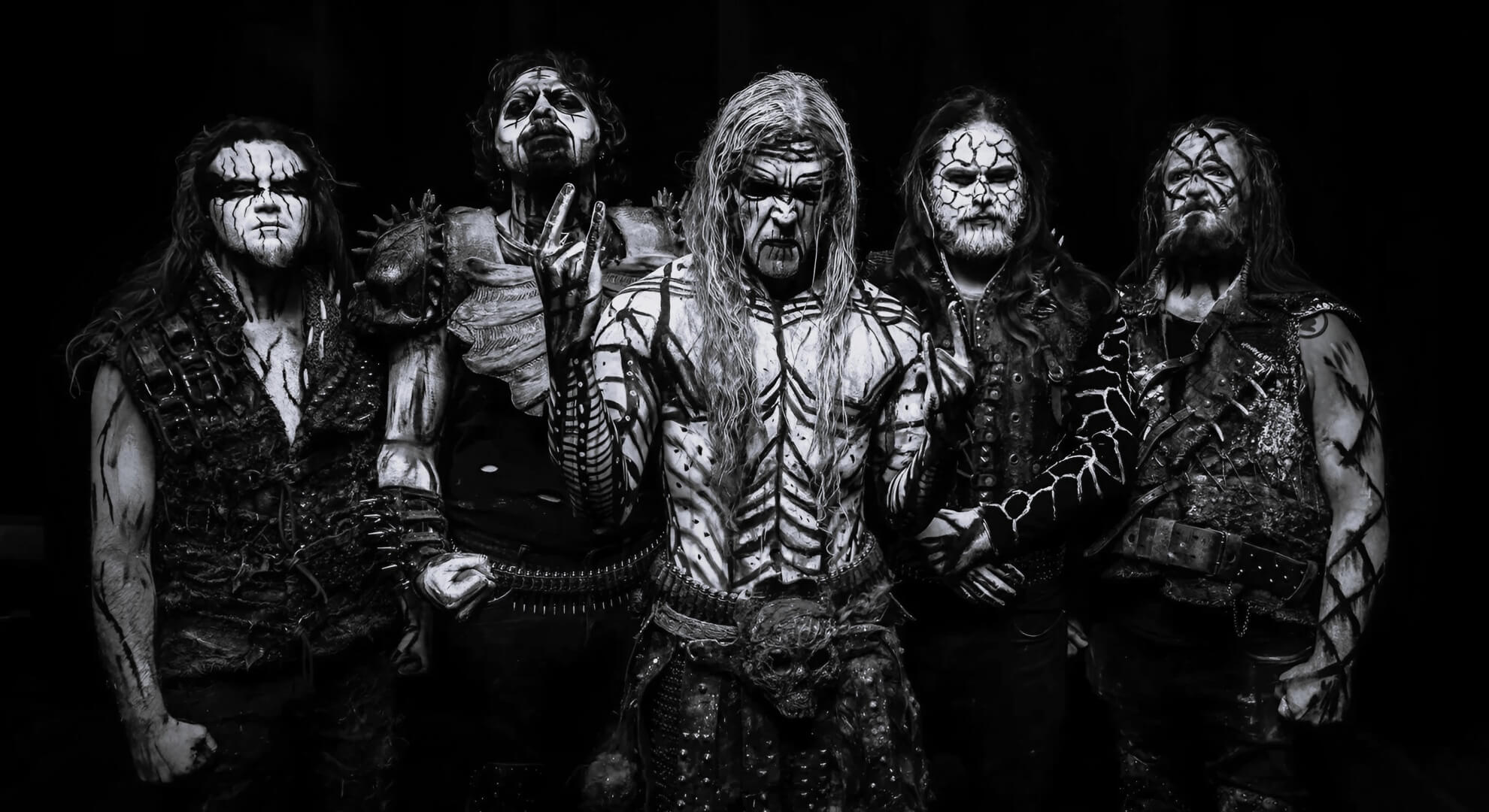
Thy Antichrist was formed in Medellín in 1998. To the uninitiated, 1998 might seem late in the canon of Black Metal, coming years after the Norwegian inner circle had already burned their churches and buried their dead. However, the Colombian context provides a grim authenticity that Scandinavia, with its high standard of living and social safety nets, could never replicate.
Medellín in the 1980s and 1990s was the most dangerous city on earth. The violence was not a verse aesthetic; it was the atmosphere. As historian Gerard Martin notes, the convergence of narcoterrorism and state fragmentation created a “culture of urgent mortality” that permeated every aspect of urban life.1
This is the lineage Andres Vargas—known as “Antichrist 666”—inherited. When he founded Thy Antichrist, he was not play-acting at evil; he was channeling the “chaotical reality” of his environment. Now, that specific frequency of Medellín darkness is set to collide with the distinct melancholia of the South.
A Philosophy of Existential Rebellion
It is imperative to clarify the philosophical underpinnings of the band’s nomenclature. As Vargas has elucidated in numerous interviews, the “Antichrist” is not a crude invocation of biblical devilry, but a direct reference to Friedrich Nietzsche’s seminal work, ‘The Antichrist.’ This distinction is vital for the cultural historian. We are not dealing with theatrical Satanism, but with “Existentialist Black Metal.”
Vargas frames his persona as a mirror reflecting the broken religious and political systems that have historically strangled the region. As Nietzsche argues, the rejection of “pity” and the embrace of vitalism is essential for the revaluation of values.2
As the band prepares to step onto stages in Lima, Santiago, and Buenos Aires, they carry this critique with them—a pan-Latin American message of sovereignty that transcends borders.
The Diasporic Weight of Exile
The band’s relocation to Dallas, Texas, in 2011 was not merely a change of address; it was a self-imposed exile that fundamentally altered the band’s metaphysical trajectory. This distance did not result in a softening of their edges. Instead, the diaspora weaponized their identity.
In the saturated market of North American metal, the “Latin American Warrior” archetype became a necessary armor. Anthropological studies on musical diaspora suggest that the immigrant artist often engages in “strategic essentialism,” amplifying specific cultural markers to carve out a sovereign space in the host culture.3
This tension is audible in their recent output; the exile has sharpened the blade. The upcoming 2026 tour represents a complex movement: an entity born in Colombia, hardened in Texas, now descending upon the Southern Cone to claim new territory. It is a demonstration of power accumulated in the void, proving that the Beast’s domain is no longer local, but continental.
Dissecting the ‘Wrath of the Beast’
The sonic vehicle for this southern crusade is the ‘Wrath of the Beast’ cycle, a body of work that serves as both a manifesto and a chart of the band’s evolution. While the album has circulated in the bloodstream of the metal community since its release via Napalm Records, its presentation in Peru, Chile, and Argentina in 2026 marks a premiere—a first contact.
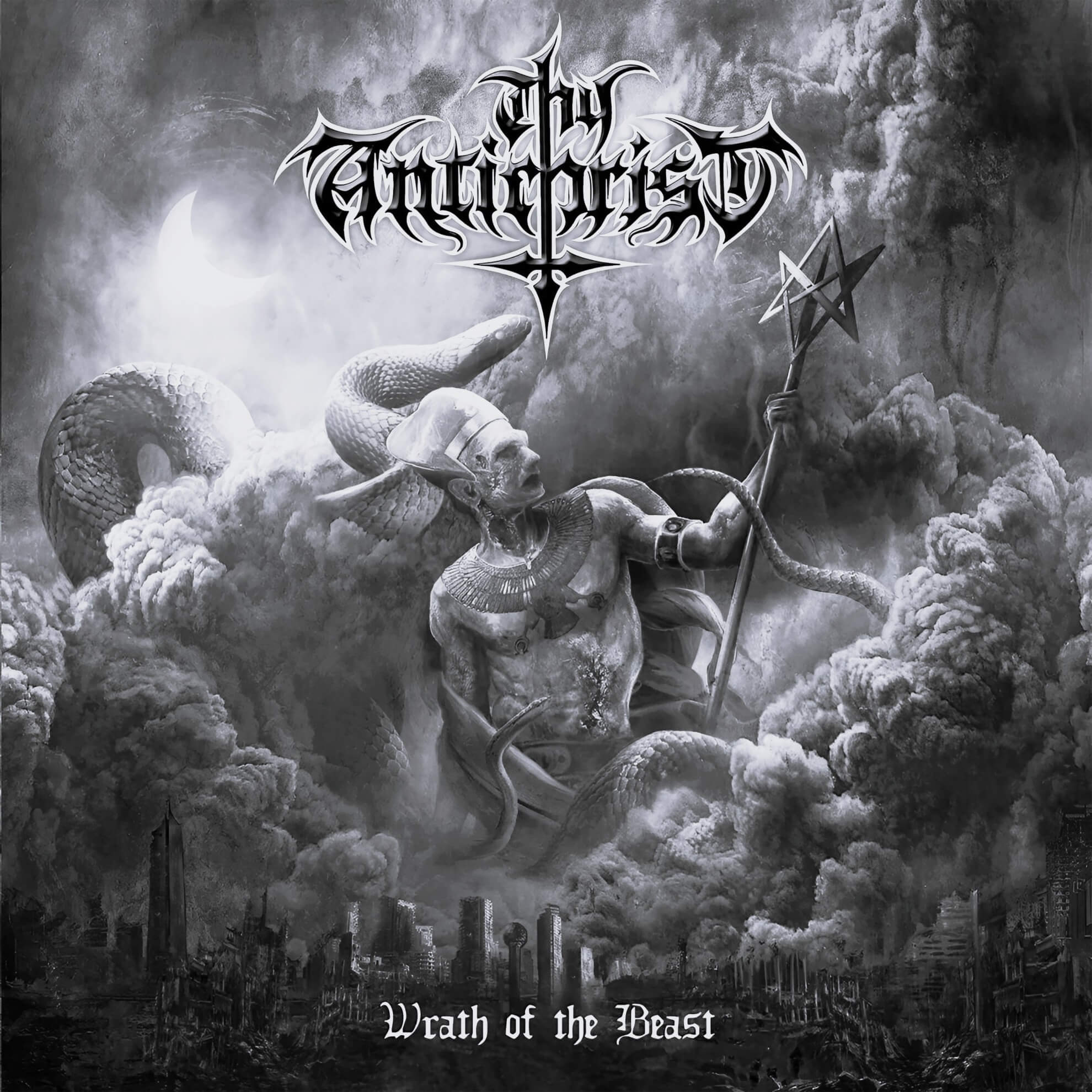
This era of Thy Antichrist marks a curious and potent hybridity, sitting at the intersection of traditional Black Metal ferocity and a polished, almost Thrash-like precision. One need only look to the track ‘Desolation’ to recognize the narrative weight of this performance. Opening with a flamenco-styled acoustic passage, the song acts as a sonic tether between the Andalusian Latin heritage and the blackened storm of the genre.
The setlist is anchored by anthems like ‘Metal to the Bone,’ a track that transcends simple heavy metal worship to become a tribal unifier. In the context of a sold-out venue in Santiago or Buenos Aires, this song functions as the liturgy’s creed. Meanwhile, ‘The Great Beast’ invokes the Crowleyan and Nietzschean archetypes that underpin Vargas’s philosophy, transforming the mosh pit into a space of cosmic horror and existential assertion.
Material from this cycle displays a significant evolution in production. The drums, recorded at Alpaca Ranch Studios in Florida, possess a punch and clarity that defies the lo-fi constraints of the genre’s origins. This “cleaning” of the sound is a necessity for the theatrical magnitude of the tour. It ensures that the intricate Latin-style guitar flourishes are not lost in a sonic barrage, allowing the nuance of the tragedy to shine through the aggression as they fill the halls of the South.
The Shamanic Ritual of the Painted Skin
The flyer depicts Vargas in his signature body paint. This is not the corpse paint of Dead or Euronymous. Vargas spends between two and a half to three hours applying this “ritualistic” paint before every show.
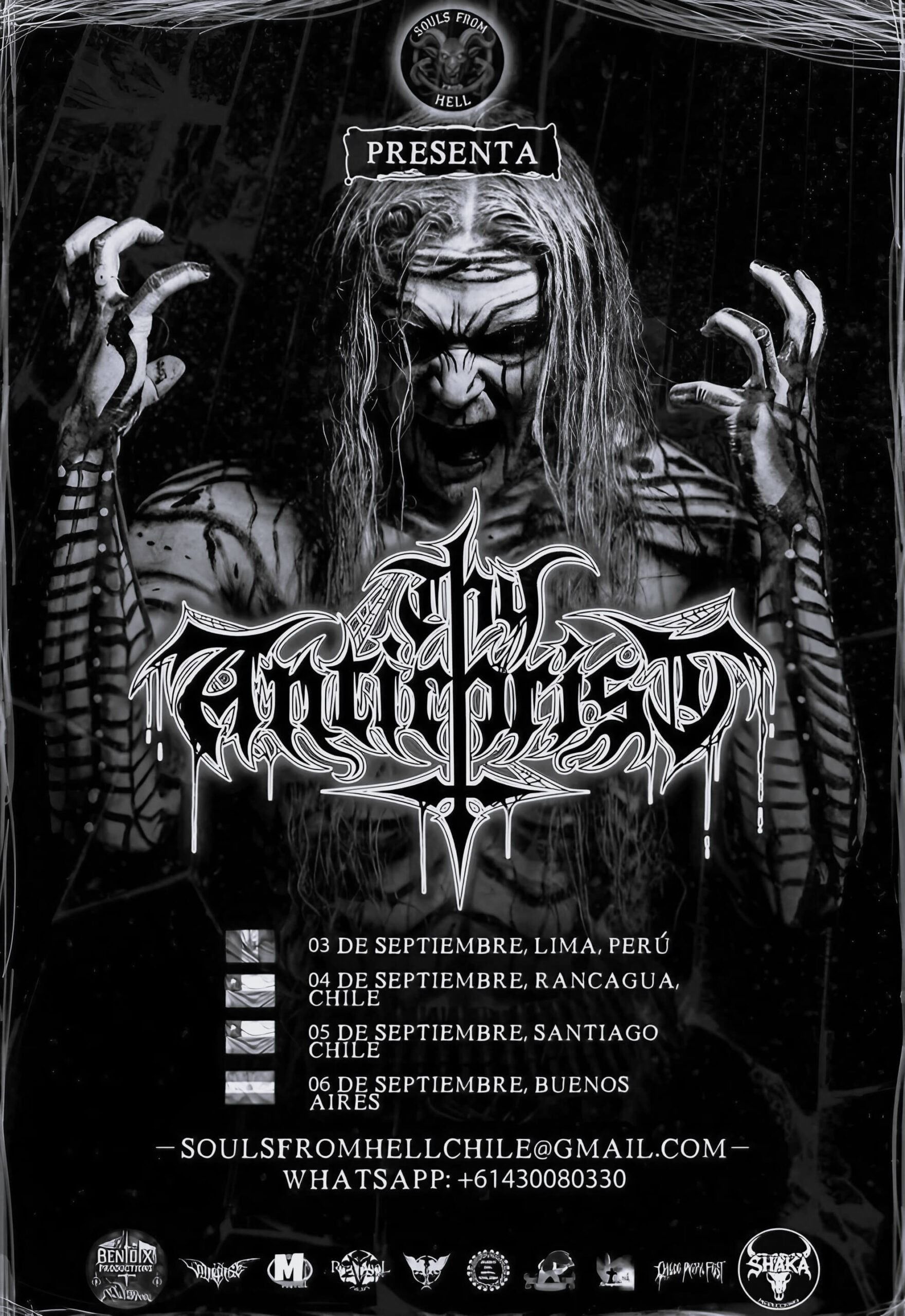
The design—white stripes contouring the musculature, black voids accentuating the eyes and mouth—is described as “sui generis.” To the untrained eye, the aesthetic might appear merely as a genre trope, but a historiographical lens reveals a deeper lineage.
The stark, high-contrast application shares less with the campy theatrics of 1970s shock rock and more with the jagged, anxiety-ridden shadows of German Expressionist cinema—think the somnambulist in Robert Wiene’s ‘The Cabinet of Dr. Caligari.’4 Yet, the performance itself transcends this European angst, moving into the realm of the “panic movement.”
A cultural analysis reveals in this paint a profound syncretism. It evokes the skeletal imagery of the “Danse Macabre” of medieval Europe, yes, but it also strongly resonates with indigenous tradition. Anthropologist Gerardo Reichel-Dolmatoff has extensively documented how shamanic traditions employ transformation masks to facilitate the “flight” into supernatural realms.5 Vargas explicitly rejects the nihilism of the corpse paint trope, grounding his aesthetic instead in ancestral connection.
This sentiment is the key to decoding the live performance. The concert is not a gig; it is a ceremony. The “Antichrist” is a shamanic figure mediating between the chaotic reality of the modern world and the primal forces of nature.
The Southern Cone
The tour announcement specifies a journey “from Inca magic to the heart of Buenos Aires.” This geographical distinction is critical. The audiences of Peru, Chile, and Argentina possess a distinct fervor, a “mystique” that the band explicitly seeks to elevate.
Stoicism of the Old World
In Europe, the metal crowd is often appreciative but regulated. As sociologist Keith Kahn-Harris observes, the global north engages in “scenic capital,” where participation is performative.6 In contrast, the Southern Cone offers a different alchemy. In Chile and Argentina, the concert is not consumed; it is survived. There is a “Dionysiac sacred ritual of communal chanting.” The intensity is a desperate, vital assertion of existence.
The volatility of daily life in South America creates a reservoir of repressed energy. The “catharsis” here is real. When Thy Antichrist plays ‘Metal to the Bone’ in Buenos Aires in 2026, the crowd will not just sing the lyrics; they will scream them as a declaration of identity. This tour is a meeting of two intense forces: the existential darkness of the Northern Andes meeting the passionate fury of the Southern Cone.
Furthermore, the timing is significant. The tour is set for 2026. The themes of ‘Wrath of the Beast’—ecological collapse, political lies, and existential dread—are more relevant now than ever. The “Antichrist” is no longer a warning; it is a description of the current geopolitical reality. The tour frames the event as a “Mass.” It is a religious experience for the godless. It is a moment where the “Latin American Warrior Metal” asserts its dominance across the continent.
The Prophecy of Expansion Fulfilled
Studying the announcement of the Souls from Hell booking, it becomes clear that this is more than a logistical itinerary; it is a spiritual geography. The “Epic Journey to the South” is a narrative arc that completes the band’s identity. They have conquered the North; now they turn their gaze to the South.
From the ancient stones of Peru to the nocturnal streets of Santiago and the fervent heart of Buenos Aires, the Beast is coming. The wait has been measured in years, but the payoff will be measured in decibels and adrenaline. The mystic connection of the metal underground is about to be elevated to its highest peak.
As we await this descent in 2026, the audience is invited to reflect on the continental significance of this movement: How does the expansion of a Colombian-born, United States-based entity into the distinct cultural theaters of Peru, Chile, and Argentina reshape our understanding of Latin American metal identity?
Citations:
- Gerard Martin, ‘The Culture of Violence in Colombia, in Violence in Colombia: The Contemporary Crisis in Historical Perspective’ (Wilmington, DE: Scholarly Resources, 1992), 125. ↩︎
- Friedrich Nietzsche, ‘The Antichrist,’ trans. H. L. Mencken (New York: Alfred A. Knopf, 1918), 45-47. ↩︎
- Thomas Turino, ‘Nationalism and Latin American Music: Selected Case Studies and Theoretical Considerations,’ Latin American Music Review 24, no. 2 (Fall/Winter 2003): 169–209. ↩︎
- Lotte H. Eisner, ‘The Haunted Screen: Expressionism in the German Cinema and the Influence of Max Reinhardt’ (Berkeley: University of California Press, 1973), 17. ↩︎
- Gerardo Reichel-Dolmatoff, ‘Amazonian Cosmos: The Sexual and Religious Symbolism of the Tukano Indians’ (Chicago: University of Chicago Press, 1971), 104-106. ↩︎
- Keith Kahn-Harris, ‘Extreme Metal: Music and Culture on the Edge’ (Oxford: Berg Publishers, 2007), 122. ↩︎

Leave a Reply