

The gothic inheritance has always functioned through stolen property. Estates built on colonial fortunes, heirlooms extracted from subjugated territories, libraries filled with the accumulated plunder of empire. What Horace Walpole codified in 1764 with ‘The Castle of Otranto’ was a genre that aestheticized precisely the anxieties of those who had benefited from imperial violence: the fear that buried crimes would surface, that bloodlines carried guilt, that the house itself might turn against its masters.
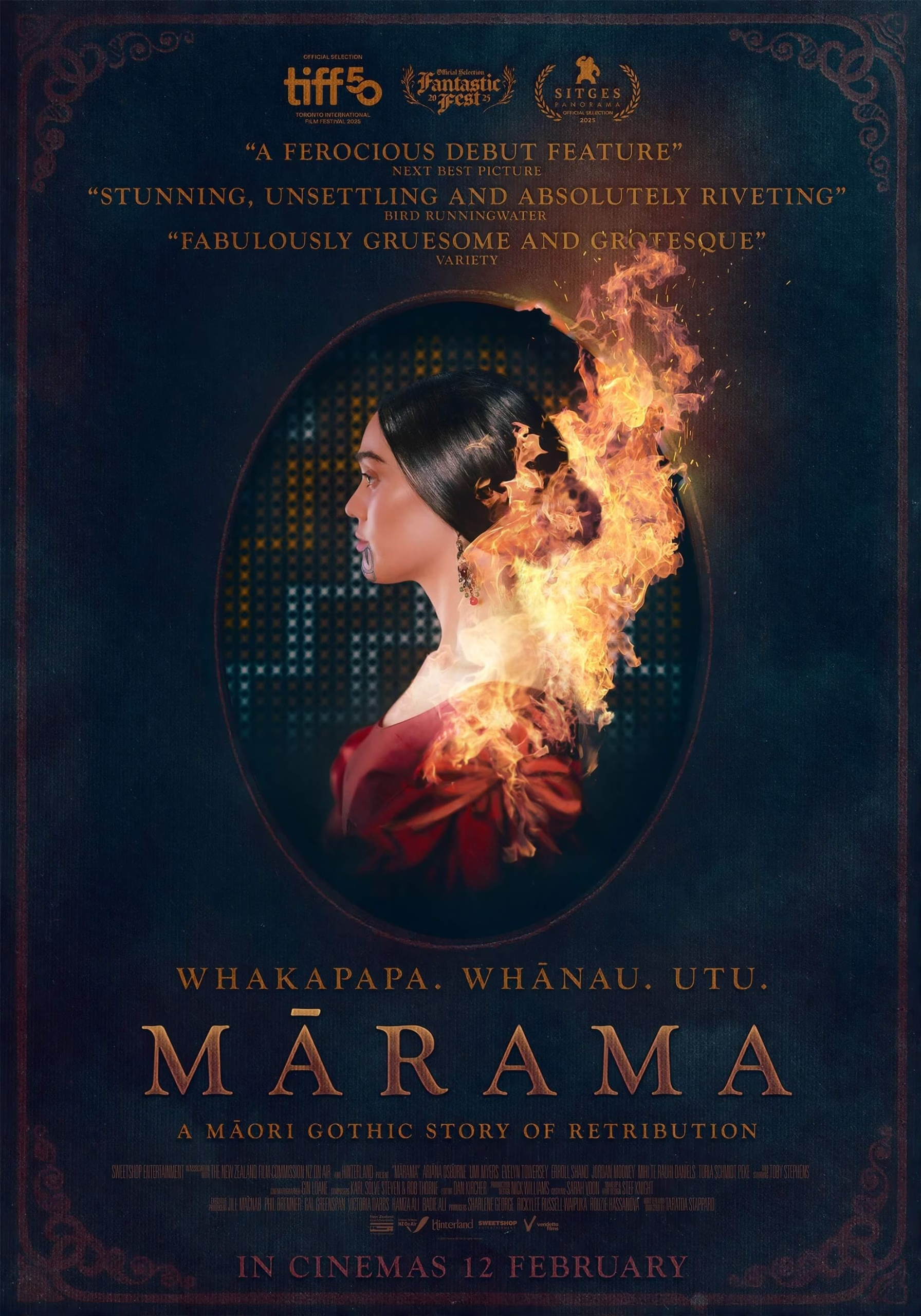
Taratoa Stappard’s ‘Mārama,’ opening in United States theaters today via Dark Sky Films and Watermelon Pictures, seizes that framework and redirects it. The film opens not with a naive governess entering a mysterious manor, but with a young Māori woman arriving in 1859 Yorkshire already carrying the knowledge that whatever she finds will be worse than gothic tradition permits her to imagine.
The Premise and Its Lineage
Mary Stevens, played by Ariāna Osborne in her first leading role, has been summoned from Aotearoa New Zealand to Hawkser Manor by a letter promising information about her parents. The man who sent it dies before her arrival. Sir Nathaniel Cole, a titled landowner who made his fortune as a South Seas whaler, offers her employment as governess to his granddaughter. Cole speaks te reo Māori fluently, displays Māori taonga throughout his estate, and positions himself as a benefactor.
The film’s opening content warning makes explicit what genre convention would render ambiguous: this will be a story about the violation and desecration of Māori culture.
Stappard, who wrote and directed ‘Mārama’ as his feature debut, has situated the film within a documented lineage. The production notes describe it as the first entry in a planned trilogy of Māori gothic horror stories about colonial violence met with Indigenous retribution. That framing positions the work not as isolated intervention but as the inauguration of a sustained formal project.
The gothic has functioned as a literature of imperial anxiety since its inception. From Ann Radcliffe’s ‘The Mysteries of Udolpho’ through Bram Stoker’s ‘Dracula,’ the genre has positioned foreign threat and contaminated bloodlines as sources of horror. What Stappard has constructed is a film that accepts the manor house, the secret history, the visions that blur past and present, and the final confrontation between hidden knowledge and entitled power, but inverts the source of the threat. The horror in ‘Mārama’ is not what enters the estate from outside but what the estate was built to conceal.
Formal Strategies and Visual Grammar
Gin Loane’s cinematography organizes the film around a tension between the inherited visual vocabulary of period gothic and a register that refuses its traditional comforts. The manor interiors are rendered in the expected shadowed corridors and candlelit chambers, but the framing persistently denies the conventional reassurances of gothic space. Where Roger Deakins might have used shadow to create mystery that the narrative would eventually resolve, Loane uses it to produce sustained unease that the film never relieves.
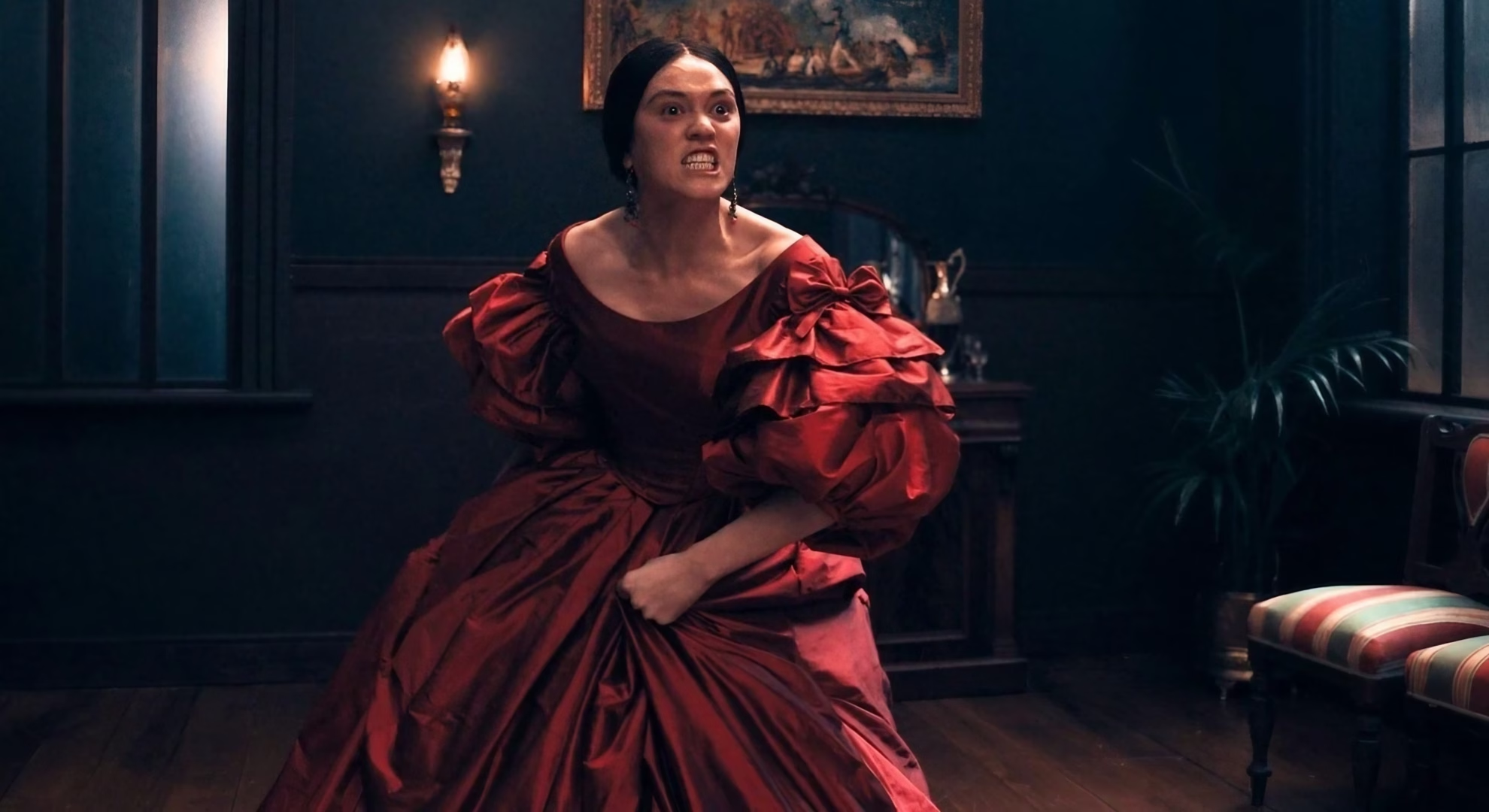
Critical reception has noted the film’s reliance on natural lighting within the studio-built sets, a choice that produces an atmosphere distinct from either the high-contrast expressionism of classic gothic or the desaturated palette that has become shorthand for prestige period drama. The light in ‘Mārama’ is neither romantically dim nor clinically flat. It renders the estate as a space that exists in historical time but refuses historical distance.
Dan Kircher’s editorial structure generates dread through a specific formal choice: the visions that Mary experiences are not marked as subjective intrusions but are cut into the present-tense action with the same visual authority. The film does not use the conventional signals — desaturation, altered sound design, soft focus — that would distinguish memory from immediate experience. This produces a continuous present in which past violence is not metaphorically haunting but actively occurring.
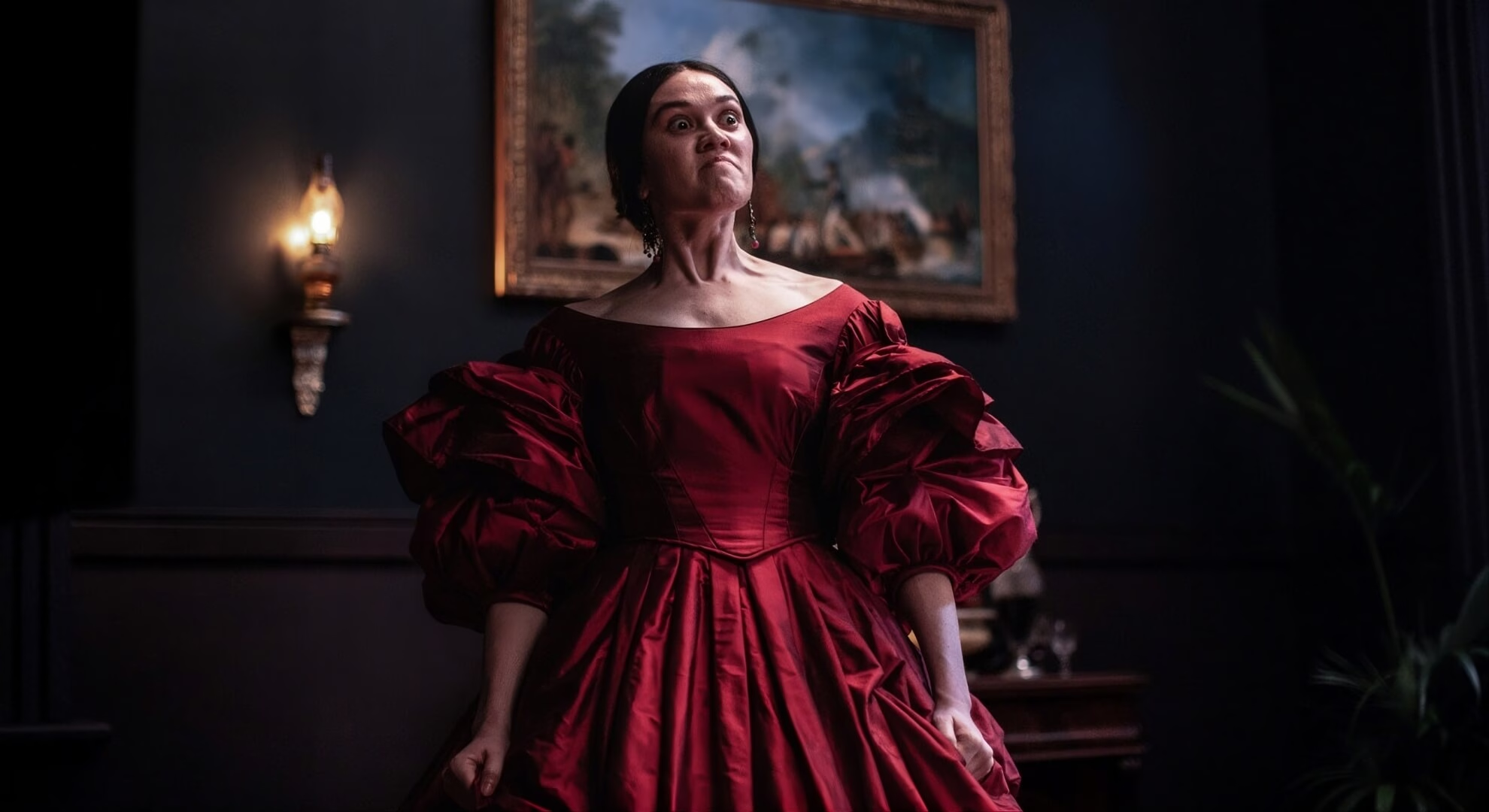
Nick Williams‘s production design transforms the manor into what one New Zealand critic described as a decadent mausoleum of colonial excess. The taonga displayed throughout the estate are not props positioned to suggest authentic period detail but are framed as stolen objects whose presence indicts the space that contains them. Sarah Voon’s costume design anchors Osborne’s Mary in period-accurate dress while reserving a single departure for the film’s central confrontation: a blood-red gown that multiple reviewers have identified as the visual fulcrum of the narrative.
The Score as Cultural Reclamation
Karl Sölve Steven and Rob Thorne’s score operates as a formal argument about whose cultural authority governs the sonic landscape of the film. The composers have constructed a soundscape that refuses the conventional orchestral grammar of period gothic in favor of a score rooted in Māori musical traditions. Māori artist Theia contributed a reworked version of her song ‘Holy War II’ for the film’s promotional campaign, a collaboration that Stappard has described as extending the film’s thematic concerns into the musical sphere.
The use of traditional instruments and vocal techniques positions the score not as atmospheric enhancement but as active assertion of Indigenous presence within a genre that has historically functioned to aestheticize Indigenous erasure. This is sound design as territorial claim.
Osborne’s Performance and the Weight of Dual Identity
Ariāna Osborne carries the film through a performance that critical consensus has described as both controlled and volatile. Mary arrives at Hawkser Manor already performing assimilation — she has anglicized her name from Mārama, has been raised outside her culture, presents herself with the deferential composure expected of a governess entering service. Osborne’s work in the film’s first act consists of allowing that performance to fracture incrementally as the manor’s secrets surface.
The central sequence, in which Mary performs a haka at a costume party where Cole’s guests have dressed in mockery of Māori culture, has been identified by multiple critics as the film’s defining moment. Osborne, clad in the red gown, transforms the party into a site of confrontation that the guests cannot comprehend and the film refuses to soften. The sequence was performed without storyboards, with cultural consultant Ngahuia Kopa and producer RickyLee Waipuka-Russell working directly with Osborne to shape the choreography.
What Osborne accomplishes in that moment is the visible reclamation of an identity that the character has been systematically denied. The performance is not cathartic release but tactical deployment of cultural knowledge as weapon.
Stephens as Imperial Entitlement Incarnate
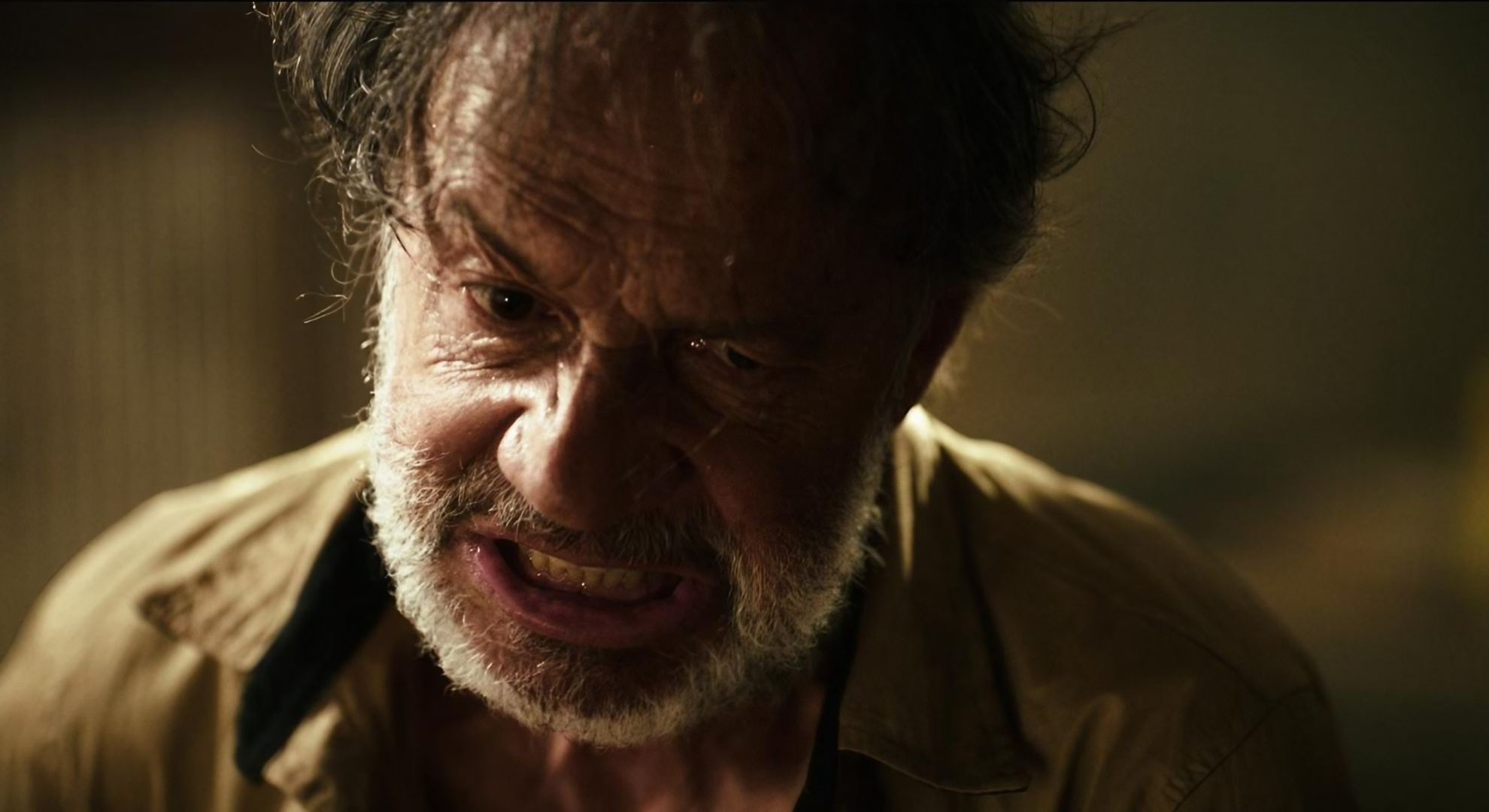
Toby Stephens, cast as Sir Nathaniel Cole, constructs the antagonist not as a figure of overt menace but as a man who genuinely believes his fascination with Māori culture constitutes respect. Cole’s fluency in te reo Māori, his careful preservation of stolen taonga, his insistence that he is honoring what he has taken — Stephens plays all of this as sincere conviction rather than calculated manipulation.
The performance generates horror precisely because Cole does not understand himself as a villain. He positions himself as curator, patron, preserver. The film’s refusal to grant him even the dramatic satisfaction of self-awareness is part of its formal rigor. Stephens has described Cole as a character who operates from a worldview in which ownership and appreciation are indistinguishable concepts.
Festival Reception and Distribution Context
‘Mārama’ premiered at the Toronto International Film Festival on September 5, 2025, in the Discovery programme, which is dedicated to identifying emerging directorial voices. The film subsequently screened at Fantastic Fest, Sitges, AFI Fest, and Palm Springs International Film Festival before its New Zealand theatrical release on February 12, 2026.
Dark Sky Films and Watermelon Pictures, both subsidiaries of MPI Media Group, acquired North American distribution rights in a deal negotiated during the Toronto festival. The April 17 United States theatrical release marks Dark Sky’s widest theatrical deployment to date for a genre acquisition. The distribution model — simultaneous limited theatrical and eventual streaming availability through a genre-focused platform — mirrors the strategy employed for other festival-originated horror films that operate outside conventional studio frameworks.
The film was produced by Sharlene George for The Sweetshop, with Rickylee Russell-Waipuka and Rouzie Hassanova as co-producers and Paraone Gloyne serving as Pou Tiaki Reo and Tikanga, the Māori language and culture producer. Vendetta Films and MPI Media Group served as additional production partners. Stappard developed the project with support from the New Zealand Film Commission, imagineNATIVE, The Black List, and the Berlinale Co-Production Market.
Situating the Film Within Decolonial Horror
‘Mārama’ arrives within a documented trajectory of Indigenous and diasporic filmmakers reclaiming horror as a genre through which to address the literal terrors of colonialism and displacement. Remi Weekes’s ‘His House’ positioned refugee trauma within a haunted house framework. Issa López’s ‘Tigers Are Not Afraid’ deployed magical realism to confront cartel violence in Mexico. Jennifer Kent’s ‘The Nightingale’ used the rape-revenge tradition to examine colonial genocide in Tasmania.
What distinguishes Stappard’s approach is the decision to work entirely within the formal constraints of Victorian gothic rather than importing contemporary horror grammar into a period setting. ‘Mārama’ accepts the candlelit corridors, the governess narrative, the isolated estate, and the revelation of hidden bloodlines. It does not modernize these elements or ironize them. Instead, it demonstrates that the gothic was always already a genre about colonial violence — it simply positioned the colonizer as protagonist rather than perpetrator.
The film’s relationship to the Brontë tradition has been noted by multiple critics. Charlotte Brontë’s ‘Jane Eyre’ and Emily Brontë’s ‘Wuthering Heights’ both positioned the Yorkshire moors as sites of romantic danger and class transgression. What those novels aestheticized as atmospheric remoteness was the geographic distance from empire’s centers of power. Stappard has chosen to set ‘Mārama’ in the same landscape but to make visible the imperial extraction that the Brontës’ work rendered invisible.
The Question of Complicity
The most contested element in critical reception has been the film’s final act, which several reviewers have described as moving from psychological horror into explicit violence. Without detailing specific plot developments, the shift in register has generated debate about whether the film’s escalation into what one critic termed Grand Guignol excess represents a formal choice or a concession to genre expectations.
The argument in favor of the escalation holds that a film about the desecration of Māori culture and the sexual violence enacted against Indigenous women cannot responsibly conclude with gothic ambiguity. The counterargument suggests that by delivering the visceral satisfactions of revenge horror, the film risks replicating precisely the voyeuristic relationship to violence that it purports to critique.
This tension is not unique to ‘Mārama.’ It is the structural problem that attends any work that attempts to use genre conventions to interrogate the ideological work those conventions perform. Michael Powell’s ‘Peeping Tom’ identified this problem in 1960 and offered no resolution beyond the acknowledgment that the camera recording suffering and the camera critiquing that act are the same instrument.
Stappard has positioned ‘Mārama’ as a film that refuses the safety of critical distance. In interviews, he has described the project as shaped by his own position as a filmmaker of mixed Māori and English heritage reckoning with family history. The film opens with his cards on the table: this will depict violence that actually occurred, and the audience will not be granted the comfort of metaphor.
The gothic has always been a genre about who gets to tell the story of the house and what it contains. For two and a half centuries, that authority has belonged to the descendants of empire. ‘Mārama’ demonstrates that the conventions themselves — the isolated estate, the buried crime, the revelation that shatters the present — remain structurally sound when redirected. What changes is not the mechanism but the position from which it operates.
Stappard has announced this as the first film in a trilogy. That commitment suggests an understanding that a single work cannot exhaust the formal possibilities of Indigenous gothic, any more than ‘The Castle of Otranto’ exhausted the possibilities of the genre it inaugurated. The question ‘Mārama’ poses is whether horror cinema is prepared to reckon with the fact that the monsters were always already inside the manor.
How does Stappard’s stated intention to create a Māori gothic trilogy shift the conversation from whether Indigenous filmmakers can work within European genre traditions to what those traditions reveal when no longer controlled by the cultures that created them?

Leave a Reply