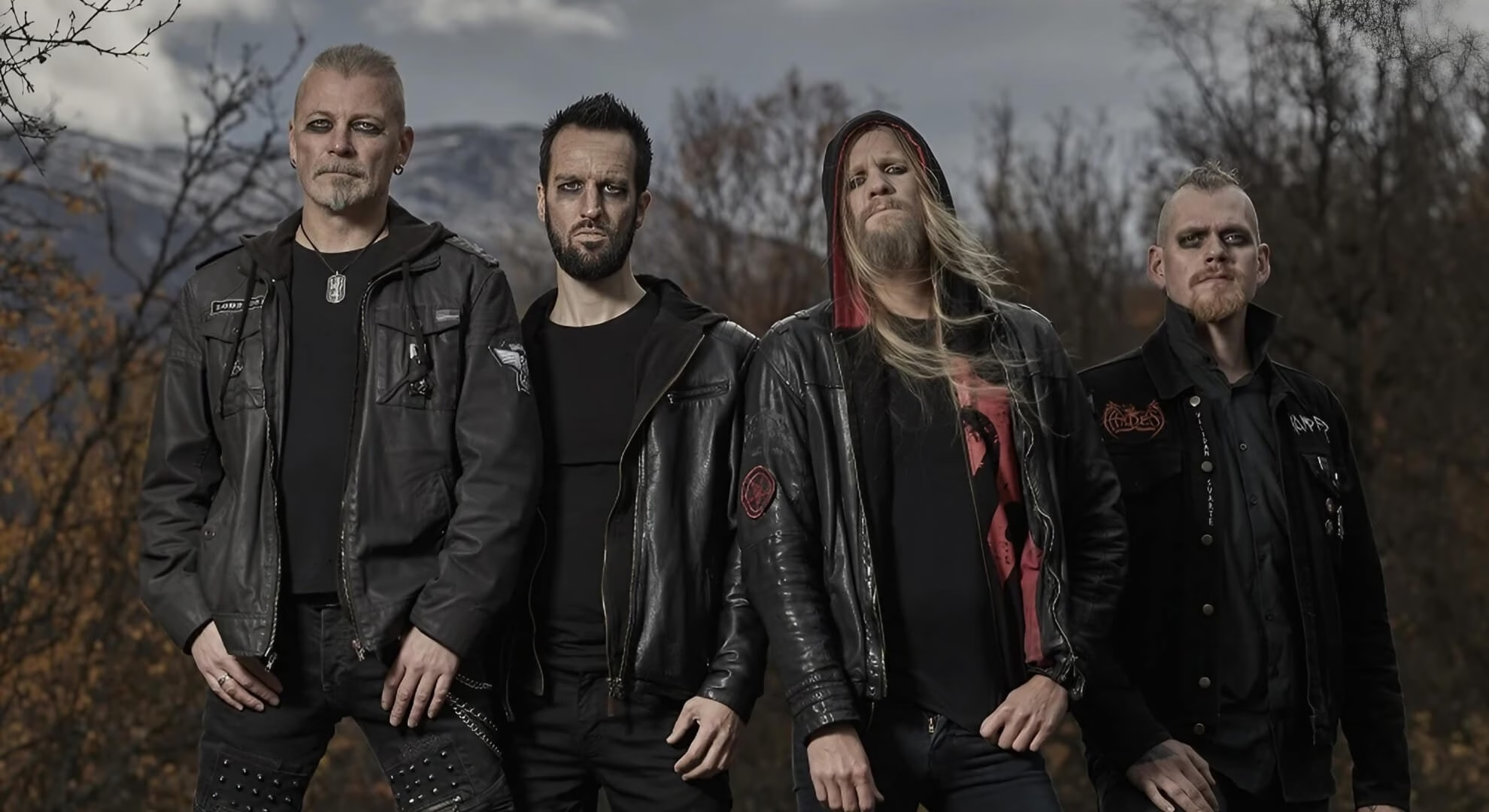


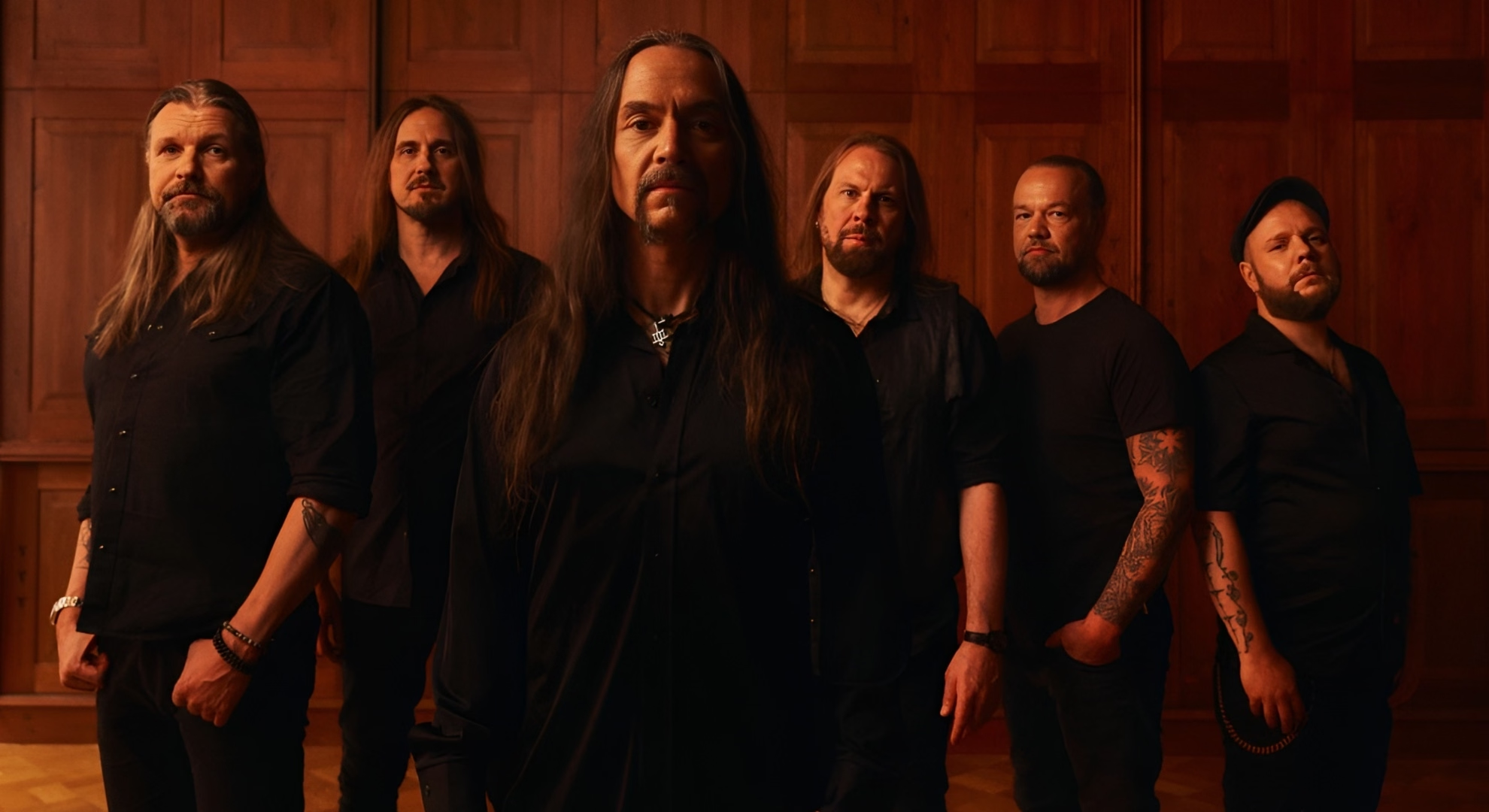
The Glomma empties into the Oslofjord at Fredrikstad, a flat industrial city on Norway’s southeastern coast where the winters are hard and the summers too brief to trust. That city—its river, its light, its ancient name—has been transmuted, by one band, into thirty-two years of black metal. When Kampfar arrives at the Corporacion Cultural Ciudad Frecuencia in Medellín on May 27th, 2026, the distance between these two cities collapses into a collision that has been thirty years in the making.
This is Kampfar’s Colombian debut. Three days before this Medellín appearance, the band completed its first performance in Bogotá. The Three Decades of True Norse Black Metal Latin America 2026 tour now moves three hundred kilometers northwest along the Andean cordillera, from the high-altitude capital into the Valle de Aburrá—a narrower valley, a lower altitude, and a city whose relationship with extreme metal was shaped under circumstances that make even the bleakest Norwegian tradition seem serene by comparison.
The Thirty-Year Arrival
The band that vocalist and primary force Dolk founded in Fredrikstad in 1994 made a decisive choice from the beginning: to reject the Satanic iconography that dominated Norwegian black metal’s most visible chapter and anchor the music in the pre-Christian traditions of the Norse territory—its mythology, its seasonal cycles, its pagan ceremonial framework.
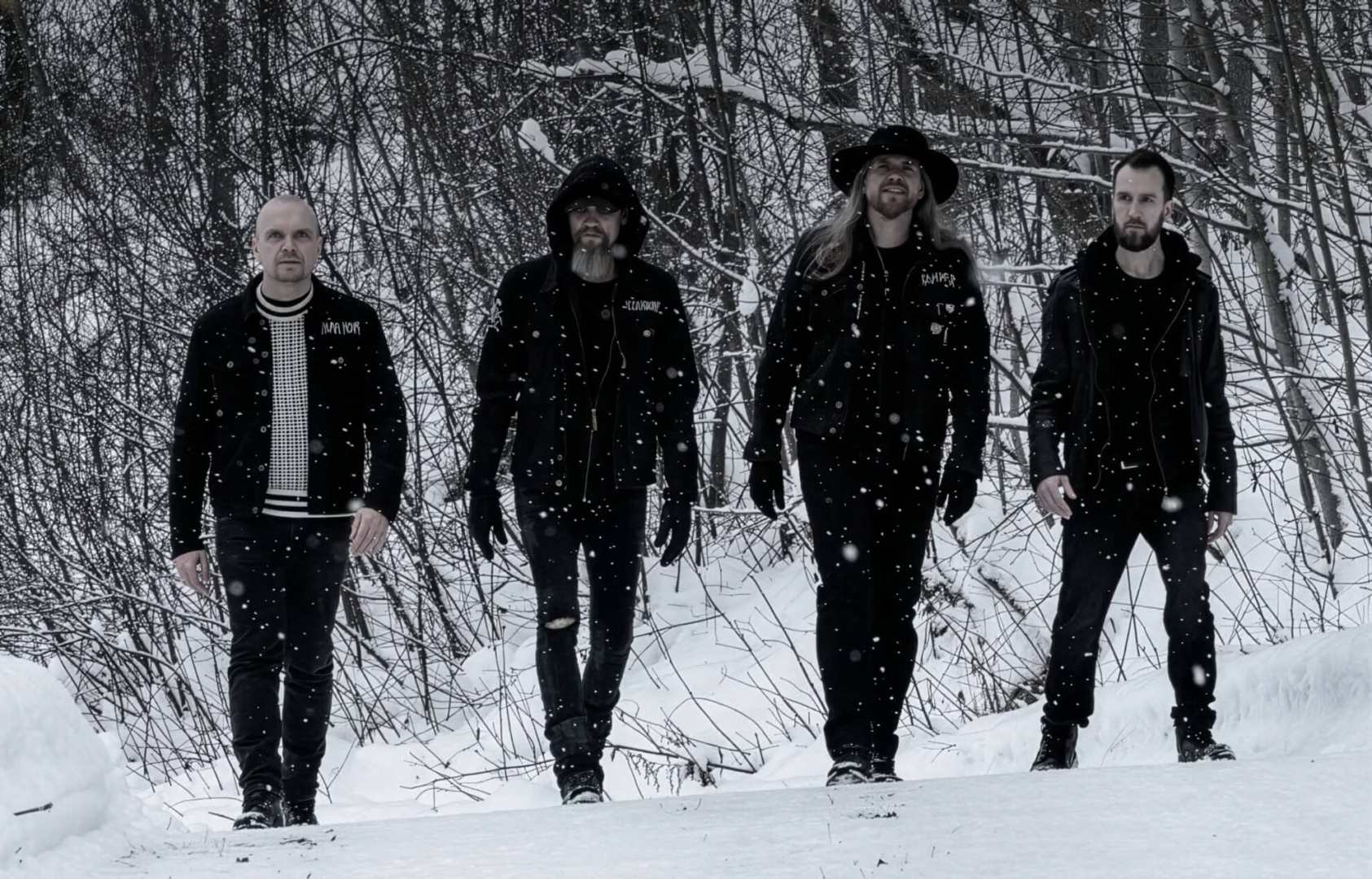
The debut record, ‘Mellom Skogkledde Aaser’—Between Wooded Hills—established that position in 1997 and held it against every temptation toward orthodoxy in the decades that followed.
That commitment produced one of the genre’s more formally rigorous discographies. ‘Profan,’ released in 2015, won the Norwegian Spellemann Award in the metal category—the country’s national music prize. The recognition arrived not as a corrective to the underground but as confirmation that the most culturally grounded argument within Norwegian black metal had been made by this particular band, from this particular city, across more than two decades of uninterrupted output.
The album that arrives with this tour—‘Til Klovers Takt,’ issued on November 11th, 2022, via Indie Recordings—carries that accumulated weight. Its title translates, approximately, as “to the beat of clover,” an agrarian, earth-bound image that refuses the abstract grandeur typically attached to Norse mythology and returns instead to the pulse of a specific territory under seasonal pressure.
What ‘Til Klovers Takt’ Offers Here
Six tracks constitute the album, and each carries a distinct ceremonial register. The opening ‘Lausdans Under Stjernene’—Wild Dance Under the Stars—extends past eight minutes, establishing the nocturnal, outdoor quality that runs through the entire record. ‘Urkraft,’ Primal Force, compresses the band’s three-decade compositional approach into seven minutes of precision. ‘Fandens Trall,’ the Devil’s Tune, shifts into a folk-inflected groove without direct precedent in their catalog.
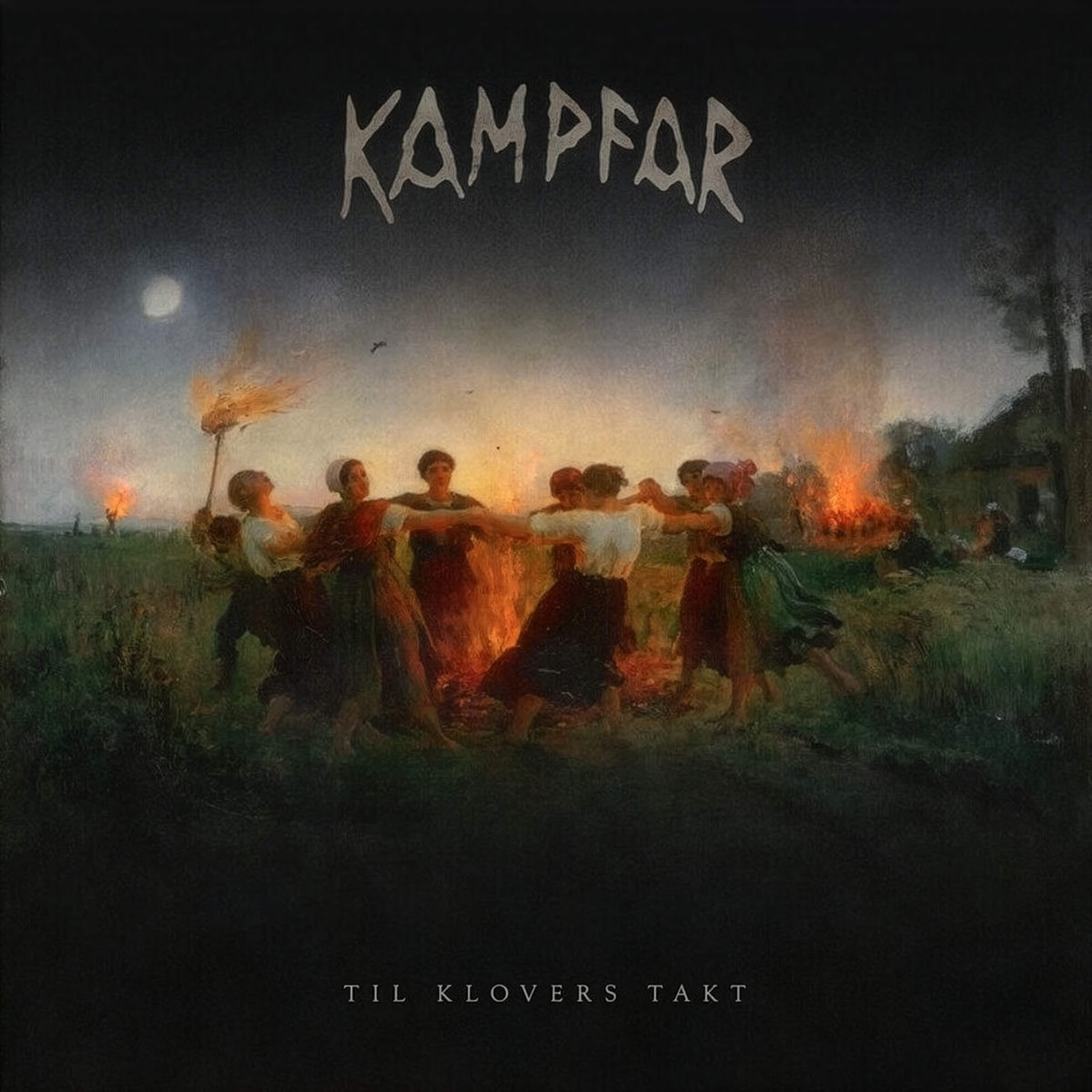
‘Flammen Fra Nord,’ Flame From the North; ‘Rekviem’; and the closing ‘Dødens Aperitiff’—Aperitif of Death—complete a sequence whose formal coherence runs deeper than subject matter alone. That last title requires no translation in Medellín. A city that spent the late nineteen-eighties absorbing the conditions of narco-era violence into the DNA of its extreme metal underground does not receive death as a foreign concept.
The encounter between Kampfar’s Norwegian ceremonial treatment of mortality and the Antioqueño tradition of making music from inside that reality is the specific cultural event that May 27th stages.
The Antioqueño Underground
Medellín’s relationship with extreme music differs from the capital’s in kind, not merely in degree. Where Bogotá produced the institutional framework—Rock al Parque, established in 1995, and the broader political legitimacy of the “roquero” as civic actor—Medellín produced something rawer and, in certain registers, more internationally consequential.
The Ultra Metal tradition that emerged from the Valle de Aburrá in the late nineteen-eighties, when bands processed the sound of the conflict decade into lo-fi recordings that reached the global black and death metal lexicon, was built from conditions of direct confrontation rather than institutional support.
Reencarnación, formed in Medellín in 1987, stands as one of the earliest South American extreme metal acts to develop a native vocabulary of sonic extremity that crossed the Atlantic through cassette tape networks and reached the forming Norwegian black metal underground—an exchange documented in the stated influences of Mayhem’s Euronymous on the band. They did not borrow from a Nordic model; they contributed to one. The Antioqueño extreme metal audience that fills Ciudad Frecuencia on May 27th carries that history actively. It does not receive Kampfar as a visitor from a distant scene.
The Space on Calle 104
The Corporacion Cultural Ciudad Frecuencia operates within the tradition of Medellín’s underground performance spaces: rooms whose configuration prioritizes the proximity between performer and audience over any pretension toward spectacle. Black metal at this scale cannot retreat behind production values. The ceremony either operates in the room or it does not.
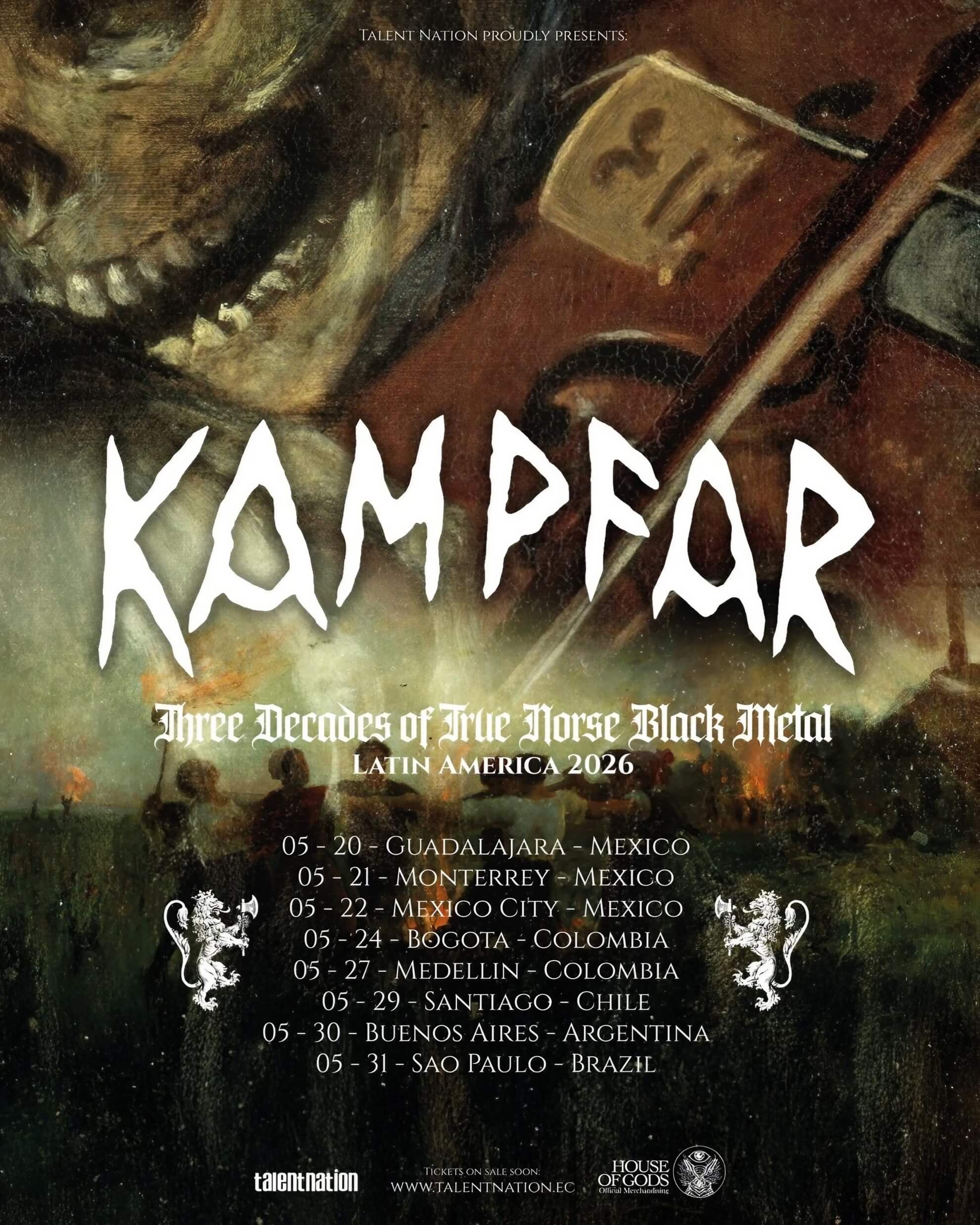
Support acts for the Medellín date had not been confirmed at the time of publication. Ticket pricing for the May 27th event had not been announced at the time of publication; current information is available through the event’s official distribution channels.
The Dead of San Pedro
The Cementerio Museo San Pedro, located on Carrera 51 in the central-eastern sector of Medellín, has been receiving the city’s dead since July 8th, 1842, when a group of prominent local families convened to establish the first private cemetery in what was then the Villa de la Candelaria.
The chapel standing within its grounds today was completed in 1929 to the design of Belgian architect Agustín Goovaerts, whose neogothic sensibility is visible in its cúpula, the luminous stained-glass windows, and the carved wooden altar housing a tubular organ still capable of sounding.
Declared a Bien de Interés Cultural of national character by the Colombian Ministry of Culture in 1999 and recognized as a museum of site by the Red de Museos de Antioquia in 1998, the cemetery holds Italian marble mausolea, bronze allegories, and funerary monuments in neoclassical, romantic, and neogothic styles, arrayed among galleries where Medellín’s founding families and most significant historical figures are interred. The cemetery is publicly accessible, with guided tours available.
For music whose central vocabulary is drawn from pagan encounters with mortality, seasonal death, and the annual return of darkness, a cemetery of this age and formal weight offers something the concert hall cannot supply alone: a physical counterpart to the ceremonial territory the music inhabits. The carved figures standing over these graves were not decorative choices. They were attempts, made in marble and bronze, to give permanent form to the same confrontation with death that Kampfar has been making in sound since 1997.
The First Night and the Thirty-Second Year
When the lights go down at Ciudad Frecuencia on May 27th, the audience will be present for something that has not happened before in this city: a Kampfar performance. The concert carries the charge of a first encounter after a thirty-year absence—an absence that was never resolved by proximity, only by the eventual convergence of a Latin American tour with a Colombian audience that has been ready for this since the nineties.
The Norwegian paganism of ‘Lausdans Under Stjernene’ and the elemental force of ‘Urkraft’ will not land in Medellín as curiosities from a northern winter. They will land in a city that has spent four decades making music from its own relationship with mortality and extremity—and that will not treat the ceremony lightly.
Which track from ‘Til Klovers Takt’ holds the most weight as you approach this first encounter, and what do you expect the Antioqueño underground to give back to the ritual once it takes hold?
Leave a Reply