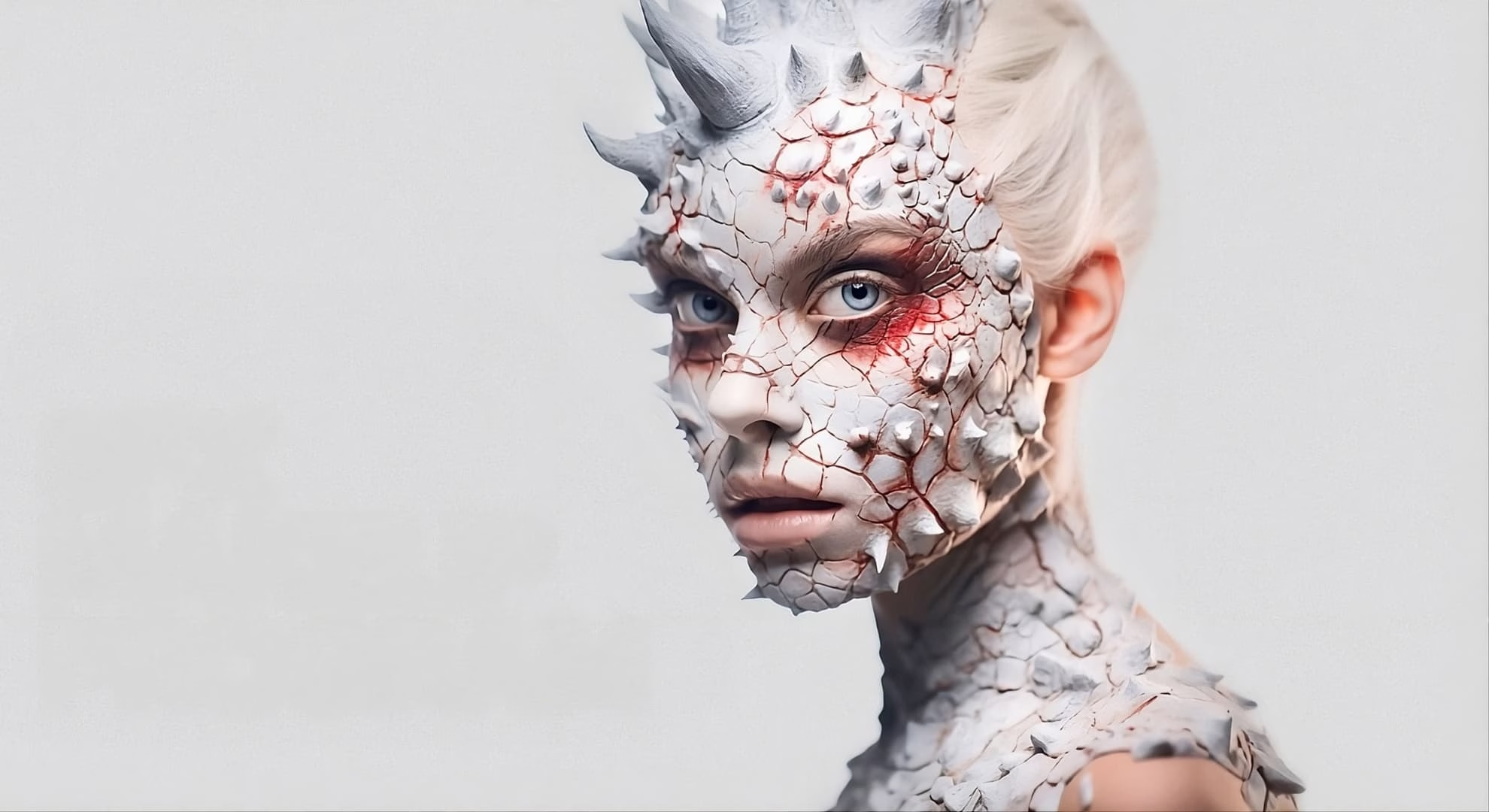


A special effects makeup artist is a creative professional who uses makeup, color, texture, prosthetics, hair pieces, and other materials to transform a performer for film, television, theater, fashion editorials, music videos, live events, and creative productions. The goal is not simply to make someone look beautiful. The goal is to help tell a visual story.
Special effects makeup sits between fine art, beauty makeup, sculpture, production design, and performance. A beauty makeup artist may focus on skin, complexion, contour, brows, lips, and camera-ready polish. A special effects makeup artist goes further. They may create age changes, period looks, fantasy characters, realistic texture, facial hair, bald caps, body painting, tattoo cover-ups, or custom prosthetic pieces.
For our readers, this field connects naturally to style, identity, theater, music culture, costume, visual storytelling, and the art of transformation. Special effects makeup is not only about extreme looks. It can be subtle, elegant, symbolic, or cinematic. A small change to skin tone, eye shape, texture, hairline, or facial structure can shift how an audience reads a character.
Tip: A beginner should not start by trying to copy the most complex transformation online. Start with clean beauty technique, skin preparation, blending, sanitation, and color theory. Special effects makeup only looks professional when the basic makeup work underneath is controlled, clean, and camera-ready.
A strong special effects makeup artist understands 3 things at the same time: the face, the material, and the camera. The face gives structure. The material creates the transformation. The camera decides whether the work looks believable. That is why professional training often includes close-up practice, photography, feedback, and portfolio development.
What Does a Special Effects Makeup Artist do?
A special effects makeup artist designs, prepares, applies, maintains, and removes makeup effects for performers, models, clients, or creative subjects. Their work can include concept planning, skin preparation, prosthetic application, airbrush work, aging effects, facial hair, bald caps, tattoo cover-ups, character makeup, body painting, continuity notes, and on-set touch-ups.
The job starts before the makeup brush touches the skin. A good artist studies the brief. What is the story? What does the director, photographer, designer, musician, performer, or client want the audience to feel? What lighting will be used? Will the look be seen in a close-up, on stage, in a music video, or in still photography? Will the performer wear it for 20min or 8 hours?
After the concept is clear, the artist plans the method. Some looks are paint-based. Some need adhesives. Some need prosthetics. Some need airbrush. Some need facial hair. Some need careful texture that looks natural under harsh lighting. Professional artists also think about comfort, allergy awareness, removal, and how the makeup will hold up during movement.
On a production, special effects makeup artists often work with directors, costume designers, photographers, stylists, performers, and other makeup artists. They may have to repeat the same look across multiple shooting days. This is why continuity matters. A beautiful look that cannot be repeated is not production-ready.
Tip: Take photos of every important step, not only the final look. Capture product order, color mix, brush choices, placement, and timing. A simple phone photo folder can save a production day when you need to recreate the same look later.
A professional special effects makeup artist also knows when to simplify. Beginners often think more product means better work. In reality, clean edges, controlled texture, smart color placement, and safe removal matter more than piling on materials. The best effects support the character without distracting from the performance.
How to Become a Special Effects Makeup Artist
To become a special effects makeup artist, build a foundation in makeup technique, learn core special effects methods, practice on different faces, document your work, create a portfolio, assist other artists, and start taking small creative jobs. The path is skill-based. Your work needs to prove that you can create reliable results.
Start with beauty makeup. This may sound basic, but it is one of the biggest shortcuts. Special effects makeup often includes skin matching, complexion correction, contouring, shading, highlighting, blending, and clean finishing. If your base work looks uneven, the creative effect will look amateur.
Next, study color theory. Special effects work depends on undertones, layering, contrast, depth, and texture. A bruise-style color study, an aging study, or a fantasy character look all require more than random colors. You need to know why yellow, blue, red, brown, green, gray, or purple changes the visual read of skin.
Then learn materials. This includes adhesives, removers, latex alternatives, silicone-based products, cream colors, alcohol-activated palettes, powders, sealers, airbrush products, bald caps, crepe hair, prosthetic pieces, and skin-safe tools. Learn what each product does, where it works, where it fails, and how to remove it without damaging skin.
Practice with purpose. Do not only create finished looks. Practice edges for 30min. Practice color matching for 30min. Practice applying facial hair. Practice taking one reference photo and building a face chart from it. Practice under different lighting. Practice taking final photos that show the work clearly.
Tip: Build your training around assignments, not random inspiration. For example, create 1 aging look, 1 clean period look, 1 character brow change, 1 bald cap study, 1 facial hair application, 1 tattoo cover-up, and 1 prosthetic edge practice. This gives you a portfolio with range, not just one style repeated 10 times.
The final step is real-world experience. Help on student films, theatre productions, editorial shoots, convention projects, music videos, and local creative campaigns. Small projects teach timing, communication, pressure, cleanup, and professionalism. Those skills are hard to learn from photos alone.
Do You Need to go to School to Become a Special Effects Makeup Artist?
You do not always need a traditional degree to become a special effects makeup artist, but structured training can shorten the learning curve and help you avoid unsafe habits. What matters most is skill, portfolio quality, professionalism, and whether you understand how to work with real people, real skin, real deadlines, and real creative teams.
This field is not like becoming a doctor or attorney, where one standard path controls entry. Many artists build careers through a mix of classes, online training, workshops, assisting, self-study, practice, and portfolio work. Some attend makeup schools. Some study beauty first, then specialize. Some start in theater, photography, cosplay, fashion, or independent productions.
Training is valuable because special effects products are not all beginner-friendly. Adhesives, removers, prosthetics, bald caps, airbrush tools, and sealing products require correct handling. You need to know patch testing, hygiene, contraindications, ventilation, product storage, skin prep, safe removal, and how to keep a performer comfortable.
A school or structured program also gives you deadlines and feedback. This matters because beginners often cannot see their own mistakes. They may miss uneven edges, harsh color transitions, poor symmetry, incorrect texture, weak photography, or an effect that looks fine in person but fails on camera.
Tip: Do not choose training only by price or certificate language. Look for feedback, curriculum depth, safety lessons, sanitation, portfolio assignments, kit guidance, business basics, and how well the program teaches camera-ready results.
A certificate can help you present yourself seriously, but it is not a magic career pass. Clients and production teams still need to see your work. Think of education as structure. Think of your portfolio as proof. Think of professionalism as the reason people hire you again.
Can You Learn Special Effects Makeup Online?
Yes, you can learn special effects makeup online, especially the theory, product knowledge, demonstrations, assignment structure, safety habits, and portfolio planning. Online learning works best when it includes clear lessons, repeated practice, photo or video submissions, instructor feedback, and a kit that lets students practice at home.
Online training is useful because special effects makeup is visual. A student can pause a lesson, replay a technique, compare product placement, practice at their own pace, and document each attempt. For many beginners, this is more realistic than commuting to a school, especially if they already work, study, travel, or live far from a major makeup school.
The risk with online learning is passive watching. Watching a bald cap lesson is not the same as applying one. Watching prosthetic blending is not the same as fixing a lifted edge. Watching airbrush technique is not the same as cleaning the tool and controlling overspray. The student must practice.
A strong online makeup school should teach safety, sanitation, face preparation, products, client comfort, color theory, airbrush basics, prosthetics, aging, hair application, bald caps, removal, reference photos, and common mistakes. It should also encourage students to photograph their work and receive feedback.
Online learning can also help students explore different career directions before committing to one. You may think you want film work, then discover you love editorial character makeup. You may start with fantasy looks, then realize you enjoy period aging, tattoo cover-up, or music video styling. A flexible learning path gives you room to test your taste.
What Should You Learn in a Special Effects Makeup Course?
A special effects makeup course should teach safety, sanitation, skin preparation, color theory, product knowledge, adhesives, removers, airbrush basics, bald caps, facial hair, prosthetics, aging effects, character design, continuity, set etiquette, portfolio photography, and the business habits needed to work professionally.
Safety and sanitation should come first. You are working on human skin, often close to the eyes, mouth, hairline, and sensitive areas. Clean tools, disposable applicators, product separation, patch testing, and correct removal are not boring details. They are part of professional trust.
Product knowledge comes next. Students should learn what materials are for, how they behave, and when not to use them. A product that works for a short photo shoot may not work for a long performance day. A product that looks fine in room light may shine under studio lighting. A strong course explains these tradeoffs.
Technique training should include both simple and advanced skills. Simple skills include skin prep, color correction, shading, highlighting, blending, texture, and sealing. Advanced skills can include prosthetic application, edge blending, bald caps, facial hair, tattoo cover-up, airbrush, body painting, and character transformation.
A good course should also teach creative planning. Students need to work from references, not guesswork. They should know how to build a face chart, plan a color palette, create a mood board, break down a character, and choose techniques that fit the time, budget, and setting.
Tip: Before starting any character look, write a 5-line brief. Who is the character? Where will the look be seen? How long must it last? What is the lighting? What detail must the viewer notice first? This stops the makeup from becoming random decoration.
Career preparation matters too. Students need portfolio review, social media presentation, basic pricing awareness, client communication, and professional etiquette. The best artists are not only talented. They are clean, punctual, calm, organized, and easy to work with.
What Should be in a Special Effects Makeup Kit for Beginners?
A beginner special effects makeup kit should include skin prep products, sanitation supplies, brushes, sponges, a mixing palette, spatulas, cream colors, setting powder, sealers, adhesives, removers, basic prosthetic pieces, practice materials, disposable tools, and a safe storage system. Start small, then upgrade based on the techniques you actually use.
Do not buy everything at once. Beginners often waste money because they buy dramatic products before learning foundational technique. A better starter kit supports practice, safety, and repeatable results.
Begin with hygiene. You need brush cleaner, alcohol where appropriate, disposable mascara wands, disposable lip applicators, cotton swabs, tissues, paper towels, hand sanitizer, palette knives, and a clean surface setup. Your kit should make you look professional before the makeup starts.
Next, build your application tools. Include small detail brushes, flat brushes, stipple sponges, wedge sponges, powder puffs, mixing palettes, spatulas, and a mirror. Then add color products. A basic cream palette, neutral complexion products, contour colors, correctors, and setting products can take you far.
For special effects work, add beginner-friendly adhesives and removers, bald cap materials, crepe hair, a few practice prosthetics, sealer, airbrush products if you are learning airbrush, and materials for texture studies. Every adhesive needs its matching remover. Never buy application products without thinking about removal.
Tip: Label your kit by function, not by brand. Use sections such as prep, color, texture, adhesive, removal, hair, prosthetics, sanitation, and photography. On set, speed comes from organization, not from owning the most products.
How to Build a Special Effects Makeup Portfolio
To build a special effects makeup portfolio, show clean technique, variety, close-up detail, before-and-after images, different faces, different lighting, and finished looks that prove you can work beyond one style. Your portfolio should show what you can do, how carefully you do it, and what kind of creative work you want to attract.
A strong portfolio is not a dump of every look you have ever tried. It is a curated proof of skill. For a beginner, 8 to 12 excellent images are better than 50 inconsistent ones. Include close-ups, side angles, clean final shots, and at least a few process images.
Show range. Include beauty-based character work, age transformation, period-inspired makeup, facial hair, bald cap work, prosthetic blending, tattoo cover-up, body paint, and editorial character makeup. You do not need all of these at once, but your goal should be to build categories over time.
Use different models. If every look is on your own face, it can make your portfolio feel limited. Practice on different skin tones, face shapes, ages, genders, and skin textures. This proves you can adapt. Production teams and clients want artists who can work with real people, not only one familiar face.
Photography matters. A poorly photographed look can make good makeup look weak. Use clean light, a simple background, sharp focus, and multiple angles. Avoid filters that hide texture. If the work is meant for screen or editorial, the viewer needs to see the makeup clearly.
Tip: For every portfolio look, include 1 clean final photo, 1 close-up of the technical detail, 1 side angle, and 1 short caption explaining the brief, materials, and time. This makes your portfolio feel professional and searchable.
How to Get Work as a Special Effects Makeup Artist
To get work as a special effects makeup artist, build a focused portfolio, assist experienced artists, join small productions, collaborate with photographers and stylists, attend industry events, post consistent work online, and become known as reliable, clean, calm, and prepared. Most early opportunities come from trust and visibility.
Start with assistant work. Assisting teaches real workflow faster than working alone. You learn station setup, time management, product handling, touch-ups, performer comfort, communication, and cleanup. You also see how professionals solve problems without panic.
Look for entry-level creative projects. Student films, theater productions, fashion editorials, local music videos, short-form content, convention shoots, dance productions, and creative portrait sessions can all help you build experience. Choose projects that give you usable photos and proper credit.
Network with related creatives. Photographers need makeup artists. Stylists need makeup artists. Costume designers need makeup artists. Directors need makeup artists. Musicians need visual identity. Theatre groups need character work. A special effects makeup artist should not only wait for job posts. Build a creative circle.
Your online presence should be clear. Use a simple website or portfolio page, plus social media that shows your best work. Post process, final photos, clean captions, and behind-the-scenes organization. Do not post only dramatic final images. Show that you understand professional workflow.
Tip: When contacting a photographer, director, or stylist, do not write a vague message. Send 3 relevant portfolio images, explain the type of project you can support, mention your availability, and ask whether they have upcoming shoots where character makeup or creative makeup could add value.
Reliability is a career skill. Answer messages clearly. Show up early. Bring backups. Keep your kit clean. Respect the performer. Follow the creative brief. Share credits. Deliver what you promised. Many artists get rehired because they are easy to work with under pressure.
Special Effects Makeup Artist Career Paths
Special effects makeup artist career paths can include film, television, theatre, music videos, fashion editorials, advertising, conventions, live events, theme entertainment, product education, social media content, private clients, teaching, and freelance creative direction. The best path depends on your skills, location, portfolio, personality, and network.
Tip: Choose your first career direction by portfolio evidence, not fantasy. Look at your best 10 images. What do they prove? What type of client would hire you from those images? Your portfolio tells you what market you are ready for right now.
The most sustainable career path combines artistry with professional discipline. Keep learning. Keep testing materials. Keep photographing your work. Study fashion, film, theatre, photography, painting, music visuals, costume history, and lighting. Special effects makeup is not only a job with products. It is visual storytelling through the human face and body.