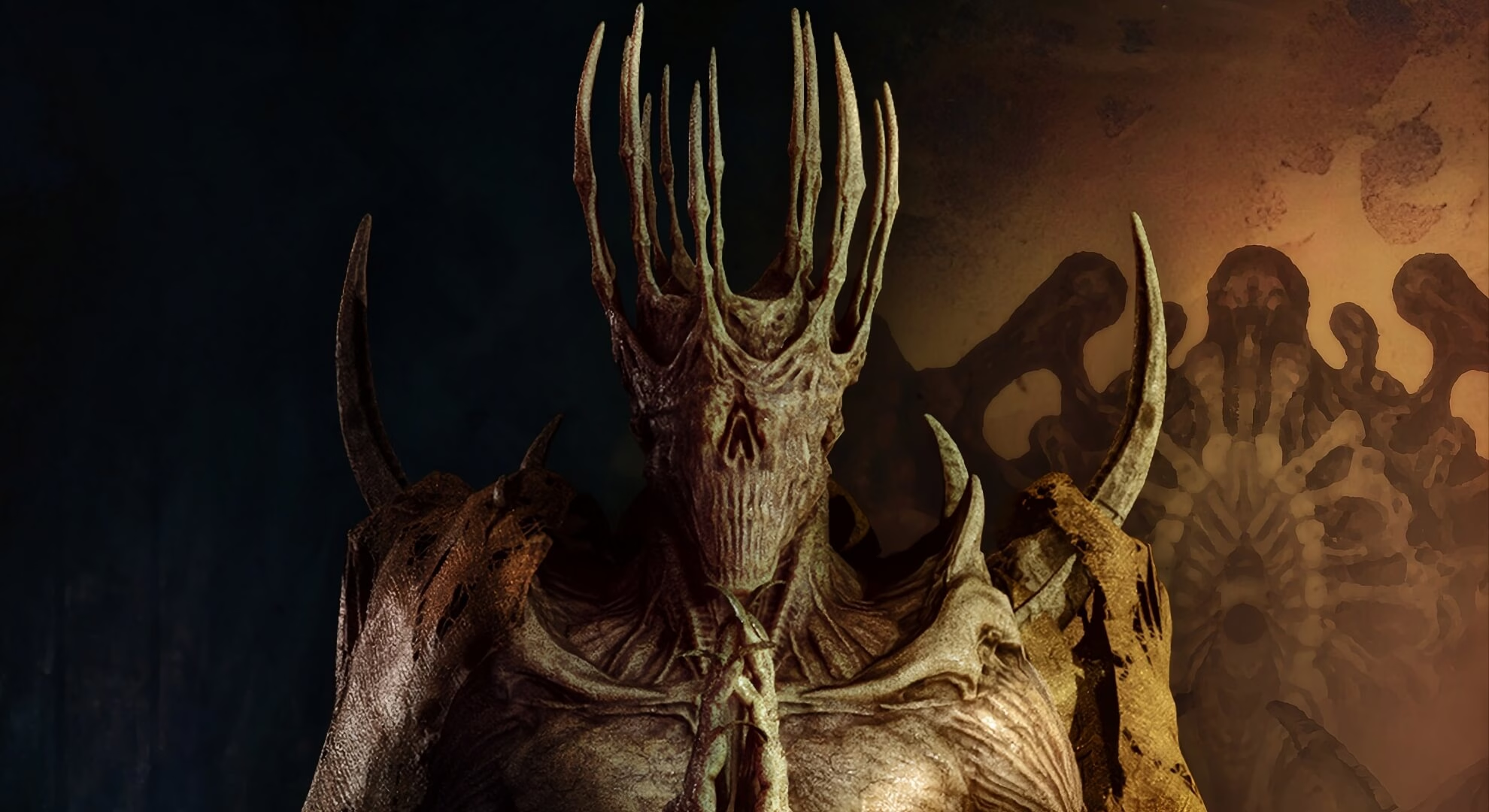


The tradition of horror games that refuse combat is a small but serious one. Frictional Games established the most consequential template with ‘Penumbra: Overture’ (2007) and confirmed it with ‘Amnesia: The Dark Descent’ (2010): remove the player’s capacity for violence, and what remains is a purer negotiation with dread. The design argument was not that weapons are incompatible with horror, but that helplessness — the inability to suppress or neutralize the threat — produces a qualitatively different experience of fear.
‘Necrophosis: Full Consciousness,’ developed by Dragonis Games — the studio founded by Greek creator Ares Dragonis, with co-developer Adonis Brosteanu — and published on console by PQube, launched on May 28th, 2026 for PlayStation 5 and Xbox Series X/S.
The release marks the first console appearance of a title that debuted on PC on April 25th, 2025, and arrives alongside the newly released ‘Subconsciousness’ DLC, which adds new surreal locations and poetic narration to the base game experience. There are no weapons in the game. There is no combat.
Beksiński’s World as Design Material
The visual premise of ‘Necrophosis’ is explicit and unusual: the game’s environments, entities, and spatial logic are derived directly from the paintings of Zdisław Beksiński (1929–2005), the Polish surrealist whose most concentrated work was produced in deliberate isolation from Western art market movements during Poland’s communist period.
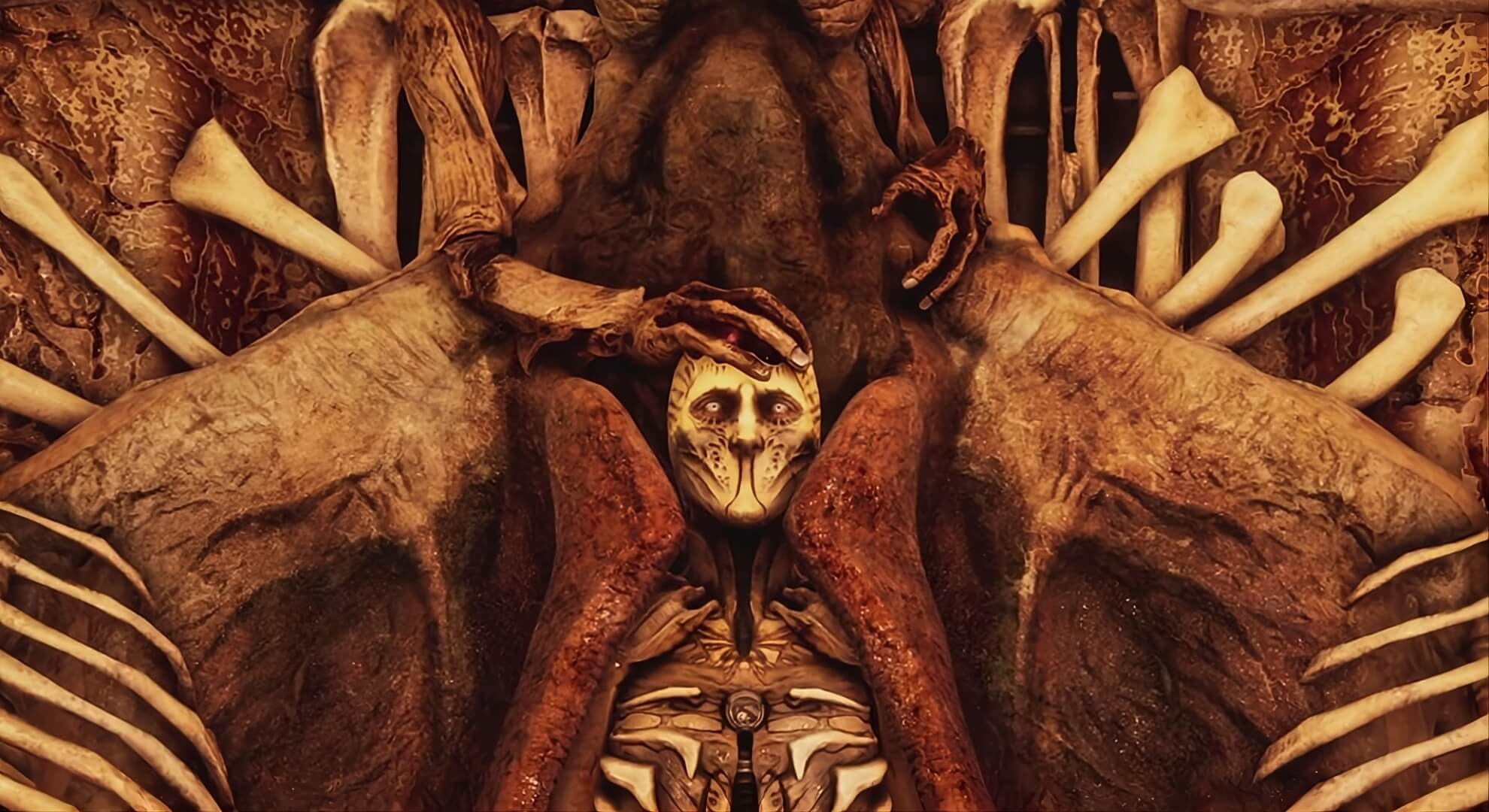
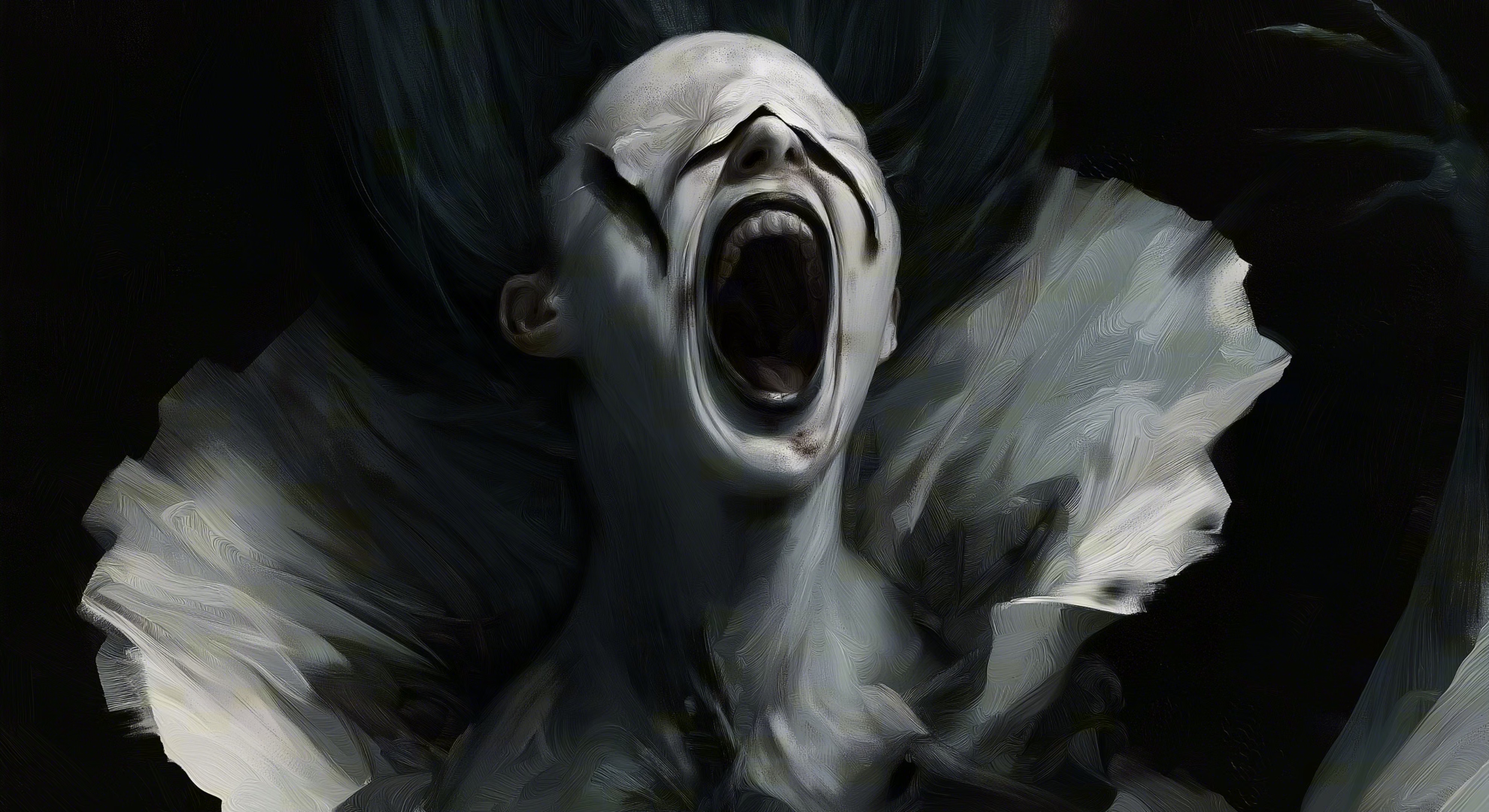
Beksiński’s output across the 1970s and 1980s depicts a world from which narrative resolution has been permanently removed: organic ruins that suggest collapsed formations of flesh, figures in states of dissolution, and spatial environments that carry the logic of a waking mind that has begun to fail.
His paintings have circulated as canonical reference points within atmospheric and cosmic horror aesthetics since his death in Warsaw in 2005, following his murder by a teenager known to his family.
The photographs of his later years, his documented refusal to explain his paintings, and his insistence that they carried no symbolic program beyond what a viewer could see — these biographical facts have compounded the mythology around his work and made his images a recurring touchstone for developers working in the dread-without-resolution tradition.
What Dragonis Games has pursued in ‘Necrophosis’ is the translation of that visual grammar into three-dimensional space: not the rendering of specific paintings as game environments, but the extrapolation of Beksiński’s aesthetic logic — grotesque organic decay, formless entities without behavioral coherence, spatial environments without horizon or exit — into a navigable world. That is a more ambitious undertaking than illustration or homage, and it required the construction of over 400 handcrafted assets to sustain.
The Refusal of Combat
Where Frictional Games removed combat to foreground helplessness as an emotional state, ‘Necrophosis’ makes a structurally different argument. The player’s movement through its environments is not flight from a pursuing entity — the central tension in the ‘Amnesia’ lineage — but passage through a world whose horror is environmental and ontological rather than relational. The entities encountered in ‘Necrophosis’ are not primarily hunters. They are occupants.
This distinction matters for understanding what the game produces. Survival horror of the Frictional Games tradition generates fear through the encounter structure: threat appears, player must evade or endure, tension resolves. ‘Necrophosis’ generates its horror through total environment — a design approach closer to the walking horror tradition associated with the PT teaser (Konami, 2014) and its descendants, though without that tradition’s reliance on looping spatial design and psychological instability as narrative device.
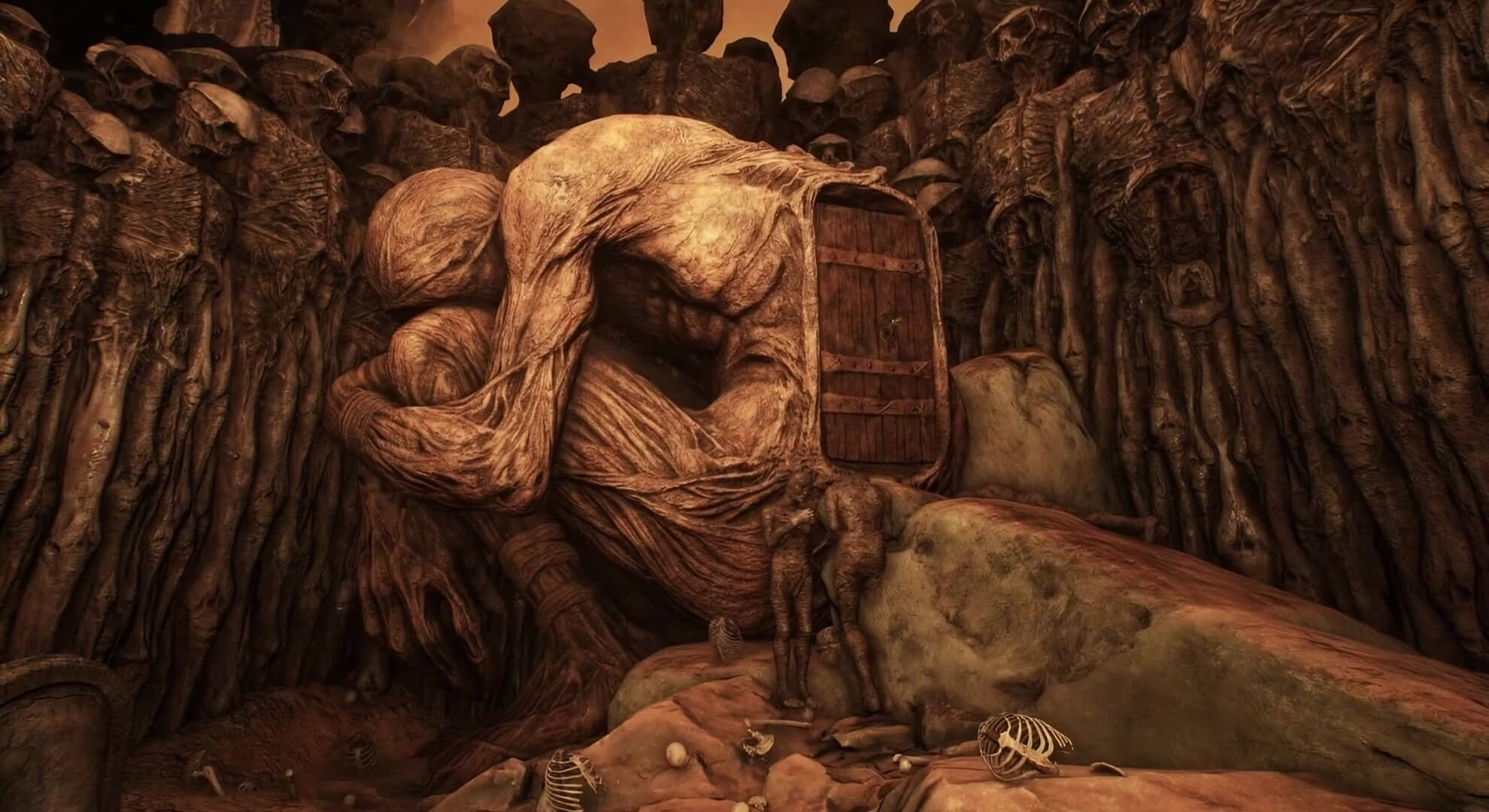
The philosophical coherence of the approach lies in its alignment with Beksiński’s actual project. His paintings do not depict monsters threatening a protagonist. They depict states of being. The horror is not something that could be defeated; it is the condition of the world as the paintings render it.
A game in which that world is navigable but not conquerable follows from the source material with a logic that most inspired game adaptations do not achieve.
Ares Dragonis has stated directly that this refusal is programmatic: “Most horror games give you a weapon, a gun, an axe, something to fight back with. Necrophosis doesn’t. That’s intentional. This isn’t about killing or surviving. It’s about facing entities you cannot fully understand, exploring worlds your mind could never imagine.”
‘Subconsciousness’ and What It Adds
The ‘Subconsciousness’ DLC is new content released simultaneously with the console launch — not a pre-existing PC expansion being repackaged. It adds new surreal environments, entities, and poetic narration woven into the puzzle structures, deepening the descent into the world established by the base game.
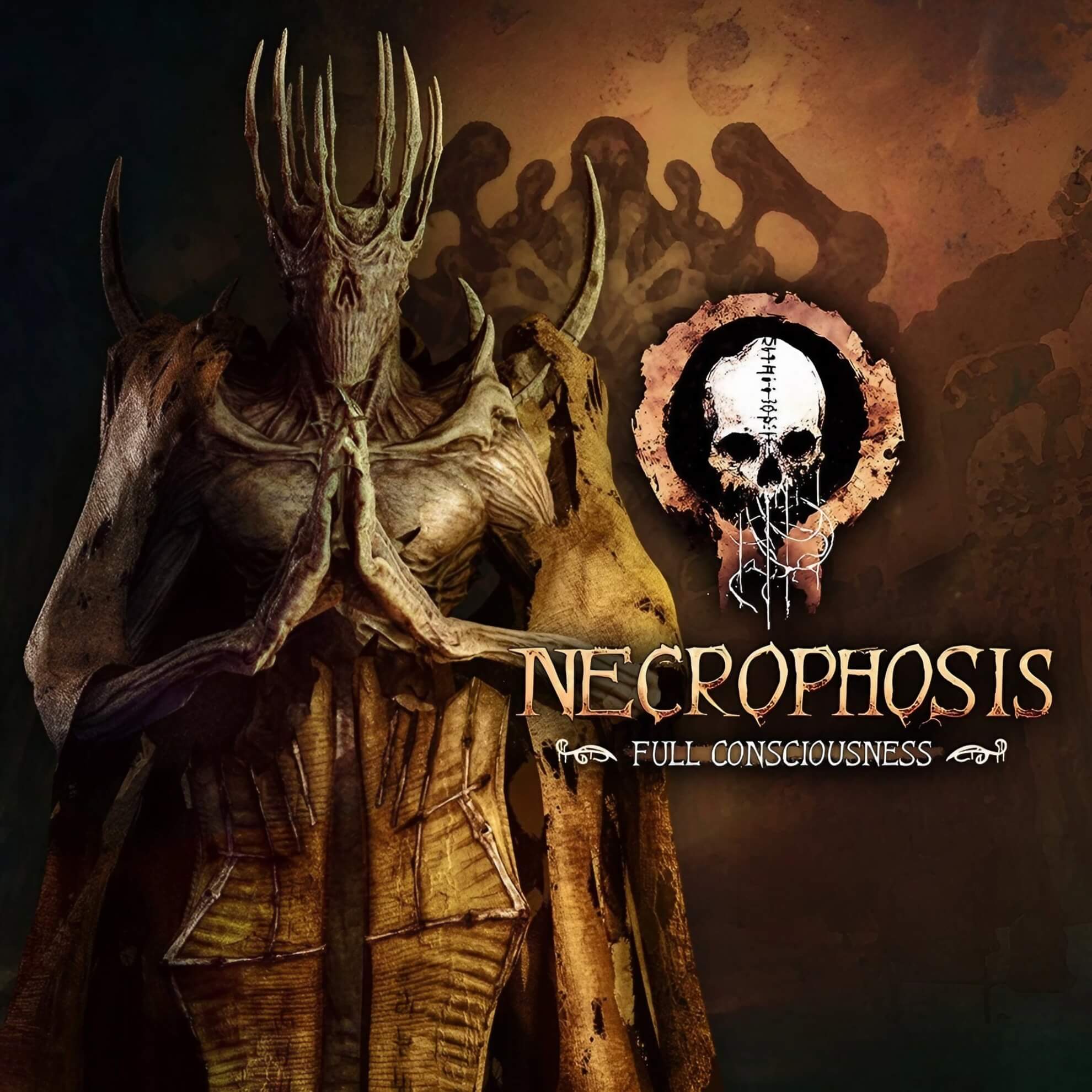
The distinction is meaningful. ‘Full Consciousness’ is not a definitive edition compiling content players could already own; it delivers original expansion material alongside the console debut. Whether the ‘Subconsciousness’ content was designed from inception to integrate with the base game’s spatial and tonal logic — or whether it extends the experience as a structurally distinct chapter — has not been detailed in developer communications at the time of publication.
Dragonis Games and the Prior Record
Dragonis Games’ previous release, ‘The Shore’ (2021), established the studio’s Lovecraftian orientation: a first-person horror-adventure set on a remote island, following a father searching for his missing daughter, with atmospheric exploration, puzzle-solving, and entities drawn from cosmic horror tradition.
The physical PlayStation 5 edition of ‘Necrophosis: Full Consciousness’ includes ‘The Shore: Enhanced Edition’ as a bundled bonus, providing direct context for players new to the studio’s work.
‘Necrophosis’ represents a significant escalation in ambition from that debut: the shift from the island-bound adventure structure of ‘The Shore’ to a world built around Beksiński’s visual logic required a sustained commitment to environmental design at a scale the first game did not demand. The 400-asset count documented in press materials reflects the gap between the two projects.
Console Arrival and the Expanded Audience
The May 28th, 2026 console launch extends ‘Necrophosis’ to platforms whose horror game audiences have been shaped primarily by the action-survival tradition: the ‘Resident Evil’ franchise, the ‘Dead Space’ series, and the more recent action-horror output of developers working in the post-‘Bloodborne’ (FromSoftware, Playstation 4, 2015) idiom. These are audiences with significant experience of horror as spectacle and systemic challenge.
Whether ‘Necrophosis’ finds a receptive audience among players habituated to those conventions, or whether its refusal of them reads as absence rather than argument, is an open question that no pre-release analysis can resolve. The game’s reception on console will be a meaningful data point for the broader question of whether the walking horror and atmospheric dread traditions have built durable audiences beyond the PC platform where most of their significant titles have originated.
The digital edition for PlayStation 5 and Xbox Series X/S is priced at $19.99 USD. The physical PlayStation 5 edition, which bundles ‘The Shore: Enhanced Edition,’ is priced at $34.99 USD. Pricing in Colombian pesos (COP) and Spanish language support for console versions had not been confirmed at the time of this report.
What Beksiński’s Medium Gains
Zdisław Beksiński spent a career producing images of death as total environment — not as event, not as encounter, but as the condition of the world. The horror in his paintings is not something that happens to a figure who might escape it. It is what the world is. ‘Necrophosis: Full Consciousness’ is one of the more philosophically coherent attempts to translate that visual argument into a playable form, precisely because its design refuses the encounter structures that would convert dread into a manageable loop.
The console launch, paired with the new ‘Subconsciousness’ content, does not change what the game is. It changes who can find it — and it delivers the most complete version of Dragonis Games’ Beksiński-derived world to date. For a visual tradition whose influence on dark game aesthetics has been significant but whose most direct interactive adaptation has, until now, been available only to PC players, that expanded access matters.
The original ‘Amnesia: The Dark Descent’ (Frictional Games, 2010) established helplessness as the dominant structural mechanic of the weaponless horror game, with the encounter between the fleeing player and the pursuing entity as its central design tension. ‘Necrophosis’ removes that encounter structure in favor of environmental and ontological dread derived from Beksiński’s paintings.
Do you think the encounter-based approach or the total-environment approach produces a more durable horror experience — and does the choice of visual source material determine which is appropriate?
Leave a Reply