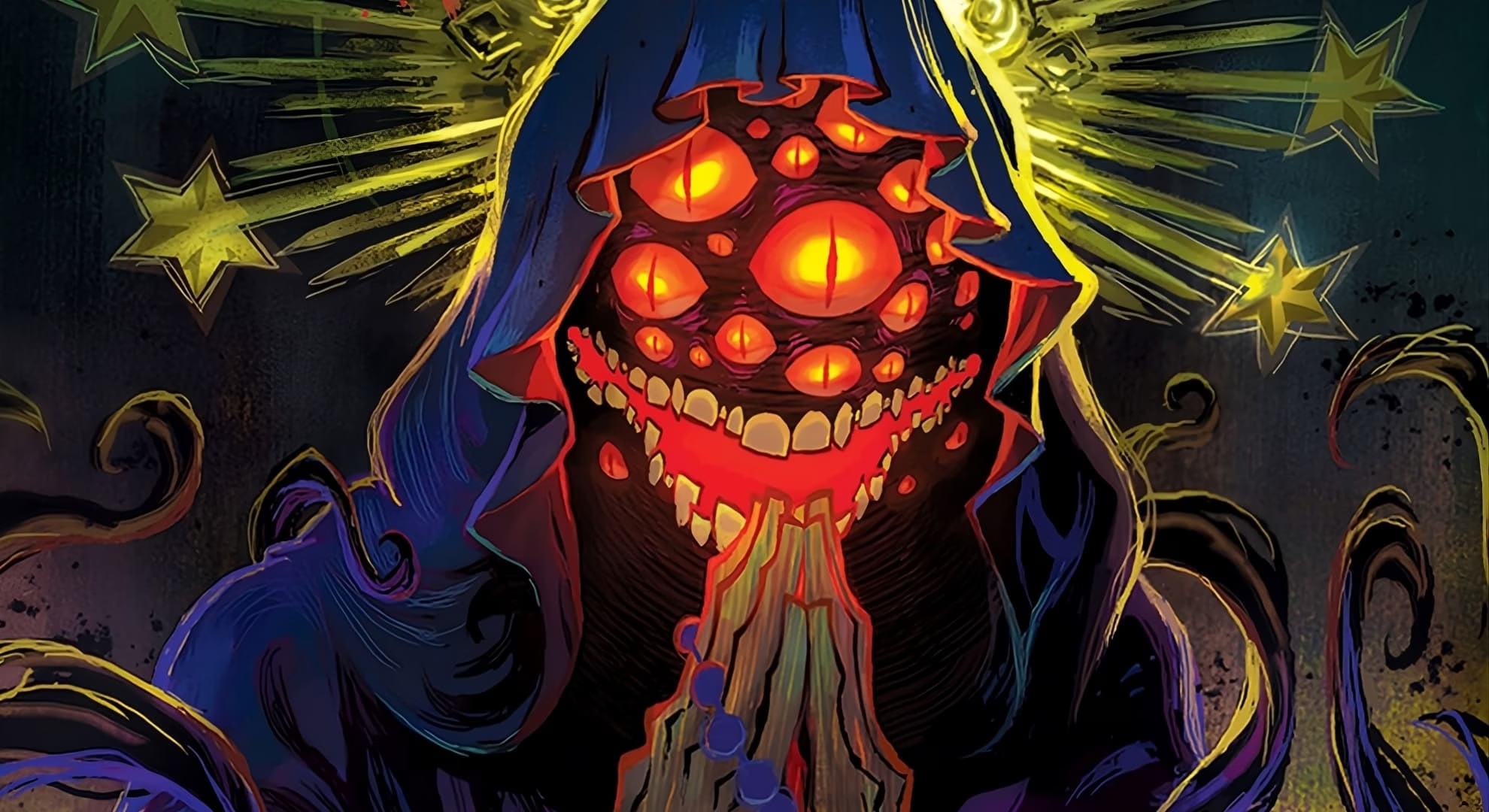


Horror comics have deployed Catholic iconography across roughly two registers since the form first engaged the Church as a subject: as ornament, where crucifixes and clerical vestments supply visual atmosphere without theological content; and as obstacle, where the Church appears as a force that either fails to recognize supernatural threats or actively suppresses what it cannot explain. What both registers share is a fundamental deference to the Christian cosmological framework — the hierarchy of salvation and damnation, angels and demons, operates as the given condition of the world, and horror works within it.
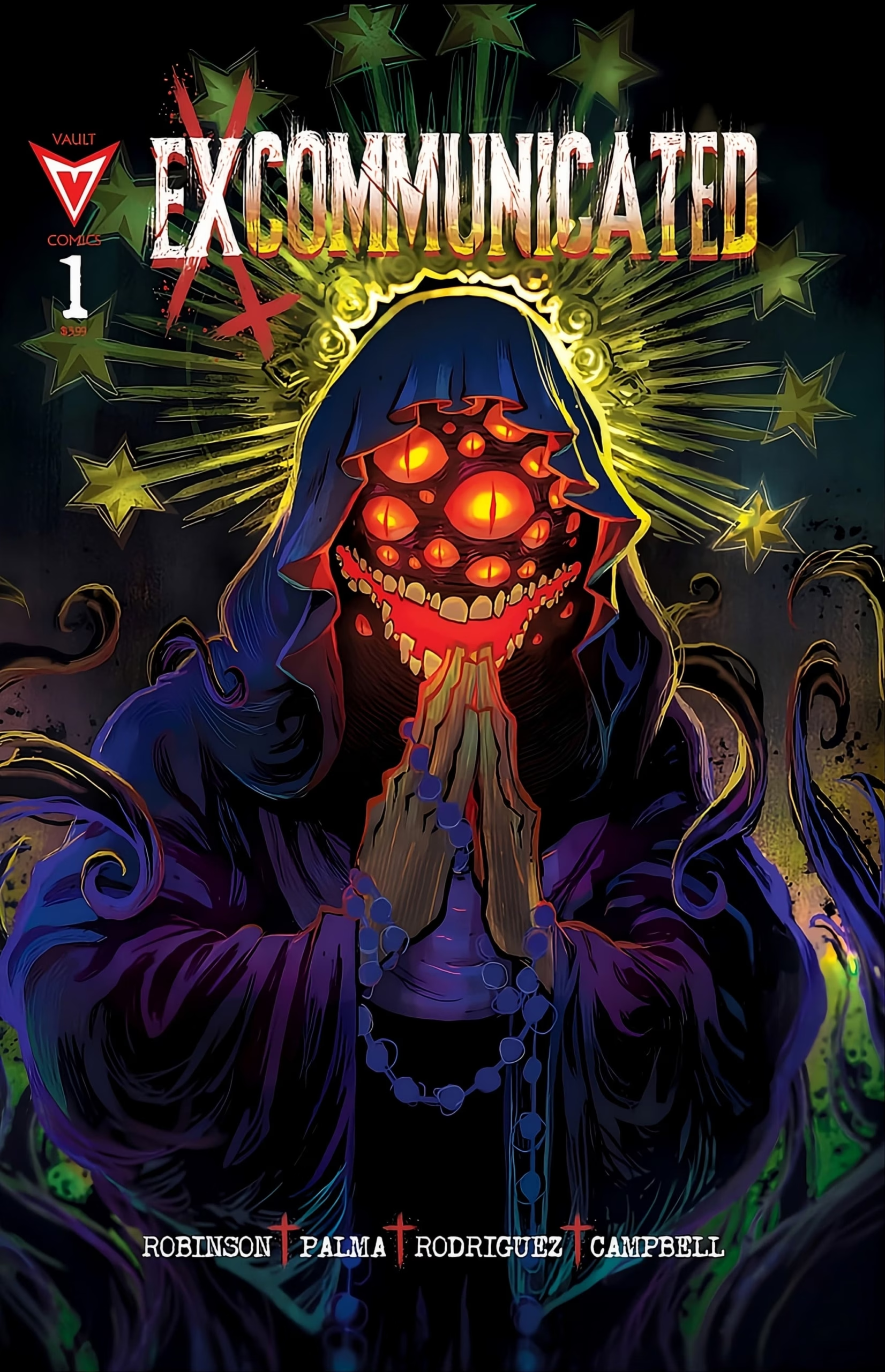
‘Excommunicated’ #1, the debut issue from Vault Comics published on May 6th, 2026, positions itself against this convention. Written by Jeremy Robinson, drawn by Tiago Palma, colored by Manuel J. Rodriguez, lettered by Jim Campbell, and designed by Tim Daniel, the series does not treat the Church as a failing institution or a source of corrupted power. It treats the Church — and Hell — as parallel bureaucratic hierarchies that discard their own agents when those agents become inconvenient.
Cast Out from Both Sides
The premise is precise in its symmetry: a botched exorcism results in Sister Josephine, a devout nun, being expelled from the Church, and Edimmu, the demon involved, being cast out of Hell in turn. According to the publisher’s official series description, Sister Josephine is deliberately deceived into attending the failed exorcism — which places the Church’s culpability in complicity rather than ignorance.
Forced into an uneasy partnership, the two must investigate the conspiracy that produced the catastrophe, working in Boston, outside the institutional structures that formed them.
Boston’s specific demographic history with Catholicism — a city whose working-class Catholic identity carries documented institutional tensions — distinguishes the series from the abstract ecclesiastical settings more common to religious horror. That specificity of place signals an intent to ground the series’ theology in documented social fact rather than Gothic convention.
The Demonology Beneath the Church
The choice of Edimmu as the demonic entity carries the series’ most carefully argued premise. The Edimmu are not Christian demons. They originate in the Mesopotamian religious traditions of Sumer and Akkad, documented in cuneiform texts from the third millennium BCE as the restless spirits of those who died violently or were denied proper burial rites — a category that, in Mesopotamian belief, made the dead dangerous and capable of possessing the living.1
They carry no intrinsic relationship to the Judeo-Christian moral order and no accountability to the framework of sin, salvation, or divine authority that Catholic theology assumes as given.
Robinson has described his research process as a return to original Biblical texts and early translations — in particular, the discovery that what modern Christian tradition renders as “Satan” (capital S, a proper name designating a fixed demonic identity) appears in original Hebrew as “the satan” (lowercase, a description of a role meaning “the adversary”) — a linguistic distinction transformed by centuries of translation and theological convention. That gap between textual origin and received tradition is the conceptual mechanism the series operates on.
In the series, information from Sister Josephine’s perspective reflects established Catholic theology; information from Edimmu reflects source meanings that predate the Christian interpretive framework. The Edimmu predates the conditions from which the Church’s authority derives, which means its presence is not a challenge to Catholic theology but an older system operating entirely by different rules.
Robinson and the Comics Form
Robinson’s comics bibliography, before his Vault arrangement, runs across three publishers with consistent genre coordinates: ‘Project Nemesis,’ the adaptation of his kaiju thriller novel, published by American Gothic Press beginning in 2015; ‘Island 731,’ from IDW Publishing; and ‘Godzilla: Rage Across Time,’ also at IDW.
The work belongs to a tradition of science fiction horror and creature feature comics — narratives built around large-scale physical threat, where the monster is the primary visual and dramatic problem. ‘Excommunicated’ is a distinct departure: not in genre enthusiasm but in the specific horror tradition the series enters, where the problem is theological rather than physical.
‘Excommunicated’ is the second title Robinson has launched through Breakneck Comics, his imprint operating at Vault Comics, following ‘Nectar’ — a Victorian monster series centered on bloodsucking butterflies and the historical Dancing Plague — which debuted on March 4th, 2026.
The Breakneck arrangement covers five titles under a formal deal with Vault, with ‘Excommunicated’ and ‘Nectar’ confirmed as part of a shared setting Robinson has named the Breakneck Horror Universe. Vault Comics, founded in 2016 in Missoula, Montana, by Adrian and Damian Wassel and Nathan Gooden, has operated consistently in horror, science fiction, and fantasy since its founding on a creator-owned model, with distribution through Simon & Schuster.
Palma and the Visual Register
Tiago Palma is identified in publisher solicitation materials as the artist of ‘X-Men United,’ a Marvel superhero title — a background that demonstrates facility with high-energy sequential storytelling in a register substantially different from theological horror’s formal demands.
‘Excommunicated’ requires figure work that carries institutional authority and supernatural menace within a single visual vocabulary, set against specific Boston locations that function as more than backdrop.
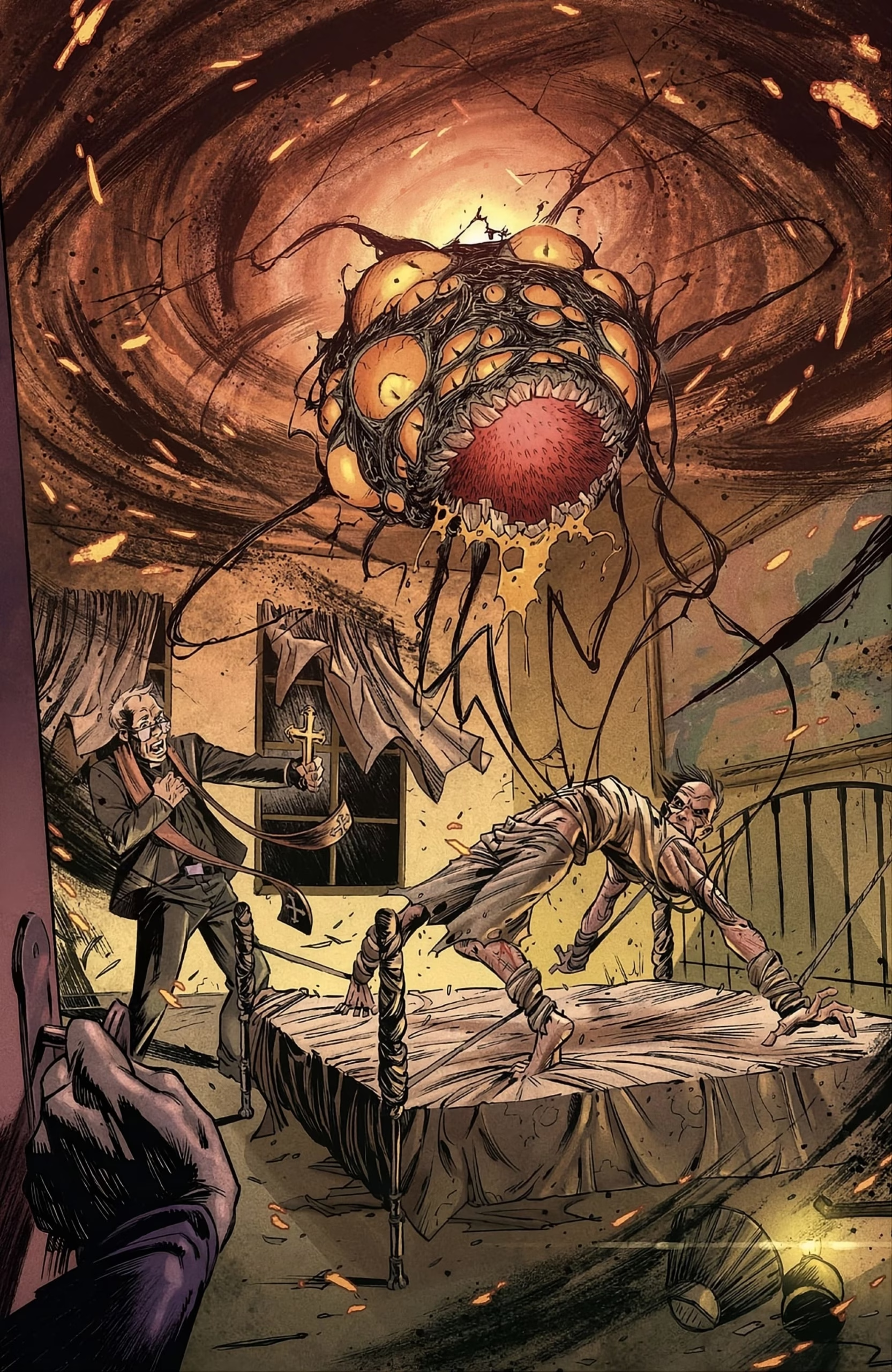
Robinson noted in the series’ announcement materials that Palma’s work captures “the characters, Boston locations, demonic horrors, and… maybe a little gore” — an account of the art’s range that positions it as spanning the mundane and the monstrous within a coherent frame.
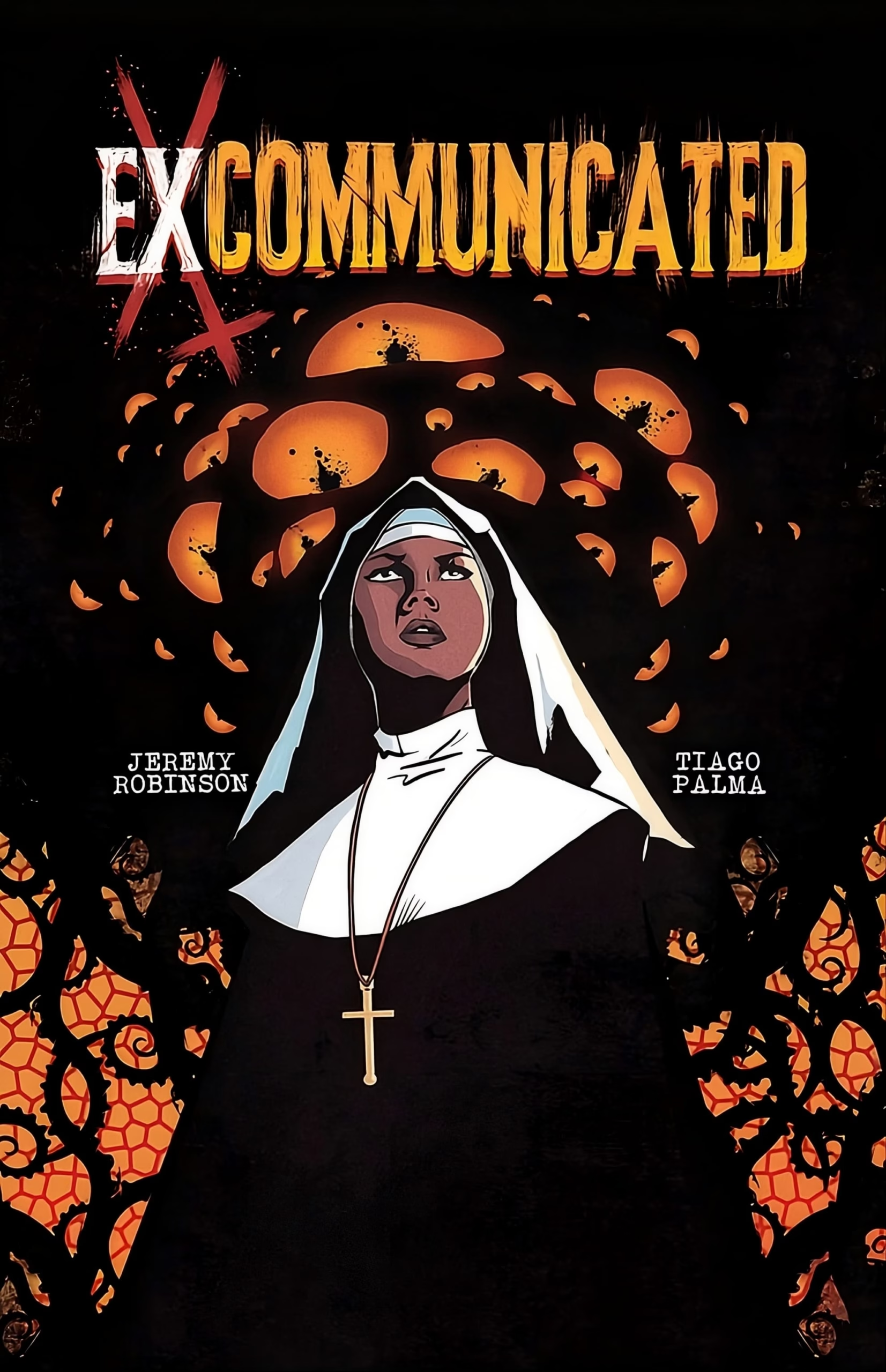
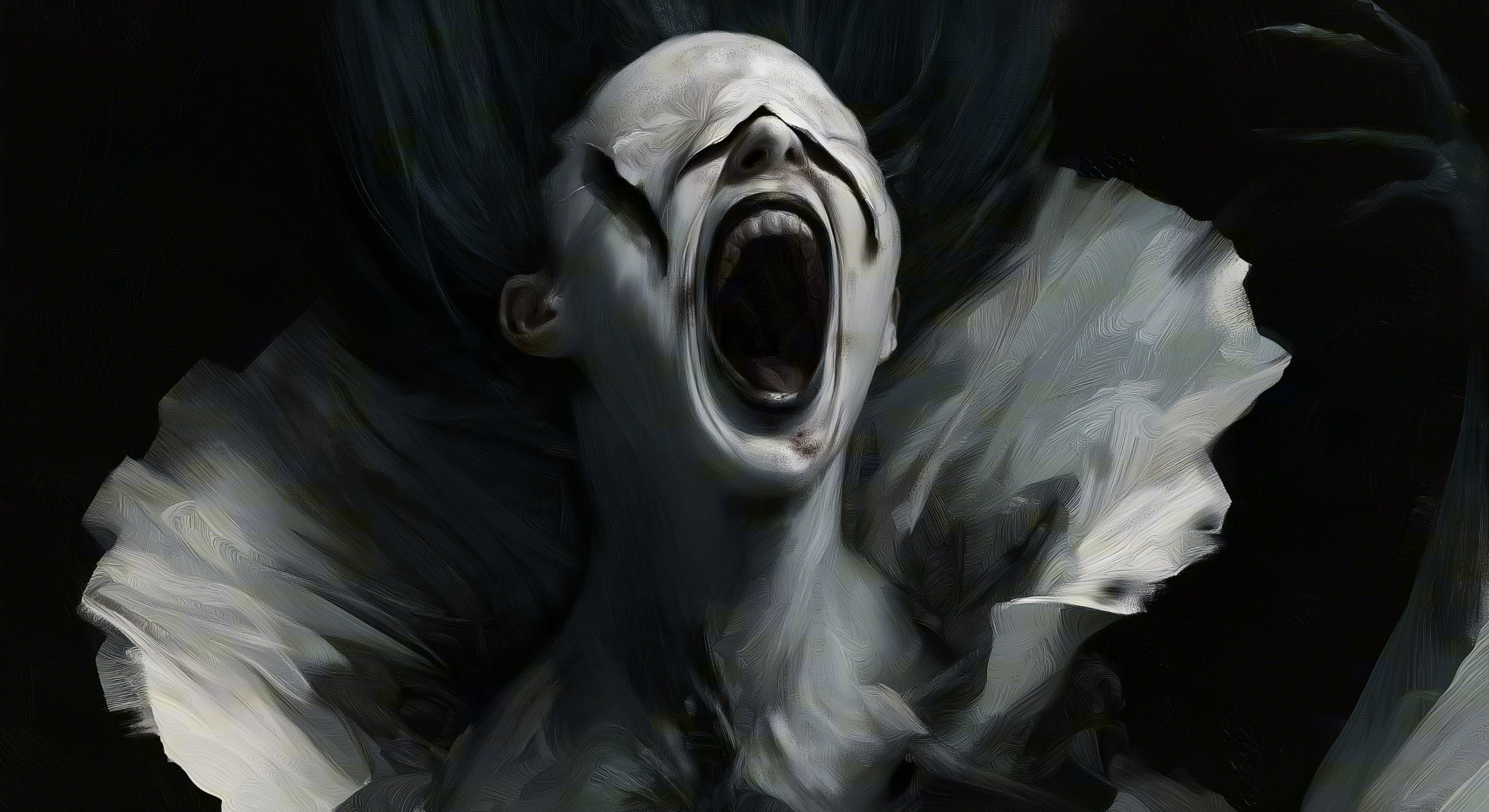
Cover A, by Flaviano Armentaro, presents Sister Josephine and Edimmu as distinct visual entities whose pairing frames the series’ central formal challenge: maintaining the visual legibility of a human protagonist and a demonic entity as genuine characters rather than symbolic opposites. The decision to give Edimmu consistent physical presence — as opposed to the formless or shadow-based visualization common to screen depictions of possession — aligns with the horror comics tradition of treating demonic embodiment as a problem of characterization rather than special effects.
Neither Realm Wants Them Back
The horror logic of ‘Excommunicated’ does not operate on the conventional axis of human vulnerability to supernatural attack. It operates on institutional abandonment: the Church and Hell have discarded Sister Josephine and Edimmu not because they are corrupt or disobedient, but because the bureaucratic logic of both systems cannot accommodate entities that fall outside their established categories.
That premise — that both sacred and infernal authority are primarily concerned with institutional self-maintenance rather than their stated purposes — is a genuinely different entry point for religious horror than the supernatural invasion narratives the subgenre has largely favored.
Whether ‘Excommunicated’ sustains that conceptual frame across its full arc, or allows the institutional argument to collapse into conventional possession mechanics, will determine whether the series makes a distinct contribution to the theological horror tradition in comics, or merely opens with a promising one.
‘Excommunicated’ treats both the Church and Hell as bureaucratic hierarchies that abandon inconvenient agents — is institutional failure a sufficient engine for sustained horror, or does the genre ultimately require a personal spiritual stake that a structural reading of both realms may not be able to supply?
Reference
- Jeremy A. Black, Anthony Green, and Tessa Rickards. ‘Gods, Demons, and Symbols of Ancient Mesopotamia: An Illustrated Dictionary.’ Austin: University of Texas Press, 1992. 67–68. ↩︎


Leave a Reply