

A man is dead after a hunt, and the wounds on his body look more like the work of a beast than the result of a fall. That single detail, placed at the center of the publisher’s synopsis, sets the terms for a novel about a household with every reason to prefer a monster to an explanation.
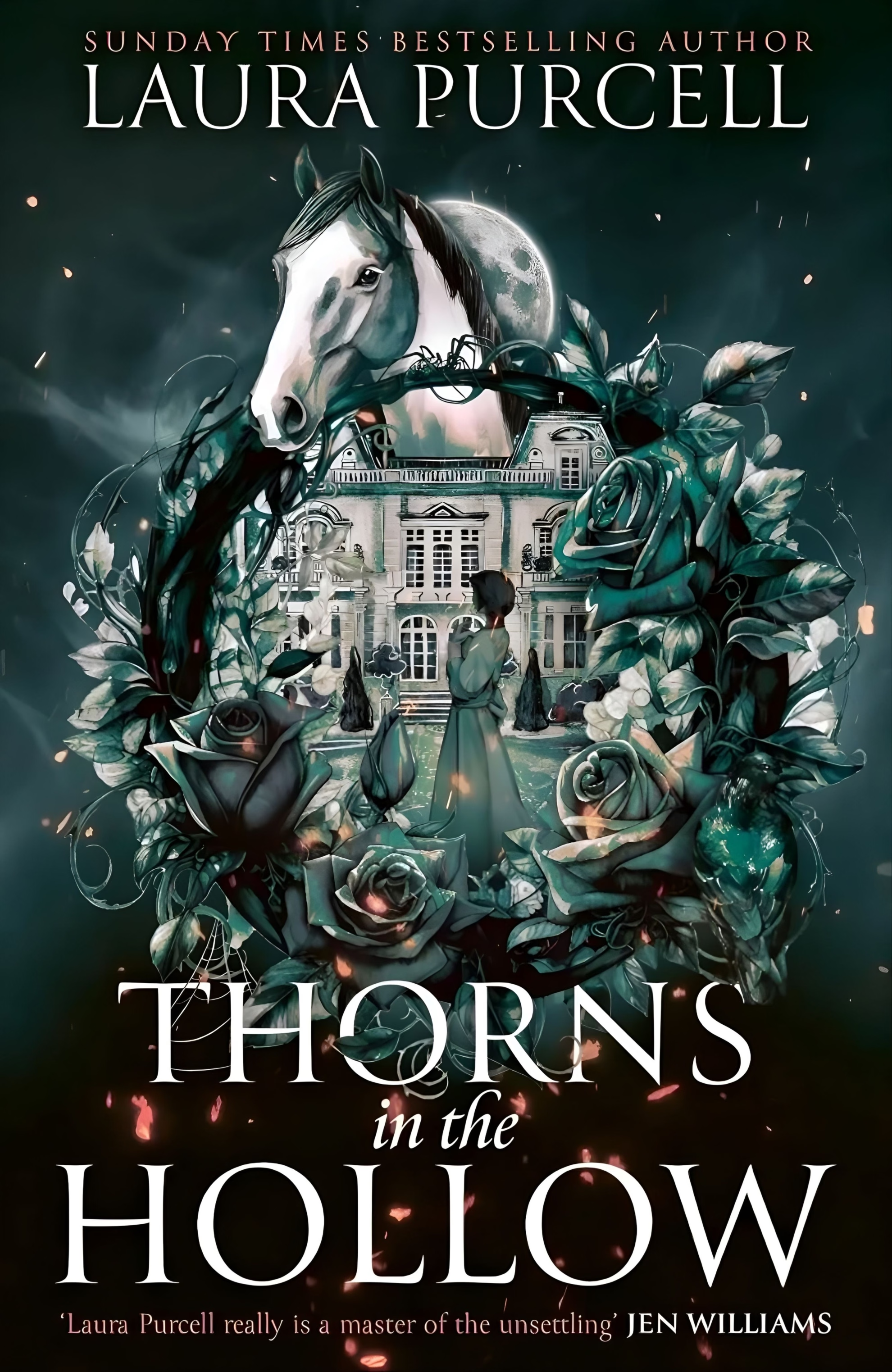
‘Thorns in the Hollow,’ the new gothic historical fantasy by Laura Purcell, is a 352-page United Kingdom hardcover from Magpie, the HarperCollins Publishers imprint, with the ISBN 978-0-00-856287-8, and it returns the monster-as-explanation to an author whose gothic novels have centered on inherited houses since 2017.
Purcell Before Magpie
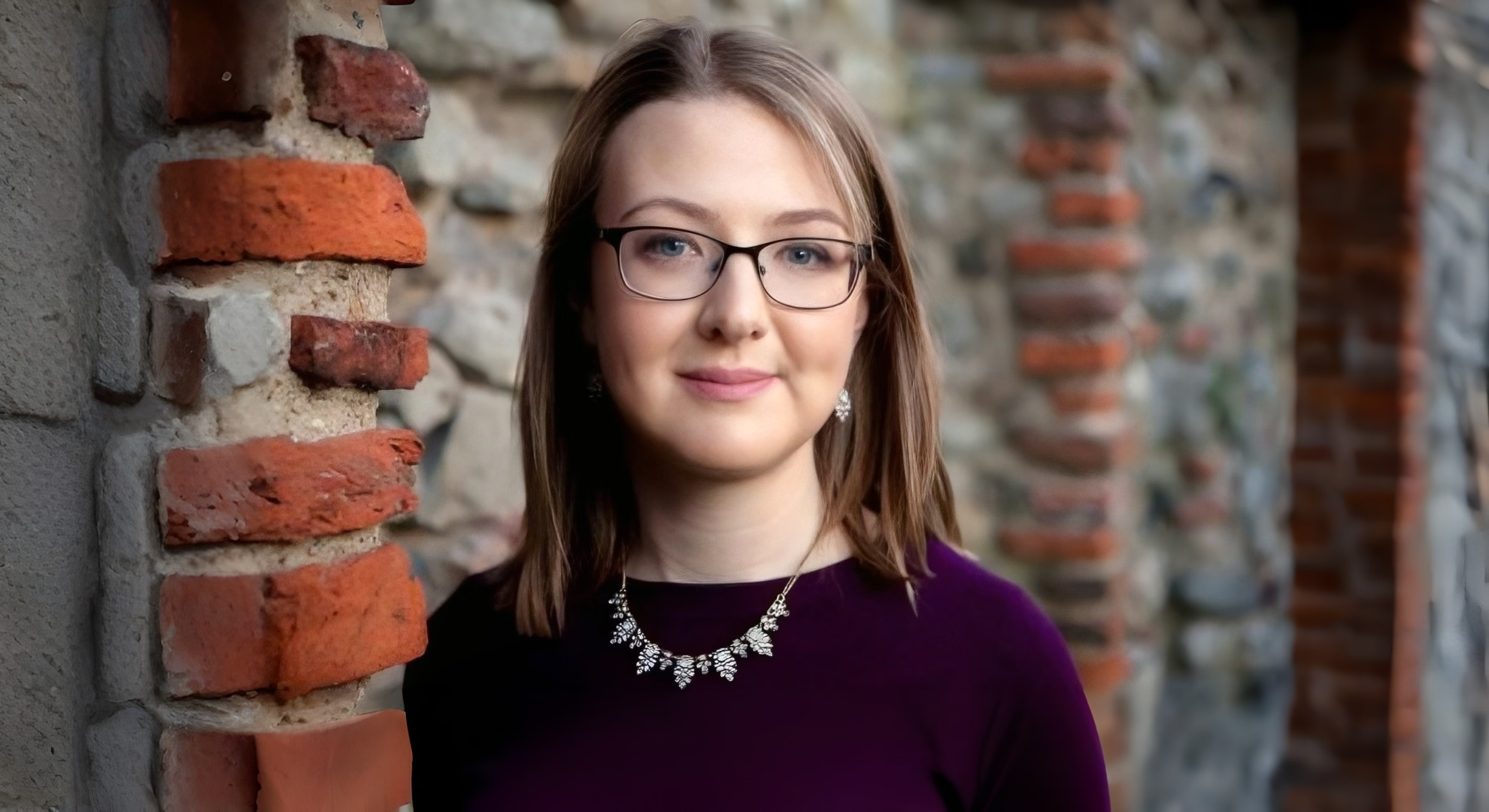
Laura Purcell lives in Colchester, Essex, and worked in local government, the financial industry and a bookshop before writing full time. She began with two historical novels about the Hanoverian monarchs, ‘Queen of Bedlam’ (2014) and ‘Mistress of the Court’ (2015), and entered the gothic with ‘The Silent Companions’ (Raven Books, an imprint of Bloomsbury, 2017), a haunted-house novel that won the WH Smith Thumping Good Read Award for 2018.
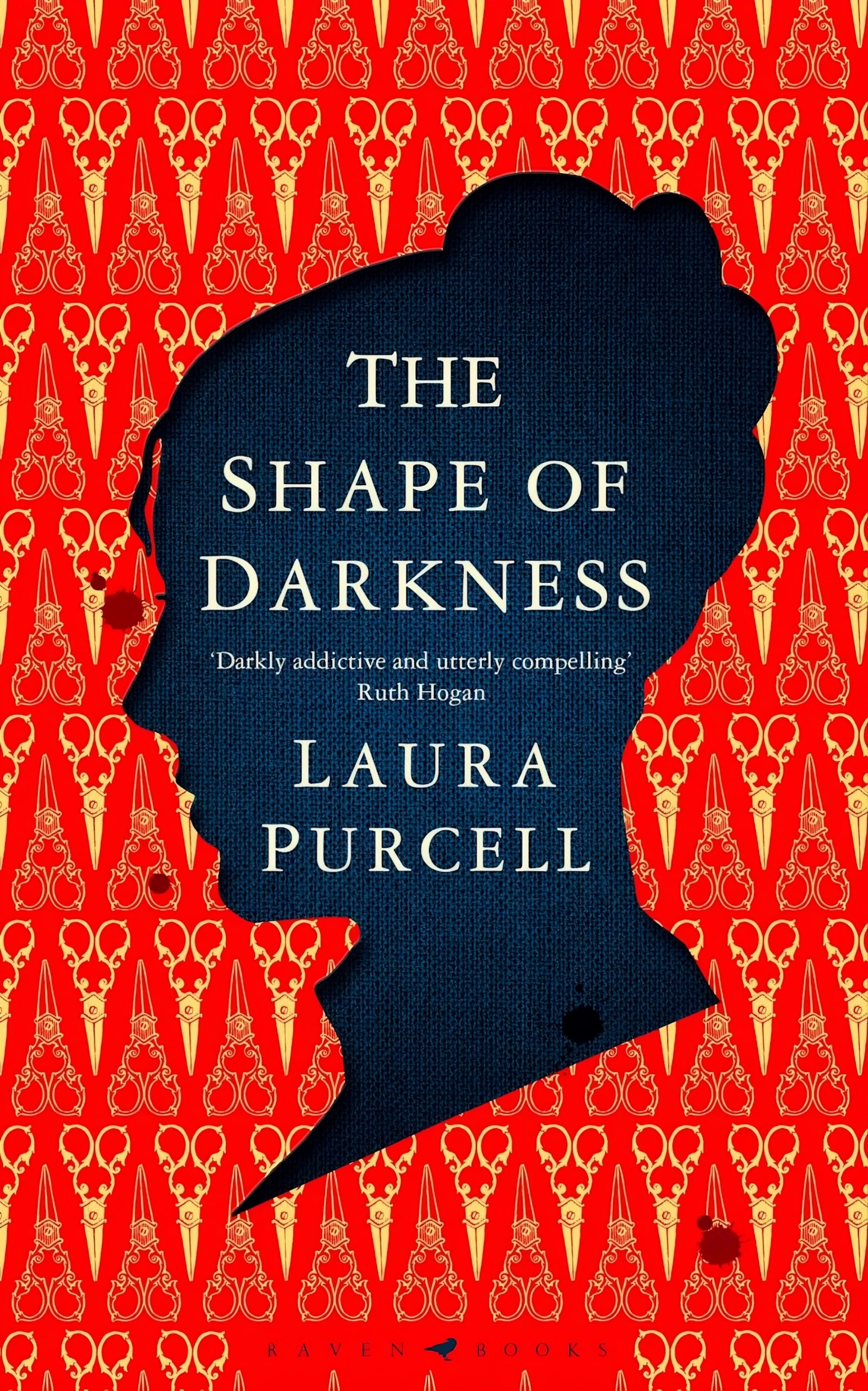
‘The Corset’ (2018) and ‘Bone China’ (2019) followed, issued in the United States as ‘The Poison Thread’ and ‘The House of Whispers.’ ‘The Shape of Darkness’ (2021), a séance mystery among the silhouette artists of Victorian Bath, won the inaugural Fingerprint Award for Historical Crime Book of the Year in 2022 and was shortlisted for an Edgar Award.
‘The Whispering Muse’ (2023) won the Dracula Society’s Children of the Night Award, which the society gives for the best original gothic, horror or supernatural fiction published in the previous year, on nominations from its members.
Her short fiction includes ‘The Chillingham Chair’ in the anthology ‘The Haunting Season’ (2021) and a story in ‘The Winter Spirits’ (2023), and she served as lead writer on ‘Roanoke Falls,’ a horror podcast for Realm executive produced by John Carpenter and Sandy King Carpenter.
Purcell has said, in an author interview, that reading historical nonfiction pushed her toward the dark because she found “so much real horror in history,” and that the supernatural in her fiction reflects the belief systems people use to cope with that trauma. The remark describes a method as much as a taste: a record of real cruelty, with a supernatural layer that behaves like belief rather than like spectacle.
From the Bridge to the Woods
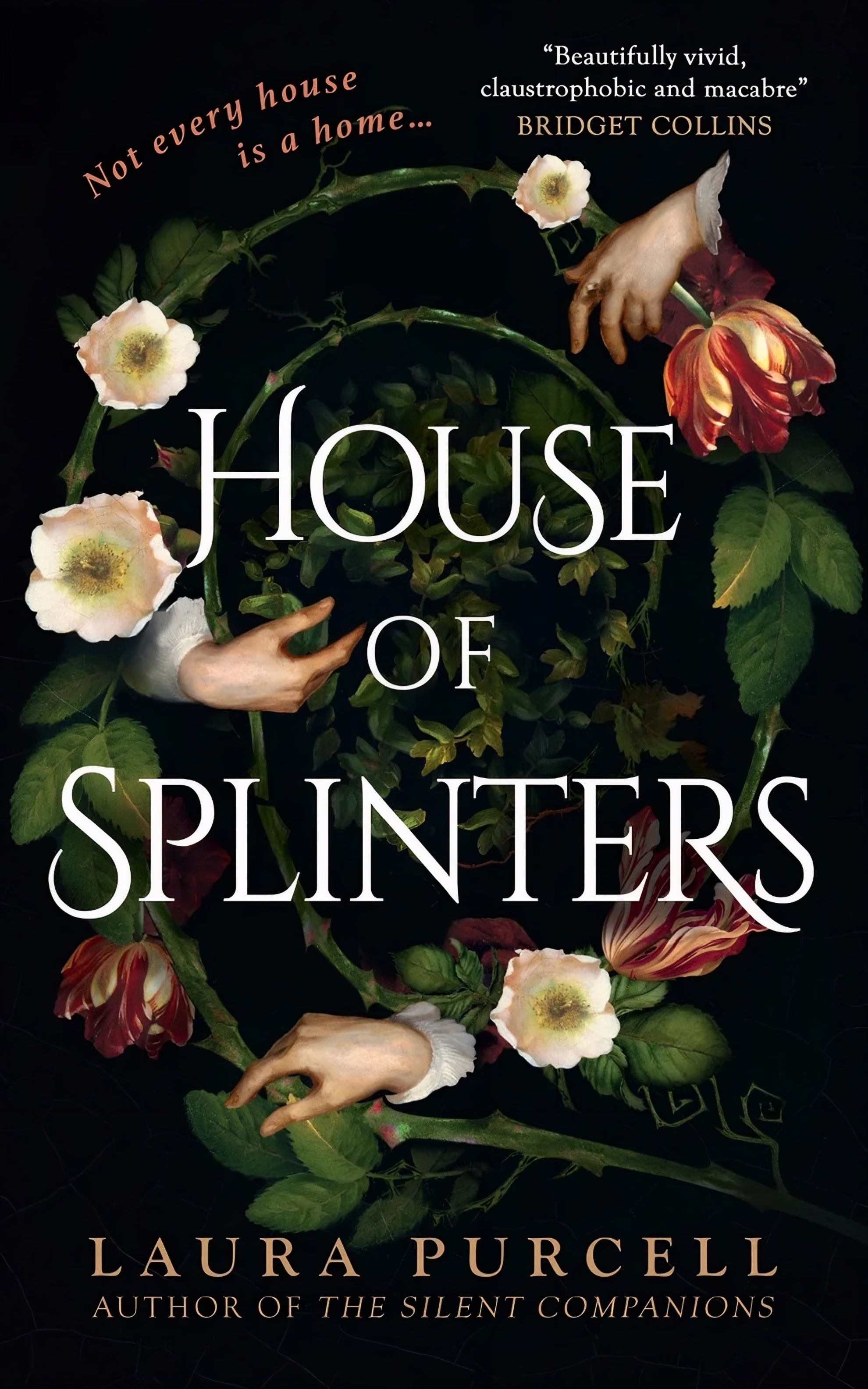
The work immediately before ‘Thorns in the Hollow’ is ‘House of Splinters’ (Raven Books, October 9th, 2025), a prequel to ‘The Silent Companions’ that returns to The Bridge, the remote ancestral house of the Bainbridge family, 90 years before Elsie Bainbridge enters it.
Belinda Bainbridge, a merchant’s daughter, becomes lady of the manor when her father-in-law dies; the estate is financially strained, rumors surround the death of a servant years earlier, and her young son, Freddy, grows fixated on the carved wooden figures known as silent companions.
A brother-in-law’s visit brings talk of a curse. Purcell has described the novel as partly inspired by Sheridan Le Fanu’s ‘Uncle Silas’ and as an exploration of the psychological toll of raising a family inside a cursed home. The menace in that book lives in the house and in the household’s inherited secrets.
‘Thorns in the Hollow’ moves the question outdoors, a movement Purcell’s first Magpie novel had already begun. ‘Moonstone’ (Magpie, May 23rd, 2024), her young adult debut, sends Camille, cast out after a scandal at the Vauxhall pleasure gardens, to live in the woods with a reclusive godmother and the godmother’s daughter, Lucy, where mysterious deaths, claw marks on the doors and the howls of a creature press the question of what is hiding in the forest.
JJ A. Harwood, author of ‘The Thorns Remain,’ described it as a gothic werewolf love story. A creature of uncertain nature in the trees is therefore a continuing line in Purcell’s work, not a departure from it.
Magpie’s Dark List
Magpie launched as the young adult sister imprint of Harper Voyager, with a remit covering young adult fantasy, science fiction, speculative romance and horror, and two fantasy books by Purcell were its first acquisitions, bought by Vicky Leech Mateos for United Kingdom and Commonwealth rights.
Leech Mateos called Purcell “a master at weaving heart with horror.” The announcement described the first title, ‘Silver and Moonstone,’ as a claustrophobic tale told under the full moon with themes of female survival, and the second as a gothic woodland fairytale. The publisher has not stated how those two announced books correspond to ‘Moonstone’ and ‘Thorns in the Hollow.’
Magpie is therefore not an imprint meeting horror for the first time; horror was part of its stated remit from the start, and a woodland gothic from its first acquired author is consistent with that list.
‘Thorns in the Hollow’ sits at the edge of this publication’s scope, since the publisher labels it a gothic historical fantasy and the listings consulted for this feature carry no young adult label, but it belongs here on the strength of its central question, whether a monster exists at all, and on a retailer category listing that places it under horror and supernatural fiction beside monsters and creatures.
The Synopsis as Structure
The confirmed synopsis supplies a structure rather than a plot. Tabitha will do anything to remain at her ancestral home, Reynard’s Hollow, and is prepared to marry her cousin Vincent to do so; Kit, the gamekeeper’s son and her childhood friend, can be nothing to her because she is the lady of the manor and he is a servant.
The death of a cousin in a hunting accident removes her best and only chance of keeping the house, and the question the synopsis puts to the reader is why his injuries look like the result of a brutal attack rather than a bad fall. Kit’s strand runs in parallel: his mother is acting strangely, the servants’ muttering about his parentage is growing louder, and he discovers that something is in the woods, although he does not think it is a monster.
That structure places two people on opposite sides of the household’s class line, one who may keep the estate through marriage and one whose parentage is disputed, so the estate’s secrets can be approached from above and from below.
The plot that makes a woman’s tenure depend on a marriage or a death has a long line in the English gothic, including Le Fanu’s ‘Uncle Silas’ (1864), in which the heiress Maud Ruthyn is endangered by an uncle who stands to gain from her fate, a lineage Purcell entered in ‘House of Splinters.’
Prose register, pacing and the management of dread cannot be assessed from a synopsis, and this feature restricts itself to the structure the publisher has confirmed. The cover artist and designer had not been confirmed at the time of publication.
The Name Reynard
The estate’s name carries a figure. Reynard is the fox of the medieval beast epic, the trickster of the French ‘Roman de Renart,’ composed in branches in northern France across the late twelfth and thirteenth centuries, a cycle that staged feudal society and human appetite through animals and whose hero’s name displaced the older French word for fox until “renard” became the common word itself.
A hollow named for a cunning animal fits a household in which an animal may be a story. Purcell had not given a documented account of the title or the estate’s name at the time of publication, so the connection is this publication’s reading rather than the author’s stated intention.
The Explained Beast
The device the synopsis invites, a deadly animal that may be a person, has a named critical history. The phrase “explained supernatural” attaches especially to Ann Radcliffe, who published five novels between 1789 and 1797, among them ‘The Mysteries of Udolpho’ (1794), and who ended apparent apparitions with rational causes.
Her essay ‘On the Supernatural in Poetry,’ published after her death in 1826, separates terror, which opens the mind toward the unseen, from horror, which freezes it, so the explanation belongs to an aesthetic of terror as much as to plot mechanics.
E. J. Clery’s study of the period traces the rationalized apparition after Horace Walpole’s ‘The Castle of Otranto’ (1764), whose ghosts are literal and never explained away, and argues that the explanation leaves a residue of the spiritual: the coincidences that clear the apparition imply a providential order.1 Walter Scott later objected that natural causes could not carry the effect of the marvel they replaced.
The label on Purcell’s book, “historical fantasy,” sits on the other side of that quarrel, since a fantasy label suggests a creature that may remain unexplained in Walpole’s manner rather than dissolved in Radcliffe’s. The synopsis keeps both outcomes open, describing Kit’s discovery as something that is not, in his view, a monster.
A Monster as Alibi
The question of the explained supernatural leaves, who gains when a death is given a monster’s face, has a Colombian counterpart worth stating carefully. La Patasola, the one-legged woman of Colombian oral tradition, is counted by regional scholarship in Tolima among that department’s emblematic legends.2
Accounts vary, but in the most commonly told origin she is an unfaithful wife mutilated by her husband; she appears to men who have strayed into the forest, often as a woman calling for help, and many tellings also make her a guardian of trees and animals against loggers and hunters.
The contrast with the Radcliffean model is structural. Radcliffe’s explanation removes the monster and exposes a human culprit; the Patasola keeps the monster and preserves, inside her origin, an account of what a man did to a woman. In the first case the beast is a cover the story must strip away, in the second a record the community keeps repeating. The comparison is a structural one, not a claim of influence, and nothing in Purcell’s published materials refers to Colombian tradition.
Latin American fiction has used the haunted estate in a closely related way. Juan Rulfo’s ‘Pedro Páramo’ (1955) sends Juan Preciado to the village of Comala to find the father he never knew, and the dead who speak there testify to the landowner Pedro Páramo’s violence and to the children he did not acknowledge; the supernatural is the village’s memory of what the estate’s owner did, the opposite of an alibi.
With rumors about a servant’s parentage inside an estate under strain, the synopsis of ‘Thorns in the Hollow’ raises the same fork between a monster that excuses and a ghost that accuses, and only the finished book can say which Purcell has written.
A Culprit Too Easily Found
For a gothic novelist whose last book kept its menace inside a house, ‘Thorns in the Hollow’ takes the question to the forest, where the creature may be an animal, a person, or the household’s most convenient story. The gothic has used the beast as the tale a family tells in place of the one it fears since Radcliffe’s time, and the measure of Purcell’s novel will be what it does with that inheritance, exposing the human hand or leaving the animal standing.
For readers of Purcell’s earlier novels, which of her settings, the Bridge of ‘The Silent Companions’ and ‘House of Splinters,’ the séance rooms of Bath in ‘The Shape of Darkness,’ or the woods of ‘Moonstone,’ has done most to unsettle you, and what does a forest ask of her method that a house does not?
References
- E. J. Clery, ‘The Rise of Supernatural Fiction, 1762–1800’ (Cambridge: Cambridge University Press, 1995), 106–171. ↩︎
- Nestor Andres Guarnizo Sanchez, Fabio Andres Lizcano Prada, Robert Gutierrez Ortiz and Misael Fernando Ariza Rodriguez, ‘Patrimonio cultural: un estudio integral de las leyendas del Tolima en la ciudad de Ibagué,’ Modulema 8 (December 2024): 122–146. ↩︎
Leave a Reply