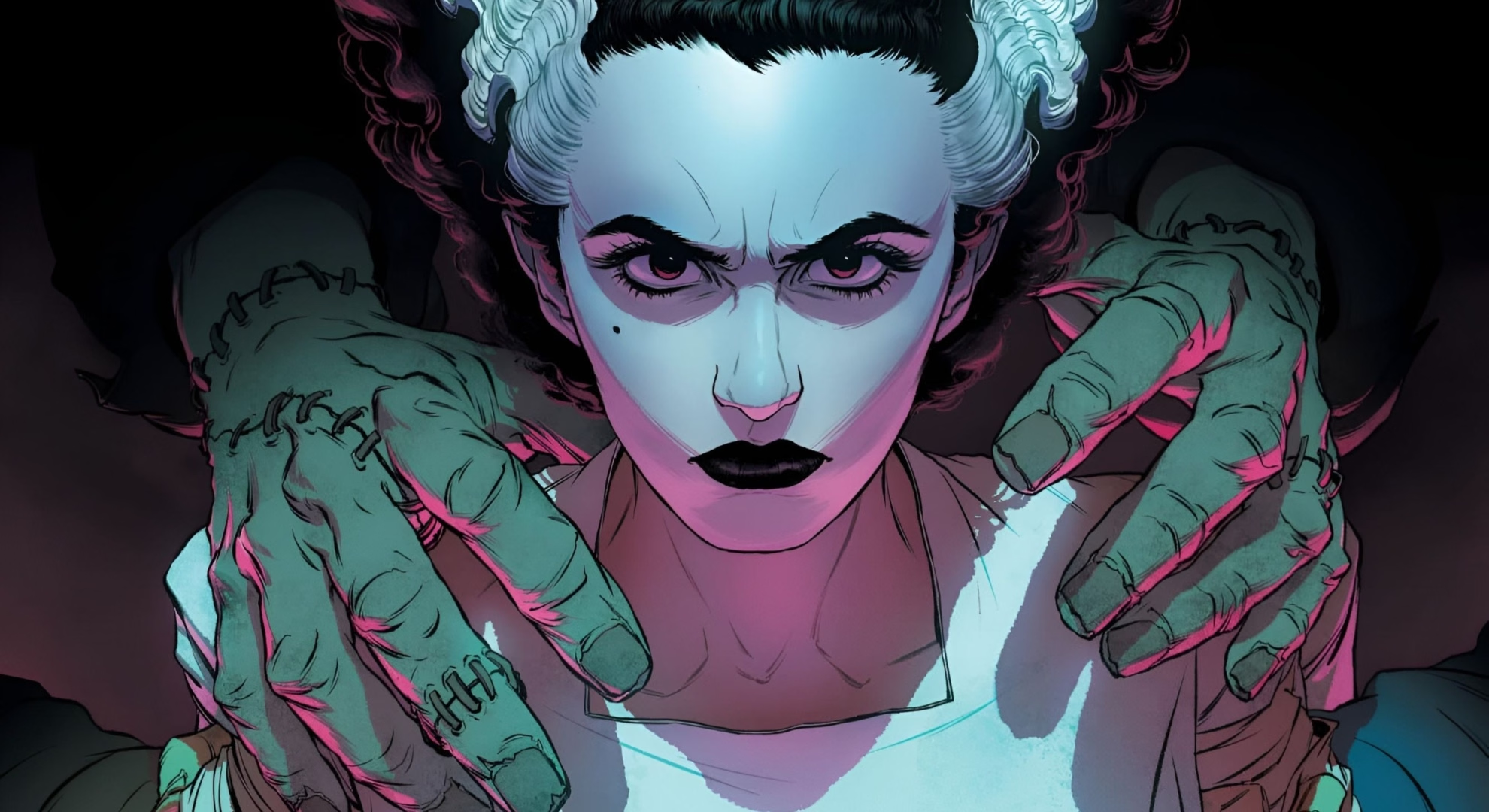


James Whale’s 1935 film gives Elsa Lanchester’s ‘Bride of Frankenstein’ an entrance, a hiss, and an exit. She opens her eyes in the laboratory, sees the Creature who has waited for her, and answers with a scream; the lever he pulls moments later collapses the laboratory on her and on the film together. Across the nine decades since, the Bride has been a woman about whom other characters decide, and the title that names her has never been hers to speak.
She existed first as an abandoned experiment. In Mary Shelley’s 1818 novel, ‘Frankenstein,’ the Creature demands a female companion, and Victor Frankenstein begins the work in the Orkney Islands, only to tear the half-made woman apart before the Creature’s eyes. His reasons all concern her possible will: she might refuse the compact made before her creation, might find the Creature as repellent as everyone else does, or might bear children and propagate a race of such beings.
The novel destroys her before she can choose, and the Creature answers by killing Victor’s own bride, Elizabeth, on her wedding night. Whale’s 1931 ‘Frankenstein’ leaves the question aside, and the sequel supplies the woman the novel never allowed to wake.
Whale’s 1935 Invention
The sequel, directed by Whale from an adaptation credited to John L. Balderston and William Hurlbut, gives the idea a mechanism and a sponsor.
Ernest Thesiger’s Dr. Pretorius persuades Colin Clive’s Henry Frankenstein to build a mate for Boris Karloff’s Creature, and the body is assembled with a heart supplied when Pretorius’s henchman Karl murders a young woman.
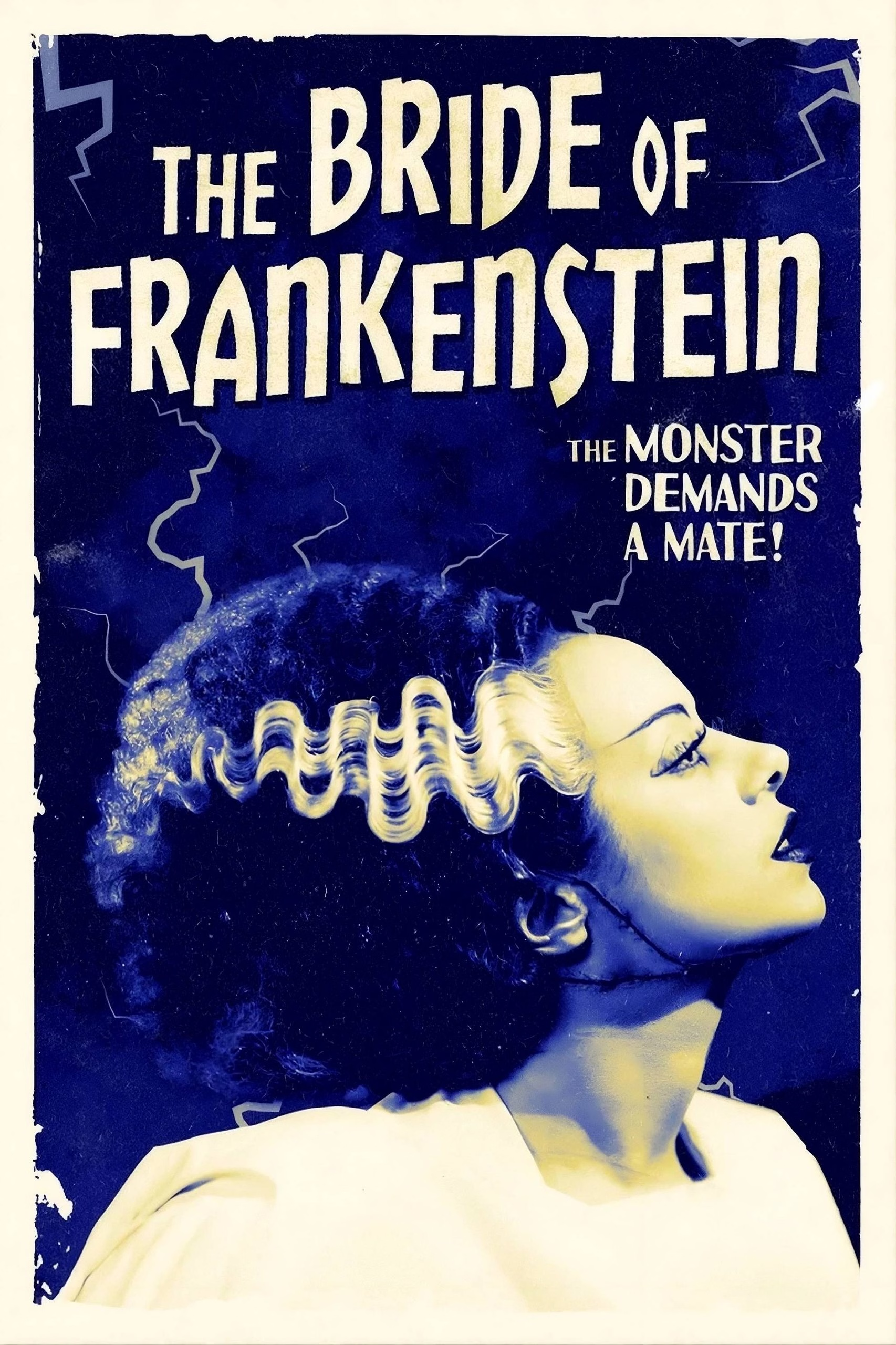
Jack Pierce’s makeup and Franz Waxman’s score give the revival its famous form: upswept hair streaked white, a stitched neck, and a bearing more birdlike than bridal. Her creation is also the film’s final sequence, which means the character who lends the film its title is introduced only as it ends.
The Lanchester Doubling
Lanchester also played Mary Shelley in the film’s prologue, a doubling that Elizabeth Young has read as a comment on the Bride’s authority.1
The author and the Bride share one performer, yet only the author is permitted to narrate. In the finale the Bride’s one act is a refusal: she recoils from the Creature, and he, rather than she, delivers the verdict, sending Henry and Elizabeth away before he pulls the lever that destroys the tower, Pretorius and the Bride with it.
That gap between a figure who dominates the image and a character allowed almost no speech is the problem ‘Universal Monsters: The Bride of Frankenstein Lives’ takes as its premise.
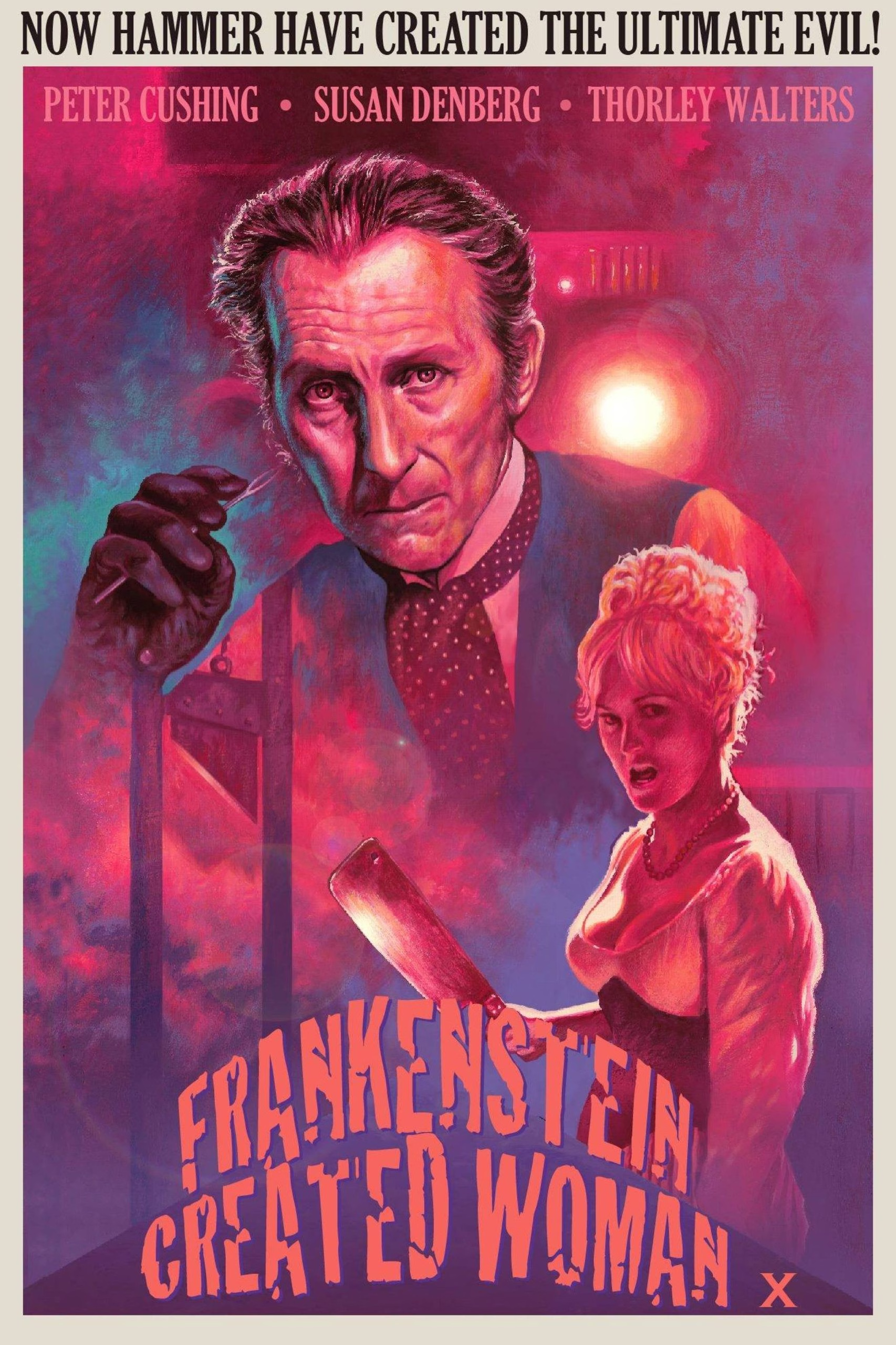
Later films gave the character a lead only by moving away from the ruined tower. Hammer’s ‘Frankenstein Created Woman’ (1967) transfers an executed man’s soul into a drowned woman’s body, Franc Roddam’s ‘The Bride’ (1985) casts Jennifer Beals as a creation named Eva, and Maggie Gyllenhaal’s ‘The Bride!’ (2026) casts Jessie Buckley in the title role. Each is a new story about a Bride.
The Skybound series is a sequel to the same hour of film, which makes the 1935 ending itself, rather than a reinvention, the source of every question it asks.
A Sequel Without a Rewrite
Writer Kelly Thompson was specific about the limits of the project in an interview published September 29th, 2026. The film, she said, is brilliant but is not really about the Bride; it concerns the Creature, and a story about the Bride’s agency is “a wide-open field.”
The series therefore does not revise the 1935 film. It begins directly after it, with the Bride surviving the destruction of the castle, with no memory of her past and no understanding of what she is.
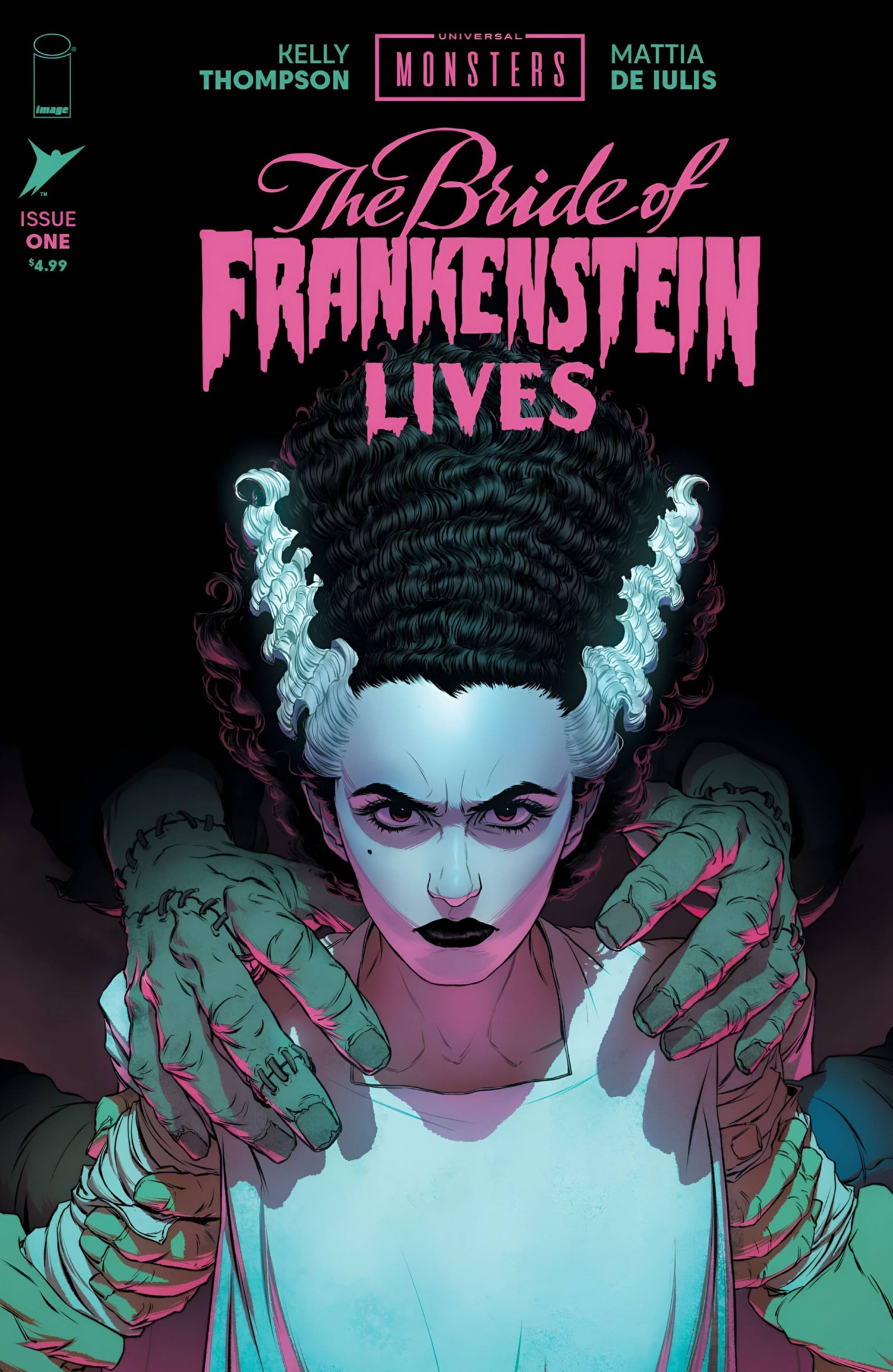
In the announcement of June 30th, 2026, Thompson said the Bride’s search extends to “the women that were destroyed to create her.” The phrase can be read as reaching back toward Shelley’s unanimated creature, and it gives the film’s murdered young woman, whose heart Karl took, a place in the Bride’s lineage as well. A missing history becomes a trail of bodies rather than a blank.
Four Issues, Not One Book
Issue one reaches comic shops on October 28th, 2026, from Skybound Entertainment and Image Comics in partnership with Universal Products & Experiences, at 32 full-color pages and $4.99, approximately COP 15,900. It is the eighth series in Skybound’s Universal Monsters line, which began in 2023, and it is neither an original graphic novel nor a collected edition: it is a monthly serial of four installments, with Alex Antone serving as editor.
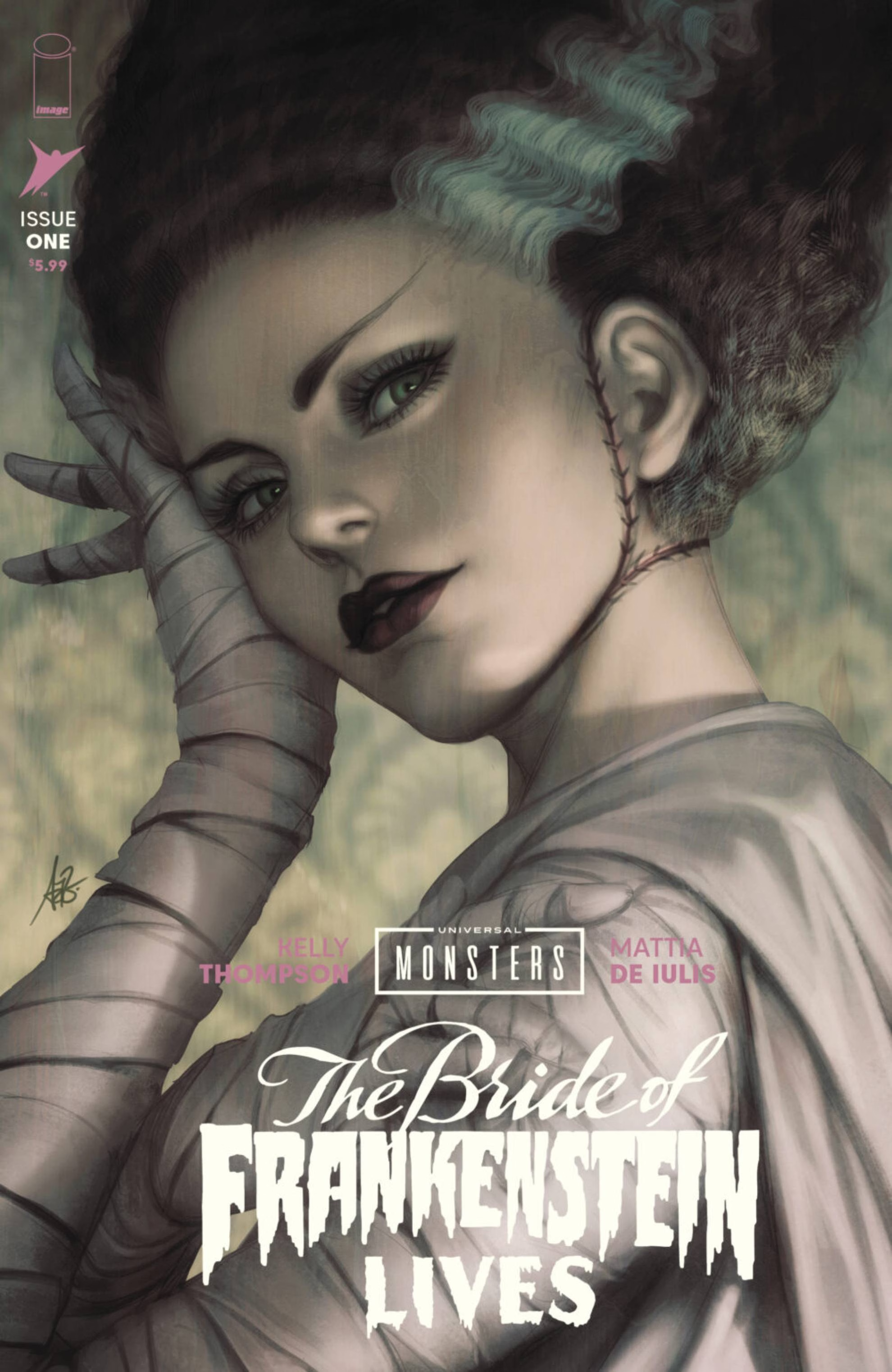
The form suits the material. A woman who begins without memory is a character whose knowledge can only accumulate, and monthly intervals hand the reader the same pauses the Bride endures between discoveries. When the four issues are gathered into a single volume, those pauses will vanish and the pursuit will read as one continuous awakening; the serial version, with its enforced waiting, is the closer match to a mind recovering itself in pieces.
One Hand for Line and Color
Mattia De Iulis draws and colors every page, with lettering by Becca Carey, which means the Bride’s face, the electric light that made her, and the flesh tones of a body assembled from stolen parts are decided by a single hand rather than passed from penciller to colorist.
In a book about who authors a body, that unity is a formal argument. Thompson and De Iulis have worked together before, on ‘Jessica Jones: Blind Spot’ for Marvel in 2018, on ‘The Cull,’ released in print by Image Comics in 2023, and on the ‘Absolute Wonder Woman Annual’ earlier in 2026.
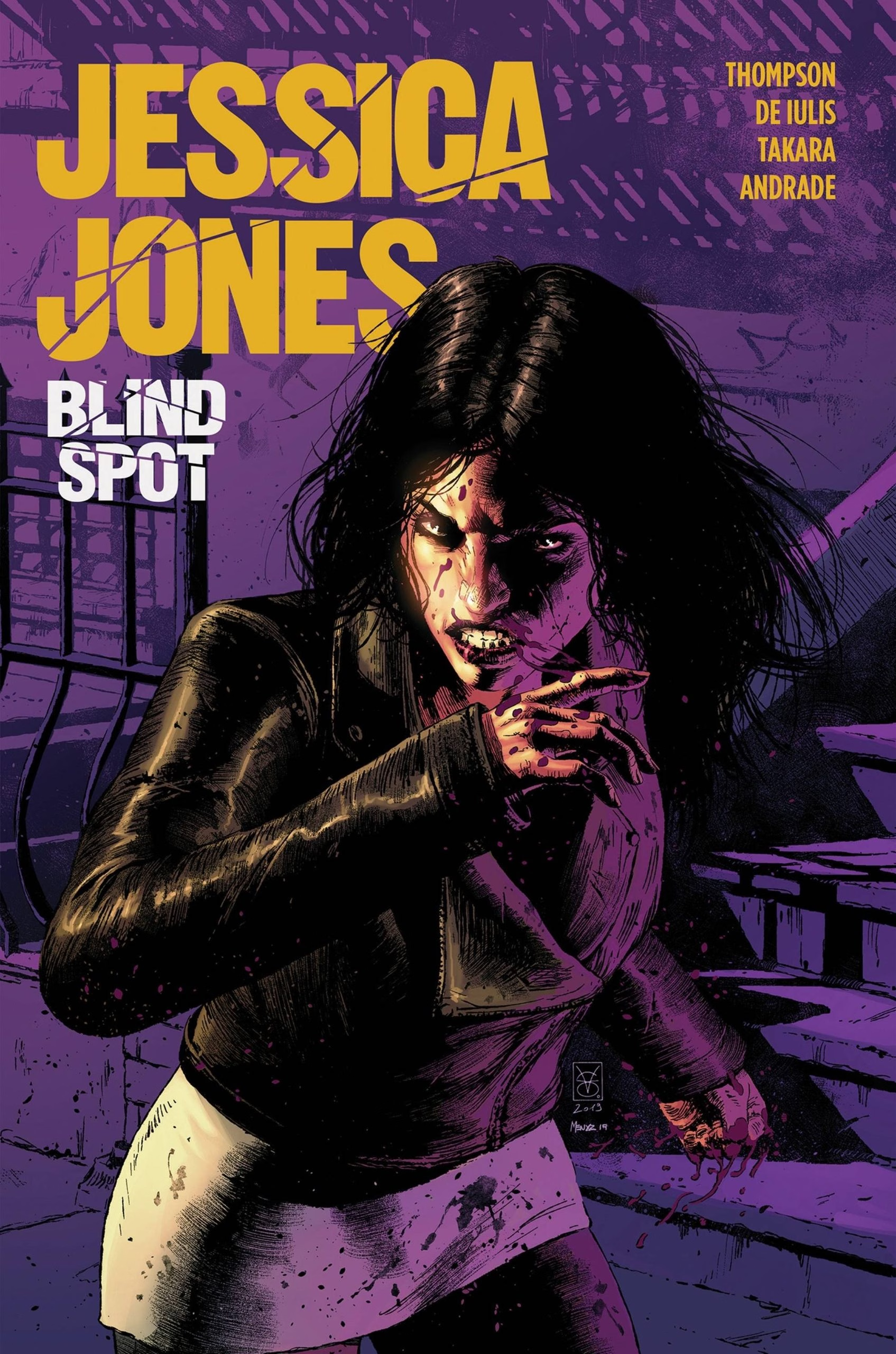
In the same interview, De Iulis said the team could not use Lanchester’s exact likeness, so he designed his own version while keeping the intensity of her gaze and expression. He explained that shaping a face lets an artist tell a character’s emotions and past through the visuals alone. The face, in other words, must carry the autobiography the Bride cannot yet speak.
Balloons and Captions
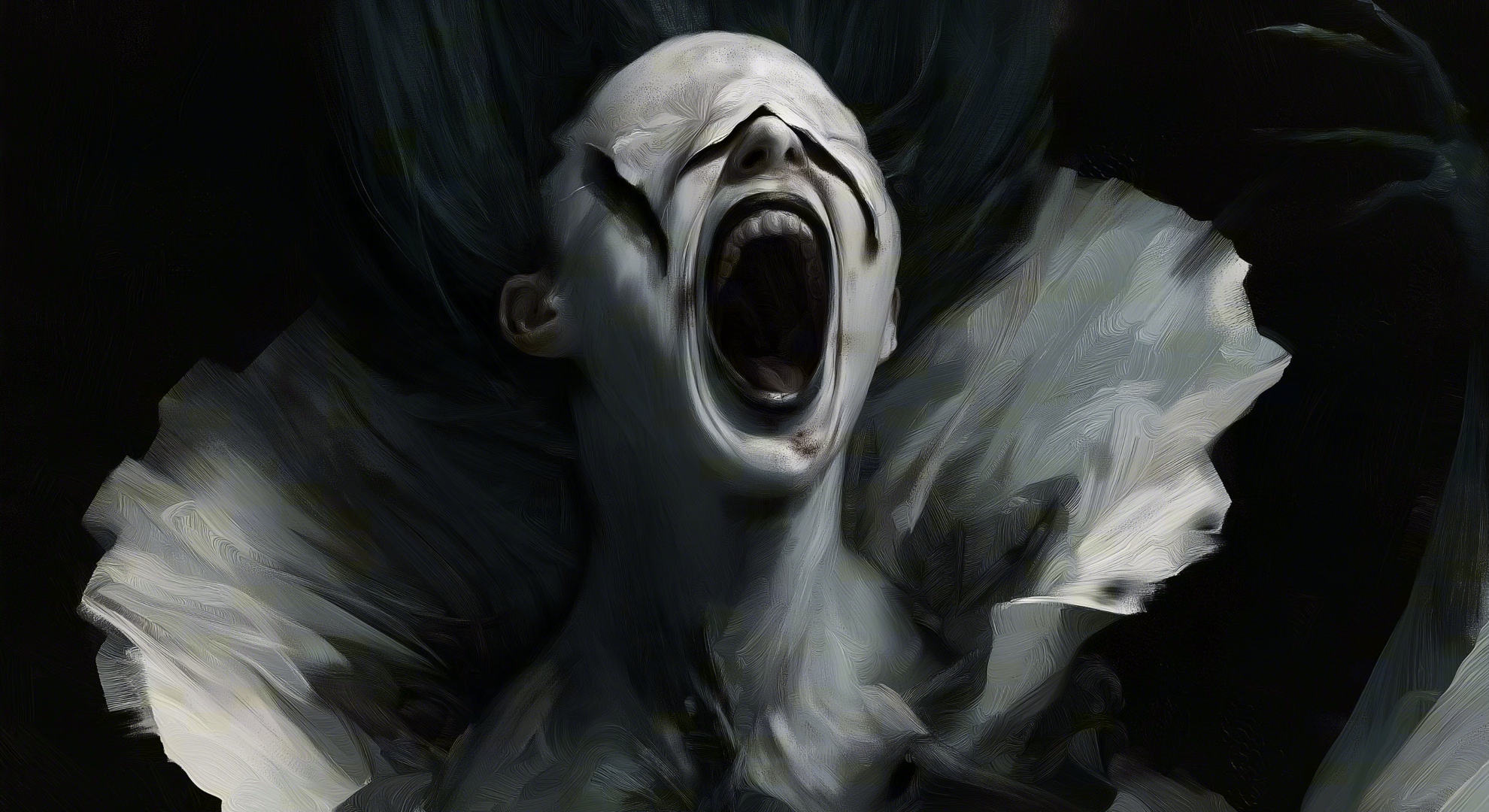
The preview pages answer that problem with a division of labor. The Bride’s narration sits in cream caption boxes, in what reads as her retrospective voice: “In retrospect…” crosses one panel of the awakening spread, and “I didn’t have the words, but the purpose for which I was intended was clear” sits beside her open mouth.
Every spoken balloon belongs to someone else. “SHE’S ALIVE! ALIVE!” bursts from the two men at her table, and “…THE BRIDE OF FRANKENSTEIN!” comes from outside the panel, naming her before she has named herself.
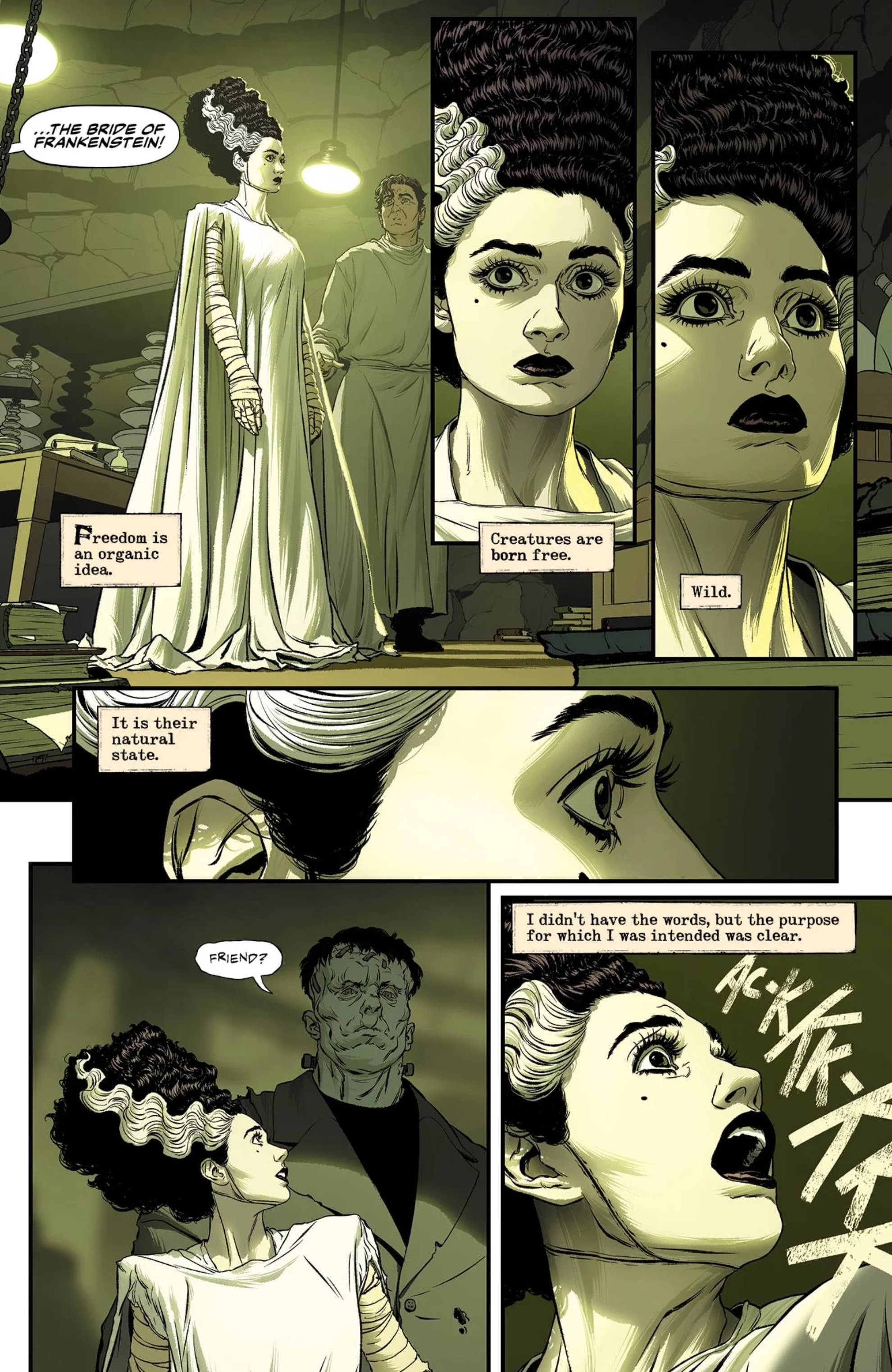
The page where the Creature asks “Friend?” makes the argument in layout. Four short captions on freedom run across a wide shot, two tall close-ups of her face, and a wide close-up of one eye, attaching abstraction to a woman who has not yet spoken. Below, her scream is lettered as a brushed white sound effect that runs off the edge of its panel, directly beside the caption that says she lacked words.
The film’s cry is thus made legible as speech by the voice that remembers it. Olive and ochre govern the laboratory pages, so the one yellow window in the blue night of the opening tower page is the only warm light the preview allows.
The Answer to the Lever
Shelley’s Victor destroys his female creature precisely so that she cannot refuse him. Whale lets his Bride refuse, then lets the Creature pull the lever over her. In both versions the verdict on her life is delivered by men before she has spoken a word.
Thompson and De Iulis begin at the one point neither predecessor reached, the morning after the refusal, and give the Bride what each denied her: duration, a history, and a point of view. The test of the series is formal rather than premise-driven: it must make a woman without a past read as someone on the page.
If the Bride’s scream in 1935 was her first act of will, does giving her a past and a voice strengthen that refusal, or does it explain away the silence that made her unforgettable?
References
- Elizabeth Young, ‘Here Comes the Bride: Wedding Gender and Race in Bride of Frankenstein,’ Feminist Studies 17, no. 3 (1991): 403–437. ↩︎


Leave a Reply