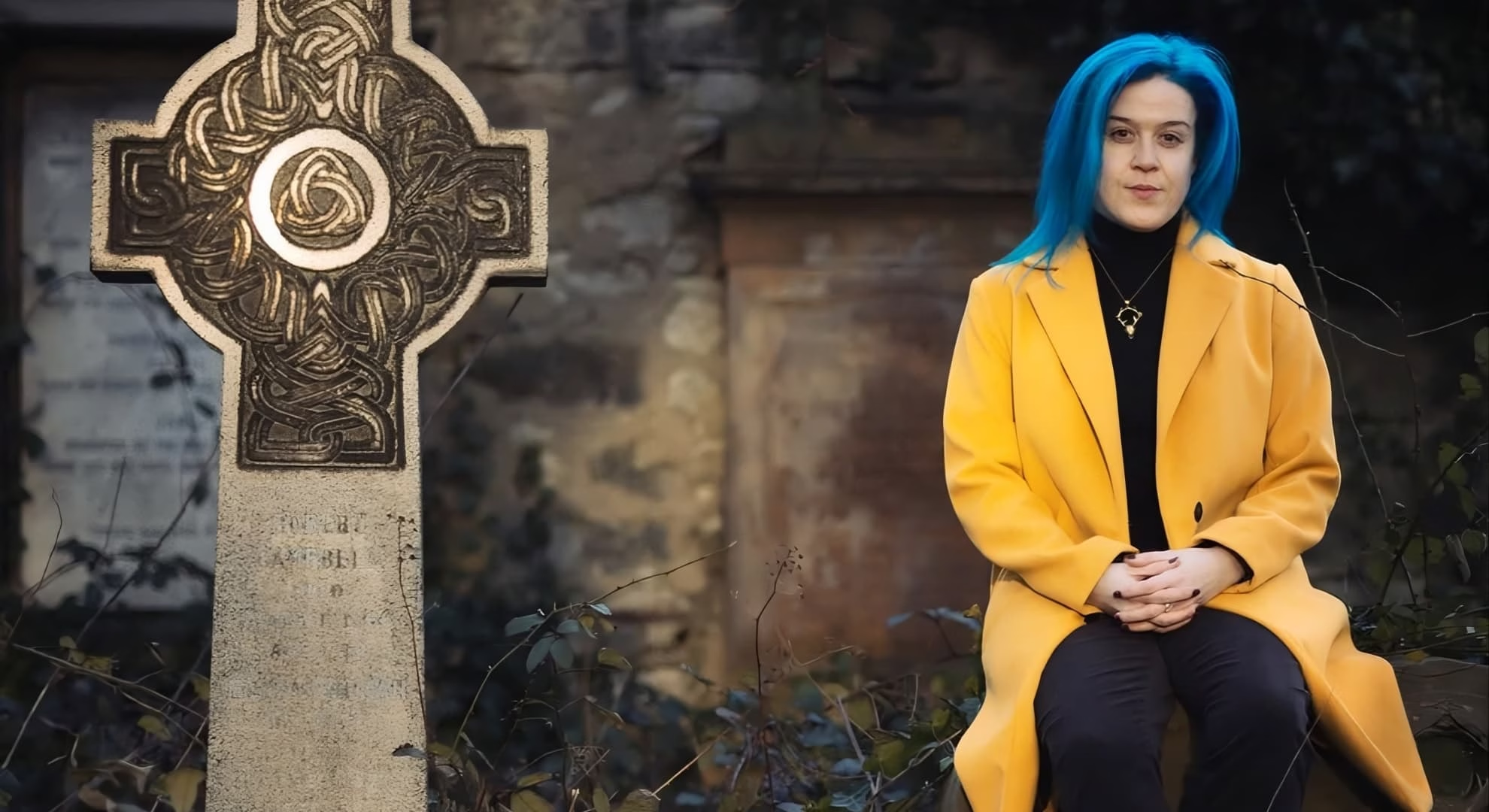


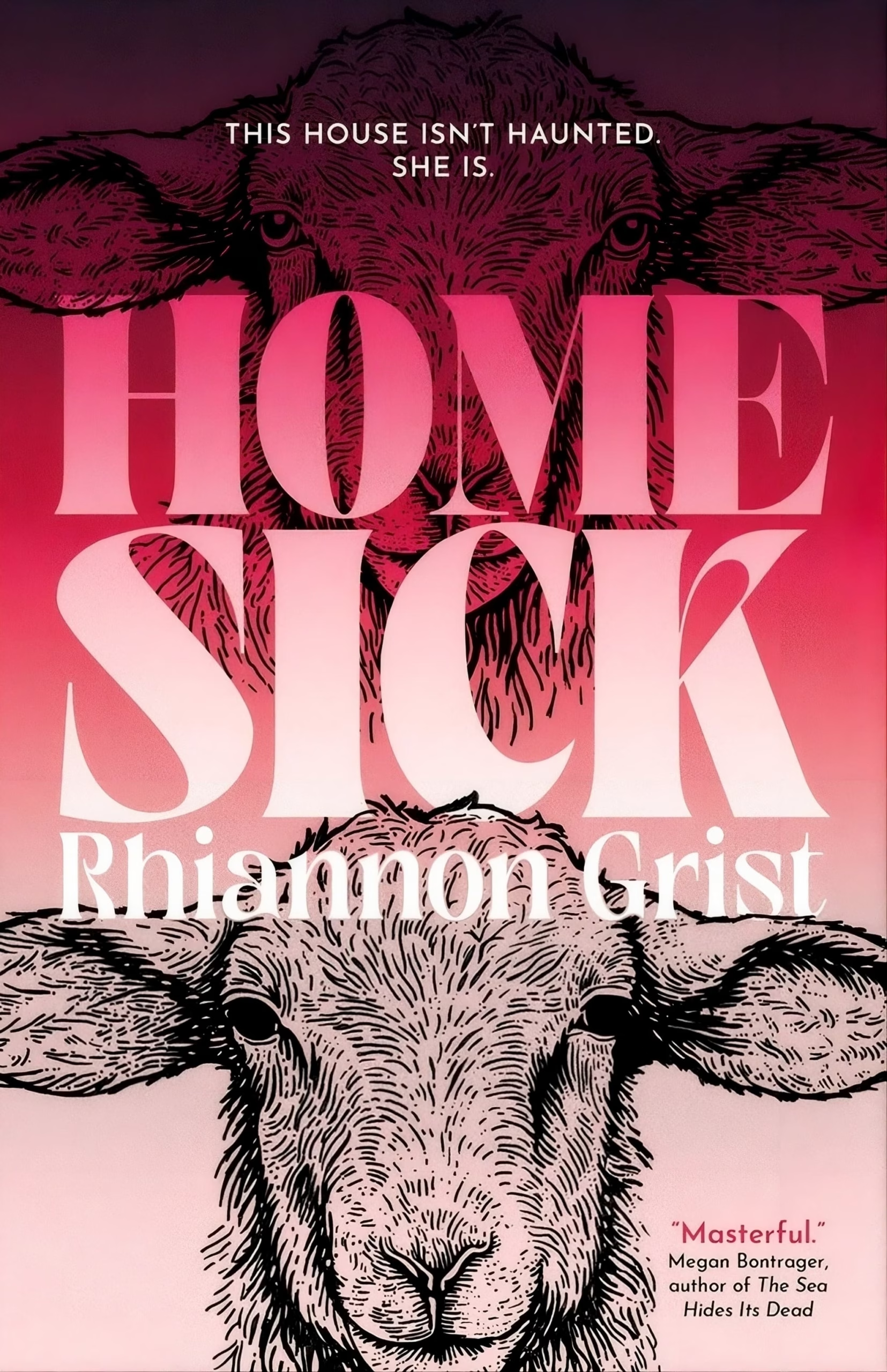
A house is the first structure a person is taught to trust, which is part of why dark fiction has spent so long turning it into the last place anyone should remain. The domestic uncanny — the dread that collects inside a familiar interior — carries a traceable line of descent in horror and Gothic writing, and a forthcoming first novel now enters that line by way of Scottish folk belief.
Set for release on July 14th, 2026 by Solaris Books, the genre imprint of Rebellion Publishing, ‘Home Sick’ is the first novel by the Welsh author Rhiannon Grist. Her publisher frames it as a psychological horror rooted in Scottish folklore and in the particular dread of the domestic uncanny — language that names the tradition the book means to work inside rather than merely gesturing at atmosphere.
That framing matters, because the domestic uncanny is not a mood a book can simply put on. It is a specific effect with documented precedents, and a novel that reaches for it invites the company of the writers who shaped the form. Solaris has placed ‘Home Sick’ at the meeting point of folk horror and psychological dread, beside British writers whose work occupies the same uneasy country between the literary and the generic.
A Debut After the Novella
Grist arrives at her first novel with a shorter work already recognized. ‘The Queen of the High Fields,’ her novella, took the British Fantasy Award for Best Novella in 2023, a prize administered by the British Fantasy Society with its own long record of honoring dark and fantastical short fiction.
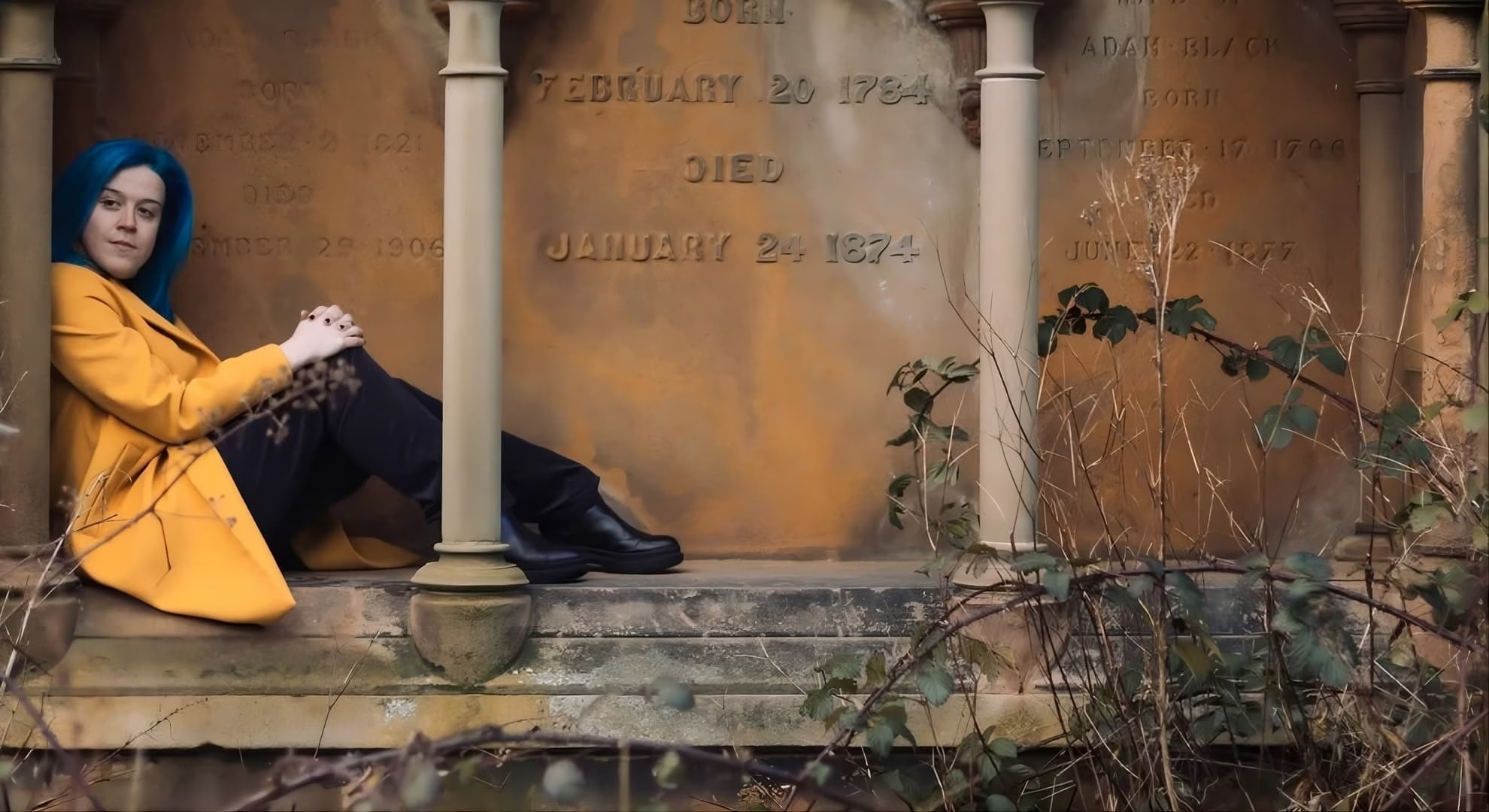
A novella that wins in that category is not a minor credential. The form holds an unusually central place in horror and dark fantasy, where the compression of the novella often serves dread better than the amplitude of the novel.
That earlier work covered folkloric and psychological ground adjacent to what the publisher describes for ‘Home Sick,’ which makes the debut less a departure than an extension — a writer moving from the concentrated pressure of the novella into the longer form while keeping the same preoccupations.
The trajectory is worth following from this point, because a first novel that follows a prize-winning novella tends to reveal whether a writer’s control survives the change of scale.
The Home Made Strange
The dread ‘Home Sick’ reaches for has a name older than the genre that trades on it now. Freud called it “das Unheimliche,” the unhomely, and located its force in the familiar made strange — the domestic revealed as the place where what should have stayed hidden returns.1 The home suits horror precisely because it is where safety is assumed, and the breach of that assumption is the effect the mode exists to produce.
In the twentieth century no writer pressed this further than Shirley Jackson, whose ‘The Haunting of Hill House’ and ‘We Have Always Lived in the Castle’ made the house itself the antagonist and the family interior a closed system of menace. Angela Carter’s revisionary Gothic reopened the fairy tale’s domestic cruelties for a later readership, and the contemporary writers most associated with the form — Carmen Maria Machado, whose ‘In the Dream House’ turned the house into the very grammar of a memoir of harm, and Paul Tremblay, whose fiction repeatedly seats catastrophe inside ordinary family rooms — have kept the domestic uncanny at the center of serious dark writing rather than at its margins.
What links these works is not subject but method. Each withholds the supernatural long enough for the house to become suspect on its own, so that when the uncanny finally declares itself it confirms a dread the ordinary rooms had already produced. A slow-burn structure, the mode the publisher attributes to ‘Home Sick,’ is the natural vehicle for that method, because the effect depends on duration — on the reader living inside the space long enough to stop trusting it.
Scottish Folklore as Substrate
Where ‘Home Sick’ proposes to differ from its English-set predecessors is in the belief system it draws on. Scottish Gaelic tradition supplies a distinct company of figures, several bound directly to the domestic and the liminal.
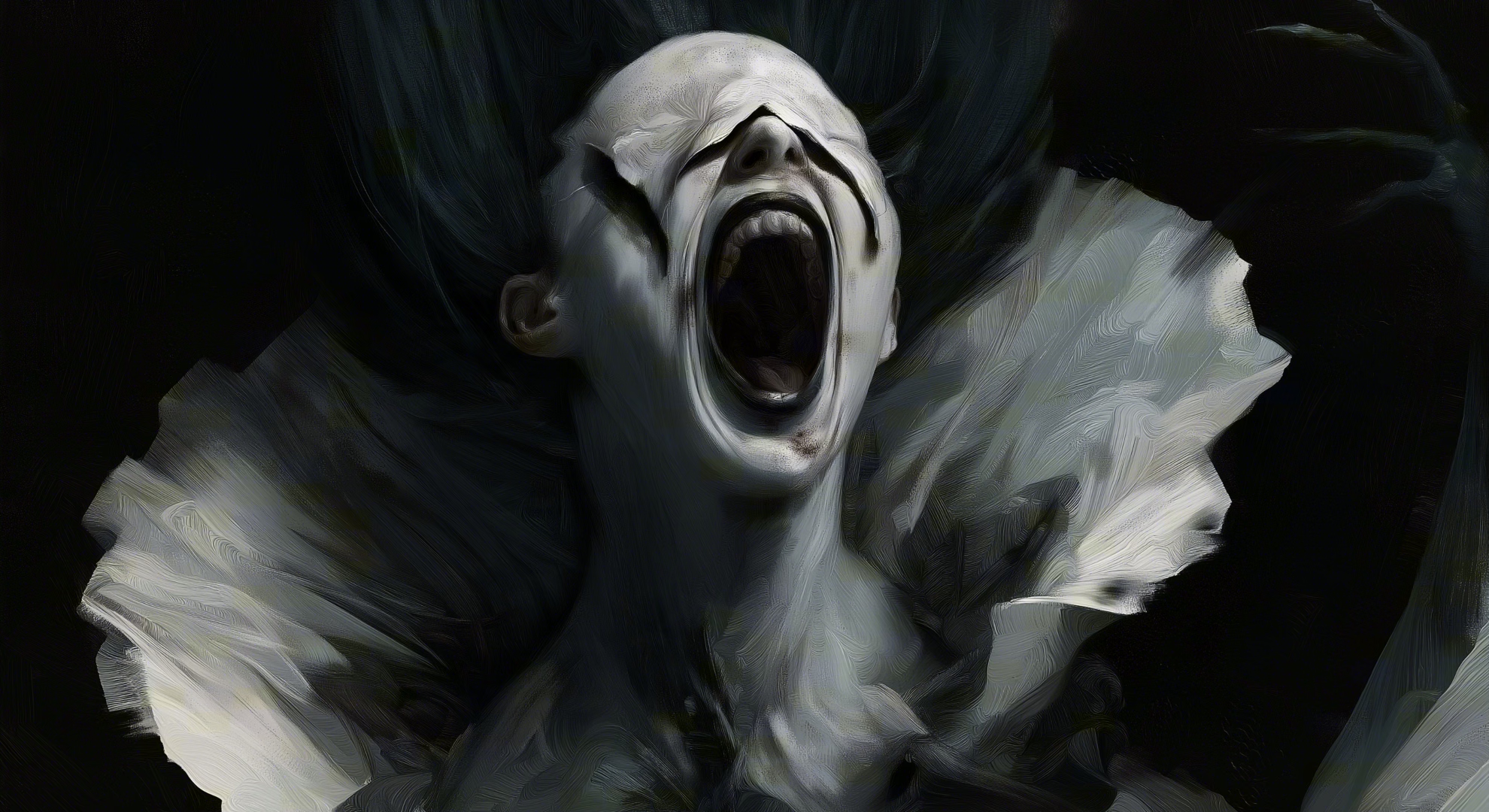
The cailleach, the divine hag who shapes weather and terrain across Gaelic Scotland and Ireland, governs the hard edge of the year; the bean sìth, the fairy woman whose cry attends a death, belongs to the household as omen rather than intruder; the sluagh, the restless host of the unforgiven dead, travels on the west wind and enters where it can.
Binding these figures to the domestic uncanny is the older folk practice of threshold ritual — the belief that the boundary between a safe interior and what waits beyond it is held by observance, and breached when observance lapses.
A dark novel that sets a failing household rite against that inheritance works with material folklore recorded long before fiction borrowed it, which gives the domestic dread a footing that atmosphere alone cannot supply.
A Welsh Writer on Scottish Ground
There is a question folded into the premise that the book cannot avoid, and it is worth naming plainly. Grist is Welsh, and Welsh tradition carries its own dark inheritance — the otherworld of the Mabinogi, the spectral hounds of Annwn — distinct from the Scottish Gaelic material she has chosen. Writing deep inside a folklore that is not one’s native ground is a long-standing practice in dark fiction rather than a novelty.
Folk horror has rarely confined its writers to the country of their birth. The form has always licensed a kind of imaginative travel into terrain and belief a writer adopts rather than inherits, and the results stand or fall on the care taken with the borrowed material.
The interesting critical question is not whether Grist is entitled to Scottish folklore, but whether the novel treats that inheritance as a living system with its own logic or as a set of props — and that is a question only the finished text can settle.
Solaris and the Genre Imprint
The novel’s home matters to how it should be read. Solaris is a dedicated genre imprint of Rebellion Publishing, a house whose catalog runs through science fiction, fantasy, and horror rather than treating the dark genres as an occasional acquisition. An imprint of that kind brings a debut horror novel into a line already committed to the form, which is a different proposition from a general publisher reaching toward horror for a single title.
The comparison points the publisher has offered — writers such as Andrew Michael Hurley, whose ‘The Loney’ reset the terms of British folk horror; Jenn Ashworth, whose unsettling domestic fiction works the same seam from the literary side; and Laura Purcell, whose Victorian Gothic keeps the ghost-ridden interior in commercial reach — place ‘Home Sick’ within a recognizable British current rather than an isolated experiment.
That current has been one of the more productive in recent dark fiction, and a genre imprint publishing into it does so with a clear sense of the readership it addresses.
The Threshold That Fails
For all that remains unconfirmed until the book is in hand, what ‘Home Sick’ commits to is already legible in how it has been framed. A debut that stakes itself on the domestic uncanny and a specific folk tradition makes a demand on a reader’s patience and on the writer’s control in equal measure, because the mode rewards neither shortcuts nor decoration.
The domestic uncanny has produced some of the most durable dark fiction of the last seventy years precisely because it refuses the easy jolt in favor of the slow corrosion of trust in a familiar room.
That a writer arriving from one Celtic tradition has chosen to work inside another, and that a committed genre imprint has placed the result at the meeting point of folk horror and psychological dread, is reason enough to watch how the finished novel handles its inheritance.
The measure of ‘Home Sick’ will be whether the failing rite at its center reads as folklore genuinely understood or merely invoked — and that is the standard the tradition it joins has always set.
When a novelist writes from deep inside a folk tradition that is not the one they were raised in, what does the resulting dark fiction gain in imaginative reach and what does it risk in inherited authority — and which way do you expect ‘Home Sick’ to fall on that question once it is read?
Reference
- Sigmund Freud, ‘The Uncanny,’ in ‘The Standard Edition of the Complete Psychological Works of Sigmund Freud,’ vol. 17, trans. James Strachey (London: Hogarth Press, 1955), 217–256. ↩︎


Leave a Reply