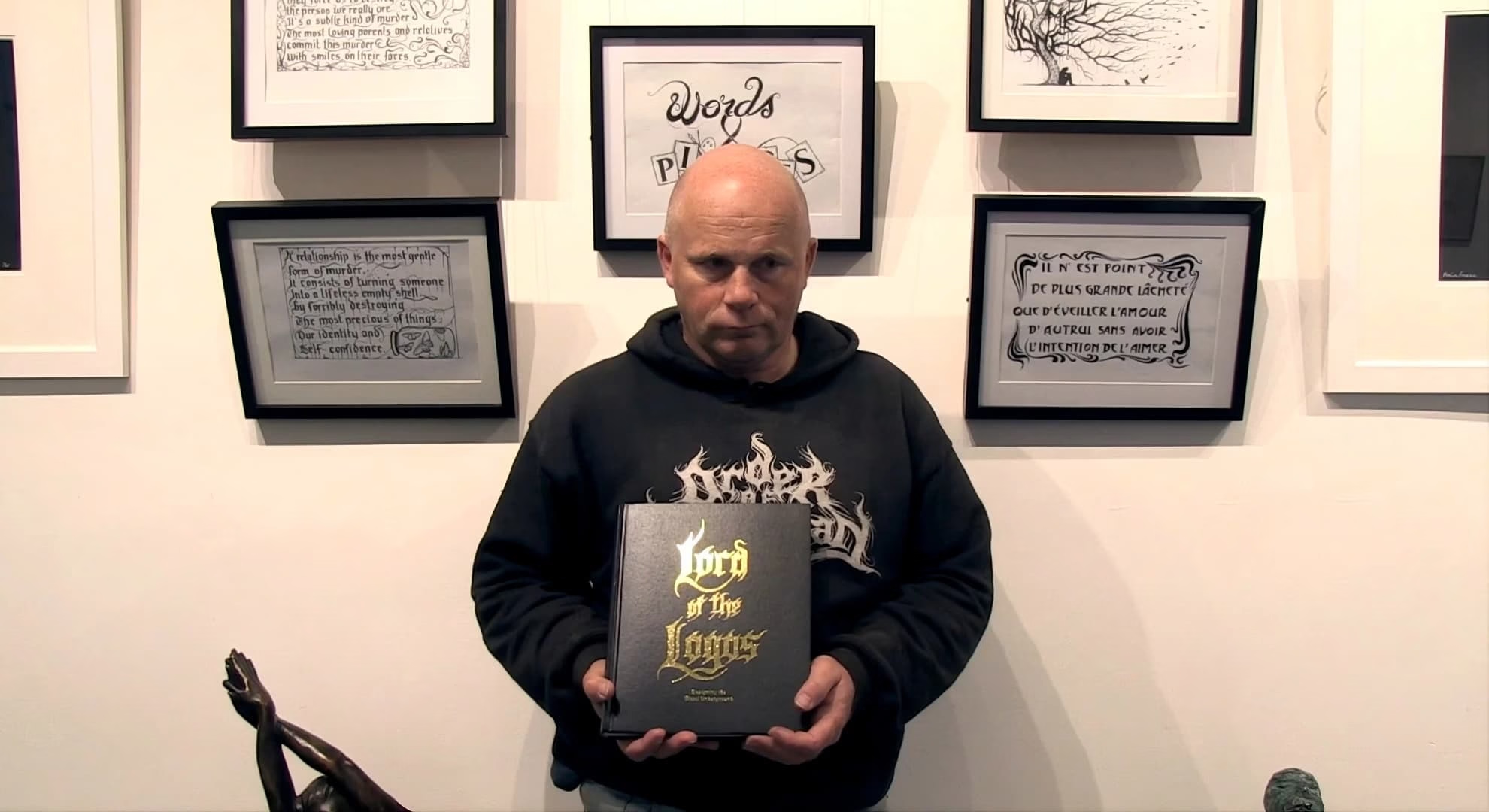


The band logo is the first thing a listener sees and frequently the last thing anyone credits. In extreme metal it carries an unusual burden, an emblem dense enough to resist reading and organic enough to declare the music’s preoccupations before a single note sounds. Scheduled for release on June 26th, 2026, and currently available for pre-order, ‘Oracles In Black’ and a second edition of ‘Archaic Modernism’ place the hand responsible for a great many of those emblems at the center of the page.
Both volumes come from Heavy Music Artwork, the British publisher devoted to rock and metal as visual culture, and both gather the logo work of Christophe Szpajdel, the Belgian-born calligrapher known across the underground as the Lord of the Logos.
The Hand Behind the Logos
Szpajdel was born on September 29th, 1970, in Gembloux, Belgium, and grew up in Louvain-la-Neuve. He took a degree in forestry engineering at the Université Catholique de Louvain, and that training in the structure of roots, branches, and growth remains visible in the sinuous, vegetal character of his lettering.
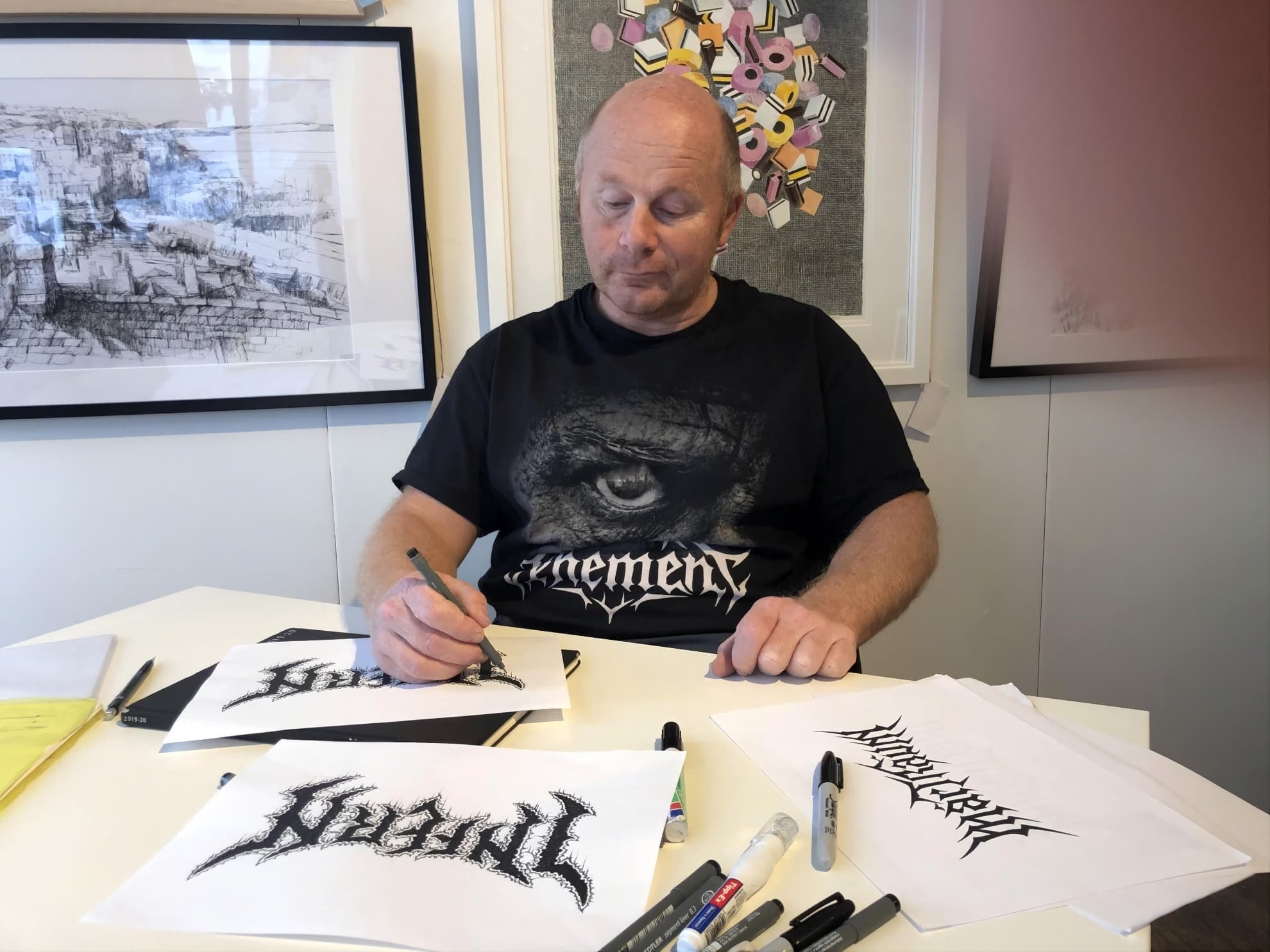
His first commissions reached print at the close of the nineteen eighties, among them a logo for the Finnish band Disgrace in 1990. The emblem that carried his name outward was the one he drew for Emperor, which appeared on the 1994 album ‘In the Nightside Eclipse’ and fixed his reputation across the black metal scene.
In the decades since, Szpajdel has produced close to 10,000 logos for bands including Old Man’s Child, Enthroned, Borknagar, Moonspell, Desaster, and Wolves in the Throne Room. He has worked from Exeter, England, for many years, and his output now reaches well beyond metal into fashion, contemporary design, and gallery exhibition.
From Gestalten to Heavy Music Artwork
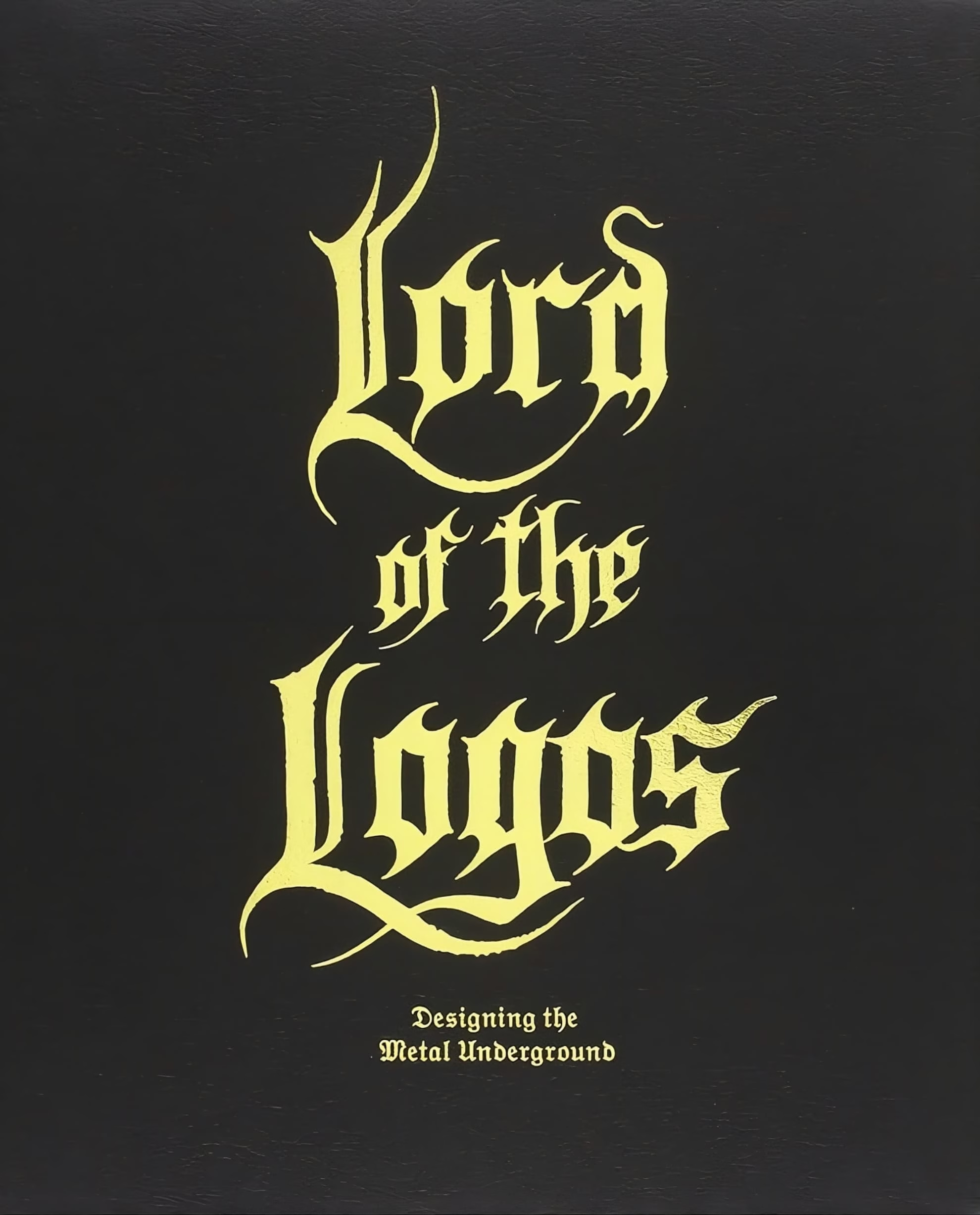
The first book-length treatment of that output was Gestalten’s ‘Lord of the Logos: Designing the Metal Underground,’ a 272-page volume published in 2010 and bound in the manner of a black prayer book. It set the visual terms for everything that followed, pairing hundreds of logos with photographs of forests, moors, and bare branches that stand close to the drawings in feeling.
Heavy Music Artwork returned to the subject in 2020 with ‘Archaic Modernism,’ the first of its own monographs on the artist. The two 2026 releases extend that relationship, a reissue of the 2020 book and an entirely new companion, with the Lord of the Logos name carried forward as the series banner under which ‘Oracles In Black’ appears.
What the Second Edition Changes
A reissue of a reference work is an archival act rather than a revision, and the second edition of ‘Archaic Modernism’ is handled as one. It preserves the original text and content of the 2020 release, adding only a small number of updated logos rather than reopening the argument.
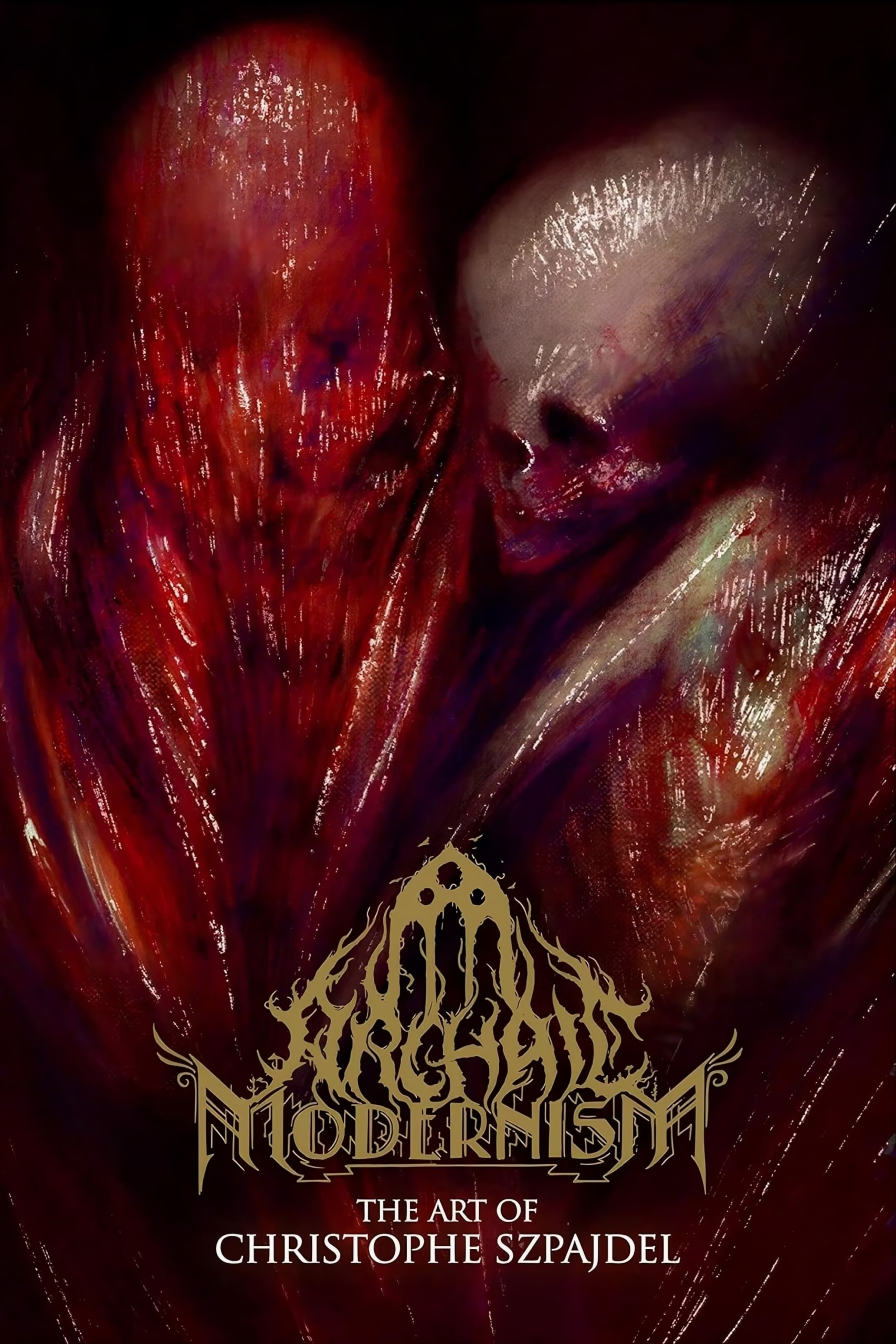
The volume returns the career survey to availability, organized around the roughly 10,000 logos Szpajdel has drawn and the debt his lettering owes to Art Nouveau and Art Deco. Its book design incorporates drawings by Stanislav Krawczyk, and it is produced as a matt hardback with a finalized length of 252 pages, printed on uncoated art paper.
Hundreds of Logos Since 2020
Where the reissue conserves, ‘Oracles In Black’ adds. The new volume collects hundreds of previously unpublished hand-drawn logos created since the first book, spanning black metal, death metal, and work that reaches past both. The new hardback runs to a projected 210 pages, not yet confirmed at the time of announcement.
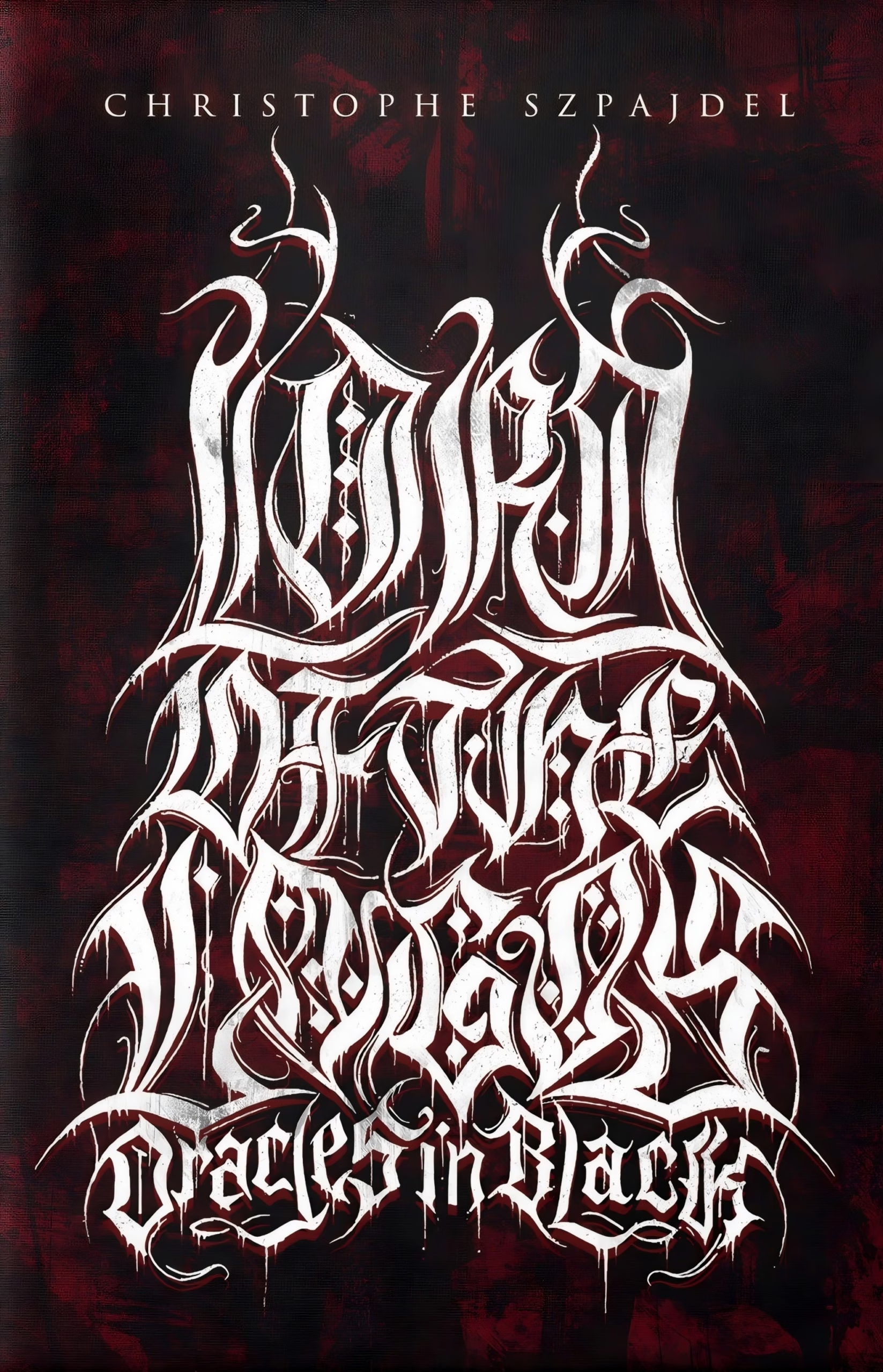
Through interviews and commentary, Szpajdel sets the drawings against his own account of process and philosophy, including his insistence on the value of the drawn line as digital tools take over commercial design. The book frames itself less as a portfolio than as an archive of a single visual practice caught at a particular moment, its pages given over to calligraphic compositions and organic lettering rather than to biography.
A Visual Language Rooted in Nature
Black metal arrived with its own set of visual markers, among them the band emblem rendered so dense and thorned that legibility becomes secondary to atmosphere.1 Szpajdel is the practice’s most prolific hand, and his logos translate the genre’s fixations into line, drawing on the curling forms of Art Nouveau, the geometry of Art Deco, and the roots, trees, and creatures that his forestry training taught him to observe.
That grounding is the argument for treating these books as dark non-fiction rather than design ephemera. A reference work on the visual grammar of a music preoccupied with death, the occult, and a natural world that offers no comfort belongs to the documentation of dark culture as squarely as any study of horror cover art or Gothic illustration.
Heavy Music Artwork’s Growing List
Heavy Music Artwork operates from Sevenoaks, in Kent, and describes its purpose as promoting rock and metal as art and culture. Its catalog runs to a numbered magazine series and to art books such as ‘Heavy Metal Flyers on the Wall,’ which preserves the photocopied flyer art of the pre-digital underground.
The press sits within a specialist tradition of metal-culture publishing alongside houses such as Cult Never Dies and Bazillion Points, which treat the genre’s visual and documentary record as worth the cost of careful physical production. Two simultaneous Szpajdel volumes mark a deepening of that commitment to the people who made the imagery rather than only the music.
Why the Hand Still Holds
Taken together, the pair performs two different kinds of preservation. The reissued ‘Archaic Modernism’ keeps an out-of-print survey within reach, while ‘Oracles In Black’ records what one of the field’s most prolific draftsmen has made since that survey closed.
The case both volumes advance is that the drawn logo remains a living form of dark art, not a relic of the cassette era, and that the person bent over the paper deserves the same documentary attention long granted to the bands whose names he renders unreadable.
Among the bands whose emblems Szpajdel has drawn over more than three decades, which logo do you consider the fullest expression of his attempt to make lettering carry the weight of the music behind it?
Reference
- Dayal Patterson, ‘Black Metal: Evolution of the Cult’ (Port Townsend, WA: Feral House, 2013), 11–18. ↩︎


Leave a Reply