
In the cordillera towns of Colombia’s coffee-growing spine, actual crows are scarce. The black vultures and caracaras that circle above the cloud forest occupy a similar space in the visual field, but neither carries the specific weight the crow has accumulated across a half-dozen unrelated mythological traditions: the bird that appears at the edge of death and does not flinch, the one that seems to know the way through.
That absence makes the choice notable when a four-piece extreme metal band from Pereira spends two decades building an identity, and now an entire concept album, around a creature few of its members likely encounter outside a screen.
This publication premieres the video for ‘Into the Woods’ today, July 21st, timed to the track’s general release, and previews the fifth full-length album it opens, ‘In Darkness All Shadows Gone,’ due October 2nd through the Italian label Rockshots Records.
A Crow Above the Andes
Pereira sits roughly two hundred kilometers southwest of Bogotá, in the department of Risaralda, a city built on coffee rather than on the recording infrastructure of the capital or the concert circuit density of Medellín.
Colombia’s specialist metal coverage, such as it is, still concentrates around Bogotá’s Rock al Parque and the label and distribution networks headquartered there and in Medellín; a band working out of the coffee axis operates at a remove from both.
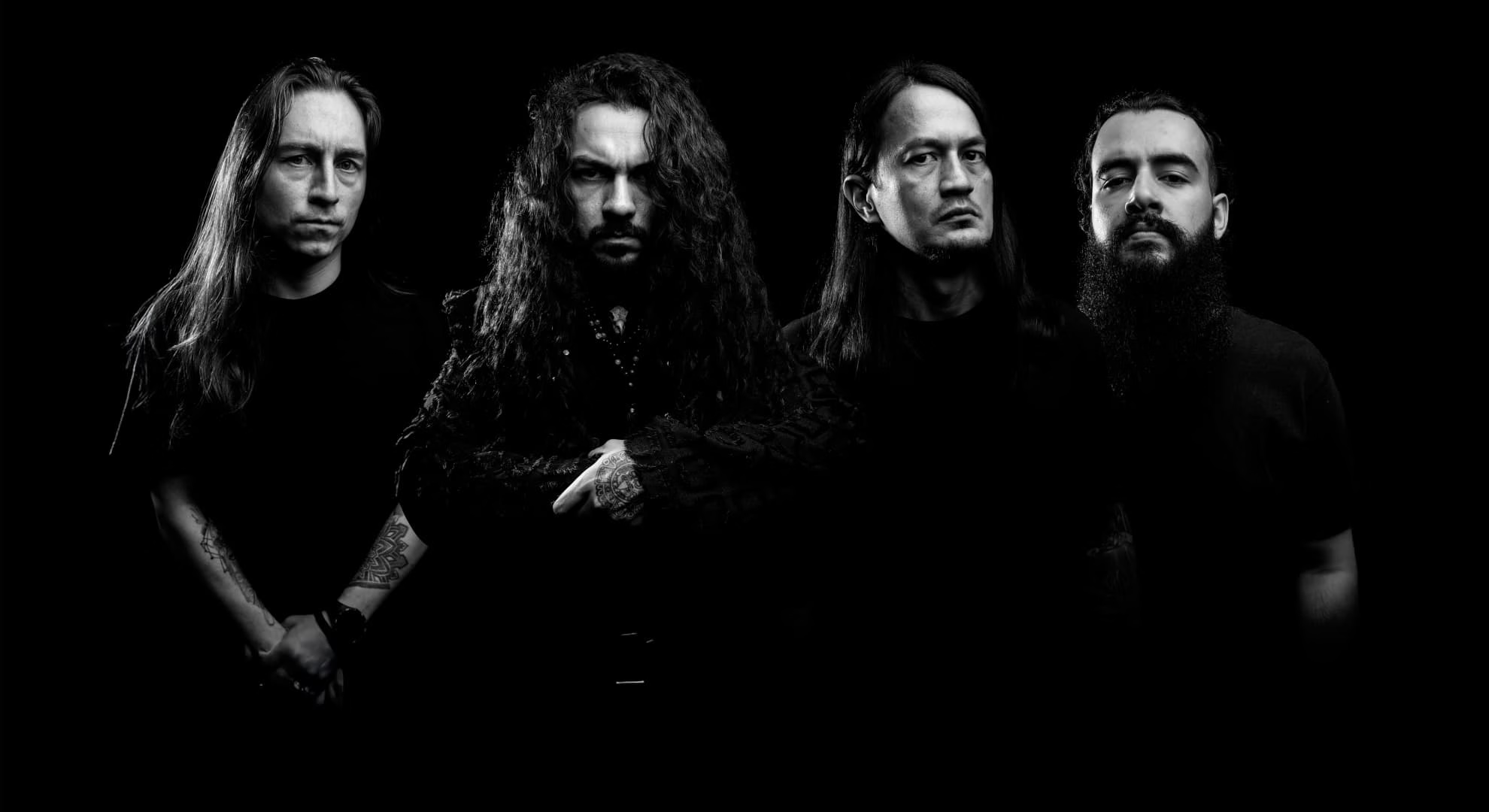
Eshtadur has spent much of the last decade closing that distance through touring rather than proximity: a 2023 booking on the 70,000 Tons of Metal cruise made the band the only Colombian act on that year’s lineup, and a Latin American run alongside the Italian band Graveworm in 2024 carried the group through Mexico, El Salvador, Guatemala, Honduras, and Costa Rica before a homecoming leg in Colombia itself.
The gap between a Risaralda coffee town and a cruise ship full of European festival regulars is not incidental context. It is the same gap ‘In Darkness All Shadows Gone’ asks its audience to travel: from a specific regional origin toward a concept built from borrowed, internationally legible myth.
Two Decades of Rebellion
Jorg August founded the project in the fall of 2005, releasing the two-track ‘Timo Be Timo’ demo ahead of the debut full-length, ‘Rebellion of Angels.’
The band’s name is drawn from an ancient Greek literary source describing a rebellion among angels; the specific circumstances of August’s discovery of the term are not corroborated in official band statements; August has instead described founding the project while still in secondary school in Pereira.
The choice set the tone for what followed: a Colombian band naming itself after a Greek theological dispute, then building a sound indebted to Swedish melodic death metal rather than to any regional folk tradition.
Four albums and two EPs later, the current lineup — August on vocals and guitar, Camilo Barbosa on lead guitar, Andrés “El Negro” on bass, and Juan López on drums — has toured across Europe, North America, and Latin America, sharing stages with Behemoth, Deicide, Vader, Cradle of Filth, and Sepultura, and holding headlining slots at Rock al Parque and Colombia’s Grita Fest.
The band’s discography traces a path from the Dimmu Borgir-indebted melodic black metal of its earliest work toward the more symphonic, orchestrated register of its recent records, without abandoning the Gothenburg-style riffing that first drew comparisons to Septicflesh and Fleshgod Apocalypse.
Echoes From the Abyss
‘In Darkness All Shadows Gone’ does not arrive from nowhere. It follows ‘From the Abyss,’ released September 4th, 2020, digitally through Blood Blast Distribution and physically through HateWorks — the band’s fourth full-length at the time, and its most heavily staffed.
Chris Clancy, known for his work with Machine Head and Kataklysm, handled mixing and mastering; Henrik Danhage of Evergrey contributed guest guitar; and Michał Łysejko, then the touring drummer for Decapitated, sat behind the kit. ‘From the Abyss’ framed its darkness as decay — a record about the erosion of the self under the weight of the abject, carried across ten songs that leaned on symphonic scale to dramatize collapse.
‘In Darkness All Shadows Gone’ inherits that scale but reverses its direction. Where the earlier record staged darkness as an ending, the new album frames it as a passage, guided rather than merely endured. The shift is not cosmetic. It relocates the crow — present in the band’s iconography since at least ‘From the Abyss,’ whose promotional language already leaned on the phrase “embrace the crow” — from an atmospheric motif into the album’s structuring device: no longer a symbol of decay, but its guide.
The Forest Calls Alone
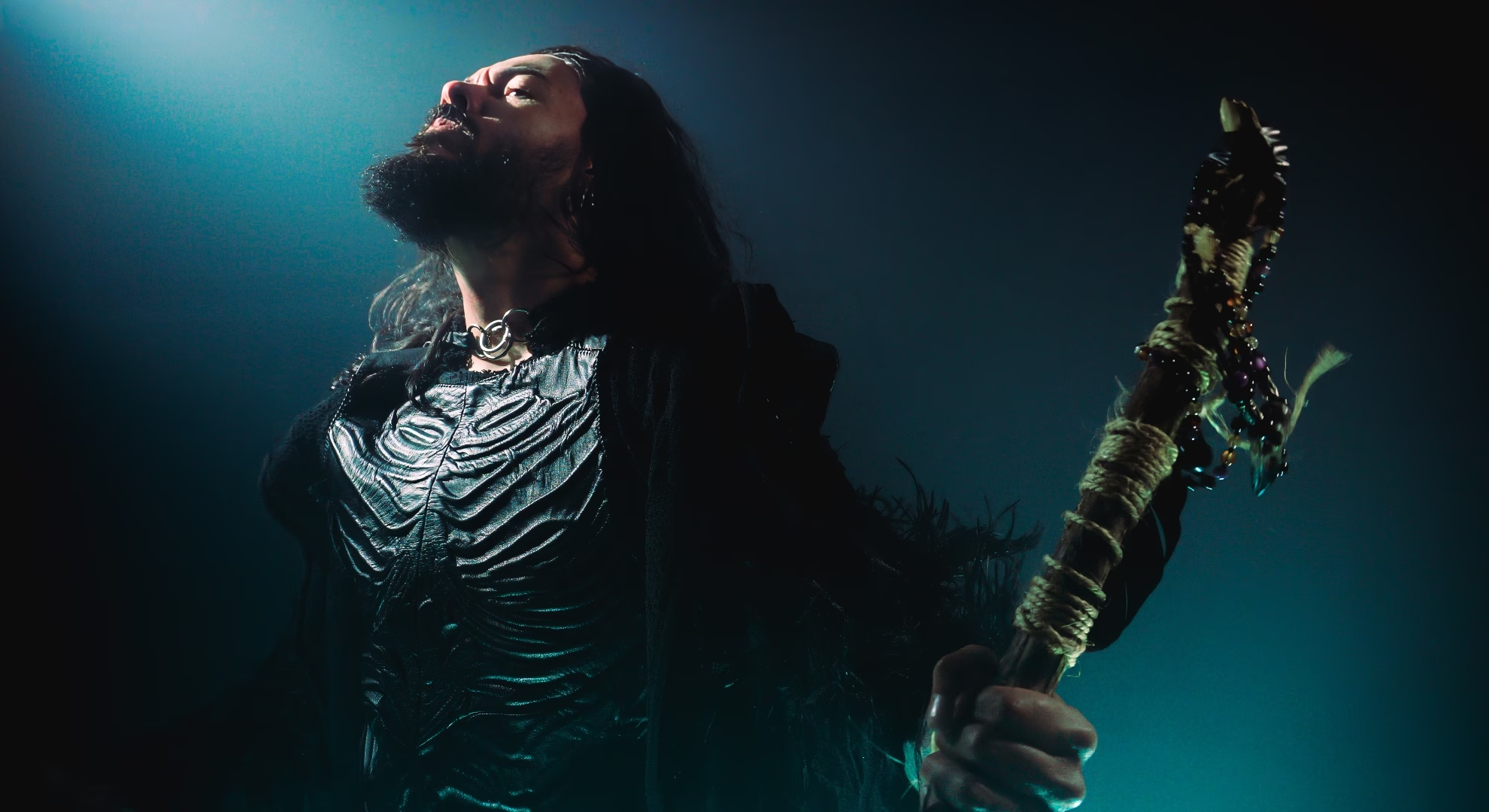
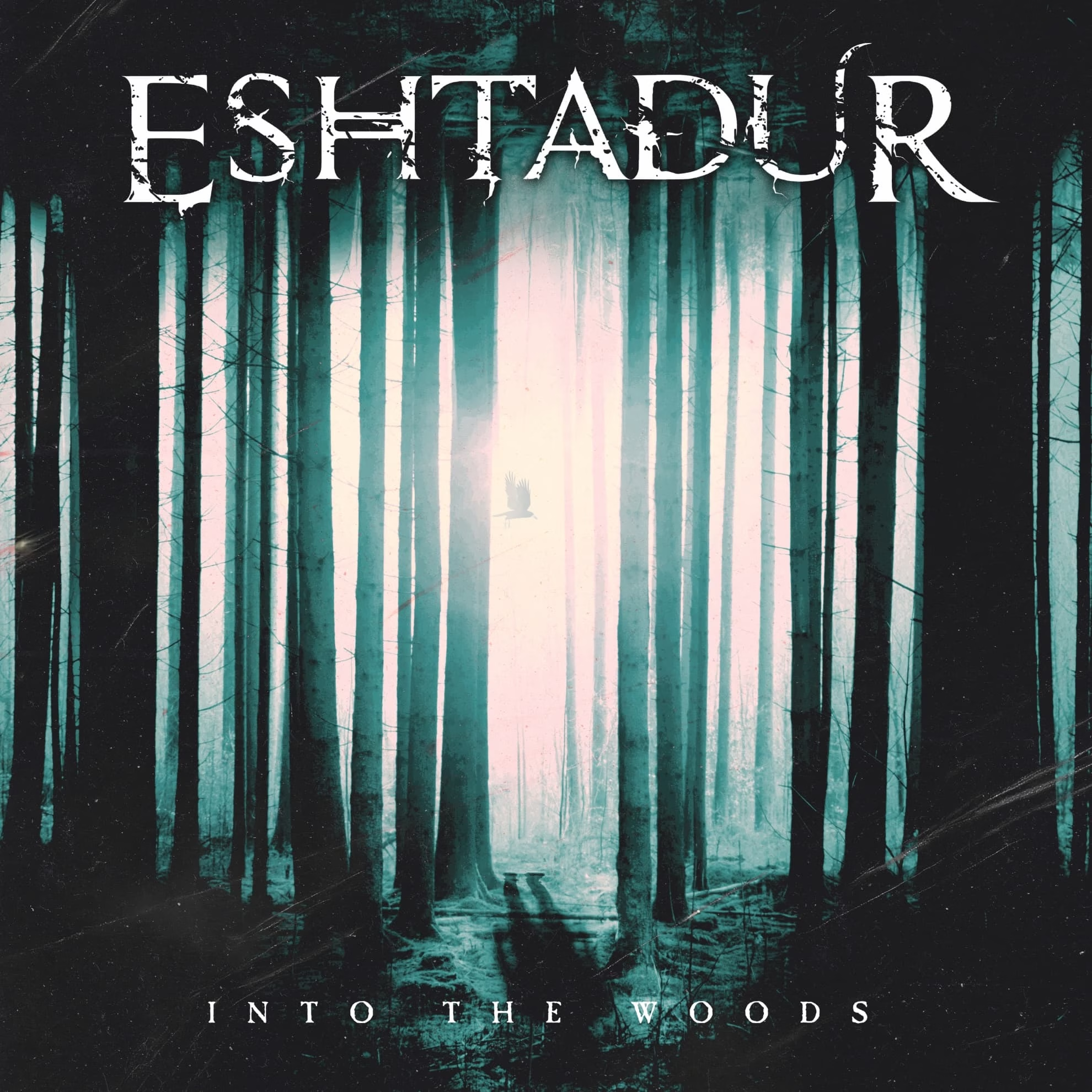
‘Into the Woods’ opens the album and functions, by the band’s own account, as its point of entry: a track built to strip the listener of everything but the decision to walk in alone. The single’s cover was designed by Gonzalo Restrepo; the video, directed by Esteban Corzo, restricts its frame almost entirely to August as the album’s sole visible protagonist, led forward by the crow rather than accompanied by his bandmates — a deliberate narrowing that places the full weight of the album’s opening initiation on one figure.
The still circulated ahead of the premiere shows August lit in cold blue-green tones, head thrown back, gripping a bone-and-twine staff bound with beads — the visual vocabulary of ritual rather than performance.
That palette, closer to the tone of a vigil than a concert, argues for the video functioning as invocation before it argues anything about the song’s tempo: the frontman is staged less as a musician fronting a band than as a supplicant mid-ceremony, consistent with the album’s description of the crow as an internal rather than a supernatural presence.
The band’s own account of the track describes fast, dissonant riffing built on alternate-picked patterns opening into orchestration, and frames the song’s subject as a descent “into the roots of one’s own being” — language that positions the forest not as a location but as an interior space the frontman is shown entering alone, matching the video’s refusal to show any other figure sharing that ground.
Ravens Across Traditions
The crow the album invokes belongs to a lineage considerably older than the band’s own catalogue. In the Norse tradition recorded in Snorri Sturluson’s ‘Prose Edda,’ Odin dispatches two ravens, Huginn and Muninn, across the world each day, and their return each evening is treated as the god’s own thought and memory crossing back into him — an extension of consciousness rather than an animal messenger.1
Irish mythological literature stages a related figure in the Morrígan, whose appearance as a crow over a battlefield marks the boundary between the living and the dead rather than merely foretelling it.2
Andean ethnographic accounts of shamanic practice describe a comparable bird-soul, a spirit capable of traveling to the land of the dead and returning with knowledge unavailable to those who remain behind. ‘In Darkness All Shadows Gone’ does not claim any one of these traditions specifically; its own account of the crow as “a manifestation of inner consciousness” reads, if anything, closer to a psychologized version of the same figure — treating the psychopomp as a feature of the mind rather than as an entity from a specific pantheon.
The album’s tracklist extends the same logic to the blind-seer archetype through the song ‘Old Shaman Blind,’ a title that draws on a figure documented across unrelated traditions: the Greek seer Tiresias, blinded and granted prophecy in the same act, as recorded in Sophocles’s ‘Oedipus the King’;3 and Odin’s own sacrifice of an eye at Mímir’s well in exchange for wisdom, a story preserved in the same Eddic material as the ravens.
In both cases, sight is surrendered specifically so that a different kind of seeing becomes possible — the same trade the album’s frontman appears to be staging in ‘Into the Woods,’ where entering the forest means giving up everything else to see the interior clearly.
The Skull Beneath the Wing
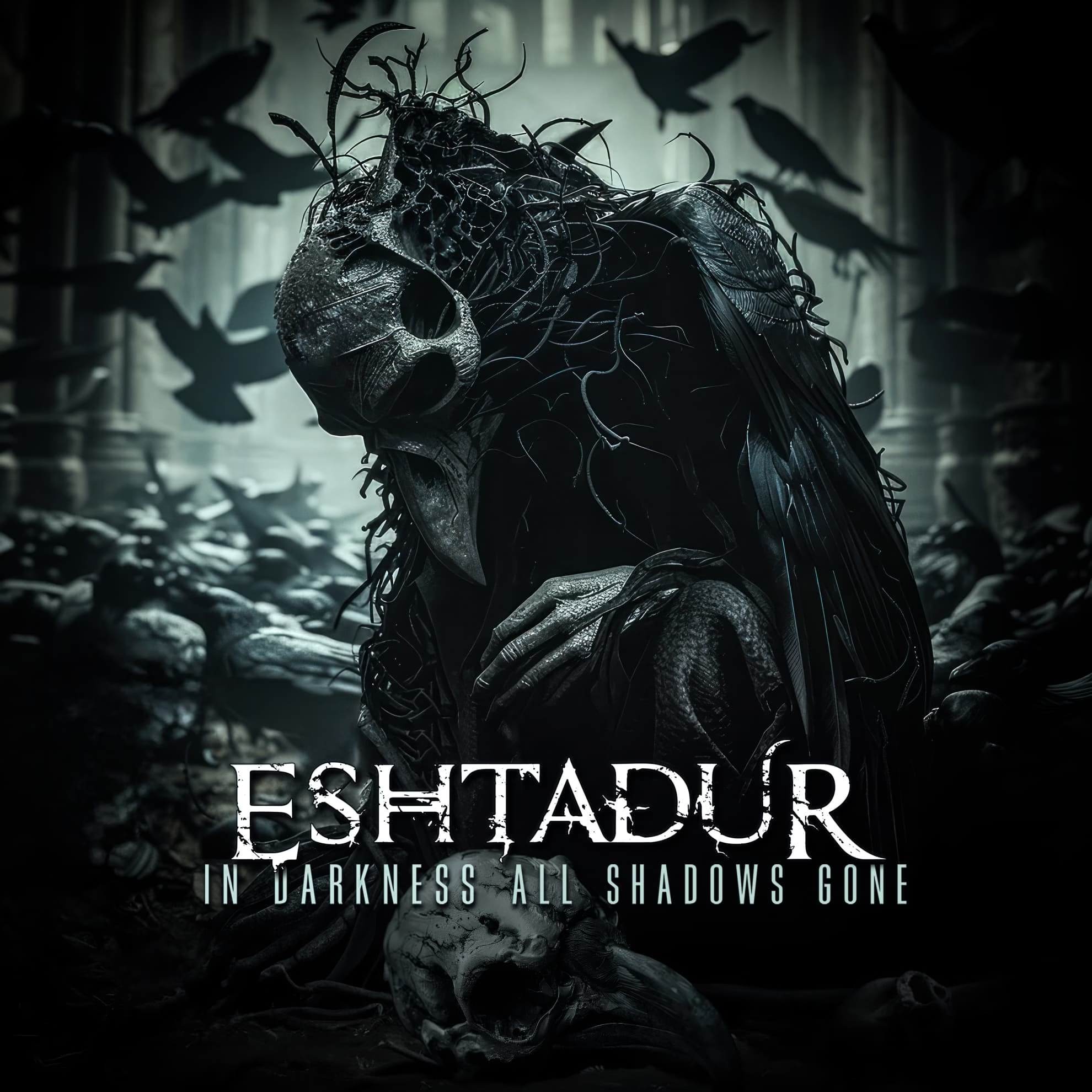
The album’s cover, credited to the artist Vallesia Obscura, depicts a crow-headed figure cradling a human skull amid crumbling stone colonnades, with a scattering of crows in flight behind it. The figure’s posture — head bowed, hand curled protectively around the skull rather than brandishing it — reads as mourning rather than menace, consistent with an album that frames its darkness as a passage rather than a destination. Further biographical detail on the artist could not be confirmed via web search at the time of publication.
Placed beside the ‘Into the Woods’ video’s own crow-guided frontman, the cover functions less as packaging than as the album’s second point of entry: where the video stages the crow leading a single living figure into the woods, the cover stages that same figure already arrived at the reckoning the woods presumably lead toward, skull in hand.
Read together, the two images argue that the album’s crow accompanies its subject across the full arc from initiation to a confrontation with mortality, not only at the beginning.
Signing Across the Atlantic
‘In Darkness All Shadows Gone’ arrives through Rockshots Records, an Italian label, rather than through a Colombian or even a Latin American imprint — a pattern increasingly common among the country’s more internationally active metal acts, for whom domestic infrastructure rarely extends past physical distribution deals like the one Eshtadur already holds with HateWorks.
Colombia supports a metal underground substantial enough to fill Rock al Parque’s metal-leaning bill most years, but specialist press and label infrastructure remain concentrated in Bogotá and Medellín, and rarely extend deep coverage to bands based in secondary cities such as Pereira. Signing with a European label functions less as a rejection of that scene than as a workaround for a structural gap the scene has not yet closed.
What the Crow Leaves Behind
What ‘Into the Woods’ and ‘In Darkness All Shadows Gone’ share, ahead of a release still weeks from arriving in full, is a refusal to let the crow remain decoration. The bird that guided Odin’s memory, marked the Morrígan’s battlefields, and carried the shaman between worlds now guides a single Colombian frontman through a video shot in near-total isolation, and again through a cover where the same figure kneels over what the forest, evidently, leads to.
Whatever the album’s remaining eleven tracks reveal when they arrive on October 2nd, the two assets sharing today’s premiere already establish that Eshtadur is asking its crow to do the same work it has always done elsewhere: escort something through an ending toward whatever comes after it.
For listeners who have followed Eshtadur since ‘Timo Be Timo,’ does casting the crow as a guide rather than an omen change how the band’s earlier, more openly despairing records read in hindsight, or does ‘Into the Woods’ simply hand the same darkness a different guide?
References
- Snorri Sturluson, ‘The Prose Edda,’ trans. Jesse L. Byock (New York: Penguin Classics, 2005). ↩︎
- Thomas Kinsella, trans., ‘The Táin’ (Oxford: Oxford University Press, 1970). ↩︎
- Sophocles, ‘Oedipus the King,’ trans. David Grene (Chicago: University of Chicago Press, 1991). ↩︎

Leave a Reply