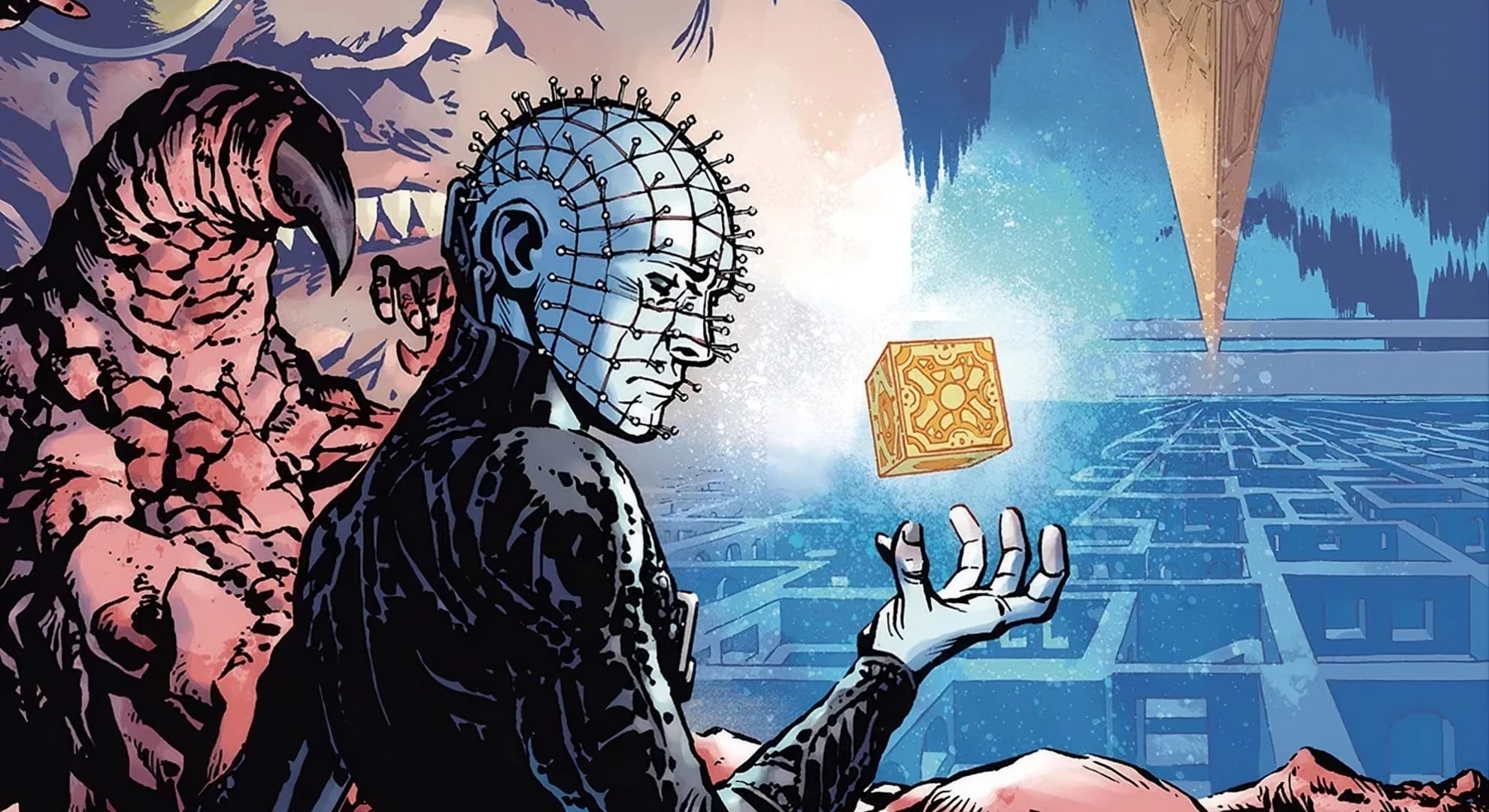


Few horror properties have suited the comics page as cleanly as the one Clive Barker conceived around a puzzle box, and few have been served by it as unevenly. The Cenobites are figures of altered flesh, their bodies reordered into instruments of sensation that practical effects and digital rendering can only approximate. A drawn panel carries no such constraint.
This September, BOOM! Studios returns to that mythology with ‘Hellraiser: Resurrections,’ a sequence of five standalone one-shots released weekly across the month. The publisher frames the event as the first chapter of a wider program, one it intends to extend into a new ongoing series and further miniseries through 2027.
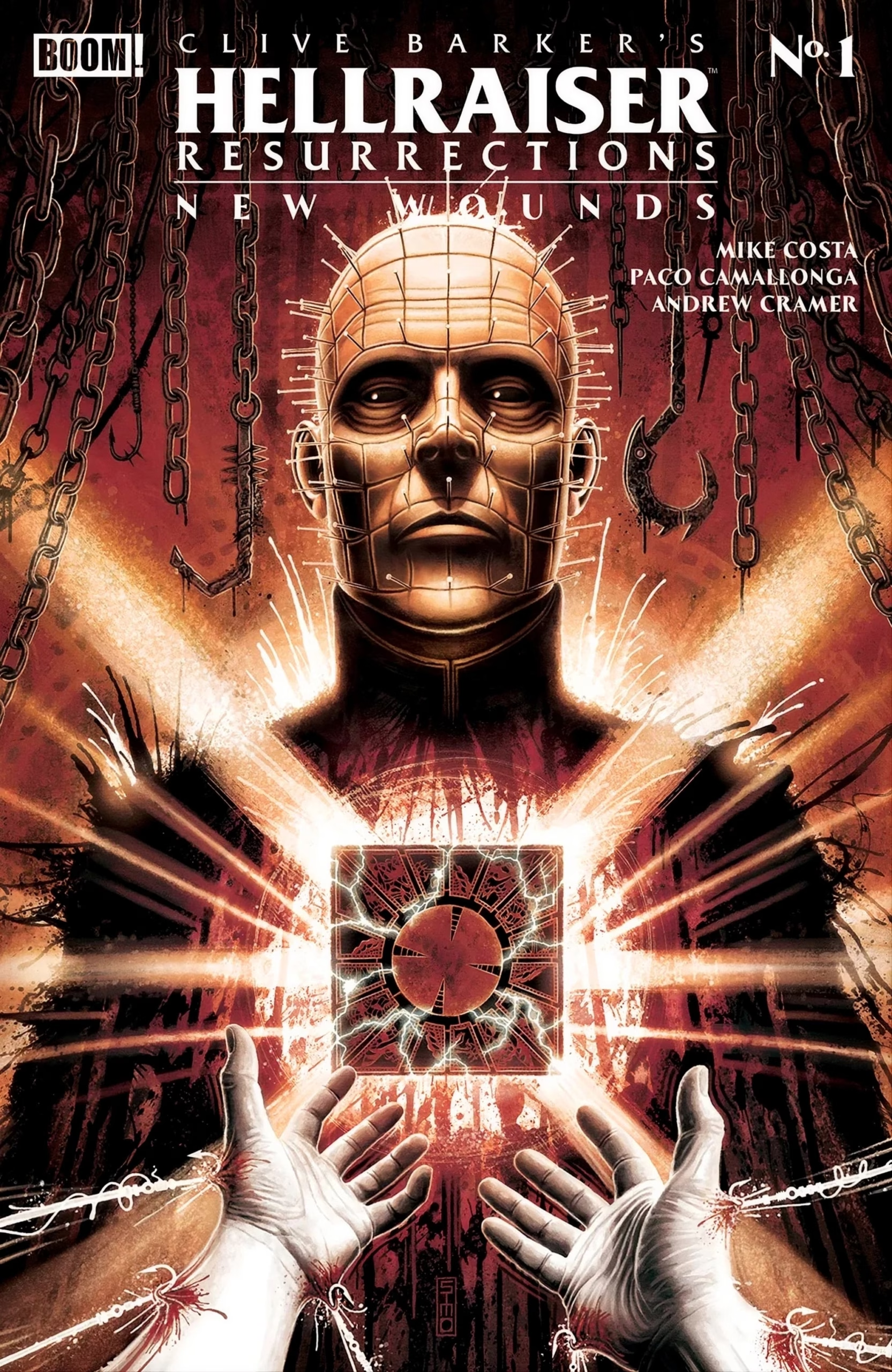
The opening chapter, ‘New Wounds’ #1, comes from writer Mike Costa and artist Paco Camallonga, and sends an investigation into the Lament Configuration sideways until the gateways to Hell reopen. ‘The Onanistic Ritual’ #1, written by Zac Thompson with art by Gavin Mitchell and colors by Francesco Segala, follows the Chatterer as the Cenobite schemes to reclaim its place at the Hell Priest’s right hand.
‘The Deep Gospel’ #1, from writer Tini Howard and artist Jenna Cha with colors by Brad Simpson, casts the Female Cenobite down into the Nidus, where larval Cenobites struggle to survive. ‘Hell’s Council’ #1, by writer Nero Villagallos O’Reilly and artist Francesca Ciregia, returns to Butterball after his fall in ‘Hellbound: Hellraiser II’ and tracks his uneasy recovery under a stranger’s care.
The event closes with ‘The Return of the Priest’ #1, written by Sarah Gailey with art by Alessio Avallone and colors by Sara Cuomo, which strands Elliot Spencer in the sensory silence of Middle Hell before pain returns to him as revelation.
Comics and the Cenobite Body
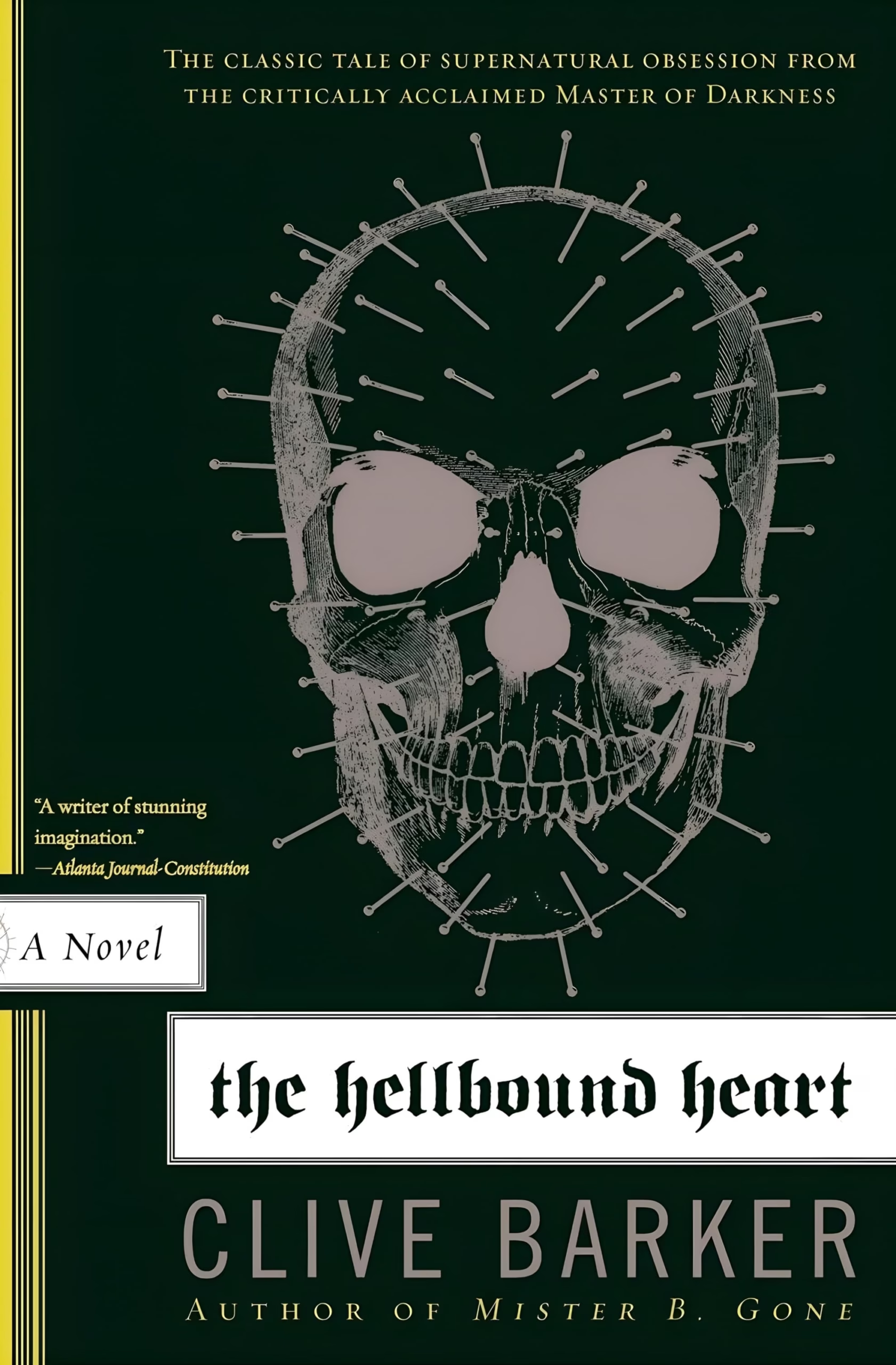
Barker introduced the Cenobites in ‘The Hellbound Heart’ in 1986, a novella in which a hedonist named Frank Cotton opens the puzzle box and learns that its keepers draw no line between pleasure and pain.1 The 1987 film he wrote and directed fixed the imagery in popular memory and gave the lead Cenobite the name audiences still use.
What the prose and the film both gestured toward, and what comics can hold still, is the specific logic of the altered body. The Cenobites are not monsters in the folkloric sense; they are people remade, their wounds deliberate and their suffering chosen.
A still panel lets a reader linger on that contradiction in a way a moving image rarely allows. The form rewards the slow study of a face that has been reorganized rather than simply ruined, which is the register Barker’s mythology has always asked for.
BOOM! and the Hellraiser License
BOOM! Studios has handled this property before. The publisher held the Hellraiser comics license through the early 2010s, a run covered here when that first series launched, issuing an ongoing series co-written by Barker himself, the relaunch ‘Hellraiser: The Dark Watch’ with Brandon Seifert, and a run of ‘Masterpieces’ volumes that reprinted older material.
That license lapsed, and the characters sat dormant in comics for more than a decade before BOOM! reacquired the rights early in 2026. The new agreement covers fresh stories alongside facsimile reprints of the earliest comics, with ‘Resurrections’ positioned as the line’s flagship.
The return also fits the shape of BOOM!’s current horror output. Its anthology ‘Hello Darkness,’ running since 2024 in the lineage of ‘Creepy’ and ‘Eerie,’ has given the imprint a steady horror engine, and Sarah Gailey, who closes the ‘Resurrections’ event, has written for that anthology as well.
Hellraiser in Comics Before Now
Hellraiser reached comics first through Marvel’s Epic imprint, which published a 20-issue anthology titled ‘Clive Barker’s Hellraiser’ between December 1989 and March 1993. Barker oversaw the line as a consultant, and the series paired strong horror illustrators with short, self-contained tales of the box and its consequences.
That anthology established the template the property keeps returning to. Hellraiser works in comics less as a continuing serial than as an arrangement of discrete nightmares, each one a fresh victim and a fresh bargain.
‘Resurrections’ adopts exactly that structure, five separate one-shots rather than a single connected narrative. The choice is faithful to the property’s oldest comics form, and it lets five creative teams work without forcing their stories into one continuity.
The Right Shape for the Property
The significance of ‘Resurrections’ lies less in any single issue than in the form BOOM! has chosen for the franchise’s revival. Breaking the relaunch into five self-contained one-shots commits the publisher to the anthology model the property has suited since 1989, and hands the Cenobites to a generation of horror creators who grew up with them rather than alongside them.
Whether that generation can hold the line between pleasure and pain as steadily as the mythology demands is the open question. The event arrives at a moment when the property is active again across media, and the comics have a chance to do what they have always done best with this material, which is to keep the altered body still long enough to be looked at.
If Hellraiser reads most naturally in comics as a set of discrete bargains rather than a continuous saga, does an event of five separate one-shots serve the Cenobites better than the connected ongoing series BOOM! plans to follow it with?
Reference
- Clive Barker, ‘The Hellbound Heart,’ in ‘Night Visions 3,’ ed. George R. R. Martin (Niles, IL: Dark Harvest, 1986). ↩︎



Leave a Reply