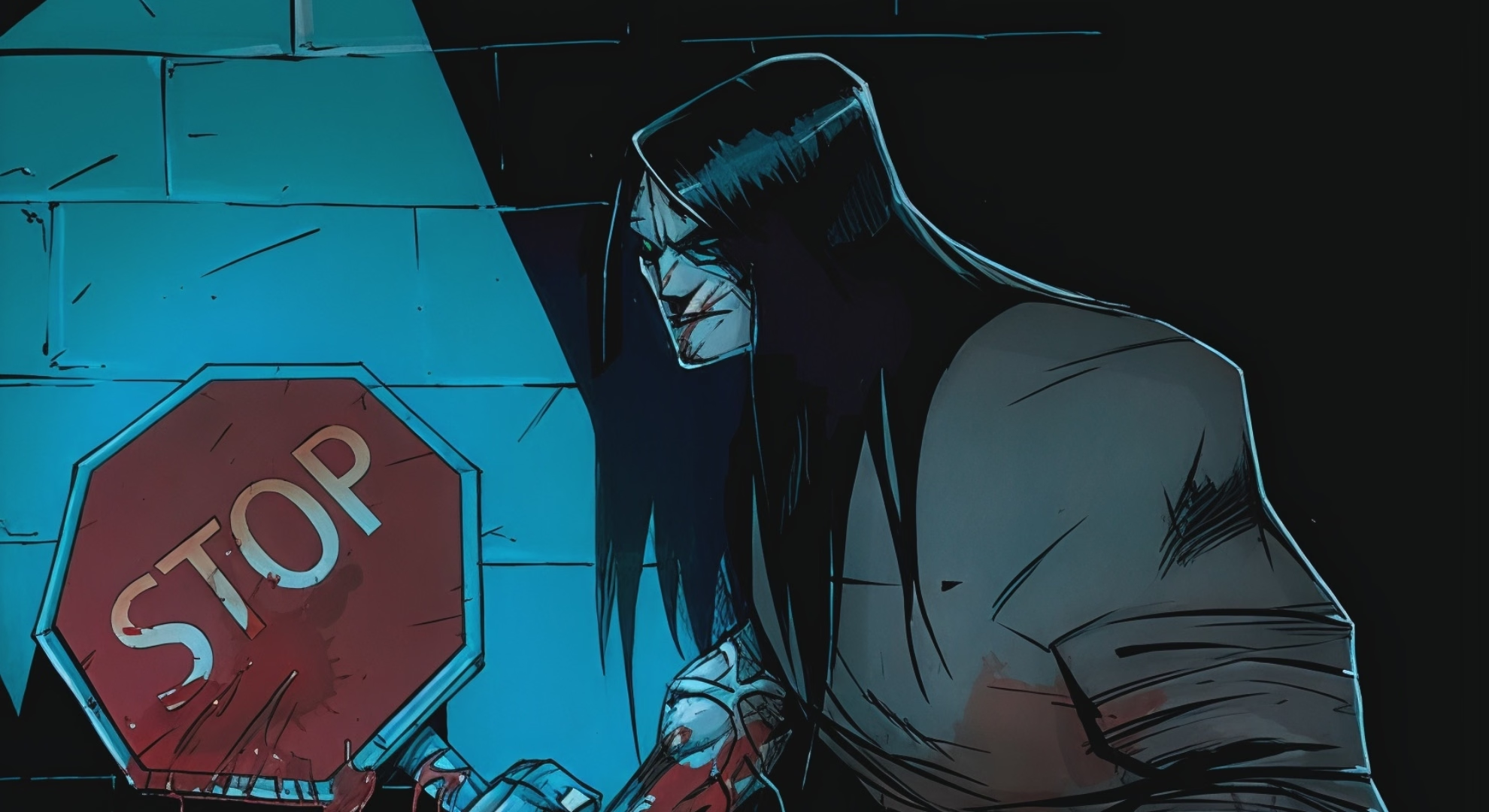


The American driver education classroom has a horror tradition of its own, and it predates any comic book that borrows from it. Films such as ‘Signal 30’ and ‘Red Asphalt’ showed students the aftermath of real collisions, and the form has since drawn scholarly study as a victimology, a system of who suffers, who is blamed, and who is punished.1
‘Dead Stop’ #1 from Red 23 is the first issue of a four-issue horror series, scheduled for November 11th, 2026, at $4.99, approximately COP 15,900 at the November 3rd, 2026 TRM of COP 3,182.99, a rate that changes daily. Evan Michael and Zak Johnson write, and Damien Worm draws the interiors and the cover.
A Ghost With a Rulebook
Thirty years before the story opens, a crash killed six people in the town of Adamsville and left behind the legend of Hector Cruz, a spirit who punishes anyone who breaks the rules of the road. The legend is the book’s founding rule: a specific death, a specific place, and a standing penalty that outlasts the people who suffered it. That is the grammar of the local ghost story.

The present-day protagonist is Tyler Theting, a 16-year-old on the first day of Driver’s Ed while murders accumulate, with a sick mother and a school crush adding private stakes. The age matters to the premise. Sixteen is the threshold at which a teenager receives both a license and a legal duty toward the road, so Tyler enters the story at the moment the legend’s rules begin to apply to him. The solicitation pitches the series as ‘The Toxic Avenger’ meets ‘Red Asphalt,’ and the pitch is more exact than most.
The Scare Film Returns
The pairing sets a Troma comedy beside a driver education film, and the two sit closer together than they appear. Jeffrey Sconce described paracinema as a reading protocol rather than a fixed group of films, one that values movies rejected or ignored by legitimate film culture and counts educational and hygiene films among its objects alongside exploitation pictures.2
Under that protocol, a classroom film about a mangled windshield and a comedy about a mop-wielding mutant are neighbors, and a comic that names both in a single line is working inside a tradition of reclaimed trash rather than borrowing from two unrelated sources.
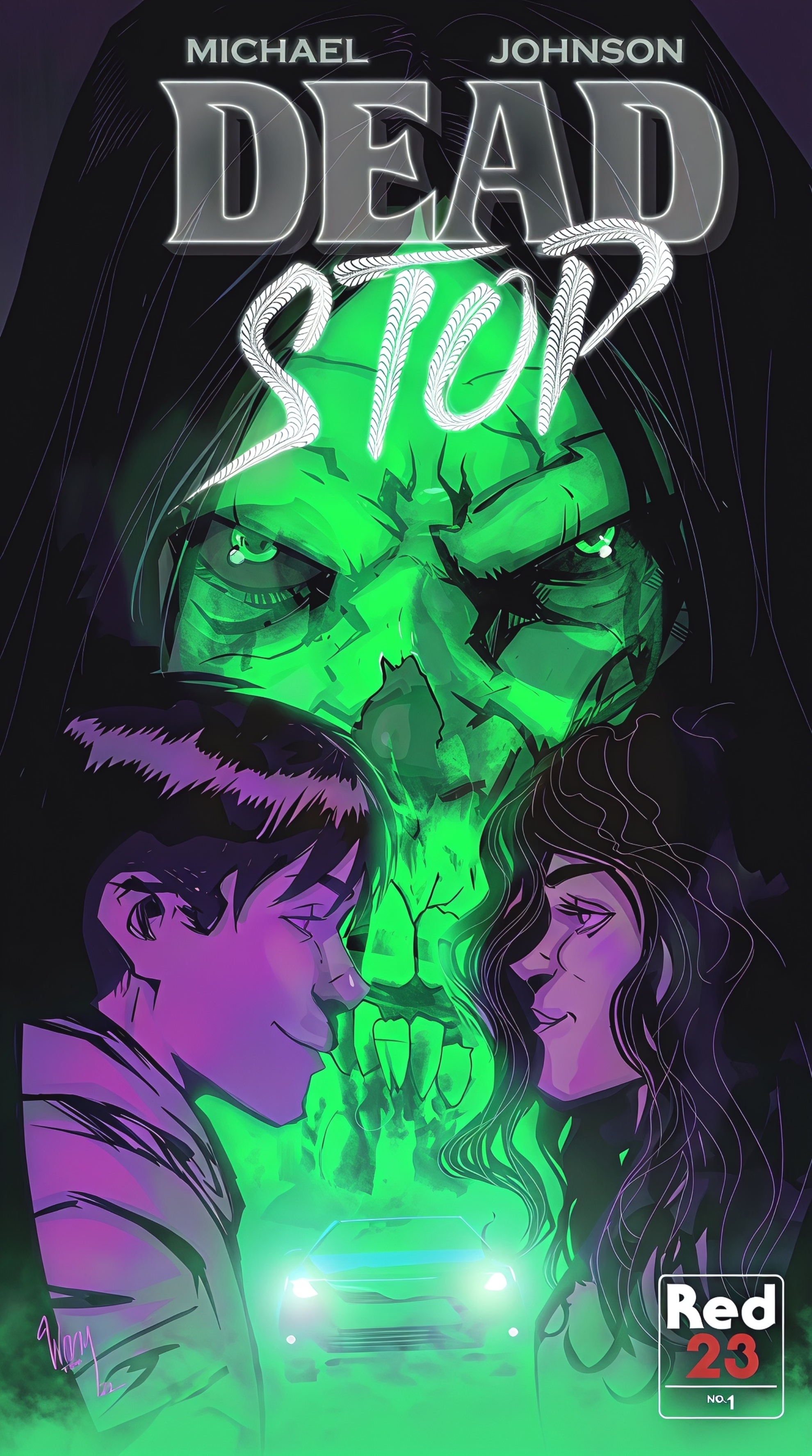
Hector Cruz converts the scare film’s accounting into a character. The films assigned fault to the careless driver and let the wreckage deliver the verdict; a spirit who attaches a penalty to every broken rule gives that verdict an author and a body count. The solicitation for the first issue closes on a line, “Driver’s Ed turns into Driver’s Dead!” that says so in the cadence of a highway poster.
The risk is tonal, because a book that rhymes its warnings can treat fear as a punchline as readily as a lesson. The scare films carried the same instability, sincere in purpose and lurid in method, which is what made them available to paracinema’s counter-canon in the first place.
A comic has a mechanism for managing that instability that a film lacks: the lettering. A slogan set in a caption box can sit flat against a drawn wreck, with no performer to deliver it and no musical cue to tell the eye whether to laugh, and the placement of that box on the page will decide the register more than any line of dialogue.
Folklore on the Shoulder
The road ghost has an American folklore record that begins well before any comic book. Richard K. Beardsley and Rosalie Hankey assembled 79 accounts of the vanishing hitchhiker in 1942 and treated the passenger who disappears from a moving car as a modern legend worth systematic study.3
In the commonest form among those 79 stories, a lone driver picks up a young woman, she vanishes from the back seat before he reaches the address she gave, and a relative there tells him she died, often in a car accident at the spot where he found her.
That ghost asks for a ride and vanishes. Hector Cruz, as solicited, does the opposite: he is tied to a specific crash, as the legend’s ghosts are tied to a specific death, but he stays, and he enforces. The passive apparition becomes an inspector. The hitchhiker legend is a story about a motorist’s encounter with the unexplained, told after the fact to warn of nothing in particular; Cruz turns the encounter into a standing audit of conduct, which is why the town of Adamsville, and not a single unlucky driver, is the series’ real protagonist.
One Lesson per Issue
Issue #2, listed for November 18th, 2026, opens with the first bodies dropped and the town of Adamsville in shock, while Driver’s Ed stays on the schedule. Tyler may have caught the eye of a secret crush, Sheriff Atwood and his crew investigate increasingly gruesome murders, and Hector Cruz may have other plans for Atwood, Tyler, and the town.
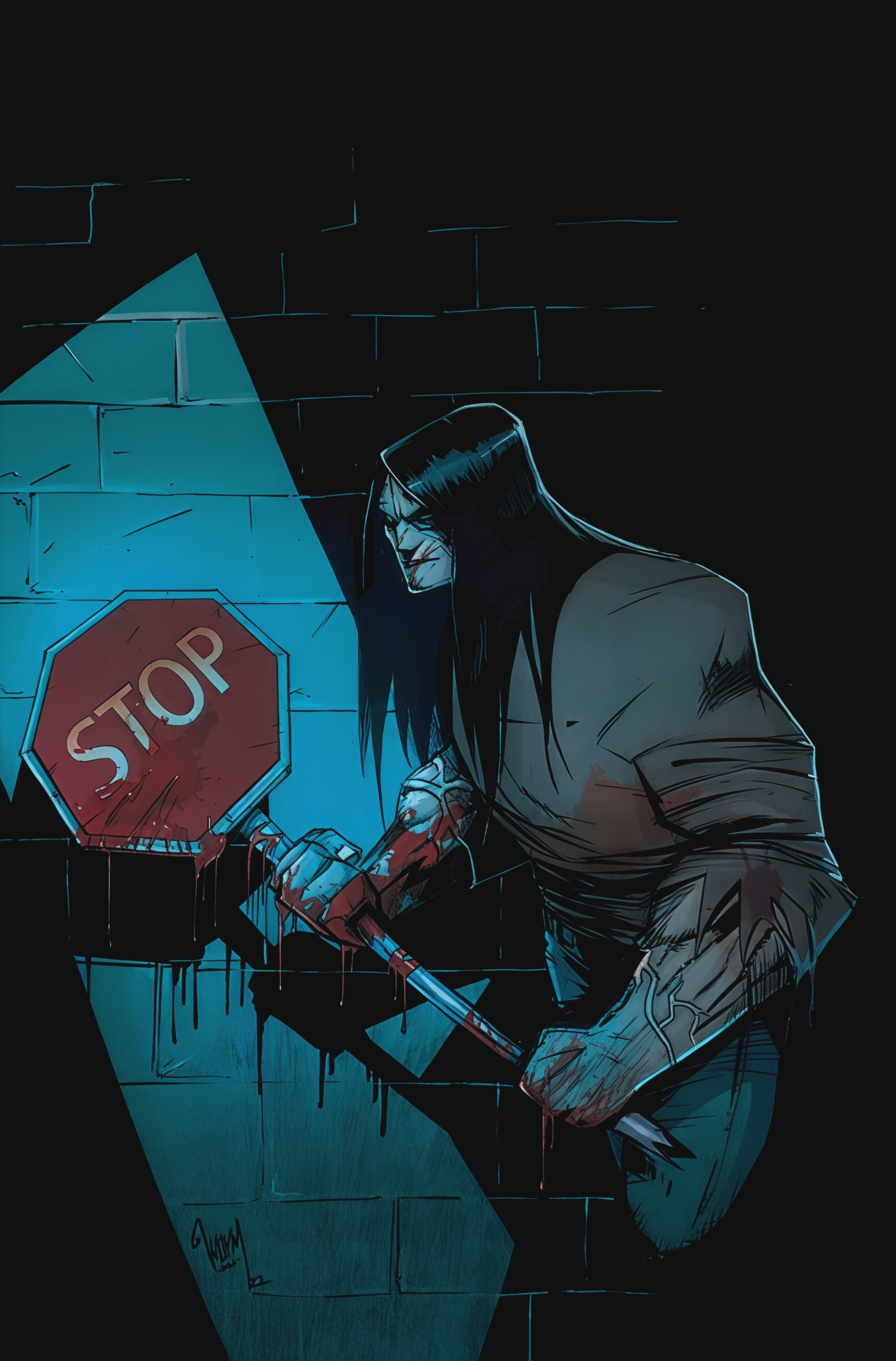
The structure carries the argument. A Driver’s Ed course proceeds by lessons, and the class that continues in the second issue while the bodies accumulate turns the curriculum into the series’ clock: each unit of classroom life is shadowed by a death, and enrollment itself becomes the measure of how far fear has spread.
The series’ format also matters. ‘Dead Stop’ is serial publication in four issues, neither an original graphic novel conceived as one sustained object nor a collected edition gathered after the fact, so each installment has to carry its own beat of the lesson. That favors the short, repeatable rhythm of a classroom unit over the long arc of a novel.
Worm at the Wheel
Damien Worm co-created ‘October Faction’ with Steve Niles and has drawn comics based on the video game ‘The Evil Within.’
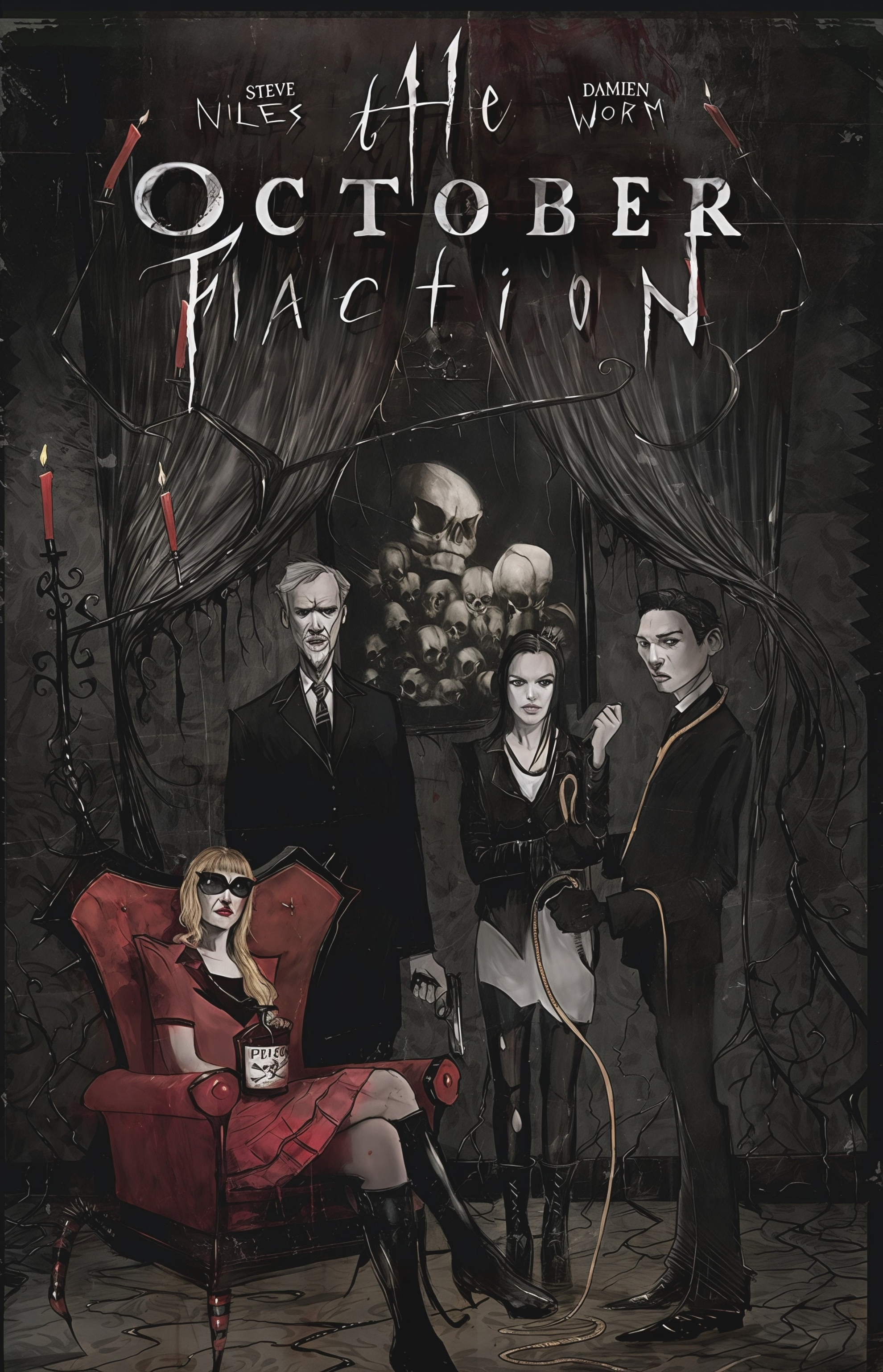
The record points to a different register than the premise: Worm’s credits sit in serious horror and horror-adjacent game adaptations, and a book that rhymes its death threats asks that register to carry a joke.
How the page holds both, in panel rhythm and in the placement of a slogan against a crash, is the formal problem the four issues have to solve. A line built for dread, with heavy blacks and rendered texture, can make a rhyme sound like a threat instead of a joke.
Fear as Curriculum
A scare film teaches by making the consequence hard to watch and by addressing its audience as drivers who have not yet erred. The vanishing hitchhiker legend gives the road a witness who disappears; the safety film gives it a lecturer who never appears. Hector Cruz does both jobs at once, supervising the lesson and delivering the penalty to a teenager who occupies the seat the film’s original audience once held.
If the book keeps its slogans on the side of the lecture and its gore on the side of the ghost, the two traditions meet in the same classroom.
If a scare film teaches by punishing the careless driver, does giving that punishment a name and a rhyme make Hector Cruz’s lessons more frightening, or easier to ignore?
References
- Michael J. T. Stock, ‘Pain Index, Plain Suffering and Blood Measure: A Victimology of Driving Safety Films, 1955–1975,’ in ‘Re-Imagining the Victim in Post-1970s Horror Media,’ ed. Madelon Hoedt and Marko Lukić (Amsterdam: Amsterdam University Press, 2024), 171–90. ↩︎
- Jeffrey Sconce, ‘Trashing the Academy: Taste, Excess, and an Emerging Politics of Cinematic Style,’ Screen 36, no. 4 (1995): 371–93. ↩︎
- Richard K. Beardsley and Rosalie Hankey, ‘The Vanishing Hitchhiker,’ California Folklore Quarterly 1, no. 4 (1942): 303–35. ↩︎




Leave a Reply