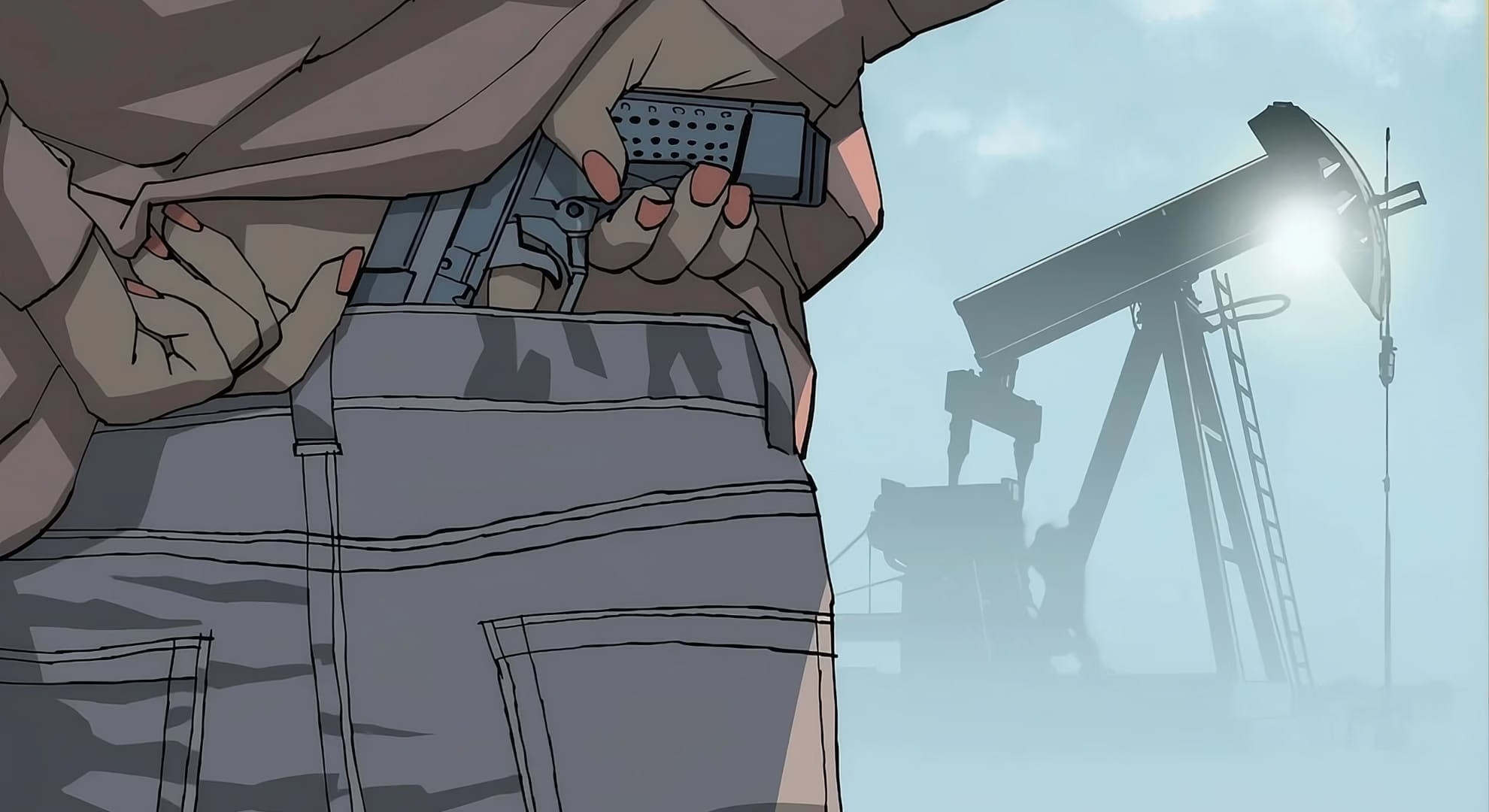


Horror has long understood that the most durable dread is not the monster at the door but the ground beneath the feet. From Algernon Blackwood’s novella ‘The Willows’ — published in 1907 as part of his collection ‘The Listener and Other Stories,’ in which two canoeists on the Danube find the vegetation of their island camp possessed by a force that preexists and exceeds them, to the ecological anxiety that saturated American genre fiction of the nineteen-seventies, the horror of a hostile natural world has produced some of the tradition’s most formally restrained and philosophically serious work.
What distinguishes this lineage from monster-of-the-week narratives is its fundamental premise: the threat does not invade from outside. It was already there, growing.
That premise now animates ‘Of the Earth’ #1, the opening issue of a six-issue miniseries published by Image Comics on May 20th, 2026. The issue sold out at the distributor level within days of its release, driven by escalating reorder activity from retailers across the North American direct market.
Image Comics announced on May 27th, 2026 that a second printing is being rushed to press, with a new cover drawn by series artist Charlie Adlard. The second printing is scheduled for June 24th, 2026.
A Return to the Single Issue
Adlard’s presence on ‘Of the Earth’ is the development that most directly frames the sellout’s significance within the medium. Between 2004 and 2019, he drew 187 issues of ‘The Walking Dead’ for Image Comics — joining the series with #7 and carrying it through to #193, its final issue — producing the visual grammar of Robert Kirkman’s zombie narrative over fifteen years and cementing a reputation for sustained, high-volume output in the service of horror storytelling.
Since departing that series, Adlard produced the historical graphic novel ‘Heretic’ — a supernatural thriller set in sixteenth-century Antwerp built around the occultist Cornelius Agrippa — and ‘Altamont,’ a European album collaboration. Both are long-form, single-volume works. ‘Of the Earth’ marks his return to the monthly single-issue format he occupied throughout ‘The Walking Dead.’
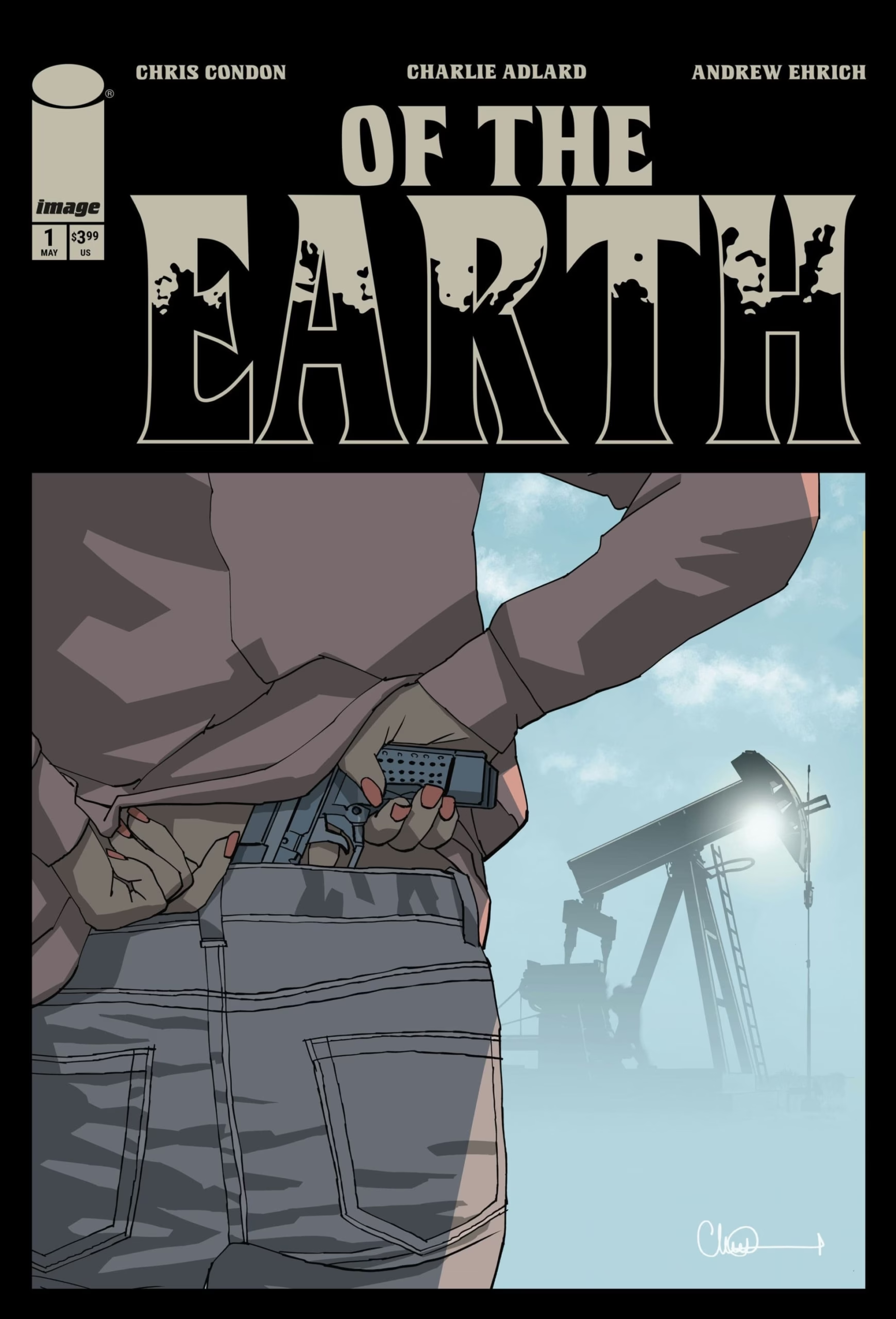
The co-writing team is Chris Condon and Andrew Ehrich. Condon’s bibliography within the horror-adjacent register includes ‘That Texas Blood,’ an ongoing Image Comics series with artist Jacob Phillips that deploys West Texas crime fiction as a vehicle for escalating supernatural and folkloric menace, and its spinoff ‘The Enfield Gang Massacre,’ named among the best comics of 2023 by both The Hollywood Reporter and The Comics Journal.
He has also written for DC, Marvel, AfterShock Comics, Dark Horse Comics, Mad Cave Studios, Oni Press, and Z2 Comics, with credits including ‘Hell Is a Squared Circle,’ a wrestling noir with horror dimensions, and ‘Night People,’ an adaptation of Barry Gifford’s dark pulp fiction. Ehrich is a first-time comics collaborator; his prior work in the medium had not been formally documented in the publisher’s solicitation materials at the time of publication.
The full creative team credited in the publisher’s official solicitation is: writers Chris Condon and Andrew Ehrich; artist Charlie Adlard; colorist Pip Martin (‘Everything Dead & Dying’); letterer Hassan Otsmane-Elhaou (‘Assorted Crisis Events’); designer Mike Tivey (‘News from the Fallout’); cover A by Charlie Adlard.
Solitude, Texas, and the Wildcatter
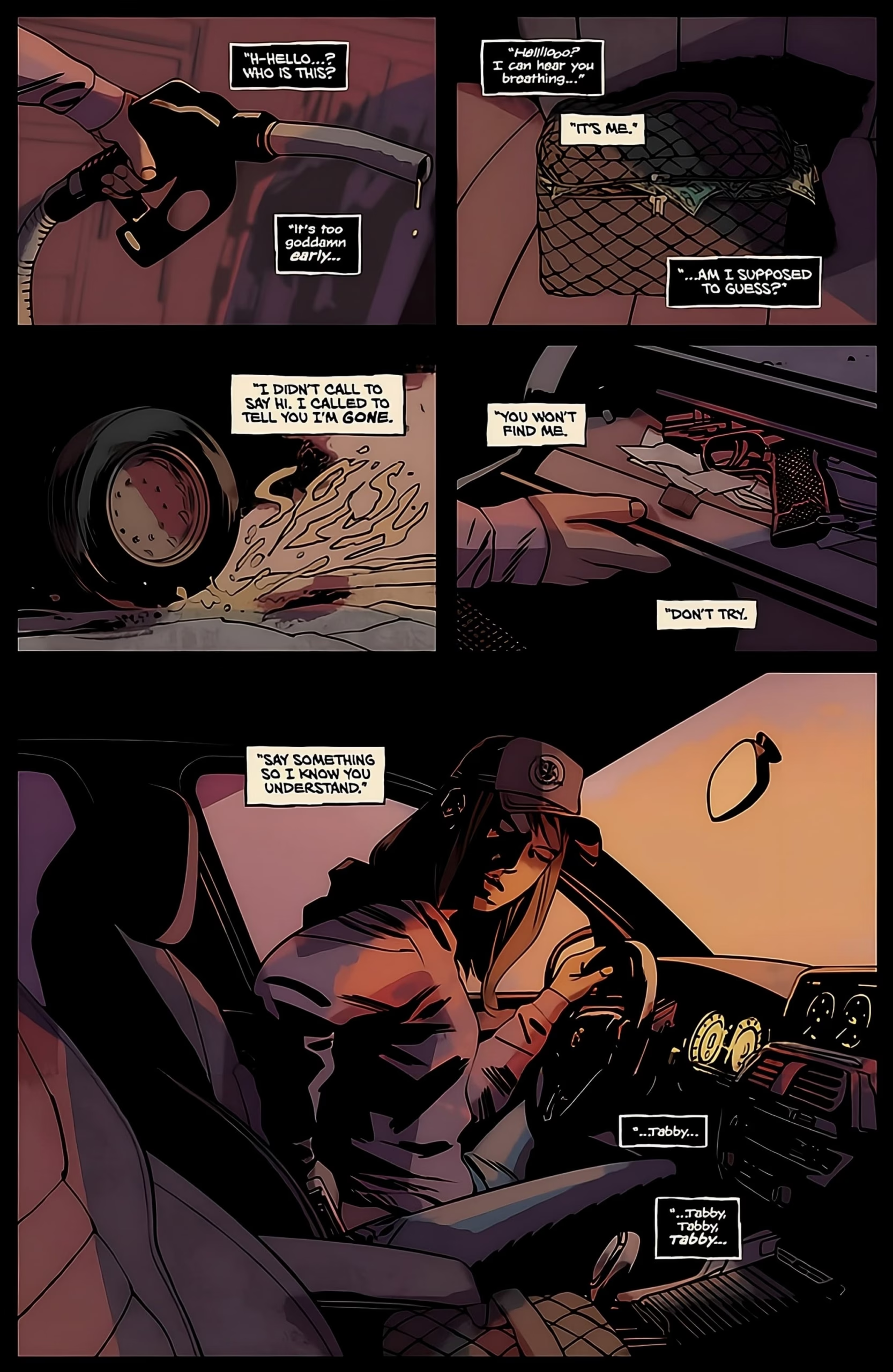
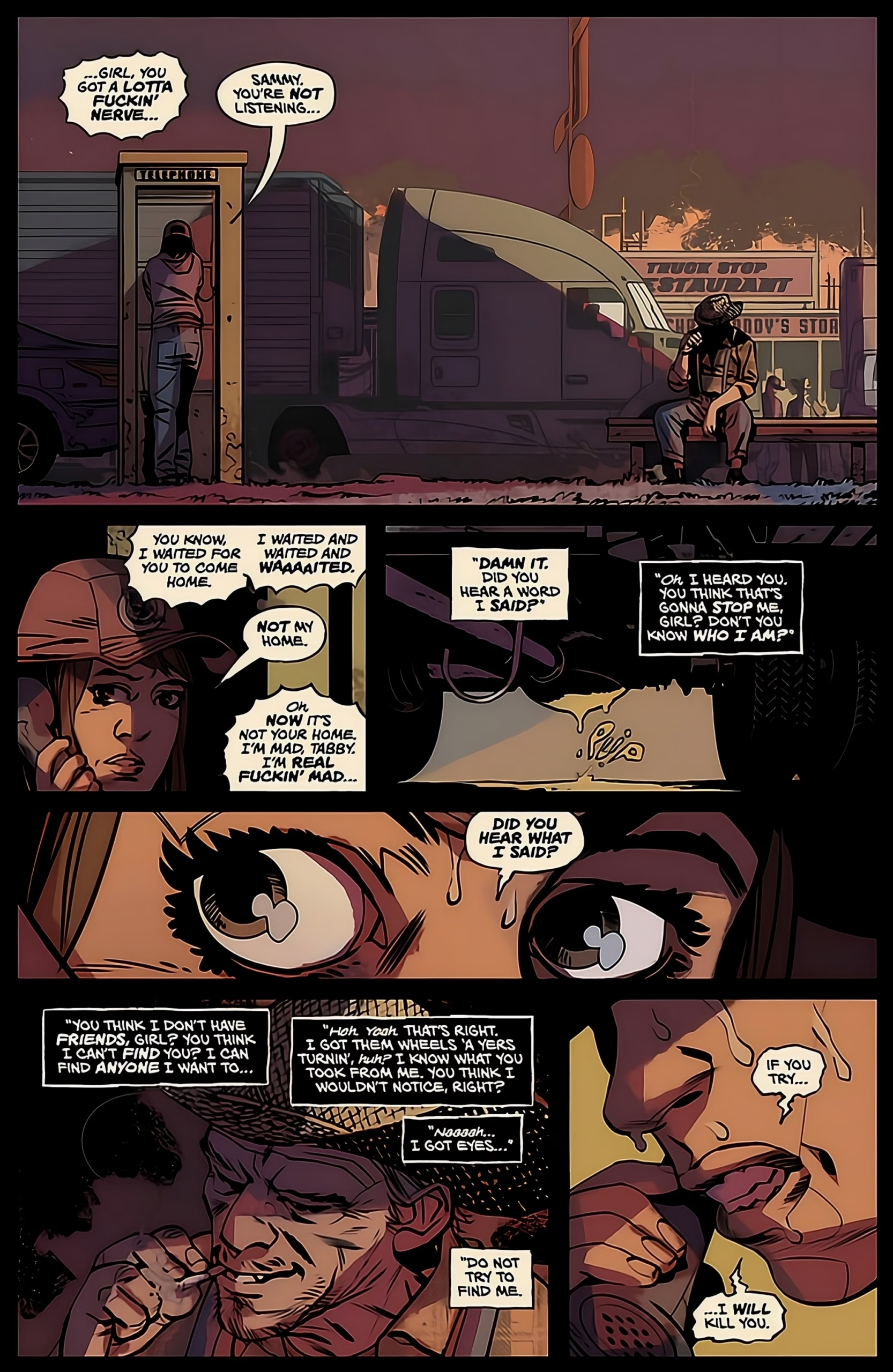
The series follows Tabitha “Tabby” Black, a woman fleeing a compromised life for her grandmother’s home in the fictional town of Solitude, Texas — a name chosen, clearly, not for comfort. The opening issue establishes the series’ folkloric frame immediately: an excerpt from a document describing a mythical creature known as the Wildcatter, said to possess a human face, an amorphous body capable of shifting between humanoid and animalistic form, and elongated limbs with horns.
The word “wildcatter” carries its own Texas specificity. In the oil extraction industry, a wildcatter is a speculative driller who sinks a well in unproven ground — someone who works the earth not knowing what will come up.
Transposing that word onto a horror entity that presumably rises from or inhabits the land is the kind of structural decision that operates on the page as efficient genre craft and beneath the page as ecological argument: that what the land yields, when it yields anything at all, was never tame.
The grandmother figure — described in publisher copy as changed, unrecognizable in some way that the issue does not immediately specify — invokes a familiar horror economy: the return home, the corrupted familiar, the domestic space that no longer holds.
What the creative team’s framing references make clear is that the mode is infiltration rather than invasion. In both Joel and Ethan Coen’s 1984 film ‘Blood Simple’ and John Carpenter’s 1982 film ‘The Thing,’ the cited reference points for this series, the horror is not visible until it is operating from within a system its hosts believe they understand.
Eco-Horror in Comics and Its Absence
The eco-horror designation in the publisher’s solicitation warrants attention, because the subgenre’s presence in comics has been partial and uneven.
The environmental anxieties of the nineteen-seventies that produced Alan Moore and Stephen Bissette’s redefinition of ‘Swamp Thing’ in the early nineteen-eighties approached ecology from a different direction: Moore’s Swamp Thing was an ecological consciousness awakened within horror form, transforming what had been a straightforward monster into a meditation on what a plant-based intelligence might understand about human civilization’s relationship to the living world.
That tradition has not produced a sustained lineage of eco-horror specifically in American single-issue comics — a format whose production constraints and commercial pressures have historically favored fast-moving action over the slow accretion of dread that ecological horror requires.
The emergence of a six-issue miniseries with a dedicated eco-horror brief, from a publisher with Image Comics’ documented history of sustaining formally ambitious horror — ‘Gideon Falls,’ ‘W0rldtr33,’ ‘Killadelphia,’ the full arc of ‘The Walking Dead’ itself — is itself a statement about what the format can currently support.
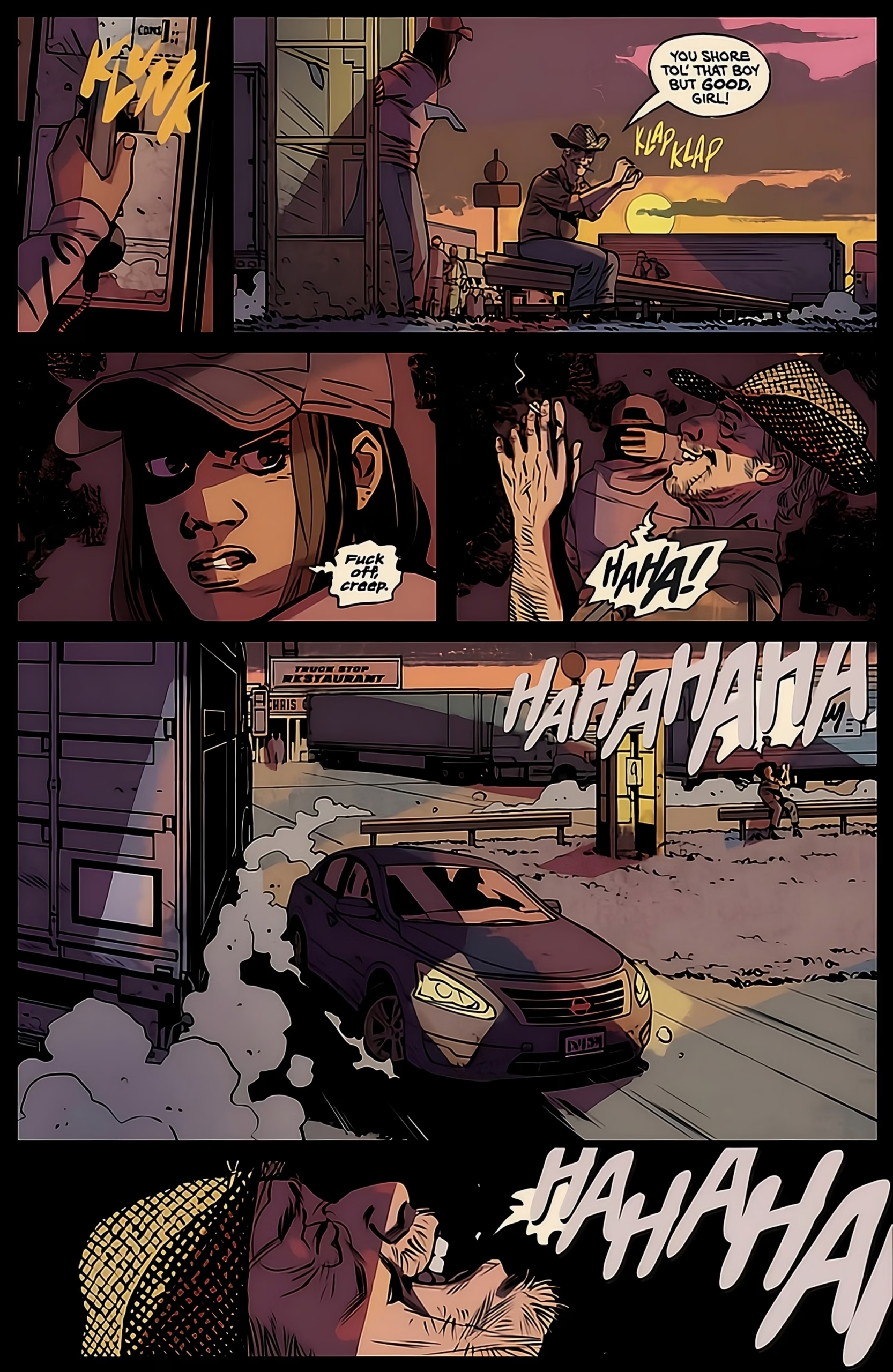
What ‘Of the Earth’ adds to that context is a neo-noir register alongside the ecological premise. Condon’s established mode in ‘That Texas Blood’ is precisely the intersection of West Texas atmosphere with crime-fiction tension; what the new series relocates is the source of the threat, from human agency and institutional failure to something older and geological.
The noir frame — the woman returning, the home that has curdled, the landscape that does not welcome — is well-established. What is less established is its convergence with land-as-threat in the comics medium at this length and in this format.
What Solitude Holds
The horror tradition that ‘Of the Earth’ draws from — land as adversary, home as corrupted system, the familiar transformed into something that cannot be held or addressed by ordinary means — is among the most demanding in the genre because it requires patience from the page and from the reader.
Blackwood’s finest work produces dread through accumulation rather than event; Carpenter’s ‘The Thing’ is about the erosion of trust within a closed system before any single horror is confirmed. These are not models for comics work that wants to deliver monthly shock; they are models for comics work that wants to build something the reader carries forward.
That Adlard — an artist whose career output across ‘The Walking Dead’ demonstrated sustained capacity for long-form genre storytelling — has chosen to return to single-issue format with material this formally demanding is the news beneath the news here. The sellout is a commercial event. What it may be marking is a re-entry: an artist at full professional maturity, working in a form he spent fifteen years mastering, applying that mastery to a subject the medium has largely left unoccupied.
Given the documented scarcity of sustained eco-horror in the single-issue comics format, what specific formal constraints of monthly publication — page count, cliffhanger structure, the economics of the ongoing issue — have historically worked against the slow-accumulation model that ecological dread requires, and does a hard six-issue miniseries structure resolve any of them?


Leave a Reply